10 sights worth your time
Ordered by the experiences locals still recommend — not just photo stops.
 1
1
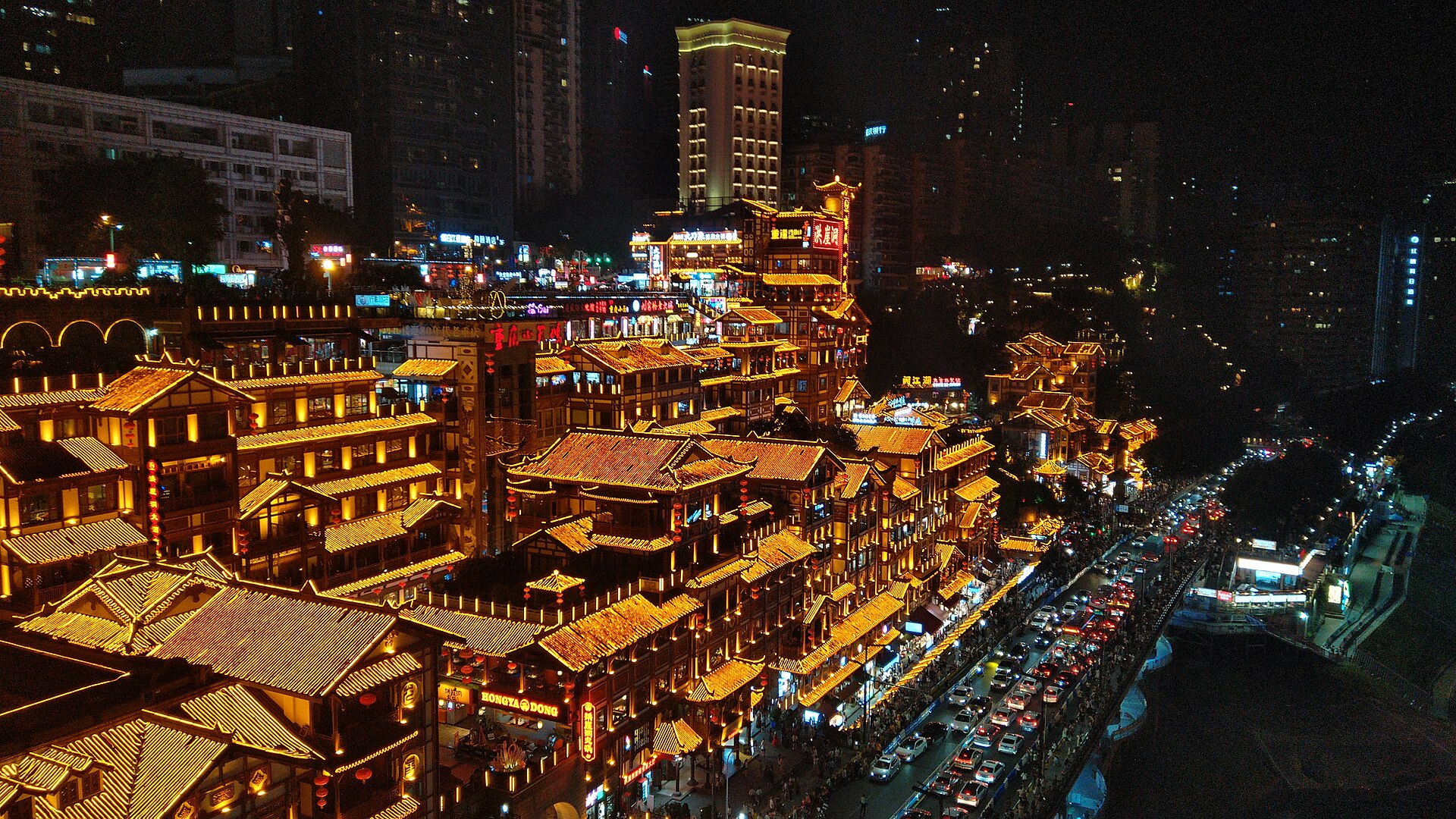
Picture this: you stand on Qiansimen Bridge, look across the Jialing, and there it is — eleven storeys of traditional stilt houses (吊脚楼) stacked up the cliff face, every level lit gold. Plenty of visitors say it looks like a scene from a certain Japanese animated film. Inside it is shops, restaurants and souvenir stalls, but the real trick is the 8D geometry: the 11th floor connects to Cangbai Road at the top, while the 1st floor opens onto Binjiang Road by the river, so you can enter from above or below. Free, and walkable 24 hours.
 2
2
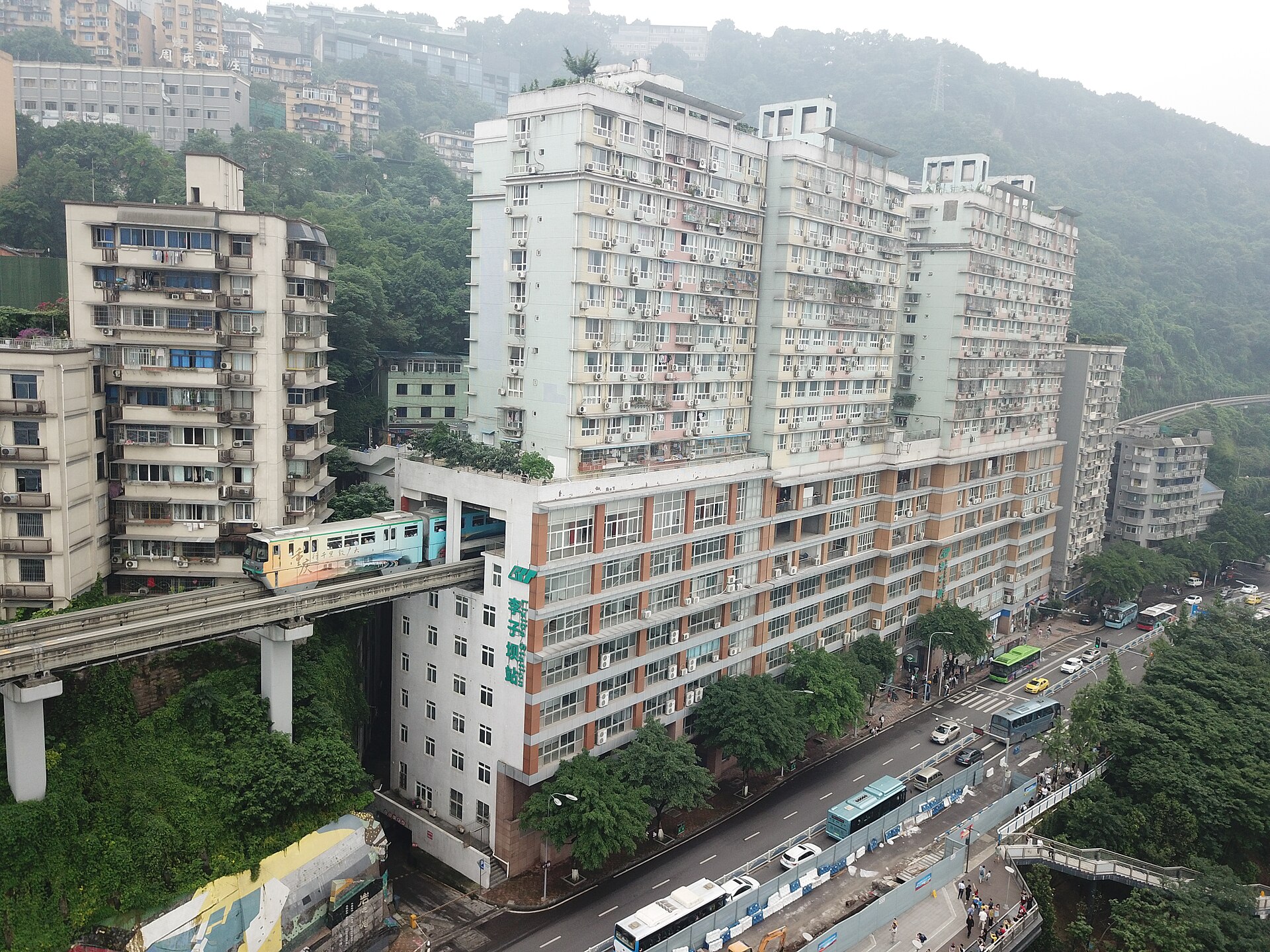
Honestly, a lot of people don't believe a train really runs through a building people live in — until they get to Liziba. The station is built into a 19-storey block, with the tracks on floors 6–7 and the platform on floor 8, and Line 2 trains enter and leave the building every 5–10 minutes. You can ride straight through it (the station is inside the building), or, to photograph the moment a train slides into the facade, head down to the free viewing platform (观景台) built on the opposite bank of the Jialing. Follow the signs from the station.
 3
3
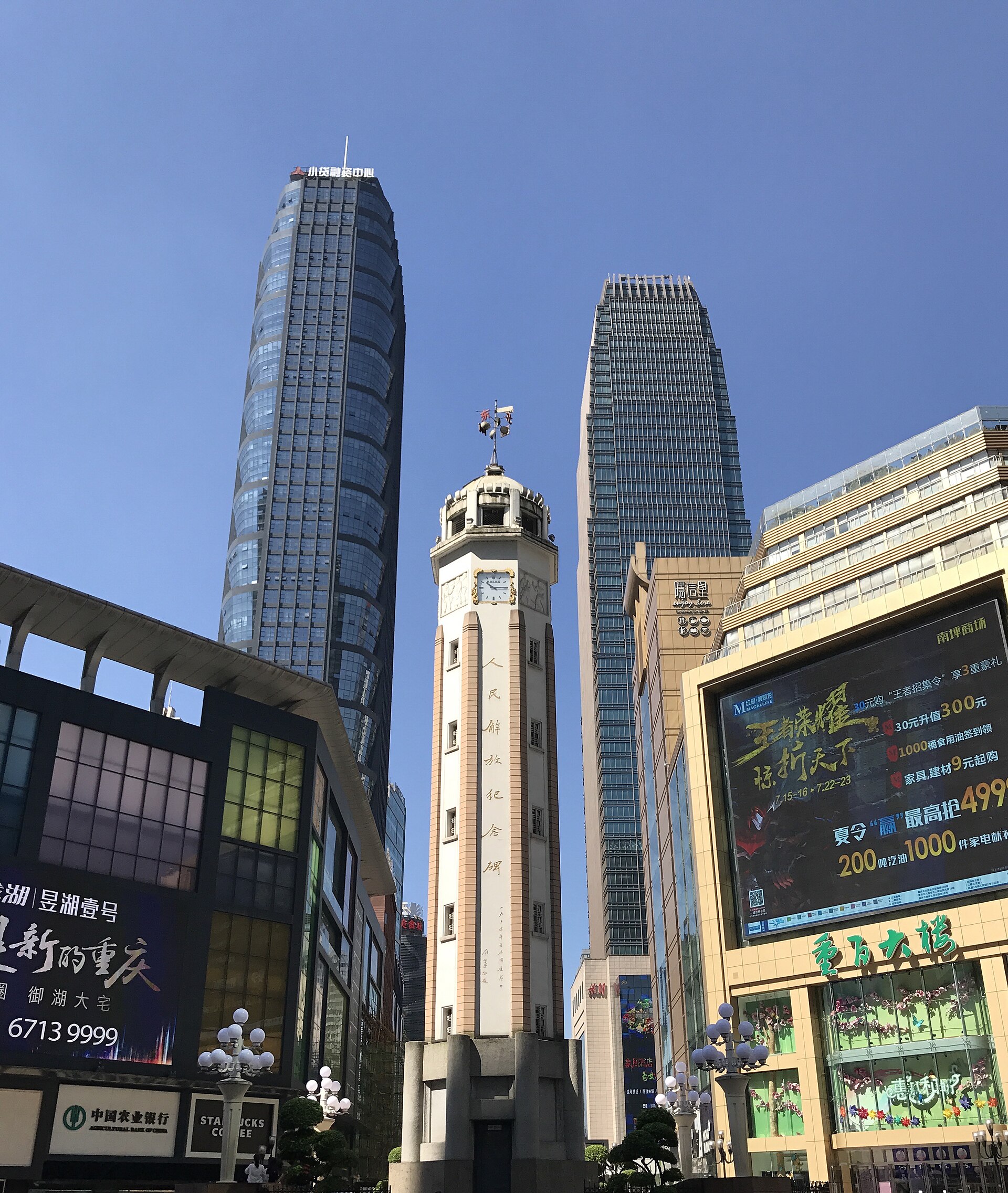
A 27.5-metre clock tower from 1947, standing in a ring of glass skyscrapers many times its height — that is Jiefangbei, the Liberation Monument that anchors the Yuzhong pedestrian core. The square spreads over 36,000 square metres, ringed by malls and brand stores, and just off it is the one thing you shouldn't miss: Bayi Snack Street (八一好吃街) — sour-and-spicy glass noodles, mountain-city tangyuan, and genuine Chongqing street food. From here it is an easy walk down to Hongyadong.
 4
4
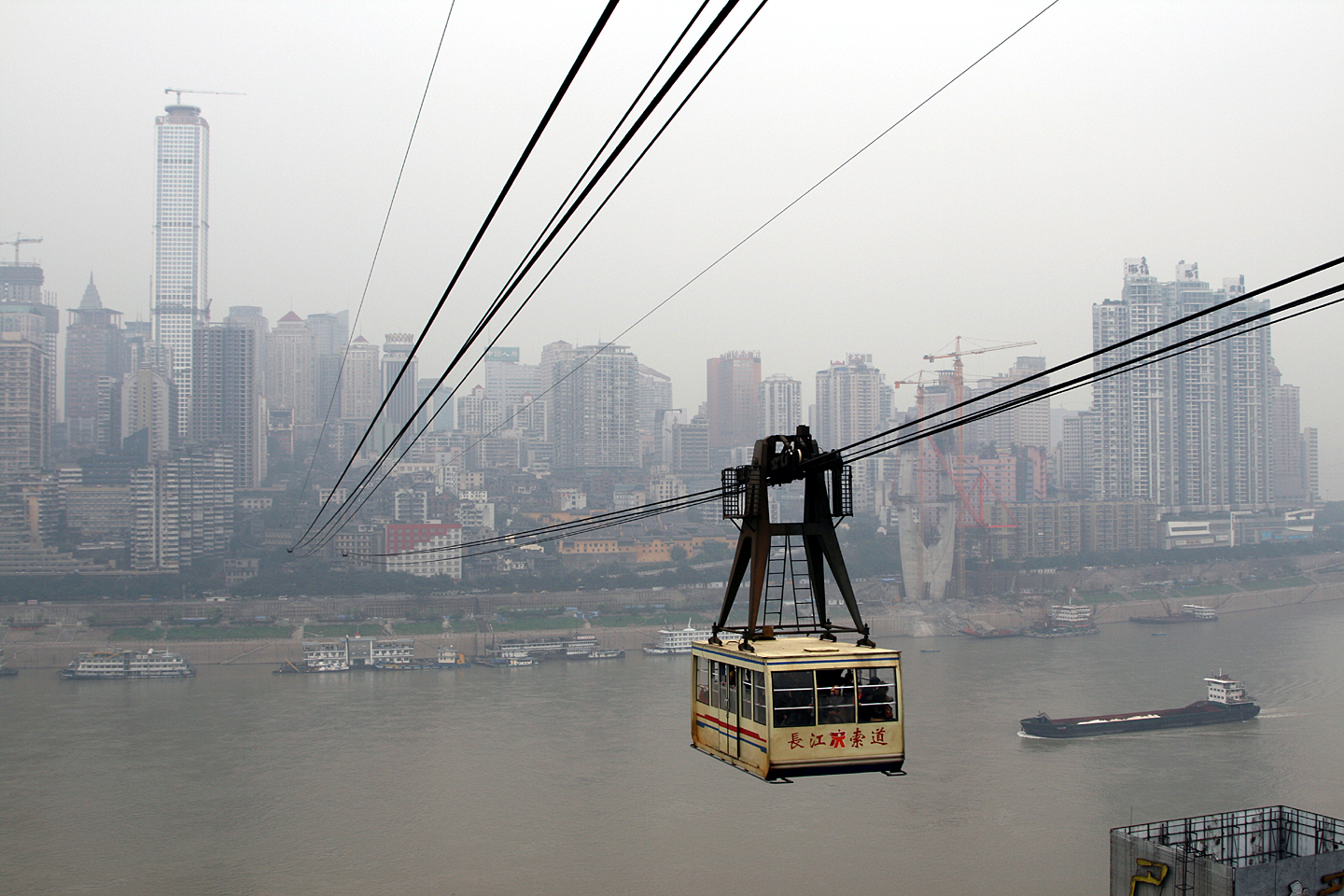
Before the city had all these bridges, locals genuinely used this cable car to commute across the Yangtze — today it is one of the best sightseeing rides in town. The cabin floats roughly half a mile over the river, from the Yuzhong side (Xinhua Road) to the Nan'an side (Shangxin Road), with cargo boats sliding past below and the towers on both banks fanning out around you. A tourist one-way ticket is ¥30 (~฿150); locals pay less with a transit card. You can book ahead on Klook.
 5
5
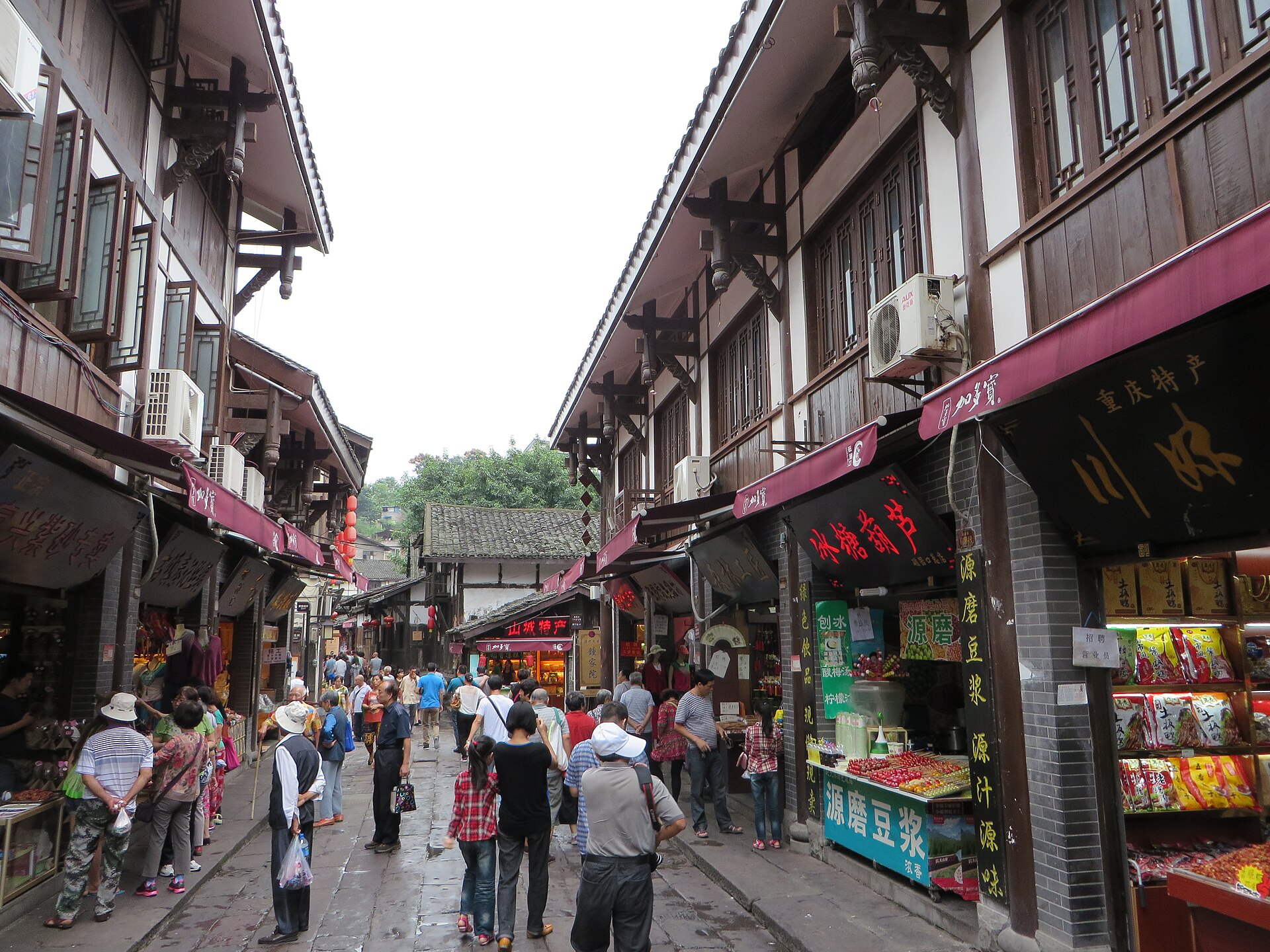
In a city that climbs vertically everywhere else, Ciqikou is where time slows down — an old porcelain port on the Jialing in Shapingba district, with roots back to the Song dynasty. Stone-paved lanes are lined with old Ming-Qing timber shops, teahouses, sweet stalls and red lanterns, with Baolun Temple up the hill. The snacks to try are chen mahua (陈麻花), crisp twisted fried dough, and maoxuewang (毛血旺), a spicy blood-curd stew said to have originated here. It is touristy, I'll be honest, but the atmosphere holds up — and a morning visit is far more pleasant.
 6
6
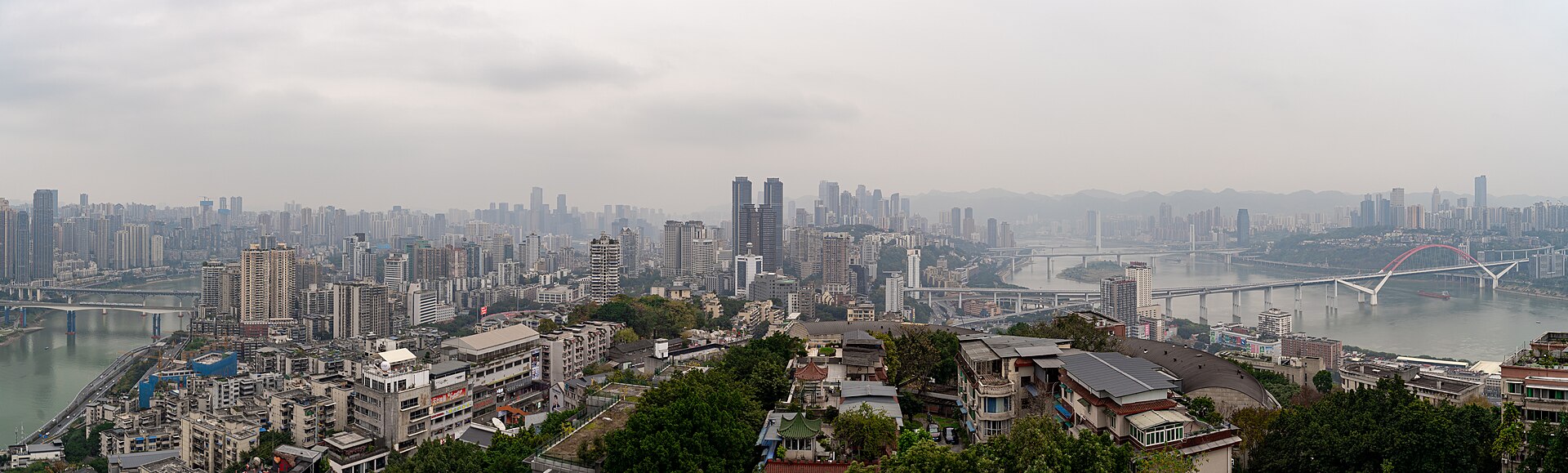
If you've ever wondered where the postcard Chongqing skyline shots are taken from, this is one answer. Eling Park sits on the Yuzhong ridge, and Kansheng Tower (瞰胜楼) opens up the full 8D-city panorama — including the point where the Yangtze and Jialing rivers meet. Sunset into the moment the city lights flick on is the most beautiful window; many locals reckon the view here beats the paid observation decks. Around it are old gardens, the Liang villa, and the trendy Eling Er Chang (鹅岭贰厂) creative park nearby.
 7
7
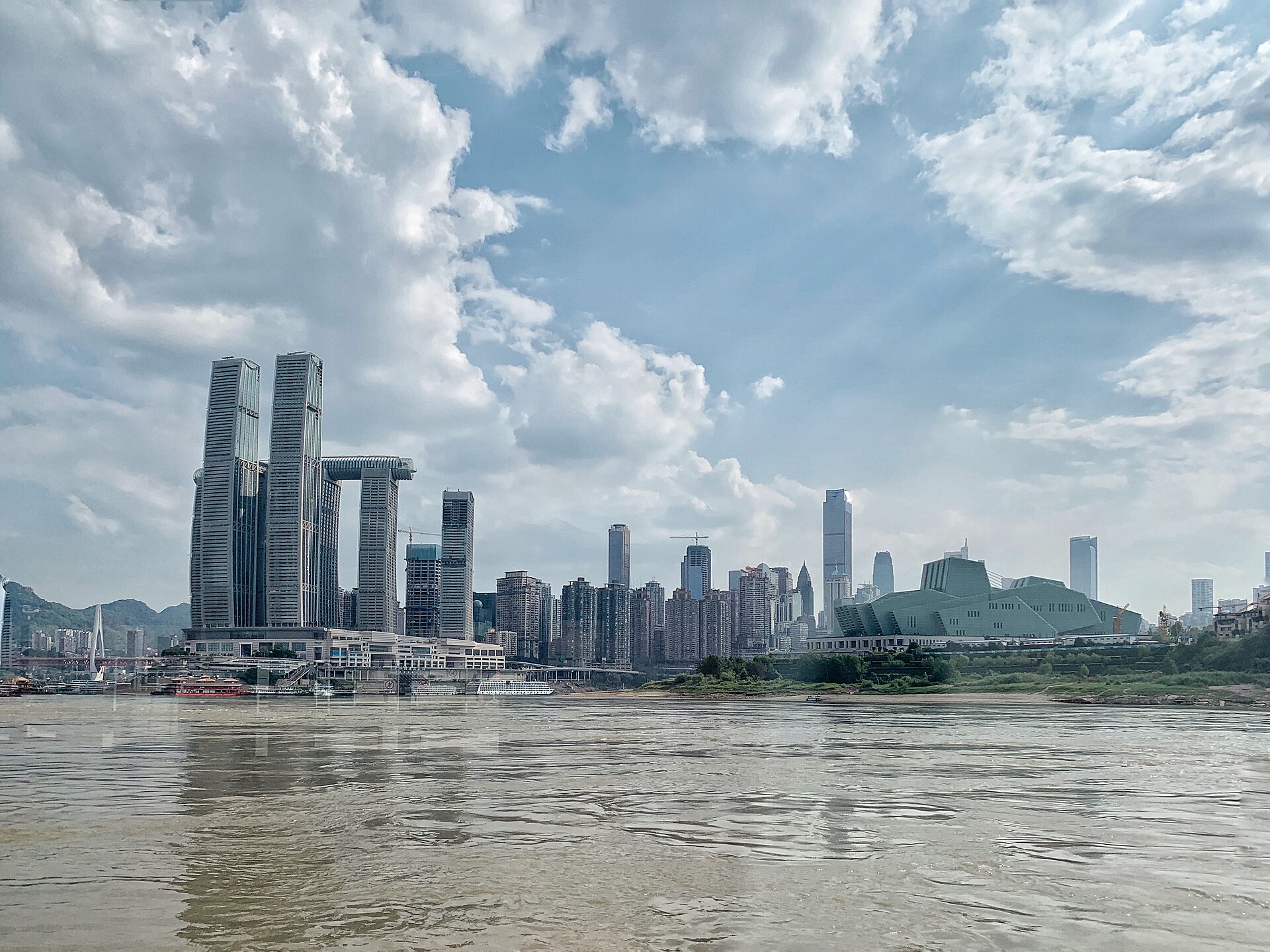
Here's the honest truth: the tip of the peninsula where the Yangtze and Jialing meet — Chaotianmen — is where the whole city began, as a gate and a wharf. Today it holds Raffles City, eight sail-shaped towers by Moshe Safdie lined up like ships along the water, linked by a horizontal sky-bridge nicknamed the "Crystal Sky Bridge" (水晶连廊). You can go up for a panorama over the confluence. Below, the wharf is where night river cruises and the Three Gorges cruises set off.
 8
8
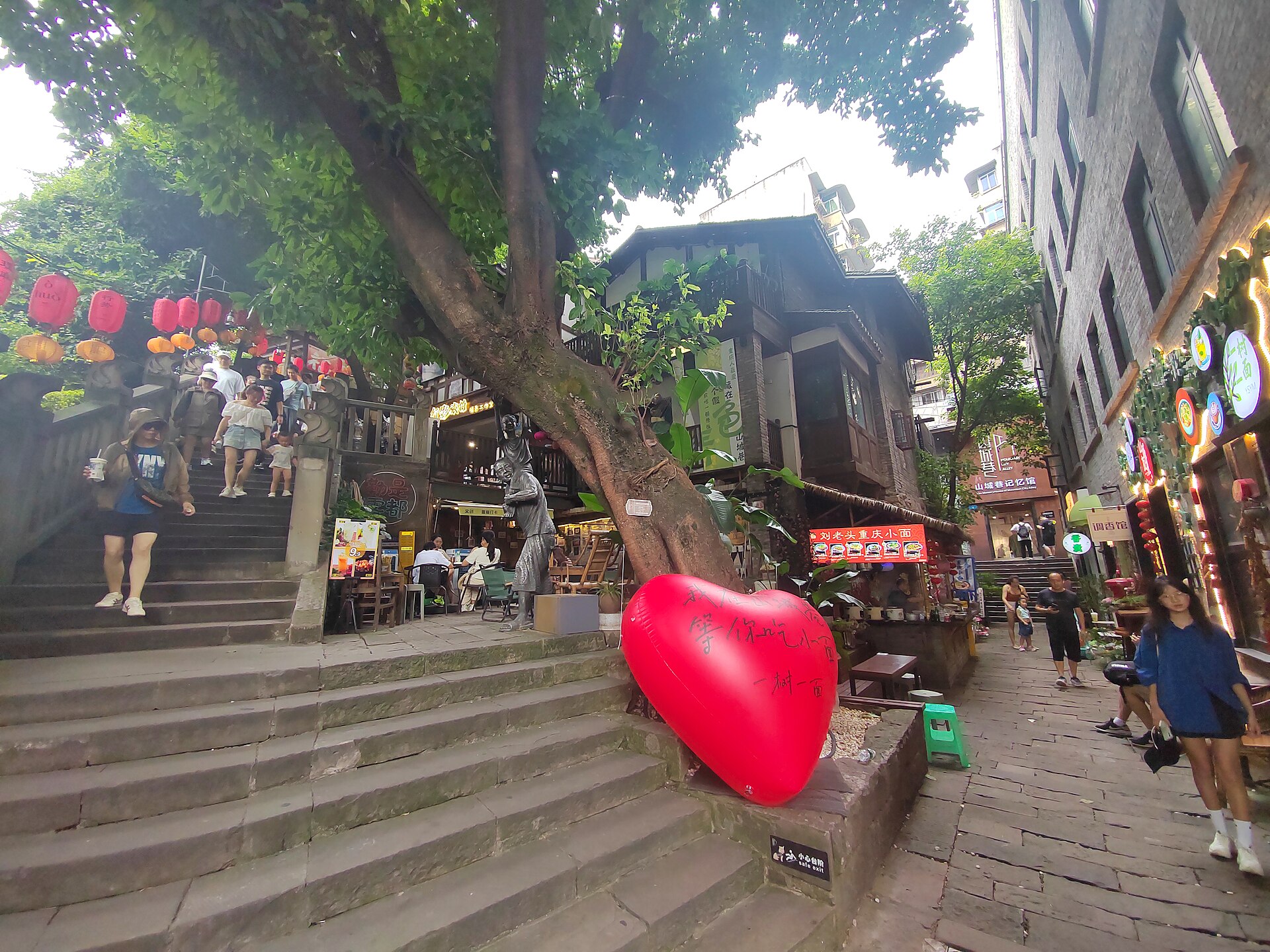
If you want the Chongqing that hasn't been dressed up for tourists, walk the Shancheng (Mountain City) Trail — a route of old stone steps that winds across steep hillsides, through old residential blocks and narrow alleys that connect the city's different levels. Along the way you see real mountain-city life: laundry lines, old teahouses, and unfenced viewpoints over the city. It is a genuine workout, all up and down, but this is the heart of what "mountain city" (山城) means. The main trail is free; a few add-ons (war tunnels, a small gondola) charge separately.
Chongqing locals are seriously proud of their night skyline — some call it "Little Hong Kong" — and the classic vantage point is up on Nanshan (South Mountain). From the Yikeshu deck (the name means "one tree") you look down over the whole Yuzhong peninsula, hundreds of towers ablaze, and the two rivers cutting through the city as dark ribbons catching the light. Entry is about ¥30 (~฿150), open 9 am–10 pm. Go up before sunset to catch the lights coming on one by one — it's an image that stays with you.
 +
+
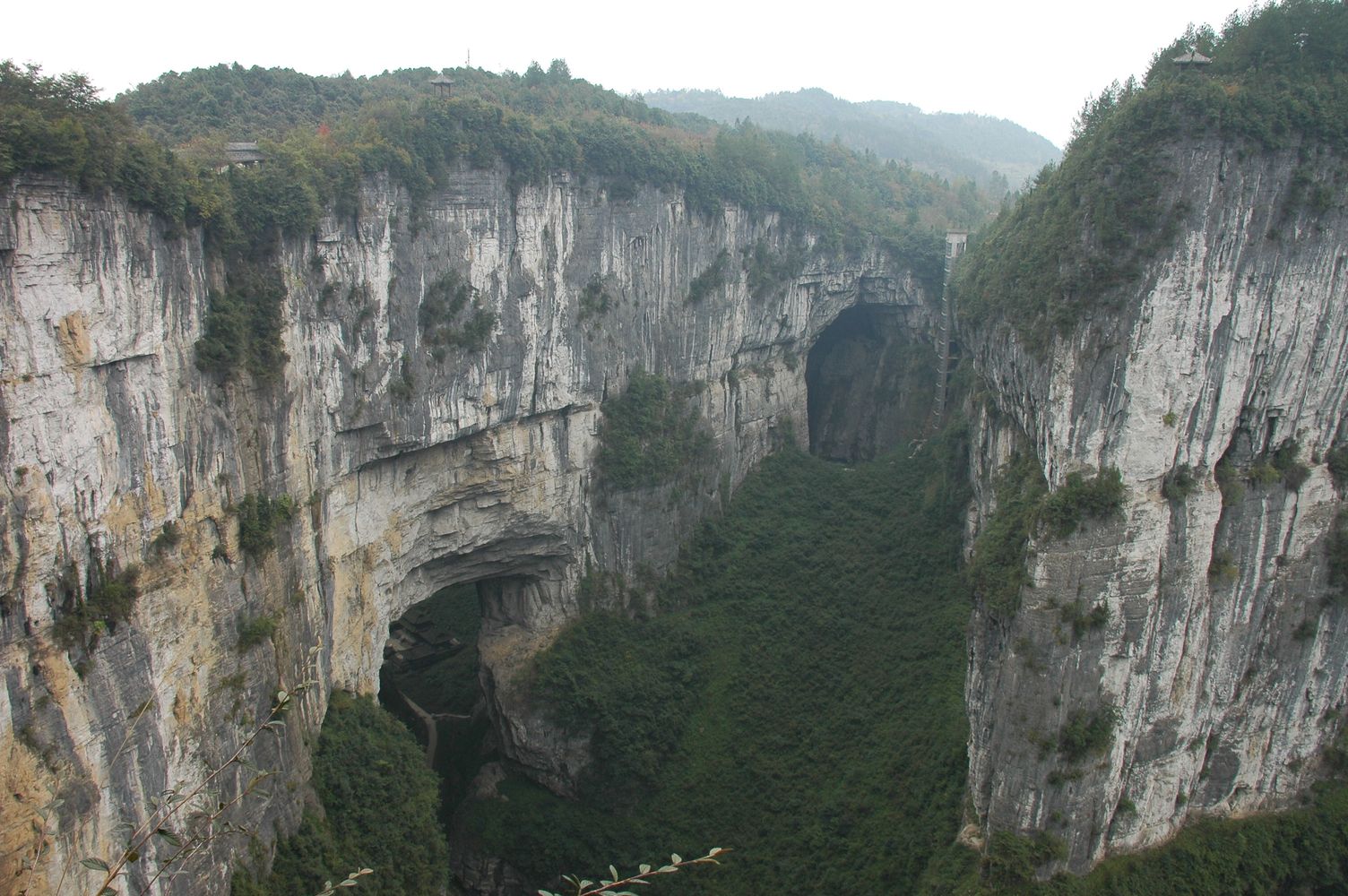
There's plenty in the city, but with extra time the region delivers some heavy hitters. The Dazu Rock Carvings (大足石刻) are UNESCO-listed Tang–Song cliff carvings of Buddhist, Taoist and Confucian figures — about 20–40 minutes by high-speed rail to Dazu South, then a connecting bus. Wulong Karst (武隆) has the giant Three Natural Bridges, a UNESCO site that doubled as a Transformers film location; a new high-speed line gets you there in roughly 40 minutes to just over an hour, with the Three Bridges ticket at ¥155. The Three Gorges cruise (长江三峡) is a multi-day trip from Chaotianmen, not a day trip — we cover it separately in the day-trips guide.