Day one among the temples of the old royal island, day two from a 15,000-stall market to a rooftop bar, day three cycling Bangkok's green lung before a Chinatown street-food finale — and day four out of the city: Ayutthaya by train, the Damnoen Saduak and Maeklong markets, or Amphawa at dusk.
Here's the honest truth about Bangkok: it's kind to people with limited time. The city's big sights cluster along the Chao Phraya River and the BTS/MRT lines, so three days cover the core well. But a second tier of brilliant things sits 1.5 to 2 hours outside the city — the World Heritage ruins of Ayutthaya, the paddle-boat floating markets, and a market that folds its umbrellas several times a day to let a train squeeze through. Those are what a three-day trip always has to cut, and they're why day four earns its keep.
Four days solves that directly. The first three days take the city at a humane pace: day one on the royal island (the Grand Palace, Wat Pho, a ferry across to Wat Arun), day two from Chatuchak Market to Jim Thompson House with a rooftop evening, day three cycling Bang Krachao, riding the free boat to ICONSIAM and finishing among the street-food woks of Yaowarat. Day four heads out of the city — Ayutthaya by train, the Damnoen Saduak + Maeklong combo, or Amphawa at dusk. You pick.
Got less time? We also have a 3-day plan (the standard formula for this city), a 2-day plan and a 1-day plan. Want to see the numbers before you commit? Check the Bangkok trip budget.
Good news: Bangkok needs almost no advance booking — palace tickets are sold at the gate. These three things are all the prep this plan takes.
The Grand Palace opens at 8:30am and sells tickets at the gate — ฿500 for foreign visitors (Thai citizens enter free). Dress so you'll pass the gate check: sleeves on, knees covered. And if anyone near the palace tells you "it's closed today" and offers a tuk-tuk tour instead, walk on — it's the city's oldest trick. Check at the gate yourself. See our Grand Palace guide.
From Suvarnabhumi, the Airport Rail Link runs to Phaya Thai for ฿45 in about 26 minutes, connecting straight to the BTS. From Don Mueang, take the A1/A2 bus (~฿30) to BTS Mo Chit, or a metered taxi (plus a ฿50 airport fee and tolls). Every option is compared in our airport transfer guide.
Markets and street stalls run on cash (locals scan PromptPay QR codes, which need a Thai bank account), so carry small notes — and note that foreign-card ATM withdrawals cost around ฿220 a time. Install Grab for cars and motorbike taxis; the BTS uses a Rabbit card, while MRT gates take contactless credit cards. First visit? Read our Bangkok first-timer guide and BTS/MRT guide.
Walk from Thailand's grandest palace to a 46-metre golden Buddha, then take a ฿5 ferry across the river to Wat Arun — day one packs old Bangkok's heart into one walkable, boatable stretch.
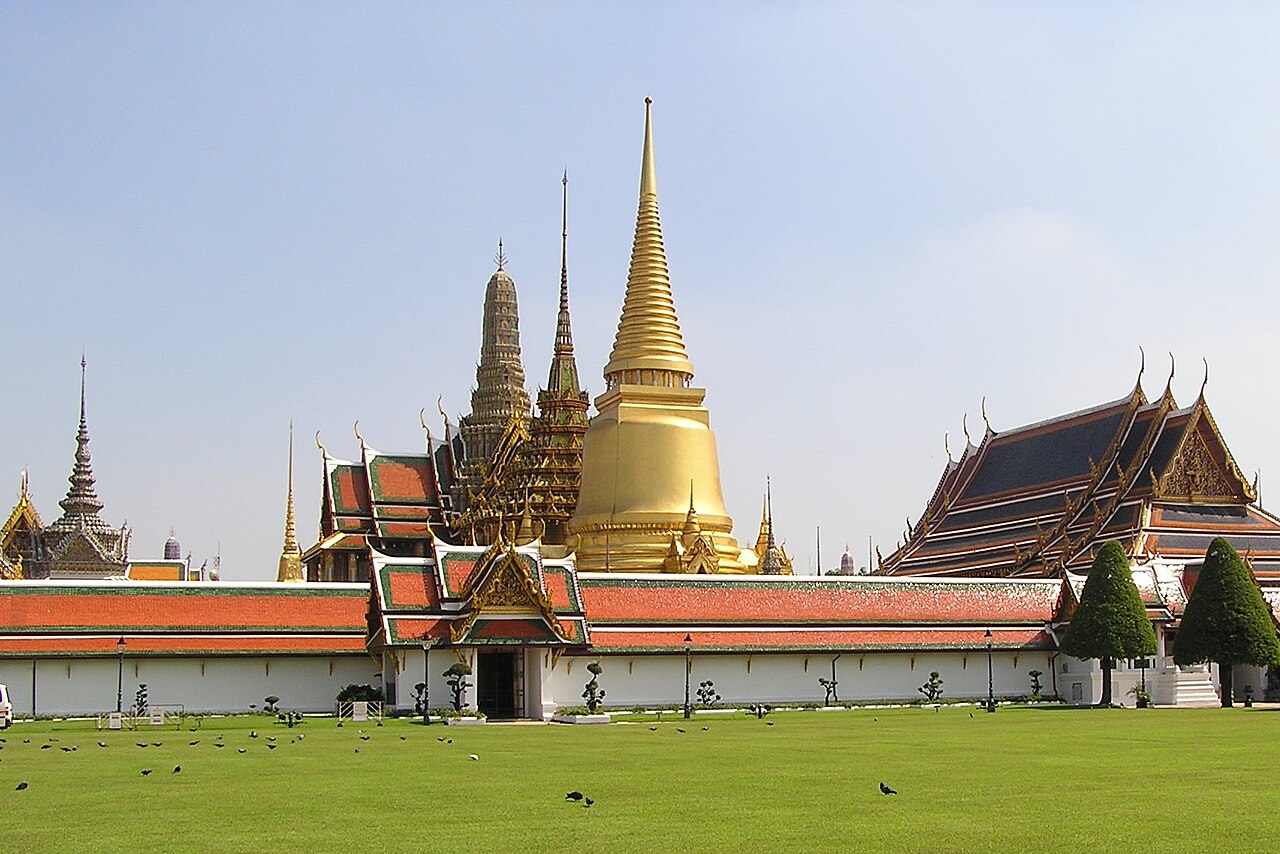
Be at the gate for the 8:30am opening — the first hour is cooler and ahead of the tour groups. Start in Wat Phra Kaew, the Temple of the Emerald Buddha, where every surface is gilded, mirrored or mosaicked, then continue into the palace grounds for the Chakri Maha Prasat — a European palace body crowned with Thai spired roofs, and like nothing else you'll see anywhere. Allow 2 to 3 unhurried hours.
The courtyards offer little shade and the sun gets serious fast, so bring a hat and water. From the exit, Wat Pho is a 10-minute walk south.
Ten minutes from the palace, Wat Pho holds the 46-metre Reclining Buddha, gold from head to mother-of-pearl feet — the feet alone, inlaid with 108 auspicious symbols, are worth the visit. Wander the courtyards of tiled chedis afterwards, and if the morning has worn you down, this temple is the birthplace of Thai massage: the massage school operates inside the grounds (roughly ฿400–500 an hour — check the board on the day).
Exit on the river side at Tha Tien pier and take the ฿5 cross-river ferry — a few minutes — to Wat Arun, the Temple of Dawn. Its central prang is crusted with broken porcelain and seashells that get more intricate the closer you stand, and you can climb the steep stairs to the middle terrace for a view back across the water to the palace.
The best end to this day: ferry back to the Tha Tien side and find a rooftop café or bar facing the river, then watch the sun drop behind Wat Arun as its floodlights come on gold against an orange sky. Afterwards, look for dinner along the riverfront near Tha Maharaj — or, if you want a livelier first night, it's about 10 minutes by taxi to Khao San Road.
Heading back to your hotel, the orange-flag express boat runs from Tha Tien/Tha Chang down to Sathorn pier, where the BTS at Saphan Taksin picks you up — the whole boat network is mapped in our Chao Phraya boat guide.
Morning in the city's biggest market (or Or Tor Kor on weekdays) · afternoon in the teak house of the American who made Thai silk famous · evening looking down on all of it from a rooftop.
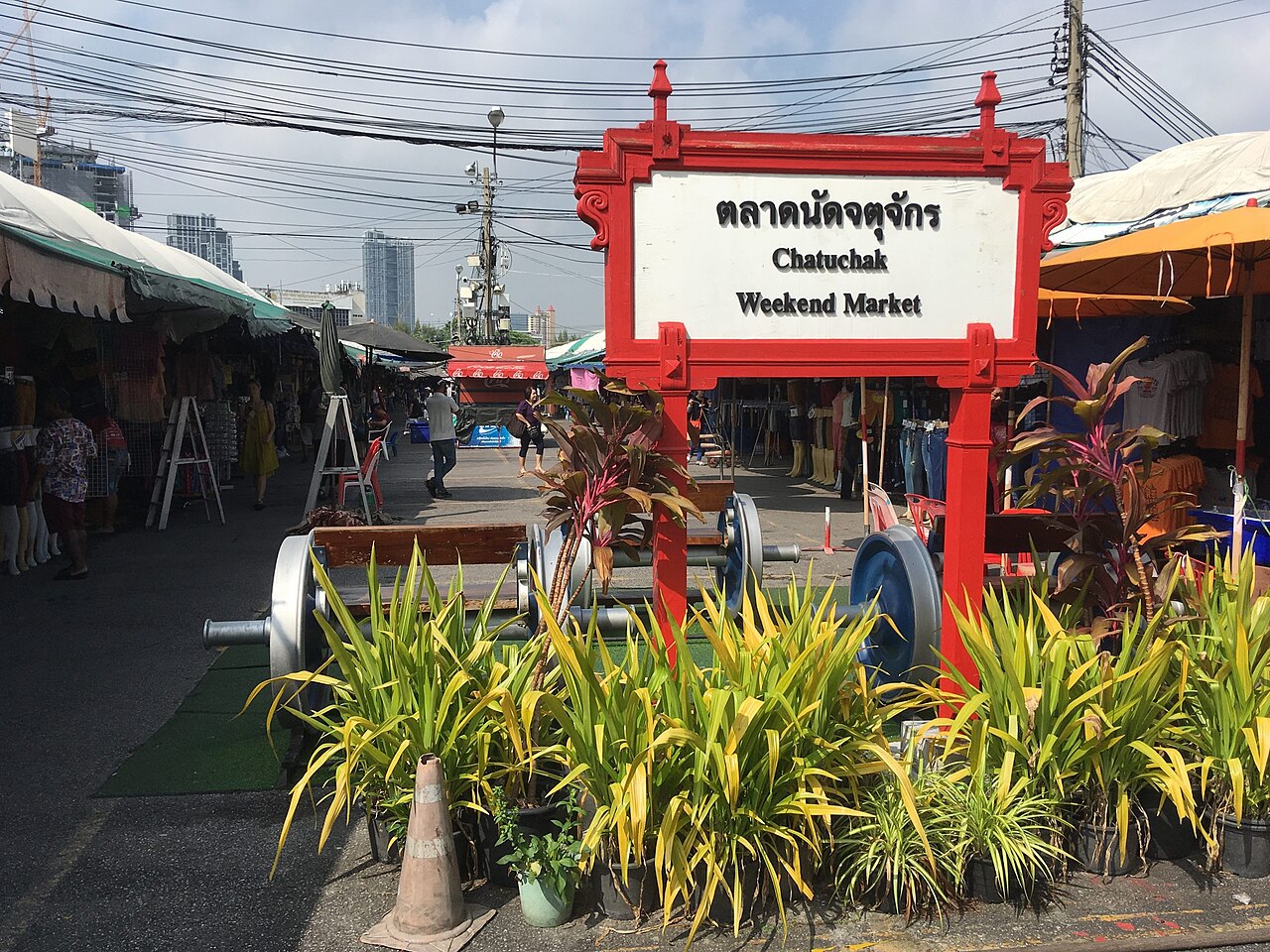
If your trip spans a weekend, aim this day at it. Chatuchak is a market of roughly 15,000 stalls across 27 sections — vintage clothes, homeware, crafts, plants, and food at every turn. Arrive before 10am to walk it in relative comfort, before the crowds and the heat peak. The queues form for coconut ice cream and icy fresh-squeezed orange juice, both worth joining.
On a weekday you lose nothing by crossing the road to Or Tor Kor instead — one of the country's best fresh markets, with seasonal fruit, seafood and a food court good enough for a full lunch (food-court fans, see our food court guide).
Ride the BTS from Mo Chit, change at Siam, and get off at National Stadium. Jim Thompson House is a compound of six teak houses on a canal, built by the American who revived the Thai silk industry — and who then vanished without a trace in the Malaysian jungle in 1967. Visits run as guided tours, taking in his Southeast Asian art collection and a deep-green garden that mutes the city around it.
Afterwards, walk or ride one BTS stop back into Siam — browse Siam Square, settle into one of the area's serious cafés (pick from our Bangkok café guide), or hit MBK, the bargain mall right by National Stadium station.
Bangkok is at its best after dark, seen from above. Two ways up: a ticketed deck like the Mahanakhon SkyWalk (around ฿800+, with the glass floor on level 78), or a rooftop bar where entry is free and the view costs whatever you drink — roughly ฿300–500 a glass. We compare the towers and their views in our rooftop bar guide. Afterwards, find dinner around Silom–Sathorn or head back towards your hotel.
Morning cycling a river bend so quiet you'll forget which city you're in · afternoon riding a free boat to a riverside mall · evening on a Chinatown street that turns into one long open-air dinner table.
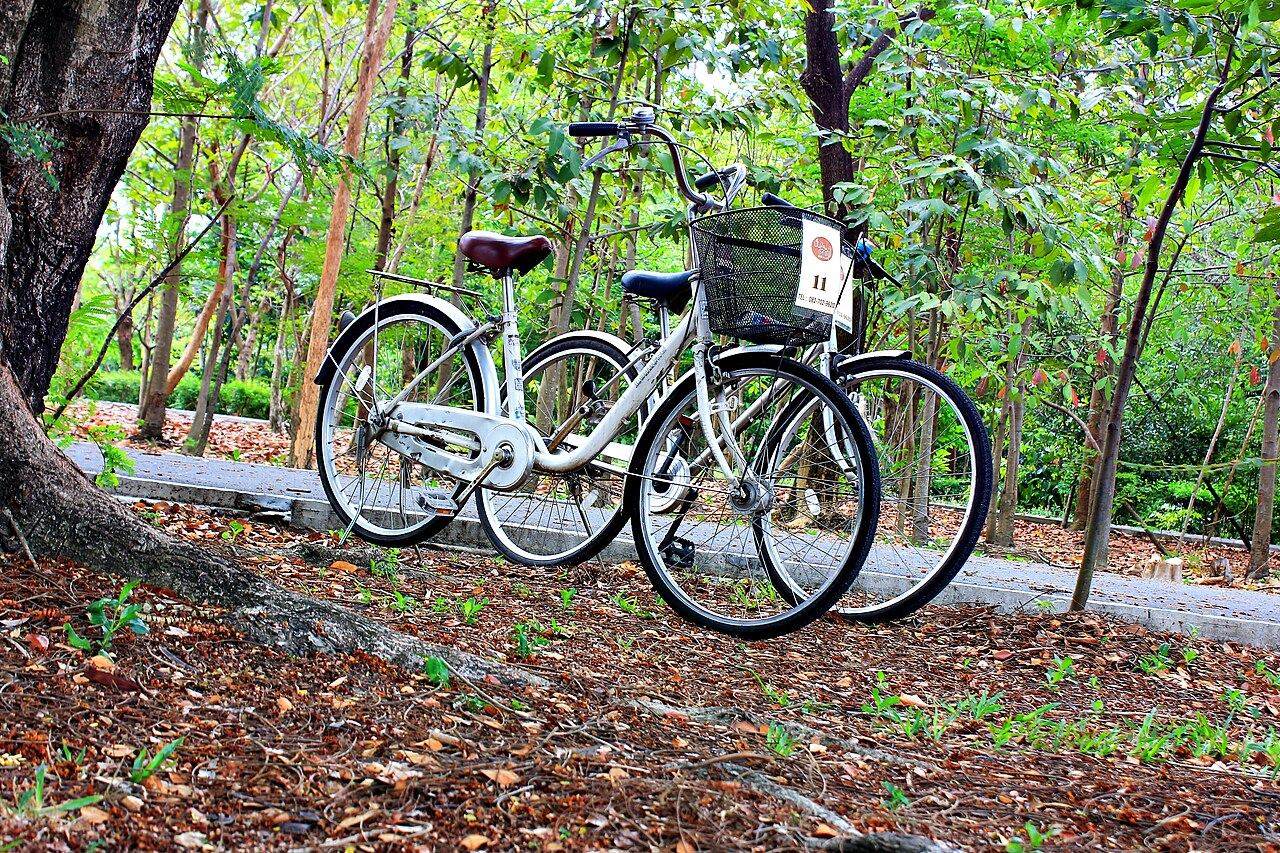
Cross the river for five minutes and the city switches off. Bang Krachao is a pouch-shaped bend of the Chao Phraya still covered in coconut groves, jungle and stilt houses. Rent a bicycle and follow the raised concrete paths that thread between the orchards, stopping at Sri Nakhon Khuean Khan Park for its lake and birdwatching tower. The air is noticeably cooler than the city side — it's one of our favourite corners in the whole Bangkok attractions list.
Land here on a Saturday or Sunday and you get a bonus: Bang Nam Phueng floating market, a low-key local one inside the same loop (all the floating markets around Bangkok are compared in our floating markets guide).
Back on the city side, swap jungle for air-conditioning: take the BTS to Saphan Taksin, walk down to Sathorn pier, and board the free ICONSIAM shuttle boat, which runs roughly every 15 minutes — the crossing doubles as a short river cruise. Inside, head for Sook Siam, the indoor floating-market hall that gathers food from every Thai region onto one floor, browse the Thai design shops, then stand a while on the river terrace watching the boat traffic before moving on.
Make your way to MRT Wat Mangkon and arrive a little before dusk, while there's still light on the old shophouses, the shrines and Wat Mangkon Kamalawat itself. Then, around 6pm, the neon comes on and the stalls take over Yaowarat Road: sizzling chive cakes, oyster omelettes, kuay teow kua gai (wok-charred noodles), roast chestnuts, the famous custard-filled buns — plus shophouse restaurants with Michelin stars or listings at street prices (we keep the list in our Michelin street food guide).
Order small and keep walking — that's the right way to eat this street. Our stall-by-stall route is in the Yaowarat food guide, and the citywide picture is in the Bangkok street food guide.
One full day out of the city — choose between World Heritage ruins you can reach on a famously cheap train, the classic floating market paired with the umbrella-folding railway market, or an evening canal market with fireflies — then give the whole day to the one you pick.
Catch a northbound train from Krung Thep Aphiwat Central Terminal (take the MRT to Bang Sue) and ride about 1.5 to 2 hours. A third-class ordinary carriage is an experience in itself — open windows, ceiling fans, vendors walking the aisle — and the ticket costs only a few dozen baht (some ordinary services still leave from the old Hua Lamphong station; check the latest timetable). At Ayutthaya station, rent a bicycle nearby or hire one of the city's distinctive tuk-tuks by the hour.
Work through Wat Mahathat (the sandstone Buddha head wrapped in tree roots — the city's defining image), then Wat Phra Si Sanphet with its three aligned chedis on the old royal palace grounds. Break for boat noodles or grilled river prawns (priced by size — check before ordering), and end at Wat Chaiwatthanaram on the riverbank as the light softens — the most beautiful Khmer-style prang in the city. Return by train or minivan.
This one rewards an early alarm — most tours leave around 6:30–7am so you reach Damnoen Saduak floating market before 9am, while the canal is still crowded with paddle boats and the light is good. Ride a boat along the canals (agree the price clearly before boarding) as vendors hand up pad thai, noodles and fragrant coconuts from the water. Then continue to the Maeklong railway market in Samut Songkhram — when the signal sounds, every umbrella and awning folds back within seconds, the train eases through inches from the produce, and the whole market springs back as if nothing happened.
Public transport here means several minivan and songthaew legs plus guessing the train times yourself, which is why this is the route where a half-day tour beats DIY — book ahead via Klook. You're back in Bangkok by early afternoon with the whole evening free — rest your feet, get a massage, or pick up a neighbourhood you missed. Every floating market is compared in our floating markets guide.
No early alarm on this one: leave around 1pm by minivan from Mo Chit or the Southern Terminal, about 1.5 hours to Amphawa in Samut Songkhram. The market comes alive from late afternoon into the evening (it starts Friday, peaks Saturday–Sunday), and the crowd is mostly Thai. Old wooden houses line the canal, between Thai dessert shops and small cafés, while boats moored below grill squid and prawns and ladle out boat noodles. Eating dinner with your feet dangling over the canal edge is the required position.
After dark, join a long-tail boat ride to see fireflies blinking in the lamphu trees along the Mae Klong river (around ฿60–100/person, most active in the rainy months). Back on land, check the last minivan immediately — they often finish around 8pm. If you'd rather not rush, a canal-side homestay for the night works beautifully, with the Maeklong railway market only ~10 minutes away the next morning.
Staying on the rail lines wins every time. Siam–Ratchathewi is the most central, reaching everything fast · Asok–Phrom Phong has the deepest bench of restaurants · the riverside near Saphan Taksin is closest to the boats for day one and ICONSIAM. For day four, Krung Thep Aphiwat station sits right on the MRT. See our where-to-stay guide or the 10 best hotels.
Build days around the BTS/MRT at roughly ฿17–62 a ride — they connect nearly every stop in this plan. Add the orange-flag express boat (~฿16 flat, faster than riverside traffic), ฿5 cross-river ferries, the Khlong Saen Saep canal boats around Pratunam, and Grab at roughly ฿80–200 for in-town hops. Details in our BTS/MRT guide and Chao Phraya boat guide.
Eating well in Bangkok doesn't have to cost much: food courts ฿40–80 a plate · street food ฿50–150 · several Michelin-recognised shophouses still charge a few hundred baht. Save the splurge nights for the riverside and the rooftops. See our Bangkok food guide and food court guide.
| Item | Budget | Mid-range | Comfort |
|---|---|---|---|
| Hotel, 3 nights | ฿1,200–2,400 (hostel/guesthouse) |
฿4,500–9,000 (3–4★ on the rail lines) |
฿15,000+ (riverside/5★) |
| Food, 4 days | ฿1,200–2,000 (street food + food courts) |
฿2,800–6,000 (name restaurants + cafés) |
฿8,000+ (riverside/rooftops) |
| City transport, 4 days | ฿600–1,000 (BTS/MRT/boats) |
฿1,200–2,000 (+ some Grab) |
฿2,400–4,000 (mostly Grab) |
| Entry tickets (days 1–3) | ฿200–600 (picking and choosing) |
฿1,000–1,500 (everything in the plan) |
฿1,800–2,600 (+ Mahanakhon SkyWalk) |
| Day 4 (day trip) | ฿150–400 (train + bike + temple entry) |
฿800–1,500 (half-day tour/minivans) |
฿1,800–3,000 (full-day/private tour) |
| Trip total (approx.) | ฿3,400–6,400 | ฿10,300–20,000 | ฿29,000+ |
Rough per-person figures (hotel based on two sharing a room) · Thai citizens enter many temples free · prices drift with season and promotions — always check before you travel · full numbers in our Bangkok trip budget