Tap through a BTS gate for the first time and Bangkok shrinks — seven rail lines that travellers actually use, fares of about ฿17–62, orange-flag river boats for about ฿16 flat, metered taxis from ฿35, and Grab as the late-night and rainy-day backup.
Bangkok's traffic reputation is deserved — but the good news is that almost everywhere travellers go is now on a rail line. The BTS Skytrain has three lines (Sukhumvit, Silom, and the short Gold Line), the MRT has two (Blue and Purple), plus the Airport Rail Link and the SRT Red commuter lines. Between them they cover Siam, Asok, Chatuchak, Chinatown (MRT Wat Mangkon), and the old town around Wat Pho and the Grand Palace (MRT Sanam Chai). Along the river, the Chao Phraya Express Boat works as one more transit line.
Rail fares are distance-based, roughly ฿17–62 per trip, and trains run from about 05:15–06:00 until around midnight (last trains vary by station). The single most important thing to know in advance: the BTS and MRT are separate systems run by separate companies, and there is no shared ticket. Every time you switch systems, you exit the gates and buy a new ticket.
This guide covers every way to get around Bangkok — the rail network that does the heavy lifting on any trip, the ticketing setup that confuses everyone, the express boats and ferries that are both fast and scenic, metered taxis, Grab, and motorbike taxis — plus the rush-hour windows you genuinely want to avoid. A little preparation and this city becomes far easier than its reputation.
Your first choice for almost every journey across the city. Air-conditioned, punctual, and distance-based fares of about ฿17–62.
The core network for visitors is the BTS Skytrain (elevated) and the MRT (mostly underground), backed up by the Airport Rail Link to Suvarnabhumi and the SRT Red Line, which passes Don Mueang airport. Trains run from about 05:15–06:00 until around midnight, signs and announcements are in English at every station, and buying a ticket is straightforward. Bangkok also has the newer Yellow and Pink monorail lines, but they serve outer suburbs away from the main sights, so this guide leaves them out.
| Line | Route | Key stops |
|---|---|---|
| BTS Sukhumvit Line | North (Khu Khot) ↔ East (Kheha) | Mo Chit (Chatuchak) · Siam (interchange with Silom Line) · Chit Lom · Asok (connects to MRT Sukhumvit) · Thong Lo · Phaya Thai (connects to ARL) |
| BTS Silom Line | National Stadium ↔ Bang Wa | National Stadium (MBK / Jim Thompson House) · Sala Daeng (connects to MRT Si Lom) · Saphan Taksin (Sathorn Pier) · Krung Thonburi (connects to Gold Line) |
| BTS Gold Line | Krung Thonburi ↔ Khlong San | Charoen Nakhon (ICONSIAM) — a short three-station line on the Thonburi side |
| MRT Blue Line | Loops the city, through the old town | Sukhumvit (connects to BTS Asok) · Si Lom (connects to BTS Sala Daeng) · Hua Lamphong · Wat Mangkon (Chinatown) · Sanam Chai (Wat Pho / near the Grand Palace) · Chatuchak Park–Kamphaeng Phet (Chatuchak Market) |
| MRT Purple Line | Tao Poon ↔ Khlong Bang Phai (Nonthaburi) | A suburban line travellers rarely need — interchange with the Blue Line at Tao Poon |
| Airport Rail Link (ARL) | Phaya Thai ↔ Suvarnabhumi (BKK) | Phaya Thai (connects to BTS) · Makkasan (walk to MRT Phetchaburi) — about ฿15–45 · ~26 minutes |
| SRT Red Line | Krung Thep Aphiwat (Bang Sue) ↔ Rangsit / Taling Chan | Don Mueang (DMK airport) · Krung Thep Aphiwat (connects to MRT Bang Sue) |
The BTS stored-value card, valid on all BTS lines including the Gold Line. Buy at any station ticket office; there is an issuing fee and staff may ask for your passport — check conditions on the spot.
The MRT has its own stored-value card, and MRT gates accept contactless Visa/Mastercard credit or debit cards directly — the easiest option if your card supports it.
BTS singles are cards from the machines (some machines take coins only — get change at the ticket office). The MRT and ARL use token coins from machines with English menus.
About ฿150 for unlimited BTS rides in one day — worth it from roughly 4 rides up. BTS only, not valid on MRT or ARL. Check the current price before buying.
Plainly: there is no single ticket that works across all systems — the BTS, MRT, and ARL are entirely separate, and this has confused visitors (and locals) for years. The simplest playbook: staying along the BTS, get one Rabbit card and you are done · riding the MRT often, just tap a contactless credit card · mixing several systems in a day, budget a few extra minutes for ticket queues. The ARL and Red Line have also been rolling out contactless card acceptance, but confirm at the gate before relying on it. For what transport adds to your overall spend, see the Bangkok trip budget.
Bangkok taxis are cheap by big-city standards: the meter starts at ฿35 for the first kilometre, then climbs with distance (roughly ฿6.5–10.5 per km) plus a small time charge in traffic. Expressway tolls are paid by the passenger — and all figures are worth double-checking before you travel.
The one rule that matters: the meter must be running. If a driver quotes a flat price instead ("Siam, 300"), refuse, get out and hail another cab, or open Grab. Flat-rate offers cluster around tourist spots — Khao San Road, outside the Grand Palace, and Asok late at night.
Grab works very well in Bangkok. The price is shown before you book, there is no haggling, and you can pay cash or by a card linked in the app. It offers GrabCar, GrabTaxi, and GrabBike, and it is the right call late at night after the trains stop, when you have luggage, or for places with no station nearby.
The honest caveat: prices surge and waits stretch when it rains or at rush hour — if you are in a hurry then, the train usually wins. Bolt is a second app that often comes out slightly cheaper; having both installed is a sensible move.
River & Canal Boats
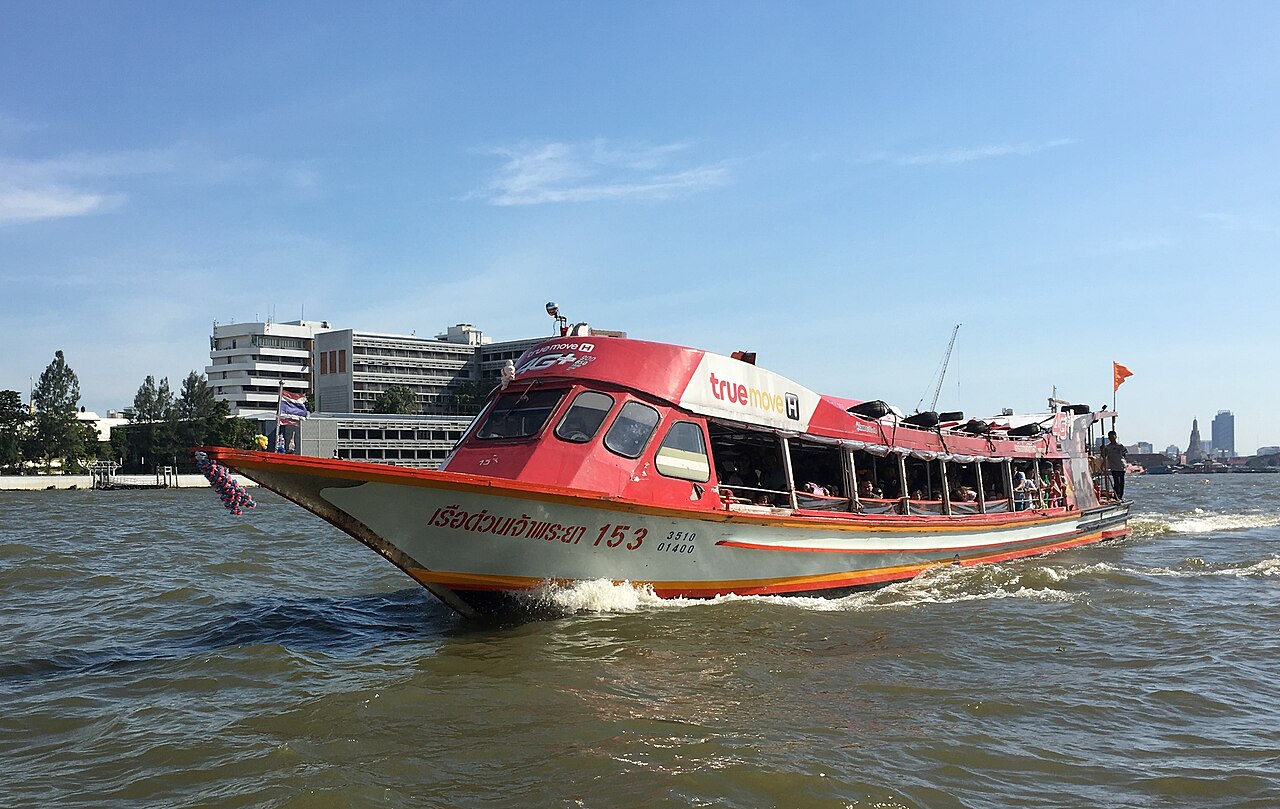
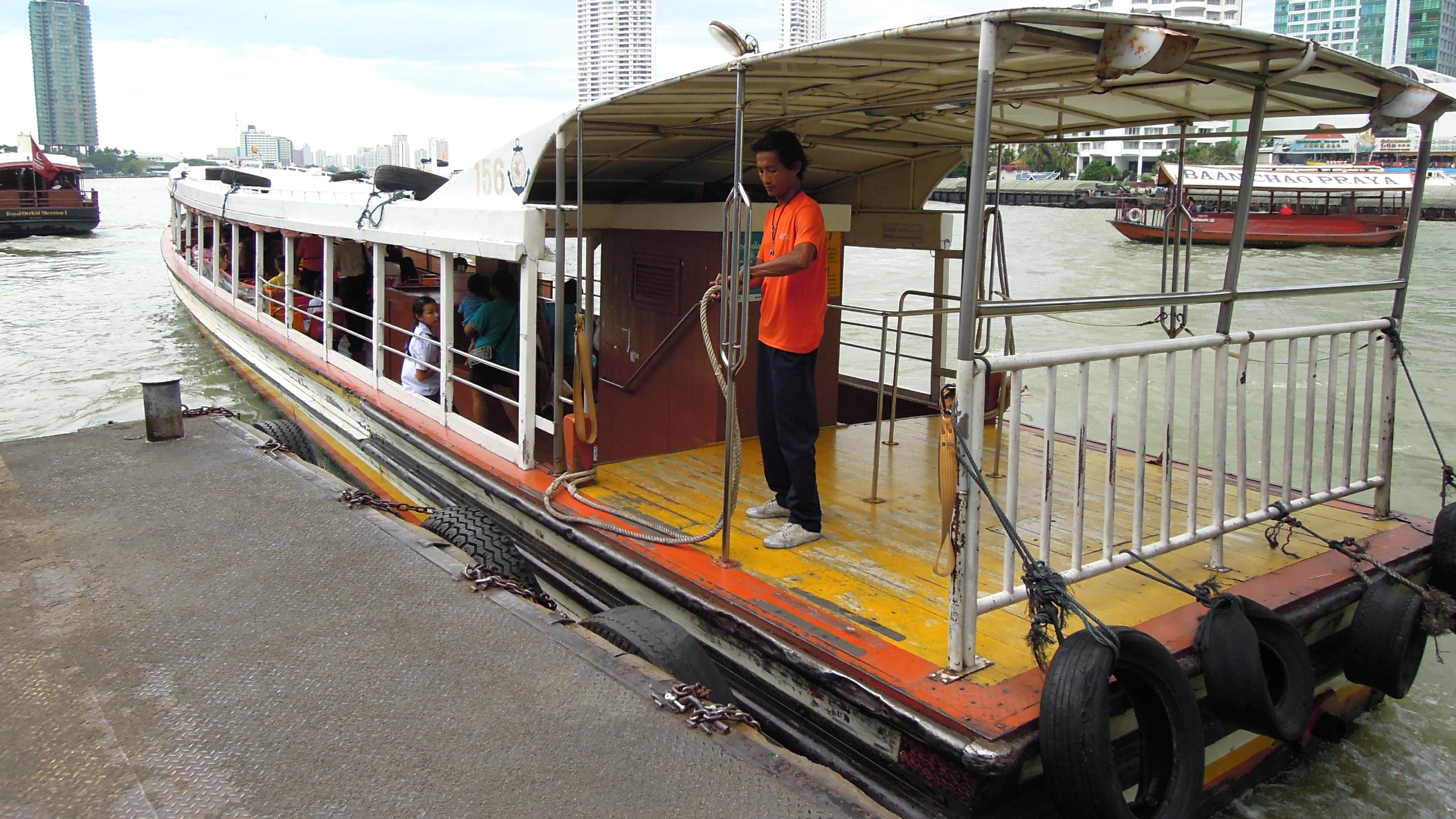
The Chao Phraya is genuine public transport, not just a sightseeing cruise. The orange-flag express boat costs about ฿16 flat and calls at the piers that matter: Sathorn (connects to BTS Saphan Taksin), Tha Tien (Wat Pho), Tha Maharaj, and Phra Arthit (near Khao San Road) — skipping the old town's traffic entirely.
Cross-river ferries cost about ฿5 — that is how you hop from Tha Tien to Wat Arun. The Khlong Saen Saep canal boats (about ฿10–20) run via Pratunam, close to the Jim Thompson House — rough around the edges but genuinely fast. Every pier and flag colour is covered in the Chao Phraya boat guide.
The orange-vested riders waiting at the mouth of every soi are the transport Bangkok residents use daily. They are ideal for short hops, deep sois, and gridlock that cars cannot move through. Short soi runs cost about ฿10–30, longer rides from ฿50 up; many stands post a price board — if not, agree on the fare before you get on.
The honest note: ask for a helmet every time (it is the law), keep your bag tight, and if you are not used to riding pillion in Bangkok traffic, start with short soi runs only — GrabBike is the app alternative with the price shown upfront.
Good news here: Google Maps works fully in Thailand — no VPN, no replacement map app needed. Its BTS/MRT/ARL directions are generally reliable, though boat and bus data is patchy and drive-time estimates can be optimistic in heavy traffic. Two apps genuinely earn a place on your phone.
Use it to plan BTS/MRT/ARL journeys; it handles interchanges and station exits well. Turn on the traffic layer and check how red the roads are before choosing between a train and a car — on a Friday evening, the train wins almost every time.
Cars, motorbikes, food delivery, and in-app card payment in one place. Install it and link a card before you fly so you can book from day one — it works across Thailand, not just Bangkok.
If you want to try the city buses or track boats live, locals use the ViaBus app — but for a first trip, rail + boats + Grab covers nearly everything. And if this is your first time in Bangkok and you want the full picture before you land, start with the Bangkok first-timer guide.
If there is one preparation that pays off, it is this: on your first day, sort out the ticket for whichever system your hotel sits on. Staying along the BTS? Get a Rabbit card at any station ticket office. Near the MRT? Try tapping your contactless credit card at the gate. Either way, every remaining morning of the trip skips the ticket-machine queue. And if you have not booked yet, choosing a base within walking distance of a station helps more than almost any other decision — see where to stay in Bangkok for first-timers.
One more thing, said plainly: rush hour is real — 7:30–9:00 and 17:00–19:30 the BTS gets seriously packed, especially between Siam and Asok, where you may wait two or three trains before squeezing on. With luggage or kids, shifting outside those windows makes life much better. Basic etiquette locals follow: queue along the arrows on the platform, let passengers off first, no eating or drinking past the gates, and leave the priority seats for monks, the elderly, and pregnant passengers.