Home Bangkok Bangkok Food Guide Thailand About
Wherebest  ›  🌏 Asia  ›  🇹🇭 Thailand  ›  Bangkok  ›  Yaowarat Food Guide
Thailand · Bangkok Chinatown · 2026

One Night on Yaowarat
An Hour-by-Hour Chinatown Food Crawl

Bangkok's Chinatown wakes up after 5 pm. This guide turns the chaos into a simple seven-stop timeline — from a legendary noodle shophouse to a final bottle of fresh pomegranate juice — with honest notes on which queues are worth it and why Monday is the wrong night.

Before You Go

How to eat Yaowarat in a single evening

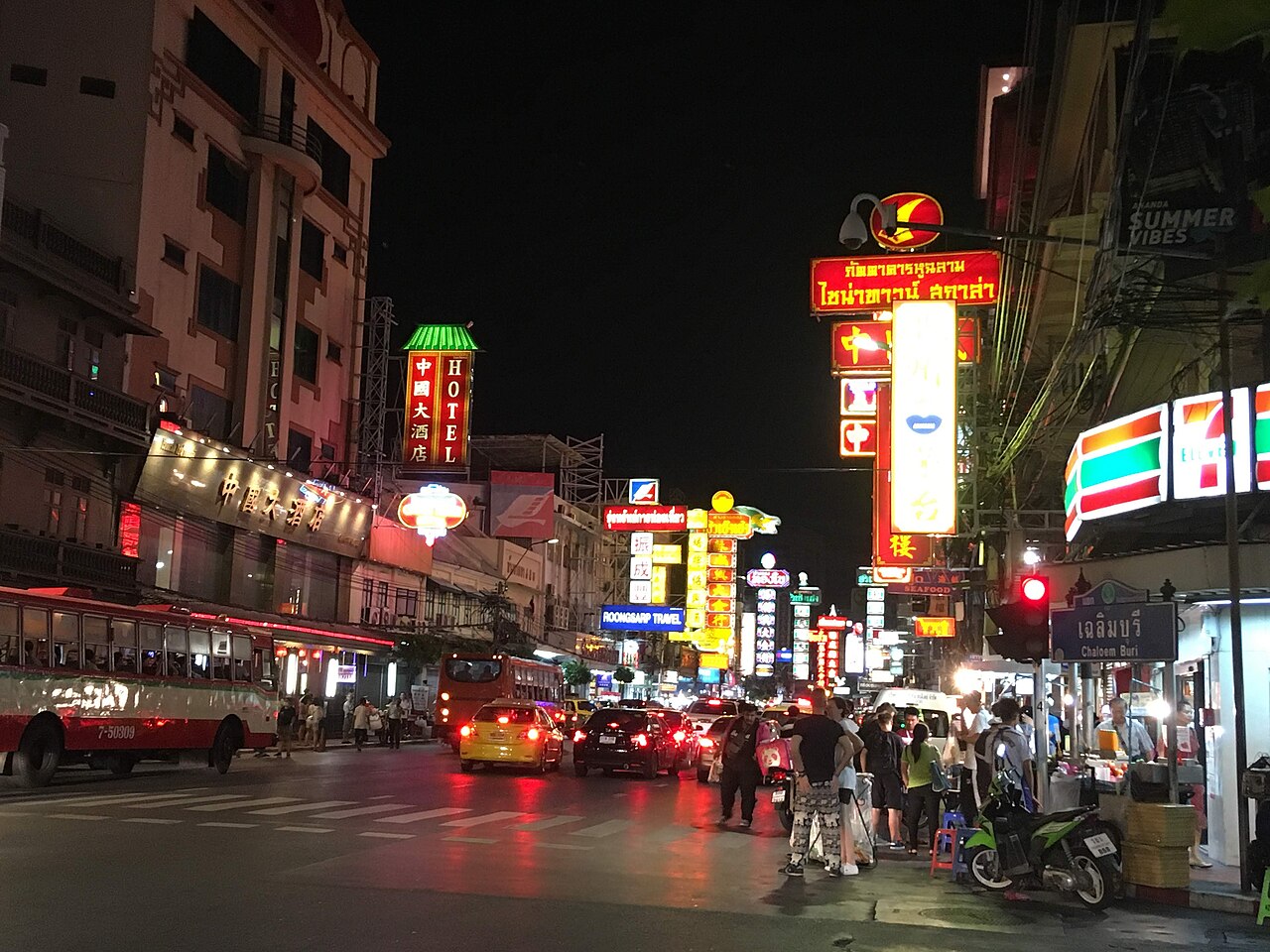
By day, Yaowarat Road is a strip of gold shops and herbal pharmacies. After five in the evening it turns into Bangkok's most famous eating street: charcoal smoke drifting between red-and-gold neon signs, folding tables claiming the pavement, and queues forming outside stalls that have been doing one thing well for decades. The food here is Thai-Chinese heritage cooking — kuai jap, roasted chestnuts, braised everything — served fast and cheap. This page arranges it all into one walkable timeline from 5:30 pm to around midnight, so you never have to guess where to start.

Getting here is easy since the MRT's Wat Mangkon Station opened in 2019 — the platform is a few minutes' walk from the action. This guide covers eating only. For the temples, Sampheng Lane and the daytime side of the neighbourhood, read our Yaowarat Chinatown guide alongside it; for the city-wide picture of what to eat, start with the Bangkok food guide.

The 7-Stop Timeline

Evening to midnight, hour by hour

Ordered by the time you should arrive at each stop — start around 5:30 pm, finish near midnight

🍜 1
Shophouse Institution · Since 1960
5:30 pm · Nai Ek Roll Noodle
นายเอ็ก · Peppery kuai jap · Yaowarat Road near Soi 9 · MRT Wat Mangkon Exit 1

Step off the MRT at Wat Mangkon and your first stop is a few minutes away. Nai Ek Roll Noodle (นายเอ็ก) has been ladling out kuai jap — a clear, aggressively peppery broth with soft sheets of rolled rice noodle — since 1960, and has held a Michelin Bib Gourmand listing for several years running. Order it with the crispy pork belly, which many regulars rate among the best in the neighbourhood, and with or without the offal that traditionally comes in the bowl; the kitchen cleans it meticulously, but you can ask for pork only.

Arriving at 5:30 pm puts you ahead of the dinner rush, and even when the queue builds, tables turn over quickly. If cheap Michelin-listed street food is your thing, we've collected the city's best in our Bangkok Michelin street food guide.
MRT: Wat Mangkon, Exit 1, about 5 min on foot
Cost: roughly ฿60–100 per bowl
Hours: morning until around midnight (check before going)
Payment: cash is safest
The pepper is real: the broth runs hot in the white-pepper sense, not the chilli sense. If that worries you, ask for "prik thai noi" — less pepper. Nobody minds.
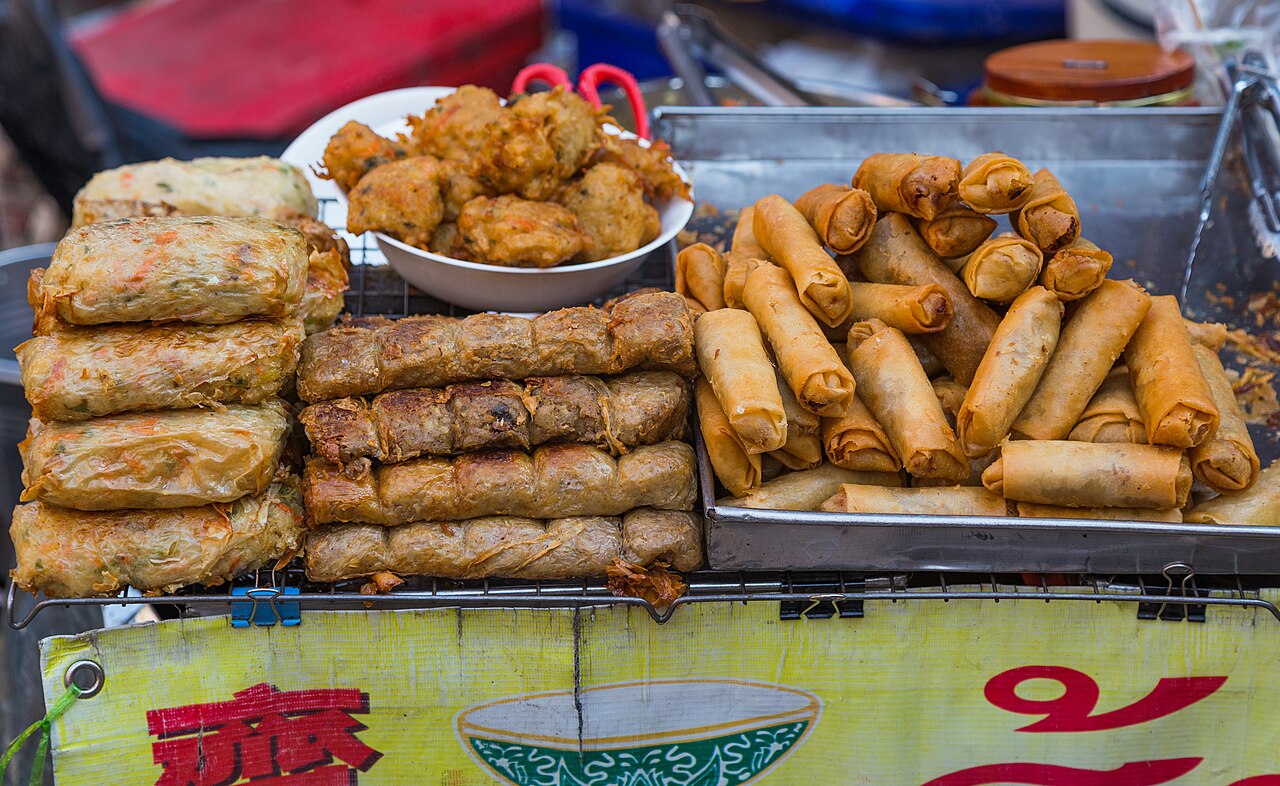
Fried spring rolls and battered snacks stacked on a street cart on Yaowarat Road 2
Walking Food · Early Evening
6:30 pm · Roasted Chestnuts + Fried Snacks
เกาลัดคั่ว · Sand-roasted chestnuts · all along Yaowarat Road

Leave the noodle shop and walk the main road. Every block or so a sweet, faintly smoky smell cuts through the traffic — that's the roasted chestnut stalls, a Yaowarat trade going back decades. Some still toss the chestnuts by hand through hot black sand in huge woks; others have switched to rotating drums. Either way you get a warm paper bag of easy-peeling, sweet-fleshed chestnuts to carry down the road. They're sold by weight, with prices moving by season and size — figure roughly ฿100–200 a bag, and more stalls appear in the cool season at the end of the year.

The same stretch is dotted with fried things worth a detour: spring rolls, chive cakes, battered bites at a few baht each. Pick the carts where the oil looks clean and the trays empty fast.
Where: stalls scattered along Yaowarat Road
Cost: chestnuts roughly ฿100–200/bag · fried snacks ฿10–40
Hours: evening until late
Payment: cash
Ask before they weigh: chestnuts are priced by weight and the rate moves with the season. Ask the per-bag or per-100g price before the scoop goes in — it saves confusion at the till.
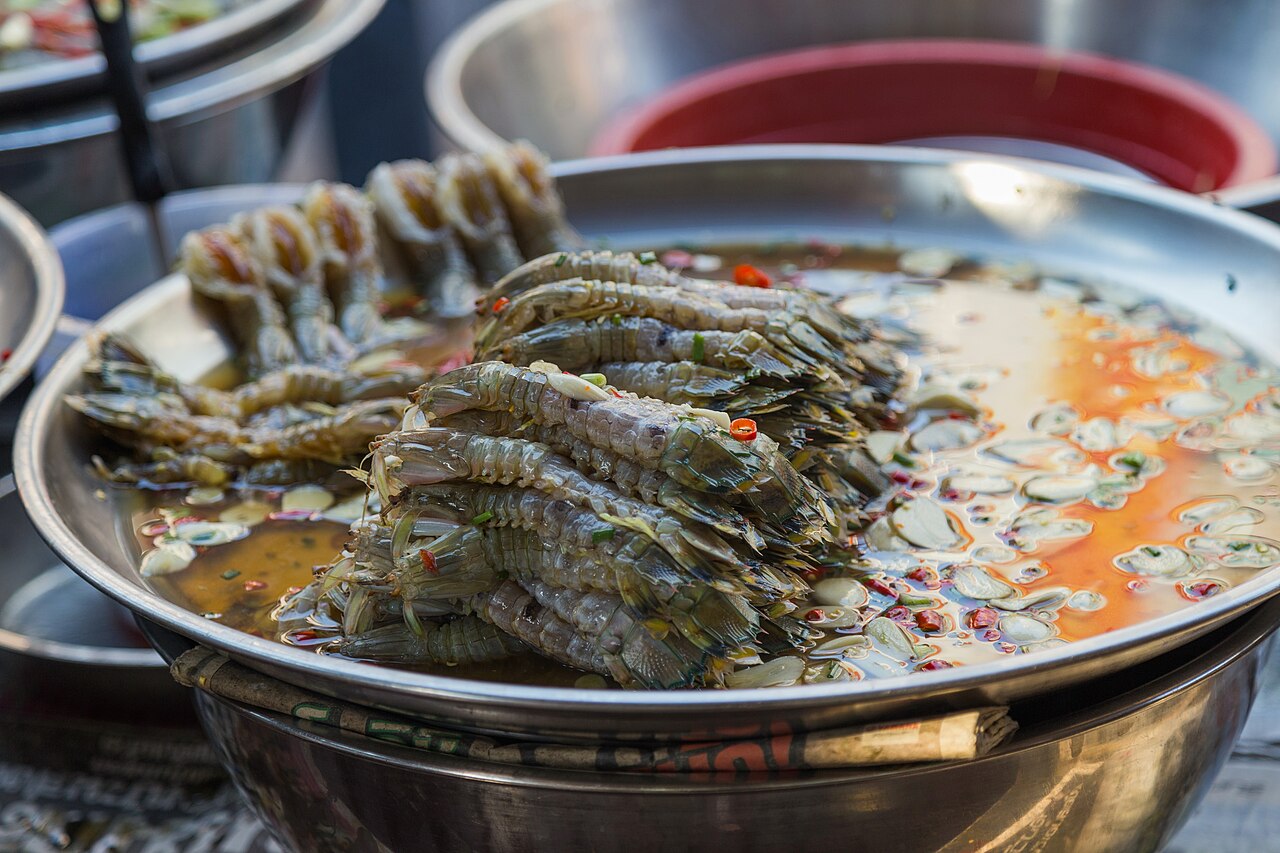
Mantis shrimp in spicy seafood marinade displayed at a Yaowarat Road street stall 3
Tourist Queue · Pavement Tables
7:00 pm · T&K Seafood — The Main Event
ที แอนด์ เค ซีฟู้ด · Corner of Yaowarat Road × Soi Phadung Dao · the green-shirt team

Around 7 pm the road hits full volume, and the corner of Soi Phadung Dao is one of its loudest points. T&K Seafood — the crew in green shirts — spreads folding tables across the pavement while charcoal grills pump out smoke you can smell from half a block away. Nearly every table orders the same things: charcoal-grilled prawns, curry-fried crab, blanched cockles and oyster omelette. Across the street, a rival seafood house in red shirts has been competing with them for years; the two corners together are one of the defining images of the road, and either side gives you much the same night.

Honestly: this is probably not the best seafood in Bangkok, and it isn't the cheapest. What you're paying for is dinner at a folding table under neon, with woks clanging a metre away — and that experience is why people keep coming back. The queue from 7 to 9 pm gets long, especially on weekends; arrive earlier or later and you'll sit much faster.
MRT: Wat Mangkon, about 5–8 min on foot
Cost: dishes roughly ฿100–300 · prawns/crab by weight · roughly ฿400–800/person
Hours: evening until late (check before going)
Payment: cash / PromptPay (ask at the counter)
Check prices before ordering: seafood is charged by weight at that day's market rate, especially the big river prawns. A quick price check first means no surprises on the bill.
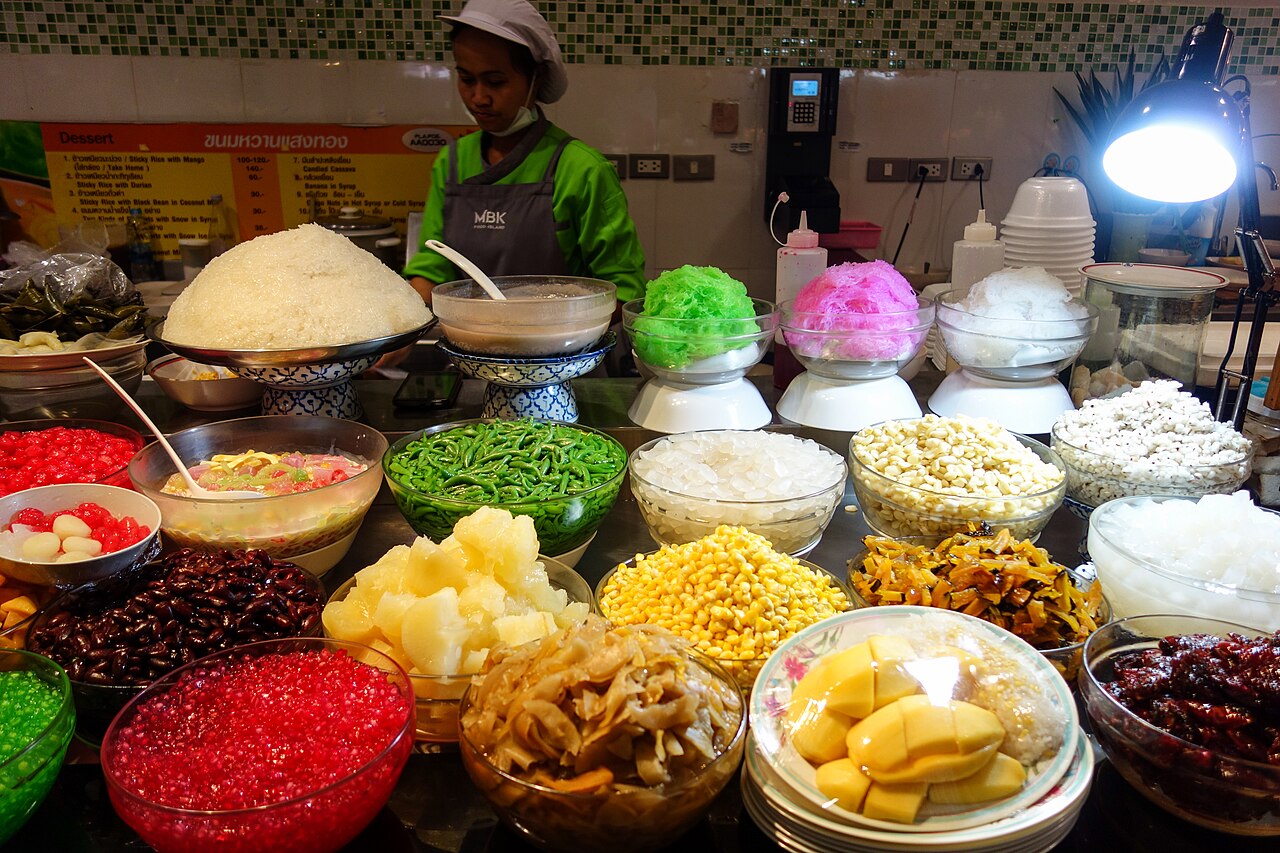
A Thai dessert counter with green lod chong noodles and colourful toppings (dish illustration) 4
Dessert Break · Closes Early
8:30 pm · Lod Chong Singapore
ลอดช่องสิงคโปร์ · Charoen Krung Road, a few minutes off Yaowarat · serving since around 1961

Time for a break from the savoury run. Cut through to Charoen Krung Road and you'll find a dessert shophouse that has been serving one thing since around 1961: lod chong — chewy pandan-green rice-flour noodles in sweet, salted coconut milk over ice. The name is a story in itself: the shop stood in front of the old Singapore Cinema, customers started calling the dessert "lod chong Singapore", and the name outlived the cinema by decades.

The noodles here are springier than the version you'll meet elsewhere in Thailand, and a cup costs roughly ฿30–50, with optional jackfruit on top. Eat it at the shopfront — it lands exactly when the first half of the crawl starts catching up with you.

Where: Charoen Krung Road (3–5 min walk from Yaowarat Road)
Cost: roughly ฿30–50 per cup
Hours: daytime until around 9–10 pm (check before going)
Payment: cash
Don't save it for last: this shop tends to close earlier than the street carts around it. Slotting it mid-crawl, like here, is safer than planning it as your 11 pm finale.
🍞 5
The Longest Queue on the Road
9:30 pm · The Charcoal Toast Stall
ขนมปังเจ้าอร่อยเด็ด · charcoal-grilled toast · mid-Yaowarat (look for the longest queue) · evenings

Back on Yaowarat Road, from about 9 pm one queue stands out from all the others. It belongs to Jao Aroi Det (ขนมปังเจ้าอร่อยเด็ด) — the charcoal toast stall that has become one of the road's signature stops. Thick slabs of soft bread are grilled over charcoal until the edges char, then loaded with your choice of pandan custard (sangkhaya), butter and condensed milk, or chocolate. Slices run roughly ฿20–35, so order a few flavours and share.

Straight talk: it's ordinary toast made very, very well. Whether it justifies a 30–60 minute wait depends on the night's queue and how much you love dessert. If the line looks brutal, skipping it is a perfectly respectable decision.
Where: on Yaowarat Road — the landmark is the longest queue in sight
Cost: roughly ฿20–35 per slice
Hours: evening until sold out · closed some days (check before going)
Payment: cash
Verify the spot: street stalls move and rest days change. If this stall is the main reason you're coming, check its latest pinned location and opening days before you set out.
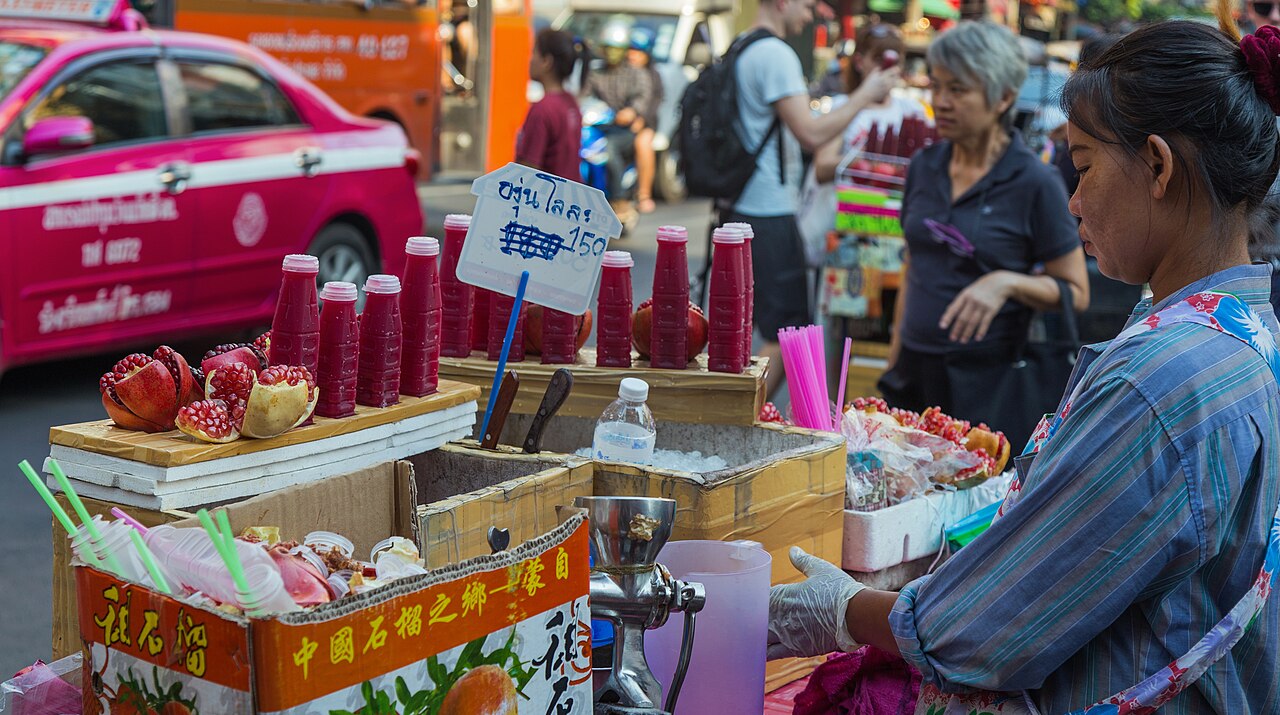
Bottles of freshly squeezed pomegranate juice lined up at a Yaowarat street cart 6
The Last Lap
10:30 pm · Pomegranate Juice, Fruit & Durian
น้ำทับทิมคั้นสด · fruit carts along the whole road · open late

On the slow walk back towards the MRT, watch the kerb. Rows of deep-red bottles of freshly squeezed pomegranate juice are one of Yaowarat's classic sights — pressed right at the cart, small bottles for pocket change, larger ones roughly ฿50–150 depending on season and size. After a night of charcoal smoke and fried snacks, it's exactly the right thing.

In durian season, carts of ready-to-eat durian appear along the road for a maximalist finish — prices follow the season and the grade, so ask first. Bagged cut fruit on ice is everywhere year-round and travels well back to the hotel.
Where: carts along the road, densest mid-stretch
Cost: pomegranate juice roughly ฿50–150 · fruit/durian seasonal
Hours: evening until late
Payment: cash
Ask the price first: fruit and juice prices genuinely swing with the seasons, and not every cart posts them. One quick question before you pick up a bottle saves any awkwardness.
Yaowarat Road at night with neon gold-shop signs and traffic 7
Plan B · Mondays & Rainy Nights
If You Land on a Monday (or It Pours)
Plan B · shophouses + Wat Mangkon · check before leaving your hotel

The single most common Yaowarat mistake: Bangkok's street carts take Mondays off, following the city's street-cleaning schedule. On Monday nights the road looks strangely empty — most carts gone, shophouses carrying the evening alone. If Monday is your only window, aim for places with a real storefront, like Nai Ek or the seafood corners at Soi Phadung Dao, which usually open as normal (still worth re-checking that day).

Rain works the same way: duck into a shophouse, wait it out, then resume — most Bangkok downpours hit hard and pass quickly. And if you want something to do while you wait, Wat Mangkon Kamalawat temple delivers the full Chinatown atmosphere a short walk away. The complete walking route through the neighbourhood is in our Yaowarat Chinatown guide.

Mondays: most carts off · many shophouses still open
Rain: shelter in a shophouse, wait it out, continue
Time needed: full crawl 4–5 hrs · short version 2 hrs
Tip: pick Tuesday–Sunday if you have the choice
Every shop rests differently: closing days vary by shop and change without notice. Before making a dedicated trip for one specific place, confirm its latest opening days.
Quick Tips

Know before you join the queue

💵
Carry small cash
Carts run on cash. PromptPay QR is spreading, but it usually needs a Thai bank account — don't count on it as a visitor. ฿20, ฿50 and ฿100 notes work best; a ฿1,000 note is hard to break at a busy stall.
🚇
Take the MRT, not a car
Wat Mangkon Station, Exit 1, is a 3–5 minute walk from Yaowarat Road. Parking nearby is scarce and evening traffic crawls. Last trains run around midnight — check the MRT app before staying late.
🗓
Avoid Mondays
Bangkok street vendors pause every Monday for street cleaning, and most Yaowarat carts vanish with them. Shophouses stay open, but the street loses half its life. Go Tuesday–Sunday if you can.
🕖
Arrive before the peak
5:30–6:00 pm is the sweet spot to start — queues are short and the light is good. The crush runs 7–9 pm, and Saturday nights get so dense the crowd barely moves.
🍢
Order small, share everything
This timeline has six or seven eating stops. Fill up at stop one and you'll never meet the dessert. Small plates, shared bites, eat while you walk — that's how you finish the route.
🌧
Pack a small umbrella in rainy season
From May to October, Bangkok rain likes early evening. It usually hits hard and stops fast — shelter in a shophouse, give it twenty minutes, and the carts roll their tarpaulins back as soon as it passes.
Frequently Asked

Questions people ask before the crawl

How do I get to Yaowarat (Bangkok Chinatown)?
Take the MRT Blue Line to Wat Mangkon Station, Exit 1, then walk about 3–5 minutes to Yaowarat Road. It is far easier than driving — parking near the road is scarce and evening traffic is heavy. Heading back, the last trains leave around midnight; double-check the time in the MRT app if you plan to stay late.
What time should I arrive, and when do the stalls open?
Most carts set up around 5–6 pm, and the road peaks between 7 and 9 pm — which is also when queues are longest. Arriving around 5:30 pm works best: start with a shophouse like Nai Ek, then work through the street carts as the evening builds. Weeknights are noticeably calmer than Saturdays and Sundays.
Is Yaowarat really closed on Mondays?
Mostly, yes. Bangkok's street vendors pause every Monday for the city's street-cleaning schedule, so most carts on Yaowarat Road disappear. Many shophouse restaurants still open as usual, but the street feels much quieter than on other nights. If you can choose your night, avoid Monday — and re-check opening days for any specific place you have your eye on.
How much money should I budget for a Yaowarat food crawl?
Grazing from cart to cart, roughly ฿300–600 per person covers a full evening — a bowl of kuai jap runs about ฿60–100, charcoal toast ฿20–35 a slice, lod chong ฿30–50 a cup. A sit-down seafood dinner with grilled prawns or curry-fried crab pushes the night to ฿500–1,000+ per person. All prices are approximate and can change.
Do vendors take cards, or do I need cash?
Cash is still king, especially at the carts. Carry small notes — ฿20, ฿50 and ฿100. A growing number of vendors accept PromptPay QR payments (Thailand's bank-transfer system), but it usually requires a Thai bank account, so visitors should not rely on it. Credit cards work only at some of the larger shophouse restaurants.
Is there anything for vegetarians or people who avoid pork?
Yes, with some picking and choosing — Yaowarat's most famous dishes lean heavily on pork and offal. Safe bets are the seafood tables, roasted chestnuts, fresh fruit, pomegranate juice and desserts like lod chong. And during the Vegetarian Festival around October, the entire road fills with yellow flags and hundreds of meat-free stalls — the single best time of year to eat here without meat.
Klook

Yaowarat Food Tours
with a guide who knows which queue is worth it

If you have one night and zero appetite for guesswork, Bangkok Chinatown food tours on Klook run most evenings — a local guide walks you through five or six tastings and fills in the neighbourhood's history between bites. From roughly ฿900–1,800 per person.

Browse Bangkok Chinatown Food Tours on Klook →
Wherebest is a Klook affiliate partner — we may earn a commission when you book through our links, at no extra cost to you.