A city where new cafés open almost monthly and Thai baristas have taken home international competition titles. Century-old shophouses by the Chao Phraya have become roasteries, and quiet sois have turned into entire coffee neighbourhoods — Bangkok takes its coffee far more seriously than most visitors expect.
Picture an old shophouse on Charoenkrung Road — worn plaster, folding wooden doors, the Bangkok of another era outside. Then one door opens onto a café: a gleaming espresso machine, a roasting drum behind the counter, a barista pouring a filter with full attention. Outside it is still the old city. Inside it is specialty coffee good enough to stand next to anything in Tokyo or Melbourne. This has been happening all over Bangkok for the past decade.
Bangkok's coffee scene has grown fast and grown serious. Several Thai baristas have won titles at international competitions, Thai beans from the northern highlands are roasted with real care by roasters right in the city, and shops like Factory Coffee made the signature drink a normal part of ordering coffee here. Prices stay friendly too — most specialty cups run around ฿80–180, cheaper than in most of the world's big coffee cities.
What makes Bangkok especially easy to love is that its cafés cluster into neighbourhoods, each with its own personality — old buildings and galleries in Charoenkrung, leafy sois in Ari, sleek design-led spaces in Thonglor, temple views in the old town. That is why this guide is organised by zone, with BTS, MRT and boat directions for each one. A good area usually holds several good cafés, so even if one has closed or moved, you'll still be spoilt for choice.
Where old shophouses and riverside warehouses have become Bangkok's most characterful cafés
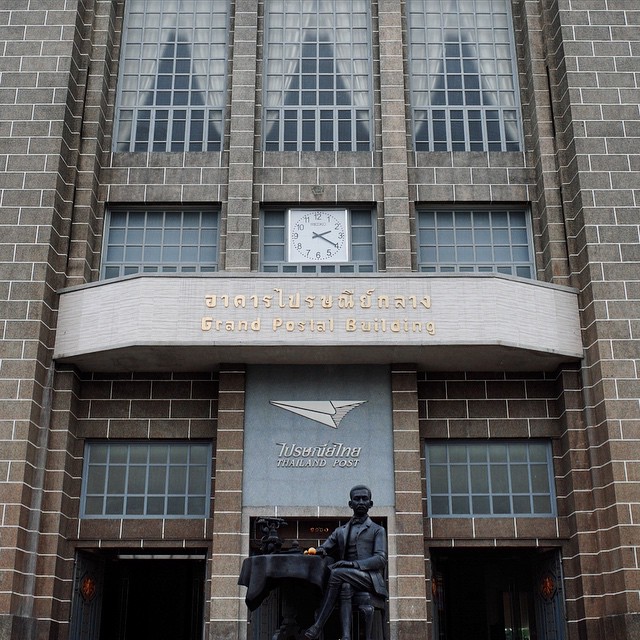
Charoenkrung was Bangkok's first Western-style paved road, laid out in the reign of King Rama IV, which is why its sides are lined with old shophouses, riverside warehouses and early landmarks like the Grand Postal Building — today home to TCDC, the Thailand Creative & Design Centre. Over the past decade the area has grown into the city's creative district: old warehouses became galleries and community spaces like Warehouse 30, and century-old shophouses became coffee roasteries, restaurants and design studios.
For coffee lovers this is the best place to start, because it holds both serious bean-focused operations like Sarnies, set inside an old shophouse, and small cafés tucked down lanes and along the river. Walk off the main road into the alleys of Talat Noi, spot a coffee-cup sign in front of an old house — and go in. That is the most enjoyable way to discover this neighbourhood.
Bangkok is huge — walk one zone at a time and each gives you a different mood, and every zone here is reachable by train or boat
The city's riverside creative district — century-old shophouses, converted warehouses, the galleries of TCDC and street art through the lanes of Talat Noi. Cafés here range from serious roastery operations in old buildings, like Sarnies, to tiny riverside spots where you watch the boats go by. The pace is slow and an afternoon disappears easily.
The neighbourhood Bangkokians crown as the café-hopping capital — Soi Ari and the small sois around it are full of cafés in converted old houses, with little gardens and home-baked pastries. You can drift from one shop to the next all day, and most are comfortable for laptop work too.
The design-led side of Bangkok's café scene — The COMMONS on Thonglor Soi 17 is a community mall gathering good coffee and good kitchens in one place, with Roast as the neighbourhood regular, while Hands and Heart on Sukhumvit 38 is the minimalist shop black-coffee drinkers keep mentioning. The zone for a day that needs both good coffee and a proper brunch.
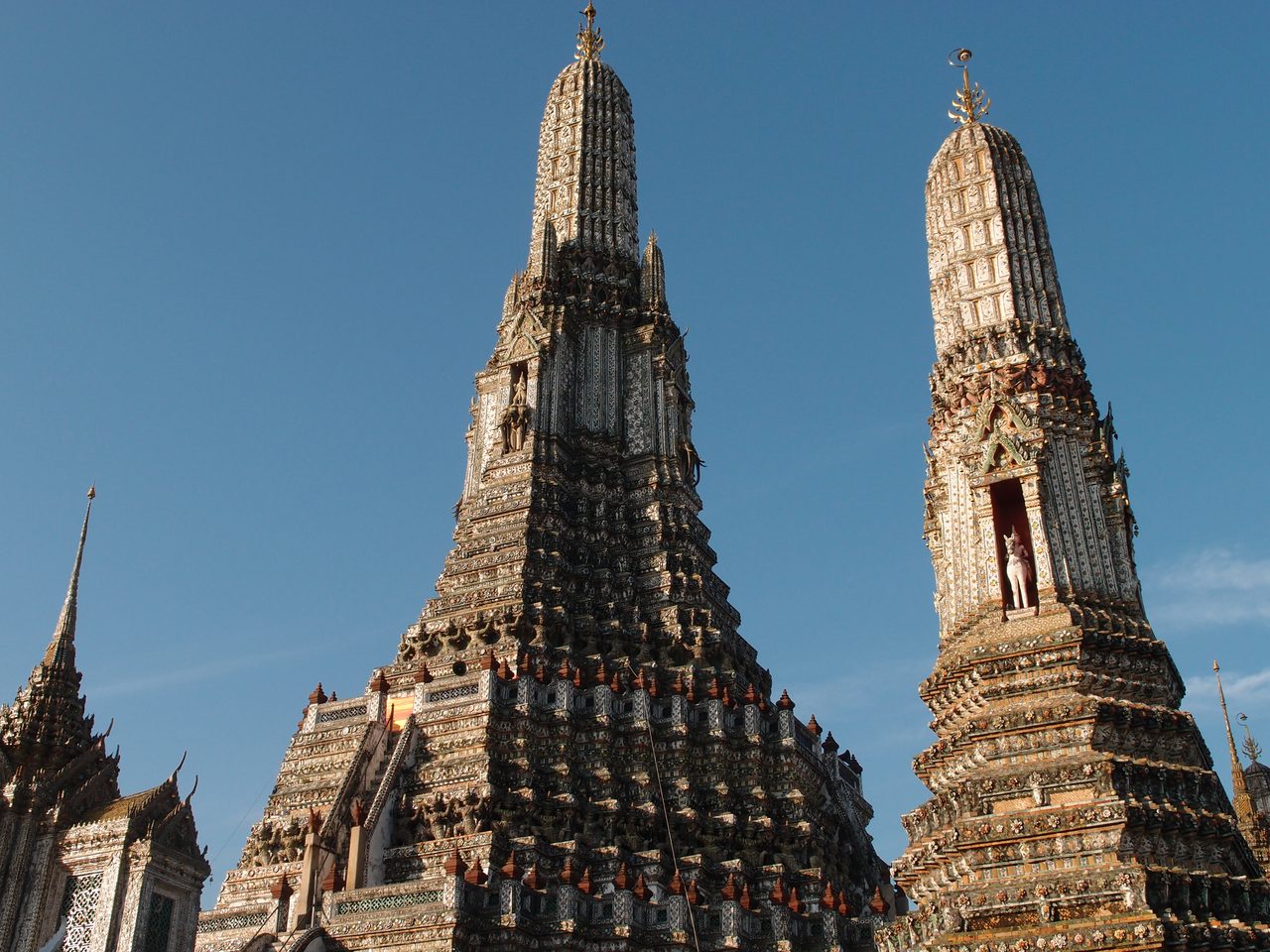
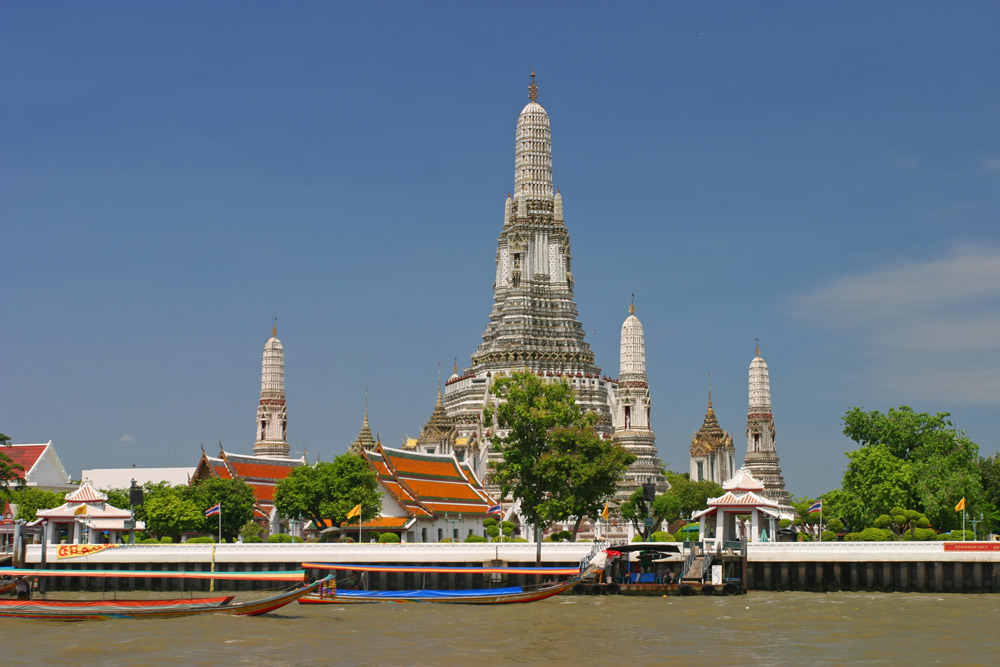
Coffee with a view found nowhere else — several cafés around Tha Tien look straight at the spires of Wat Arun from their upper floors, and Blue Whale near Wat Pho serves the blue butterfly-pea latte people queue to photograph. Temple-walk first, café after; the late-afternoon light here is lovely.
A zone people cross town for because of one shop — Factory Coffee, whose barista team has collected a string of Thai competition titles, anchors this side of the city. Smaller cafés dot the sois of Ratchathewi around it, and the Airport Rail Link to Suvarnabhumi leaves from right here, which makes this an ideal last cup before a flight home.
Coffee is good here because the drinkers are office workers who drink it every single day — Rocket Coffeebar on Sathorn Soi 12 was one of the pioneers of Bangkok's brunch-café wave, and more cafés sit in office towers and side sois across Silom–Sathorn. Weekday mornings hum; weekends turn quiet and surprisingly relaxed.
Walk the murals, stop at cafés in old houses — one afternoon covers both the art and the coffee
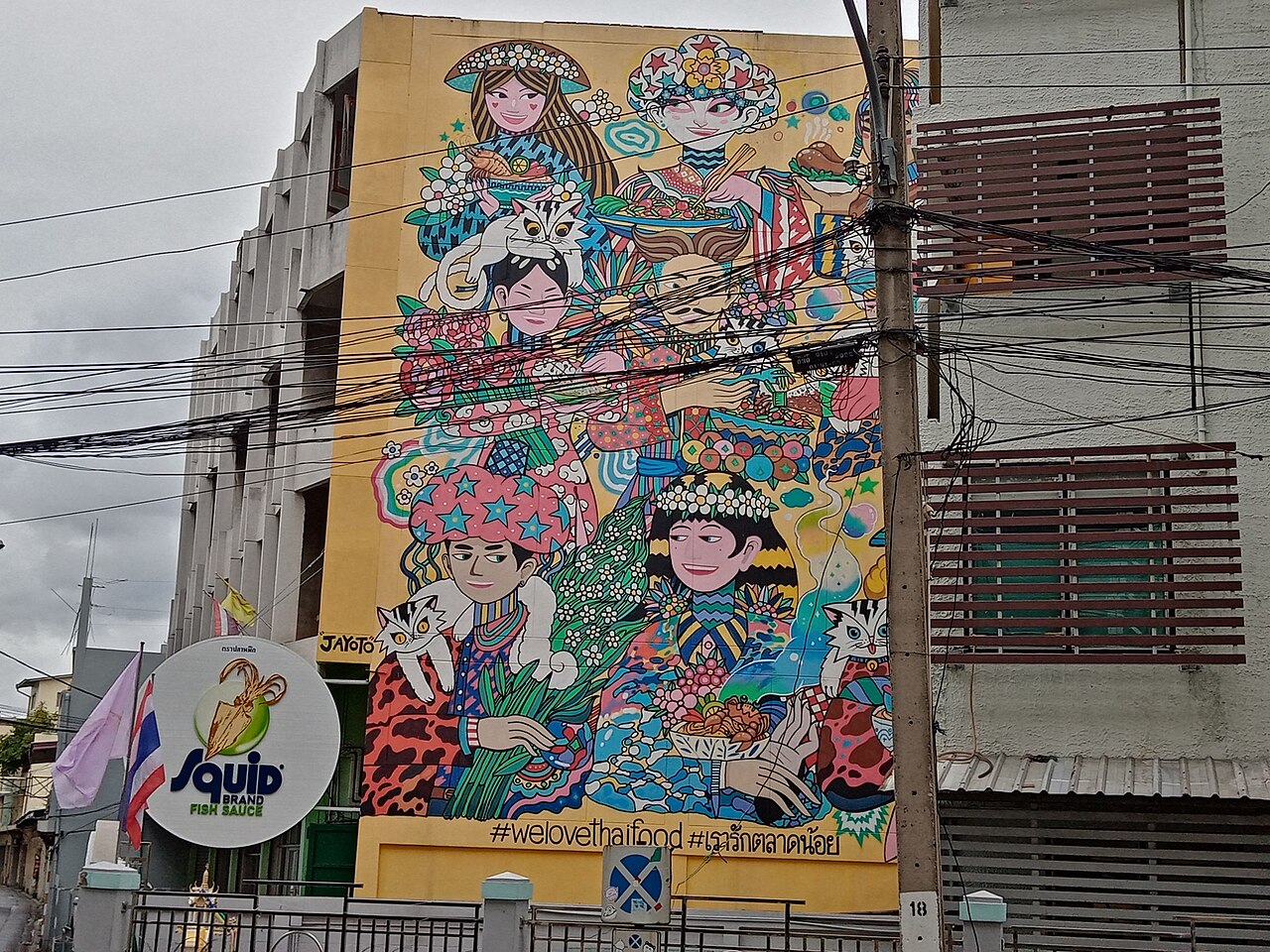
Talat Noi is an old Thai-Chinese community on the Chao Phraya, just south of Yaowarat. Its narrow lanes hold timber houses, shrines, machine-repair shops and piles of old engine parts that have become accidental photo sets. In recent years artists have painted street art across walls throughout the quarter — small pieces hiding around corners and murals covering whole buildings — and Talat Noi has turned into a weekend walking spot Bangkok locals come to photograph themselves.
The best way to do it is to walk slowly and stop for coffee in stages — small cafés in old houses are scattered through the lanes, most pouring good cups at around ฿80–160, with window seats made for watching lane life go by. Keep walking south along Charoenkrung and you reach TCDC and Warehouse 30, completing an afternoon of art, old buildings and good coffee. For anyone who loves both, this is honestly one of Bangkok's best afternoons.
These names have genuine reputations — but cafés change fast, so always check current branches and hours before you go
One of the first names anyone in Thai coffee mentions. The shop's barista team has collected a string of titles from Thai barista competitions, and the rotating signature menu runs from fruited coffees to drinks that play with temperature and texture. If you drink coffee with full attention, this is one of the best places in the city to start. It's a few minutes' walk from BTS/ARL Phaya Thai — an easy stop before the train to the airport.
One of the shops that built Bangkok's brunch-café culture into what it is today. House-roasted coffee comes with genuinely well-made full plates. The branch people talk about most sits in The COMMONS on Thonglor Soi 17, with another over at EmQuartier. Weekend queues get long in the late morning — come on a weekday or in the late afternoon for an easier seat.
A pioneer that opened before the word specialty was on every Bangkok menu. The original branch on Sathorn Soi 12 keeps a minimal Nordic feel, pairing serious coffee with Scandinavian-style breakfasts. Sathorn office workers drop in from early morning, and the room isn't large — at peak hours expect a short wait.
A Singapore-born café brand that chose a roughly century-old shophouse in Charoenkrung for its Bangkok home, keeping the original plaster walls and timber through the whole building. It roasts its own beans and serves big brunch plates — come for a late-morning meal, then spend the rest of the day walking the creative district. About 10–15 minutes on foot from BTS Saphan Taksin, or arrive by river boat for the scenic route.
A minimalist black-and-white shop that black-coffee drinkers in Bangkok mention as often as any. The focus is filter and espresso from carefully chosen beans, Thai and imported. The room stays calm and quiet — better for reading or working alone than for a big group. From BTS Thong Lo it's a short walk into Sukhumvit Soi 38.
A small shop in an old shophouse near Wat Pho that became internationally known for one drink — the blue butterfly-pea latte, its colour fading through layers so photogenic that people queue for the picture. It tastes better than it needs to, too. The three-storey room is a sweet rest stop between Wat Pho and Wat Arun, a few minutes' walk from MRT Sanam Chai.
Wat Arun, across the river from Tha Tien — a fine way to end an old-town café day. Several cafés here see the spires from their upper floors, and Blue Whale sits steps from Wat Pho.
Paying: Most Bangkok cafés take cash and Thai PromptPay QR as their main methods. Mid-size cafés and anything inside a mall usually accept credit cards too, but some small independents are cash-and-QR only — if you're visiting from abroad, carry some cash as a backup. Most specialty cups run around ฿80–180.
Timing and days off: Weekday mornings are quiet almost everywhere, with seats to spare. On weekends, Ari, Thonglor and Talat Noi fill up from late morning through the afternoon. The thing that catches people out most: many cafés take a weekly day off, and it varies from shop to shop — before a special trip to any one café, check its latest hours on Google Maps or Instagram so you don't arrive at a closed door.
Getting around: Every zone in this guide is reachable by BTS, MRT or the Airport Rail Link without touching a car. Bangkok traffic at rush hour is heavy enough to ruin an evening, so skip taxis in the late afternoon when you can. And for the Charoenkrung–Talat Noi and Tha Tien sides, the river is the fun way in — the Chao Phraya Express Boat runs right along the riverside café quarter (see our Chao Phraya boat guide).
The Chao Phraya on the old-town side — the Tha Tien, Talat Noi and Charoenkrung café quarters are linked by boat and the MRT
Basing yourself by the river on the Charoenkrung–Sathorn side, or along Sukhumvit around Thonglor–Ekkamai, puts good cafés within a few minutes' walk