Zone by zone, with the honest verdict
Ordered from where Bangkok locals genuinely eat to the hyped zones you should size up before you go
 1
1
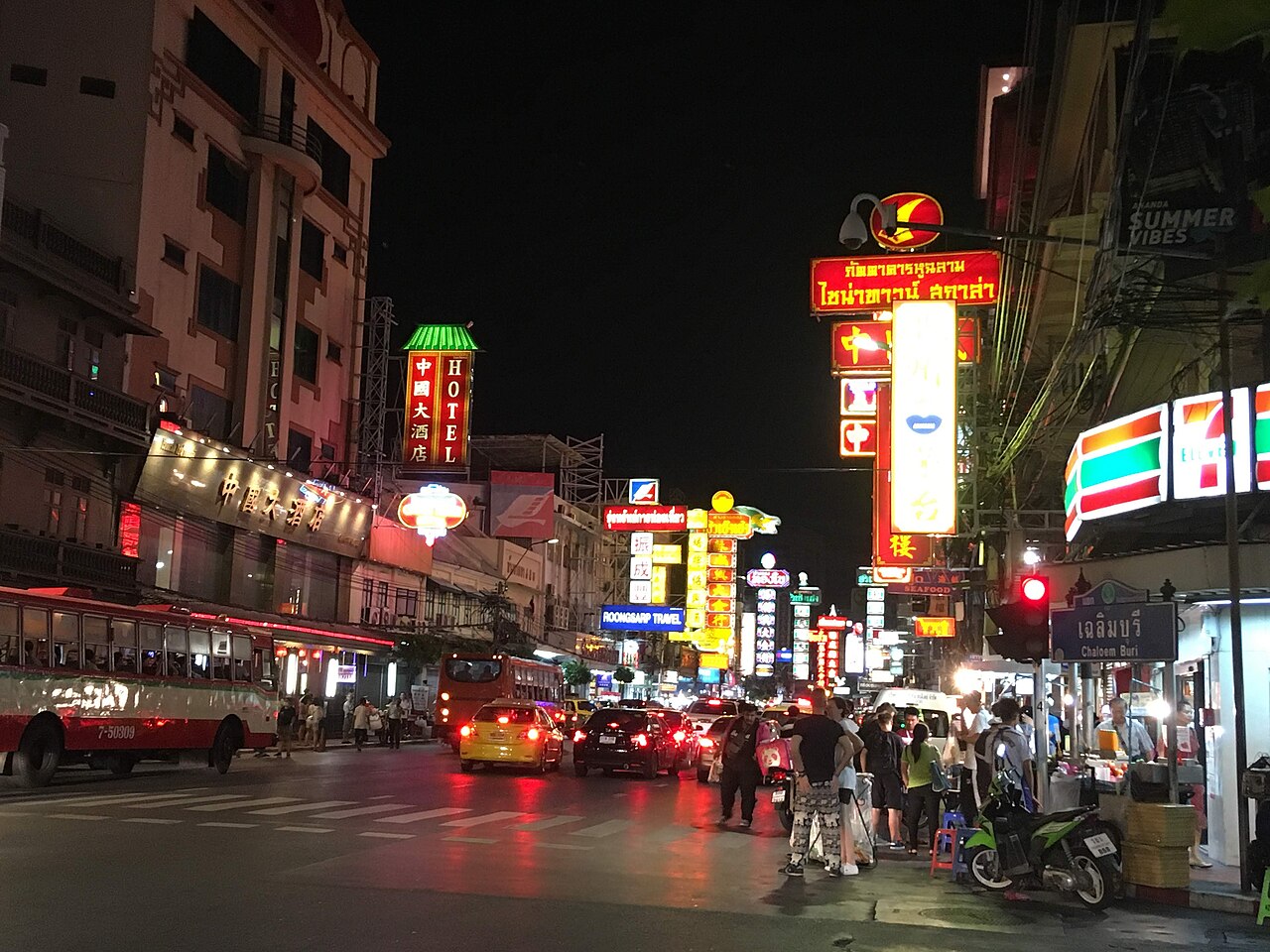
If you get one street food night in Bangkok, spend it here. Yaowarat is one of the world's oldest Chinatowns, and it changes shape every evening: by day it's a road of gold shops and Chinese herb dealers, and at sunset hundreds of carts roll out along both sides of the road and into the sois, with woks firing and queues forming by early evening.
The names people genuinely line up for: Nai Ek Roll Noodle (นายเอ็ก) — peppery clear-broth kuai jap with crispy pork, an institution of the street; T&K Seafood — the corner shophouse at Soi Phadung Dao with the green-shirted crew, grilled prawns, curry-fried crab and blanched cockles; then dessert from the kerb — roasted chestnuts, charcoal-grilled toast and warm soy milk. For an hour-by-hour plan of this one street, we've written a separate Yaowarat food guide.
 2
2
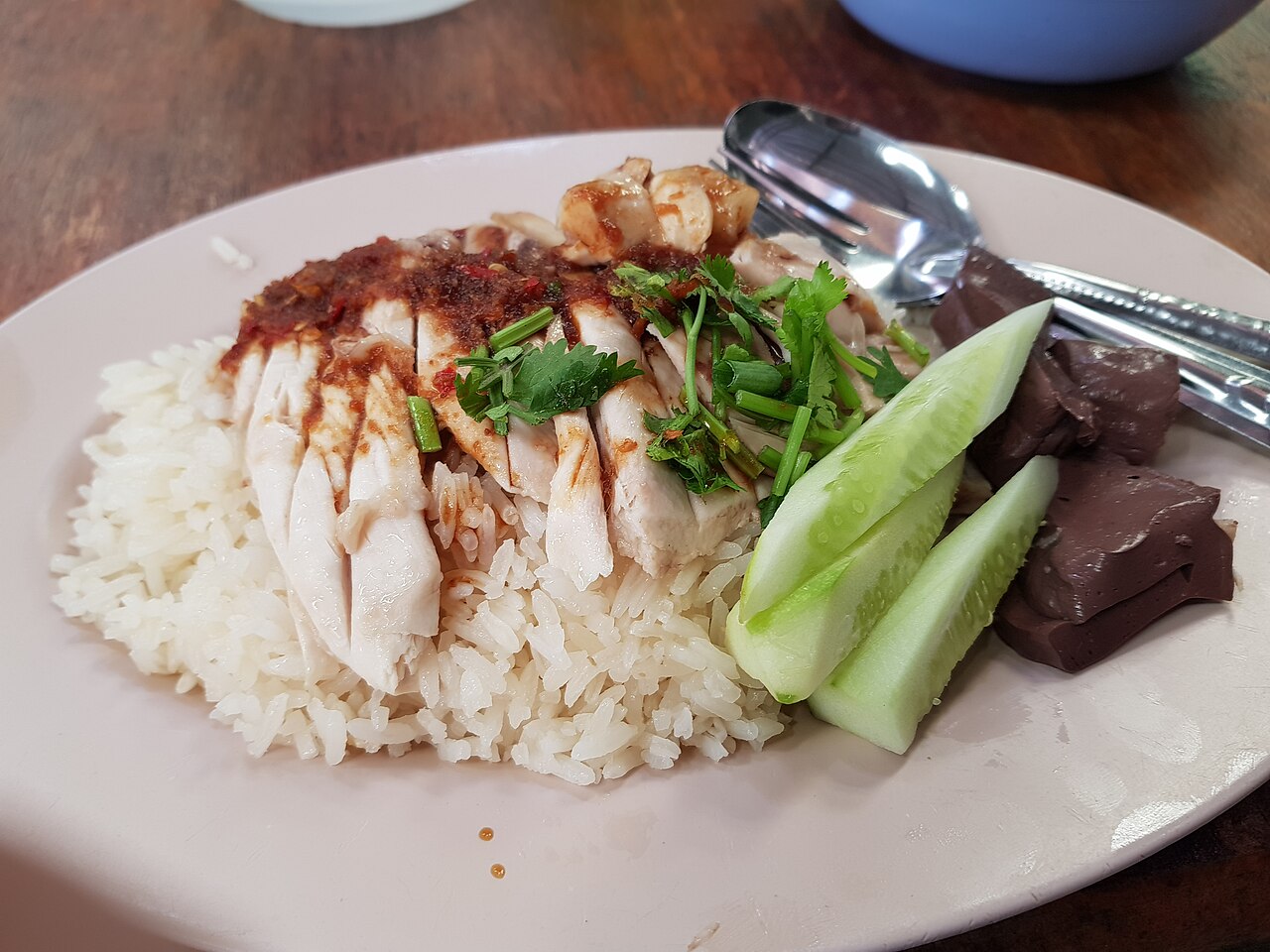
Pratunam is Bangkok's garment-market district, but for eaters it comes down to one shop: Go-Ang Kaomunkai Pratunam (โกอ่าง), the decades-old chicken rice specialist that has held a Michelin Bib Gourmand for several years running. The staff's pink shirts are so famous the place is simply called "the pink chicken rice shop."
The appeal is how plain it is: tender poached chicken over rice cooked in the poaching broth, a gingery fermented-bean sauce with a chilli kick, and a bowl of hot winter-melon soup on the side. A plate runs about ฿50-70 (prices can shift — check the board). The queue moves fast because tables turn over quickly, and solo diners slot in easily. Afterwards, walk it off in the Pratunam market maze or the snack stands around the Platinum mall area.
Want to see how Bangkok actually does lunch? Come to Silom at 11:30 on a weekday. Soi Convent and the lanes around it fill with office workers queuing at carts and shophouse kitchens — noodle soups, curry-on-rice, pork satay smoking up the whole soi, som tam, bagged fruit, and iced coffees carried back to the desk in a plastic sling.
The charm here is that none of it is staged for visitors — prices are chalked in Thai, and nearly every customer works within a few blocks. Plates run ฿40-80, and you'll eat well for about ฿100. There are fewer kerbside carts than a decade ago after city sidewalk clean-ups, but the shophouse kitchens and inner sois still hum every working lunchtime. If you're staying in Silom or Sathorn, consider this your canteen for the whole trip.
 4
4
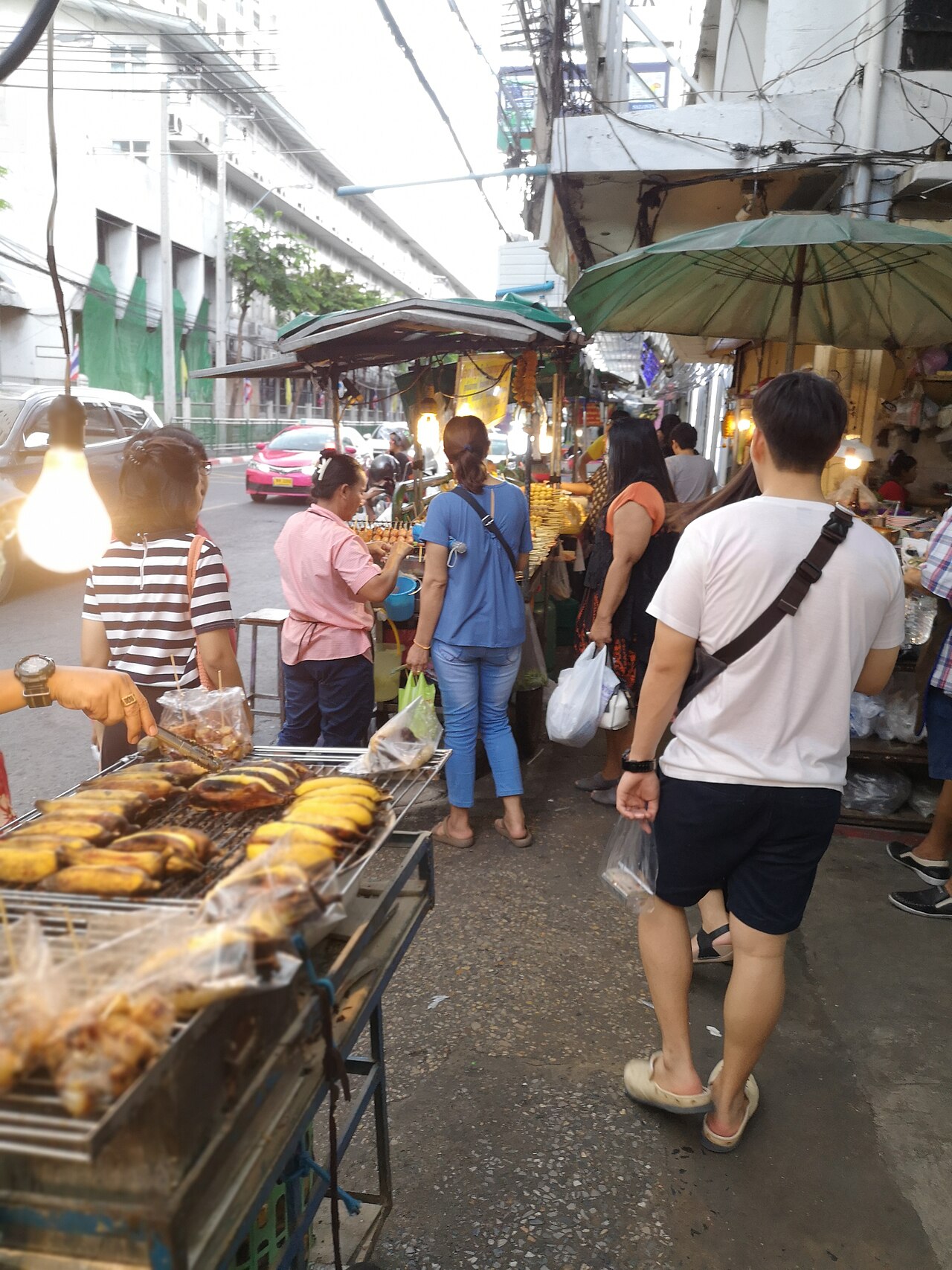
Wang Lang is one of the most overlooked eating zones in the city — a web of market lanes pressed against Siriraj Hospital on the Thonburi bank. Its core customers are medical students, nurses and hospital visitors, which tells you everything: the food has to be good, fast and genuinely cheap or it doesn't survive. Noodles, curry-on-rice, fried snacks, grilled bananas, fruit and old-style Thai sweets, with something new to try every ten steps, mostly ฿20-60 an item.
Half the fun is the journey: take the Chao Phraya Express Boat or a cross-river ferry from the old-town bank to Wang Lang pier — river breeze, a view toward Wat Arun on the way — and walk straight off the jetty into the lanes. Boat routes are simple once you've seen them laid out: our Chao Phraya boat guide covers it.
 5
5
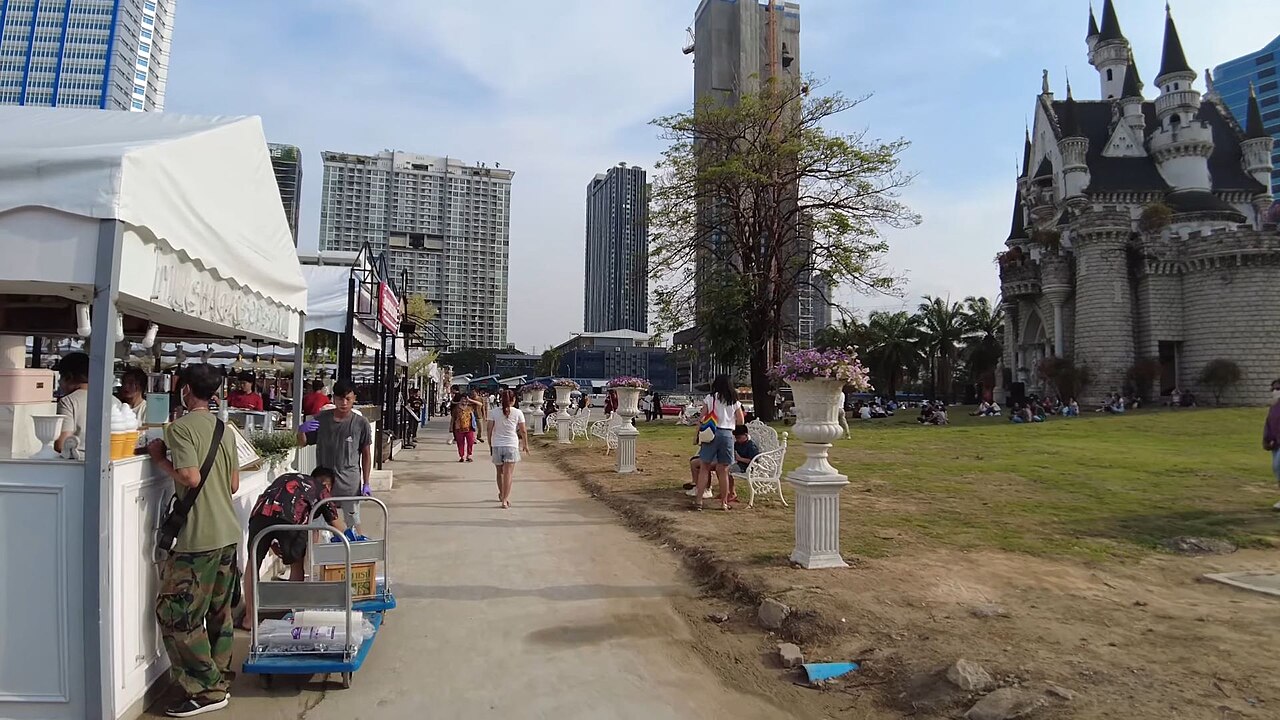
If you've seen those drone shots of rainbow-coloured market tents, that was the old Train Night Market Ratchada — and it's gone. But the same operators reopened as Jodd Fairs, now the busiest night market of Bangkok's current era, with the main site in the Rama 9 area and a second branch, DanNeramit, set around an old amusement-park castle.
Photogenic food is the draw: leng saap (เล้งแซ่บ) — a volcano of stewed pork spine under fiery lime broth; smoking pork barbecue pans; flame-torched cheese; seafood buckets; and dessert stands in every direction. You can graze all evening for ฿300-500 a head. The mood is half market, half hangout — drink stalls, live music, and vintage clothes mixed in with the food.
Let's be straight: Banthat Thong is a phenomenon that rose extremely fast in the last few years — an old sporting-goods street beside Chulalongkorn University reborn as a food strip where young Bangkok queues for dessert cafés, tea stands, exploding fishball noodles, sizzling seafood pans and whatever shop is trending on social media that month.
What you should know before going is that this strip turns over fast. Shops open, close and change hands constantly, and the hype has run hot and cold — last year's viral counter may simply not be there today. That's why we're not pinning specific shops here as sure things: five minutes checking recent reviews of the places you're eyeing will save you a wasted trip. If you enjoy university-district energy, mid-range prices and trying whatever's new, it's still a fun evening.
To eat morning the way Bangkok does, get up a little early and head into the old town. The institution here is On Lok Yun (ออน ล็อก หยุ่น), a shophouse breakfast room on Charoen Krung Road trading since 1933, near MRT Sam Yot. The classics: kai krata — eggs in a small pan with Chinese sausage and pork; sangkhaya toast with coconut custard; and old-style dark coffee or tea. The stone tables and wooden chairs have never been renovated into blandness, and the queue starts early, especially on weekends.
The other breakfast every neighbourhood runs on: a hot bowl of jok (โจ๊ก) — rice porridge with pork meatballs and egg, scattered with ginger — plus patongko fried dough dipped in condensed milk and warm soy milk. Jok stalls appear at dawn almost everywhere, including around Yaowarat, which in the morning turns into a quiet coffee-and-dim-sum street — a different planet from its night self.