One weekend, two very different Bangkoks — the temples and river of the old royal island on Day 1, the markets, malls and rooftops of the modern city on Day 2. This plan maps the route, the timing and every BTS, MRT and boat connection across 48 hours.
Picture it first — on the first morning you're standing at the white wall of the Grand Palace at 8:30, the light still soft, the tour groups not yet arrived. Twenty-four hours later you're at a rooftop bar or a plastic table on Yaowarat Road, looking at the city you just walked glowing in front of you. Bangkok is genuinely too big for two days, but its two essential faces — the old royal city on the river and the modern city along the BTS line — fit into 48 hours if you route them right.
This plan gives all of Day 1 to the old royal island at an unhurried pace (Grand Palace, Wat Pho, the ฿5 ferry to Wat Arun, a riverside finish) and all of Day 2 to the modern side — Chatuchak Market, Jim Thompson House, Siam or ICONSIAM, then Chinatown street food or a rooftop bar. You'll move by MRT, boat and BTS almost the whole way, which means almost no time lost to traffic. What this plan deliberately leaves out: every day trip — Ayutthaya, the floating markets, Bang Krachao. With more time, see the 3-day plan or 4-day plan; with less, there's a 1-day plan too.
The single most useful thing to check before you arrive: whether Day 2 of your trip lands on a weekend, because the full Chatuchak Market runs only on Saturday and Sunday — if you're here midweek, this plan has weekday alternatives built into Day 2 (Or Tor Kor Market or the khlong canal boat). For where to sleep, choose the old-town riverside or a BTS-connected base around Silom–Sathorn or Siam — see the where-to-stay guide.
Handle these three in advance and the two days run smoothly from the first morning.
The Grand Palace has the strictest dress code in Thailand — sleeved tops and trousers or skirts covering the knee (no tank tops, no shorts); trainers are fine. Wat Pho and Wat Arun apply the same standard a little more loosely. Bringing the right clothes beats queueing to borrow a cover-up at the gate. See the Grand Palace guide.
The core of Day 2's morning is Chatuchak, which runs in full only on Saturday and Sunday, roughly 9:00–18:00. If your dates fall midweek, use the weekday plan B built into Day 2. Watch Mondays too — many street-food stalls across the city take the day off. See the Chatuchak guide.
Ferries, express boats and street stalls run on cash — keep small notes handy. Install Grab (Southeast Asia's ride-hailing app) for evenings, and budget ฿17–62 per BTS/MRT ride. Just landed? See the airport transfer guide and the BTS & MRT guide.
The kingdom's holiest temple at opening time, a 46-metre Reclining Buddha, a ฿5 ferry across the river, late light on the porcelain prang, and a riverside table as Wat Arun lights up.
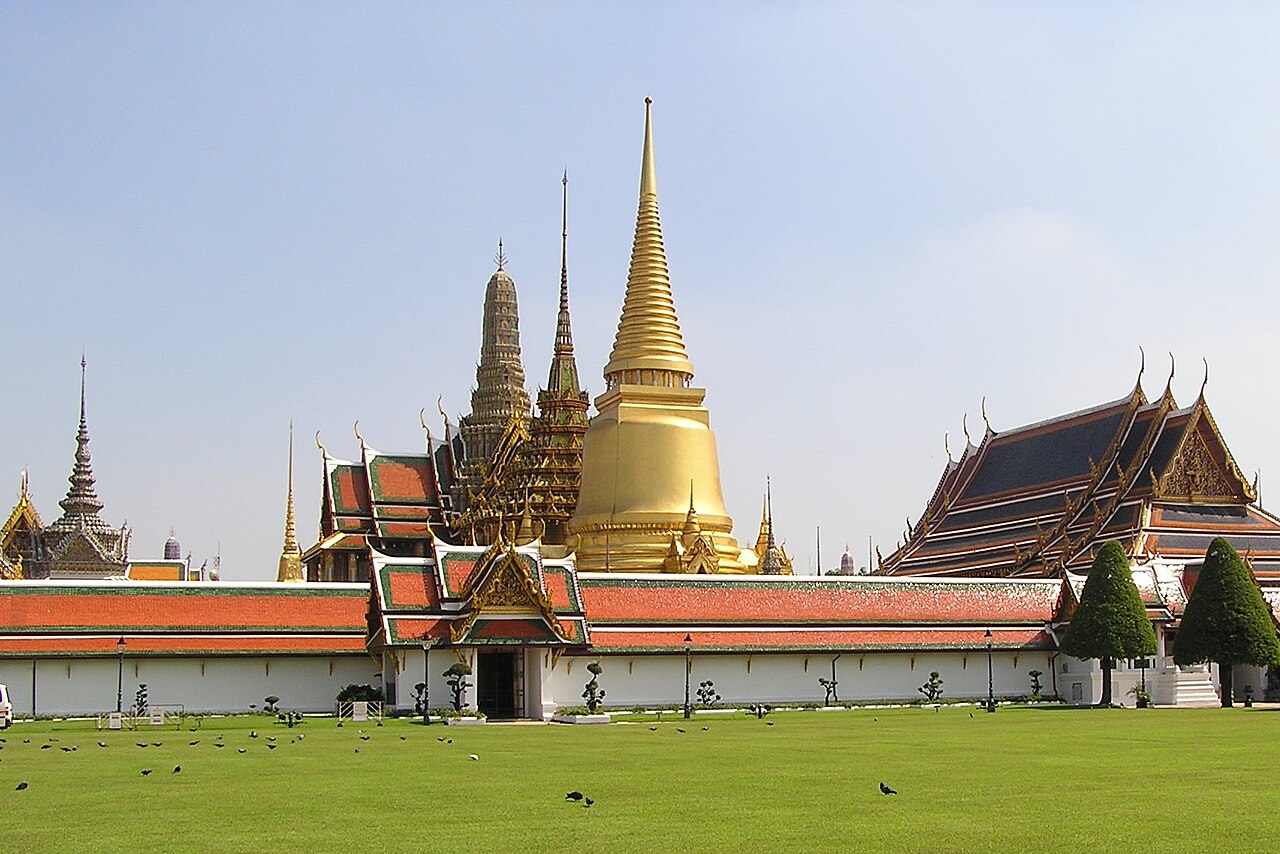
Start the way we'd tell a friend to — be at the palace gate for the 8:30 opening, when the light is soft and the crowds are thin and the golden spires stand against the morning sky with nobody in your shot. The Grand Palace and Wat Phra Kaew (Temple of the Emerald Buddha) is the one stop every first Bangkok trip should anchor on: the Emerald Buddha itself, five-metre guardian giants at the gates, and the Ramakien murals running the full length of the cloister. At an easy pace it takes 2.5–3 hours.
The dress code is the real first checkpoint — sleeved top, knees covered. And if anyone near the gate tells you "the palace is closed today" and offers a tuk-tuk to somewhere better, keep walking: it's the oldest scam in Bangkok. The palace opens daily (apart from occasional royal ceremonies) — trust only the actual ticket windows inside.
After lunch, walk into Wat Pho, home of the 46-metre Reclining Buddha — you walk its full length from the head to mother-of-pearl-inlaid feet, then drop coins into the 108 bronze bowls along the back wall (coin exchange ~฿20). Wat Pho is also the birthplace of traditional Thai massage: if your legs are complaining after the morning, the massage pavilions inside the temple charge about ฿300–500 per hour and you just walk in and sign up.
From Wat Pho it's a few minutes on foot to Tha Tien pier, where the cross-river ferry (~฿5) shuttles you over the Chao Phraya to Wat Arun. The prang — a tower studded with porcelain and seashells — looks good from the water and better from directly underneath. You can climb the steep stairs to the terrace (hold the rail); by late afternoon the light comes in low and the whole surface starts to glitter.
Take the ferry back to the Tha Tien side and find a riverside seat — this stretch has small rooftop bars and upper-floor restaurants facing the prang across the water. As the sky darkens, the floodlights on Wat Arun come on, and the sight of the golden tower floating on the dark river is the moment Bangkok wins a lot of people over. A riverside dinner runs about ฿150–600 per person; you don't need an expensive table to get the same view.
If you'd rather go bigger on the first night, this is the evening for a Chao Phraya dinner cruise — boats glide past Wat Arun and the lit-up old town, mostly departing from ICONSIAM or River City and lasting about 1.5–2 hours. Booking ahead on Klook usually beats the pier-side price. For every kind of boat on this river, see the Chao Phraya boat guide.
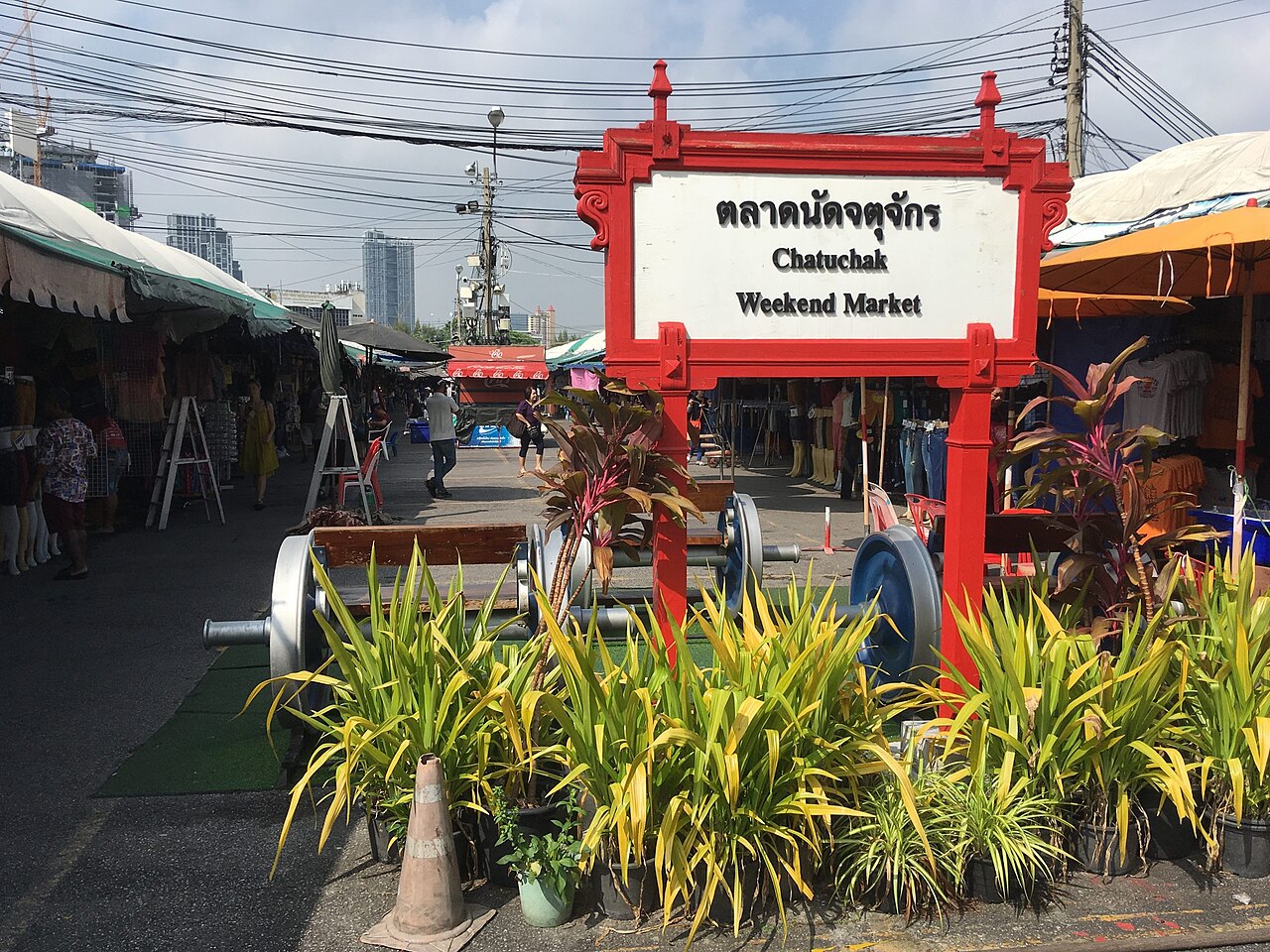
A morning at one of the world's biggest weekend markets (with an honest weekday plan B), an afternoon at a teak house in the city and a mall on the river, and an evening at a street-food table or on a rooftop.
If today is a Saturday or Sunday, the morning decides itself — it belongs to Chatuchak, often called the biggest weekend market in the world: around 15,000 stalls in ~27 sections selling vintage clothes, plants, ceramics, crafts and collectables, plus the coconut ice cream that's practically an entry ritual. Arrive as the market wakes around 9:00, while the air is still bearable, walk it for 2.5–3 hours, and retreat before midday when it turns hot and packed.
Here on a weekday? Honestly: don't go to Chatuchak — the full market runs weekends only, and midweek most stalls are shuttered (the plant section is the exception, trading Wednesday–Thursday). Plan B comes in two flavours. First, Or Tor Kor Market (ตลาด อ.ต.ก.) directly across the road — arguably the best fresh produce and fruit market in the city, open daily, with a food court worth your lunch. Second, skip the north side entirely and start the day on the khlong Saen Saep canal boat from Phanfa Leelard pier (near the Golden Mount) toward Pratunam, ~฿10–20 — a low-roofed commuter boat racing past the back porches of the city, a side of Bangkok most visitors never see. Get off at Hua Chang pier and you can walk to Jim Thompson House in about 10 minutes.
Start the afternoon at Jim Thompson House — six teak houses in a shaded garden on the Saen Saep canal, assembled in 1959 by the American who revived Thai silk for the world and then vanished without a trace in the Malaysian jungle in 1967. Entry is by guided tour only (~35 minutes, English tours run constantly), about ฿200, and the cool dark houses are an excellent escape from the afternoon heat. Coming from Chatuchak, ride the BTS from Mo Chit, change at Siam, and get off at National Stadium, exit 1 — Soi Kasemsan 2 is a 5-minute walk.
Mall option: from the house you can walk straight into MBK (connected to National Stadium station) — the upper-floor food court is the area's best cheap feed — then continue through Siam Square and Siam Paragon, where new cafés open faster than anyone can keep up. Shortlists live in the café guide and the food court guide.
River option: ride the BTS to Saphan Taksin, exit 2, and board the free shuttle boat at Sathorn pier (every ~10–15 minutes) across to ICONSIAM — its ground-floor Sook Siam zone recreates a floating market indoors with food from all 77 provinces, and the ~400-metre riverside promenade out front is timed nicely for the late light. Read up first in the ICONSIAM guide.
Option one is the classic: Yaowarat after 6 pm, when the whole street turns into an open-air kitchen — thick-broth kuay jab, dry rice porridge, roasted chestnuts, charcoal-grilled toast with heavy toppings, and shophouse restaurants holding Michelin recognition while still charging shophouse prices. Take the MRT to Wat Mangkon, exit 1, and you surface in the middle of it. Pick your stalls with the Yaowarat food guide and the Michelin street food list.
Option two — end the trip on a roof. Bangkok from above is as good as Bangkok from the kerb, and rooftop bars are scattered across Silom–Sathorn and along the river. Drinks run about ฿250–500; dress a notch smarter (many turn away shorts and flip-flops). Choose your tower from the rooftop bar guide and get up there half an hour before sunset.
These two days are already full, but if you walk fast and stay up late, here is what genuinely fits.
Still awake after the Day 1 riverside dinner? From Tha Tien it's a short walk or ride to Pak Khlong Talat, the flower market that never sleeps — mounds of marigolds, jasmine garlands and roses by the bundle at wholesale prices. Busiest in the small hours, but 8–9 pm already has the full atmosphere (MRT Sanam Chai is close).
Want to see the legendary backpacker strip once in your life? A ~10-minute Grab from Tha Tien lands you on Khao San Road — pad thai from screaming-hot woks, bars duelling over the sound system, and travellers from everywhere on one short street. A fitting nightcap to Day 1. See the Khao San guide.
If you pick Yaowarat for the last evening, arrive early for Wat Traimit (วัดไตรมิตร) — a solid-gold Buddha weighing about 5.5 tonnes that spent decades disguised under plaster. It sits at the Hua Lamphong end of Yaowarat Road, about a 10-minute walk from the food stretch. More in the Chinatown guide.
The old-town riverside (Tha Tien–Tha Maharaj) puts Day 1 on foot with the best atmosphere, but no trains nearby. Silom–Sathorn or Siam puts you on the BTS, which makes Day 2 easier — and from Saphan Taksin you can catch boats to both Tha Tien and ICONSIAM. Mid-range hotels run ฿1,500–3,000 per night. See the neighbourhood guide or browse top-rated hotels.
BTS and MRT cover nearly every stop in this plan at ฿17–62 per ride. Day 1 leans on boats instead — orange-flag express boat ~฿16, cross-river ferry ~฿5, khlong Saen Saep boat ~฿10–20. For evenings or rain, a Grab across town runs about ฿80–200. See the BTS & MRT guide and the Chao Phraya boat guide.
Malls and bigger restaurants take cards everywhere, but half of this plan lives in markets and on boats — carry small cash. Thai ATMs charge foreign cards a fee of about ฿220 per withdrawal, so take out larger amounts less often. All the first-trip basics are in the Bangkok first-timer guide.
| Category | Budget | Mid-range | Comfortable |
|---|---|---|---|
| Hotel (1 night) | ฿400–900 (hostel / guesthouse) |
฿1,500–3,000 (3–4 star) |
฿4,000–12,000+ (riverside / 5-star) |
| Food (3 meals/day) | ฿200–400 (street food / food courts) |
฿600–1,500 (known spots + one riverside meal) |
฿1,800–4,000+ (restaurants + rooftop drinks) |
| Transport / day | ฿70–150 (BTS/MRT + boats) |
฿250–500 (+ some Grab rides) |
฿600–1,200 (mostly Grab) |
| Admission (full 2-day trip) | ~฿1,200 (palace ฿500 + Wat Pho ~฿300 + Wat Arun ~฿200 + Jim Thompson ~฿200) |
~฿1,200 (same four tickets) |
฿1,200+ (+ dinner cruise ~฿1,000–2,000 if you take one) |
| Total for 2 days (est.) | ฿2,100–3,200 (~$60–90 USD) |
฿4,400–8,200 (~$120–230 USD) |
฿10,000–23,600+ (~$280–660+ USD) |
Exchange rate used: ฿36 ≈ $1 USD (rates drift) · Hotel cost counted as 1 night · Admission prices are the foreign-visitor rates and change occasionally — check before you go · For the full cost playbook see the Bangkok trip budget guide.