Every stop in detail with boats, trains and tips
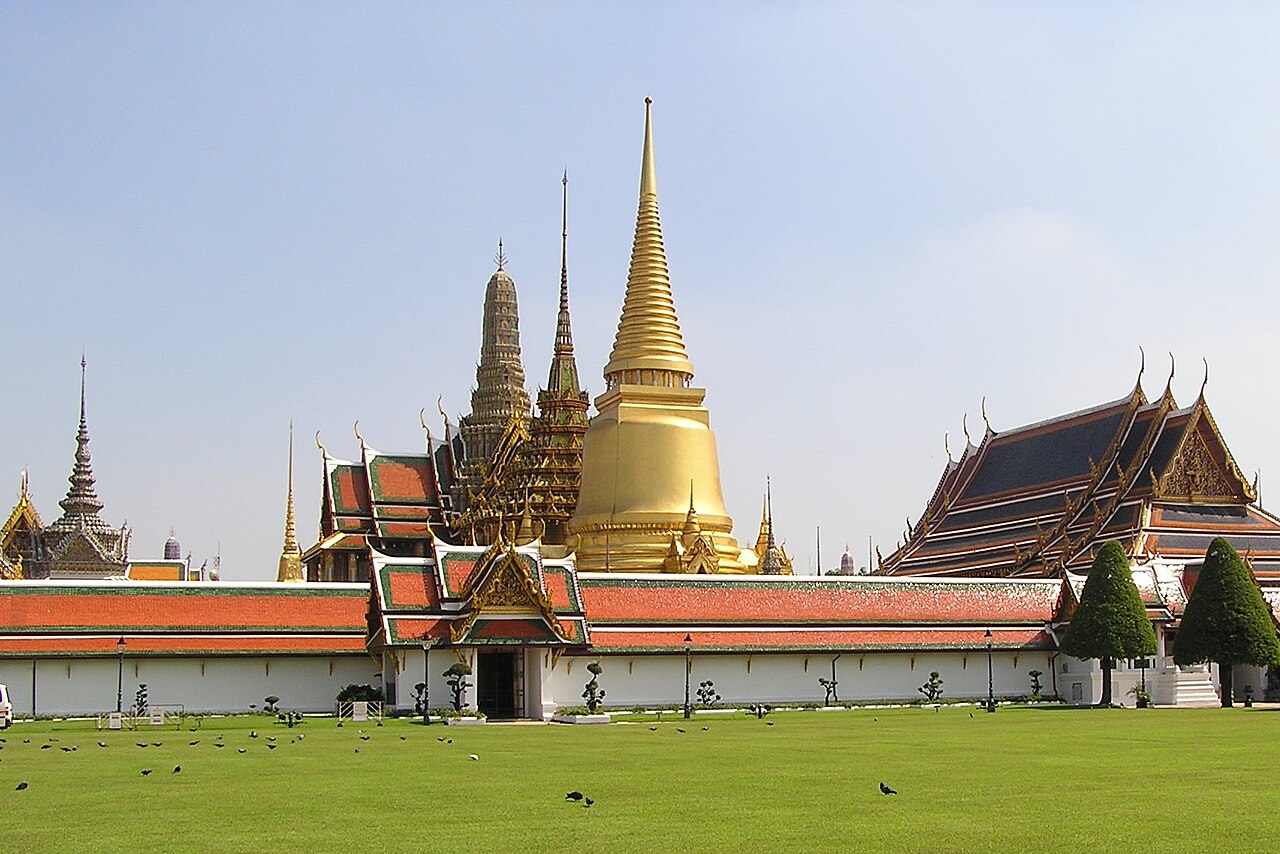
Start the day at the Grand Palace and Wat Phra Kaew (the Temple of the Emerald Buddha) right at the 08:30 opening — this is the busiest, hottest stop of the day, and arriving early wins on both counts. Inside the temple compound you move between the Emerald Buddha in its ordination hall, the gold Phra Si Rattana Chedi, the Royal Pantheon, and the Ramakien murals running the full length of the cloister walls. Then the route continues into the palace side, where the Chakri Maha Prasat throne hall stacks Thai roof spires on top of a European-style building.
Allow about 2–2.5 hours at an unhurried pace. The visitor entrance is the Wiset Chaisri Gate on Na Phra Lan Road, with a bag check and a dress-code check at the door.
Leave the palace and walk south along Maharat or Sanam Chai Road for about 10 minutes to Wat Pho — a temple older than the city itself, considered Thailand's first university and the birthplace of traditional Thai massage. The headline act is the 46-metre gold-leafed Reclining Buddha, so large you walk it section by section along the hall until you reach the soles of the feet, inlaid with mother-of-pearl in 108 auspicious symbols. Then comes the small ritual most visitors enjoy: exchanging a few coins and dropping them one by one into the 108 bronze alms bowls lining the wall, a soft metallic chime following you down the row.
Beyond the Buddha hall, the grounds hold the four porcelain-tiled royal chedis, courtyards of Chinese stone guardians and miniature rock gardens. If your legs are already complaining at half-day, the pavilions of the Wat Pho traditional massage school operate right inside the temple.
Tha Tien pier is a few minutes' walk from Wat Pho, and the old shophouse blocks around it hold dozens of rice-and-noodle shops and small cafes. Eat a sensible lunch — Chinatown is doing dinner tonight. Then board the Tha Tien–Wat Arun cross-river ferry: about ฿5, a crossing of barely a few minutes, and easily the best-value view of the day as the prang of Wat Arun grows larger and larger ahead of the bow.
Wat Arun, the Temple of Dawn, is a central prang roughly 70 metres tall, encrusted with millions of fragments of Chinese porcelain and seashell — the closer you stand, the finer the detail gets. Climb the steep stairs to the mid-level terrace and look back across the river: Wat Pho and the palace you walked this morning sit lined up along the opposite bank.
Ferry back to the Tha Tien side and switch to the Chao Phraya Express Boat — the orange-flag line, about ฿16 flat fare. Ride upriver past the old riverfront facades and get off at Ratchawong pier; from there it is about 5 minutes up Ratchawong Road into Yaowarat, one of the oldest and busiest Chinatowns anywhere. Prefer rails to water at this point? The MRT runs from Sanam Chai to Wat Mangkon in a single stop and drops you in the middle of the district.
While the food stalls are still setting up, the side streets are the show — Song Wat Road, where century-old shophouses have turned into galleries and coffee bars; Sampheng Lane's dried-goods stalls run by the same families for generations; and the incense smoke of Wat Mangkon Kamalawat temple. Call it a quality leg-rest before the main event.
Once the neon comes on and the stalls are set, around 6 pm, Yaowarat turns into one long dinner table — peppery guay jub (rolled rice-noodle soup), oyster omelettes off a screaming-hot pan, khao tom (Thai rice soup) joints, bird's nest and shark fin for the ambitious, then sweet endings like ginger-syrup bua loi or fresh pomegranate juice. Grazing stall to stall is the entire agenda of the evening. Several of the famous names here carry Michelin street-food listings; the queues look long but move fast.
A strategy that genuinely works: come as a group and share — order one or two things per person and pass them around, so you taste the most before you fill up at stall number three. For a stall-by-stall hit list see the Yaowarat food guide, or zoom out with the Bangkok street food guide and the full Bangkok food guide.
Choose this if you want to see the city you just walked turn into a carpet of lights. Bangkok is one of the world's great rooftop-bar cities, from riverside terraces around Charoenkrung to sky bars on the Silom–Sathorn towers. From Chinatown it is a short MRT-plus-BTS hop. Expect drinks at roughly ฿250–500 plus service, and a smart-casual dress code at most places (closed shoes, no shorts) — worth planning your outfit around since morning if this is your finale.
The sit-down alternative is a Chao Phraya dinner cruise, gliding past the lit-up Wat Arun and under Rama VIII Bridge — ideal when your legs are done but your eyes are not. Evening departures can be booked ahead on Klook.
- Chatuchak Market — fully open only on Saturdays and Sundays, far north of this route, and it needs half a day to be any fun.
- The floating markets — Damnoen Saduak and Amphawa sit 1–1.5 hours outside the city each way; give them a half or full day of their own.
- ICONSIAM and the Jim Thompson House — two excellent stops that belong in the 2-day plan; squeezed into today they rush everything else.
- Ayutthaya and other day trips — the old capital wants a full day of its own, about 1.5 hours of travel each way.