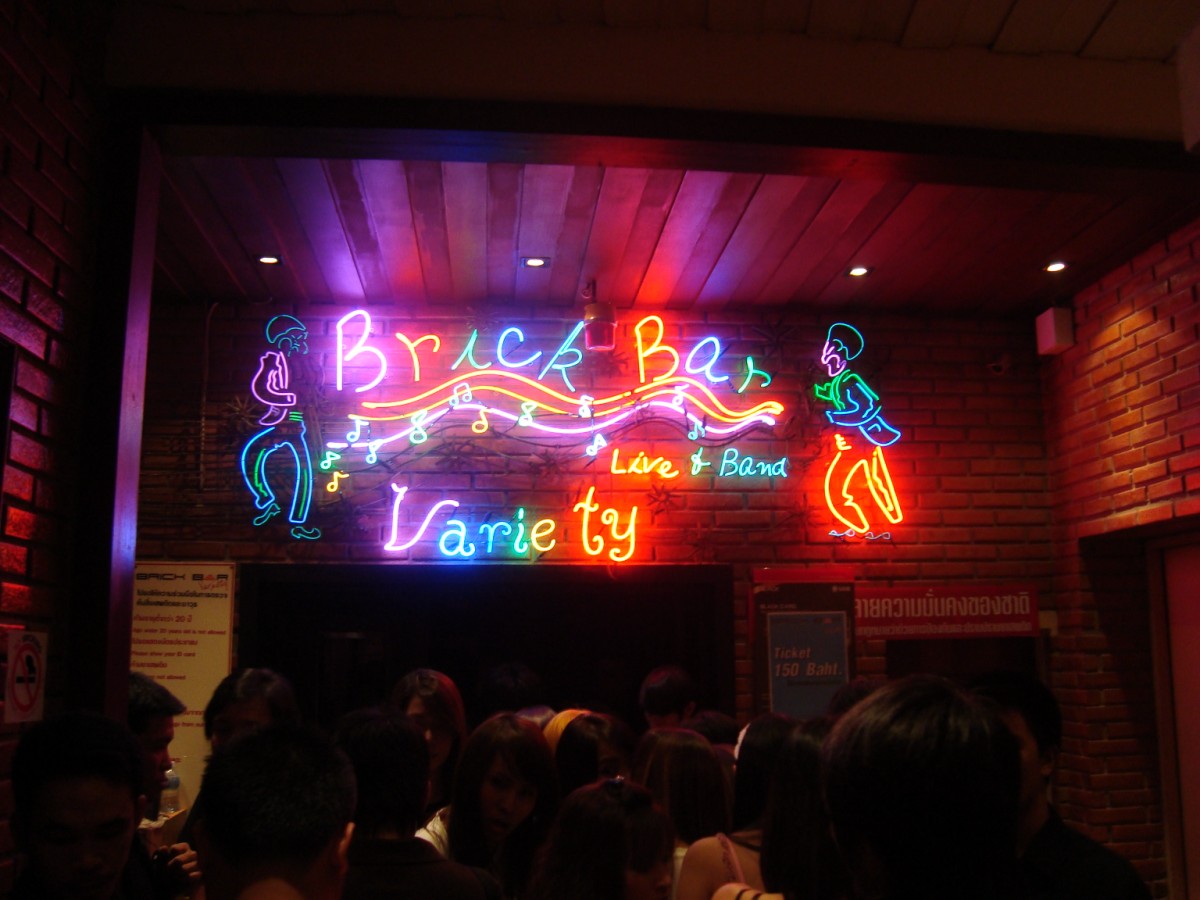
Four hundred metres that doze through the day, then flip after sunset — neon stacked on neon, three bars' playlists fighting in the air, pad thai smoke drifting down the street. Some people fall for it on the spot; some want out within ten minutes. Both reactions are fair.
Picture it: seven in the evening, and you are standing in the middle of a street closed to traffic. Neon signs stack on top of each other past counting, playlists from three different bars collide in the air, a pad thai wok hisses somewhere behind you, and backpackers from everywhere on earth weave between Thai twenty-somethings filming clips. This is Khao San Road — a short street in the old Banglamphu quarter that became one of the most recognised travel names Bangkok has ever produced.
The name means "milled rice": this was once a rice-trading street of old Bangkok, until cheap guesthouses began taking in travellers in the early 1980s and the street grew into the backpacker capital of Asia. The film The Beach (2000) pushed the legend far beyond Thailand. Then, around 2020, the city gave the street a major facelift — new paving, organised stall rows, a proper walking layout — so it now looks noticeably tidier than it did in its grungy heyday. The party spirit, though, survived intact.
Here is the honest version before you go: Khao San is no longer a Western-backpacker monoculture. Young Thais come out here in numbers, and Asian travellers fill the lane just as densely. By day the street is half asleep — the real show starts after sunset, and it is a full-volume party street: loud, crowded, selling the same elephant pants every ten metres. If that is what you came for, this is some of the best fun in the city. If it is not, one well-planned evening covers it and you sleep elsewhere. We will lay out both sides.
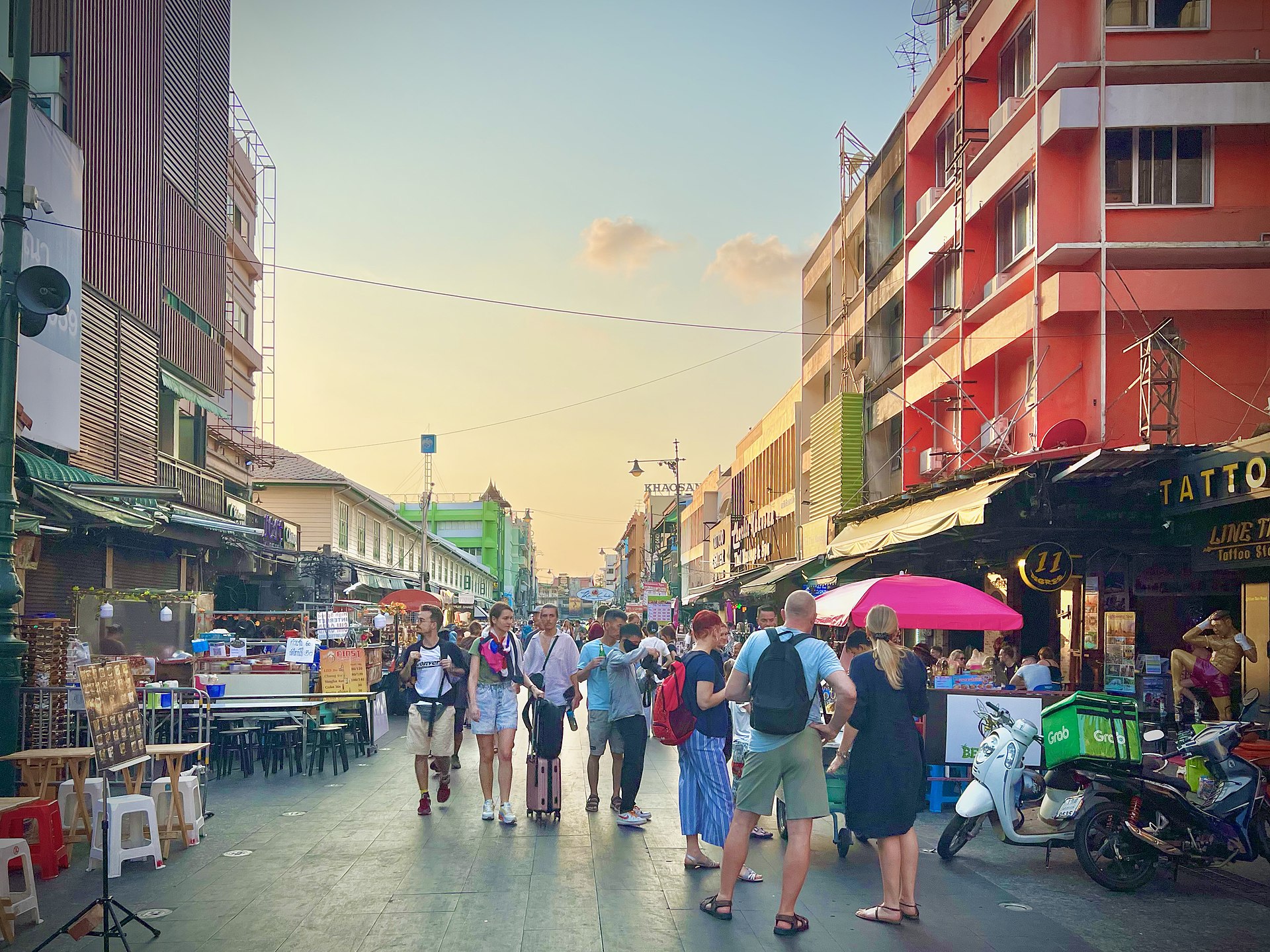
Same street, different hours, completely different moods — plus the lanes most visitors walk straight past.
Before noon, Khao San looks like the morning after: most bars shuttered, stalls only appearing from mid-afternoon, cafés serving late breakfasts to the recently awake. What is open: tattoo studios, hair-braiding chairs, tailors and tour agents. If you only come by day and wonder how this street got famous — fair question. You have not seen its real mode yet. Use the daylight to scout the lane, book a tour and haggle for clothes, then come back after dark.
Around 6 pm the street closes to traffic, the food carts roll into position and the neon comes on in one long flicker — and Khao San becomes the image the world remembers. Pad thai from a flaming wok from about ฿60, banana roti, mango sticky rice, the famous insect cart for the brave (some vendors charge for photos — ask first). Bar playlists collide from three directions, and a roadside beer table here is some of the best people-watching in Bangkok. For proper live music, squeeze into Brick Bar under the Buddy Lodge hotel, where Thai bands play packed-out sets most nights (sometimes a cover charge — check at the door).
Five minutes' walk from the top of Khao San, Phra Athit Road runs along the Chao Phraya and feels like a different city: calm cafés, Thai restaurants locals actually eat at, small bars where you can hold a conversation. At the far end sit Santichaiprakan Park and the white Phra Sumen Fort — the best sunset spot in the neighbourhood, with a river breeze that feels unreal after the crush you just left.
Soi Rambuttri curls in a horseshoe around Wat Chana Songkhram right next door — more trees, softer music, better tables. It is the slightly-more-grown-up version of Khao San. Beyond it, Banglamphu proper is one of old Bangkok's original neighbourhoods: market stalls, shophouse kitchens that have cooked for decades, and fabric shops that were here long before the first backpacker arrived. An early-evening wander shows you a side of the area most visitors never see.
You will love it if: you are travelling solo and want company tonight, you enjoy a temple-fair-meets-street-party atmosphere, you are on a budget but want a big night out, or you simply want to see the backpacker legend once with your own eyes. You will not if: you are a light sleeper, you came looking for old, quiet Bangkok, dense crowds drain you, or being offered a suit, a tattoo or a tuk-tuk every thirty steps wears you down. The good news: you do not have to pick a side. One evening, one plate of pad thai, one cold beer — then sleep somewhere calmer. That covers everything this street has to give.
The golden window is 5.30–6.30 pm — arrive in the soft light, walk the lane while it can still breathe, then stay as the neon flickers on sign by sign until the whole street glows. You get both versions of Khao San in a single visit. Friday and Saturday nights are the fullest and the most fun; weeknights are easier on the elbows but a notch quieter.
During Songkran (13–15 April), Khao San turns into one of the biggest water-fight arenas in Thailand. If a soaking-wet street party sounds like your kind of chaos, time your trip for it. If it sounds like a nightmare, give the whole neighbourhood a wide berth that week.
Street food is the star: pad thai from about ฿60, sweet banana roti, mango sticky rice in season, and the famous fried-insect carts — photogenic, but some vendors charge for photos, so ask before you raise the camera. For T-shirts, elephant pants and souvenirs, a friendly 30–40% haggle is normal and expected on both sides.
Now the games: a tuk-tuk offering a ฿20 "whole city tour" always ends at a gem or tailor shop — decline with a smile. Anyone announcing "the palace is closed today" on your way to the Grand Palace is running the oldest trick in Bangkok; walk to the gate and see for yourself. The laughing-gas balloons sold late at night are illegal — skip them. And keep your bag in front of you when the crowd thickens.
Cannabis dispensaries are everywhere in the area, but Thai law on this keeps changing and smoking in public is clearly illegal — check the current rules before going anywhere near it.
Since the 1990s, this is where backpackers bought overnight-bus tickets to Ko Tao, Ko Pha-ngan and Chiang Mai — and tour agents still line the street. Prices are genuinely low, but bus quality varies wildly: pick an office that looks like a real business, read recent reviews before paying, and keep valuables on your person for any overnight ride.
For the classic day trips sold here — Ayutthaya, the Damnoen Saduak floating market, the Maeklong railway market — booking ahead online through Klook costs about the same and is far easier to compare.
The honest version: Khao San has no BTS or MRT within walking distance. The most enjoyable way in is the river; the easiest door-to-door is a Grab or a metered taxi.
The street sits on the edge of Rattanakosin — Bangkok's old royal island — so the big temples and the river are closer than you'd think.