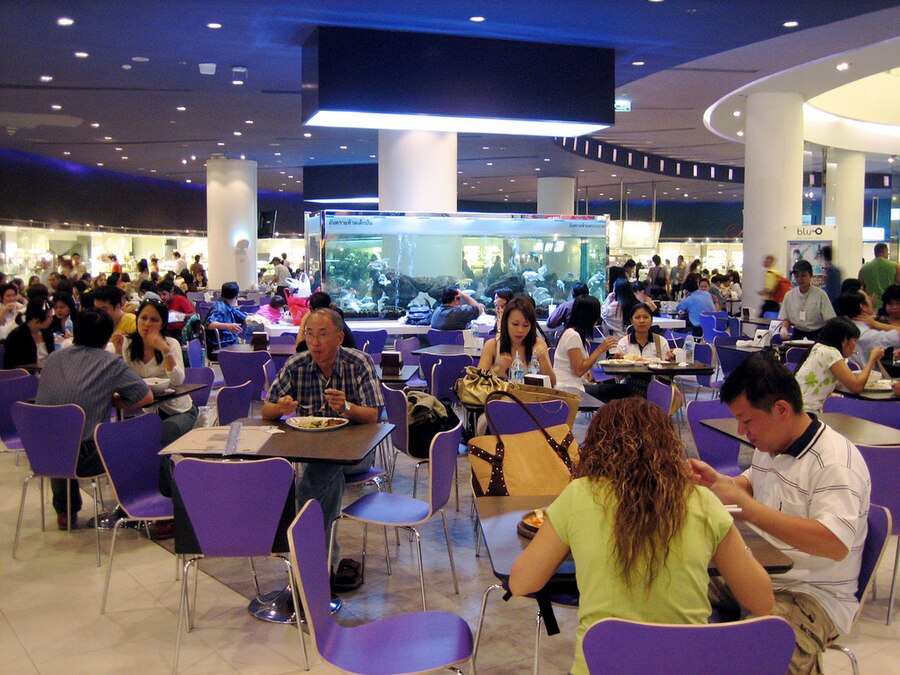
Air-conditioned, prices posted, pictures to point at, and dishes from the whole country gathered under one roof. Food courts are the lowest-stress first step into Thai food — for first-timers, for families spanning three generations, and for any day you just want to eat well without a gamble.
Picture your first day in Bangkok. You've just landed, it's hot, you haven't found your feet, and the street food looks fantastic but you don't yet dare to order — where would you even start? The answer we give every friend is simple: walk into a mall food court. Inside you'll find nearly all the same dishes the street vendors sell, but in air conditioning, with prices on signs, photos to point at, a guaranteed seat, and clean toilets a short walk away in the mall.
Let's be honest: a food court is not where you'll eat the best pad thai of your life — the legendary versions still live on the street and in old shophouses. But a good food court gets you about 80% of that flavour for ฿40–120 a plate, with no haggling, no guessing what anything costs, and no eating in a sweat. For the first meal of a trip, a rainy afternoon, or a dinner with everyone from toddlers to grandparents, this is the answer we use ourselves most often.
This guide covers the four worth a special trip — Pier 21, so cheap that Asok office workers eat there daily; MBK Food Island, the old-guard food court tourists have known for decades; Sook Siam, which brings food from all over Thailand to the riverside; and Or Tor Kor, the premium market no fruit lover should skip — and finishes with the prepaid card system, which works the same way in nearly every mall in the country.
The same system in nearly every Thai mall — understand it once and you can eat anywhere in the country
The standard routine has just four steps. One — go to the exchange counter at the food court entrance and pay cash for a card or coupons loaded with however much you want to spend (฿150–200 per person covers a meal comfortably). Two — walk the full circuit of stalls before you decide; a queue of Thai office workers is the most reliable quality signal in the building. Three — order, hand over the card to be charged, and collect your plate on the spot. Four — when you're done, return the card to the same counter and get every unspent baht back. No fees, no deductions.
The system exists so that dozens of small stalls never have to handle cash, and it happens to be great for visitors: every dish has its price posted, there's no tourist price and nothing to negotiate. Some newer malls have swapped the card for QR scanning or a tap card, and a few now let you pay at the stall directly — each place posts its exact rules at the counter, with English signage in nearly every major mall.
The classics you'll find in nearly every food court — prices are typical for central Bangkok malls and vary a little by venue
The safe order that's genuinely delicious. Fragrant oily rice, tender chicken, and a fermented-soybean dipping sauce that is the whole point. Kids eat it, grandparents approve, and there's zero chilli unless you add it. Food court chicken-rice stalls live and die by their sauce and soup — if you can't decide, order it mixed, half poached and half fried.
An intensely savoury, spiced broth that Thais are quietly obsessed with. Food court bowls are bigger than the tiny canal-side originals and easier to eat. Season it yourself at the table with chilli, vinegar and sugar — and taste the broth plain first, so you understand what the fuss is about.
These three are one team. Som tam Thai is the gateway version — sweet, sour, with peanuts; the fermented-crab version is for committed palates. Crisp-skinned grilled chicken, hot sticky rice rolled into bites and dipped into the papaya-salad dressing. You can ask for it mild — "one chilli" is a completely normal request, and beginners should start with som tam Thai every time.
If you want to eat what Thais actually order when they can't decide, it's this: minced pork stir-fried with holy basil over rice, plus a fried egg with crisp edges and a runny yolk. Most food court stalls wok-fry it fresh to order, and asking for "not spicy" or "a little spicy" is always fine.
Pork leg simmered in a five-spice braise until it falls apart, served over rice with pickled greens, a stewed egg and a sharp garlic-chilli sauce on the side. Spotting a good stall is easy: look for the huge braising pot with a deep, glossy brown liquid — that colour means it has been simmering long enough. Not spicy at all unless you add the sauce.
Mango sticky rice is the Thai dessert the whole world knows — sweet coconut cream over warm sticky rice and ripe mango, at its peak in mango season (roughly March to June; off-season it costs more or disappears from some stalls). Lod chong — pandan noodles in iced coconut milk — and shaved-ice desserts are the best fire extinguishers after a hot som tam.
Want to taste dishes from every region without leaving Bangkok? This is the one floor where you can.
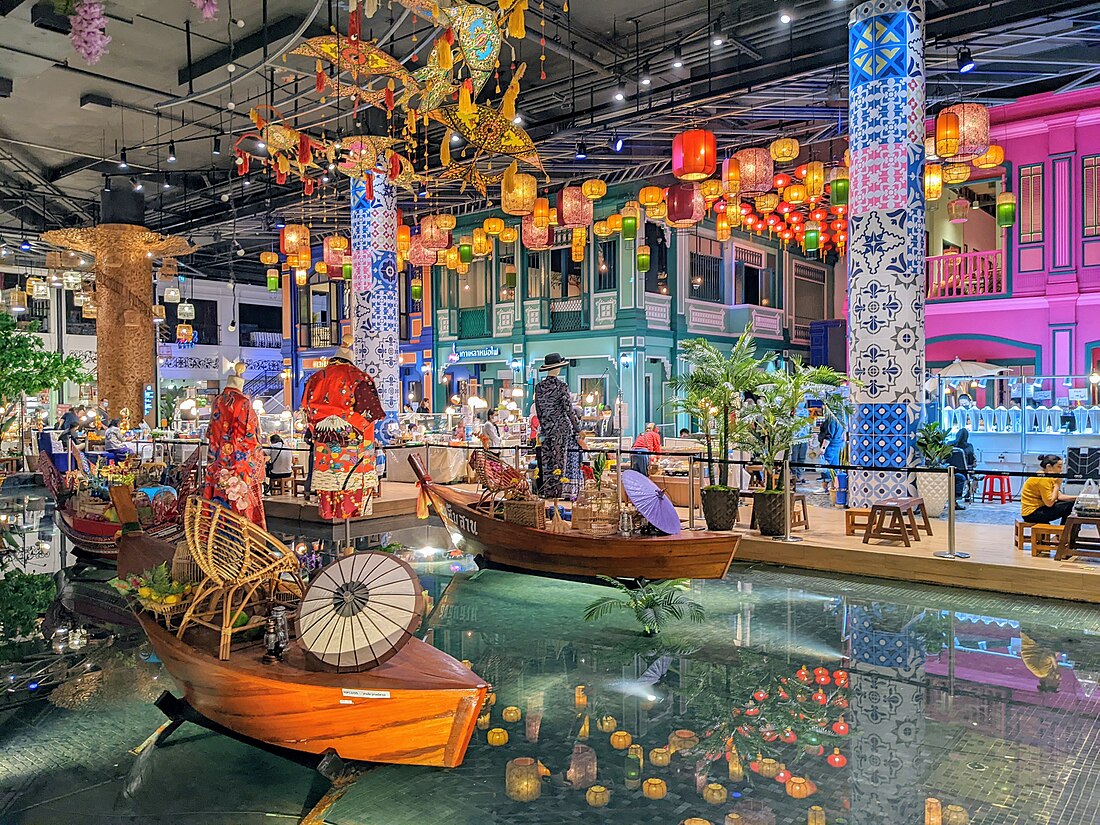
Sook Siam, on the ground floor of ICONSIAM, is unlike any other food hall in the city: it recreates a floating market indoors, with an artificial canal, real wooden boats, old-style Thai shophouses, and stalls curated from across the country under its "77 provinces" concept. Northern khao soi and sai ua sausage, fiery southern curries, Isan classics, and old-fashioned Thai sweets you rarely see in other malls — arrive hungry and you can eat your way around regions that would otherwise take a domestic flight to reach.
Prices run higher than a standard food court, about ฿60–150 a plate, and the floor gets packed on weekend evenings. But the journey is part of the value: take the river shuttle boat from Sathorn Pier (get off the BTS at Saphan Taksin) and cross the Chao Phraya to the mall's own pier, or ride the BTS Gold Line to Charoen Nakhon station. After eating, the riverside promenade is right outside — our ICONSIAM and riverside guide has the full half-day plan.
Ordered by how easy they are for visitors — every one is reachable by BTS, MRT or boat. Prices drift a little year to year, so allow some wiggle room.
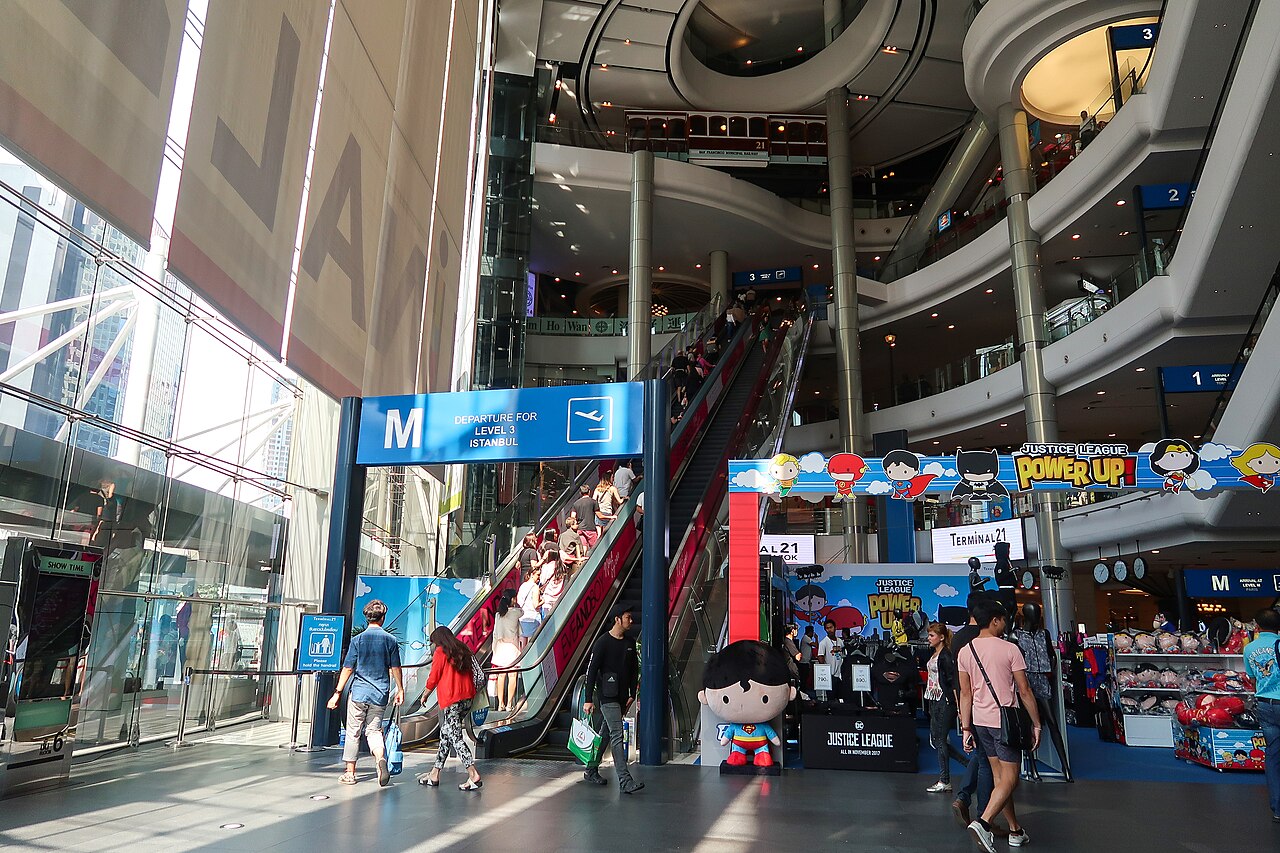
The food court Bangkok talks about most when the subject is price — a large share of main dishes still sit at ฿40–80, clearly cheaper than any comparable mall even though it stands in the middle of Asok. And the food holds up: chicken rice, noodles, som tam, desserts, nearly every category covered. Office workers from the surrounding towers fill it every weekday lunch, which tells you everything. The mall itself is airport-themed, each floor styled as a different city — the Pier 21 floor is done as San Francisco — so you can wander and take photos after eating.
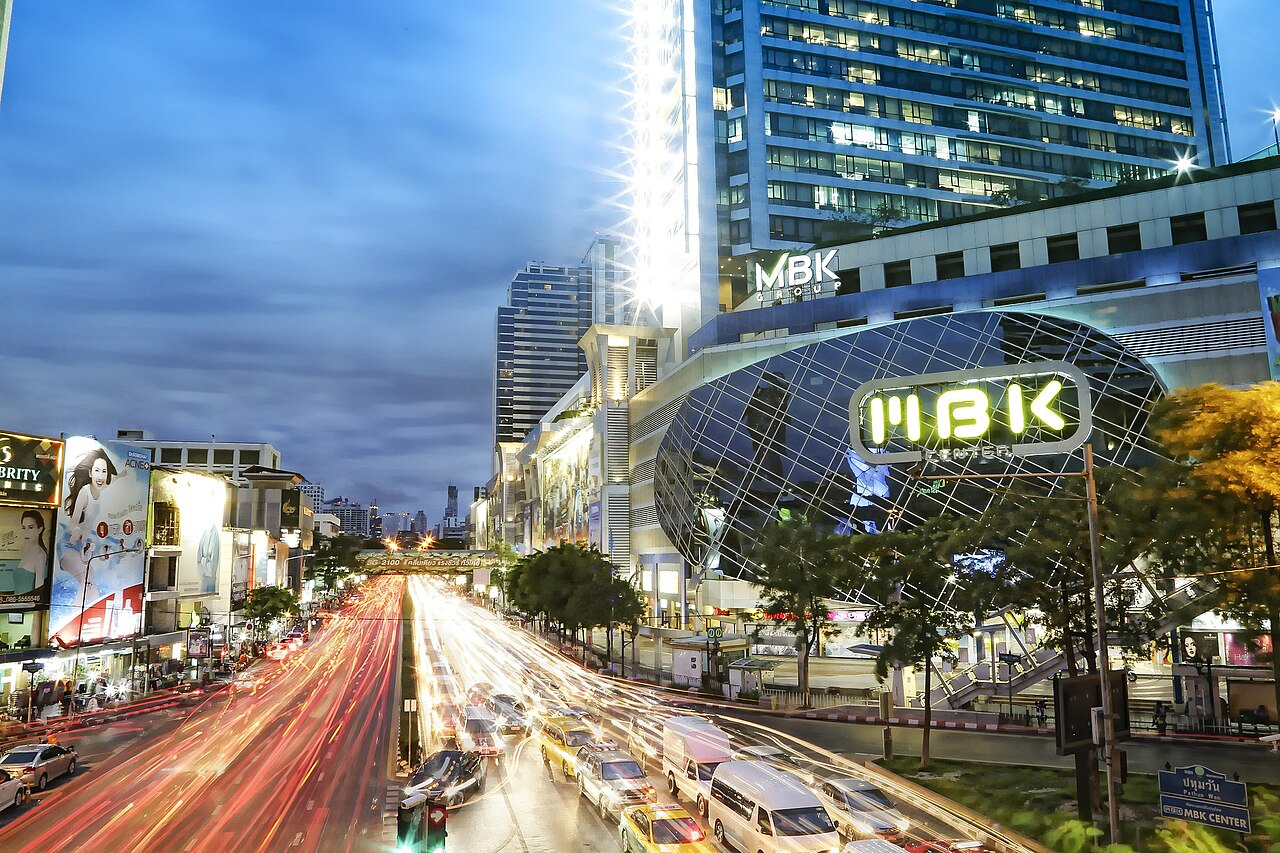
The old-guard food court that has fed travellers for decades. It's big, the stall count is high, and the range covers every Thai category plus international counters and a halal corner, at middling prices of roughly ฿50–120. The draw is convenience: it's extremely easy to reach and pairs naturally with a bargain-hunting wander through MBK itself. The mall has several other food zones on other floors, so if you can't find it, check the directory or ask staff for Food Island.
The indoor floating market that gathers food from the whole country — the best single stop for anyone with only a few days in Bangkok who still wants to taste the north, the northeast and the south. The setting is so fully built that the walk itself is entertainment. Prices are above a normal food court but well below the restaurants upstairs in the same mall. Go mid-afternoon, eat, then step out to the river promenade in time for sunset.
Not a mall food court at all, but a premium fresh market that CNN once ranked among the best fresh markets in the world. Export-grade fruit stacked so neatly you hesitate to touch it — durian, mango and mangosteen in season — a famous mango sticky rice stall, curry pastes, quality dried goods for gifts, and a cooked-food zone with seating at the back. Prices run above an ordinary market, but the quality is plain to see. Come for lunch and leave with your gift shopping done.
The open secret: nearly every mall in Thailand has a food court, usually on the top floor or in the basement, all running the same card system. The upscale Siam malls — Paragon's food floor is big enough to get lost in — charge more as the mall gets fancier, while supermarket food courts in Big C or Lotus's are the cheapest of all and charge true local prices. There's no need to cross town: the mall closest to your hotel is, for that meal, the best food court in Bangkok.
Terminal 21 Asok — the airport-themed mall where every floor is a different city. The Pier 21 food court is on level 5, styled as San Francisco.
Paying: carrying cash to exchange for the card is the simplest route for visitors. Counters at the big malls often take credit cards or Thai QR payment too, but don't count on it everywhere. ATMs and currency exchanges sit inside every major mall. Budget ฿150–200 per person per meal — that buys a main, a dessert and a drink, and you'll still get change back when you return the card.
When it's quiet: weekday lunch from 12:00 to 13:00 is rush hour for office workers, and Pier 21 tables vanish fastest of all. If your schedule is flexible, eat before 11:30 or after 13:30. Weekend evenings belong to families and tourists — Sook Siam and MBK stay busy from about five to eight — which makes weekday afternoons the golden window for travellers.
The small stuff: drinks come from a dedicated drinks stall, and mall ice is factory-made, so it's safe in your glass. Cutlery and napkins sit at central stations or at each stall — help yourself. You don't have to clear your own tray (staff do it), though doing it anyway is a kind gesture. And when you meet a dish you don't recognise: point at the picture and smile. It works at every stall in the country.
MBK Center at Pathum Wan intersection — walk straight in from BTS National Stadium; the Food Island food court is on level 6
Base yourself around Siam–Ratchaprasong or Sukhumvit–Asok and the big food courts are a few minutes' walk away; river fans should look at Charoen Nakhon, near ICONSIAM