Six antique teak houses in a lush garden beside a Bangkok canal, built by an American who vanished in Malaysia in 1967 — today it is one of the easiest museums in the city to visit: ride the BTS, walk five minutes, step out of Bangkok entirely.
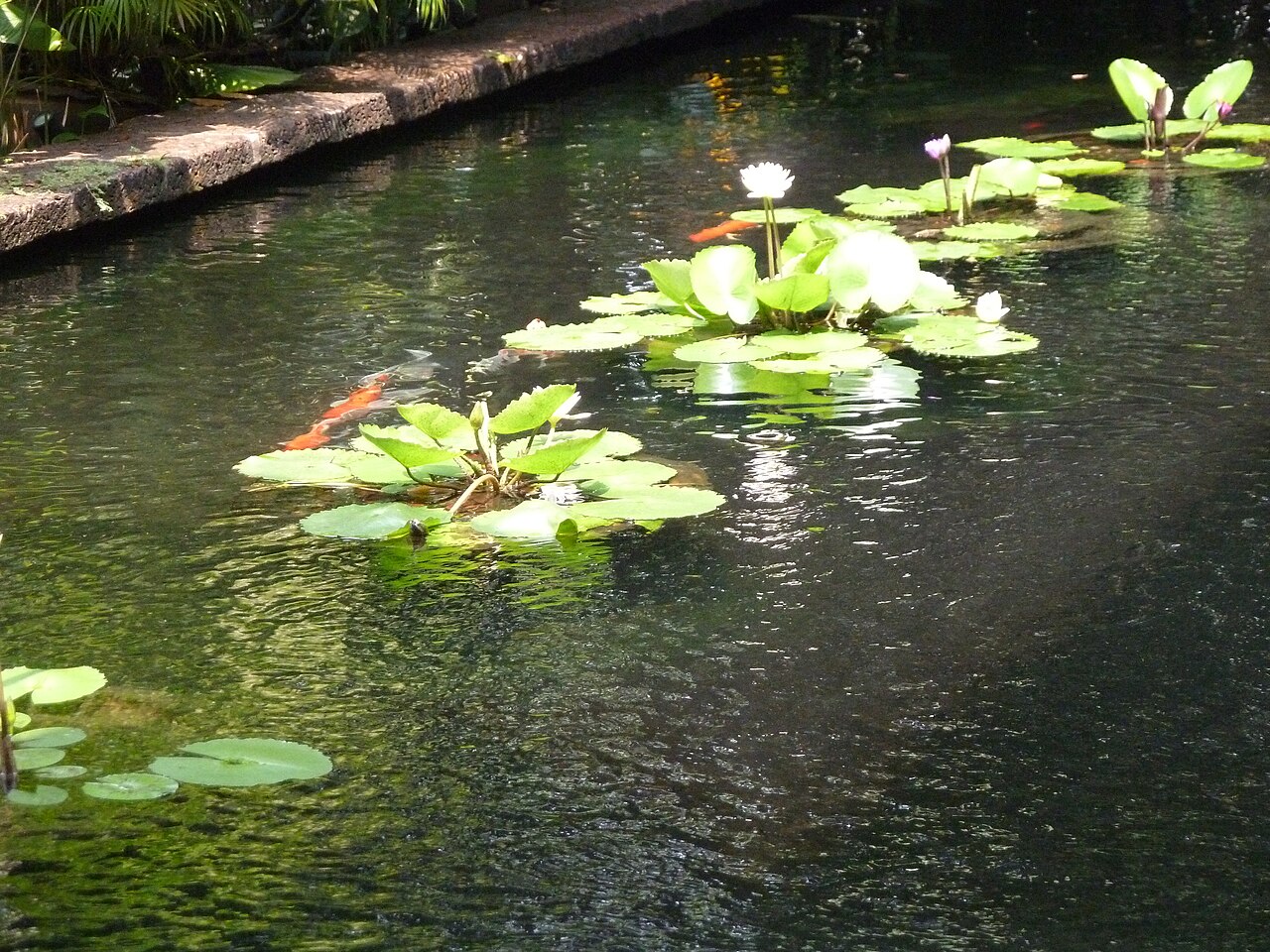
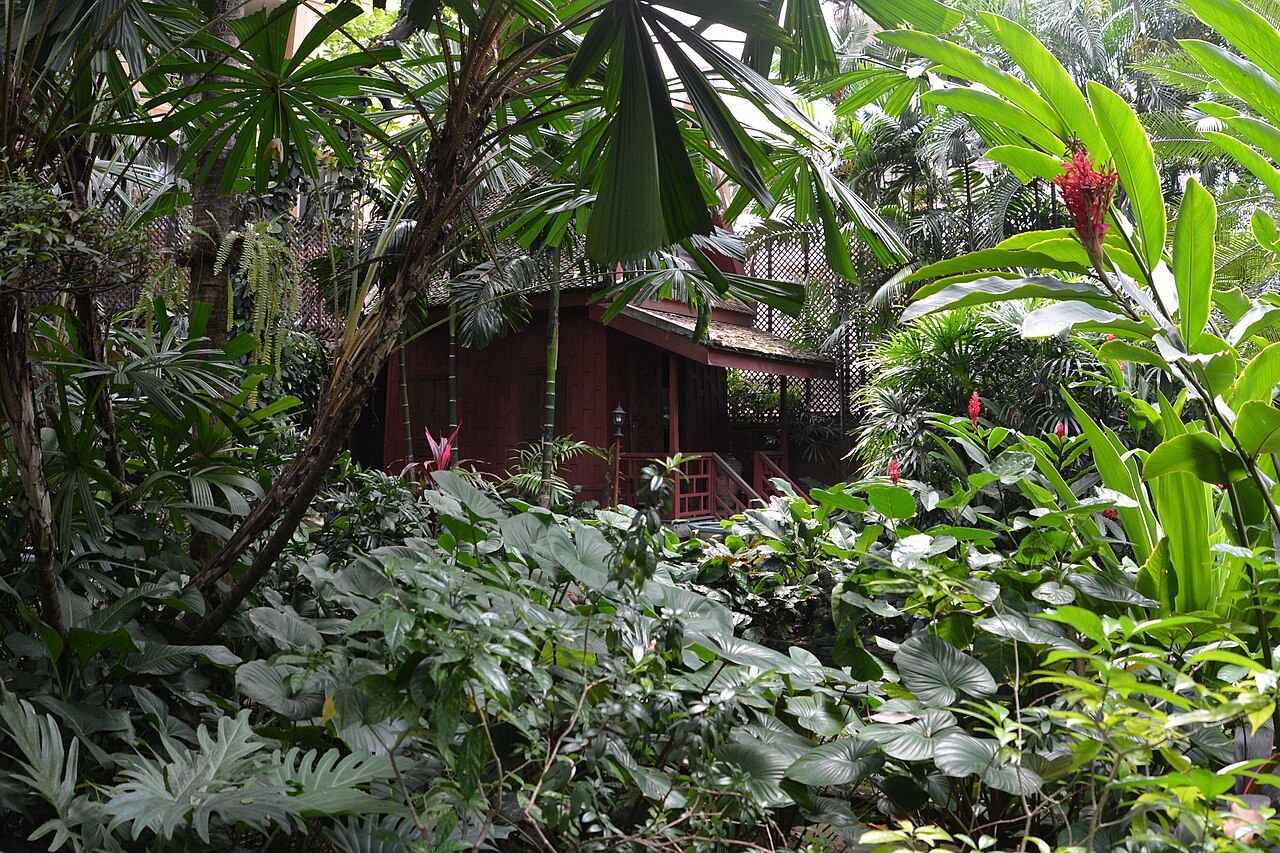
There is a moment, halfway down Soi Kasemsan 2 off Rama I Road, when the traffic noise fades behind you. At the end of the lane is a wooden gate, and the second you step through it, Bangkok switches off — replaced by a jungle-thick garden, a lotus pond with carp circling under the leaves, and a cluster of deep-red teak houses raised on stilts in the old Thai way. This was the home of Jim Thompson, the man everyone came to call the Thai Silk King.
James H.W. Thompson was an American architect who arrived in Thailand at the end of the Second World War as an officer of the OSS, the intelligence agency that preceded the CIA — and liked the country enough to stay. In 1948 he co-founded the Thai Silk Company and brought a fading craft back to life, working with the weavers of Ban Krua just across the canal. His silk dressed the Broadway production of The King and I, and suddenly fashion houses from New York to Paris wanted Thai silk.
In 1959 he assembled his dream on the bank of Khlong Saen Saep: six antique teak houses, some dismantled and carried over from Ban Krua across the canal, others floated down from Ayutthaya — a few said to be around a century old or more. He filled them with art collected across Southeast Asia, and the house became one of the most talked-about addresses in Asia while he still lived in it, hosting guests from all over the world.
But what turned a beautiful house into a legend happened on Easter Sunday, 26 March 1967. On holiday in Malaysia's Cameron Highlands, Thompson went out for an afternoon walk alone — and was never seen again. No trace, no answer, to this day. His house is not just a museum; it is the unfinished last chapter of one of Bangkok's best stories.
From the houses themselves to the rules at the door — a little preparation makes the visit better.
Thompson did not build new. He hunted down antique teak houses, had them dismantled and reassembled by the canal. The fun is in how he bent the rules — some walls were reversed so the carved side faces the rooms, and the staircase was moved indoors, which traditional Thai houses never did. The guides point these details out one by one; anyone who likes architecture will grin through the whole tour.
The rooms are dense with pieces Thompson collected back when few people valued them — Buddha images spanning several centuries, Ming-era blue-and-white porcelain, Benjarong ceramics, Burmese teak carvings and old Thai paintings. Everything is still arranged as a lived-in home rather than rows of glass cases, which is exactly what makes this museum feel different from most.
You cannot wander the houses on your own — entry is in small groups with a guide, which protects the collection. It sounds like a restriction but works in your favour: the guides' storytelling is what brings the house to life. Tours leave frequently all day in several languages, including English; walk in, buy a ticket and join the next one. Shoes come off before you go up, larger bags go into a locker, and photography is normally not allowed inside the houses.
The garden is overgrown on purpose — palms, ferns and giant leaves crowd in until the sunlight arrives in patches, and orange carp glide through the dark lotus pond. Thompson wanted the house to feel as if it stood deep in a forest, and he pulled it off a few hundred metres from the city's biggest malls. After the tour there is no need to rush out; the garden is yours to wander and photograph.
The exit leads past a Jim Thompson shop — scarves, ties, bags and fabric by the metre. It is not cheap, but it is genuine Thai silk from the brand the man himself founded. Next to it, a restaurant and café sit in the garden, so you can have a Thai lunch or a coffee by the lotus pond before heading back out to the Siam malls.
On the afternoon of Easter Sunday, 26 March 1967, Thompson — then 61 — was staying with friends at a cottage in Malaysia's Cameron Highlands. After lunch he said he was going for a walk, stepped out alone, and no one ever saw him again. The search that followed is said to have been one of the largest in Malaysian history: soldiers, police, aboriginal trackers, helicopters, even local shamans. Not a single trace was found.
The theories cover every genre: a fall in the jungle, wild animals, kidnapping, and — because he had served in the OSS, the forerunner of the CIA — espionage. A few months later his sister was murdered in her home in the United States, which only fed the legend. He was declared legally dead in 1974, but the question of what happened to Jim Thompson has never been answered — and that is why walking through his house raises the hairs on your arms in a way few museums can.
Tours run frequently all day, but just after opening and late afternoon are quieter than the mid-morning tour-group rush, and the garden light is softer for photos. The whole visit takes about an hour and a half at an easy pace.
The rules are few: no photography inside the houses (the garden and exteriors are fine), shoes off before going up, and larger bags into the free lockers. This is not a temple, so there is no strict dress code — dress comfortably, and shoes that slip off easily will save you a small struggle at the start of the tour.
The house has its own garden restaurant and café beside the lotus pond, so you can eat Thai food in the quiet without leaving the grounds. Prices run higher than the street outside, as you would expect from the setting, but the atmosphere earns it.
Back out on the street, the Siam area is your playground — MBK Center is a 5–10 minute walk away, and its upper-floor food court is genuinely good and cheap. The Bangkok Art and Culture Centre (BACC) sits opposite the BTS station with free entry, and Siam Square and Siam Paragon are one stop or an easy walk further. It adds up to a very walkable half day with no taxi required.
This is one of the easiest museums in Bangkok to reach — step off the Skytrain and you are at the gate in five minutes.
It sits right in central Bangkok — several more places are a BTS ride or a walk away.