Home Bangkok Thailand Bangkok Hotels About
Wherebest  ›  🌏 Asia  ›  🇹🇭 Thailand  ›  Bangkok  ›  The Grand Palace & Wat Phra Kaew
🇹🇭 Bangkok · Things to See

The Grand Palace & Wat Phra Kaew
Where Bangkok began, 240 years ago

The royal palace King Rama I built in 1782, and the Emerald Buddha that crossed half of Asia to get here — this guide covers the ฿500 ticket, the strictest dress code in Thailand, how to arrive by MRT or river boat, and the one scam to see coming.

First Things First

Why your Bangkok trip starts here

It is 8:30 on an ordinary weekday morning and you are standing at the Wiset Chaisri Gate. Through the white wall, dozens of golden spires cut against the sky. The early light catches the Phra Si Rattana Chedi until the whole stupa burns gold, and two five-metre giants lean on their clubs, guarding the temple gate ahead. The crowd around you goes quiet without anyone asking — a thing that rarely happens at a sight you have already seen in a hundred photos. The real thing simply beats the pictures, by a distance.

Rewind to 1782. King Rama I moved his capital across the river from Thonburi and built the Grand Palace as the heart of a new city: Rattanakosin, today's Bangkok. The intention was unmistakable — to raise a capital as splendid as Ayutthaya, the one lost to war. So this was never just a residence; it was a declaration that the kingdom stood again. Inside the walls, across more than 200,000 square metres, sit the royal quarters, the great throne halls, and Wat Phra Kaew — the Temple of the Emerald Buddha, a palace chapel with no resident monks, built for one purpose: to house the most sacred Buddha image in Thailand.

Today this is the single most visited sight in the country, and the one Thais themselves keep returning to — every lap of the compound reveals details you missed: the porcelain-flower mosaics, the mirrored glass that glitters along entire walls, gate giants whose faces are never repeated twice. This guide covers what genuinely deserves your time, plus the practical truths to know before you arrive, from the dress code to the street trick that still works on someone every single day.
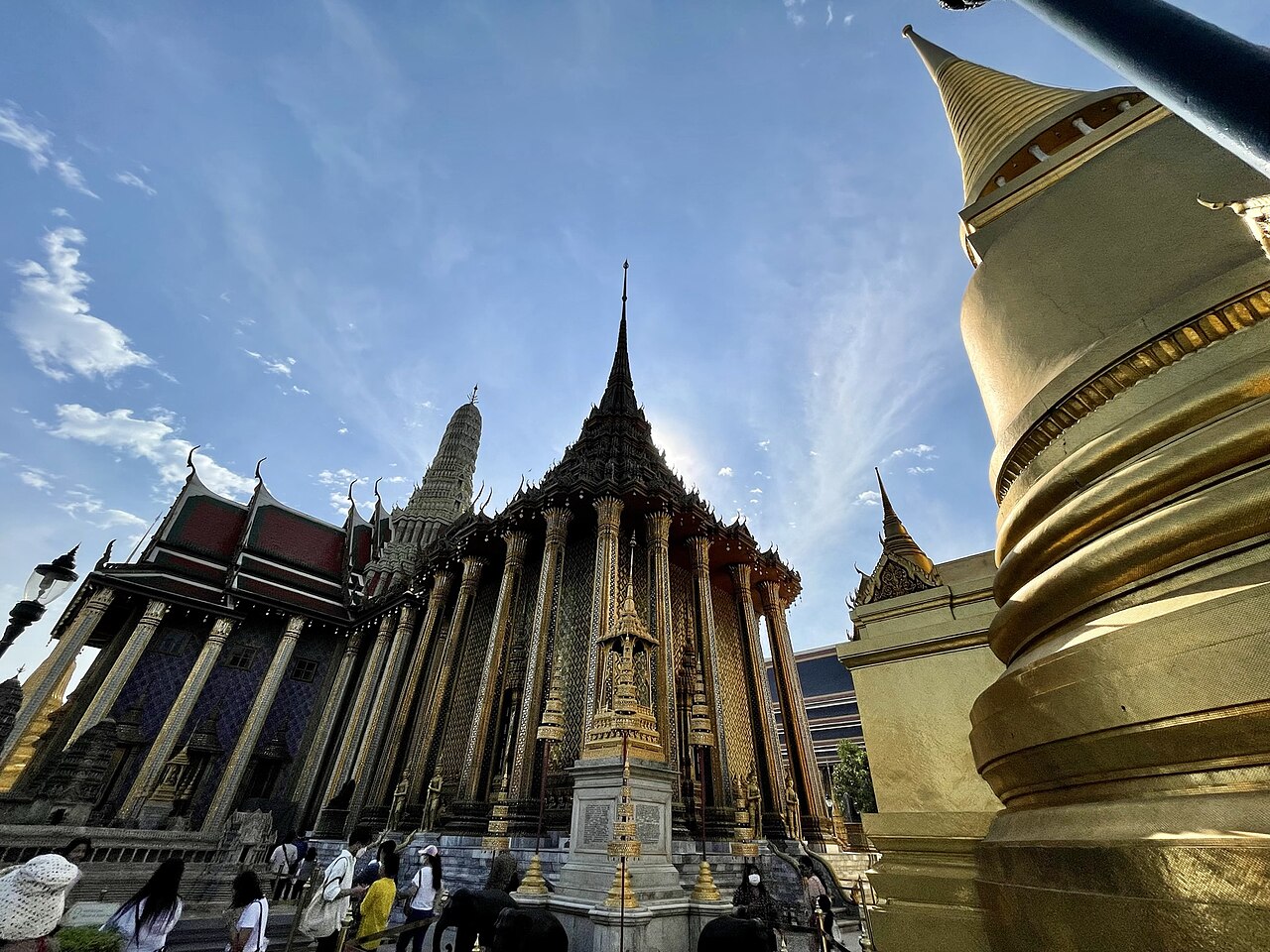
Prasat Phra Thep Bidon and the golden chedi at Wat Phra Kaew, seen from below against a blue sky, with mirrored mosaic columns glittering
Prasat Phra Thep Bidon and the golden chedi on the upper terrace — the zone worth slowing down for, detail by detail
🎫
Entry Fee
~฿500 (foreign visitors)
Thai nationals free · buy tickets inside the palace only
🕣
Opening Hours
~8:30am–3:30pm daily
May close on royal ceremony days — check ahead
⏱️
Time Needed
2–3 hours
Big open courtyards, little shade — bring water and a hat
👕
Dress Code
Strictest in Thailand
Shoulders + knees covered · no leggings or tight tops · cover-ups rentable at the gate
🚇
Getting There
MRT Sanam Chai · Tha Chang pier
~10-minute walk from the station to the gate
🏛️
Built In
1782 · King Rama I
The founding point of Rattanakosin-era Bangkok
What to See

The 5 stops that tell the palace's story

The visitor route leads through Wat Phra Kaew first, then out into the throne-hall quarter — these five are the ones not to drift past.

Know Before You Go

Paying respect properly — and dodging the oldest trick outside

🙏 The Emerald Buddha — one of Asia's most travelled statues

The Emerald Buddha's biography reads like a road novel. Records say it surfaced in Chiang Rai around 1434, when lightning split an old chedi and revealed green stone beneath the stucco. From there it journeyed to Lampang, then Chiang Mai, then across the Mekong to Luang Prabang and Vientiane for over two centuries, before returning with the Thonburi-era army and finally settling here in 1784 — where it has presided over the kingdom ever since.

Chapel etiquette: shoes and hats off, cameras away completely, sit on the floor with your feet tucked away from the image, and keep voices low. Visit in early March, July or November and you may land on a costume-changing period — and meet the Buddha in a brand-new seasonal robe.

⚠️ "The palace is closed today" — the trick that never retires

Walk anywhere near the palace and a well-dressed, friendly stranger may inform you the palace is closed this morning — a Buddhist holiday, a royal ceremony — and kindly offer a ฿20 tuk-tuk tour to "another famous temple" instead. Assume it ends at a gem shop or a tailor with very persistent salesmen, because it almost always does. The truth: the palace opens every day. Genuine closures are rare and announced officially at the gate, nowhere else.

The fix is simple: smile, decline, and walk on to the Wiset Chaisri Gate to see for yourself. Buy tickets only at the official counters inside the walls — never from anyone on the street — and treat any suspiciously cheap tuk-tuk around here as the most expensive ride in Bangkok.

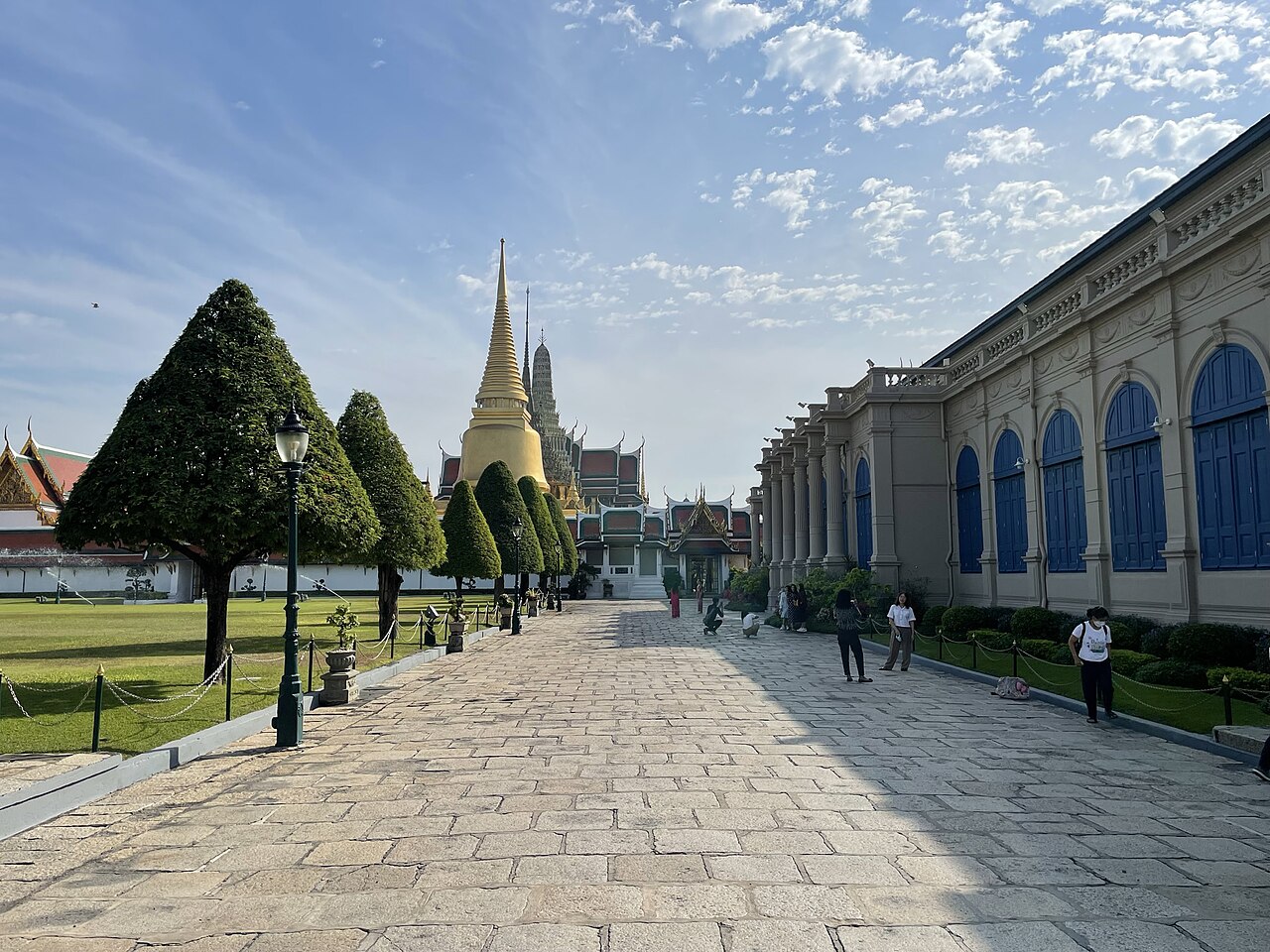
A stone walkway inside the Grand Palace in the early morning, the golden chedi rising ahead and only a few visitors around
The palace walkways just after opening — the golden hour that belongs to people who arrive at 8:30 sharp

📸 Getting photos most visitors go home without

The kindest light falls between 8:30 and 10:00 am, while the sun is still angled and the gilding glows without harshness. The classic frame is the upper terrace, catching chedi, mondop and pantheon in a single shot. The frames most people miss are the close-ups — mirrored mosaic on the column bases, the row of garuda figures gripping naga serpents around the chapel, and the golden kinnari statues posing motionless in the corners.

The limits, so you are not caught out: no photography at all inside the chapel of the Emerald Buddha, no drones over the palace grounds full stop, and between 10 am and 2 pm the crowds make clean shots nearly impossible. If photographs matter to you, arriving at opening time is the only real answer.

Getting There

The smart ways in — train, boat, or pin drop

The palace sits on Rattanakosin Island, where the lanes are narrow and traffic crawls most of the day. The clever play is rail or river, then a short walk. The visitor entrance is the Wiset Chaisri Gate on Na Phra Lan Road.

🚇
MRT Blue Line
Sanam Chai station, exit 1
~10-minute walk past Museum Siam to the gate · fares ~฿17–45 · immune to traffic
⛴️
Chao Phraya Express Boat
Tha Chang pier (closest)
From BTS Saphan Taksin, board at Sathorn pier · ~฿16–33 · river views included
🚖
Grab / Taxi
Pin "Na Phra Lan Road"
Honest note: traffic jams hard mornings and afternoons, and roads around the palace sometimes close
The one-day route that actually works: enter the palace at 8:30, out by 11. Walk ~10–15 minutes to Wat Pho for the Reclining Buddha and a Thai massage to rescue your legs. Then cross the river from Tha Tien pier for ฿5 to Wat Arun, and end the day watching the palace and temples glow from the far bank — three of Bangkok's biggest landmarks, one unhurried day.
Keep Exploring Bangkok

Where to go straight after

All three are within a short walk or a single boat hop — easy to combine with the palace in one day.

Frequently Asked

FAQ · before you visit the Grand Palace

How much is the Grand Palace entry ticket?
Foreign visitors pay around ฿500 per person, which covers Wat Phra Kaew and the outer palace grounds, and has generally included the Queen Sirikit Museum of Textiles inside the complex. Thai nationals enter free with their ID card. Conditions can change, so confirm at the official ticket office — and only buy tickets inside the palace walls, never from anyone on the street outside.
What is the Grand Palace dress code?
The strictest in Thailand. No shorts or skirts above the knee, no sleeveless tops or vests, no tight or see-through clothing, no leggings, no ripped jeans. Both men and women need shoulders and knees covered. If your outfit does not pass, shops around the entrance sell and rent cover-ups, shirts and long trousers cheaply. Sandals are acceptable, but you remove shoes before entering the chapel, so slip-ons are easiest.
What is the easiest way to get to the Grand Palace?
Take the MRT Blue Line to Sanam Chai station, exit 1, then walk about 10 minutes to the Wiset Chaisri Gate. The more scenic option is the Chao Phraya Express Boat to Tha Chang pier, the closest pier to the palace, or Tha Tien pier if you want to walk past Wat Pho first. If you use Grab or a taxi, set your pin to Na Phra Lan Road and allow extra time — the roads around the palace jam badly and sometimes close.
What are the opening hours, and how long does a visit take?
Open daily from about 8:30 am to 3:30 pm; parts may close on royal ceremony days, so check before you go. The best plan is to arrive right at 8:30 when the gates open — the light is soft, the heat is bearable, and you stay ahead of the tour groups that peak between 10 am and 2 pm. A full visit covering Wat Phra Kaew and the throne halls takes around 2–3 hours. Bring water and a hat; the courtyards have very little shade.
Can I take photos inside the Grand Palace?
Photography is allowed everywhere outdoors — the temple courtyards, the golden chedi and the throne-hall facades. Inside the chapel of the Emerald Buddha, however, photography is strictly forbidden and the rule is firmly enforced, so put cameras and phones away before entering. Drones are completely banned over the palace grounds.
Someone outside said the palace is closed today — is that true?
Almost certainly not. This is Bangkok's oldest tourist trick: a friendly stranger near the palace says it is closed for a holiday or ceremony, then offers a cheap tuk-tuk ride to another temple — which ends at a gem shop or tailor with heavy sales pressure. The palace is open every day, and genuine closures are announced officially at the gate only. Smile, decline, and walk to the Wiset Chaisri Gate to check for yourself.
Klook · Bangkok Tours & Activities

Want the stories the signboards skip? Book a guided palace tour or a Chao Phraya dinner cruise

Guided Grand Palace tours that explain what you are actually looking at, three-temple walking tours of the old royal island, and dinner cruises that glide past the palace lit up after dark — all bookable on Klook with real traveller reviews to compare.

See Grand Palace tours on Klook →
Wherebest is a Klook affiliate partner — we may earn a commission when you book through our links, at no extra cost to you.