Bangkok grew up along this river, and its express boats are still the fastest, cheapest way to its old town — past Wat Arun, the Grand Palace and Chinatown for about ฿16, a ~฿5 ferry across to the temples, and a dinner cruise once the spires light up. It all starts from the same pier.
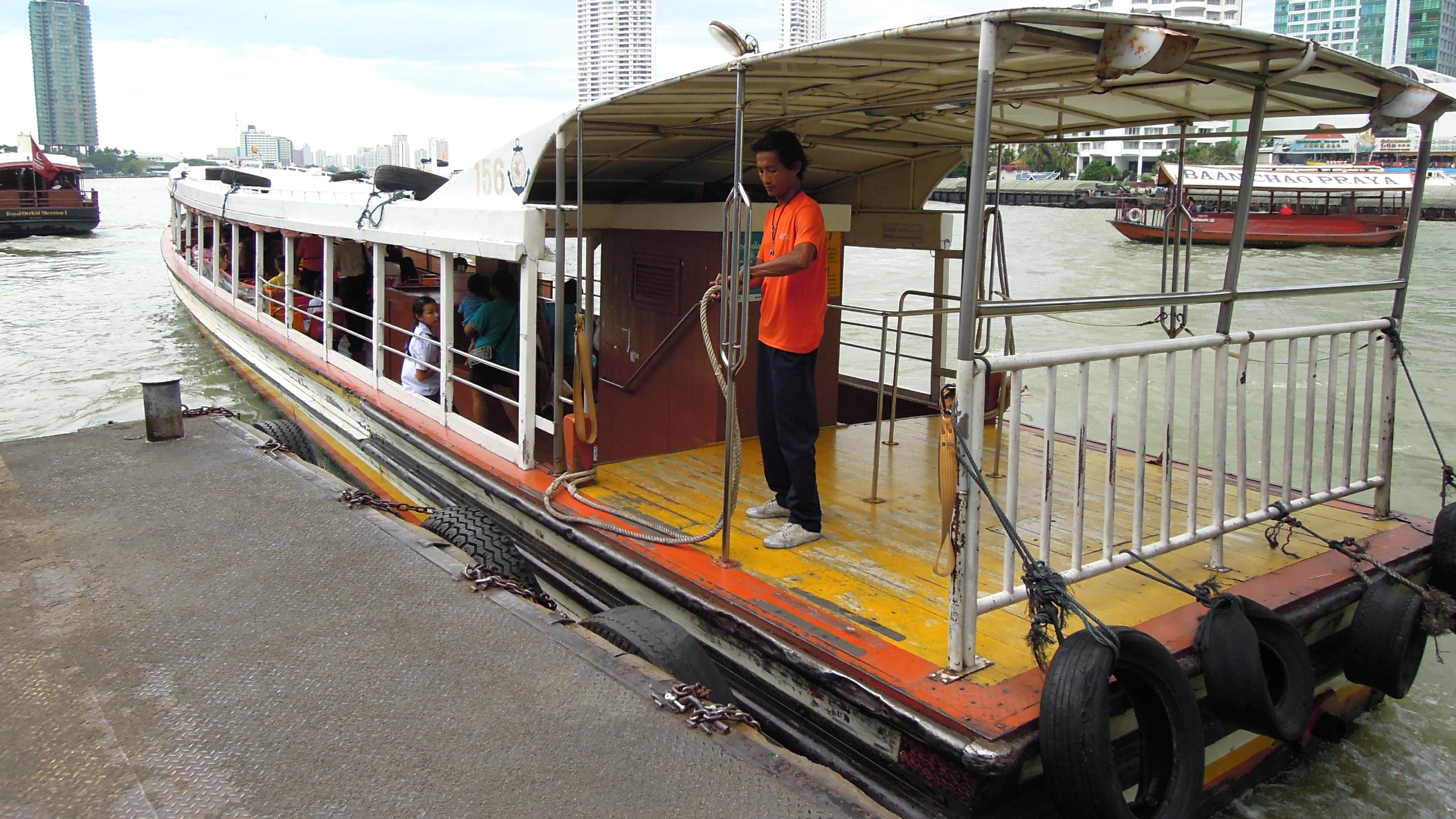
Picture this: you are standing on Sathorn pier at nine in the morning. A long boat with an orange flag at the stern swings in to the whistle of the deckhand, locals step on and off in one practised motion, and the boat pulls away upstream — riverside hotels, old godowns, churches and temples sliding past one scene at a time, until the spire of Wat Arun rises on the left bank. The fare for all of this: about ฿16.
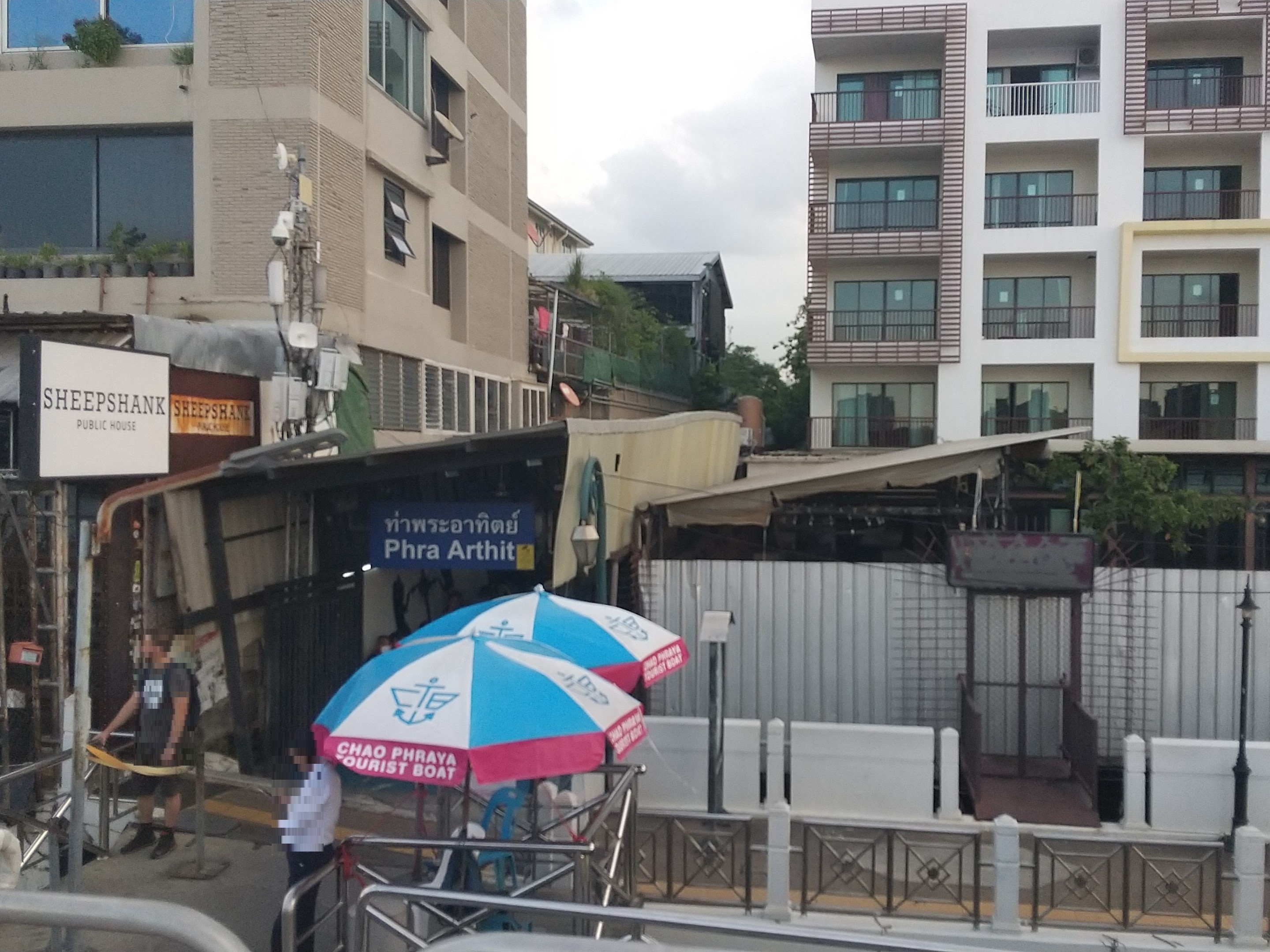
The Chao Phraya was Bangkok's first highway — the city grew outward from its banks, which is why nearly every major temple and palace sits within a short walk of the water. The Chao Phraya Express Boat has been carrying commuters along it for more than fifty years, and it remains the quickest, cheapest way to reach those sights. The main line runs from Sathorn pier upstream past Ratchawong (for Chinatown), Tha Tien, Tha Chang and Phra Athit, continuing to Nonthaburi — no traffic lights, no gridlock.
What makes the river more than a way of getting around is that it is an attraction in its own right — ride the orange flag through the old town from mid-river, hop a ~฿5 cross-river ferry to Wat Arun, get off wherever a pier name catches your eye, and after sunset the same water becomes the stage for dinner cruises gliding past lit-up temples on both banks. You can fill a whole day here without touching a road.
From the orange-flag express to the dinner boats — match the boat to your day before you leave the pier.
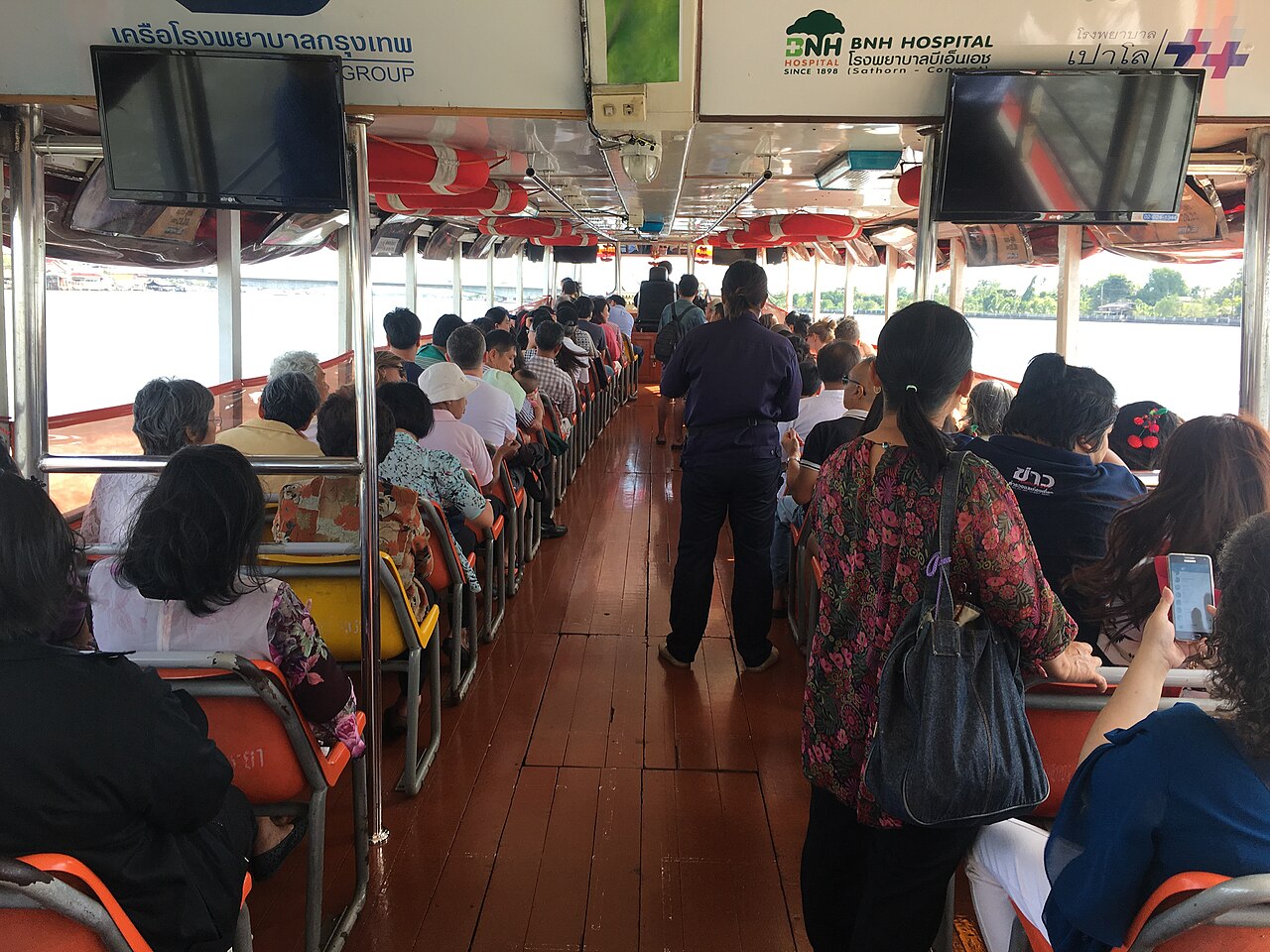
The river's main line runs every day and calls at nearly every pier that matters — Sathorn, Ratchawong, Tha Tien, Tha Chang and Phra Athit are all on it, from Wat Rajsingkorn up to Nonthaburi. Board first, then pay the conductor who works the aisle rattling a metal ticket tube: one flat fare of about ฿16 no matter how far you ride. Boats come every 10–20 minutes through the day. Remember this one line and you can cover the whole river.
These two run only on weekday mornings and evenings, built to get office workers home fast — which means they skip many of the smaller piers. Fares run roughly ฿21–33 depending on distance. Board one in a hurry without checking the flag and you can sail well past the stop you wanted. Check the colour at the stern before you step on; if you are not sure, let it go and wait for the next orange flag.
Built for visitors, this one calls only at the headline piers — Sathorn, ICONSIAM, Ratchawong, Tha Tien, Maharaj and Phra Athit — with English announcements telling you what to see at each stop, wider seating, and a hop-on-hop-off day pass at roughly ฿150–200. It is a good choice for your first day, while you are still finding your bearings. On a budget? The orange flag rides the same river with the same views for a fraction of the price — the difference is convenience, not scenery.
A separate system from the express boats: these small ferries simply shuttle straight across the river. The crossing visitors use most is Tha Tien to Wat Arun — pay about ฿5 at the booth, walk on, and you are on the Thonburi bank within minutes. Another worth knowing is Tha Chang across to Wang Lang by Siriraj Hospital, a lane of student-priced food. And if you want the cheapest "cruise" in the city, ride a ferry at sunset — same golden river as the expensive boats.
Once night falls, Wat Arun, the Grand Palace and Rama VIII Bridge all light up — and the only place you see them all properly is from mid-river. Most dinner boats leave in the evening from piers around ICONSIAM and River City, looping up past the old royal island for about two hours with a buffet or set dinner on board. Prices start around ฿1,000–1,500 per person and climb with the class of boat. Window tables and weekend sailings go fast, so book ahead.
The one rule that matters: look at the flag on the stern, not the colour of the hull. Orange is the one you are waiting for. Boats touch the pier only for a moment — stand near the boarding point, listen for the deckhand's whistle, and step on in rhythm with the locals. No ticket needed beforehand on the orange flag: find a seat and the conductor with the metal ticket tube will come to you.
On weekday rush hours, roughly 7–9 am and 4–6 pm, the boats genuinely fill up and most arrivals are yellow or green flags that skip the small piers. If you are hauling a suitcase or travelling with kids, avoid those windows — late morning to mid-afternoon is when the river is at its calmest.
Heading upstream from Sathorn, the left side faces Thonburi — Wat Kalayanamit, the Santa Cruz church, and the big moment: Wat Arun's spire appearing shortly after Ratchawong pier. The right side faces the old royal island — riverside Chinatown, Tha Tien and the long white walls of the Grand Palace. Better still, stand in the open section at the stern: a clear wide angle over both banks with no windows in the way.
The river's golden hour runs from about 5 to 6.30 pm, when the light turns low and orange across the water. Time a Tha Tien cross-river ferry for sunset and you get Wat Arun backlit against the sky for about ฿5 — cheaper than any tour in town.
Step off the boat in the late afternoon and the evening is already laid out for you — from Sathorn pier a free shuttle boat to ICONSIAM runs through the day, dropping you at the riverside food halls and the fountain show. Asiatique also runs an evening boat from Sathorn (schedules change, so check at the pier).
For a special night, book a dinner cruise ahead — most boats have you check in at piers around ICONSIAM or River City before a roughly 7 pm departure. From mid-river you watch Wat Arun glowing over the water, an angle no spot on shore can give you.
The easiest entry point is Sathorn pier — the only pier where the train practically delivers you to the gangway.
Three big sights the boats deliver you to — step off the pier and walk.