Ranked by popularity — out to see the real thing
Ordered by how popular they are, with an honest note on which is half a day, a full day, or an overnight.
 1
1
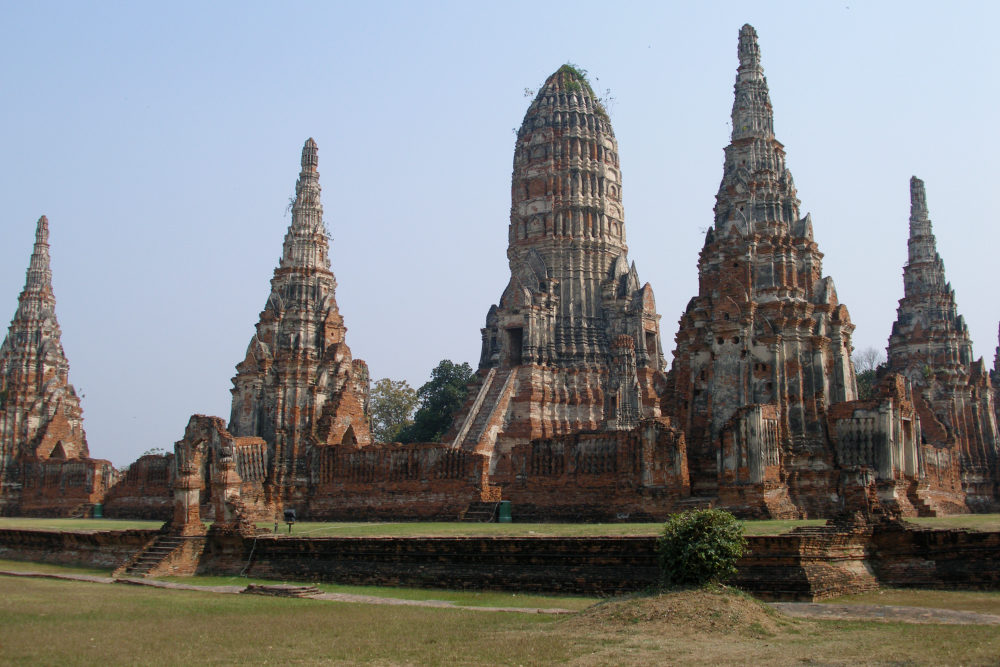
Stand in front of Wat Mahathat early in the morning, when the light slips through the bodhi tree whose roots cradle a sandstone Buddha head — that image, known around the world, sits only about 80 kilometres from Bangkok. Ayutthaya was the capital of Siam for 417 years (1350–1767) before it was burned in war, and today the island core is a historical park, on the UNESCO World Heritage list since 1991.
Our favourite stops: Wat Mahathat (the Buddha head in the tree roots), Wat Phra Si Sanphet (the three great chedis of the former royal temple) and Wat Chaiwatthanaram, the Khmer-style towers on the riverbank that look their best in late-afternoon light — some nights the ruins are lit up, check ahead. Rent a bicycle and you can ride the whole island at your own pace. Eat the local pair: boat noodles and roti sai mai, the cotton-candy roti the city is known for. For the full city guide, see our Ayutthaya guide.
 2
2
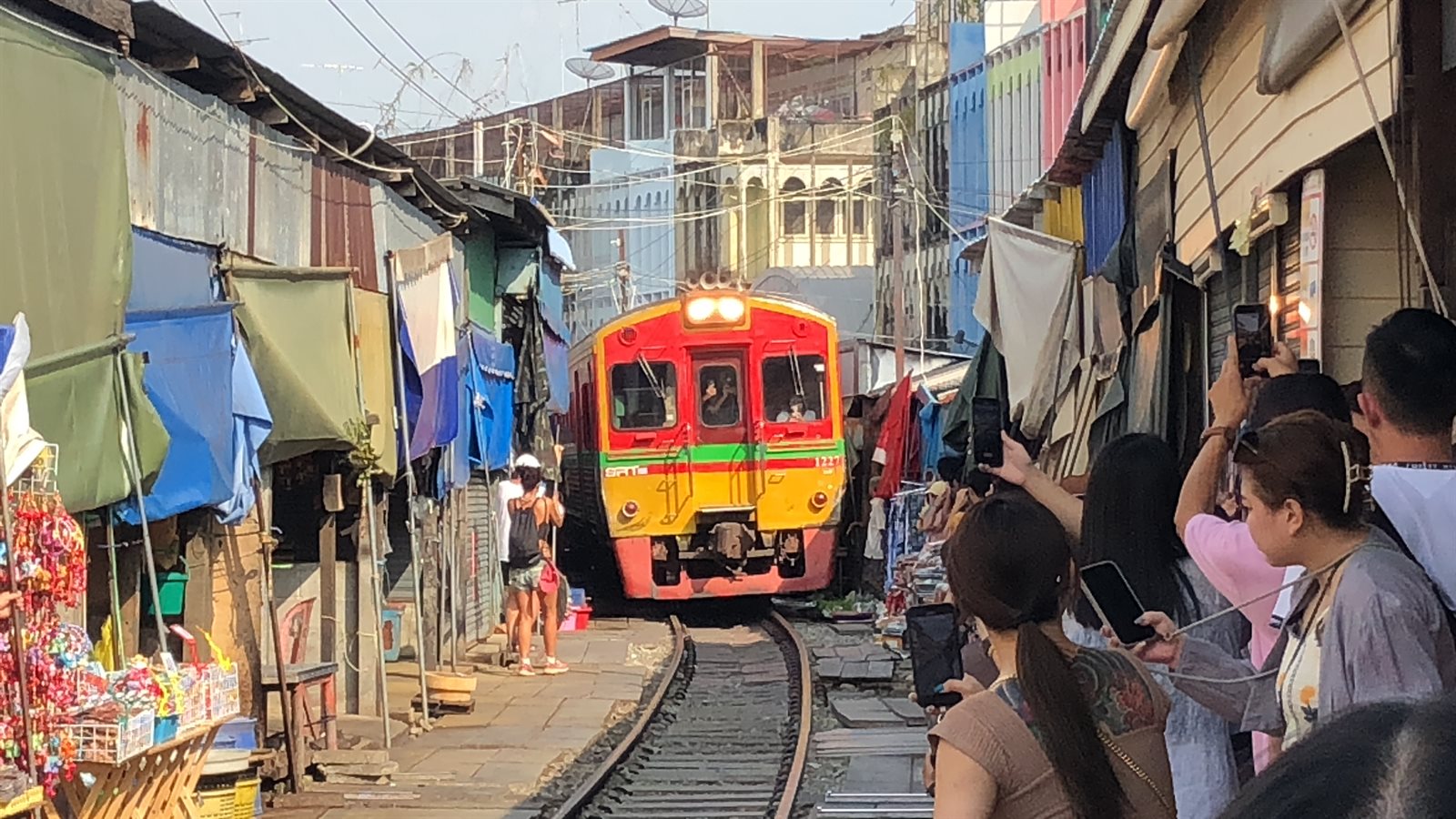
These two markets are the Thailand images the whole world flies in for, and they sit southwest of Bangkok along the same route — which is why nearly everyone pairs them as a half-day combo. Damnoen Saduak (Ratchaburi) is the morning one: paddle boats stacked with mangoes, noodles and fried bananas crowding the canal between about 8 and 10 am. We'll be honest — it is touristy, and priced for tourists, but the scene is worth it. The Maeklong Railway Market (Samut Songkhram) is a working fresh market set directly on live train tracks: when the train comes, vendors fold their umbrellas and slide their trays back in seconds, the carriages brush past centimetres from the produce, and everything springs back as if nothing happened — about 8 times a day.
We cover every market around the city in our floating markets guide; if you'd rather not drive the loop yourself, half-day combo tours pick up from Bangkok hotels.
 3
3
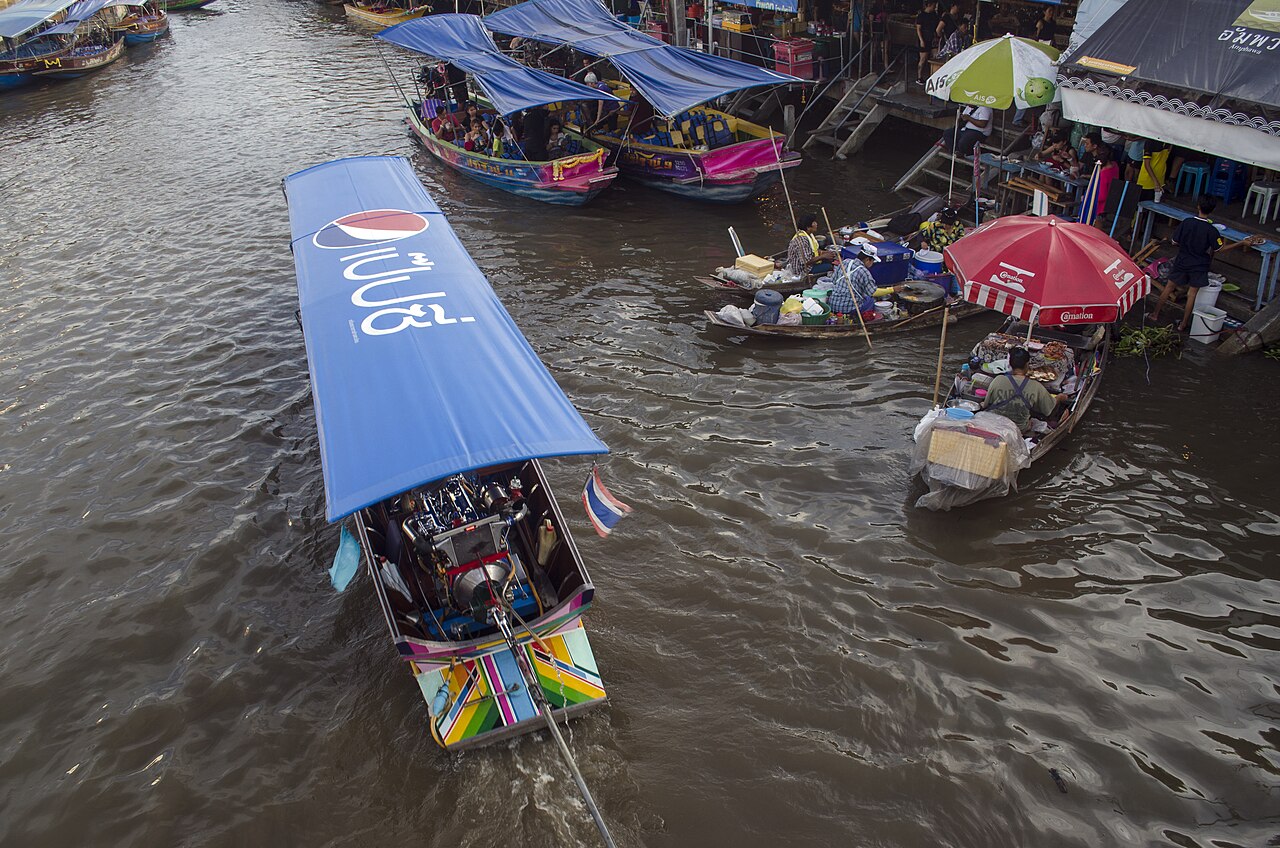
If Damnoen Saduak is the postcard floating market, Amphawa is the one Thais actually go to. It runs Friday to Sunday only, from mid-afternoon into the evening, along a canal lined with old wooden shophouses. Boats moor against the bank grilling river prawns, shellfish and squid, the smell drifting the length of the canal — you sit on the steps with your feet over the water and order straight from the boat.
After dark, long-tail boats run short trips to watch fireflies blinking in the lamphu trees along the river (roughly ฿60–100 a person). Nearby stands Wat Bang Kung, an ordination hall completely wrapped in the roots of a banyan tree. Amphawa sits only ~10 minutes from the Maeklong Railway Market, so the two pair into a tidy Saturday afternoon-and-evening run. For the wider province, see our Samut Songkhram guide.
 4
4
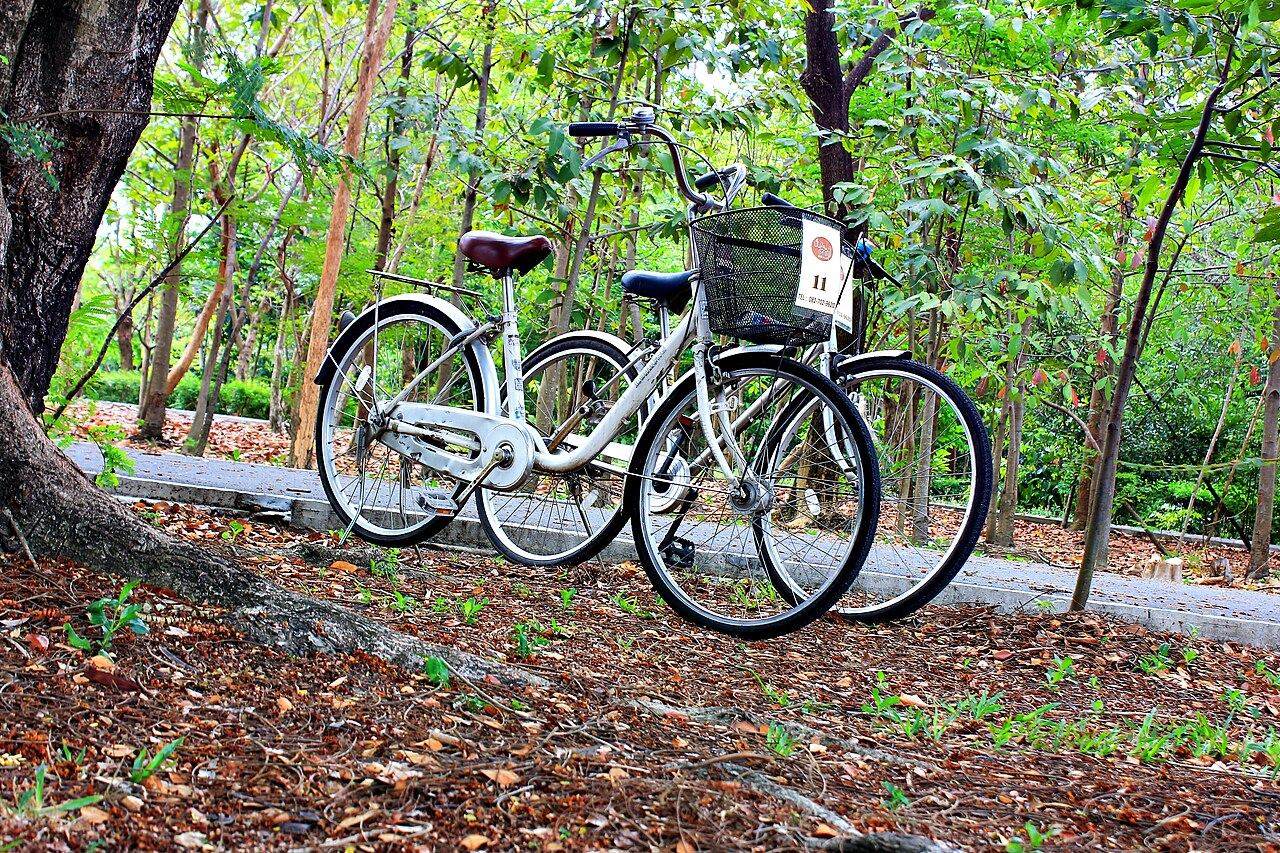
This one is special because you barely leave the city. Bang Krachao is a tongue of land wrapped in a bend of the Chao Phraya in Phra Pradaeng, directly opposite the Khlong Toei docks — from a plane it reads as a giant green blot pressed against the skyline, which is why the foreign press likes to call it Bangkok's green lung. The crossing takes minutes: a small ferry from the pier at Wat Khlong Toei Nok, about ฿10, and the city swaps for coconut groves, nipa palm and narrow elevated bike paths threading through the green.
Rent a bicycle at the pier and ride to Sri Nakhon Khuean Khan Park — free entry, a lake, a bird-watching tower — and on weekend mornings the small Bang Nam Phueng floating market. The raised concrete paths are narrow with the gardens right below, so take them slowly.
 5
5
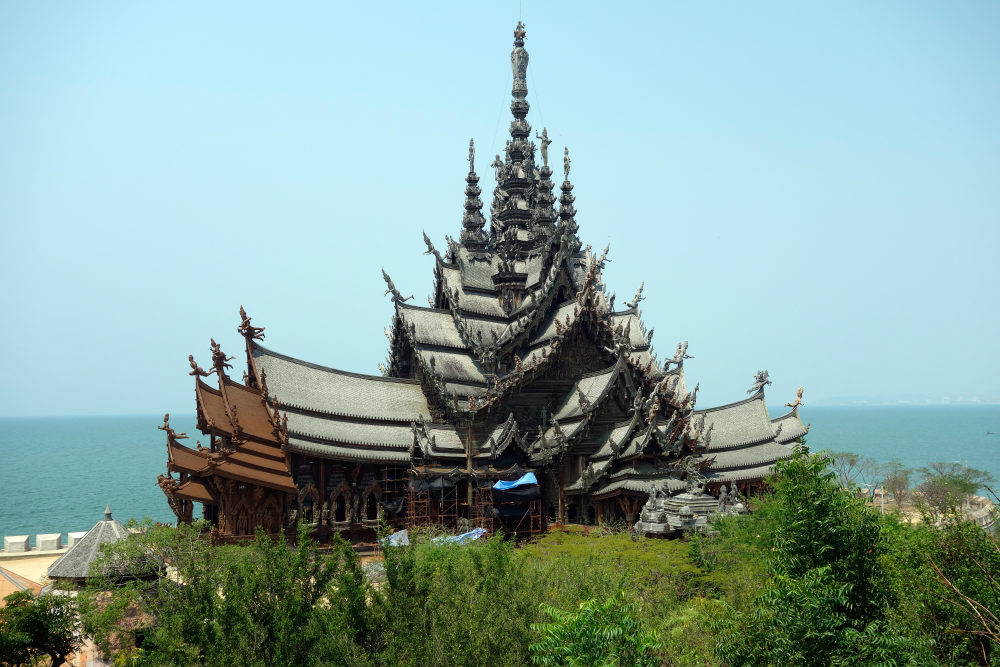
If you want the sea on a day's notice, Pattaya is the easiest answer from Bangkok — buses leave Ekkamai roughly every half hour and arrive in about two hours. For a day trip, the two things we rate most: the Sanctuary of Truth, a colossal all-wood temple-monument by the sea, carved end to end and still under construction since 1981 (entry ~฿500 — check ahead), and the boat to Koh Larn, where the water turns properly clear about 45 minutes offshore.
Walking Street is the nightlife strip that made Pattaya famous — we'll say it straight: it isn't for everyone. Families do better at the quieter Jomtien beach or the Nong Nooch gardens. For the full picture, see our Pattaya guide.
 6
6
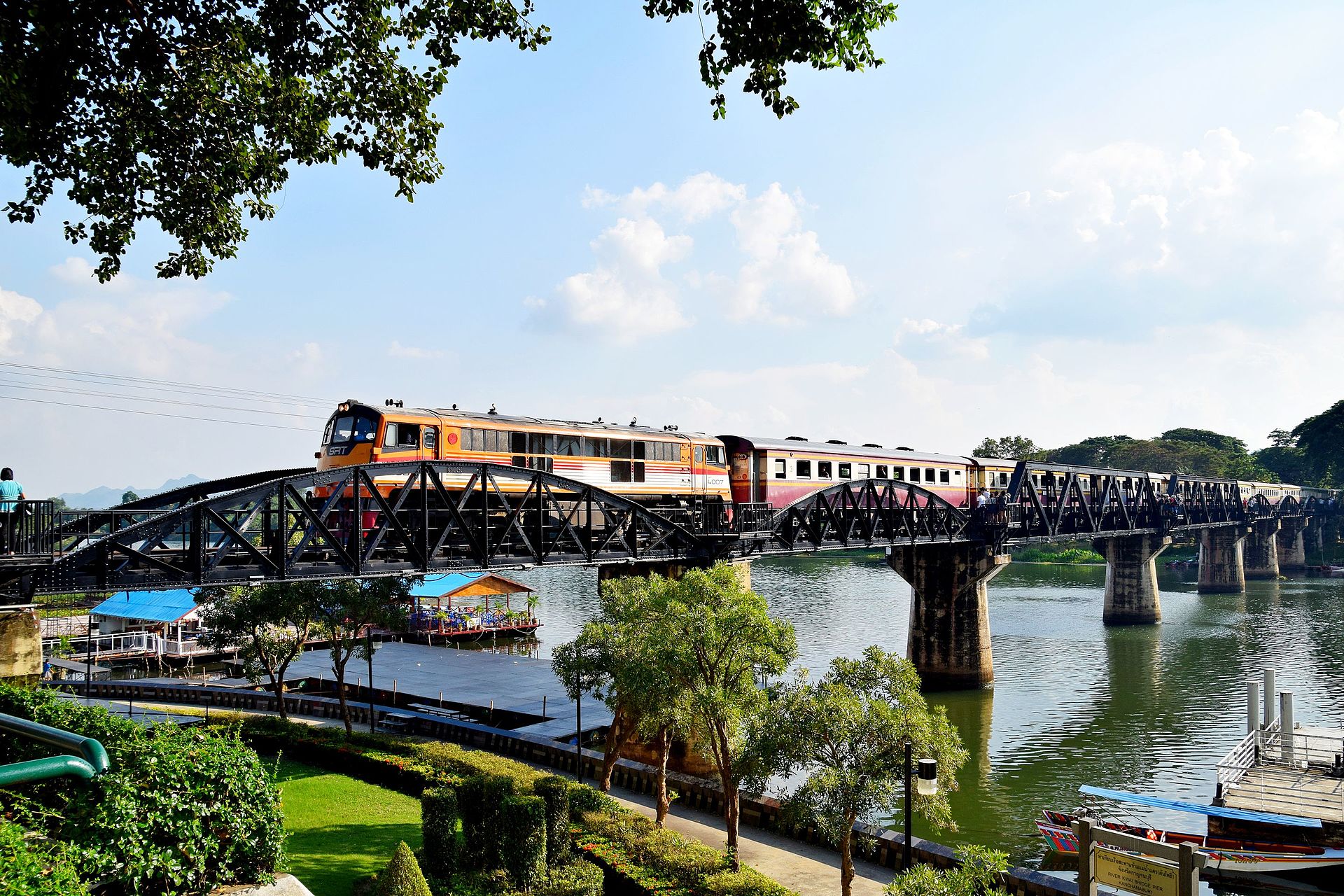
Let us say it straight away: Kanchanaburi can be done in a day, but it deserves a night — we've put it last because it's the trip to give more time to. The Bridge over the River Kwai is part of the WWII Death Railway, built by prisoners of war and conscripted labourers under the Japanese army; more than a hundred thousand people are believed to have died along the line. Walk the bridge, pay your respects at the Allied War Cemetery, and visit the Hellfire Pass memorial or one of the railway museums, which tell the story without flinching.
With more time, ride the line itself — the most striking stretch is the wooden trestle hugging the cliff at Tham Krasae, the Khwae Noi river running below. Stay the night and day two is Erawan Falls: seven tiers of emerald pools in a national park (foreigner entry ~฿300).