Vintage band tees, jungle plants, puppies, hand-thrown ceramics and coconut ice cream — all in one market of roughly 27 sections, open in full on Saturday and Sunday only, with an MRT exit that drops you straight inside.
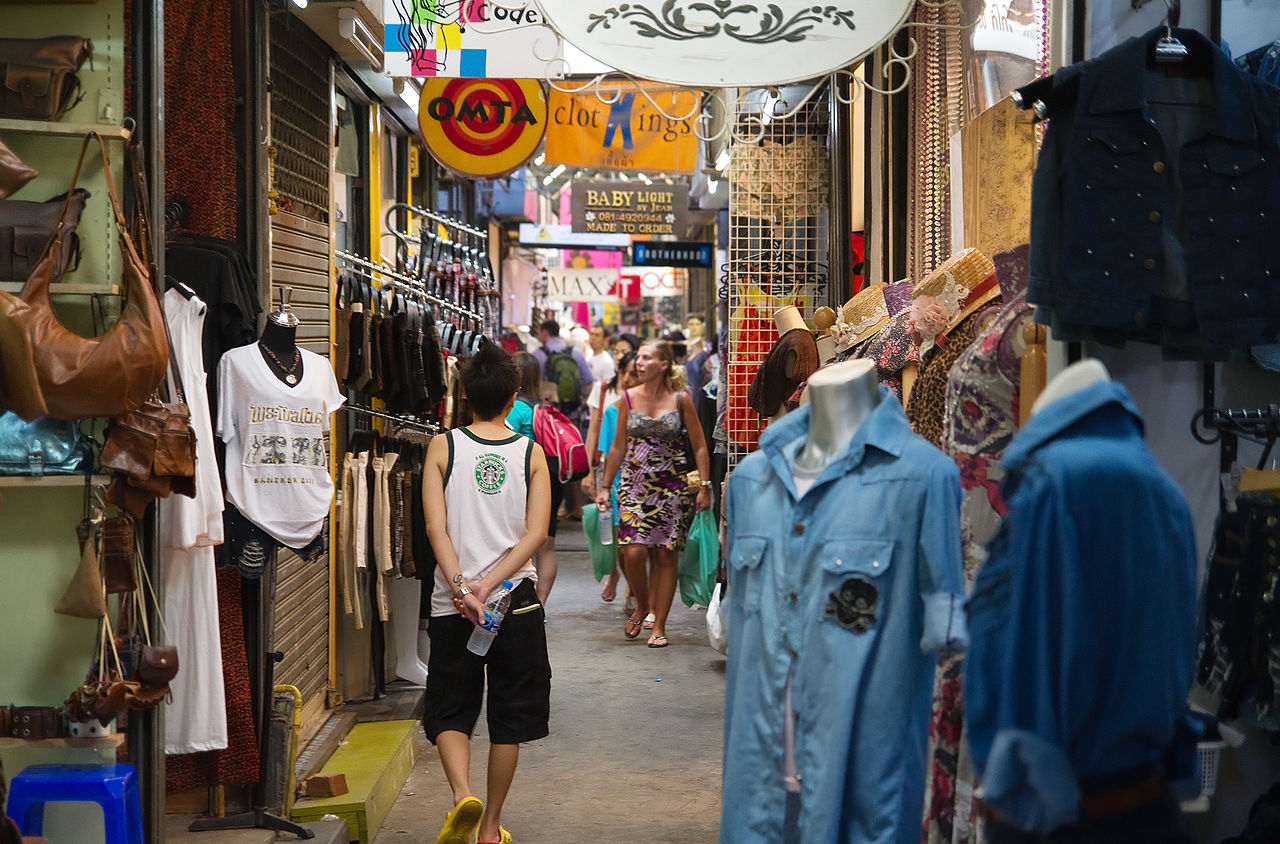
Picture this: 9 am on a Saturday, and you have just climbed the stairs out of MRT Kamphaeng Phet, Exit 2, to find yourself already standing inside the market. Ahead of you, a narrow lane hung with 1990s band T-shirts. Grilled pork smoke drifting in from the left, the back-and-forth of haggling from the right — and for the next few hours, you will be happily lost in a few dozen more lanes exactly like this one.
This is Chatuchak Weekend Market — locals call it JJ Market — said to be the largest weekend market in the world, with around 15,000 stalls across roughly 27 sections. The range runs from vintage clothing, plants and pets to furniture, handicrafts, collectibles and food good enough to justify the trip on its own. On a busy weekend day, visitor numbers are commonly put in the hundreds of thousands.
There is one rule that matters: the full market runs on Saturday and Sunday only, roughly 9 am to 6 pm. Midweek, only parts of it operate — the plant market on Wednesday and Thursday, for instance — and hours can shift, so check before you go. If your trip includes a weekend in Bangkok, give Chatuchak half a day of it.
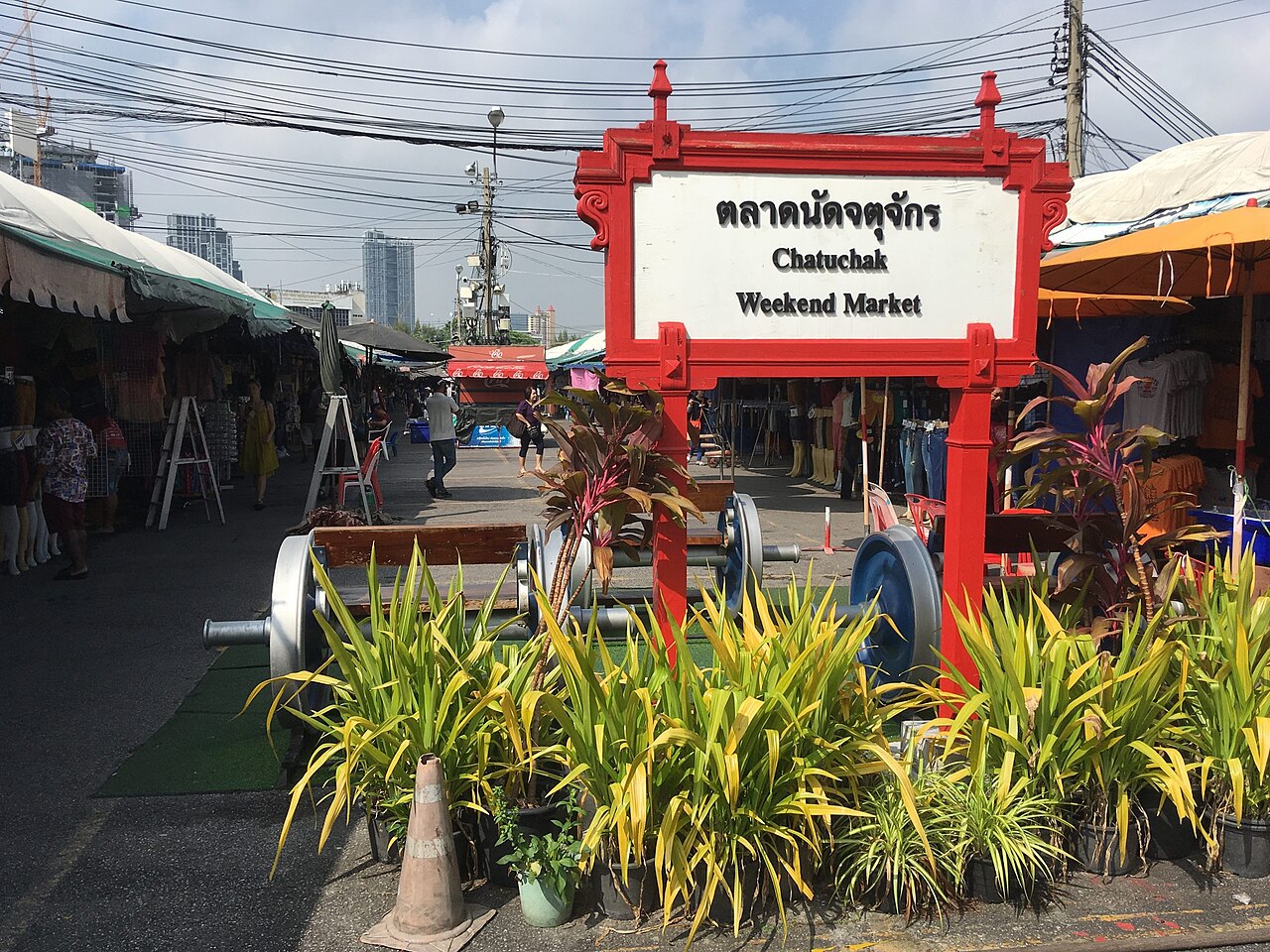
Section numbers are signposted throughout the market — know these five and the rest is browsing.
The clock tower is the market's traditional meeting point, and it has rescued generations of separated friends. If you lose your group — or lose any sense of where you are on the map — walk back to the clock tower and restart from there. It is the simplest navigation system Chatuchak has.
Band tees, worn-in denim, rare sneakers, military jackets — these lanes are the reason vintage collectors fly into Bangkok from across Asia. Stock turns over fast: if you find the piece, decide quickly, because the odds of wandering back to the same rack later are slim.
Houseplants, cacti, ceramic pots and air-purifying greenery at a fraction of mall garden-centre prices. The plant market is at its fullest on Wednesday and Thursday, when whole rows turn into a temporary garden. Travellers cannot take plants home through customs, but it is a genuinely pleasant walk regardless.
Walking through melts most people, and if you have children with you, this will be their highlight. To be straightforward about it: this section draws fair questions about animal welfare. Browse if you like, and think hard before buying.
Hand-painted ceramic tableware, leather bags at negotiable prices, rattan lamps, woodwork — this is where to find souvenirs that do not look like souvenirs. Several stalls here supply boutiques abroad, which tells you something about the quality at the top end.
The easiest way in is MRT Kamphaeng Phet, Exit 2 — the stairs surface inside the market, no road crossings involved. From there, use the clock tower as your main reference point and watch for the numbered section signs at the larger junctions. The market is laid out as small lanes branching off main walkways; loop the main walkways first, then dive into the lanes, and you will stay roughly oriented.
The iron rule of Chatuchak: if you like a stall but are not buying yet, photograph its sign and section number. The chance of finding the same stall again by wandering is close to zero. Most stalls display a lot number you can use to ask for directions later.
Most stalls deal in cash. Some accept PromptPay QR payments — which only work with Thai banking apps — and credit cards are limited to a few larger shops. There are ATMs inside the market, but afternoon queues get long; arriving with enough cash is the easier play.
Haggling is normal here, done politely and with a smile. Expect around 10–20% off, more readily when buying several items from one stall. Many starting prices are already reasonable, so push gently — Chatuchak vendors have seen every negotiation tactic ever invented.
Chatuchak afternoons are genuinely hot and genuinely packed. The plan that works: arrive around 9 am, walk your priority sections in the cooler morning, and shift to eating by late morning. Cold coconut water and coconut ice cream are the market's unofficial cooling system. Dress light and wear shoes you can walk in for hours — the lanes are covered but the air inside them sits still and warm.
If you start fading, head for air conditioning: Mixt Chatuchak, the mall attached to the market (open daily), or one of the air-conditioned cafes around the edges. Toilets are dotted throughout for a small fee. And keep your wallet and phone in front pockets — in tight, crowded lanes, pickpockets work Chatuchak the way they work every big market on earth.
The short answer: take the train — three stations ring the market, and the ride home skips the traffic entirely.
Bangkok is a city of markets — after Chatuchak there are floating markets, street-food districts and Chinatown still waiting.