Home Suzhou China Suzhou Hotels About
Home  ›  China  ›  Suzhou  ›  First-Timer Guide
Suzhou First-Timer Guide · 2026

Your first trip to Suzhou
Everything you need, nothing you don't

The Jiangnan garden city just half an hour from Shanghai by high-speed rail — UNESCO classical gardens, old canals, wooden rowing boats sliding under stone bridges, and waterside lanes people still actually live in. This guide is built from verified facts and real visitor accounts to get you ready before you leave home.

Why start here

Suzhou is China's garden-and-canal city

If the image in your head of a Chinese garden — a curved-roof pavilion, oddly shaped rocks, a pond mirroring willows and a stone bridge arching over a canal — has a name, that name is Suzhou. This 2,500-year-old city in Jiangsu province is the one Chinese tradition pairs with Hangzhou in the saying "in heaven there is paradise, on earth there is Suzhou and Hangzhou." It holds nine UNESCO World Heritage classical gardens, a grid of ancient canals cutting through the old town, and a ring of historic water towns that still keep their waterside way of life.

Right next to Shanghai — the high-speed train from Shanghai Hongqiao takes just 23–30 minutes and costs ¥35–40 (~฿175–200), so many travellers come over as a day trip from Shanghai → or build a Shanghai–Suzhou–Hangzhou triangle. Two cities in one — the western old town is gardens and canals, while the eastern Suzhou Industrial Park (SIP) around Jinji Lake is all modern towers, malls and an evening skyline. Safe and walkable — the old town is flat, perfect for walking and cycling along the canals.

A note on this guide: All prices, hours and logistics here are drawn from public sources and verified visitor accounts. Details change — check for the latest before you travel.
Trip planning

How many days do you need?

It depends how you arrive. As a day trip from Shanghai, you can still catch the core — the Humble Administrator's Garden, the Lion Grove Garden, the Pingjiang canal and Shantang Street. But to do the city justice, two or three nights is far better: you get to walk the gardens unhurried, add Tiger Hill and the Jinji Lake side, and take the metro out to a water town.

☀️
1 Day — a day trip from Shanghai
For travellers based in Shanghai

A 30-minute morning train from Shanghai Hongqiao → the Humble Administrator's Garden early before the crowds → Lion Grove Garden → Suzhou Museum → squirrel mandarin fish for lunch → a walk and tea along the Pingjiang canal → Shantang Street under red lanterns at dusk, then catch the last train back.

🗓️
2–3 Days — the full city
The version most people wish they had booked

Day 1 covers the old-town gardens and canals; Day 2 adds the Lingering Garden, Tiger Hill (虎丘) and the modern Jinji Lake side, or a water town; Day 3 takes Metro Line 4 to Tongli, or a full day at Zhujiajiao or Zhouzhuang.

Plan in detail: 1-day itinerary · 2 days, 1 night · 3-day itinerary · day trip from Shanghai

Getting oriented

Gardens, water towns and a new city — Suzhou's three faces

Before you plan a first trip, understanding Suzhou's three sides makes laying out your days much easier. See the full picture at Suzhou attractions →

Classical gardens (old town)
The heart of Suzhou · UNESCO World Heritage

Jiangnan-style gardens designed to look like paintings — pavilions, covered walkways, ponds, rockeries and latticed windows. The headliners are the Humble Administrator's Garden (the largest), the Lion Grove Garden with its rock maze, and the Lingering Garden. See them all at the Suzhou gardens guide →

Where: Western old town, Metro Lines 1/4 plus a short walk
Water towns + old canals
A waterside life that is still real

Inside the old town, the Pingjiang canal and Shantang Street are made for waterside strolls, boat rides and tea. Just outside the city are ancient water towns such as Tongli, Zhujiajiao and Zhouzhuang — arched stone bridges, timber houses over the water and rowing boats. See them all at water towns near Suzhou →

Where: Pingjiang/Shantang in town · Tongli at the end of Line 4
The new city: SIP + Jinji Lake
The side many visitors don't know exists

The eastern half is the Suzhou Industrial Park (SIP) around Jinji Lake — modern towers, the curving Gate of the Orient, big malls, a Ferris wheel and an evening fountain show. The place to see a different Suzhou from the old gardens. Metro Line 1 runs right through it.

Where: Eastern SIP, Metro Line 1 (Jinji Lake)
Tiger Hill + Hanshan Temple
Landmarks beyond the gardens

Tiger Hill (虎丘) to the north has a thousand-year-old leaning pagoda locals call Suzhou's Leaning Tower, while Hanshan Temple (寒山寺) has a bell made famous by an old Chinese poem. Both pair nicely with a second day. More sights at Suzhou attractions →

Where: Tiger Hill via Metro Line 2, Huqiu station, plus a walk or bus
Getting in

Most people arrive from Shanghai

Suzhou has no major airport of its own — most visitors fly into Shanghai (Pudong PVG or Hongqiao SHA) and connect by high-speed rail, or come over from Hangzhou or Nanjing. It's very close and very fast.

High-speed rail from Shanghai
The easiest, fastest way

From Shanghai Hongqiao to Suzhou Railway Station (苏州站) takes about 23–30 minutes for ¥35–40 (~฿175–200), with departures every 10–15 minutes. Suzhou Railway Station sits on the edge of the old town, with Metro Lines 2/4 straight into the centre. Suzhou North (苏州北站) is on the SIP side (Line 2) — handy if you're staying near Jinji Lake. Book on 12306 or Trip. See the China high-speed rail guide →

Tip: Use your passport to tap through the station gates — no paper ticket to collect
From Shanghai's airports
Land at PVG or SHA, then take the train

Landing at Hongqiao (SHA) is easiest, since the airport is attached to Hongqiao Railway Station — walk straight to your Suzhou train. From Pudong (PVG), take the maglev or Metro Line 2 to Hongqiao first, then the high-speed train, for a total of about 2–2.5 hours to Suzhou. Allow extra time if you arrive at Pudong.

Tip: If your trip starts in Shanghai, do Shanghai first and slot Suzhou in on the way out
Planning a day trip: if you're based in Shanghai with just one day, see the route and last-train-back timings at Suzhou as a day trip from Shanghai →
In the city

Getting around & paying for things

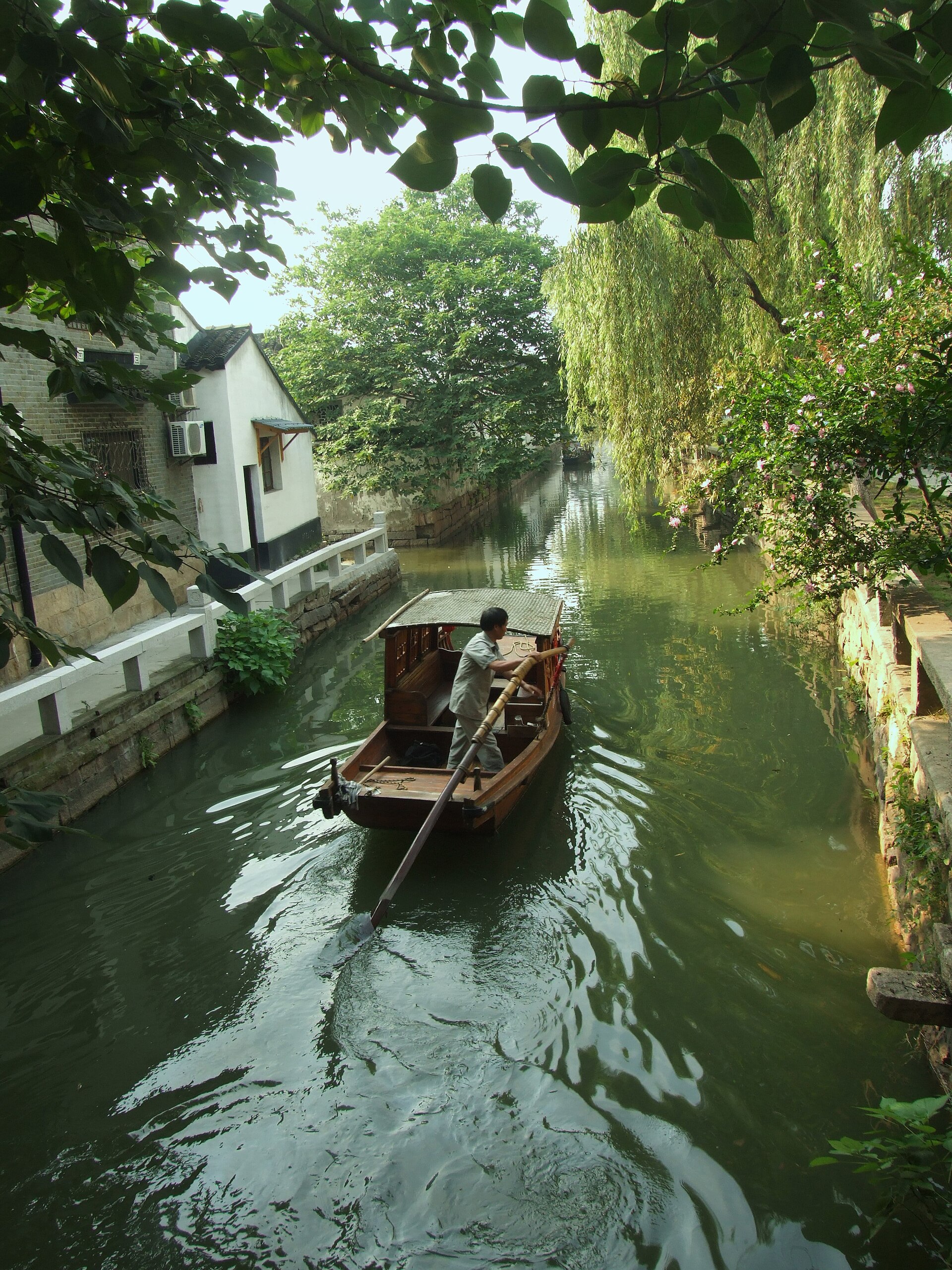
An old-town canal in Suzhou — a wooden rowing boat with a standing boatman gliding under willows beside whitewashed waterfront houses
Metro, walking and cycling
5 lines · a flat, walkable old town

Suzhou's metro runs 5 lines, fares ¥2–8 (~฿10–40) per ride. Line 1 runs east–west through the old town all the way to the SIP and Jinji Lake; Line 2 passes the railway station and Tiger Hill; Line 4 heads south to Tongli. Pay by scanning an Alipay or WeChat Pay QR code at the gate. One thing to know: the old-town lanes and canal banks aren't reachable by metro — you walk or cycle (Hello/Meituan bikes). The upside is that the old town is flat and easy on foot, with many gardens close together, and some stretches are best seen by canal boat. Full guide at getting around Suzhou →

Navigation: Use Amap (Gaode Maps) or Apple Maps — Google Maps does not work in China
💳
Paying for things
Alipay · WeChat Pay · credit card · cash backup

The whole city runs on mobile payment. Street stalls, market vendors, old-town tea houses and boatmen often take Alipay or WeChat Pay only, with no card reader at all. Hotels and larger restaurants accept Visa and Mastercard. Set up the tourist version of Alipay before you leave home: it accepts foreign Visa and Mastercard and works immediately. Alternatively, withdraw yuan from a Bank of China or ICBC ATM — ¥500–1,000 covers most small purchases. Full guide: paying in China →

Internet: Google / social media blocked without VPN — see VPN & eSIM guide →
Accommodation

Which area should you stay in?

Choosing a base in Suzhou is much easier once you know what your trip is built around — gardens and canals (the old town) or malls and night views (the Jinji Lake side). See real reviews at Top 10 Hotels in Suzhou → and 6 luxury hotels →

Old town / around Guanqian (观前)
The best first-timer base

The heart of a garden-and-canal trip: step out to the Humble Administrator's Garden, the Pingjiang canal and Guanqian Street within a short walk or metro hop. An old-town atmosphere with plenty of local restaurants, and rooms from hostels up to boutique stays.

Best for: First-timers who want gardens, canals and old-town walks
Jinji Lake / SIP (金鸡湖)
New city, malls and night views

The modern district around Jinji Lake — towers, big malls, international restaurants and plenty of international-brand hotels, with a handsome evening skyline. A good fit if you want comfort and space; Metro Line 1 reaches the old town in about 20 minutes.

Best for: Families, shoppers, fans of newer spacious hotels
Near Suzhou Railway Station
Practical for rail connections

If you're transiting or doing multiple cities, the area around Suzhou Railway Station is very convenient — tap your passport and you're on a train to Shanghai, Hangzhou or Nanjing. Metro Lines 2/4 run from the station, and it sits on the northern edge of the old town, within reach of Tiger Hill.

Best for: Multi-city trips, fast in-and-out travellers
Around Tiger Hill / north side
Quieter, better value

The area around Tiger Hill (虎丘) on the north side is quieter than the centre and easier on the wallet. A good choice if you don't mind not sleeping right in the old town, in exchange for a short metro ride or DiDi to the main gardens.

Best for: Budget travellers, anyone who likes a quieter base
The highlights

Sights that first-timers shouldn't miss

Suzhou has more to see than most visitors can cover in one trip. These six are the core. Full details at Suzhou attractions → or go deeper on every garden at the Suzhou gardens guide →

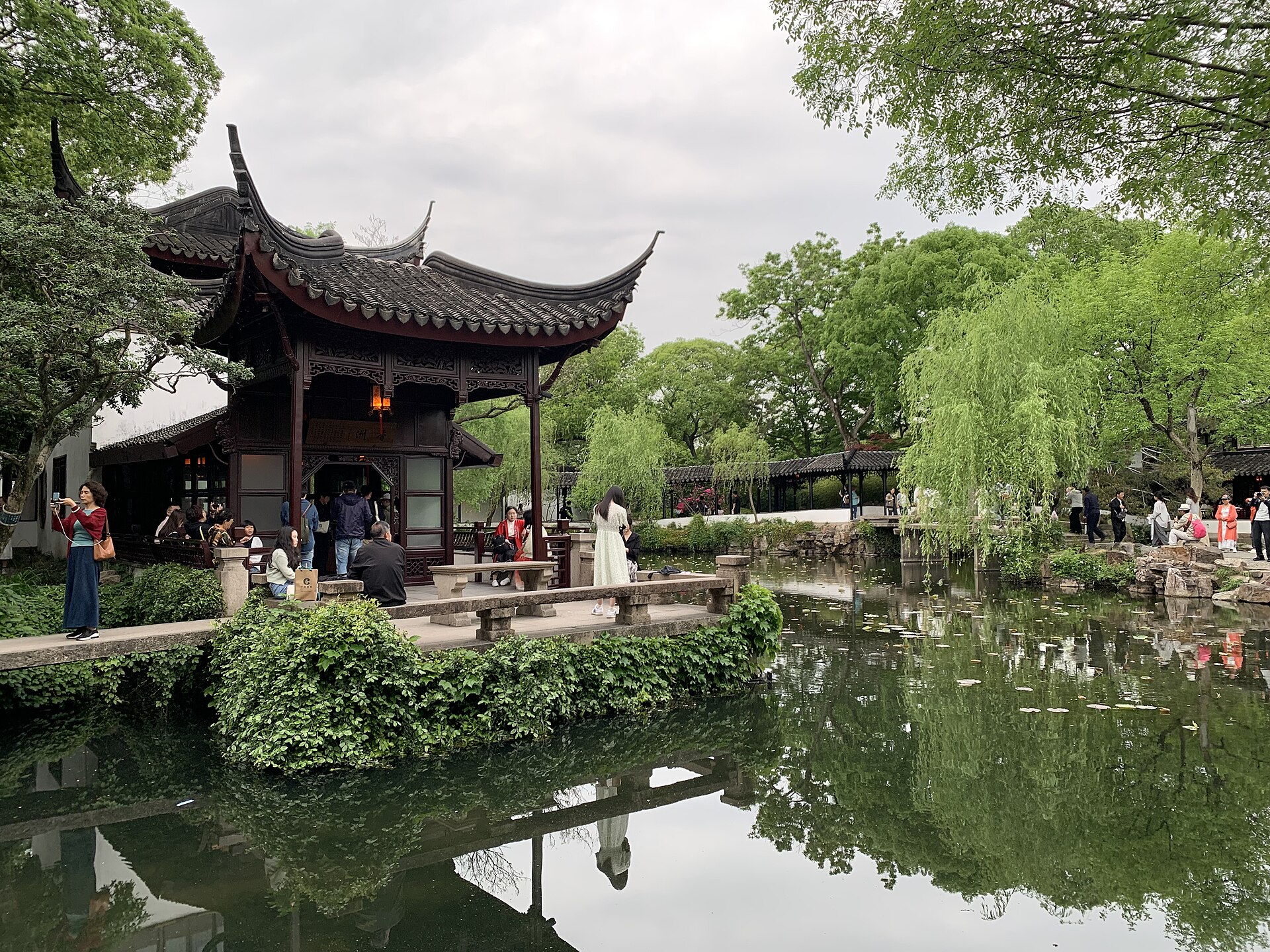
The Humble Administrator's Garden, Suzhou — a curved-roof pavilion reflected in a pond, willows draping over the water and visitors in traditional dress
Ticket ~¥80 (~฿400) · UNESCO site · the largest garden

Suzhou's largest and most famous classical garden, laid out in the Ming dynasty — ponds, pavilions, covered walkways, zigzag bridges and summer lotus. It's the template for all of Jiangnan garden design. Come early before the crowds for the quietest atmosphere.

Metro: Line 4, Beisita station, ~10-minute walk
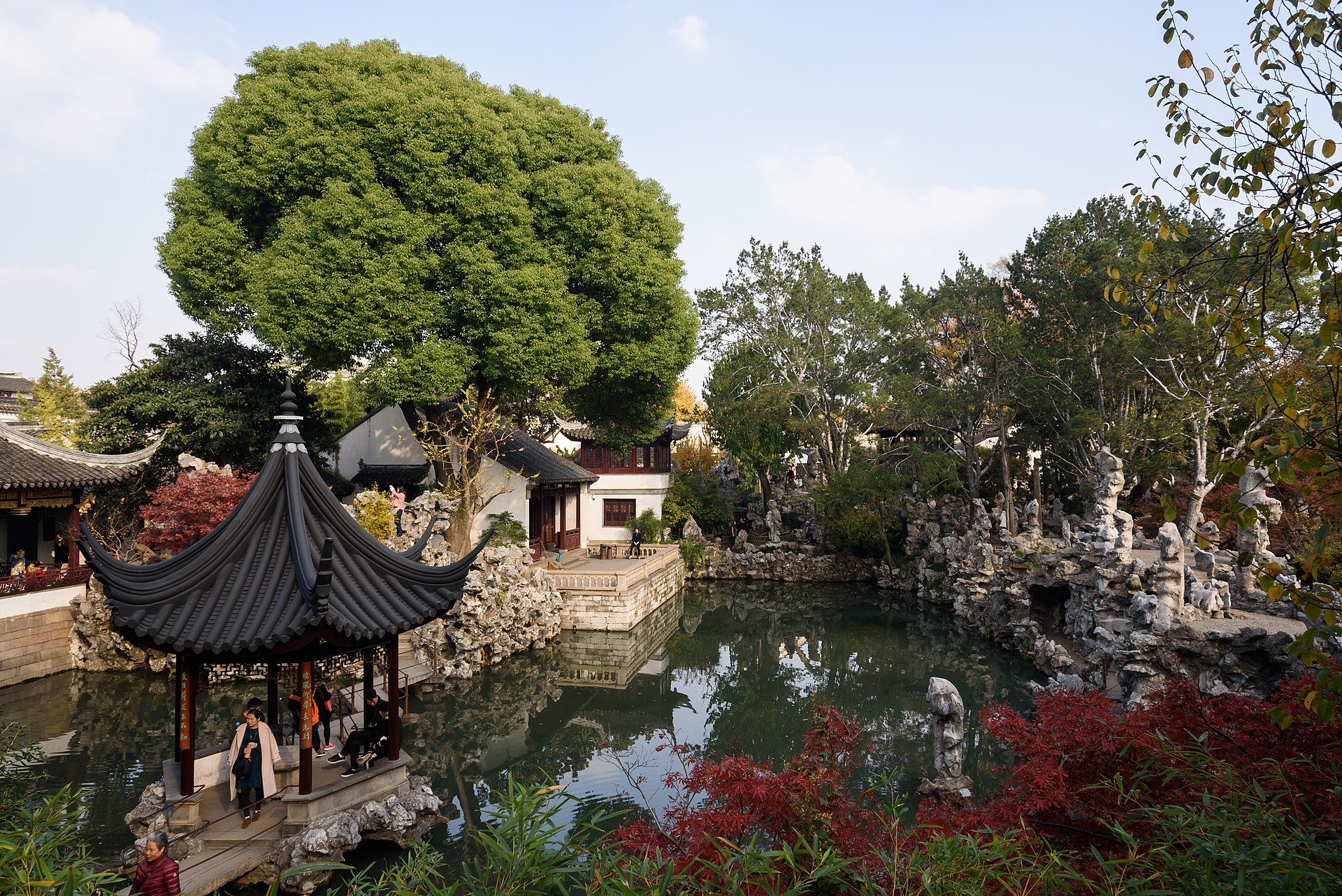
The Lion Grove Garden, Suzhou — a pavilion beside a pond reflecting the water, with strangely shaped rocks stacked into a maze and large green trees
Ticket ~¥40 (~฿200) · UNESCO site · a rockery maze

The garden adults and children enjoy in equal measure, thanks to its Taihu rockery stacked into a maze you can clamber and duck through. Many of the rocks resemble lions, which gives the garden its name. It's a garden you play in, not just look at — and it sits right next to the Humble Administrator's Garden, so the two pair perfectly.

Metro: Next to the Humble Administrator's Garden — walk between them
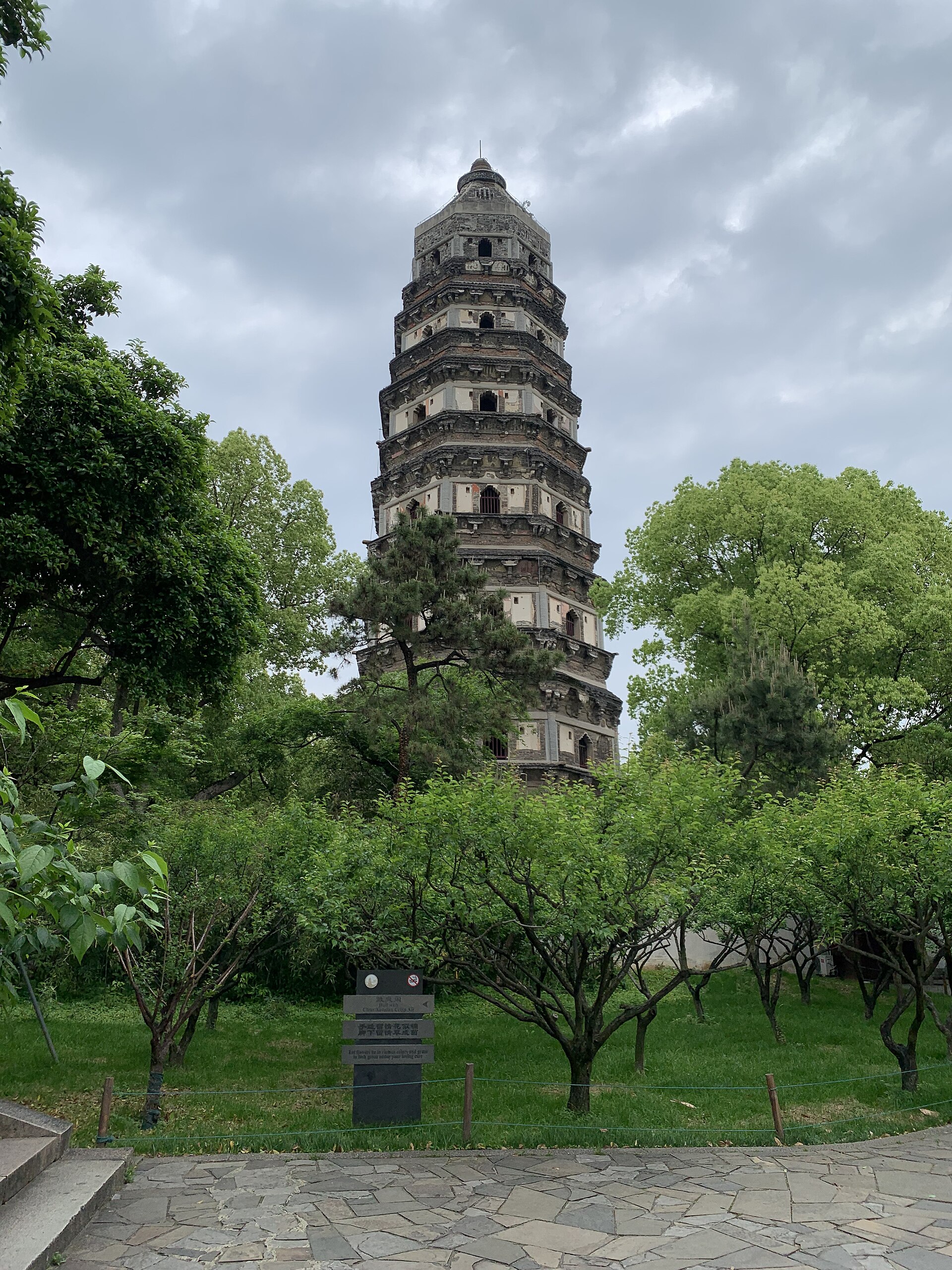
Tiger Hill, Suzhou — a tall brick pagoda leaning slightly, standing on a wooded hill among green trees
Ticket ~¥60 (~฿300) · a thousand-year-old leaning pagoda

A hill on the north side of the city crowned by the Yunyan Pagoda, which leans just enough that locals call it Suzhou's Leaning Tower. It's over a thousand years old, surrounded by the Sword Pool, pavilions and legends of ancient kings — the landmark beyond the gardens that Suzhou locals are proudest of.

Metro: Line 2, Huqiu station, plus a bus or walk
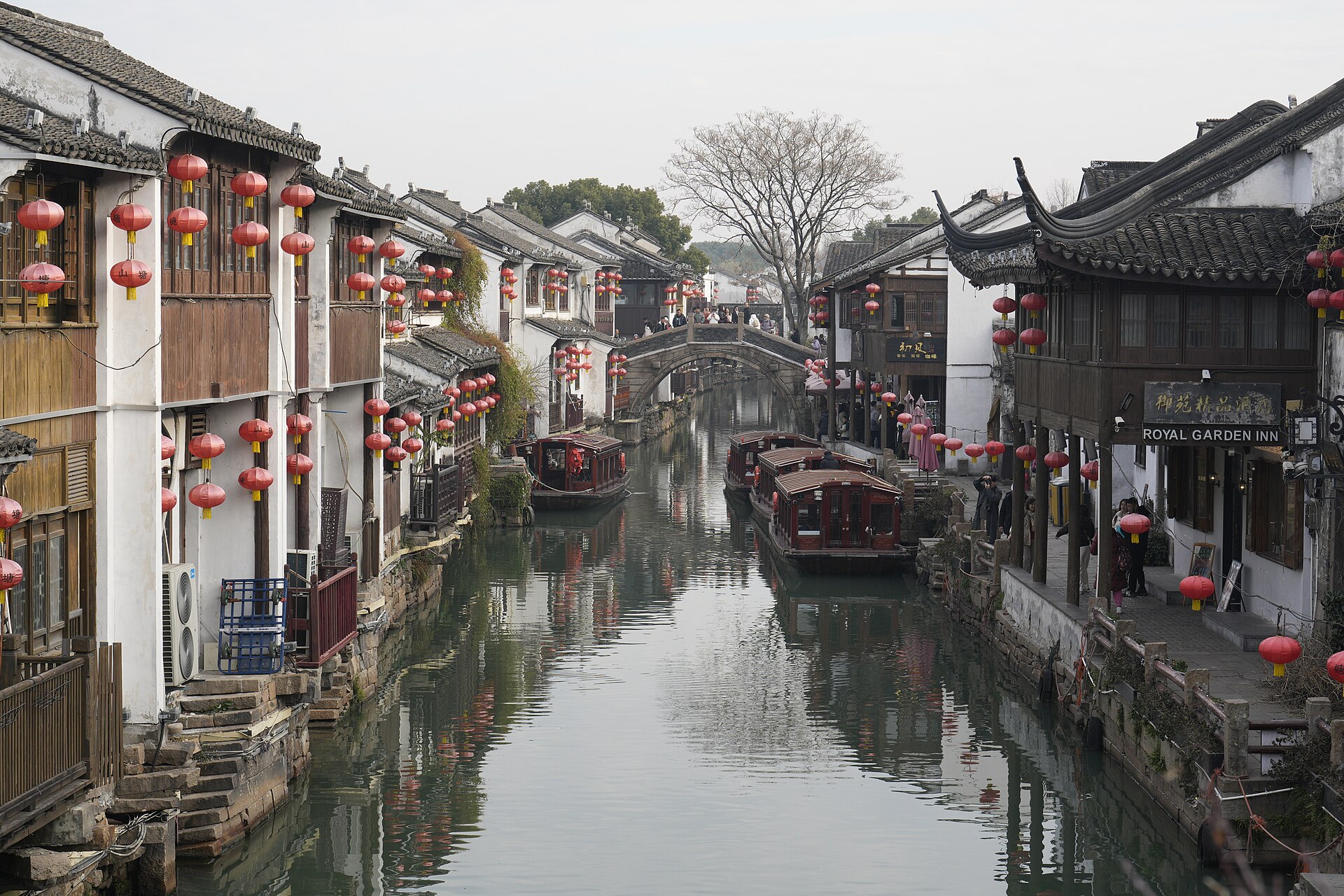
Shantang Street, Suzhou — an old-town canal lined with timber houses hung with red lanterns, wooden boats moored along it and a stone arch bridge in the middle
Free · best at dusk · canal-side street food

The two most famous canal lanes — Shantang is longer, strung with red lanterns over the water; Pingjiang is quieter and more classically Suzhou. Walk the waterside, sip tea, graze on street food, or take a rowing boat at dusk. The postcard image of Suzhou comes from right here.

Getting there: Pingjiang in the old town · Shantang to the northwest
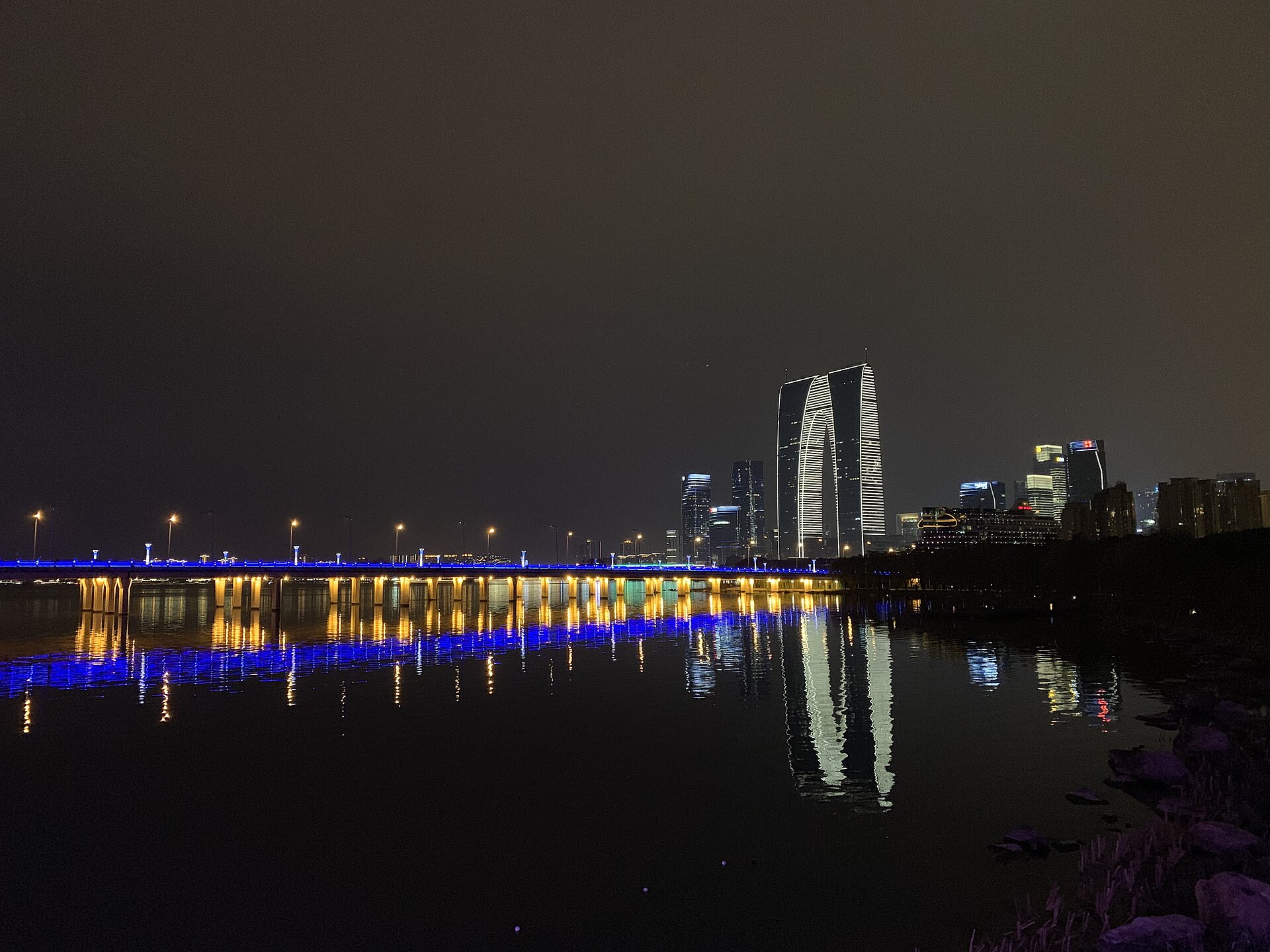
Jinji Lake, Suzhou, at night — the curving illuminated Gate of the Orient tower reflected in the water, with a bridge lit in blue and gold
Jinji Lake + SIP (金鸡湖)
Free · the new city · night views

The side of Suzhou many visitors don't know exists — a lake at the centre of the new district, ringed by skyscrapers, the curving Gate of the Orient, big malls, a Ferris wheel and an evening fountain show. Walk the lakeside at dusk for a modern-skyline contrast to the old gardens.

Metro: Line 1, Dongfangzhimen / Times Square stations
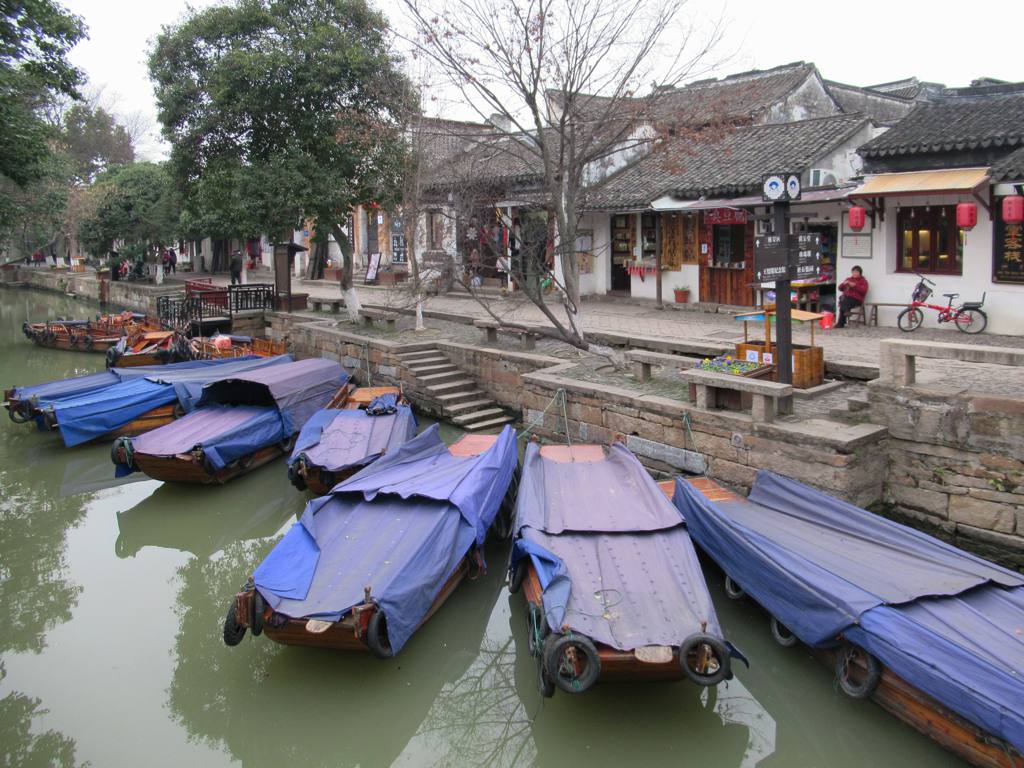
A water town near Suzhou — an ancient canal lined with whitewashed houses under black-tiled roofs, wooden boats and an arched stone bridge
Tickets ~¥80–100 · Tongli · Zhujiajiao · Zhouzhuang

Several ancient water towns ring the city — Tongli (reachable on Line 4), Zhujiajiao and Zhouzhuang, the last often called the "Venice of the East." Timber houses over the water, arched stone bridges, rowing boats and a waterside life that is still real, not staged. A natural choice for a third day.

Getting there: Tongli at the end of Line 4 · Zhujiajiao/Zhouzhuang by bus
If you have more time: add the architecturally beautiful Lingering Garden → or walk the gardens in order with the Suzhou gardens guide → See everything at Suzhou attractions →
Eating in Suzhou

What to eat on your first visit

Suzhou has its own regional cuisine — called subang (苏帮菜) — built on fresh ingredients, a faintly sweet edge and careful, almost handcrafted cooking, in the gentle Jiangnan style. Full guide: Suzhou food guide →

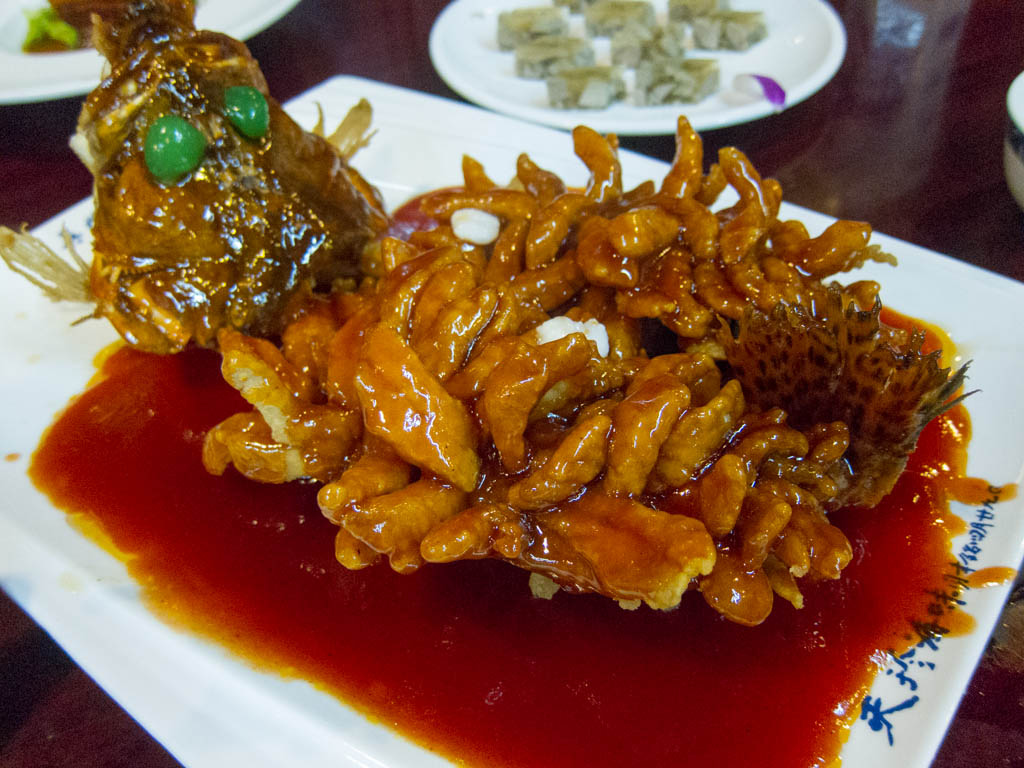
Squirrel mandarin fish, Suzhou — a deep-fried fish scored to fan out like a flower, draped in a glossy red sweet-and-sour sauce and served whole on a long plate
Squirrel Mandarin Fish (松鼠鳜鱼)
Crisp-fried scored fish in sweet-sour sauce · the signature dish

The dish everyone tries — freshwater mandarin fish scored so it fans out like a squirrel's tail, deep-fried crisp and draped in a glossy red sweet-and-sour tomato sauce while the flesh inside stays tender. It's as much a piece of craftsmanship on the plate as it is dinner. On every subang menu in town.

Price: ¥100–200 (~฿500–1,000) · see this dish →
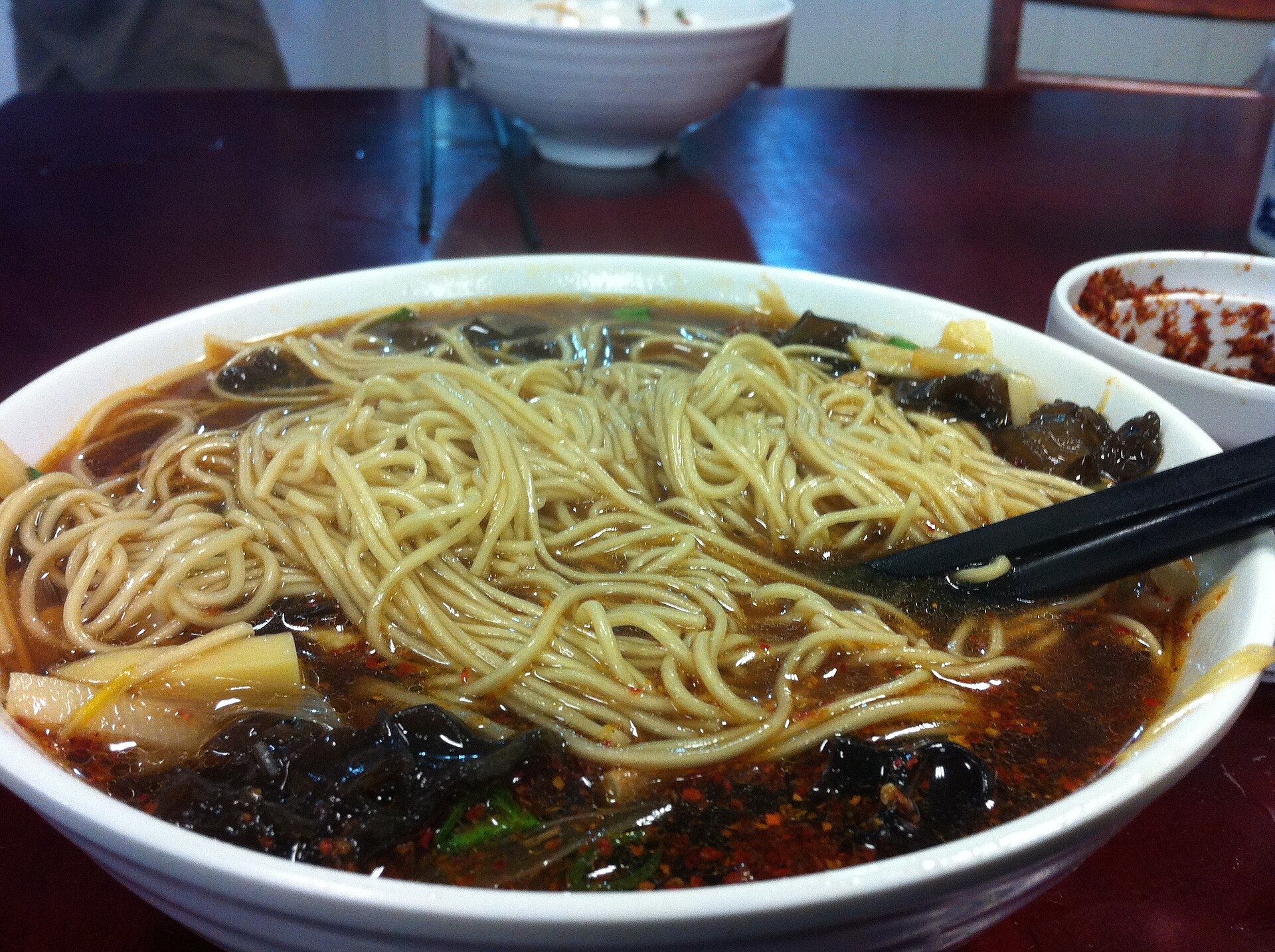
Suzhou noodles — thin yellow noodles in a dark brown broth, with toppings and a side of chilli flakes
Suzhou Noodles (苏式汤面)
Noodles in a clear broth · the local breakfast

Locals start the day with a bowl of noodles — thin strands in a balanced clear broth, topped with your choice (浇头) of braised pork, steamed fish or shrimp, ordered separately to taste. The broth is the soul of it, simmered for hours from bones and fish. Try a bowl in the morning at one of the city's old noodle houses.

Price: ¥15–40 (~฿75–200) · see Suzhou noodles →
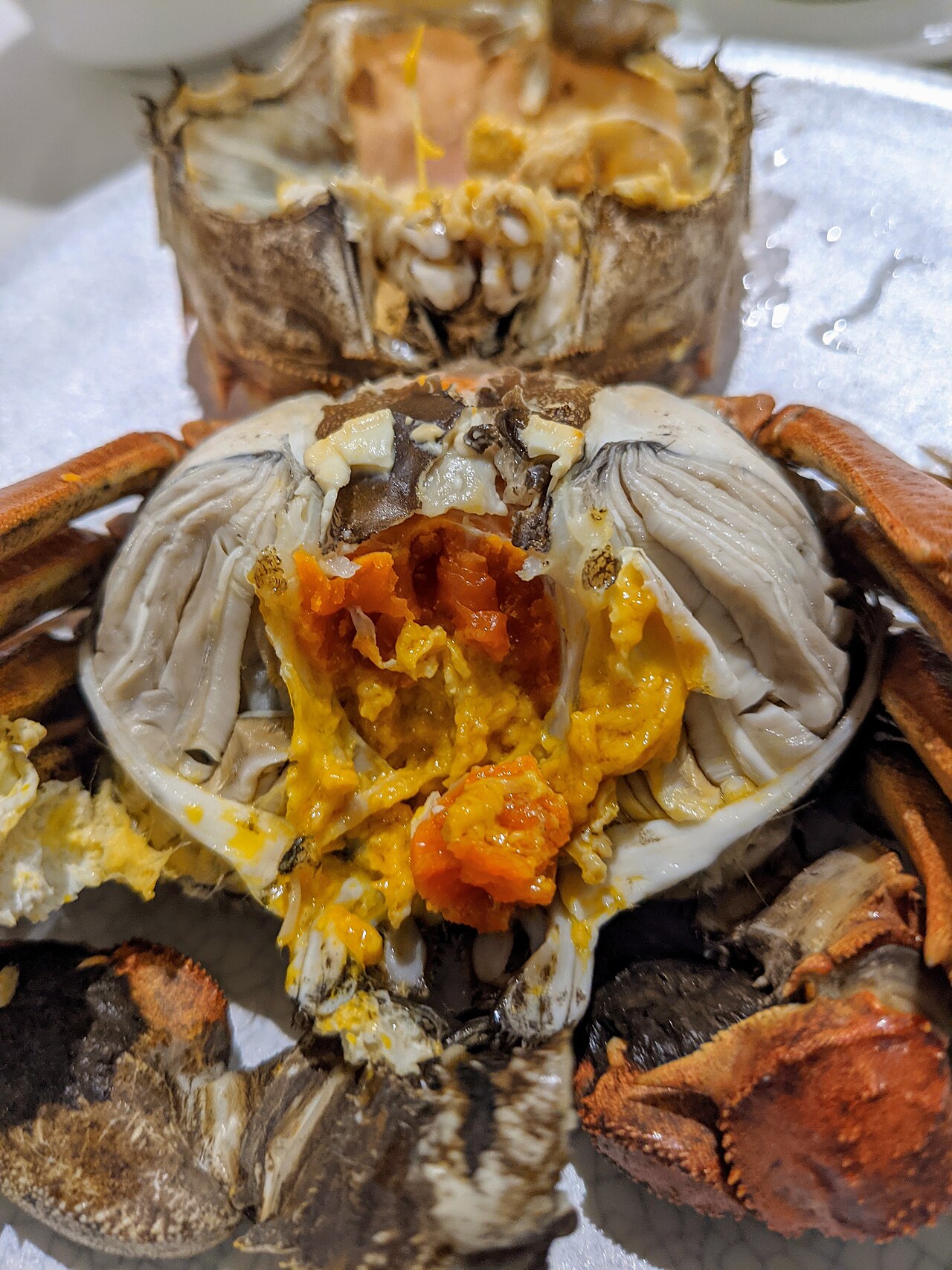
Hairy crab, Suzhou — a hairy crab cracked open to reveal white meat and bright orange-gold roe, on a white plate
Hairy Crab (大闸蟹)
Steamed hairy crab · seasonal, October–November

The seasonal delicacy Chinese diners wait all year for — the hairy crabs from nearby Yangcheng Lake are the prized ones. Steamed whole and dipped in ginger-vinegar, the meat is sweet and the orange roe is rich. The season runs October to November; if you're here then, don't miss it. Prices swing with size and season.

Price: ¥80–300+ (~฿400–1,500+) each · see hairy crab →
🥮
Suzhou sweets & tea
Refined pastries + Biluochun green tea

Suzhou is known for delicate Jiangnan pastries — flaky mooncakes with seasonal fillings, floral cakes and old court sweets — paired with Biluochun (碧螺春), the fine green tea grown on the hills beside Lake Tai. A cup of it in a canal-side tea house is Suzhou at its most authentic.

More food resources: full Suzhou food guide → · Pingjiang & Shantang street food →

Before you fly

Best time to go & what it costs

When to visit
Spring and autumn are the sweet spots

March to May: the gardens are in bloom and the weather is mild for walking. September to November: the clearest skies of the year, with sweet osmanthus (桂花) scenting the whole city — and October to November is also hairy-crab season. Summer brings lotus to the gardens but heat and humidity; winter is cool and pleasant. Month by month at when to visit Suzhou →

Avoid: Golden Week (1–7 May and 1–7 Oct) and Chinese New Year — the gardens get overwhelmed and prices surge
Entry requirements
Visa-free for many nationalities — verify before booking

As of 2026, Thai passport holders enter China visa-free for up to 30 days for tourism, and many other nationalities have similar arrangements. Policy changes without much notice, so check the current rules at the China visa-free entry guide → before committing to flights. Have your passport, a hotel booking and a return ticket ready.

Passport validity: At least 6 months remaining is strongly recommended

Suzhou works for almost any budget — the canals and old streets are free to walk, the metro is cheap, and the main gardens run ¥40–80 to enter. At the other end, the luxury hotels by Jinji Lake can run high. China budget overview at China travel budget guide →

Level Accommodation/night Food/day Approx. total/day
Budget ¥150–300 (~฿750–1,500) hostel or budget hotel ¥60–130 (~฿300–650) ¥250–500 (~฿1,250–2,500)
Mid-range ¥400–800 (~฿2,000–4,000) 3–4 star hotel ¥180–400 (~฿900–2,000) ¥650–1,300 (~฿3,250–6,500)
Luxury ¥1,500–5,000+ (~฿7,500–25,000+) Jinji Lake / garden-area resort ¥500–2,000+ (~฿2,500–10,000+) ¥2,500–8,000+ (~฿12,500–40,000+)

Garden entry: Humble Administrator's Garden ~¥80 · Lion Grove ~¥40 · Tiger Hill ~¥60 · the Pingjiang canal and Shantang Street are free to walk. Metro fares of ¥2–8 add very little. More at when to visit Suzhou →

Practical heads-up

Six things first-timers get wrong

Google is blocked — prepare before you land
The single most common oversight

Google Maps, Gmail, Translate, YouTube, Facebook, Instagram, WhatsApp and LINE all stop working the moment you connect to a Chinese SIM or network, unless you have a working VPN. Set it up on your phone at home — configuring one from inside China is harder. Download Amap (Gaode Maps) for navigation; it works without a VPN and has English. For the internet itself, see VPN and eSIM guide →

Replacements: Amap for navigation · Apple Maps · WeChat instead of WhatsApp
Small shops take mobile payment only
Cash and cards won't always work

The whole city runs on mobile payment. Market stalls, tea houses, small noodle shops and boatmen often have no card terminal at all — Alipay or WeChat Pay is the only option. The tourist version of Alipay accepts foreign Visa and Mastercard and takes a few minutes to set up. Alternatively, withdraw yuan from an ATM on arrival — ¥500–1,000 covers small purchases. Major chains and hotel restaurants take cards without issue.

The old-town lanes are walk-and-cycle, not metro
Plan your route ahead

The metro covers Suzhou's main axes well, but the small old-town lanes and canal banks aren't reachable by metro — you walk or cycle (Hello/Meituan bikes). The upside is that the old town is flat and pleasant on foot, with many gardens close enough to walk between. See getting around Suzhou →

Tip: Group the gardens that sit close together and do them in one go to save walking
Popular gardens may need advance booking
Some have a daily visitor cap

Major gardens such as the Humble Administrator's Garden use online real-name reservation systems, and at busy times — especially long holidays — they sell out fast and cap daily numbers. Check whether a garden needs a booking before you go. See each garden's hours and details at the Suzhou gardens guide →

Tip: Keep your passport on you — it doubles as ID for entry at many sites
Golden Week fills the gardens
Book early or reschedule

During Golden Week (1–7 May for Labour Day, 1–7 October for National Day) and Chinese New Year (January or February, dates vary), domestic tourists travel in enormous numbers. The Humble Administrator's Garden and Shantang Street can become almost impassable, and hotel prices typically double or triple. If your dates overlap, book months ahead. Full seasonal guide: when to visit Suzhou →

Good months: March–May, September–November
Agree the boat price before you board
Worth knowing in the tourist canal areas

A rowing boat along the Pingjiang or Shantang canal is well worth it, but prices come in several forms — per boat or per person, and some areas have official ticket points. Check the rate and agree it clearly before you step on. The city is genuinely safe in all other respects; this is just worth keeping an eye on in the busy tourist canals.

Rule: Confirm whether it's per person or per boat before you agree
Frequently asked

FAQ · Before you go

How many days should I spend in Suzhou as a first-timer?
One day works if you come over from Shanghai and stick to the core — the Humble Administrator's Garden, the Lion Grove Garden, Suzhou Museum, the Pingjiang canal and Shantang Street at dusk. To do the city justice, stay two or three nights: Day 1 for the old-town gardens and canals, Day 2 for the Lingering Garden, Tiger Hill and the Jinji Lake side, Day 3 for a water town like Tongli. See the full plans: 1-day · 2-day · 3-day
How do I get to Suzhou from Shanghai?
The easiest way is the high-speed train from Shanghai Hongqiao to Suzhou Railway Station — about 23–30 minutes for ¥35–40 (~฿175–200), with departures every 10–15 minutes. Get off at Suzhou Railway Station (edge of the old town, Metro Lines 2/4) or Suzhou North (SIP side, Line 2). Full route at Suzhou as a day trip from Shanghai →
How is Suzhou different from Shanghai and Hangzhou?
If Shanghai is the modern skyscraper city and Hangzhou is the wide natural lake, Suzhou is the city of classical gardens and water towns — UNESCO Jiangnan gardens, old canals, arched stone bridges, wooden rowing boats and lived-in waterside lanes. Many travellers combine the three into a Shanghai–Suzhou–Hangzhou triangle. See the sights at Suzhou attractions →
What if I don't have Alipay or WeChat Pay?
Large hotels and restaurants accept Visa and Mastercard, but small shops, market stalls and old-town tea houses often take mobile payment only. Set up the tourist version of Alipay before you leave home — it accepts foreign bank cards. Alternatively, withdraw yuan from a Bank of China ATM on arrival. Full guide: paying in China →
What is the best month to visit Suzhou?
Spring (March–May), when the gardens are in bloom, and autumn (September–November), when sweet osmanthus scents the city under clear skies, are the best seasons — and October–November is also hairy-crab season. Avoid Golden Week (1–7 May and 1–7 October) and Chinese New Year, when the gardens get overwhelmed. Month by month at when to visit Suzhou →
Is Suzhou safe for solo travellers?
Suzhou is one of the safest cities in China for visitors. Crime rates are low, metro stations have English throughout, and walking the old town and canals at night is fine. The main thing to watch for is boat-ride and souvenir pricing in the tourist canal areas — always agree the price before you step onto a boat.
Klook · Suzhou Activities

Book Suzhou tickets and tours in advance — skip the queues

Humble Administrator's Garden tickets, old-canal boat rides, Tongli and Zhouzhuang water-town tours, and day trips from Shanghai — book ahead on Klook and arrive without the queue.

Browse Suzhou on Klook →
Wherebest is an affiliate partner of Klook — we may earn a commission when you book through our links, at no extra cost to you.