Home Suzhou China Suzhou Hotels About
Home  ›  China  ›  Suzhou  ›  3-Day Itinerary
🗓️ Suzhou Itinerary · 3 Days · 2026

3 Days in Suzhou —
The Venice of the East, a city of gardens and canals

From classical Chinese gardens on the UNESCO World Heritage list, to ancient canal lanes where pole boats glide past whitewashed houses, to thousand-year-old water towns where time stands still — three days is exactly enough to take it all in without burning out on gardens.

Why 3 days

Suzhou is more than a single garden

There is an old Chinese saying — "Above there is heaven; below there are Suzhou and Hangzhou." People have repeated it since the Song dynasty, and the moment you stand inside the Humble Administrator's Garden in the soft early light, watching a curved pavilion roof reflected in a pond with willows brushing the water, you understand exactly why.

This plan is built for a first visit to Suzhou. Day 1 stays in the heart of the old town, with the most famous classical gardens and the Pingjiang canal street. Day 2 heads west to the Lingering Garden and Tiger Hill, an evening of Kunqu opera, and then across the city to modern Jinji Lake (SIP). Day 3 takes a bus or metro out to a thousand-year-old water town such as Tongli or Zhouzhuang. What sets Suzhou apart from Hangzhou is that the main gardens charge admission — but the single most important tip is this: don't do more than two gardens in a row each day. Suzhou's gardens are beautiful but similar enough to blur together, so this plan alternates gardens, canals, museums and the modern lakeside to give every day its own rhythm.

Want more time? See all Suzhou attractions and add another garden or water town. Short on time instead? Try the 2-day Suzhou plan.

Day One

The Heart of the Old Town · Classical Gardens & Canals

A World Heritage garden, a maze of lion-shaped rocks, and a canal lane where boats slip past — the day that explains why Suzhou is called the finest garden city in China.
01
Day 1
Humble Administrator's Garden · Lion Grove · Pingjiang Road
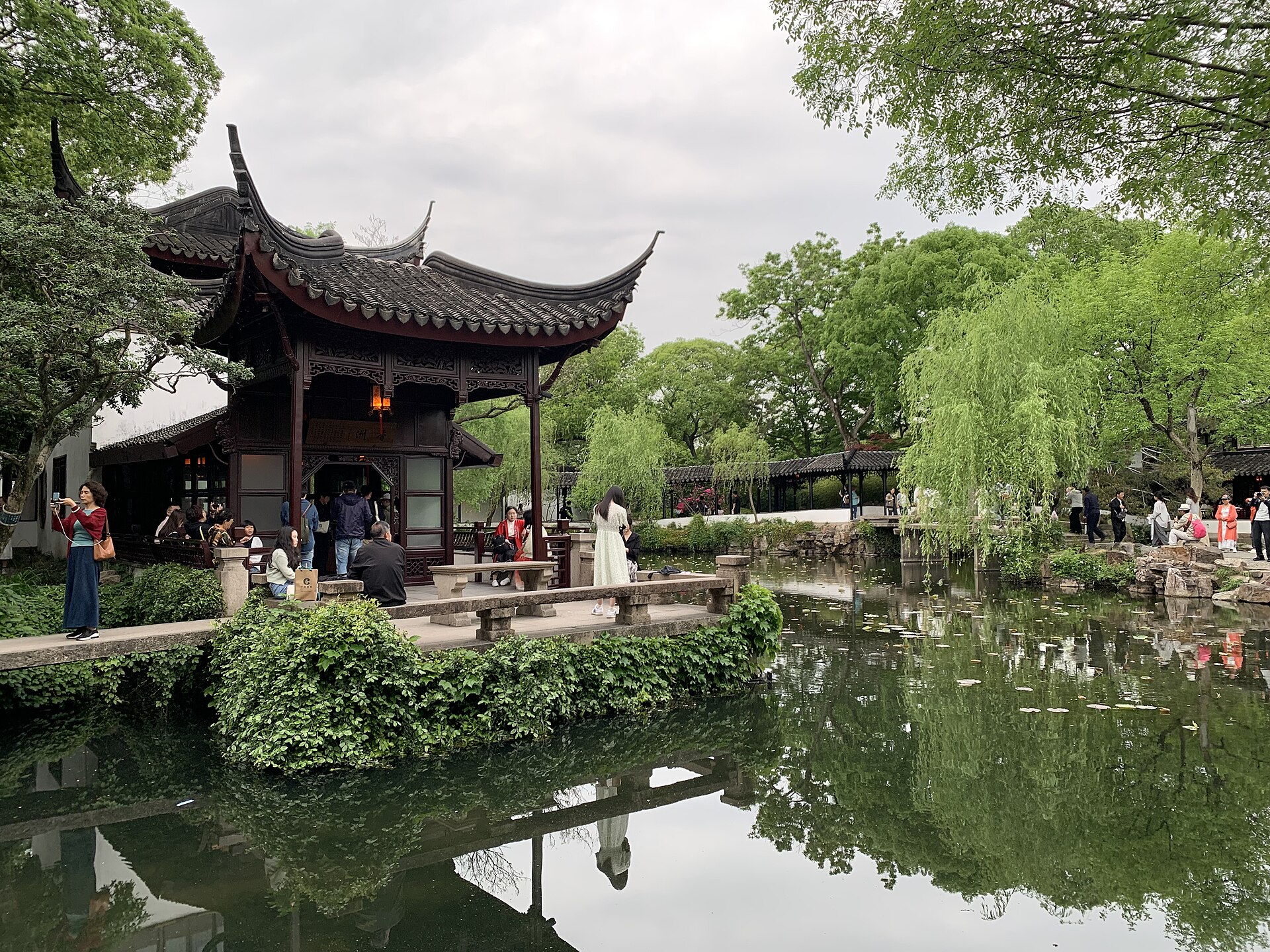
The Humble Administrator's Garden, Suzhou — a dark curved-roof pavilion beside a pond, willows trailing into the water, the reflection still and clear, with visitors strolling
Morning · ~3 hours
Humble Administrator's Garden (拙政园) + Suzhou Museum

Start early at the Humble Administrator's Garden around 8:30 am, before the tour groups arrive — the largest and most celebrated classical garden in Suzhou, on the UNESCO World Heritage list and laid out in the Ming dynasty more than 500 years ago. Almost half of it is water, with pavilions, little bridges and winding paths that knit the ponds and the planting into a single composition. Walk it slowly: every few steps the view is framed like a painting. Allow about 1.5 hours.

Right beside the garden's exit is the Suzhou Museum (苏州博物馆), designed by the architect I.M. Pei (of the Louvre Pyramid). The building itself is a piece of contemporary architecture that reinterprets the Chinese garden through geometry and water. Entry is free, and it's a fine way to rest your eyes after the old garden.

Metro: Line 4 to Beisita (北寺塔), then a 10-minute walk · or a DiDi into the old-town core
Garden entry: ¥80 (~฿400) peak season (Apr–Oct) · ¥70 (~฿350) off-season · Book ahead in the mini-program
Suzhou Museum: Free · Open 09:00–17:00 (closed Mondays) · Reserve a slot in the app first
Afternoon · ~3 hours
Lion Grove Garden (狮子林) + a Suzhou lunch

After a Su-cuisine lunch nearby, walk a few minutes to the Lion Grove Garden (Shizilin), a classical garden famous for its Taihu rockery — stacked limestone formed into a small labyrinth of caves and passages you can actually clamber through. Many of the rocks resemble lions, which gave the garden its name. Kids love hiding and scrambling here, and adults enjoy hunting for the best photo angle. It is a garden you can "play in" more than any other. Allow about an hour.

For lunch, try genuine Suzhou cooking — squirrel-shaped mandarin fish (松鼠鳜鱼), the city's signature dish of crisp-fried fish in a sweet-and-sour glaze, or a bowl of Suzhou-style noodles (苏式汤面), prized for their clear, delicately sweet broth — see our Suzhou food guide for specific recommendations.

Lion Grove entry: ¥40 (~฿200) peak · ¥30 (~฿150) off-season · ~10-minute walk from the Humble Administrator's Garden
Mid-range lunch: ¥60–150 (~฿300–750) per person · Old-town restaurants
Must-try: Squirrel mandarin fish · read about it · Clear-broth Suzhou noodles
Tip: Two gardens today is exactly right — the Humble Administrator's Garden is grand, Lion Grove is playful, and they feel clearly different. Force a third into the same day and your eyes glaze over; you'll stop remembering which garden was which.
Evening · ~2.5 hours
Pingjiang Road (平江路) canal street by night

Close the day on Pingjiang Road (Pingjiang Lu), the best-preserved canal lane in Suzhou — a single canal running alongside a narrow stone street, lined on both sides with whitewashed houses under grey-tiled roofs in the classic Jiangnan style. There are tea houses, cafes, local sweet shops and, on some nights, tea halls where you can hear Pingtan (评弹), the storytelling ballads sung in the Suzhou dialect. By night the lanterns reflect on the canal and it becomes the most romantic stretch in the city. Take a little pole boat through the canal, or simply wander, hunting for dinner and snacks to round off the day.
Pingjiang Road: Free · Most shops open until ~22:00 · Snacks ¥10–40 (~฿50–200) each
Canal pole boat: ~¥80–120 (~฿400–600) per boat · Seats several · Prettiest at night with the lanterns lit
Getting there: In the old-town core, walkable from the main gardens · Near Xiangmen station on Line 1
What to eat by the canal: Try Suzhou's local sweets — osmanthus cake, fish balls and braised duck — read about the Pingjiang and Shantang street food before you go.
Day Two

A Literati Garden, Tiger Hill & the Modern Lakeside

A garden the design manuals rank among the finest, a thousand-year-old leaning pagoda on a green hill, an ancient opera in the quiet of night — then a leap across town to glass towers by a lake. The day Suzhou shows you both the old and the new.

02
Day 2
Lingering Garden · Tiger Hill · Kunqu · Jinji Lake
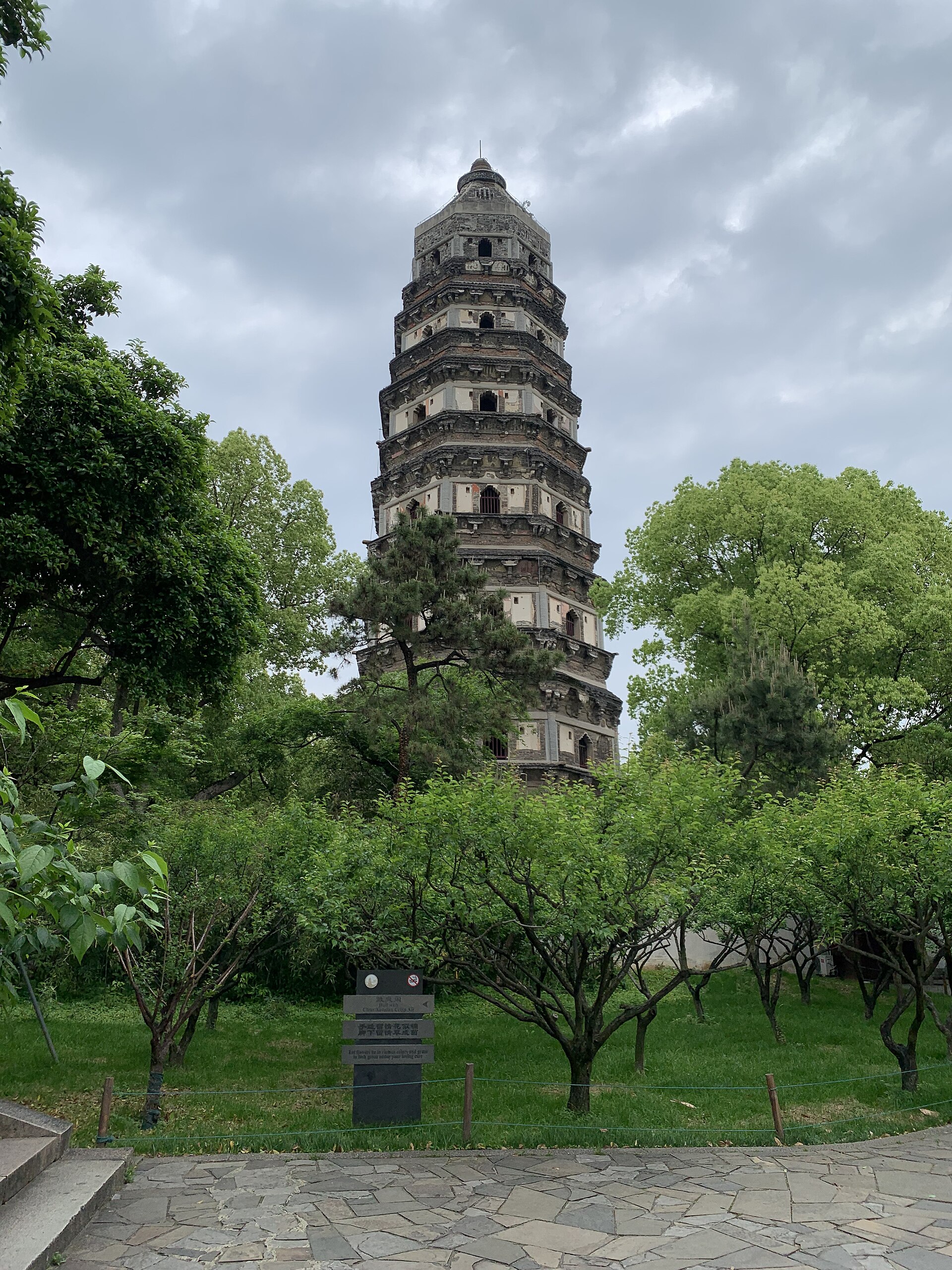
Tiger Hill, Suzhou — the brick Yunyan Pagoda leaning slightly on a hilltop, ringed by green trees, under an overcast sky
Morning · ~3 hours
Lingering Garden (留园) + Tiger Hill (虎丘)

Head out early to the Lingering Garden on the western edge of the old town — one of the "Four Great Gardens of China," admired by the design manuals for how it paces space. You move through a long covered corridor that changes the view at every window, opening onto rock courts, ponds and pavilions arranged like scenes revealed one act at a time. The highlight is the giant Taihu rock "Cloud-Crowned Peak (冠云峰)," more than six metres tall.

From the Lingering Garden, a short DiDi takes you to Tiger Hill (Huqiu), the small hill the people of Suzhou call "the first wonder of Wu." On its summit stands the Yunyan Pagoda, a brick pagoda over a thousand years old that leans to one side like the Tower of Pisa (it has earned the nickname "the Leaning Tower of the East"). On the way up you pass the Sword Pool, stone inscriptions and the legend of King Helü's tomb. Allow about 1.5 hours to climb and explore.

Lingering Garden entry: ¥45 (~฿225) peak · ¥35 (~฿175) off-season · Near Liuyuan, reachable on foot/DiDi
Tiger Hill entry: ¥60 (~฿300) peak · ¥45 (~฿225) off-season · Near Huqiu station on Line 2
Between the two: DiDi ~¥15–25 (~฿75–125) · Far quicker than connecting by bus
Afternoon · ~3.5 hours
Jinji Lake (金鸡湖) + the modern SIP district

This afternoon, swap the old town for another side of Suzhou that visitors rarely see — take metro Line 1 east to the Suzhou Industrial Park (SIP), the modern district around Jinji Lake, an urban lake ringed by skyscrapers. Here you'll find the Gate of the Orient (东方之门), the giant "trousers" tower that has become the city's landmark, a Ferris wheel, and a lakeside promenade where locals jog and cycle in the early evening. It's a striking contrast with the old town. Walk the shore, sit in a cafe, or browse the big malls.

Getting there: Metro Line 1 from the old town to Dongfangzhimen / Wenhuabolanzhongxin · ~20 minutes
Jinji Lake: The lakeside walk is free · Lake cruise ~¥80 (~฿400)
Ferris wheel: ~¥60–80 (~฿300–400) · Lake and city views at dusk
Tip: Eyes starting to glaze after a morning of gardens? That's exactly why the plan brings you to the new city in the afternoon — swapping ponds and rocks for glass towers and a lake gives your brain half a day off from gardens.
Evening · ~2 hours
Kunqu opera at the Master-of-Nets Garden (网师园)

Come back into the old town after dark for something you won't find anywhere else — the Master-of-Nets Garden (the Fisherman's Garden), a small classical garden that landscape designers hold up as the model for making a tight space feel spacious. From spring to autumn (roughly Mar–Nov) it opens for evening sessions with live performances of Kunqu (昆曲), the oldest surviving opera form in China and the ancestor of several later opera schools. Performers sing in lantern-lit pavilions around the garden — a quiet, lovely night that photographs can't quite capture.

Master-of-Nets, daytime: ¥40 (~฿200) peak · ¥30 (~฿150) off-season
Evening session + opera: ~¥100 (~฿500) · Roughly Mar–Nov · Book ahead
Dinner: ¥80–200 (~฿400–1,000) per person · Old-town restaurants, before or after the show
Don't fancy the opera? Stroll Shantang Street (山塘街) instead, the long western canal that is every bit as pretty by lantern light as Pingjiang, livelier, and lined with plenty to eat — a relaxed way to end the day.
Day Three

Choose Your Own Day · A Water Town or Stay in Town

A water town where time stands still, a temple a thousand-year-old poem wrote about, an ancient gate over a canal — the final day, shaped to fit you and the energy you have left.

03
Day 3
Tongli · Zhouzhuang · or Hanshan Temple + Panmen
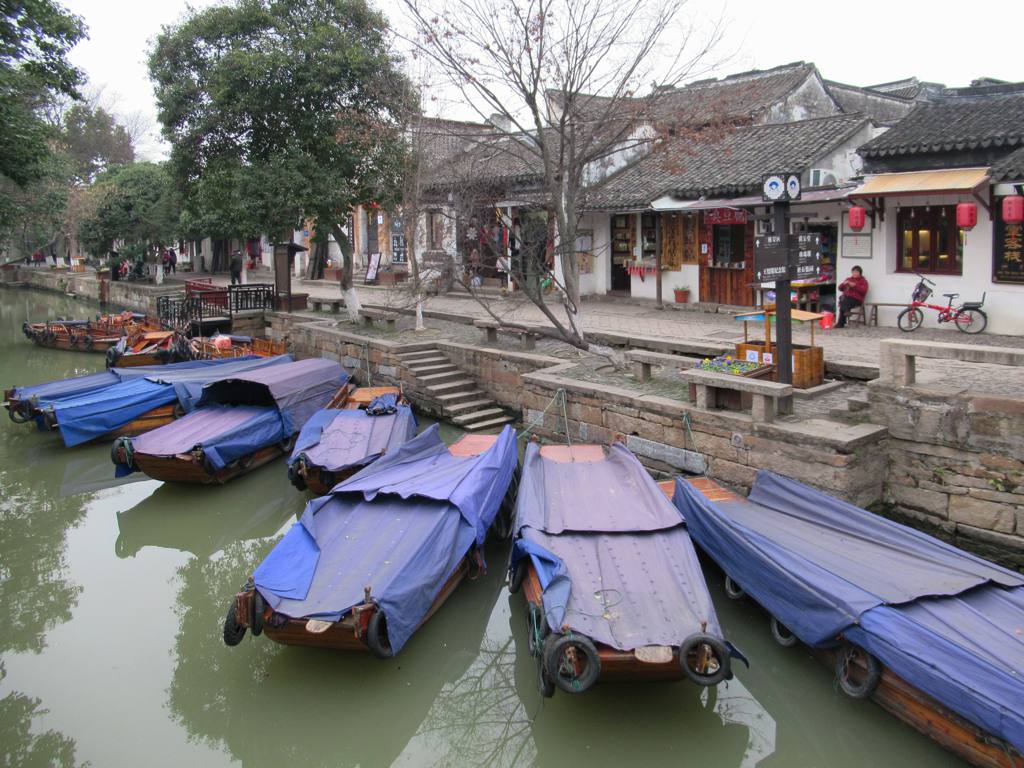
A water town near Suzhou — a narrow canal lined with blue-canopied wooden pole boats moored side by side, with whitewashed grey-tiled houses on both banks
Option A · full day
Tongli water town (同里) — reachable by metro

If you want a traditional water town with the easiest journey, Tongli is the answer — a thousand-year-old canal town at the end of metro Line 4 (you ride straight from the old town, no bus changes). Canals cut through the centre, 49 old arched stone bridges link the lanes, timber houses stand over the water, and the Tuisi Garden (退思园) — another World Heritage classical garden — sits right inside the town. The mood is slow and quieter than Zhouzhuang. Take a pole boat through the canals, sip tea, and watch life along the water. It's the gentlest day trip of all.

Getting there: Metro Line 4 to its terminus, Tongli station, then a short shuttle/DiDi ~10 min · ~1 hour total
Entry: Tongli combined ticket ~¥80–100 (~฿400–500) · Includes Tuisi Garden and the old houses
Canal pole boat: ~¥90–150 (~฿450–750) per boat · Seats several
Option B · full day
Zhouzhuang (周庄) or Mudu (木渎) — the famous water towns

For the most famous water town of all, Zhouzhuang — "the number one water town in China" — is the name everyone knows: the Twin Bridges from a celebrated painting, the old Shen family merchant mansion, and canals where pole boats glide all day. To be honest, Zhouzhuang draws big crowds and sits further out than Tongli (it's a ~1–1.5-hour bus ride from the bus station), but it lives up to its reputation, especially in the morning when mist hangs over the canals and at night when the lights come on. A closer alternative is Mudu, a small water town with several classical gardens and fewer crowds, good if you want to dodge the bustle — see all the options in our guide to the water towns around Suzhou.

Zhouzhuang: Bus from North Square ~1–1.5 hours · Entry ~¥100 (~฿500)
Mudu: Much closer · Bus/DiDi ~30–40 min · Combined garden ticket ~¥40–80 (~฿200–400)
Note: Allow the whole day for a water town · Back in Suzhou by evening
Option C · half to full day
Stay in town: Hanshan Temple + the silk museum + Panmen

If you'd rather not leave the city on Day 3, Suzhou still has several corners worth your time. Start the morning at Hanshan Temple (寒山寺), a thousand-year-old Buddhist temple that the poet Zhang Ji wrote about in "A Night Mooring by Maple Bridge," a poem every Chinese schoolchild can recite — its bell has become a symbol of the city. Next, visit the Suzhou Silk Museum (苏州丝绸博物馆), free to enter, telling the story of the Silk Road and the silk-weaving that has made Suzhou famous for over a thousand years. Finish at Panmen (盘门), an ancient city gate that is both a land gate and a water gate in one, framed beautifully by the Ruiguang Pagoda and the Wumen Bridge.

Hanshan Temple: ¥20 (~฿100) · Bell ringing ¥5 · West side of the old town, near Shantang Street
Silk Museum: Free · Open 09:00–17:00 (closed Mondays)
Panmen: ¥40 (~฿200) · Ruiguang Pagoda + ancient water gate · Near Nanmen station
Extending the trip? A 4-day plan gives you time for a water town, the remaining gardens such as the Couple's Garden or the Garden of Cultivation, and the in-town temples and museums. See all the locations and options in our complete Suzhou attractions guide.
🏯
Want to go deeper?
Understand Suzhou's gardens — which ones are worth your time, and how to see them without garden burnout
Read the gardens guide →
Practical info

Where to Stay · Getting Around · Budget

🏨
Where to Stay

For this itinerary, the old town (Gucheng) around Pingjiang Road and Guanqian Street is the most practical base — walk to the main gardens and the canal streets, historic atmosphere, metro Lines 1 and 4 close by. The SIP / Jinji Lake side is the modern alternative, with big malls and international hotel brands. Compare them in our top 10 Suzhou hotels or 6 luxury Suzhou hotels.

🚇
Getting Around

Suzhou has 5 metro lines, fares ¥2–8 per trip, paid with Alipay or WeChat Pay (scan QR at the gate). Line 1 runs east–west through the old town and out to SIP; Line 4 reaches Tongli. But the old-town canal lanes are for walking and cycling (Hello/Meituan bikes) — there is no metro on every corner. DiDi is cheap and easy, signs are bilingual, and Amap is the easiest map app.

💳
Paying for Things

Set up Alipay with a foreign Visa or Mastercard before you leave home (use the international version of the app). Most Suzhou shops accept Alipay or WeChat Pay only — some take no cash at all — and don't forget to book popular gardens like the Humble Administrator's Garden in the app during peak season. See the Alipay & WeChat Pay setup guide first.

Budget breakdown

Estimated cost per person per day

Category Budget Mid-range Comfortable
Hotel (per night) ¥120–220
(~฿600–1,100)
¥300–600
(~฿1,500–3,000)
¥800–1,800+
(~฿4,000–9,000+)
Food (3 meals) ¥60–100
(~฿300–500)
¥100–220
(~฿500–1,100)
¥280–550
(~฿1,400–2,750)
Metro + bus ¥8–18
(~฿40–90)
¥15–30
(~฿75–150)
¥40–80
(+ occasional DiDi)
Garden tickets + boats ¥30–70
(2–3 standout gardens)
¥90–180
(main gardens + Tiger Hill)
¥180–350
(+ water town + opera)
Total per day (est.) ¥218–408
(~฿1,090–2,040)
¥505–1,030
(~฿2,525–5,150)
¥1,300–2,780+
(~฿6,500–13,900+)

Exchange rate used: ¥1 ≈ ฿5 · Prices are estimates and may vary by season · Suzhou's gardens charge different rates in peak season (Apr–Oct) and off-season — check before you go.

Frequently asked questions

FAQ · 3-Day Suzhou Itinerary

Is 3 days enough for Suzhou?
Three days is the sweet spot. It covers the main classical gardens (the Humble Administrator's Garden, Lion Grove, Lingering Garden, Master-of-Nets), the canal old town (Pingjiang Road, Shantang Street), Tiger Hill and the Suzhou Museum, and still leaves Day 3 free for a thousand-year-old water town like Tongli or Zhouzhuang. The trick is not to do more than two gardens in a row each day — Suzhou's gardens are beautiful but similar enough that they blur together. Break the rhythm with canal streets, museums and the modern lakeside and it stays fresh. If you want a slower pace and several water towns, stretch to four days — see our guide to the water towns around Suzhou.
What is the best time of year to visit Suzhou?
Spring (March to May — fresh green gardens, blossom, wisteria and old roses in the Humble Administrator's Garden) and autumn (September to November — sweet osmanthus and dry, comfortable air) are the best windows. Summer (June to August) is hot and humid but the garden ponds fill with lotus, and hairy-crab season starts in late September. Winter is cool and quiet, with plum blossom at Xiangxuehai in late February. Avoid China's Golden Week (1–7 October), Labour Day (1–5 May) and Chinese New Year, when the gardens are too packed to walk. Hairy-crab season runs October to November — read about Suzhou hairy crab.
How do you get around Suzhou, and how do you pay?
Suzhou Rail Transit has 5 metro lines, ¥2–8 per trip, paid by scanning a QR code in Alipay or WeChat Pay at the gate. Line 1 runs east–west through the old town and out to Jinji Lake and SIP; Line 4 runs north–south through the old town to its terminus at Tongli; Tiger Hill is near Huqiu station on Line 2. But the heart of the old town is canal lanes you walk or cycle (Hello/Meituan bikes) — there is no metro stop on every corner. DiDi is cheap and easy, and use Amap rather than Google Maps.
What is a realistic budget for 3 days in Suzhou?
A mid-range budget runs roughly ¥500–900 per person per day (about ฿2,500–4,500), covering a 3-star or 4-star hotel (¥300–600), three meals (¥100–220), metro and bus fares (¥15–30) and garden tickets (¥30–90). Garden admission is the main cost that sets Suzhou apart from Hangzhou — the Humble Administrator's Garden is ¥80 in peak season, the Lingering Garden ¥45, Lion Grove ¥30 and Tiger Hill ¥60. Budget travellers in old-town hostels who pick just two or three standout gardens and eat at local noodle shops can manage on ¥330–480 per day.
Which neighbourhood should a first-time visitor stay in?
The old town (Gucheng) around Pingjiang Road and Guanqian Street is the most practical base for a first visit — you can walk to the main gardens and the canal streets, the atmosphere is historic, and metro Lines 1 and 4 are close. A second option is the SIP / Jinji Lake side, which is modern, with big malls and international hotel brands, ideal if you prefer comfort and don't mind being away from the canals. Compare them in our top 10 Suzhou hotels.
Do I need a VPN in Suzhou?
Yes, if you want to use Google Maps, Instagram, WhatsApp, Facebook or Gmail. Download and activate your VPN before you leave home — most VPN websites are themselves blocked inside China. Apps that work without a VPN include Alipay (payments), Amap or Baidu Maps (navigation), WeChat and DiDi (taxis). Popular gardens such as the Humble Administrator's Garden cap daily visitor numbers in peak season, so book your ticket ahead through a mini-program in Alipay or WeChat.