Home Suzhou China Suzhou Hotels About
Home  ›  Asia  ›  China  ›  Suzhou  ›  Gardens Guide
🇨🇳 Suzhou Gardens Guide · 2026

Which Suzhou gardens should you visit?
Pick 2–3 in a day that don't blur together

Suzhou has 9 UNESCO-listed classical gardens — but try to do them all in one day and you'll forget which was which. This guide helps you choose: a big water garden, a rockery garden, or a small quiet one, so you taste every style in the time you've got.

Choose, don't collect

2–3 well-chosen gardens beat running through all nine

Here's the honest truth: the biggest trap in Suzhou is your own good intentions. You see there are nine World Heritage gardens and you want to bag them all — then you walk through four or five back-to-back and end up with what we call "garden blur." Every garden starts to look the same: curved-roof pavilion, pond, pile of rocks, willow tree, until you're back at the hotel and can't recall which lion-shaped rock belonged to which garden, or which zigzag bridge crossed which pond. Literati gardens speak the same design language. The magic lives in small details you have to slow down for — not in the count.

So here's the move: choose 2–3 gardens that are clearly different instead of collecting as many as you can. One big water-centred garden (Humble Administrator's, the star of the city); one garden famous for its rocks or maze (Lion Grove, a stone labyrinth that's genuinely fun, or Lingering Garden with its Cloud-Capped Peak rock and corridor architecture); then finish with one small, quiet garden where the crowds thin out (Garden of Cultivation or Master-of-Nets). That's the whole range of the classical garden, no eye-strain. Below we line up the standout gardens, who each one suits, and which ones have a full guide to read next.

Garden by garden

Suzhou's standout gardens, and how they differ

Listed from the biggest, most famous garden down to the small ones locals love — tap any card with a link for a full guide.
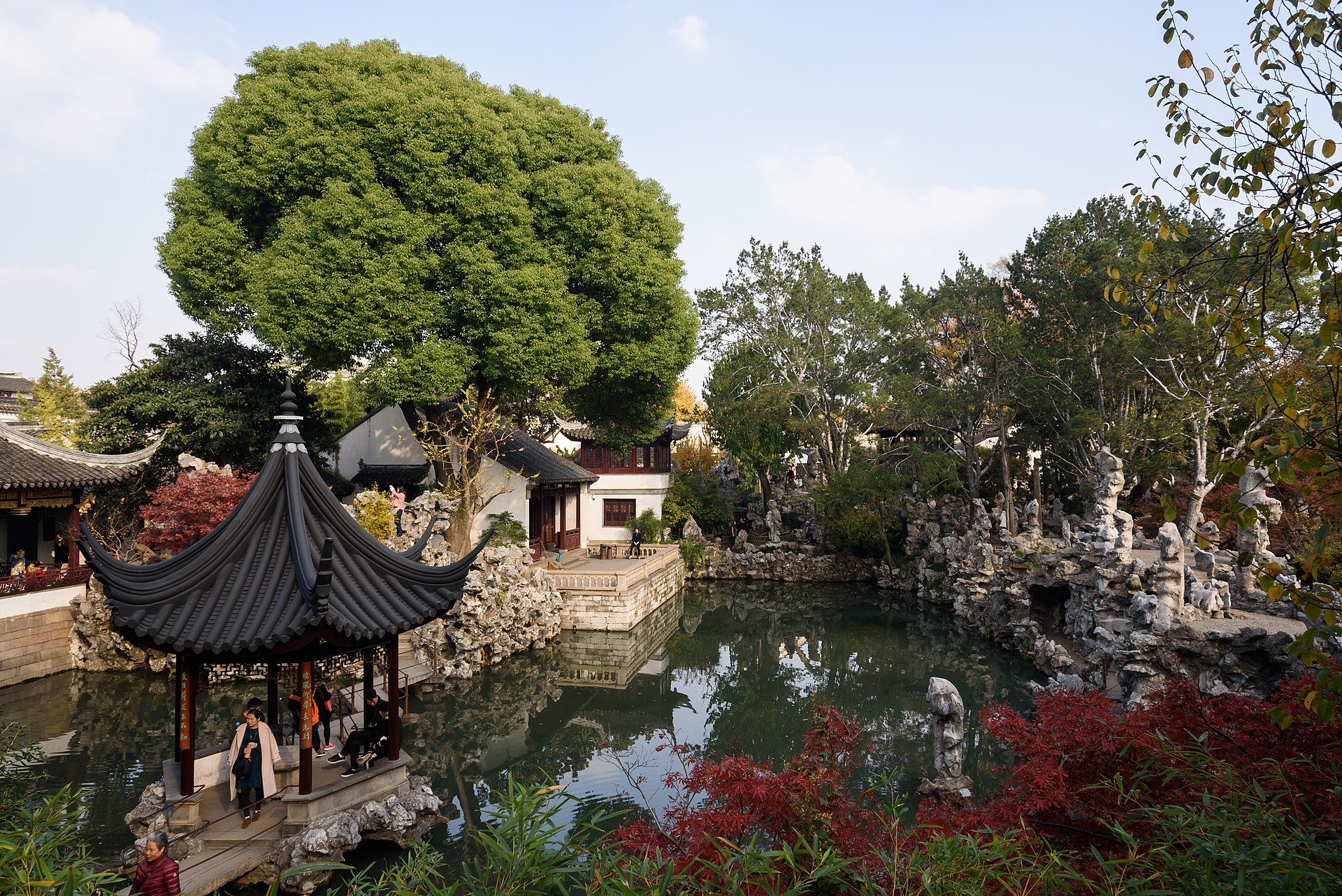
Humble Administrator's Garden, Suzhou — a curved-roof pavilion mirrored in a still pond, willows on the bank, visitors in hanfu 1
Humble Administrator's Garden (拙政园)
Zhuozheng Yuan · largest · water-centred · UNESCO

If you only have time for one, make it this one. Humble Administrator's is the biggest and most famous garden in Suzhou, built in the Ming dynasty (around 1509) over five-plus hectares, more than half of it water — ponds, marshes, zigzag bridges, pavilions that seem to float like boats. The classic moment is the "borrowed view" of distant Beisi Pagoda (北寺塔), which sits well outside the garden yet is framed to read as part of it. In summer the lotus ponds bloom and it's at its loveliest — and at its most crowded. Arrive before 08:30 and it's worth it. It sits right next to Lion Grove and Suzhou Museum, so all three pair up in one outing.

Metro: Line 4, Beisita (北寺塔) station, ~10 min walk
Ticket: ¥80 peak (Apr–Oct) / ¥70 off-peak (~฿400/350)
Hours: 07:30–17:30 (Nov–Feb closes 16:30)
Read the full Humble Administrator's guide →
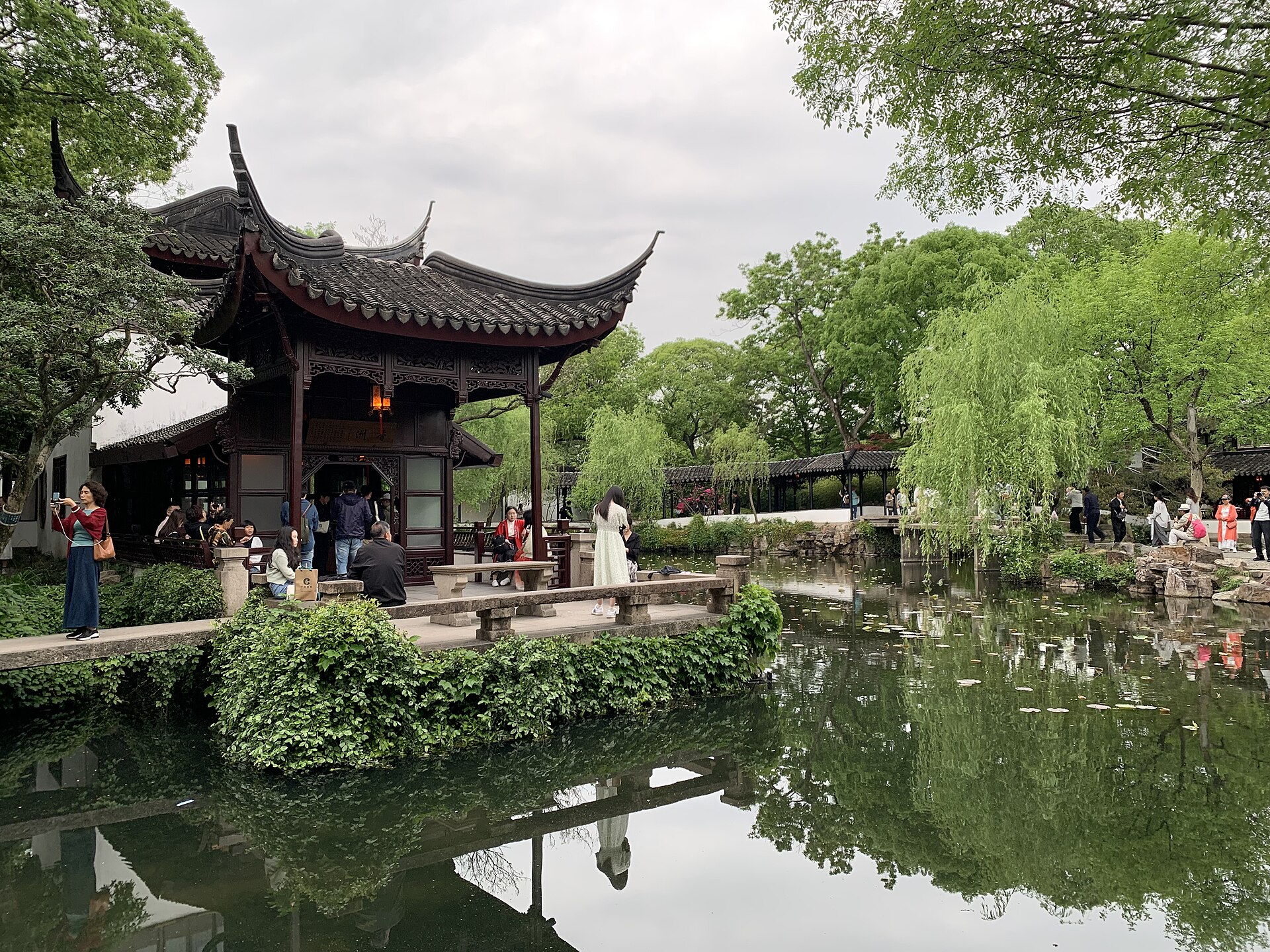
Lingering Garden, Suzhou — a flagstone courtyard with a tall vertical Taihu rock standing in the centre, dark-timber halls behind, greenery all around 2
Lingering Garden (留园)
Liu Yuan · one of China's 4 great gardens · the Cloud-Capped Peak

Lingering Garden is one of the "four great classical gardens of China" and the one designers hold up as the best lesson in handling space. A long covered corridor winds you past leak-windows one by one, squeezing tight then opening onto a broad court in a rhythm that almost tells a story. The star is the Cloud-Capped Peak (冠云峰), a Taihu limestone rock about 6.5 metres tall, said to be the most perfect example of the Chinese stone ideal — "thin, wrinkled, porous, perforated." It's in the city's northwest, near Tiger Hill, and usually quieter than Humble Administrator's — so it pairs neatly with Tiger Hill in one day.

Location: Northwest of the old town, near Tiger Hill · bus/taxi
Ticket: ¥55 peak / ¥45 off-peak (~฿275/225)
Known for: the Cloud-Capped Peak · covered corridors · leak-windows
Read the full Lingering Garden guide →
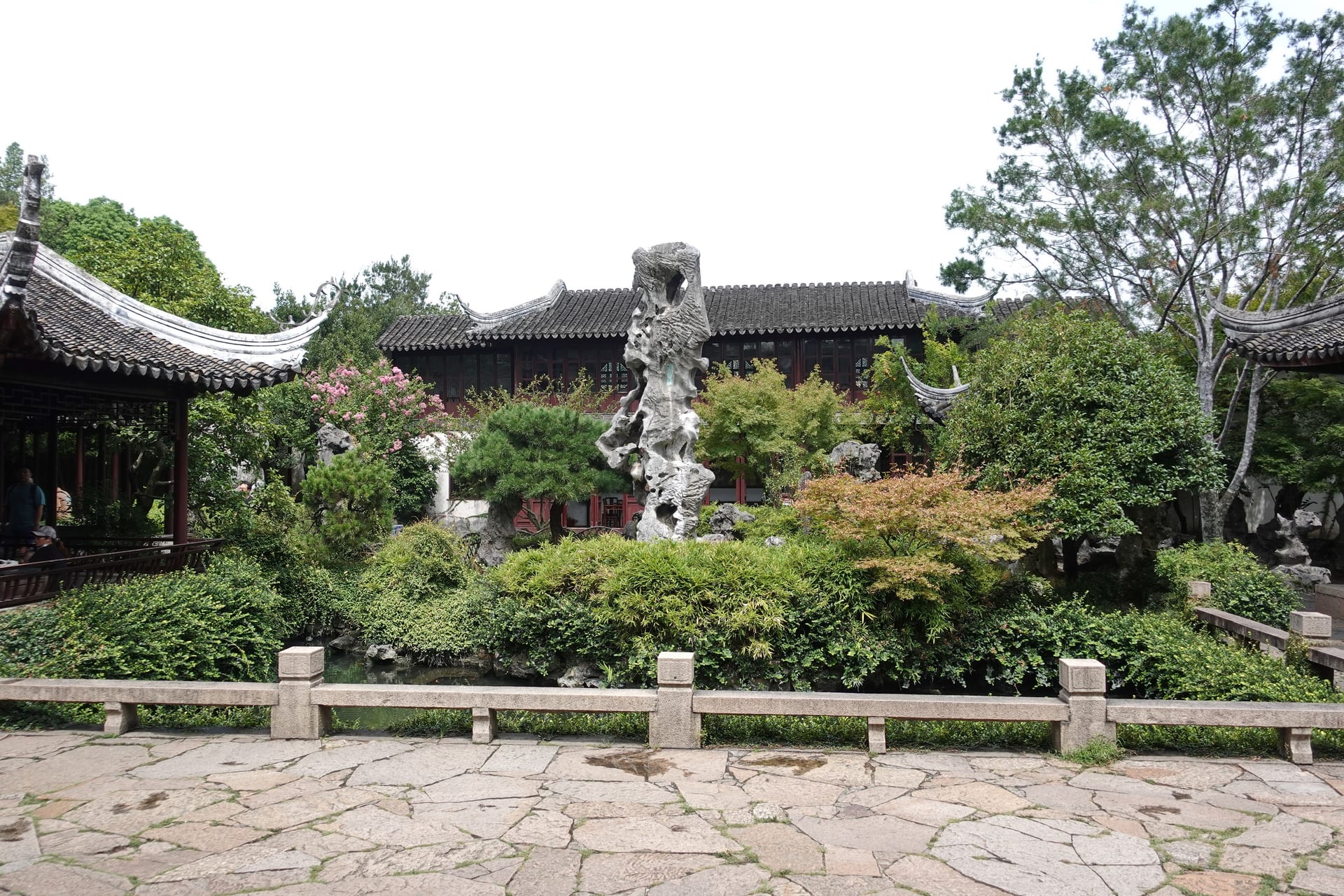
Lion Grove Garden, Suzhou — a garden with a big tree, pond and pavilion, with a maze of stacked Taihu rocks on the right 3
Lion Grove Garden (狮子林)
Shizilin · rockery maze · Yuan dynasty (1342) · kids love it

Travelling with kids, or tired of gardens you have to walk through in silence? Lion Grove is the answer. This Yuan-dynasty garden (built in 1342) is famous for its colossal rockery maze of stacked Taihu rocks — many shaped like lions, which is where the name comes from — laced with cave passages and narrow stairways you can genuinely get lost in. It's as fun as a hedge maze, and kids tend to dart in and out of the caves for ages. The garden isn't huge but it's densely packed, and it sits right beside Humble Administrator's, so the two pair up perfectly in one morning. (Watch out: the rocks get slippery in the rain.)

Metro: Line 4, near Humble Administrator's — walkable between them
Ticket: ¥40 peak / ¥30 off-peak (~฿200/150)
Known for: the Taihu rockery maze with cave passages · great for kids
Read the full Lion Grove guide →
🎭4
Master-of-Nets Garden (网师园)
Wangshi Yuan · small but perfect · evening Kunqu opera

Master-of-Nets — the "garden of the fisherman" — is the smallest of the famous gardens, yet many call it the most perfectly proportioned. Everything is scaled down just so, until it feels warm and home-like rather than cramped. It was the model for the "Astor Court" at the Met in New York. The real highlight, though, is the evening session, roughly mid-March to mid-November, when Kunqu opera, Pingtan storytelling, guzheng and flute are staged in different halls across the garden. You wander from one to the next under the lanterns — an atmosphere you simply can't get in daytime. Night tickets are around ¥100; book ahead on WeChat.

Location: Southeast of the old town, near the pedestrian street
Ticket: daytime ~¥30–40 · evening (Kunqu opera) ~¥100 (~฿500)
Evening session: ~mid-Mar to mid-Nov, around 19:30–22:00 (check first)
🛶5
Canglang Pavilion (沧浪亭)
Canglang Ting · the Surging Wave Pavilion · oldest garden in Suzhou

Canglang Pavilion is the oldest garden in Suzhou, dating to the Northern Song dynasty (around 1044) and built by the poet Su Shunqin. What sets it apart is that it doesn't wall itself off — it opens out toward the canal in front, using the public waterway as part of the garden's view, a textbook example of "borrowed view." Inside there's an artificial earth hill standing in for a mountain, covered walkways and a double-decked waterside gallery. The mood is ancient, solemn and quiet — better for a slow walk than a photo dash. Tickets are very cheap.

Location: South of the old town, on the canal · near the Kunqu Opera Museum
Ticket: ~¥15–20 (~฿75–100), inexpensive · check before you go
Known for: the oldest garden · opens onto the canal · quiet, few crowds
🌿6
Garden of Cultivation (艺圃)
Yi Pu · quiet, the fewest crowds · a local feel

Garden of Cultivation is the one locals quietly love — a small Ming-dynasty garden tucked away in an old residential lane. You reach it through narrow alleys where neighbours still hang their washing, which makes the atmosphere far more real and far quieter than the famous gardens. The garden itself is simple: a central pond that mirrors its pavilion and rocks in just the right balance, and a teahouse where you can sip tea by the water without fighting for a seat. If you've already seen one or two big gardens and want to finish somewhere calm that actually feels like a rest, this is it. Entry is free or very cheap.

Location: In an old residential lane, west side of the old town
Ticket: free or very cheap (~¥10) · check before you go
Known for: the fewest crowds · a waterside teahouse · a local feel
💞7
Couple's Retreat Garden (耦园)
Ou Yuan · a paired garden on the canal · the romantic one

Couple's Retreat — literally the "paired garden" — has a sweet backstory. It's laid out with two gardens, east and west, flanking the house in the middle, built for an owner and his wife who shared a love of reading and music. The character "ou" (耦) is a homophone for "couple." The standout is that it sits against the canal on three sides — step out the back gate and you can board a boat straight away. It's the idealised Suzhou image where garden meets water town. Quieter than the central gardens and easy to stroll, it pairs beautifully with a walk along nearby Pingjiang Road (平江路).
Location: East side of the old town, on the canal · near Pingjiang Road
Ticket: ¥25 peak / ¥20 off-peak (~฿125/100)
Known for: a paired garden on 3 canal sides · the couple's story · quiet
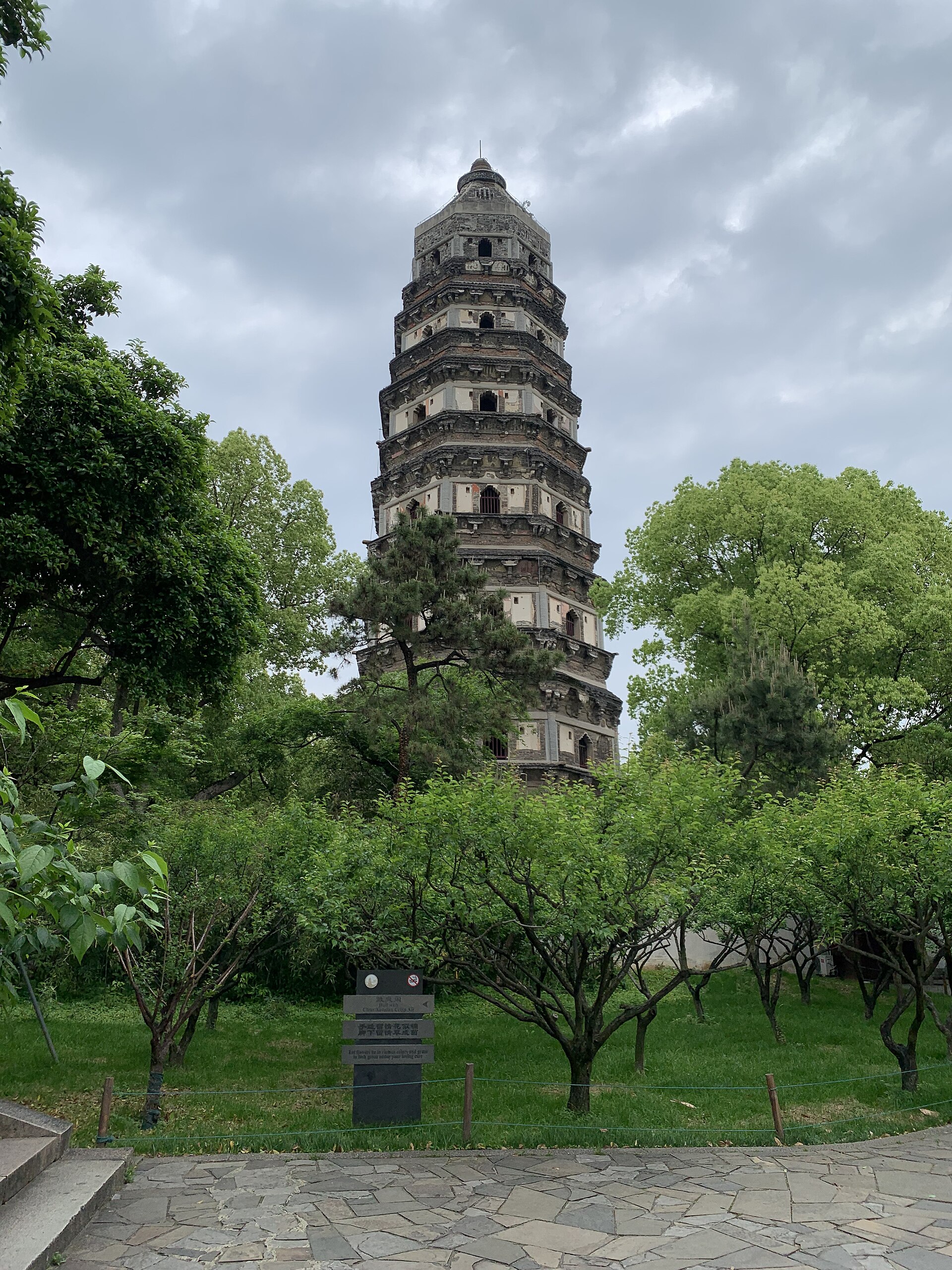
Tiger Hill, Suzhou — the leaning Yunyan Pagoda, a tall multi-storey stone pagoda rising above green trees under a grey sky 8
Tiger Hill (虎丘)
Huqiu · "the first scenic spot in Wu" · leaning pagoda, royal tomb

Tiger Hill isn't a literati garden — it's a hill the poet Su Shi wrote of: "It would be a pity to visit Suzhou and not see Tiger Hill." The headline is the leaning Yunyan Pagoda (云岩寺塔), an octagonal brick pagoda built in 961 that tilts like the Tower of Pisa — China's own leaning tower, off-kilter for over a thousand years. On the hill you'll also find the tomb of King Helü of Wu and the Sword Pool (剑池), a cleft pool where legend says enchanted swords were buried. It's history, nature and legend in one — and it pairs well with Lingering Garden nearby for a half-day.

Location: Northwest edge of the city · bus/taxi
Ticket: ~¥60–80 (~฿300–400), varies by season
Known for: the thousand-year leaning pagoda · royal tomb · Sword Pool
Read the full Tiger Hill guide →
Want to see them all anyway? Suzhou's UNESCO inscription covers 9 gardens — beyond the 7 above there's also Mountain Villa with Embracing Beauty (环秀山庄), prized for a masterpiece rockery, and Retreat & Reflection Garden (退思园), which is out in the Tongli (同里) water town. Truthfully, though, you don't need to collect them all — 2–3 that are clearly different, as above, beats racing through nine and remembering none of them.
Plan your day

How to build a garden day that works

Pick the set that fits your style — every one is built to start with the big garden first thing, then drift to smaller, quieter gardens later.

The classic set (first visit)
Humble Administrator's + Lion Grove + Suzhou Museum

Start at Humble Administrator's when it opens at 07:30, before the crush; allow ~2 hours. Then walk next door to Lion Grove (the rockery maze, ~1 hour). Finish at Suzhou Museum (designed by I.M. Pei, free entry), which is in the same cluster. All three are within walking distance — the most time-efficient set for a one-day visitor.

Time needed: half to full day · Strength: water + rocks + museum, one neighbourhood
The quiet set (dodge the crowds)
Lingering Garden + Tiger Hill

Both sit in the city's northwest and draw fewer people than the central gardens. Start at Lingering Garden in the morning (the Cloud-Capped Peak, the covered corridors, ~1.5 hours), then head to Tiger Hill nearby — climb the hill for the thousand-year leaning pagoda and the Sword Pool. Good for travellers who want atmosphere over ticking off landmarks.

Time needed: full day · Note: bus/taxi between the two
The connoisseur set (real garden lovers)
Master-of-Nets + Garden of Cultivation + Canglang Pavilion

For those who want to soak up small gardens with lovely proportions and few people — Master-of-Nets (small but perfect), Garden of Cultivation (hidden in a lane, the quietest, with a teahouse), Canglang Pavilion (the oldest, opening onto the canal). All three are in the southern-western part of the old town and walkable. If you can catch the evening session at Master-of-Nets, that's the highlight of the trip.

Time needed: half to full day · Bonus: evening Kunqu opera at Master-of-Nets
The romantic + water-town set
Couple's Retreat + a Pingjiang Road stroll

Couple's Retreat (the paired garden on three canal sides) is on the east of the old town, near Pingjiang Road (平江路) — Suzhou's prettiest old canal street. Do the garden in the morning, then stroll the Pingjiang canal in the late morning and afternoon, sipping tea and watching the timber houses on the water. It's an easy, gentle set, ideal for couples or anyone who wants both garden and water-town feel in a half-day.

Time needed: half day · Strength: garden + old-town canal in one area
Read it like a local

4 things that bring a garden to life

A literati garden was made to be paused in, not walked through — watch for these four and the garden starts to tell you a story.

Borrowed view (借景)
Jiejing · bringing the outside in

A garden deliberately places a gap, a moon gate or a window so you catch a distant pagoda or a neighbour's treetop, as if it belonged to the garden though it stands beyond the wall. The borrowed-view of Beisi Pagoda at Humble Administrator's is the most famous example — find the spot it was designed for and stand there.

Leak-windows (漏窗)
Louchuang · picture frames that move

Garden walls are cut with openings, almost every one a different pattern — florals, geometry, lattice — framing the view beyond like a painting. As you walk, the picture inside the frame keeps changing. Lingering Garden has beautiful leak-windows you could count for an afternoon.

Rocks as mountains (假山)
Jiashan · a miniature mountain climb

The piled Taihu rocks aren't just decoration — they're "miniature mountains" a scholar used to stand in for real ones. You can walk through caves and climb narrow stone steps like a hike in miniature. Lion Grove's stone maze is the ultimate of this technique — most fun if you let yourself get a little lost.

Name plaques and poetry (匾额)
Bian'e · the cue for what to look at

Every pavilion is named, with a couplet carved beside it — not just decoration but a hint at what the spot was built to make you feel. A "listen to the rain" pavilion is for hearing rain fall on lotus leaves; a "watching the fish" pavilion for leaning out over the carp. If there's an English translation on the plaque, you'll see why the pavilion stands exactly there.

Frequently asked

FAQ · before you walk in

How many gardens does Suzhou have, and how many should I visit in a day?
Suzhou has 9 classical gardens inscribed together as a single UNESCO World Heritage site (out of around 60 that still survive), but don't try to do them all in one day. Literati gardens share the same design language, so walking through 4–5 in a row leaves you with "garden blur" — you can't remember which rock or bridge belonged to where. The trick is to choose 2–3 that are clearly different: one large water-centred garden (Humble Administrator's) + one rockery or maze garden (Lion Grove or Lingering) + one small quiet garden (Garden of Cultivation or Master-of-Nets). That way you taste every style without the fatigue.
How much are Suzhou garden tickets, and is there a combined ticket?
Prices vary by season (peak Apr–Oct is dearer than off-peak Nov–Mar). Roughly: Humble Administrator's ¥80/¥70 (~฿400/350) · Lingering ¥55/¥45 (~฿275/225) · Lion Grove ¥40/¥30 (~฿200/150) · Tiger Hill ~¥60–80 (~฿300–400) · Master-of-Nets daytime ~¥30–40 · Canglang Pavilion ~¥15–20 · Couple's Retreat ¥25/¥20 · Garden of Cultivation free or very cheap. Most people buy per garden through the Suzhou Gardens mini-program on WeChat. A multi-garden "through ticket" exists in some periods, but for just 2–3 gardens, buying separately is usually better value · prices can change, check before you go.
Where is the evening Kunqu opera at Master-of-Nets Garden, and how much is it?
Master-of-Nets Garden (网师园) runs evening sessions roughly mid-March to mid-November (some years stated as Apr–Oct), around 19:30–22:00. Performers stage Kunqu opera, Pingtan storytelling, guzheng and flute in different halls across the garden, and you wander from one to the next. Tickets are around ¥100 (~฿500) per person, booked in advance via the Suzhou Gardens mini-program on WeChat. A small garden at night, lit by lanterns and filled with old music, is the one thing you can't get in daytime · dates and prices vary year to year, check before you go.
What's the best time of year to visit Suzhou's gardens?
Spring (Mar–May) is the prettiest — blossoms out and fresh green foliage. Summer (Jun–Aug) is hot and humid, but it's lotus season in the ponds of Humble Administrator's. Autumn (Sep–Nov) brings cool weather and the maples at Lion Grove and Lingering starting to turn. Winter has the fewest crowds and cheapest tickets but bare trees. The thing to avoid is Golden Week (National Day, Oct 1–7) and Chinese New Year, when the gardens get so packed you can barely walk.
Should I go in the morning or afternoon to dodge the crowds?
Go as early as you can. Gardens open around 07:30. The famous ones — Humble Administrator's and Lion Grove — start filling up after about 09:30–10:00, especially with tour groups. Get in before 08:30 and you'll have an almost-quiet garden and clean reflections in the water with nobody in shot. The smart play is to start with the biggest, most popular garden first thing, then drift to the smaller, quieter gardens later in the morning and afternoon.
How do I actually 'read' a literati garden instead of just walking through it?
Watch for four things and the garden comes alive: (1) Borrowed view (借景) — gardens deliberately frame a distant pagoda or a neighbour's treetop so it reads as part of the garden. (2) Leak-windows (漏窗) — every wall opening has a different pattern, framing the view beyond like a picture. (3) Rocks as mountains (假山) — piled Taihu rocks stand in for real mountains; you can climb through caves like a miniature hike. (4) Name plaques and poetry (匾额) — each pavilion is named to tell you what to look at from there, like a "listen to the rain" pavilion for hearing rain on the lotus leaves.
Klook · Suzhou gardens

Suzhou garden tickets & tours — book ahead, skip the gate queue

Tickets for Humble Administrator's, Lingering Garden and Tiger Hill, guided garden tours, and water-town day trips near Suzhou — book on Klook and scan straight in.

See Suzhou tickets & tours on Klook →
Wherebest is a Klook affiliate partner — we may earn a commission when you book through our links, at no extra cost to you.