Pick the right one before you set off
Ranked by ease of travel — work out whether you want calm, fame or a short hop.
 1
1
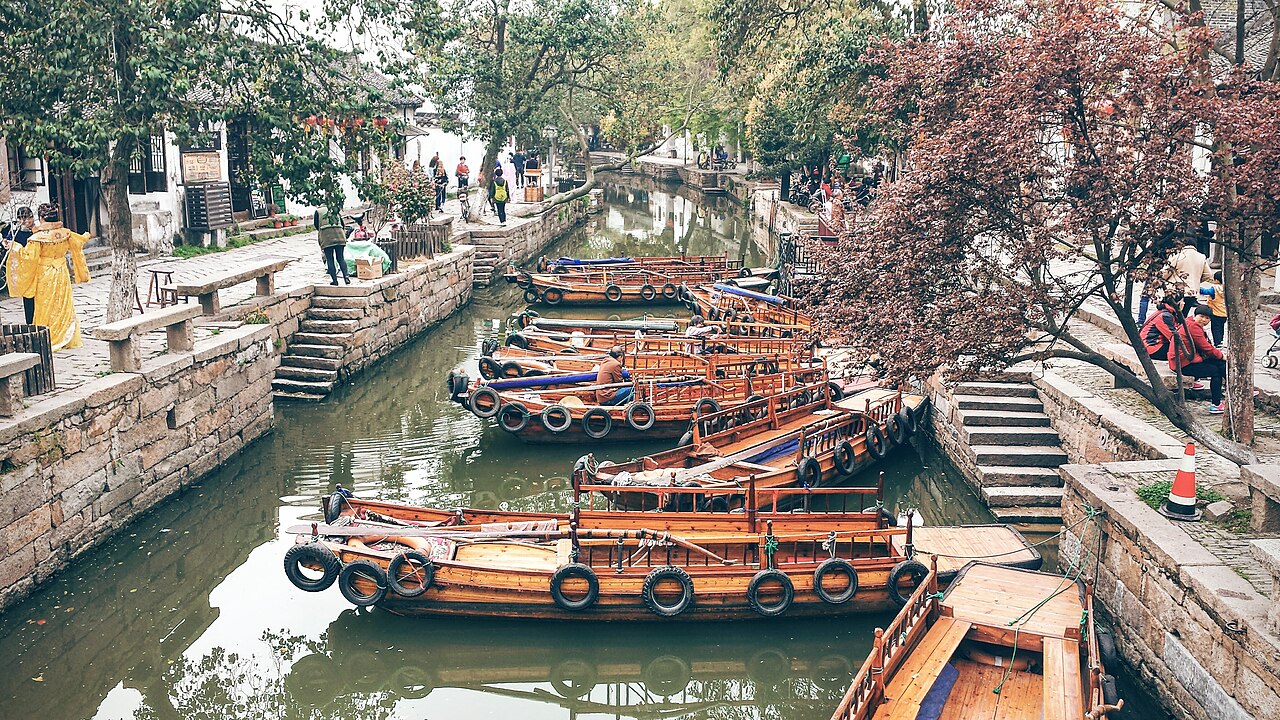
If you want to see an ancient water town without standing shoulder to shoulder with crowds, Tongli is the answer. It sits about 18 km south of Suzhou, where three canals cut the town into little islands joined by almost 50 old stone bridges. The mood is unfussy and people still live there.
Its highlight is the Tuisi Garden (退思园), a Qing-dynasty classical garden inscribed by UNESCO alongside the Classical Gardens of Suzhou. Built in 1886 by an official dismissed from his post, "Tuisi" means "to retreat and reflect," and the garden lives up to the name — every corner is calm, the water still, pavilions low to the bank, with none of the grandeur of the larger Suzhou gardens. Best of all, Tongli is the easiest town to reach: ride Metro Line 4 to the end and a short transfer drops you at the gate.
 2
2
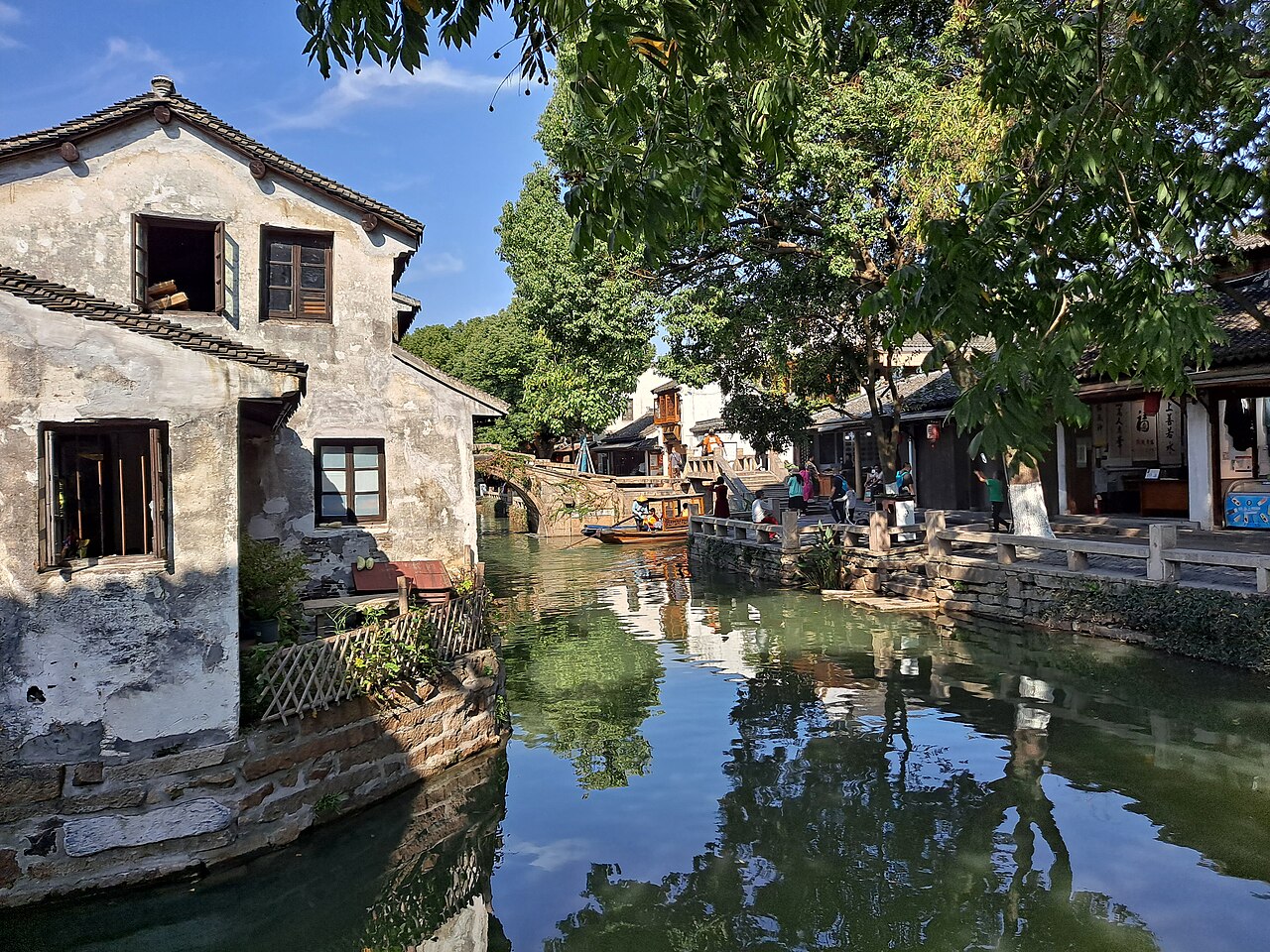
Zhouzhuang is the best-known water town in the world, nicknamed "China's No.1 water town." It owes much of that fame to the painter Chen Yifei, who painted its twin bridges in 1984; the image travelled the globe and Zhouzhuang became the symbol of the Chinese canal town ever since.
The Shuangqiao twin bridges (双桥) are two stone bridges set side by side — one arched, one squared — built in the Ming dynasty, and from one angle they read like an old key. There is also Shen House (沈厅), a hundred-room Qing-dynasty mansion that survives intact. The honest truth is that Zhouzhuang gets very crowded and feels quite commercial, with shops packed into every lane. If you want the textbook picture and do not mind people, it earns its place — but if you want quiet, skip across to Tongli or Luzhi.
Mudu is the closest water town to central Suzhou, sitting on the city's southwestern edge near the foot of Lingyan Hill (灵岩山), about 15 km out. It is roughly 30 minutes by metro or taxi — ideal for a half-day that does not eat your whole schedule with travel.
Mudu's nicest feature is that you can walk the canal streets for free — old lanes, local snack stalls, souvenir shops, little canals threading through. You only pay to enter the old gardens. The finest is the Yan Family Garden (严家花园), the largest in Mudu, along with Hongyin Shanfang (虹饮山房), where the Qianlong Emperor is said to have stayed on his southern tours. With over 2,500 years of history, Mudu carries more of a scholar-and-emperor flavour than the other towns.
Luzhi is a small water town east of Suzhou, more than 2,500 years old and one of the least-visited towns around — and that is exactly its charm. Winding canals and over 40 old stone bridges crowd into a tiny area, earning it the nickname "museum of ancient bridges."
The standout is Baosheng Temple (保圣寺), founded in 503 AD, which holds a set of Tang-dynasty clay Arhat sculptures of master quality, modelled by Yang Huizhi, the "sculpture sage" of the age — artistry of this calibre is rare in any water town. Because Luzhi is small and lightly visited, it feels more like genuinely stepping into the past than the more famous towns do.
If you have already done the famous water towns and want somewhere genuinely quieter, look toward Kunshan (昆山), between Suzhou and Shanghai, where two small canal towns see very few foreign visitors.
Jinxi (锦溪) is a peaceful lakeside town with a clutch of charming little museums, an old waterside pagoda, and a local atmosphere that has not been turned wall to wall into souvenir stalls. Qiandeng (千灯) is the birthplace of Gu Yanwu, the great Ming–Qing scholar, with a long old flagstone street and ancient temple halls. Both charge less, draw fewer people and suit anyone who wants to wander slowly without fighting for a photo spot.