Classical Chinese gardens on the World Heritage list, old stone canal lanes where gondolas still glide by, a thousand-year-old leaning pagoda on Tiger Hill, and across town a skyline mirrored in Jinji Lake — forty-eight hours is exactly enough to feel the best of this city.
Two days in Suzhou is enough for the Suzhou people talk about — the classical gardens on the UNESCO World Heritage list, the ancient canal lanes that make you feel you have slipped back a few centuries, and the other side of town where the city turns into a modern lakeside skyline. All of it fits into two days, as long as you don't lose time deciding on the fly.
This plan is built for travellers who are short on time — a quick weekend, a side trip from Shanghai (just ~23–30 minutes by bullet train from Hongqiao), or anyone who wants to stay the night and catch Suzhou after dark, which a day trip can't. Day 1 keeps you in the old town all day — gardens, canals, a museum and Su-cuisine, easy on the feet. Day 2 heads west for a garden and Tiger Hill, then ends with a choice between the modern Jinji Lake district and the Tongli water town. What's not in this plan: a full-day water town, Hanshan Temple and several smaller gardens — if you want those too, see all the Suzhou attractions and add a day.
One tip that matters most: book a hotel in the old town around Pingjiang Road and the Humble Administrator's Garden (Gusu), or in the SIP district near Jinji Lake — both keep canals and the metro within easy reach. See the 10 best hotels in Suzhou for options to match your budget. If you only have one day, start with the 1-day Suzhou itinerary instead.
A World Heritage garden at opening · the maze-like Lion Grove · I.M. Pei's Suzhou Museum · a Su-cuisine lunch · a Pingjiang Road canal walk with Biluochun tea · Shantang Street under the lanterns after dark
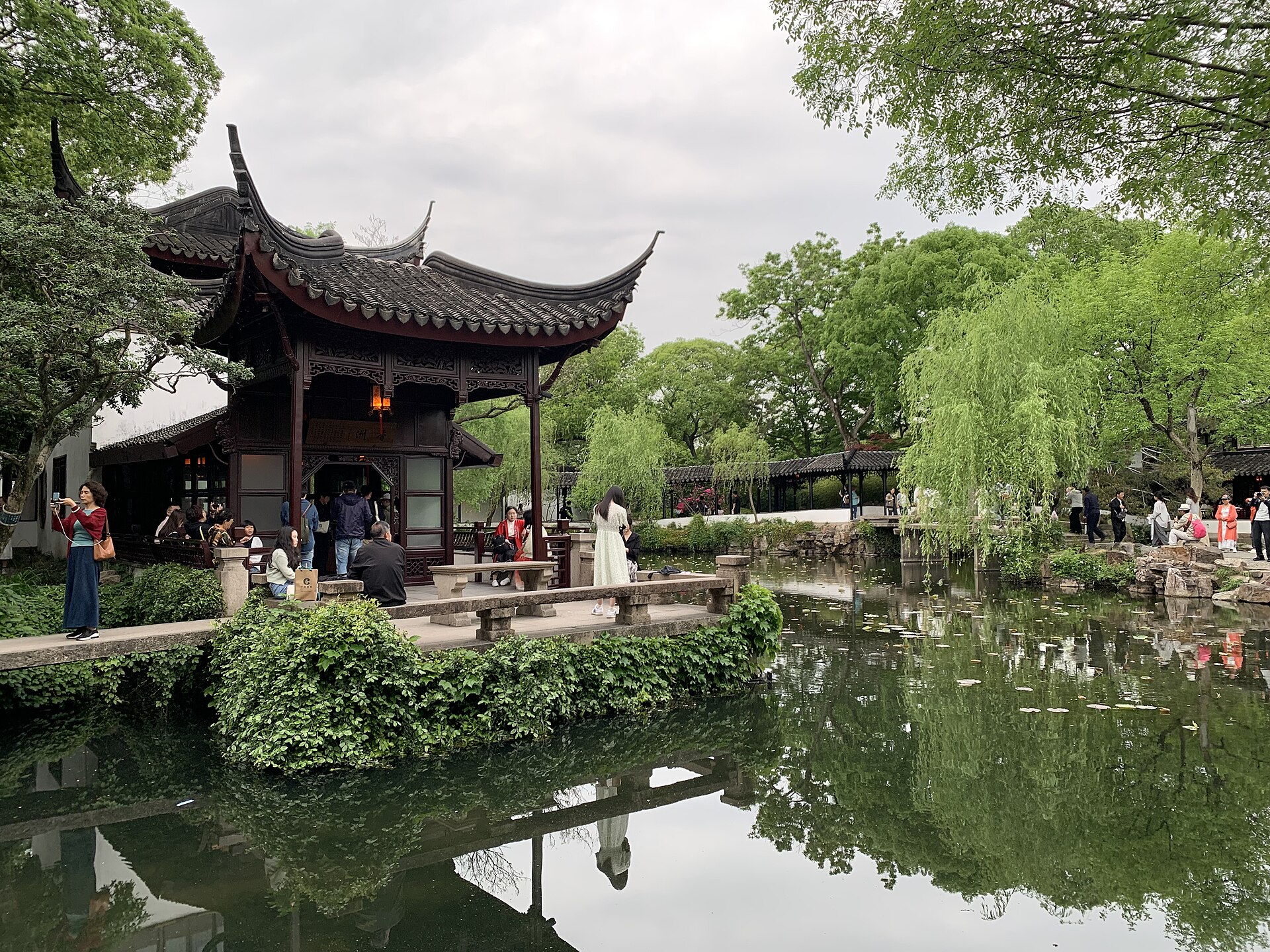
Leave the hotel early — the goal is to reach the Humble Administrator's Garden for the 8:30am opening, while the crowds are still thin. It's the largest garden in Suzhou (~5.2 hectares), laid out in the early 16th century under the Ming dynasty, and the template for southern Chinese gardens everywhere. Broad lotus ponds, waterside pavilions, zigzag stone bridges and windows that frame the view like a painting — wander slowly for 1.5 to 2 hours. Lotus blooms in summer; maple leaves turn red in autumn, each lovely in its own way.
A few hundred metres on is the Lion Grove Garden — smaller, but more fun, especially for kids. It's famous for its Taihu rockery, piled into a maze of little caves you can genuinely climb and duck through, with stones shaped like crouching lions. Getting briefly lost in the rocks is a surprisingly good time — allow about an hour.
Right beside the garden is the Suzhou Museum (苏州博物馆), designed by the legendary architect I.M. Pei — the same hand behind the Louvre glass pyramid — who came from an old Suzhou family. Entry is free. Its clean white-and-grey lines reinterpret the classical garden in modern form, with Wu-era antiquities and ink paintings on show; it's a cool, shady refuge when the sun is strong (closed Mondays, advance booking required).
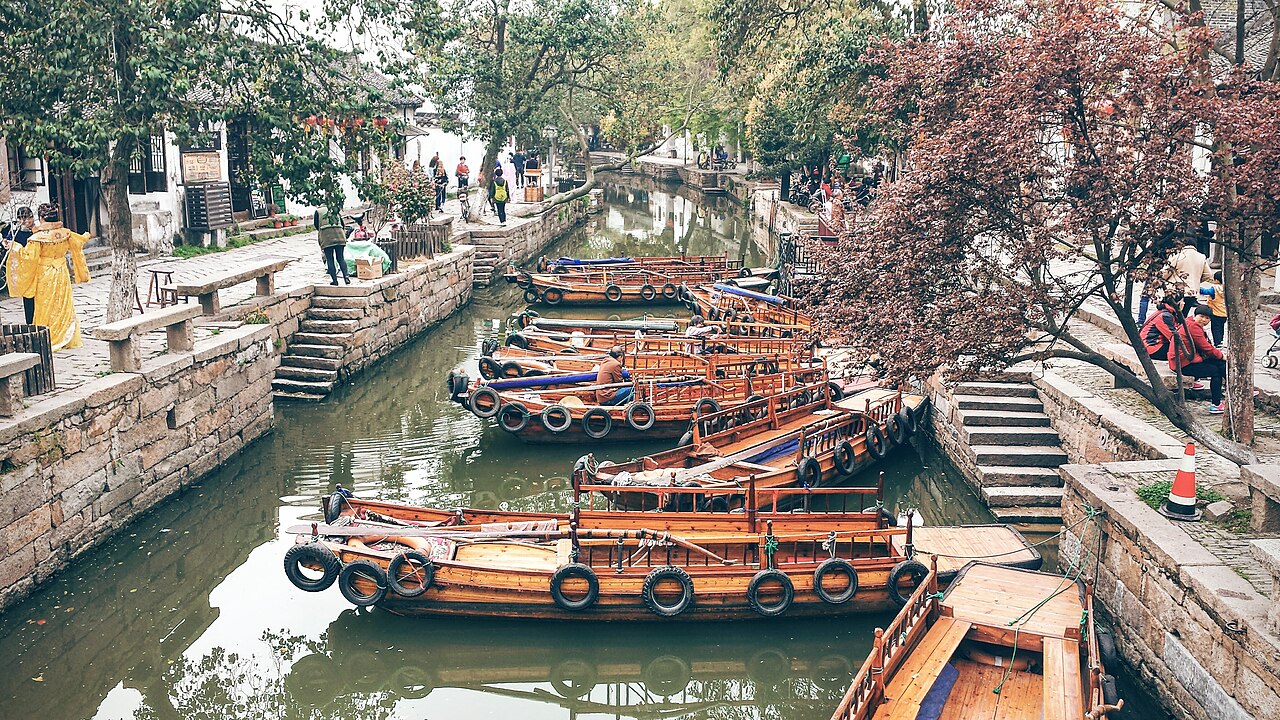
For lunch, try Su-cuisine (苏帮菜), the sweet, gentle Jiangnan style — the city's signature squirrel mandarin fish (松鼠鳜鱼) in sweet-and-sour sauce, or a steaming bowl of clear Suzhou noodles. See the picks in the Suzhou food guide. Then walk into Pingjiang Road (平江路) — a ~1.6 km stone canal lane that preserves the old Suzhou street grid intact: waterside houses, arched stone bridges, gondolas slipping by. Find a canalside tea room and sip Biluochun green tea, the famous leaf from the Dongting hills around Lake Taihu, with its floral-fruity scent.
In the evening, take a short metro ride or DiDi northwest to Shantang Street (山塘街) — an old canal street the poet Bai Juyi had dug over a thousand years ago. It's longer than Pingjiang, livelier, and at its best after dark once the red lanterns come on — light rippling across the canal, lantern-lit gondolas sliding under the stone bridges. Stroll, graze on street snacks, and you won't pay to enter if you stick to the main street (the inner "Seven-Li Shantang" zone charges ~¥45 in places if you go in).
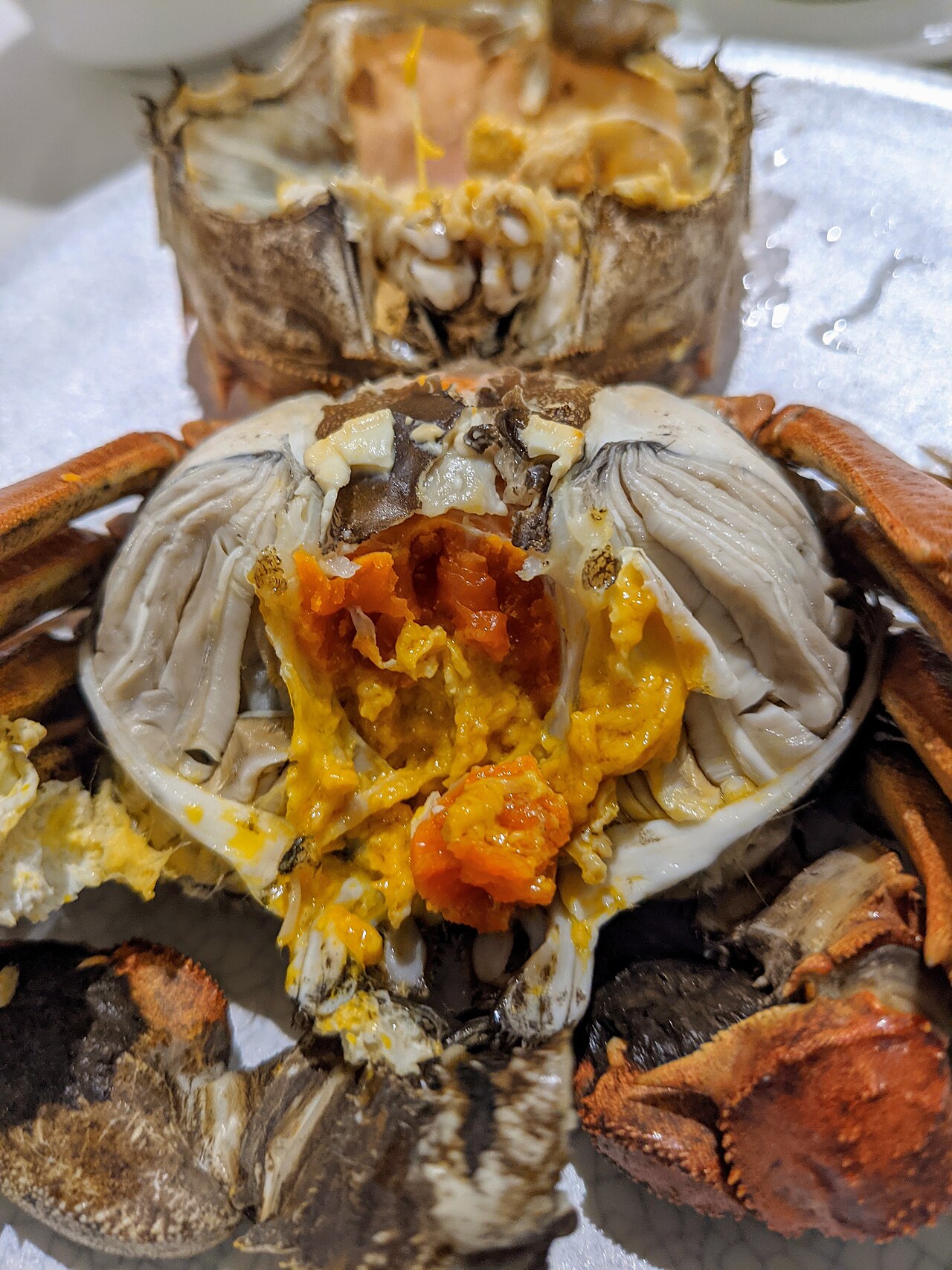
For dinner, pick a canalside Su-cuisine spot — Suzhou-style braised pork or local river prawns (油爆虾), both easy on the wallet at ¥70–150/person. If you come in autumn (Oct–Nov), don't miss Yangcheng Lake hairy crab (大闸蟹) — the legendary local delicacy, dense orange roe, steamed and eaten with ginger-vinegar dip and a cup of warm yellow wine. For a lot of people it's the whole reason to time a Suzhou trip for this season.
The Lingering Garden at dawn · a thousand-year leaning pagoda on Tiger Hill · then choose your afternoon — the modern Jinji Lake skyline, or a half-day at the Tongli water town via Metro Line 4
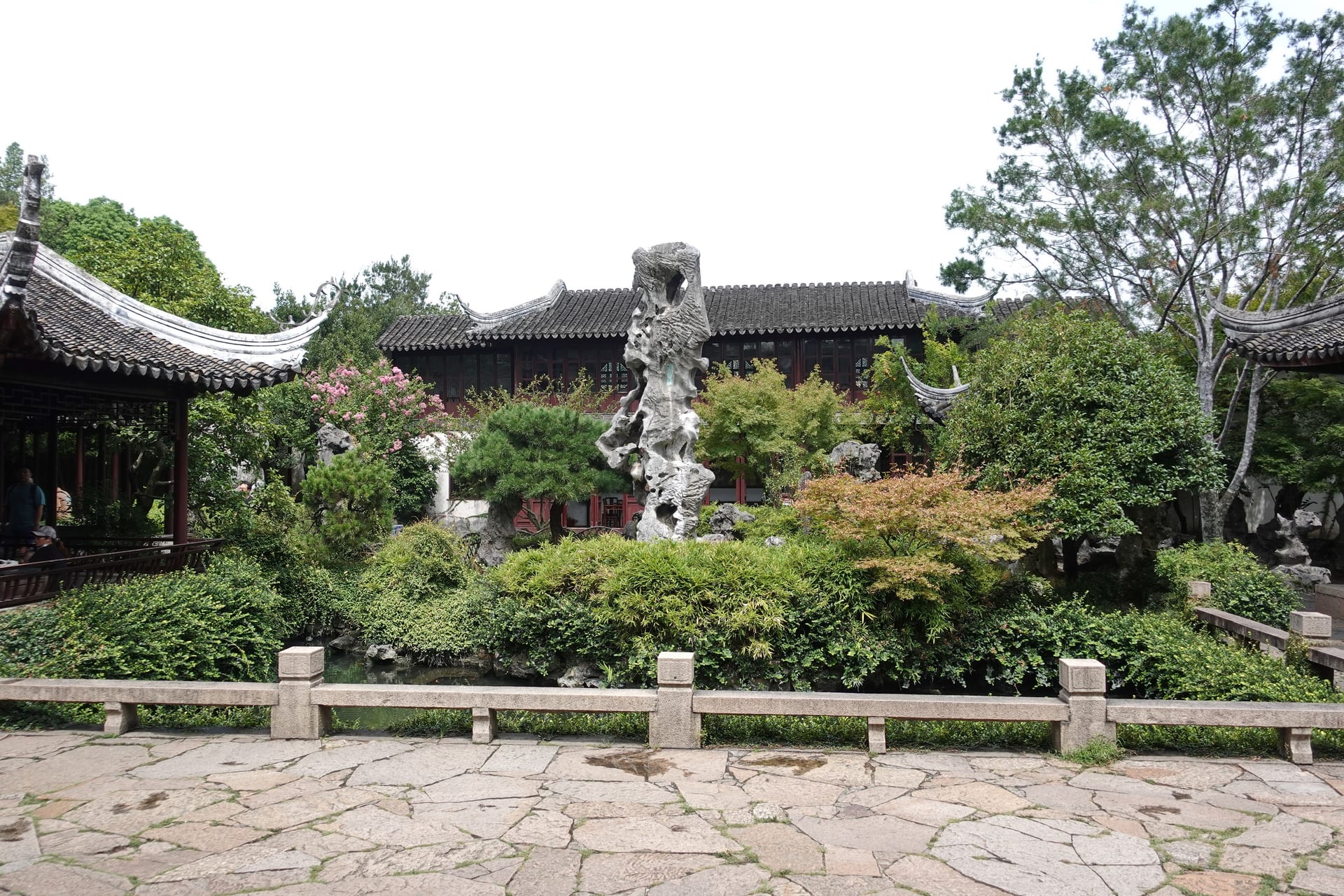
Start the day at the Lingering Garden — one of the four most important classical gardens in China, just outside the old city wall to the west. It's celebrated for the way its long, winding covered corridors release the view one frame at a time, and for Cloud-Capped Peak (冠云峰), a ~6.5 m Taihu stone considered the finest garden rock in Suzhou. Allow 1 to 1.5 hours.
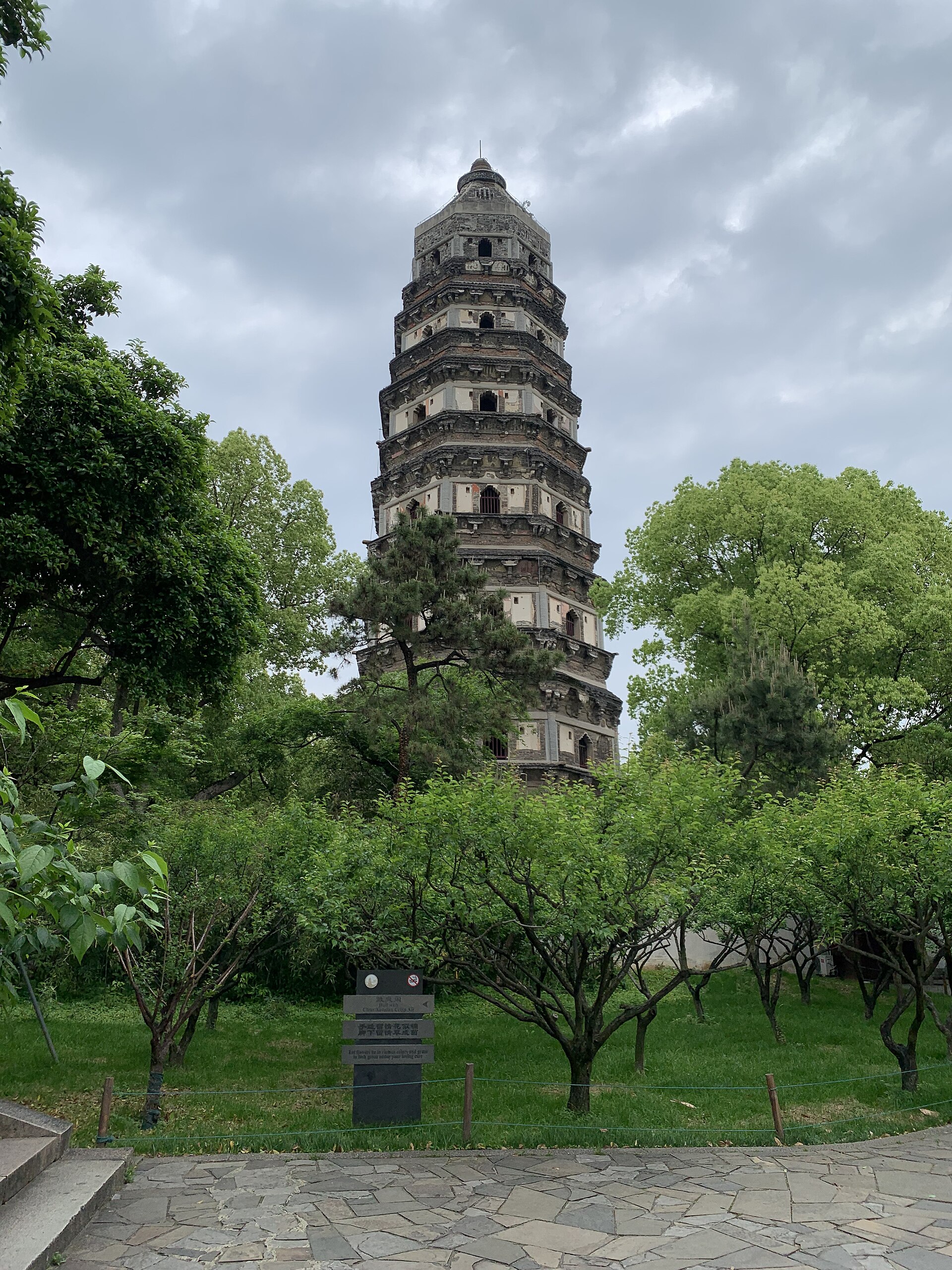
From there, head to nearby Tiger Hill (虎丘) — a low mound crowned by the Yunyan Pagoda (云岩寺塔), a 47 m brick tower built in 961 AD that leans more than 3 metres, earning it the nickname "the Leaning Tower of the East" — older, in fact, than Pisa. Around the hill are the Sword Pool, the Thousand-Person Rock and the legend of the tomb of the King of Wu. The climb is gentle and easy, and the view from the top reaches over the fields and the city.
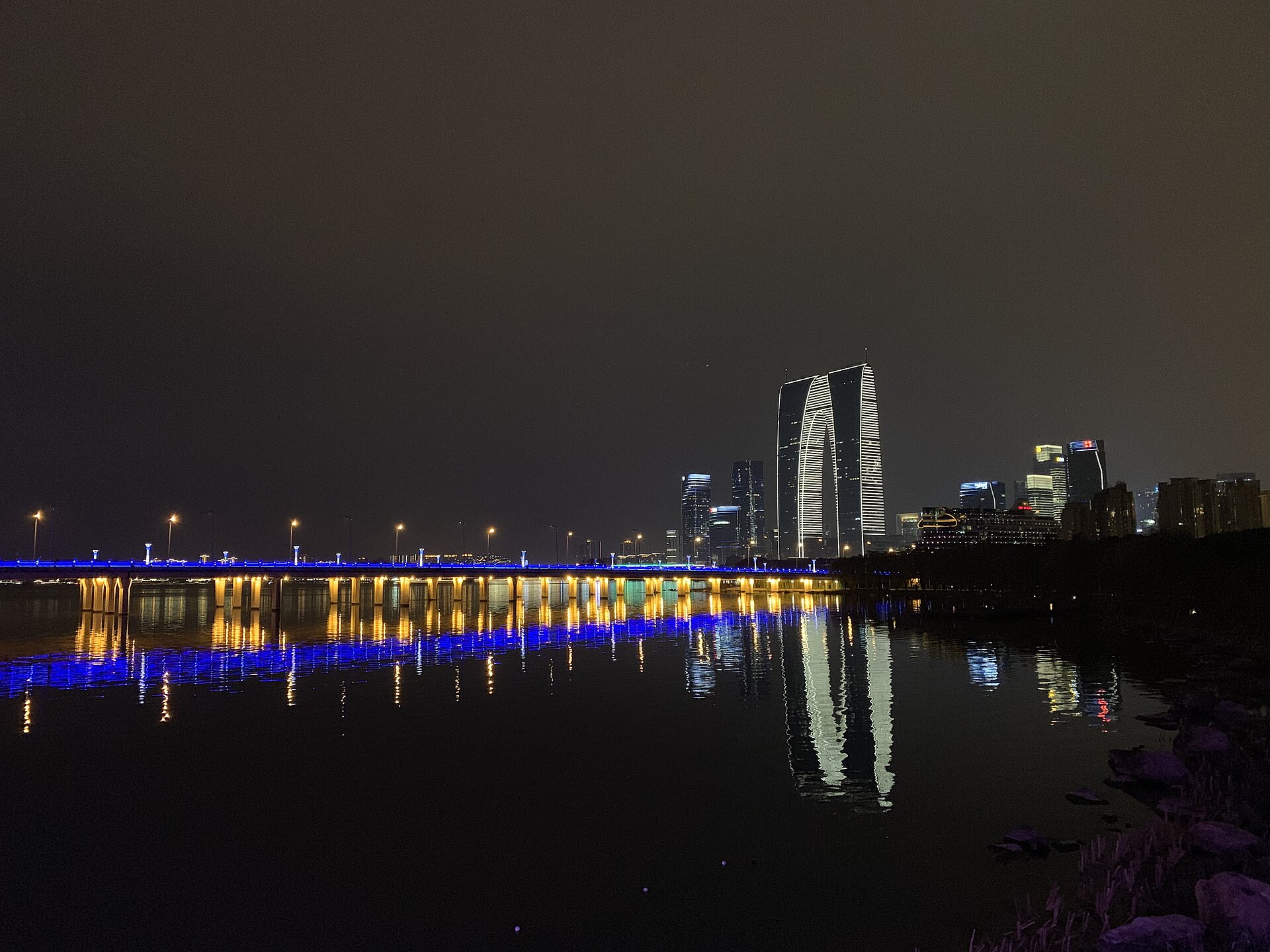
The first afternoon option — see the other face of Suzhou, a world away from the canals and gardens. Take Metro Line 1 straight east from the old town to the Suzhou Industrial Park (SIP) and Jinji Lake (金鸡湖) — a big lake at the heart of the new city, ringed by skyscrapers. The highlight is the Gate of the Orient (东方之门), a pair of towers that arch together (locals nickname it "the big trousers"), and the Suzhou Center mall (苏州中心) under its giant rippling glass roof. Walk the lakefront, rent a bike, or sip a coffee over the water; come dusk, the lit towers mirror beautifully in the lake.
If you'd rather collect one more classic water town, take this route — Suzhou has the advantage that the Tongli (同里) water town sits right at the end of Metro Line 4, so you ride straight there with no fiddly bus transfer. This thousand-year-old town has more than 40 arched stone bridges, timber houses along the canals and gondolas rowing through, plus the Retreat & Reflection Garden (退思园), a small World Heritage classical garden within the town itself. It's slower and quieter than Zhouzhuang, and an easy half-day before you ride the metro back. Compare all the options in the guide to the water towns around Suzhou.
In the evening, head back toward the old town — if you chose Jinji Lake and still have energy, linger a while for the towers lit up over the water before you go; if you came from Tongli, Metro Line 4 carries you straight back into the old town. Collect your bags, rest, and get ready to move on.
For a farewell dinner, pick a Su-cuisine restaurant in the old town and order a dish you haven't tried — osmanthus blood duck (母油船鸭) or a bowl of Suzhou-style topped noodles. If you're here in crab season, more hairy crab never gets old, at ¥80–200/person. If you're catching a late train back to Shanghai, leave time for the station — Metro Lines 2/4 to Suzhou Railway Station (苏州站), or Line 2 to Suzhou North (苏州北站) on the SIP side for some bullet trains. Check which station your ticket leaves from.
The old town around Pingjiang Road / Humble Administrator's Garden (Gusu) suits this plan best — you can walk straight to the canals and several gardens. Or the SIP district near Jinji Lake if you'd rather be close to the metro, the malls and the new towers. Mid-range hotels run ¥350–650/night. See the 10 best hotels or the 6 luxury hotels in Suzhou.
Metro + walking + bikes cover this plan — Line 1 runs east–west through the old town to SIP/Jinji Lake, Line 4 runs through the old town down to Tongli, Line 2 passes Tiger Hill and the railway station. The canal lanes in the old town are walk-and-bike zones (no metro deep inside). Fares ¥2–8, paid via the Suzhou Metro QR, Alipay or WeChat. See the Suzhou getting-around guide.
Set up Alipay (the international version, linked to a Visa/Mastercard) before you travel. Shops, the metro and the garden booking pages mostly accept Alipay or WeChat Pay only; some places don't take cash. See the guide to setting up Alipay & WeChat Pay.
| Item | Budget | Mid-range | Comfort |
|---|---|---|---|
| Hotel (1 night) | ¥130–280 (~฿650–1,400) |
¥350–650 (~฿1,750–3,250) |
¥800–2,500+ (~฿4,000–12,500+) |
| 3 meals/day | ¥70–120 (~฿350–600) |
¥130–250 (~฿650–1,250) |
¥300–600 (~฿1,500–3,000) |
| Metro / city rail, 2 days | ¥15–30 | ¥25–50 | ¥60–140 (+ some DiDi) |
| Admission (2 days total) | ¥100–130 (2 gardens + Tiger Hill · museum/canals/Jinji Lake free) |
¥200–270 (4 gardens + Tiger Hill + canal boat) |
¥270–370 (+ Tongli ¥100 / Shantang zone / boats) |
| 2-day total (approx.) | ¥430–840 (~฿2,150–4,200) |
¥1,010–1,720 (~฿5,050–8,600) |
¥2,290–5,740+ (~฿11,450–28,700+) |
Reference rate ¥1 ≈ ฿5 · prices are approximate and vary by season · hotel costed for 1 night · Suzhou garden tickets have peak/off-peak rates (Mar–May / Oct) — check before you go · autumn hairy crab (Oct–Nov) is an extra worth budgeting for.