Shanghai and Suzhou sit almost on top of each other — the high-speed train from Hongqiao gets you there faster than a taxi across Shanghai itself. Leave your hotel in the morning, walk a UNESCO garden by mid-morning, eat squirrel fish at noon, wander a canal street at dusk, and sleep back in Shanghai.
If you are staying in Shanghai and have a spare day, Suzhou is the best value trip you can make — it is astonishingly close. A high-speed train from Shanghai Hongqiao (上海虹桥) takes just 23–30 minutes to reach Suzhou Railway Station (苏州站), which sits right on the edge of the old town. The trains are so fast and so frequent that the journey feels more like a long metro ride. Shanghai is a city of glass towers; Suzhou is canals, rockery gardens, curved grey rooflines and still water reflecting wooden pavilions — two different worlds, half an hour apart.
This page is a complete guide to doing Suzhou in one day, out in the morning and back by evening: which train to take and which station to use, a tight hour-by-hour plan, and the thing most day-trippers forget — what time the last train back to Shanghai leaves. Before you go, read our China high-speed rail guide, which covers booking tickets and boarding with a foreign passport. For the bigger picture, see our Suzhou attractions and full Suzhou city guide.
The trains are frequent enough that you barely need to plan — but there are three things worth knowing before you book.
Almost all trains leave from Shanghai Hongqiao (上海虹桥), the main high-speed station on the western edge of the city, next to Hongqiao Airport and connected to metro Lines 2, 10 and 17. Some services also depart from Shanghai Railway Station (上海站) in the centre, which is handy if your hotel is in Puxi.
There are two arrival stations. For the old town, get off at Suzhou Railway Station (苏州站), on the northern edge of the old town, with metro Line 4 straight to the gardens. Suzhou North (苏州北站) is on the SIP side and suits Jinji Lake; a few of the fastest trains stop only there, so always check your ticket's destination before boarding.
A second-class ticket costs about ¥35–40 (~฿175–200 / US$5–6) one way. First class and Business class cost a little more, but on a hop this short, second class is perfectly comfortable.
There are three ways to buy: the official 12306 app (English interface, register with your passport); Trip.com (the easiest route for visitors, accepts foreign cards); or a station ticket machine or counter using your physical passport. You board by scanning your passport at the gate — no need to collect a paper ticket.
If you have just landed and want to fit in Suzhou before heading into the city, you can. Hongqiao Airport (SHA) is easiest, because the terminal and Shanghai Hongqiao railway station are right next to each other — walk across and board the train to Suzhou.
Pudong Airport (PVG) is on the far side of the city, so take the Maglev (430 km/h, fast and fun) or metro Line 2 to Hongqiao first, then connect to a high-speed train. PVG to Suzhou comes to around 1.5–2 hours in total, so allow plenty of time if you plan to do this straight off a flight with luggage.
This is the thing day-trippers get wrong most often — always check the last train back to Shanghai first. The final departures usually leave around 22:00–23:00, but exact times shift with the season and the timetable, so do not guess. Open the 12306 app or Trip.com and look up the last departure for your travel date.
The safest approach is to book your return ticket in advance on an evening train, because plenty of people head back to Shanghai after dark and popular departures sell out. If you are unsure how long you will stay, choose a return that leaves you a comfortable margin to walk back to the station — you can always switch to an earlier train if you finish early.
This plan focuses on the old town — classical gardens, the museum, squirrel fish and Pingjiang Road. For the full version, see our Suzhou one-day itinerary.
Leave your hotel early and take metro Line 2 or 10 to Shanghai Hongqiao. Pick the fastest G train (about 25 minutes) and get off at Suzhou Station (苏州站). If you are carrying big bags, leave them in a station locker before you start walking. For the full picture of moving around the city, see our getting around Suzhou guide.
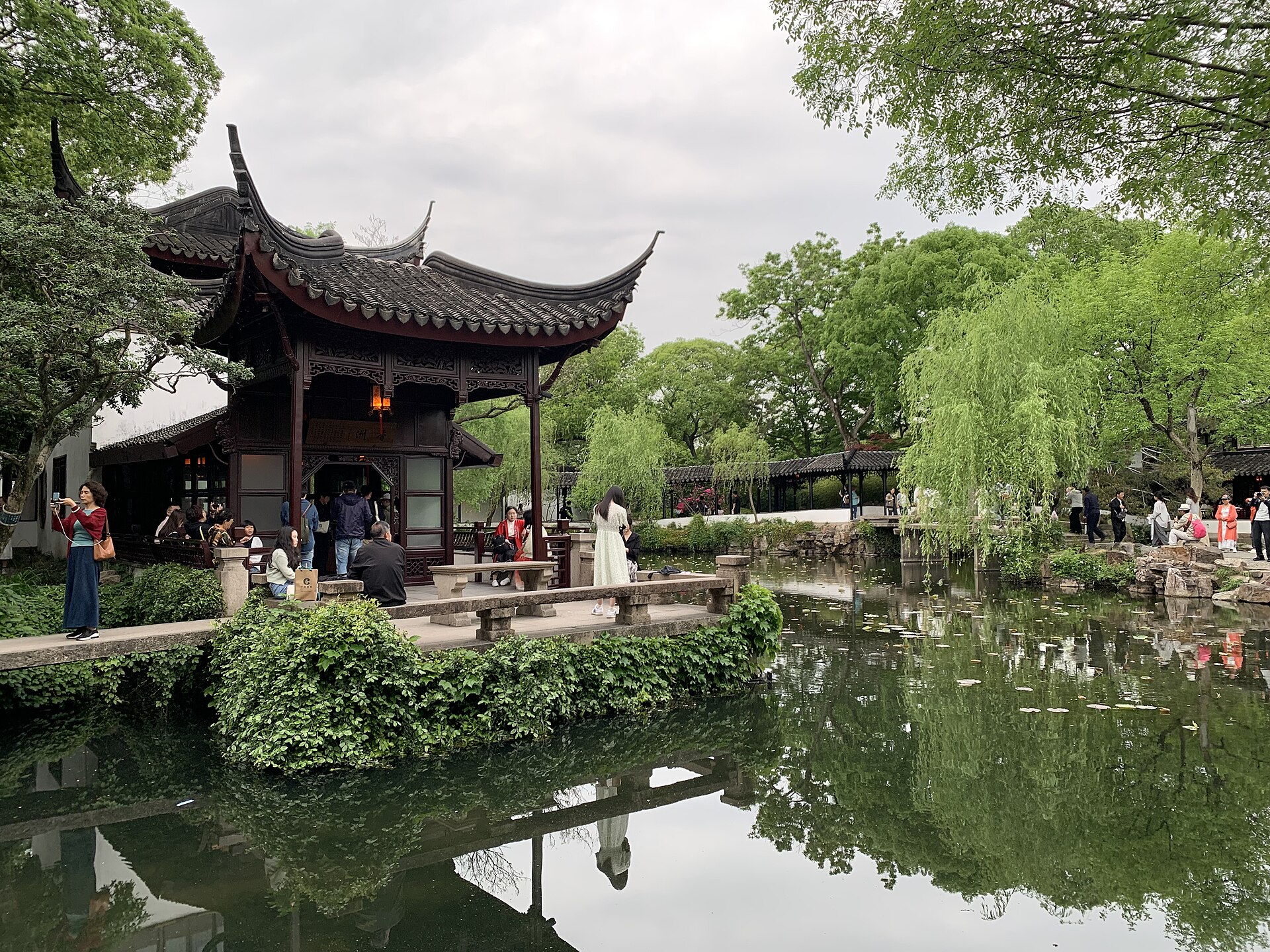
From Suzhou Station it is a short walk or a few stops on metro Line 4 to the Humble Administrator's Garden (拙政园), the largest and finest of Suzhou's UNESCO classical gardens, built in 1513 — ponds, wooden pavilions, stone bridges and deliberately winding paths. Give it 1.5–2 hours. Arrive before 9 am to beat the tour groups that flood in late morning; the garden opens around 07:30 and you book online with your passport. To go deeper, see our Suzhou classical gardens guide.
A few minutes' walk from the Humble Administrator's Garden is Lion Grove Garden (狮子林), famous for its maze of lion-shaped rockery that children love to clamber through. Next door, the Suzhou Museum (苏州博物馆), designed by the Chinese-American architect I. M. Pei, is free (book a slot online) and so handsome the building itself is the attraction.
The dish to try is squirrel mandarin fish (松鼠鳜鱼): a whole fish scored into a crisp lattice and bathed in bright orange sweet-and-sour sauce, shaped to resemble a squirrel's tail — bold, classic Suzhou flavour. The old restaurants are clustered around the old town and Pingjiang Road. For what else to eat, see our Suzhou food guide.
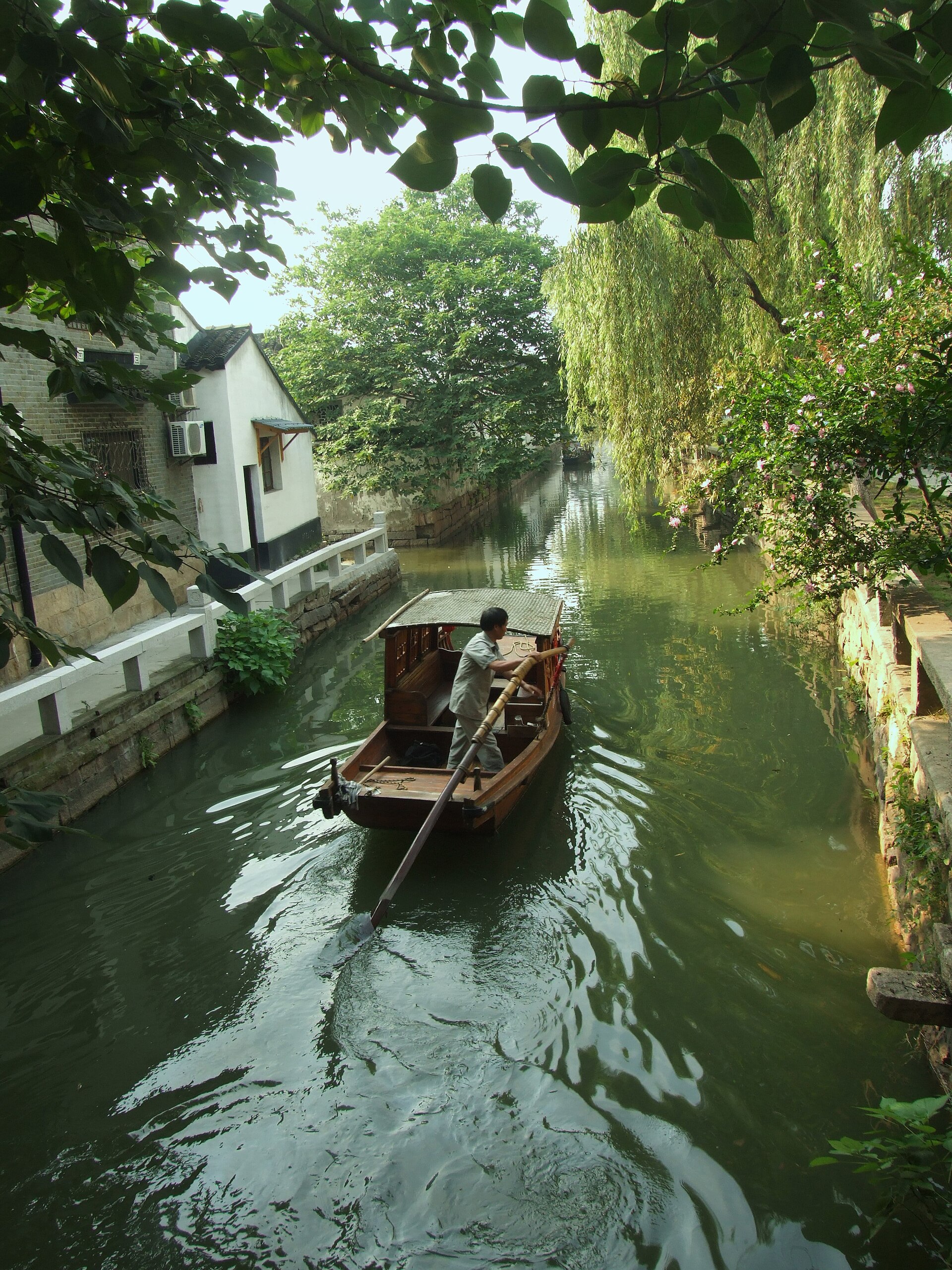
The heart of Suzhou is Pingjiang Road (平江路), a canal-side street whose layout has barely changed since the Song dynasty — tea houses, silk shops and snack stalls line both banks. Hire a small rowing boat through the canals, or sit with a pot of tea in an old shophouse and watch the boats drift past. This is the Suzhou people remember.
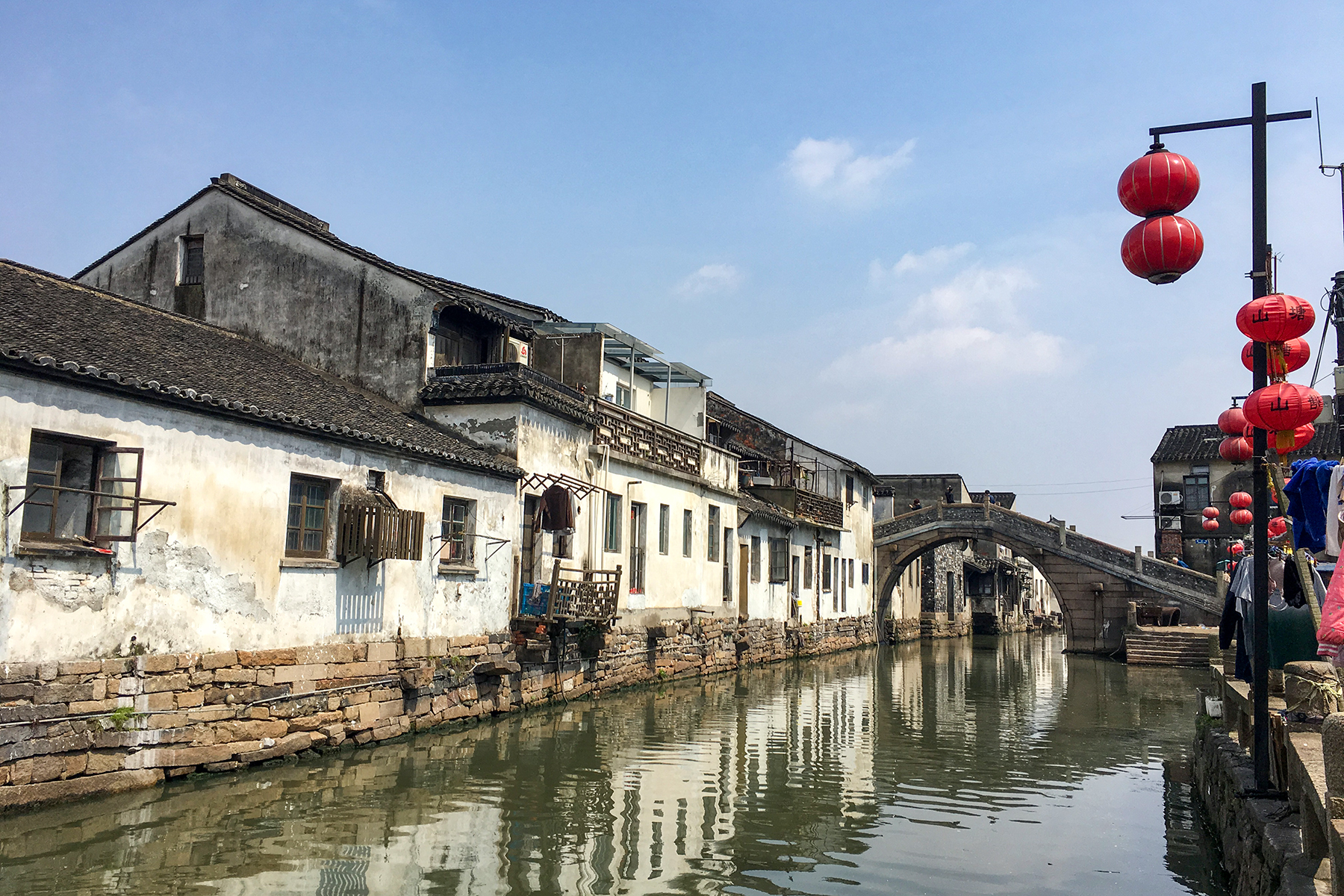
If you are not yet due at the station, stop by Shantang Street (山塘街), a long canal quarter that glows at dusk: red lanterns line the whole stretch and the water turns gold — the prettiest hour of the day. Walk and snack before heading back — but keep an eye on your last-train time and leave a comfortable margin to walk back to the station.
Take metro Line 4 from the old town back to Suzhou Station, board your booked return train, and you are back in Shanghai in about 25 minutes — in time for dinner or an evening stroll along the Bund. If one day leaves you wanting more, see our Suzhou two-day itinerary, which adds Tiger Hill and Jinji Lake.
One day is enough — if you focus on the old town. The Humble Administrator's Garden, Lion Grove Garden, Suzhou Museum, a squirrel-fish lunch and an evening along Pingjiang Road all fit comfortably if you leave Shanghai early. That is exactly why Suzhou is the most popular day trip from Shanghai — close, frequent, and with plenty to see within walking distance.
Stay overnight — if you want more than the old town. Suzhou also has the Lingering Garden, Tiger Hill with its thousand-year-old leaning pagoda, Jinji Lake on the modern SIP side, and the surrounding water towns of Tongli and Zhouzhuang — too much for a single day. One night lets you walk Pingjiang Road and Shantang Street after dark without watching the clock, and start the gardens early before the crowds. For where to stay, see our top 10 hotels in Suzhou, or for something special, the luxury Suzhou hotels.