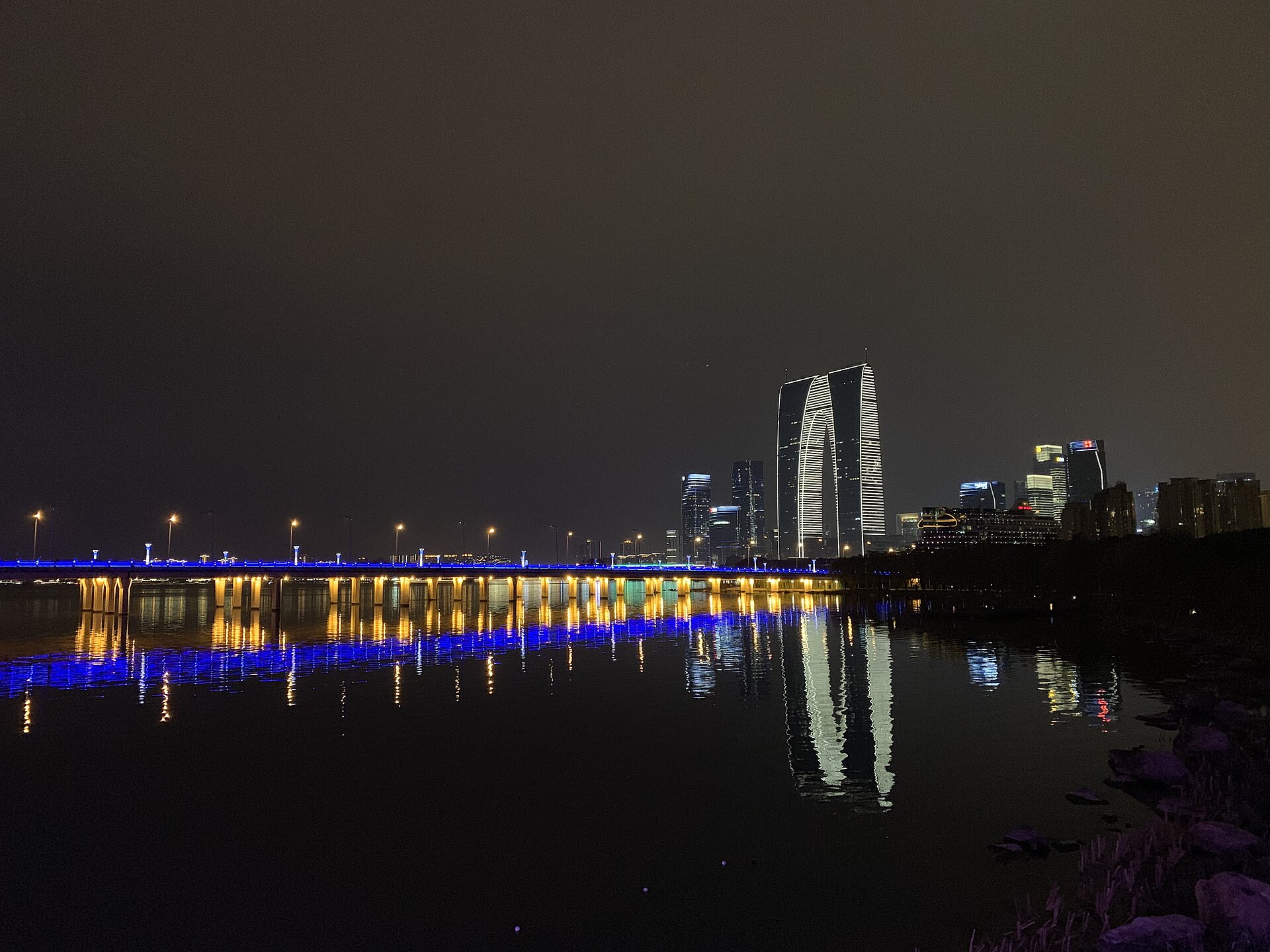
Leaves rolled tight into tiny spirals like little snails, furred with white down, scattered over a glass of hot water — they sink and unfurl, and a fruit-and-flower aroma rises before the first sip. This is Biluochun from the Dongting hills by Lake Taihu, and the Pingtan teahouse culture of Suzhou.
Picture a spring morning on the Dongting hills by Lake Taihu. The tea gardens grow tucked between loquat, plum and citrus trees, and pickers move along them taking only the youngest buds by hand — tiny leaves rolled tight into spirals, furred with fine white down like a dusting of frost. Brew them in a clear glass and they slowly sink and open, and a soft aroma of fruit and flowers comes up to meet you. This is Biluochun (碧螺春), one of China's ten famous teas, and a thing Suzhou is as proud of as its classical gardens.
Its original name was 吓煞人香 — roughly, "a fragrance so strong it startles you." One legend has a nun picking tea on the mountain and gasping at how powerfully it smelled. Later the Kangxi Emperor visited Lake Taihu in the 38th year of his reign, decided the old name was too coarse, and gave it the more elegant Biluochun instead — bi (碧) for jade-green, luo (螺) for the snail-like curl of the rolled leaf, chun (春) for the spring it is picked in. "Green snail spring."
And coffee? Honestly, Suzhou is still very much a tea town — tea is the city's real heritage. But over the past few years a new wave of specialty cafés has been opening in the old town's lanes and out on the Jinji Lake side. This guide takes you through both worlds — starting with the Biluochun that is the root, the Pingtan teahouses that are the heart, then crossing into the coffee scene that keeps quietly growing.
The shape of the leaf is the first thing that tells you whether it is real Biluochun — tightly spiral-curled, covered in fine down.
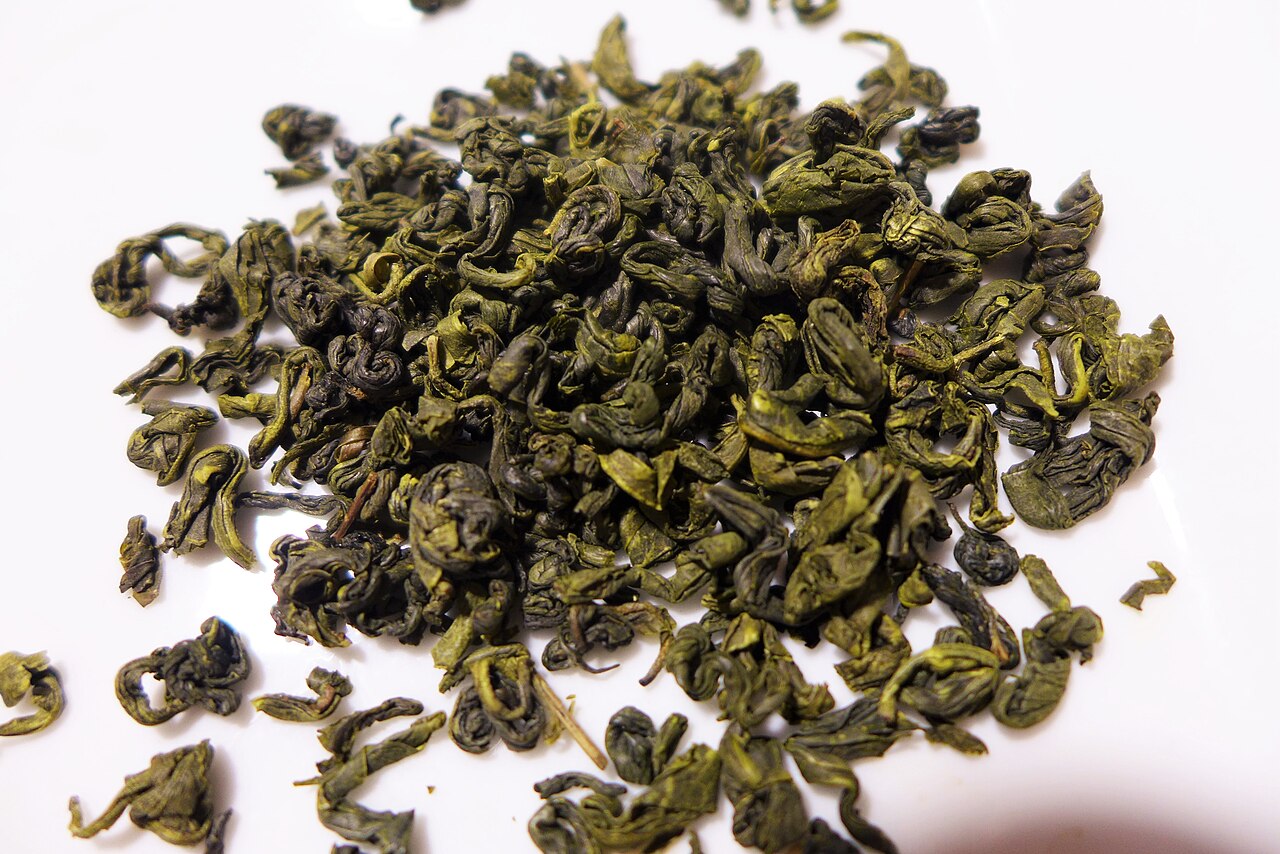
Genuine Dongting Biluochun is easy to recognise once you know what you're looking for — leaves rolled tightly into small spirals like little snails, a deep silvery-green colour, and fine white down (白毫) across the whole leaf. The higher the grade, the more down it carries and the smaller and tighter the curl, because it is the very youngest buds, picked by hand.
A single pound of finished tea takes 60,000 to 80,000 tiny buds, all picked, sorted and pan-fired by hand. That is exactly why real Biluochun is expensive — and why fakes are everywhere. The tea itself is fresh and bright, with a sweetness that lingers and a fruit-and-flower aroma softer than most green teas — a character said to come from the Dongting gardens being planted in among the fruit orchards.
From the picking season and the grades to the brewing that lets Biluochun show its best.
Biluochun is picked very early and only once a year, from mid-March to early April. The tea picked before the Qingming Festival — Mingqian (明前) — is the top grade: youngest leaves, most down, freshest aroma. The Mingqian window lasts only about 7–10 days, which is why it is so scarce and so dear. Visit Suzhou in that window and you can drink the freshest new tea of the year.
Real Biluochun grows on the eastern and western Dongting hills (东山/西山) by Lake Taihu, southwest of Suzhou. What makes it special is that the tea gardens are planted in among fruit orchards — loquat, plum, citrus — so the leaves take on a floral, fruity note. Tea grown outside Dongting may look similar, but it doesn't carry the same aroma.
Biluochun is very delicate, so use water at only about 75–80°C — too hot and it turns bitter and the aroma burns off. It is usually brewed in a clear glass so you can watch the leaves open, using the "leaves after water" method (上投法): pour the water in first, then scatter the leaves on top. The downy leaves slowly sink and unfurl. Steep for 2–3 minutes; drink it plain, no sugar or milk.
Because Biluochun is so popular, fakes are everywhere. The big problem is lower-grade or out-of-region tea — often from Sichuan, where it's cheaper to grow — sold under the Dongting name. The safest move is to buy from a shop that lets you taste before you buy and can state the grade and origin clearly. Be suspicious of anything cheap that claims to be Mingqian Dongting, since the genuine top grade is always pricey. Better still, go up to the tea villages on the Dongting hills and buy direct from the gardens.
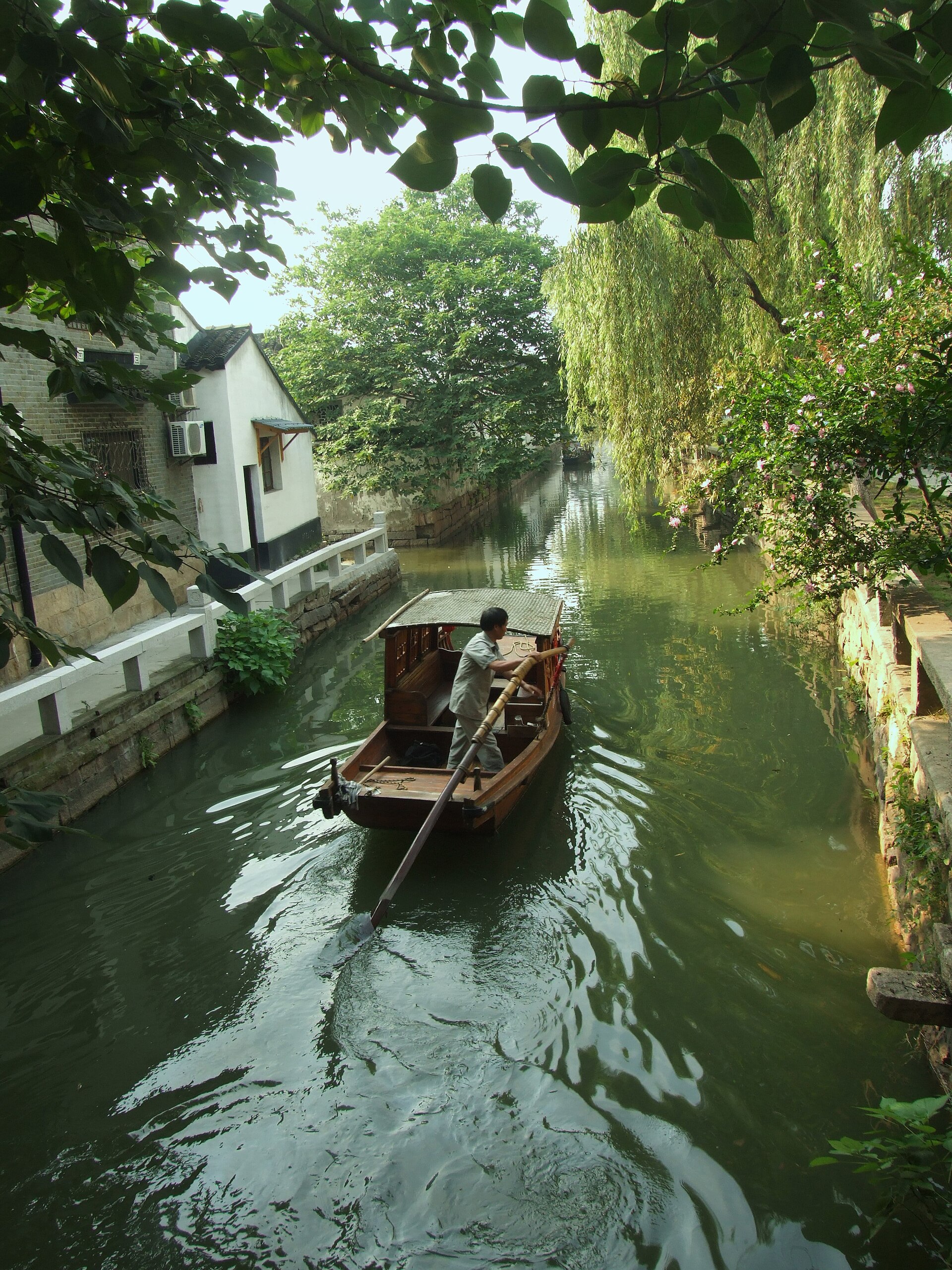
In Suzhou, tea rarely comes alone — it comes with storytelling and song in the soft Suzhou dialect.
Pingjiang Road (平江路) — Suzhou's ancient canal-side street, where teahouses and Pingtan venues hide down the lanes
In Suzhou, the old teahouses often pair tea with Pingtan (评弹) — the art of storytelling and ballad-singing in the famously soft, sweet Suzhou dialect, accompanied by the pipa (琵琶) and sanxian (三弦). A performer tells a classic tale in instalments, breaking into melody as it goes. People here have listened to it for centuries, and it is one of China's recognised intangible cultural heritages.
The way to experience it is to step into a teahouse in the old town, order a pot of tea (Biluochun or jasmine, your call) with a few local snacks, and sit through a set of roughly an hour. Typical prices run ¥30–120 (~฿150–600) per person, depending on the venue and the session. Some are afternoon shows, some evening — check the showtimes before you go, since not every teahouse performs all day.
From the canal-side streets to the tea villages on the Dongting hills — each gives a different mood.
Suzhou's loveliest canal-side street, lined with teahouses and small tea rooms, many running Pingtan sets in an old-lane setting of red lanterns and brush calligraphy. Sipping tea by the water while a ballad is sung in the Suzhou dialect is the image people carry away from this city. The main drag is the busiest and dearest — step into the side lanes for quieter, friendlier rooms.
Another canal-side street with a long history, near the Changmen Gate (阊门). It has traditional teahouses that pair tea with Pingtan or Kunqu opera (昆曲) — for the price of a cup, around ¥30–50, you can sit and listen for an hour. It is especially pretty at night when the canal lanterns come on, a good pick if you're staying near Changmen or the centre.
Some of Suzhou's classical gardens have tea pavilions set among rockeries, lotus ponds and lattice windows — built for exactly this kind of pause. Sipping Biluochun in a pavilion inside a centuries-old garden makes it instantly clear why Suzhou prizes tea and quiet. Prices depend on the garden, and some include an admission charge.
To reach the true source, head up to the tea villages on the eastern or western Dongting hills by Lake Taihu. In picking season (Mar–Apr) you can see the tea being hand-picked and pan-fired, and buy genuine Biluochun direct from the gardens — sipping tea with a lake view, in a setting completely unlike the old town. It's a half- to full-day trip by DiDi or car, best for serious tea lovers.
Honestly, still the newcomer next to tea — but real, and growing, especially in the old-town lanes and out by Jinji Lake.
Jinji Lake (金鸡湖) on Suzhou's new-district side — where many of the newer cafés have opened along the water
Suzhou is not a coffee capital on the scale of Shanghai, with its thousands of cafés. But as a city with a large high-tech industrial park and plenty of younger residents, its specialty-coffee scene has grown quickly in recent years. Good independent cafés keep opening — even as their parents still sip Biluochun every day.
The coffee clusters in two main areas — the small lanes of the old town, around Pingjiang Road and inside old courtyards turned into cafés, where a classical setting meets a modern bar · and the Jinji Lake (金鸡湖) side in the new district (SIP), a newer business quarter with Western-style cafés along the water. Specialty coffee generally runs ¥25–45 (~฿125–225) a cup, and many shops borrow the city's Biluochun tea or its osmanthus into a signature drink.
From real Biluochun to coffee that borrows the city's tea and flowers.
The number-one drink to try — real Dongting Biluochun, served in a clear glass, the tiny downy spirals slowly sinking and unfurling. The liquor is a pale, clear green; the taste fresh, with a lingering sweetness and a fruit-and-flower aroma. Drink it plain. You'll get it freshest at an old-town teahouse or up in the hill tea villages, and best of all in new-tea season.
Plenty of Suzhou's newer cafés borrow the city's Biluochun into a drink — a Biluochun latte is espresso with milk and green tea, the nutty-fruity note of the tea cutting against the depth of the coffee. It's a handshake between the city's tea heritage and a coffee scene on the rise. If you see it on a menu, try a cup — drinking a Biluochun latte in the city where the tea was born means something a little different.
Osmanthus (桂花) is Suzhou's autumn scent, and teahouses and cafés alike turn it into drinks — from osmanthus tea to a cold brew or latte scented with the flower, sweet and fragrant on its own without much added sugar. Come in September–November when the flowers are out and this is the seasonal flavour to try.
Sipping tea in Suzhou usually comes with small local snacks — soft Suzhou-style rice cakes, mung-bean cakes, osmanthus sweets, and melon or pumpkin seeds to nibble while you top up the pot. Most teahouses set out a few with the tea already, but if you want more, order some local sweets alongside — their gentle sweetness plays nicely against the fresh green tea. To go deeper, see our Suzhou mooncakes and pastries guide.
Suzhou is deeply cashless — small teahouses and many cafés take WeChat Pay and Alipay as their main methods, and some don't take cash at all. Before you travel, set up Alipay and link a Visa or Mastercard through its international mode (it works for visitors · see our China payment guide).
If you're coming for new-tea season, the best window is mid-March to early April, when the Mingqian is picked. For the osmanthus mood instead, come September–November. For Pingtan teahouses you can go year-round, but check the showtimes first, since not every venue performs all day. Weekends and long holidays — especially Golden Week — pack Pingjiang Road and Shantang Street to the brim.
If you want a VPN for general internet use in China (Google Maps, Instagram and the like), set it up before you travel, since most apps can't be downloaded once you're inside the country — see our China internet & VPN guide. For getting up to the Dongting tea villages, DiDi is easiest, though the distance out of the city makes the fare higher than a ride downtown.