Every stop in detail with metro and tips
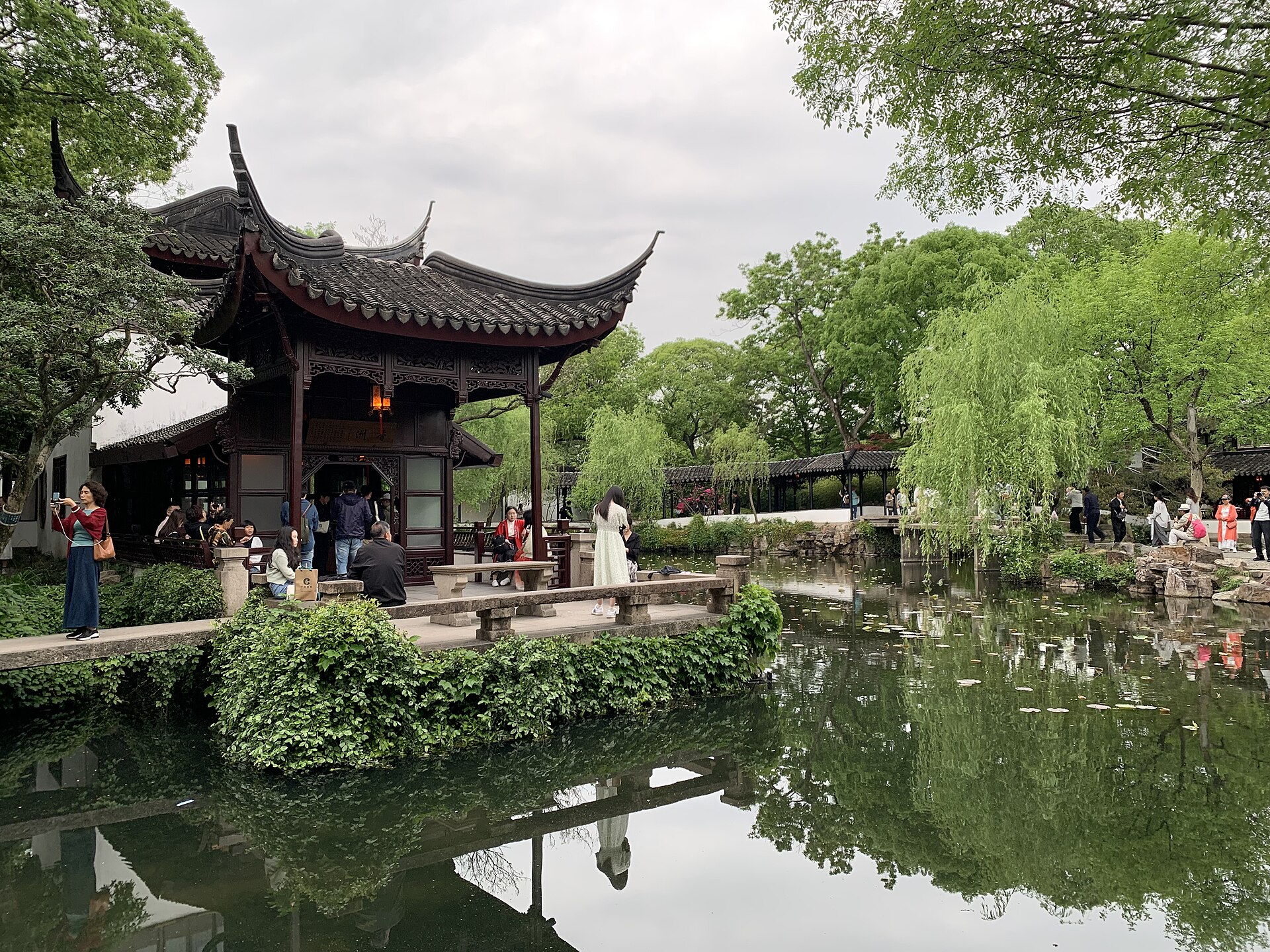
Start the day at the Humble Administrator's Garden, the largest and most famous classical garden in Suzhou, at 8:30 am as the gate opens. Built in 1509 during the Ming dynasty, it is laid out around water — ponds, pavilions, stone bridges and long covered walkways linking one view to the next. This early, the crowds are still thin, the light comes soft through the willows, and the pavilions mirrored in the still ponds are the garden at its best.
The garden is inscribed as a UNESCO World Heritage site among the Classical Gardens of Suzhou. Take it slowly — about an hour and a half. Look for the moments where a carved window frames a view of the next courtyard, the "borrowed scenery" technique the Suzhou gardens are known for. For the full picture, see our Suzhou classical gardens guide.
A five-minute walk south of the Humble Administrator's Garden brings you to Lion Grove Garden, a smaller garden with the opposite character. Its centrepiece is a labyrinth of stacked Taihu limestone, with winding paths that thread in and out of real rock grottoes — children love it and adults enjoy it just as much. Some of the stones resemble lions, which gives the garden its name. It was built in 1342, late in the Yuan dynasty.
Allow about 45 minutes to an hour to wander Lion Grove; this stop is more about the fun of clambering through the rockery than sitting with a view. Save your legs for the canal walk in the afternoon.
Right beside Lion Grove is the Suzhou Museum, designed in 2006 by I.M. Pei — the Chinese-American architect, of Suzhou descent, who designed the glass pyramid at the Louvre. He called this building his "small daughter." The white-and-grey geometric roofs are outlined in dark stone, and the inner courtyard arranges water and rock like an ink-wash painting, an interpretation of the Suzhou garden in a modern architectural language. Inside are local antiquities, silk textiles and dynastic art.
Entry is free, but you must reserve ahead through the museum's WeChat mini-program, and slots fill quickly, especially on holidays — book several days before you travel. Allow about an hour to walk through.
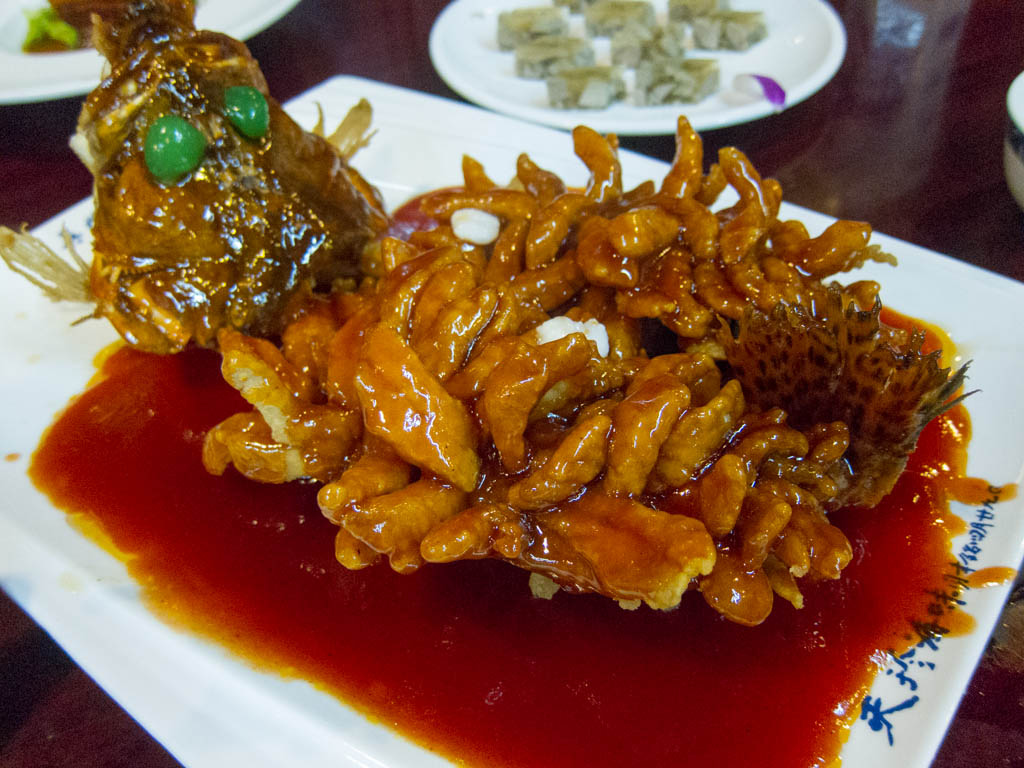
Leave the museum area and find a local restaurant for the city's most famous dish, squirrel mandarin fish (松鼠鳜鱼) — mandarin fish scored into a crosshatch, deep-fried so it fans out like a squirrel's tail, then glazed in a bright sweet-and-sour sauce that sizzles when it is poured over hot. The dish is said to date back to the Qianlong Emperor's tours of the south.
Suzhou cooking leans sweet and gentle, milder than other regional Chinese cuisines. Order a side or two — soy-braised pork (酱方) or a bowl of Suzhou clear-broth noodles. See all the dishes to try in our Suzhou food guide.
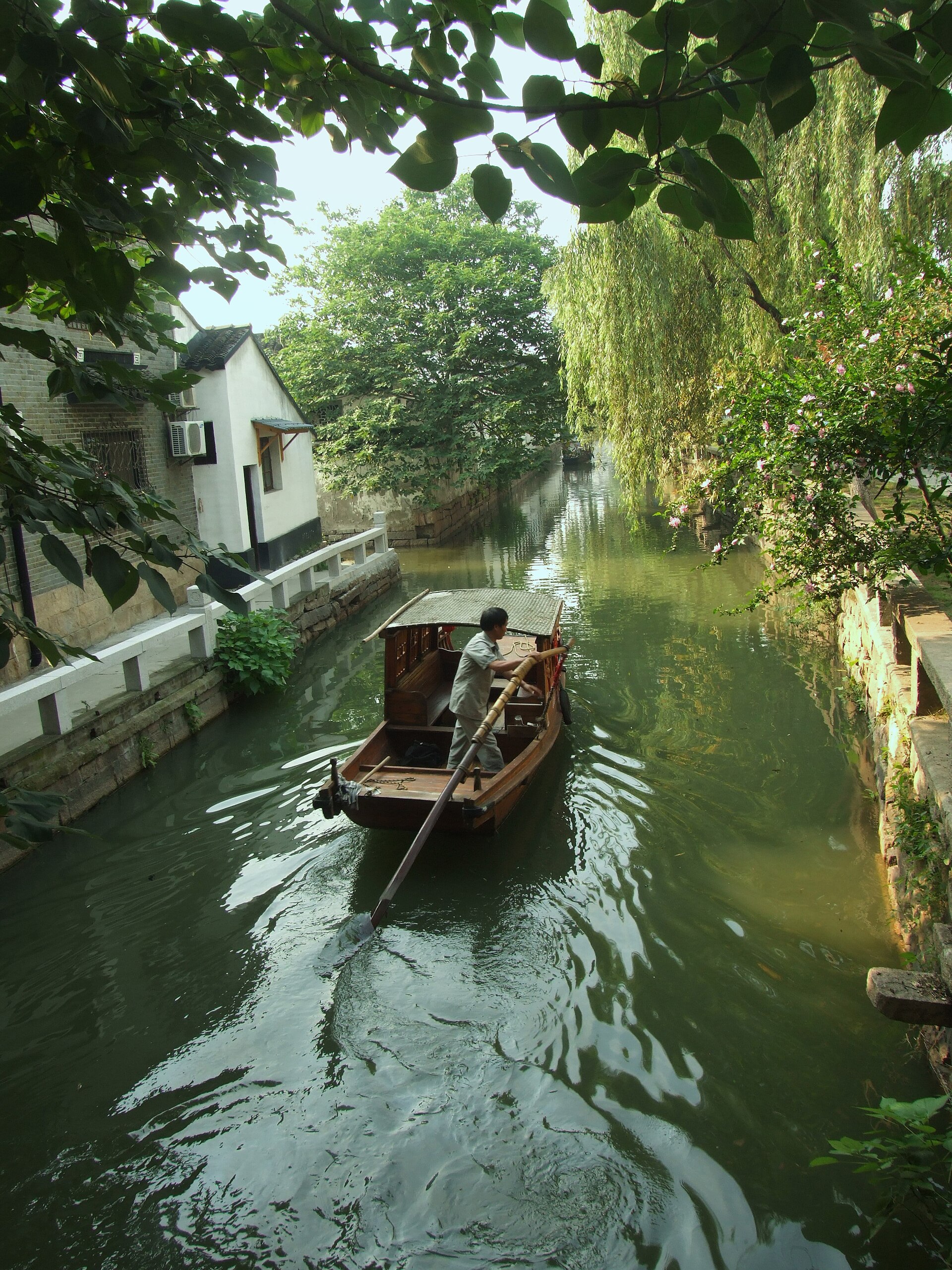
Spend a slow afternoon on Pingjiang Road (平江路), a canal lane about 1.6 kilometres long that has kept the old town's street plan for more than 800 years, matching the ancient Song-dynasty Pingjiang map. The canal runs parallel to a stone walkway, lined on both sides by whitewashed houses with grey-tiled roofs, and small wooden boats drift past now and then. The shops along the lane are a run of cafés, craft studios, teahouses and traditional snack stalls.
This is the spot to sit down with a cup of Biluochun green tea (碧螺春), the city's celebrated tea grown on the Dongting hills by Lake Tai, its leaves rolled into tiny downy spirals with a soft fruity aroma. Find a canal-side teahouse, watch the boats pass, and take the best break of the day. If you fancy it, short canal boat rides run for about ¥50–80 per person.
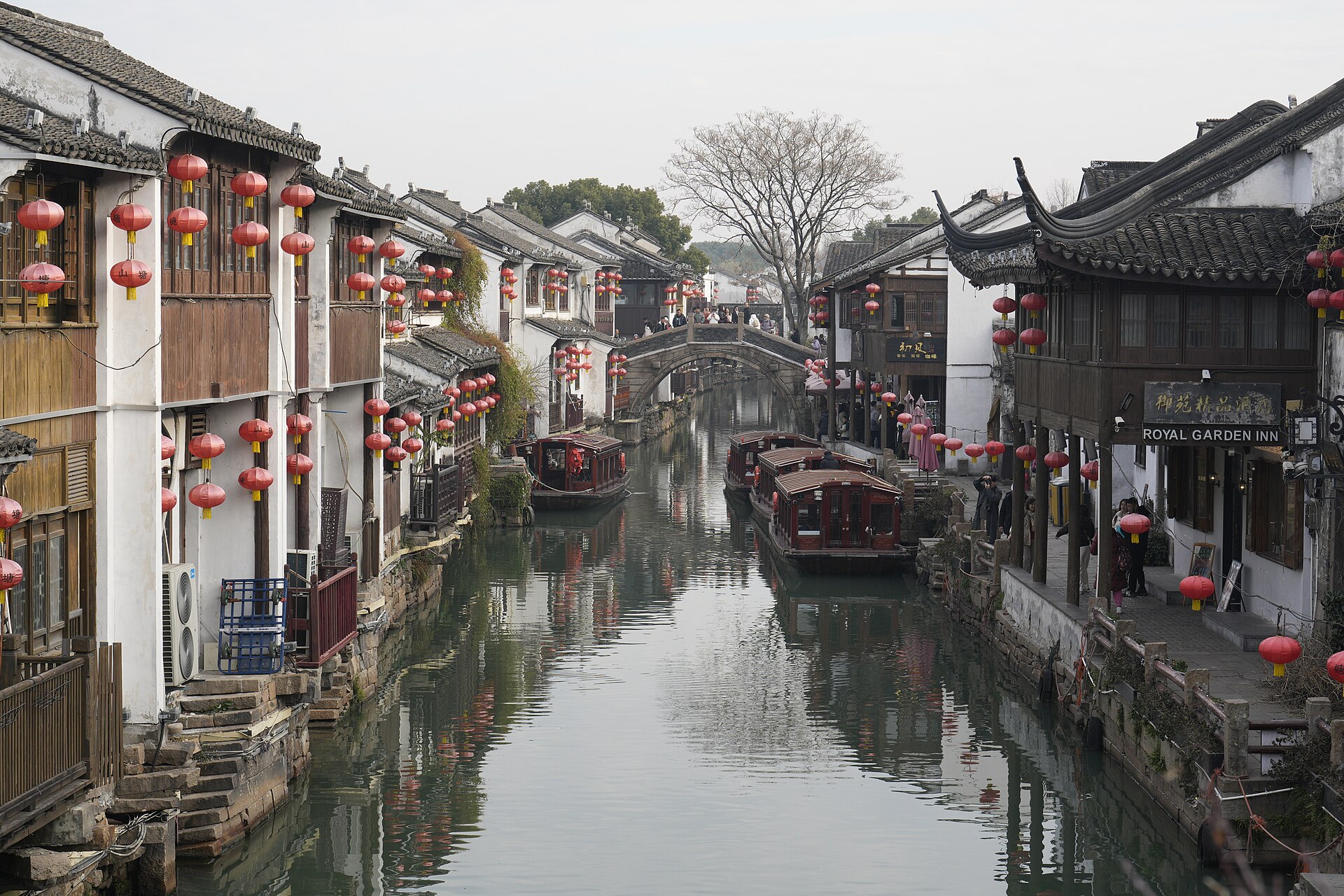
End the day on Shantang Street (山塘街), a canal and pedestrian lane the poet Bai Juyi ordered dug in 825 AD while he was governor of Suzhou, linking the old town to Tiger Hill. The stretch most visitors walk is the first 800 metres or so near the Changmen gate. Night is when Shantang is at its best — rows of red lanterns line both banks and glow in the water, old timber houses light up warm, and an arched stone bridge spans the canal.
Graze your way along the lane with the evening canal-side snacks — local sweets, braised duck, meatballs and Suzhou desserts. Or, if you would rather sit down, both banks have local restaurants to choose from. Close the day with a short boat ride along the Shantang canal at night (¥50–100 per person), the red lanterns sliding past on either side, before catching the metro or a DiDi back.
- The Lingering Garden (留园) — one of the four most famous classical gardens in China, but on the western edge of the old town; pair it with Tiger Hill on a second day. See the Lingering Garden.
- Tiger Hill (虎丘) — a leaning pagoda and ancient royal legends, at the northern end of Shantang Street; allow half a day. Save it for a second day. See Tiger Hill.
- Jinji Lake + SIP (金鸡湖) — the modern district of skyscrapers and a lake, a different part of the city from the old town and a long Metro Line 1 ride away.
- Tongli / Zhouzhuang water towns (同里/周庄) — ancient water towns outside the city that need a full day and do not fit a one-day old-town plan. See the water towns around Suzhou.