A relaxed seaside island city where a metro takes you anywhere for ¥2 by phone, where you ferry over to a car-free Gulangyu to wander all day, where eating shacha noodles, market snacks and street food alone is completely normal, where the cafés of Shapowei are made for sitting solo, and where a hostel can make friends for you in five minutes — Xiamen is one of the easiest cities in China to travel on your own.
If you are planning your first solo trip in China and wondering where to start, Xiamen is one of the gentlest answers you can pick. It is a relaxed, slow-paced seaside island city that is safe and easy to walk — and it ranks among the safest, friendliest cities in China for solo travel, including for women travelling alone. Areas like Siming, Zhongshan Road, Xiamen University and Shapowei stay busy and well lit late, plenty of people walk to late-night food on their own, and violent crime against tourists is rare.
What makes Xiamen easy to do alone is its compact, walkable scale, with metro Lines 1, 2 and 3 covering the tourist areas and the Gulangyu ferry terminals, paid by tapping Alipay or WeChat, with fares from ¥2 (about ฿10). Add shared bikes for the seafront road, and the city's headline: car-free Gulangyu island, where you can wander all day with no traffic to think about. And the things solo travellers worry about most here — how to eat alone, how not to feel lonely — all have real, workable answers, because Xiamen is full of single-bowl food, wet markets, cafés and social hostels where eating on your own is the most ordinary thing in the world.
This guide covers everything a solo traveller in Xiamen needs: honest safety advice, getting around by metro and ferry, the things that are genuinely good to do alone, how to eat shacha noodles and eat solo without feeling awkward, where to base yourself, how to meet people along the way, and the easy solo days out on Gulangyu, around Xiamen University and along Huandao Road that are the most enjoyable of all on your own.
Safer than you would expect — but there are a few small things worth knowing first, so you do not get caught out.
Xiamen has a very low rate of violent crime and strong public security, and it is a relaxed, slow-paced resort city. Walking back to your accommodation in the evening through areas like Zhongshan Road, Siming and Zengcuoan is safe, with people about and good lighting late, plus CCTV and police throughout — many people walk to late-night food on their own. The thing to watch is pickpocketing in dense crowds, such as the Zhongshan Road pedestrian street and Gulangyu when it is busy. Keep your passport and valuables secure and watch your bag in crowds and you are well covered.
Xiamen ranks among the safest and friendliest cities in China for women travelling alone, and most report feeling safe on the metro, on the ferry, in restaurants and after dark. Street harassment is uncommon. Apply the same basic caution you would in any large city — avoiding quiet, dark lanes on Gulangyu late at night after the day-trippers leave, not getting too drunk, and trusting your instincts — and you can travel with real confidence.
Xiamen does not really have the organised scams of bigger cities, but the thing to watch is tourist seafood restaurants on Gulangyu and around Zhongshan Road that set high prices or do not display them clearly, plus touts selling goods and photo services around the check-in spots. The fix is simple: choose places that display prices clearly, check the price before ordering — especially seafood priced by weight — book ferry tickets and activities through an app, and call a DiDi, which shows the price clearly before you get in.
The metro closes around 11pm; after that, take a DiDi or an official taxi, both safe and cheap. The climate is subtropical: the best windows are Oct–Dec (dry, clear autumn) and Mar–May (spring). Summer (Jun–Aug) is hot and humid, and Jul–Sep is typhoon season, when the ferry can pause, so check the forecast before heading to Gulangyu. And avoid Golden Week (Oct 1–7) and Spring Festival, when accommodation prices spike and Gulangyu packs out.
If you are coming to Xiamen alone and want a base you can walk everywhere from, plus some company, Koala International Youth Hostel (考拉国际青年旅舍·中山路轮渡店) is the best-value pick — a hostel in central Siming at 110 Zhongshan Road, on Xiamen's oldest pedestrian street. A few minutes' walk to the Gulangyu ferry and to metro Line 1 (Zhenhai Lu station), it has both dorm beds and private rooms and a common area for meeting other travellers. Dorm beds from around ¥70 (~฿350) and private rooms from around ¥220 (~฿1,100) a night, and it scores 8.6/10 from around 557 real reviews. A solo trip that does not have to be a lonely one.
Read the Koala Hostel Review →Ordered by what solo travellers tend to enjoy most and find easiest.

1
Xiamen's headline, and the most enjoyable thing of all to do solo, is Gulangyu (鼓浪屿) — a World Heritage island that is car-free, with only footpaths and small electric carts. You can explore its colonial-era lanes, old churches, the seaside Shuzhuang Garden and its cafés in old houses all day, with no traffic to worry about. Because there are no cars, you set your own pace, get pleasantly lost in the little lanes, and stumble on pretty corners on your own. It is one of the most relaxing places in China to wander alone. The trick is to go early or stay into the evening after the tour groups leave, when the island goes quiet and prettier.
The dish to try most in Xiamen is shacha noodles (沙茶面) — a noodle soup in a fragrant, savoury shacha broth made from peanuts, dried shrimp and spices, topped with prawns, squid, fish balls or offal as you like. It comes in a single bowl, and most shacha shops are small places with counters and little tables, full of people eating alone — nobody looks twice. It is one of the most satisfying, comforting meals you can have on your own. Ordering is easy: just point at the toppings you want in the front cabinet, tap Alipay, done.
3
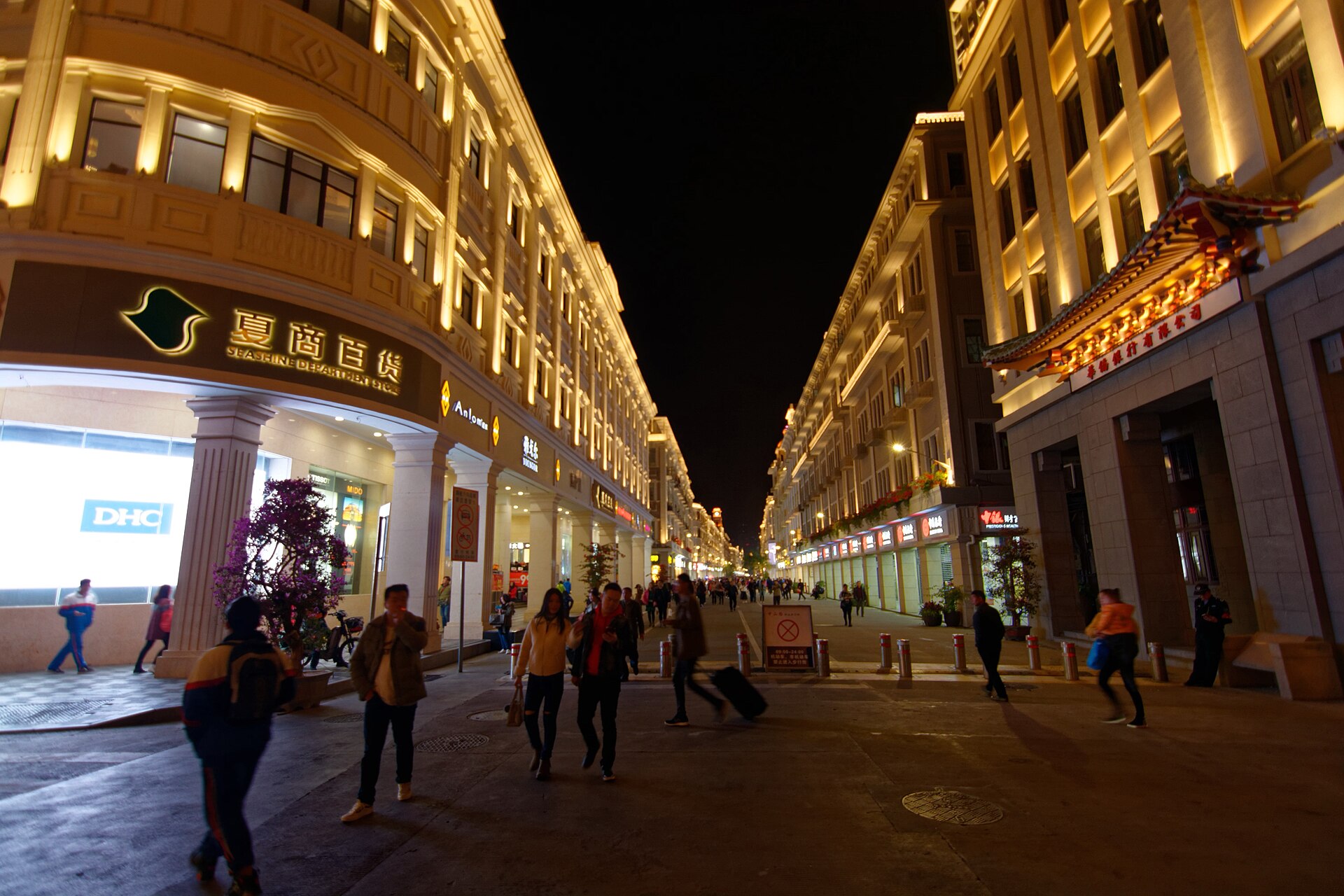
To feel the real Xiamen on your own, go and wander Bashi market (八市, the "Eighth Market") — an old wet market in central Siming near Zhongshan Road. It is the city's seafood heart, with fish, prawns and shellfish laid out fresh along the lanes, threaded with stalls selling single-bite food like oyster omelette, local snacks, soy milk and Hokkien bites. Grazing through it alone is great fun, taking in the produce and the morning-market rhythm. Just watch the wet floors and check prices before you buy.

4
Travelling alone and worried about feeling lonely, or about paying a full room rate solo? The best fix in Xiamen is a hostel like Koala International Youth Hostel (考拉国际青年旅舍·中山路轮渡店), in central Siming at 110 Zhongshan Road, on Xiamen's oldest pedestrian street. Its standout is the walk-everywhere location — a few minutes on foot to the Gulangyu ferry and to metro Line 1 (Zhenhai Lu station). It has both budget dorm beds and private rooms and a common area for chatting with other travellers, so you get good value and travel company in one.

5
Xiamen is known for its café culture, and the best place to sit alone is Shapowei (沙坡尾) — an old fishing harbour turned waterfront quarter of cafés, design shops and art studios, with old wooden boats moored in the little inlet for a view. You can wander and photograph it and stop for a coffee watching the boats all afternoon. It is a young, creative area where sitting alone feels completely natural, many places have Wi-Fi and sockets, and it suits working, reading or resting your feet after a day of walking. The Xiamen University area is right next door to walk on to.
6
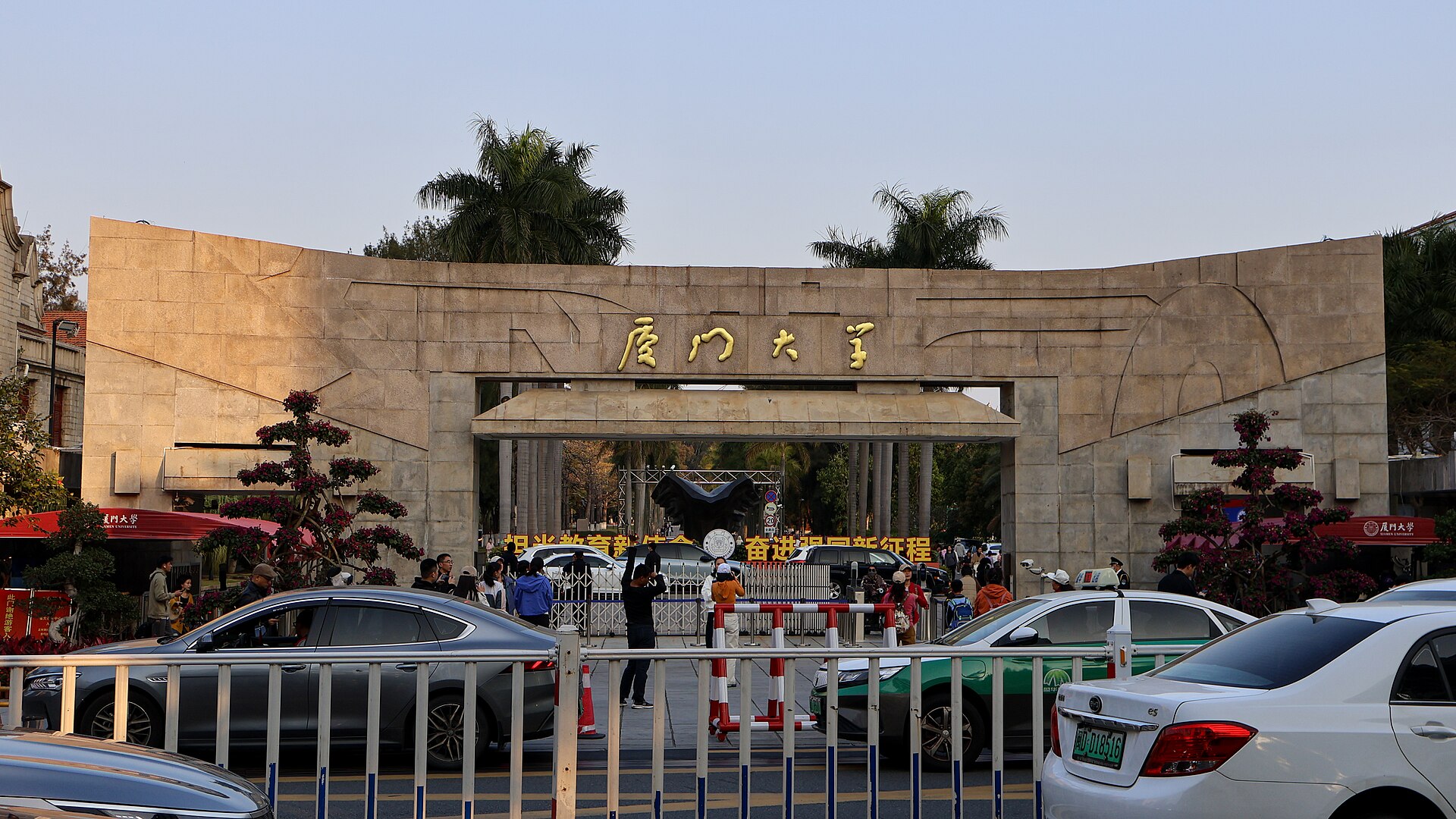
Xiamen University (厦门大学) is reckoned one of the prettiest campuses in China — Sino-Western buildings by the sea, lotus ponds, leafy trees and a student-painted tunnel, all very peaceful to wander alone. Right next to it is Nanputuo Temple (南普陀寺), an old Buddhist temple on the hillside with a pagoda and a pavilion by a pond, calm and made for a slow solo walk. The two sit side by side, easily done together in a half-day. Note: the university caps visitor numbers and usually needs an advance booking and your passport, so check the rules before you go.
7
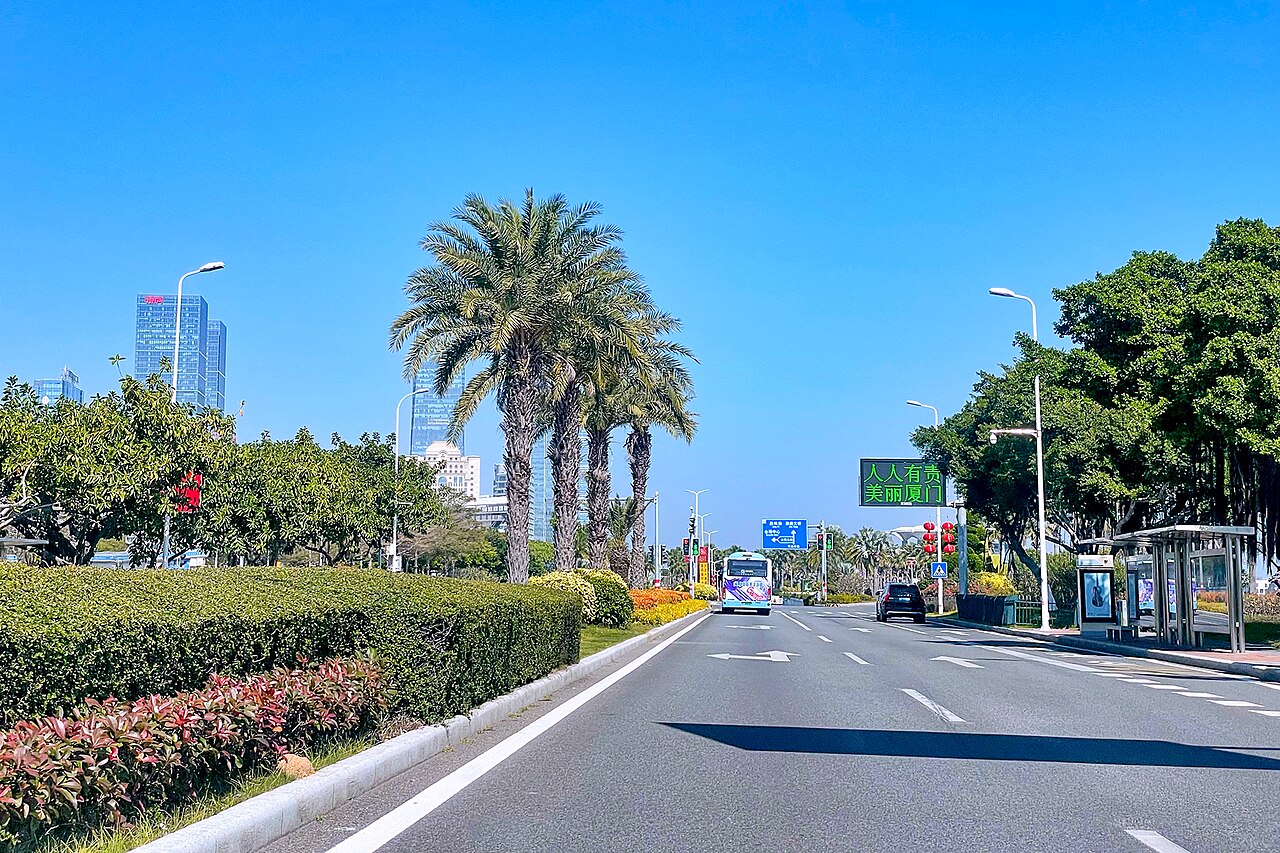
For a seaside mood done solo, Huandao Road (环岛路) is the spot that is most enjoyable to walk and cycle alone — a long seafront road with a waterfront promenade and cycle path, beaches in stretches, views of the strait and small islands, and a separate, safe bike lane. Locals come to run, cycle and stroll morning and evening. Hire a shared bike (Hellobike/Meituan) and ride along the sea on your own, easily and safely. The sunrise along the beach here is lovely. It is the outdoor activity that feels most relaxing of all to do alone.

8
Once you have ferried over to Gulangyu, do not miss Sunlight Rock (日光岩) — a big rock that is the island's highest point. A short climb up the steps brings you to a viewpoint with a 360-degree view over the island's old rooftops, the strait and the Xiamen skyline opposite. It is an easy thing to do alone — you do not need a photo partner to capture the view. There are gardens and pavilions to pause at on the way up. Best in the morning, when the air is cool and clear and you can see a long way.
Hulishan Fortress (胡里山炮台) is an old late-Qing coastal gun fort on the island's south shore, home to one of the largest surviving Krupp cannons from Germany. You can wander the history, the stone ramparts and the sea views over Gulangyu and the small islands at your own pace, alone. It is quieter than Gulangyu and less crowded, which suits anyone who likes history and wants a calm corner. There are mock cannon-firing shows at certain times, and you can walk on to it from Huandao Road.
If you are in Xiamen for a few days and fancy a change of scene, a day trip to Quanzhou (泉州) is easy and very doable alone — Quanzhou is a World Heritage port city, once the starting point of the Maritime Silk Road, with old temples, an ancient mosque and an old town to wander. From Xiamen North Station (厦门北站), the high-speed train reaches Quanzhou in about 30 minutes, with frequent departures all day, so it is an easy out-and-back. Book tickets through Trip.com or the 12306 app (passport needed). It is a day trip that solo travellers can pull off very smoothly.
Xiamen is compact and very walkable. In town, rely on the metro (Lines 1, 2, 3 · ¥2–7 by tapping Alipay/WeChat · Line 1 has a scenic elevated seafront stretch), backed by the BRT, buses and shared bikes (Hellobike/Meituan ~¥1.5/30 min) for the seafront road. For Gulangyu you take the ferry from the Cruise Terminal (tourists with a passport, return ticket ¥35–50). For shorter hops, or after the metro closes around 11pm, call a DiDi (China's ride-hailing app, like Grab), which shows the price before you get in. Tip: keep your destination saved in Chinese characters to show the driver.
If you are worried about feeling lonely, the most effective trick is to stay in a hostel with common space like Koala on Zhongshan Road, where it is easy to meet other travellers. Sit in the cafés of Shapowei and the university area, which are full of young people and international students, and join a day tour (to the Tulou houses or Quanzhou, say), which tends to draw solo travellers. Xiamen is a university and tourist city with plenty of international students and travellers, many happy to chat and team up — just open with a hello. One honest thing to know: some Chinese places, especially small hostels and guesthouses, will not check in foreign passports, because their police-registration system only handles Chinese ID — pick a place that states it accepts foreigners (most sold on Booking/Agoda/Trip do) and have your passport ready at check-in.
The metro is fully signed in English, and bigger hotels and hostels speak English, but beyond that English is limited in Xiamen, especially at local restaurants and markets. Download an offline-capable translation app first, such as Pleco (the popular Chinese dictionary) or Google Translate with Chinese downloaded for offline use — the camera-translate feature helps a lot with menus and signs. For maps, use Amap (高德地图) or Apple Maps, which are accurate and handle metro, bus and ferry routes in China better than Google Maps, which does not work inside China — and set up Alipay/WeChat before you travel.
Google, LINE, Instagram and WhatsApp are blocked in China, so sort a VPN and a travel eSIM before you travel (VPN sites are unreachable once you are inside China). An eSIM keeps your familiar apps working as normal. For paying, link Alipay or WeChat Pay to a foreign card in advance, because cash is barely used here — you tap to pay everywhere, from street stalls and the metro to the Gulangyu ferry ticket and the shacha-noodle shop. Everything in Xiamen runs on the phone.