Everything a short trip gives you — the west-coast beaches, the Promthep Cape sunset, one island day, the Sino-Portuguese Old Town — plus a fourth day for one big experience you choose yourself: a second island, sea-canoeing in Phang Nga Bay, or the Khao Sok rainforest. Four days gets you both the calm and the adventure.
Three days in Phuket covers the highlights well — but every three-day plan has the same problem: you have to cut the big day out. A second island, canoeing into the hidden lagoons of Phang Nga Bay, or a rainforest day at Khao Sok each need most of a day and a trip away from the beach zone. You can wedge one into three days, but only by sacrificing a whole beach or Old Town day and feeling rushed doing it.
Four days solves that directly. The first three days take care of the heart of Phuket — swimming on the west-coast beaches, the Promthep Cape sunset, the boat out to Phi Phi or Phang Nga Bay, the Sino-Portuguese Old Town, and the Big Buddha and Wat Chalong. Day four is your own big experience, chosen to suit your group — and it's the day a three-day trip simply has no room for.
Unlike a longer trip, this plan gives you one big experience and keeps you in a single hotel throughout — ideal if you have exactly four days and want to use each one fully without packing and moving. If you want a second island day or an extra slow beach day, stretch it into a 5-day plan.
Turquoise Andaman water from the morning, a beach to suit your mood among Patong, Kata and Karon, and the day closing with the sunset at Promthep Cape — an easy first day that lets Phuket introduce itself.
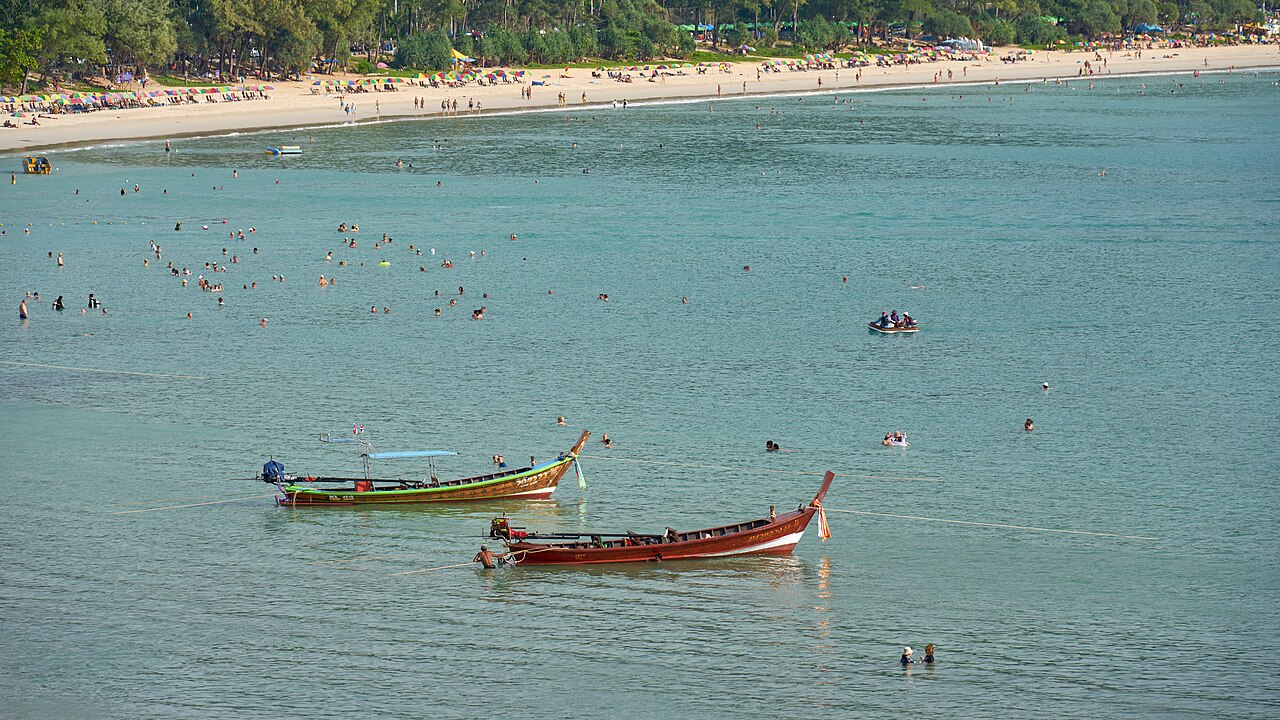
Start the first day without rushing. Phuket's best beaches line the west coast, so if you're staying nearby you can simply walk down to the sand. Patong Beach is the liveliest in-town beach — plenty of shops, easy umbrella and lounger hire, and watersports. Kata and Karon are quieter, with fine white sand and gentle high-season surf that suits families. Swim, stroll, then settle in somewhere with a fresh coconut and let the morning drift.
Not sure which beach is your kind of place? The Phuket beaches guide compares them all (Surin, Kamala, Nai Harn and more) so you can pick by mood.
Lunch on the first day calls for fresh seafood or punchy southern Thai dishes like braised pork (moo hong), stir-fried stink beans (sator) and crab curry. The early afternoon brings the strongest sun, so rest in the shade and head back into the water once it softens, or explore the shops and cafés around the beach. The Phuket food guide covers the dishes worth trying, and the seafood guide helps with the weigh-it-yourself restaurants.
Before dusk, drive down to Promthep Cape at the island's southern tip — the best-known sunset spot in Phuket. From the headland you look out over the open Andaman Sea all the way to the horizon, and as the sun drops, golden light washes across the cape. It's a gathering point at golden hour and the most beautiful way to close the first day. For higher vantage points, the Phuket viewpoints guide rounds up the best, including Karon Viewpoint and the Windmill.
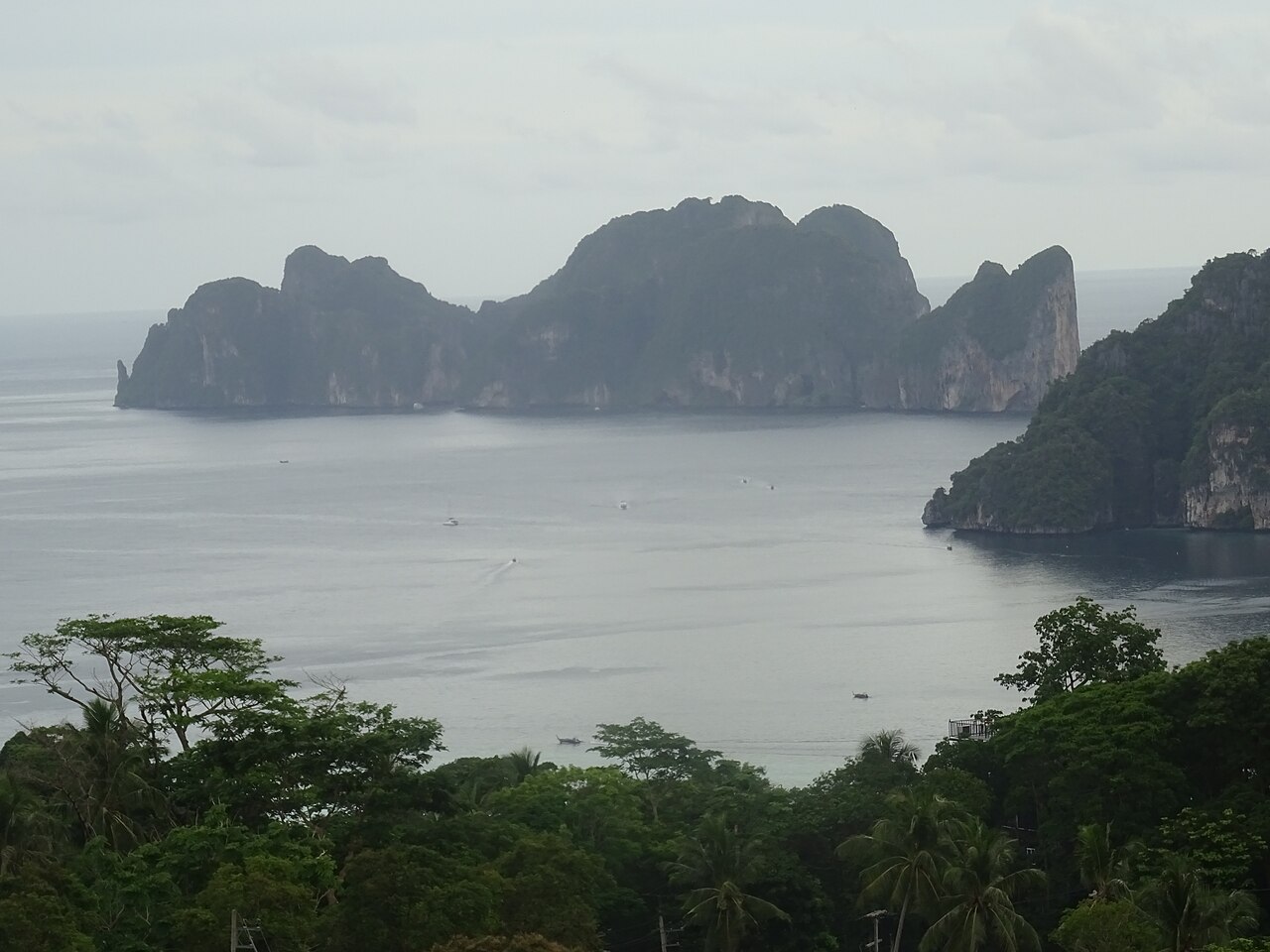
The clearest water of the trip at Phi Phi and Maya Bay, or towering limestone karsts rising out of the sea at Phang Nga Bay and James Bond Island — the day Phuket shows off its best water.
Head out early on a boat to the Phi Phi Islands — an archipelago known for clear water and dramatic limestone cliffs. A standard day trip takes in Maya Bay (from the film The Beach), Pileh Lagoon, Viking Cave and snorkelling stops over the coral. A speedboat from the pier takes around 45–60 minutes; the big ferry is slower but steadier. See the full rundown at the Phi Phi day trip from Phuket guide.
If you'd rather have calmer water and a karst-scenery day, choose Phang Nga Bay instead — a wide bay with hundreds of limestone pinnacles rising straight out of the water. The highlights are James Bond Island (Khao Tapu) from The Man with the Golden Gun, the stilt fishing village of Koh Panyee, and usually a canoe paddle through caves into hidden lagoons. Sheltered inside the bay, the water stays calmer than the open coast — handy if the monsoon has the outer sea churned up. See the details at the Phang Nga Bay, James Bond Island guide.
Rest your legs after a full day on the water and find an easy dinner near your base — more seafood, or wander a Phuket night market with its local street food and souvenirs. If you still have energy and you're staying around Patong, it's worth a look at the Bangla Road scene after dark.
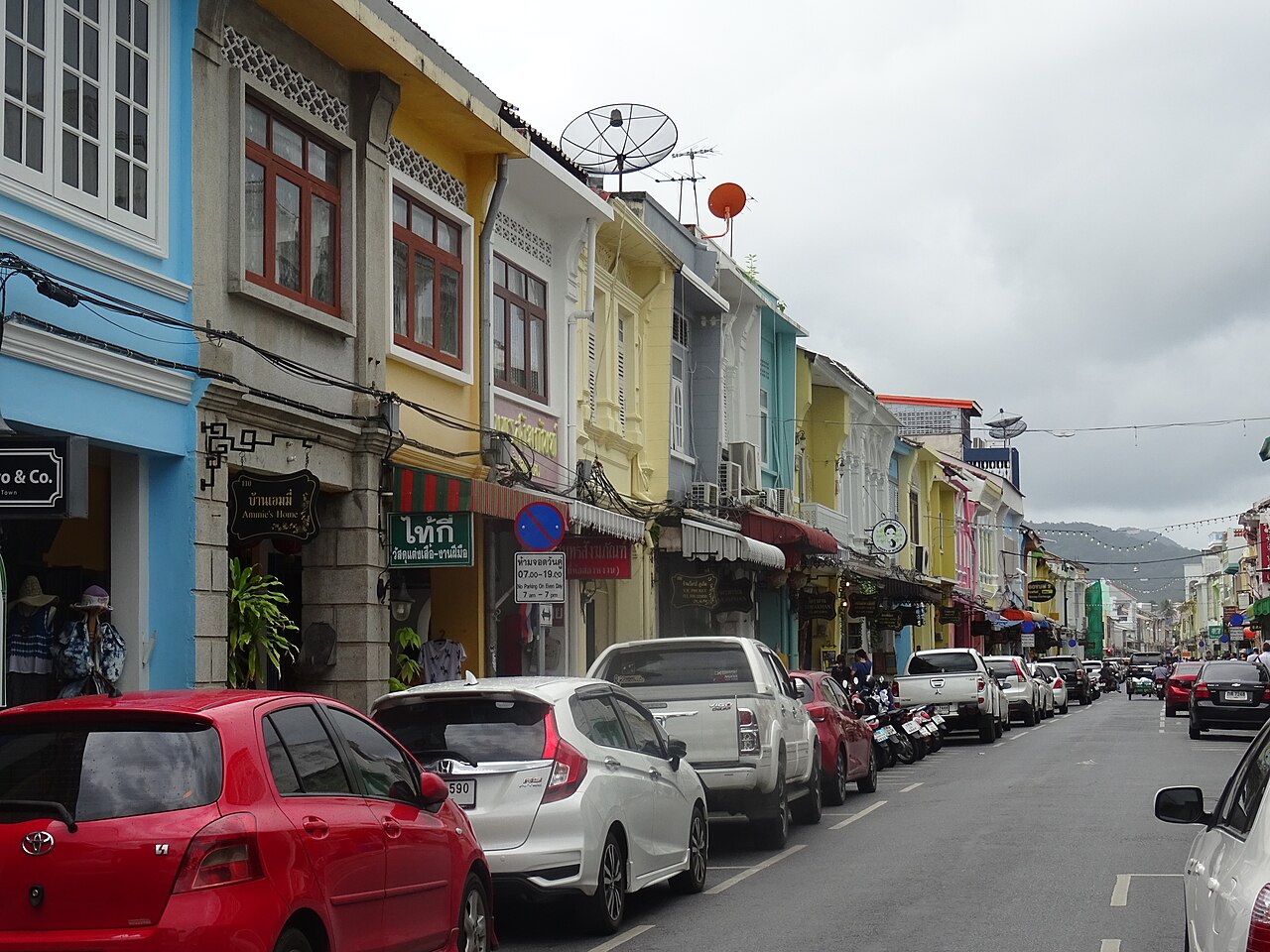
Pastel Sino-Portuguese shophouses in the Old Town, a 45-metre white marble Buddha on Nakkerd Hill, and Phuket's most revered temple — the day Phuket tells its story of people and faith.
Head out early to Phuket Old Town — Thalang, Dibuk and Soi Romanee are lined with century-old pastel Sino-Portuguese shophouses, a legacy of the tin-mining era that blended Chinese, Portuguese and Malay influences. Photograph the street art, stop for local sweets, and dip into the small museums. The morning is cooler and easier for walking. See the highlights and where to stop in the Phuket Old Town guide.
For lunch, stop at an Old Town café or a famous Hokkien noodle shop, then head up in the afternoon to the Big Buddha on Nakkerd Hill — a 45-metre white marble Buddha visible from far away, with views over Chalong Bay and the west coast from the top. Drop back down afterwards to Wat Chalong, Phuket's most revered temple, with a pagoda enshrining a relic of the Buddha and the image of the revered monk Luang Pho Cham. See the details at the Big Buddha and Wat Chalong.
Return to your base in the evening and keep things light over dinner, because tomorrow is your big day and it needs a full tank. If day four is an island trip or Khao Sok with an early start, get to bed a little earlier tonight and lay out your clothes and gear. The full list of Phuket attractions is there if you want to adjust the plan.
This is the day that separates four days from three. Pick one big experience that wants most of a day, and give it everything.
If you did Phi Phi on day two and the sea still has you, swap to Phang Nga Bay on day four for the karst scenery and canoeing — or, if you did Phang Nga on day two, go to Phi Phi for the clear water and snorkelling. For something nearer and gentler, Coral Island (Koh Hae) or Koh Maithon are a short boat ride away and better for a relaxed beach day than a full-on excursion. Pick an island that is different from day two so the mood doesn't repeat.
Heading back in the late afternoon, if you have energy left, stop for dinner by the beach — or shower at the hotel first and head out for a final seafood meal afterwards. The Phuket day trips guide rounds up every island and destination.
If you want a calm sea day that isn't about swimming, canoeing in Phang Nga Bay is the answer — a larger boat carries you into the bay, then a guide paddles you in an inflatable canoe through low cave mouths into hidden lagoons (hong) inside the limestone karsts, quiet enough to hear the water drip, with monkeys, hornbills and mangrove forest around you. Sheltered inside the bay, the water stays far calmer than the open sea — ideal if the monsoon has the outer sea too rough for distant islands.
Many tours run an evening departure that includes sunset over the bay. When you're done, head back to shore for an easy dinner. See the details at the Phang Nga Bay, James Bond Island guide.
The option that fully swaps the sea for land. Khao Sok National Park (about a 2–2.5 hr drive north) holds ancient rainforest and Cheow Lan lake, where limestone karsts rise straight out of emerald-green water — you can take a boat cruise and kayak. If you'd rather not drive far, an ethical elephant sanctuary around Phuket (~30–60 min) lets you feed and bathe elephants up close, with no riding and no shows.
It suits anyone who wants a day different from the beach — or who's visiting in the monsoon, when the open sea makes distant islands awkward; a land day doesn't depend on the swell. See all the options in the Phuket day trips guide.
Crossing the island between zones takes time, so staying in one place for the whole trip is best. Patong suits anyone who likes a lively base — plenty of restaurants, close to island-trip piers. Kata and Karon are quieter, with lovely beaches and a family feel. The Old Town suits café and architecture lovers but isn't on a beach. See the top 10 Phuket hotels and the where to stay in Phuket guide.
Phuket has no metro or train — getting around means a metered taxi (agree the price or meter first), Grab (limited in some areas), a rented scooter (licence and helmet required; accidents are common, so ride carefully) or a rented car. Slow local songthaews run between the beaches and Phuket Town. Read the full rundown in the getting around Phuket guide.
Phuket Airport (HKT) is at the far north of the island, about 32 km (around 45–60 minutes) from the west-coast beaches. Book a transfer or use an airport taxi, and budget the cost and time. See the Phuket airport transfer guide, and if it's your first visit, read the Phuket first-timer guide before you go.
| Item | Budget | Mid-range | Comfortable |
|---|---|---|---|
| Hotel · 3 nights | ฿1,500–3,000 | ฿4,500–9,000 | ฿12,000–30,000+ |
| Food · 4 days | ฿1,200–2,000 | ฿3,000–5,000 | ฿6,000–12,000 |
| Getting around · 4 days (taxi/Grab/scooter + airport) | ฿800–1,500 | ฿1,800–3,500 | ฿4,000–7,000 |
| Island day (day 2) | ฿1,200–1,600 (join-in group tour) |
฿1,800–2,500 (speedboat tour) |
฿4,000–8,000+ (private/premium boat) |
| Day 4 big experience | ฿1,200 (island / half-day sanctuary) |
฿2,000–2,500 (sea-canoe / full-day island) |
฿3,500+ (full-day Khao Sok / premium) |
| Total per person (approx.) | ฿5,900–9,300 | ฿13,100–22,500 | ฿29,500–64,000+ |
Approximate per-person costs (excluding flights), and they vary by season — high season (Nov–Apr), especially Dec–Jan, pushes hotel rates up, while the monsoon (May–Oct) is usually cheaper for hotels and tours. Always check live prices before booking. See the full Phuket trip budget.