Home Phuket Thailand Phuket Hotels About
Home  ›  Thailand  ›  Phuket  ›  Phi Phi Day Trip
Phi Phi Day Trip from Phuket · 2026

A day trip to Ko Phi Phi
Maya Bay, coral and the truth about crowds

Ko Phi Phi is the most famous sea trip out of Phuket — Maya Bay, the cove from The Beach, has reopened (with rules), there's the emerald Pileh Lagoon, and snorkel spots thick with fish. We'll tell you straight which boat to take, what it costs, how crowded it gets, and when it's worth going.

Why Phi Phi is a day trip

The prettiest islands are an hour from Phuket

If you come to Phuket and never get out to Ko Phi Phi, you've half-missed the point. The Phi Phi islands sit in the Andaman Sea between Phuket and Krabi — sheer limestone cliffs rising straight out of emerald water, fine white-sand beaches, and so many fish below the surface that even snorkelling shows them off. The islands shot to fame through the film The Beach, shot at Maya Bay, and have drawn visitors from all over the world ever since.

The good news is that Phi Phi is an easy day return from Phuket — a speedboat takes only about 45–60 minutes each way, and tours run out in the morning and back in the evening, taking in Maya Bay, Pileh Lagoon, Viking Cave, the snorkel spots and lunch on Phi Phi Don. The list below is what you'll see on a day trip, ordered from the highlight everyone wants down. After that we cover how to choose your boat, the real prices, and what to watch out for. Read it alongside our Phuket island-hopping guide to compare it with the other islands.

Book ahead
A Phi Phi day tour with hotel pick-up, the boat, snorkel gear and lunch — out in the morning, back by evening
See Phi Phi tours on Klook →
6 stops on a Phi Phi day trip

All the highlights in a single day

The stops most day tours make — with an honest note on which you can land at, which you only see from the boat, and where you can't swim.
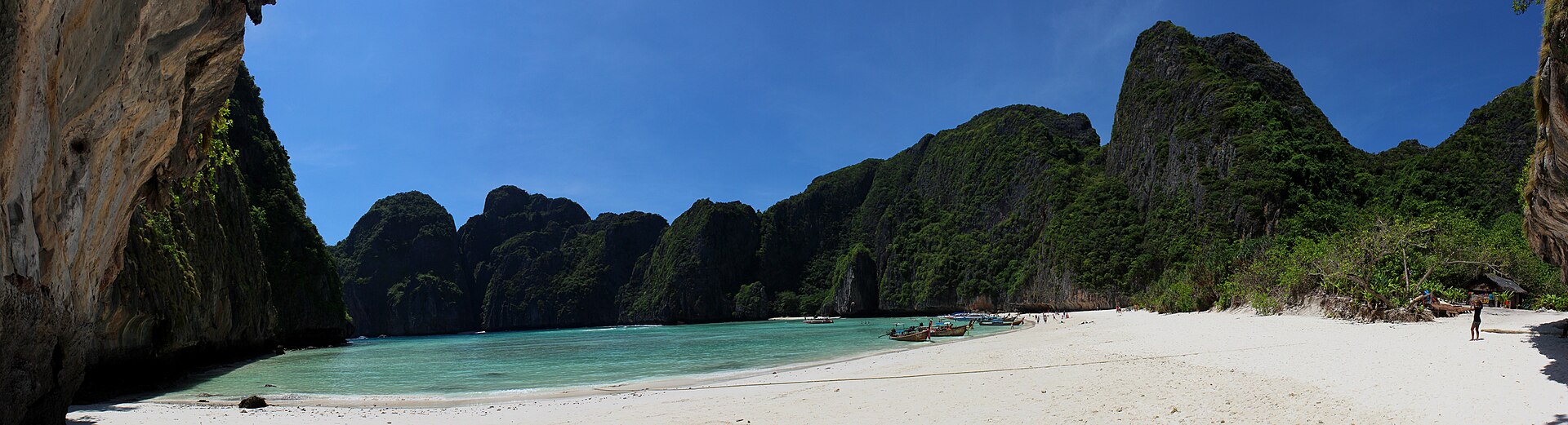
Maya Bay on Ko Phi Phi Leh — a curving white-sand beach ringed by tall limestone cliffs with clear emerald-green water 1
Maya Bay
The beach from "The Beach" · reopened but no swimming in the bay · park fee applies

This is the one everyone comes for — a small cove on Ko Phi Phi Leh almost entirely enclosed by limestone cliffs, with fine white sand and emerald water, made world-famous by the 2000 film The Beach.

After several years closed to let the wrecked coral recover from sheer over-visitation, Maya Bay has reopened — but the rules have changed. Boats no longer pull up on the beach; they dock at a floating pier on the Loh Samah side behind the island, and you walk in along a boardwalk. Crucially, you cannot swim in Maya Bay, to protect the recovering coral and the blacktip reef sharks that have returned. You can walk and take photos on the beach along the marked path. Be honest about timing: by mid-morning it's packed, so the earliest tours get the beach while it's still clear.
Getting there: Included in the boat tour from Phuket · boats dock on the Loh Samah side and you walk across to the beach
Fee: National park entry ~400 baht for foreign adults · ~200 for children · less for Thais · usually separate from the tour price, check first
Rules: No swimming in the bay · keep to the marked path · the park may close the bay seasonally
Tip: Take the earliest (early-bird) tour to arrive before the big groups from Phuket and Krabi
Best time: High season Nov–Apr, when the sea is clearest and calmest · in the monsoon (May–Oct) the swell is up and the park may close the bay or tours cancel — check the Department of National Parks notices first
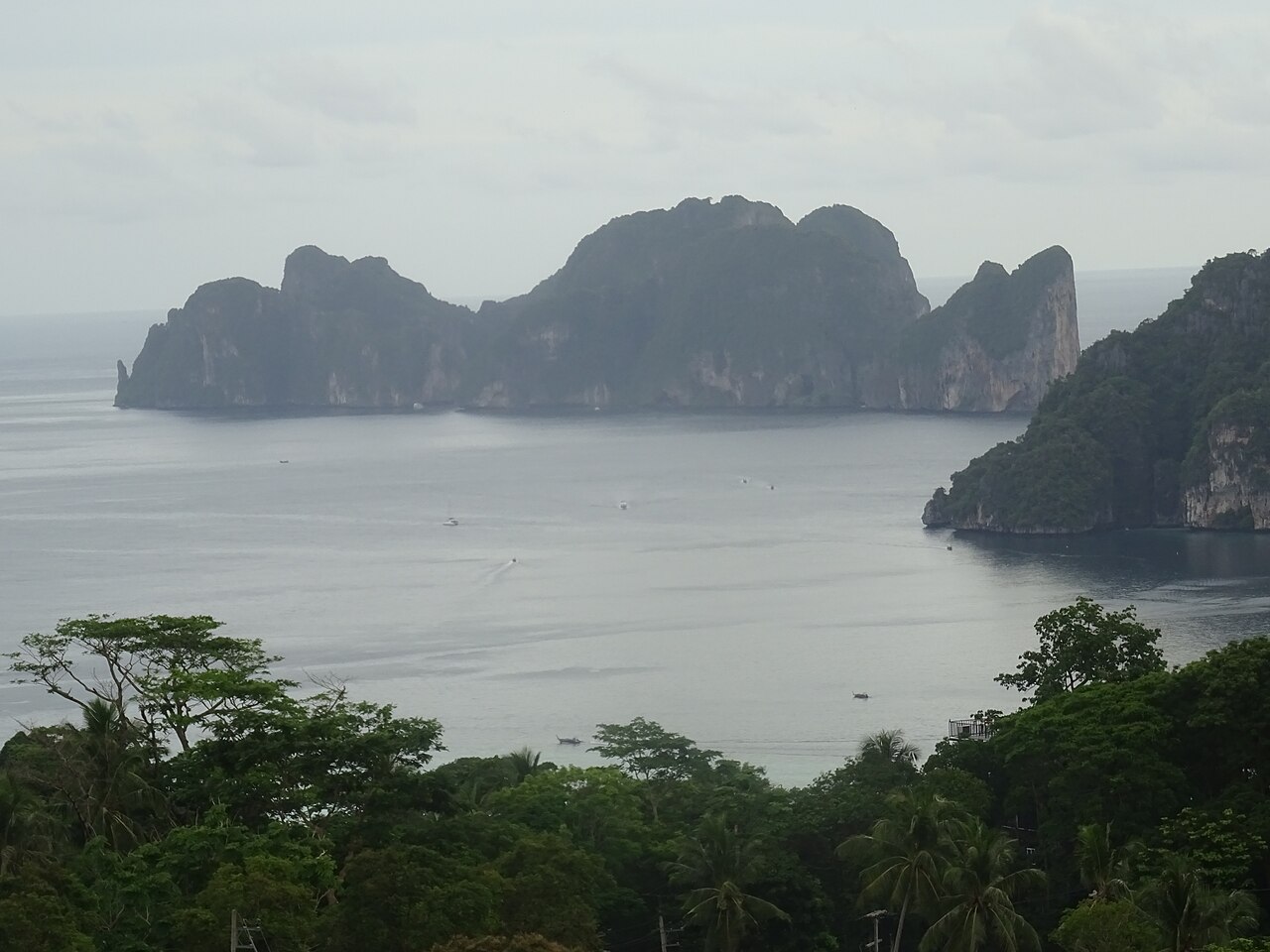
The limestone cliffs and lagoons of the Phi Phi islands — clear emerald water enclosed by tall karst walls, similar in feel to Pileh Lagoon 2
Pileh Lagoon
Emerald lagoon ringed by cliffs · a favourite swim and photo · on Ko Phi Phi Leh

A short hop from Maya Bay, Pileh is a pool of sea almost completely enclosed by limestone walls — like a natural swimming pool. The water is still, clear and a deep emerald green, and plenty of people rate it more beautiful than Maya Bay itself.

Here you can get in the water (unlike Maya). Tours usually stop to let you jump in and swim or paddle a kayak; it's fairly deep in the middle, so a life jacket is the safer bet. Honestly, by the middle of the day the boats pack in and the lagoon gets crowded, so if your tour comes through early or late in the afternoon the photos are better and the swim is calmer.

Getting there: Included in the boat tour · close to Maya Bay on Ko Phi Phi Leh
Activities: Swimming · jumping in · kayaking (some tours) · wear a life jacket
Time needed: ~30–45 minutes (part of the day tour)
Tip: It's deep in the middle · children and weaker swimmers should stay near the edge and wear a life jacket
Best time: The lagoon stays calm most of the year thanks to its cliff walls, but in the monsoon the entrance can get rough · avoid the busiest boat hours (~10 am–2 pm)
🕳️3
Viking Cave
A swiftlet-nest cave · seen from the boat · no landing

As you round Ko Phi Phi Leh, the tour slows the boat by Viking Cave — a big limestone cave in the cliff face with old painted images of boats on the walls that resemble Viking ships, which gave it its name. Inside is a licensed site for harvesting swiftlet nests, with tall bamboo scaffolding that collectors climb to reach them.

To be honest, you can't land here — it's a protected concession area — so you view it from the boat only. It's a short photo stop on the way to Maya Bay rather than a main highlight, but the story of the nest harvest is an interesting one.

Getting there: The boat slows past it as you go around Ko Phi Phi Leh
How to see it: From the boat · no landing (a protected nest concession)
Time needed: ~5–10 minutes (a photo stop)
Tip: Have your camera or phone ready · sit on the side facing the cliff
🐒4
Monkey Beach
A small beach with wild macaques · on Ko Phi Phi Don · mind your things

On the south side of Ko Phi Phi Don, Monkey Beach is a little strip of sand where a troop of wild macaques comes down to the shore at close range. Tours often stop here for a paddle in the shallows and to watch the monkeys; the water is clear and full of fish, and it's a hit with kids.

A warning, though — the monkeys here are accomplished thieves. Don't hold plastic bags, food, water bottles or anything shiny in your hands, don't feed them (it's against the rules and makes them aggressive), and watch for monkeys jumping onto your shoulder or grabbing your phone. Keep valuables zipped in a waterproof bag. If one comes close, stay calm, don't stare it down or bare your teeth.

Getting there: Included in the boat tour · south side of Ko Phi Phi Don
Activities: A paddle in the shallows · watching the monkeys · photos
Time needed: ~20–30 minutes
Watch out: Monkeys grab things from your hands · don't feed them · zip phones and sunglasses into a waterproof bag
🐠5
Snorkel spots
Around Ko Phi Phi Leh — Loh Samah Bay, Hin Klang · full of fish, clear water

The heart of a Phi Phi trip is snorkelling over the coral. The islands have several clear, fish-rich spots — Loh Samah Bay behind Ko Phi Phi Leh, the reef around Hin Klang, and the fringing coral off Ko Phi Phi Don. You'll see clownfish, parrotfish and sergeant-majors, and on a lucky day a small, harmless blacktip reef shark.

The tour hands out a mask and snorkel and a life jacket. Honestly, even weak swimmers can snorkel here because the life jacket keeps you afloat. Listen to your guide about where it's safe, and don't stand on the coral — it's fragile and recovers painfully slowly. Use reef-safe sunscreen, because ordinary sunscreen contains chemicals that harm the coral.

Getting there: Included in the tour · the boat stops at the spots around the islands
Included: Mask and snorkel · life jacket · guide · (some tours add scuba for extra)
Time needed: ~45–60 minutes per spot
Tip: Reef-safe sunscreen · don't touch or stand on coral · wear the life jacket even if you can swim
Best time: Nov–Apr, clear water and the best underwater visibility · in the monsoon the water is murkier and the swell is up, so there's less snorkelling
🏝️6
Ko Phi Phi Don
The main inhabited island · village and restaurants · the Phi Phi Viewpoint

Ko Phi Phi Don is the large, inhabited island — unlike Phi Phi Leh, which is a protected island with no residents. Day tours usually stop here at midday for lunch (mostly a buffet included in the tour) and a stroll along Ton Sai beach or the Loh Dalum bay.

If you stay overnight, Phi Phi Don adds a real highlight: the Phi Phi Viewpoint, a climb up the hill to look down on the narrow isthmus with a bay on either side — a stunning view, especially at sunset. Be honest, though: a day trip rarely leaves time for the viewpoint climb, so for that you need to stay a night. After dark, Phi Phi Don comes alive with beach bars and fire shows.

Getting there: Included in the tour · the boat docks at Ton Sai Pier
On a day trip: Lunch · a stroll on the beach ~1–1.5 hrs
If you stay over: The Phi Phi Viewpoint climb · sunset · beach bars at night
Tip: To see the twin-bay isthmus view you need to stay a night (a day trip won't fit it in)
Choose the right boat

Ferry vs speedboat vs catamaran — which suits you

This single choice shapes the whole trip — pick wrong and you're seasick all day or you miss half the stops. Here are the honest trade-offs.

Speedboat — the fastest, about 45–60 minutes from Phuket to Phi Phi, and able to fit several stops around Phi Phi Leh in one day (Maya, Pileh, Viking Cave, snorkelling). It's the most popular choice for a day trip. The downside is that it slams over the waves: if you're prone to seasickness it's hard going, and on a rough day you'll get soaked. A tour with snorkel stops runs about 1,200–2,000 baht, depending on what's included.

Big ferry — a large passenger boat, far steadier and more comfortable than a speedboat, good for anyone who gets seasick, and for older travellers and small children. The trade-off is that it's slow (about 1.5–2 hours each way) and it usually just drops you at Ko Phi Phi Don to explore on your own, rather than running the Maya/Pileh circuit like a speedboat tour. A one-way ticket is about 400–650 baht — ideal if you're staying overnight or want to explore at your own pace.

Catamaran — a twin-hulled boat, the steadiest of the three thanks to its stability, ideal for a relaxed or family trip, or for anyone who really fears seasickness, with a deck to sunbathe on. But it's slower than a speedboat and there are fewer tours to choose from, and it usually costs more than an ordinary speedboat tour. The short version: want to fit every stop into one day and don't get seasick — speedboat; want comfort over speed, or get seasick easily — ferry or catamaran; staying overnight to explore on your own — ferry.

Before you go

What to know before you board for Phi Phi

Water safety comes first — the Andaman is beautiful but not always calm, especially in the monsoon (roughly May–Oct), which brings rip currents and big waves that have caused drownings. The simple rule: if a red flag is flying on the beach, do not get in the water. Wear a life jacket whenever you snorkel or swim in deep water, don't swim far from shore alone, and listen to your guide about where it's safe to swim. If you're not a strong swimmer, stay with the group and a float.

When to go, and the monsoon — the sea is at its best and all the boats run in the high season, November–April: clear, calm water and good sun. In the monsoon (May–Oct) the wind and swell pick up, and on some days the harbour master bans small boats; speedboat tours may be cancelled or switched to a bigger boat. If you book ahead, choose an operator that refunds or reschedules when the sea is closed, and don't force a trip out on a bad day — safety beats a photo.

The park fee and getting around Phuket — the Phi Phi islands lie within the Hat Noppharat Thara–Mu Ko Phi Phi National Park, with a foreign-adult fee of about 400 baht, children about 200 (less for Thais), usually paid separately from the tour, so bring cash. As for getting to the pier in Phuket — be honest, Phuket has no proper train or decent public buses. Most tours include a hotel pick-up; if you go independently, use a taxi or Grab (agree the price first, as Phuket taxis often won't use the meter) or a rental car. The main piers for Phi Phi are Chalong Pier and Rassada Pier — leave plenty of time to reach the pier for the morning boat.

Want more islands? — if Phi Phi isn't enough, Phuket also runs tours to Phang Nga Bay and James Bond Island (kayaking through caves, karsts rising from the sea) and the Similan Islands (the clearest water in Thailand, but open only in high season). See the full picture in our Phuket island-hopping guide, or the land trips in day trips from Phuket.

Frequently asked questions

FAQ · Phi Phi day trip from Phuket

Can you do Ko Phi Phi as a day trip from Phuket?
Yes, easily — it's how most people see Phi Phi. Day tours leave from the Phuket-side piers (usually Chalong Pier or Rassada Pier) around 7.30–8.30 am and are back by about 4.00–5.30 pm. By speedboat the crossing is about 45–60 minutes each way; by big ferry it's about 1.5–2 hours each way. Tours usually take in Maya Bay, Pileh Lagoon, Viking Cave, the snorkel spots and lunch on Phi Phi Don. A single day covers the highlights, but if you want Phi Phi at dawn or dusk when the crowds have gone, stay one night on the island.
Has Maya Bay reopened, and what are the rules?
Maya Bay has reopened to visitors (it was closed for several years to let nature recover after it was overwhelmed following the film The Beach), but the rules are stricter now. The key one is that swimming in Maya Bay is not allowed, to protect the recovering coral. Boats no longer moor in the bay; they dock at a floating pier on the Loh Samah side behind the island and you walk across. You can stand on the beach but must keep to the marked path. There's a national park entry fee — around 400 baht for foreign adults, 200 for children, less for Thais. The park may close the bay seasonally or for recovery, so check the Department of National Parks notices before you go.
Should I take the ferry, a speedboat or a catamaran to Phi Phi?
It depends on how easily you get seasick and how many stops you want. A speedboat is fastest (about 45–60 minutes from Phuket) and fits several stops in one day, but it slams over the waves and is hard going if you're prone to seasickness; a tour with snorkel stops runs about 1,200–2,000 baht. A big ferry is steadier and more comfortable, good for anyone who gets seasick or is travelling with older people or small children, but it's slow (about 1.5–2 hours) and usually just drops you at Phi Phi Don; a one-way ticket is about 400–650 baht. A catamaran is the steadiest thanks to its twin hulls, ideal for a relaxed or family trip, but slow with fewer tours. In short: to fit every stop into one day, take the speedboat; for comfort over speed, take the ferry.
Is Ko Phi Phi very crowded, and when is the best time to go?
Honestly, it gets very busy, especially from late morning to mid-afternoon (around 10 am–2 pm) when the tour boats from Phuket and Krabi all converge on Maya Bay and Pileh Lagoon at once. The way to beat the crowds is to choose the earliest tour (an early-bird or sunrise trip leaving around 6–7 am) so you reach Maya Bay before the big groups, or to stay a night on Phi Phi Don and head out at dawn or in the evening once the day-trippers have gone. The sea is at its best and all the boats run in the high season, November–April; in the monsoon (May–Oct) the swell picks up and tours may cancel or reroute.
Can you go to Phi Phi in the rainy (monsoon) season — is it safe?
You can on calm days, but understand that during the southwest monsoon (roughly May–Oct) the Andaman coast gets windier and rougher. On some days the harbour master or the park bans small boats from sailing, and speedboat tours may be cancelled or switched to a bigger boat. If you book ahead, choose an operator that refunds or reschedules when the sea is closed. Safety matters: the monsoon brings rip currents and big waves that have caused drownings. Never get in the water when a red flag is flying on the beach, always wear a life jacket when snorkelling, and listen to your guide about where it's safe to swim.
What does a Phi Phi day tour include, and what should I bring?
Most day tours include hotel pick-up and drop-off in Phuket, the round-trip boat, snorkel gear (mask and snorkel), a life jacket, a buffet lunch on Phi Phi Don, drinking water and fruit, and a guide. Most do not include the national park fee (about 400 baht for foreigners, paid on arrival or bundled into some packages — check first). What to bring: swimwear worn under your clothes, reef-safe sunscreen, a hat, sunglasses, secure sandals, a waterproof phone pouch, seasickness tablets if you're prone to it, and cash for the park fee and anything on the island.
Klook · Phi Phi tours

A Phi Phi day tour from Phuket — boat, snorkel gear, lunch and hotel transfers

Don't want to juggle booking a boat, finding the pier and sorting your own transport? Klook sells Phi Phi tours by both speedboat and big boat, early-bird trips that beat the crowds, and packages with hotel pick-up, a guide, snorkel gear and lunch — compare prices and reviews before you book.

See Phi Phi tours on Klook →
Wherebest is a Klook affiliate partner — we may earn a commission when you book through our links, at no extra cost to you.