Home Phuket Thailand Phuket Hotels About
Home  ›  Asia  ›  Thailand  ›  Phuket  ›  Food Guide
🍜 Phuket Food Guide · 2026

What to Eat in Phuket
12 Baba-Hokkien & southern Thai dishes

An island with its own cuisine — not central Thai food, but Hokkien Chinese flavours crossed with fierce southern Thai ones, the Baba-Peranakan way. Hokkien mee stir-fried in a thick broth, dim sum for breakfast, pork belly braised in soy and pepper, ice-cold o-aew, punchy southern curries, and fresh Andaman seafood. These are the 12 dishes that tell this island's story best.

Why eat here

Baba-Hokkien and southern Thaiare the soul of this island

If you come to Phuket expecting the Thai food you eat at home, get ready for a surprise — Phuket has a cuisine all its own. Its roots come from the Hokkien Chinese who arrived to mine tin over a century ago and married locals, creating the Baba-Peranakan culture. So Phuket food blends Hokkien Chinese flavours with fierce southern Thai ones — there's Hokkien mee, breakfast dim sum, moo hong (pork belly braised in soy and pepper), and lo bak from the Chinese side, and gaeng tai pla, yellow curry and shrimp-paste relish from the spicy southern side.

The other half of the island's identity is its Baba sweets and seafoodo-aew, the cold jelly in red syrup over shaved ice that is the island's signature; a-pong, a sweet cup-shaped pancake; and fresh seafood from the Andaman Sea you can pick live at Rawai and Chalong. Round it off with kopi, dark-roast coffee with condensed milk in an old Sino-Portuguese coffee shop. We picked the 12 dishes and food categories that capture Phuket's roots and flavours best, led by the island's signatures.

The dishes

12 dishes to try before you leave Phuket

Ranked by how distinctive they are — the dishes that capture the island's Baba-Hokkien and southern Thai flavours.
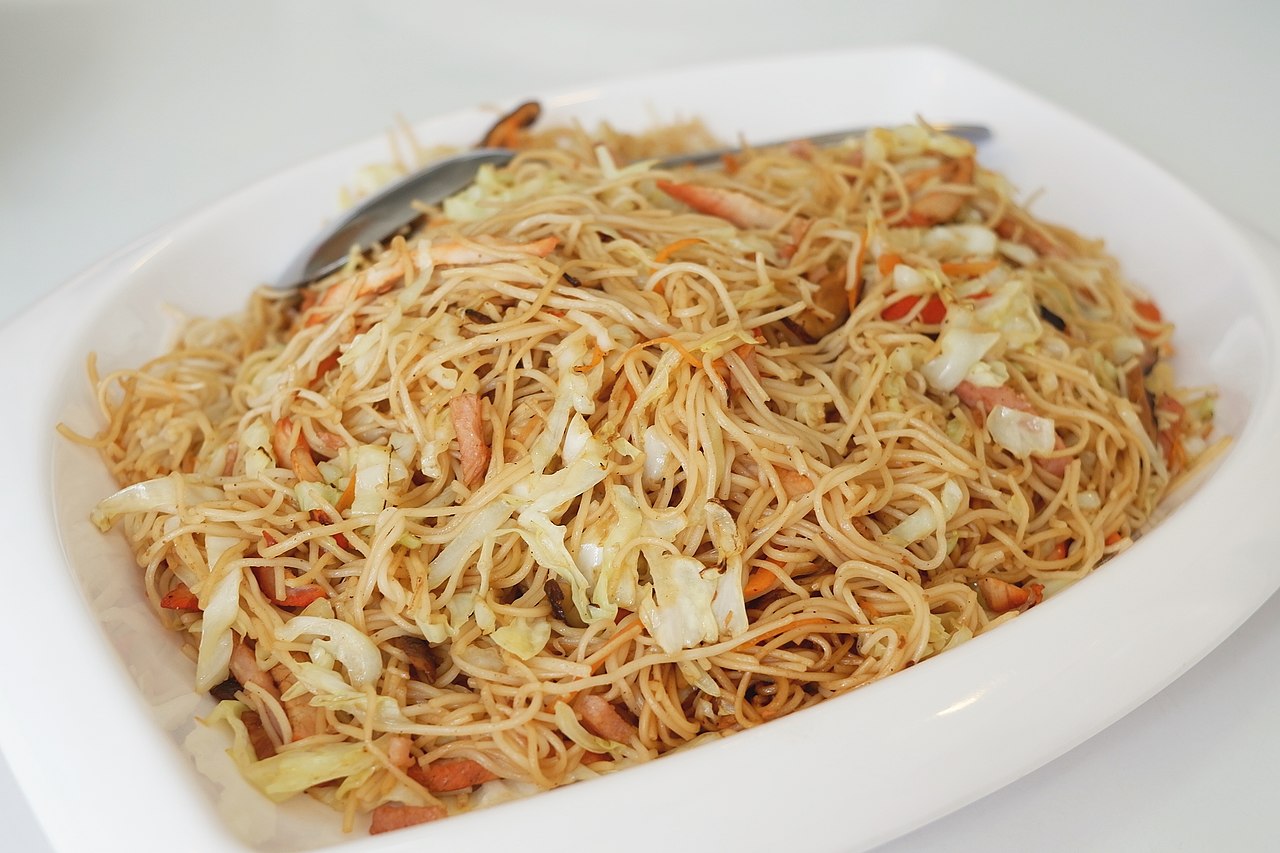
Phuket Hokkien mee — yellow noodles stir-fried in a thick broth with prawns, pork and cabbage on a white plate 1
Hokkien Mee
福建麵 · Phuket-style noodles stir-fried in a thick broth

The dish that tells you instantly you're in Phuket — plump yellow noodles stir-fried in a thick broth with prawns, pork, squid and vegetables, savoury and full of wok aroma. It came with the Hokkien Chinese who carried their noodle recipe when they arrived to mine tin, then made it their own here, different from the dry or dark-fried Hokkien mee elsewhere. Some shops serve it wet, the broth clinging to the noodles; others offer a dry version. Locals eat it for both breakfast and lunch, and you won't easily find this exact taste off the island.
How to eat it: order the wet, thick-broth version · add chilli vinegar and chilli flakes to taste · squeeze lime for freshness
Price: ฿50–90 per plate
Where: Mee Ton Poe in town · Lock Tien food court in the Old Town
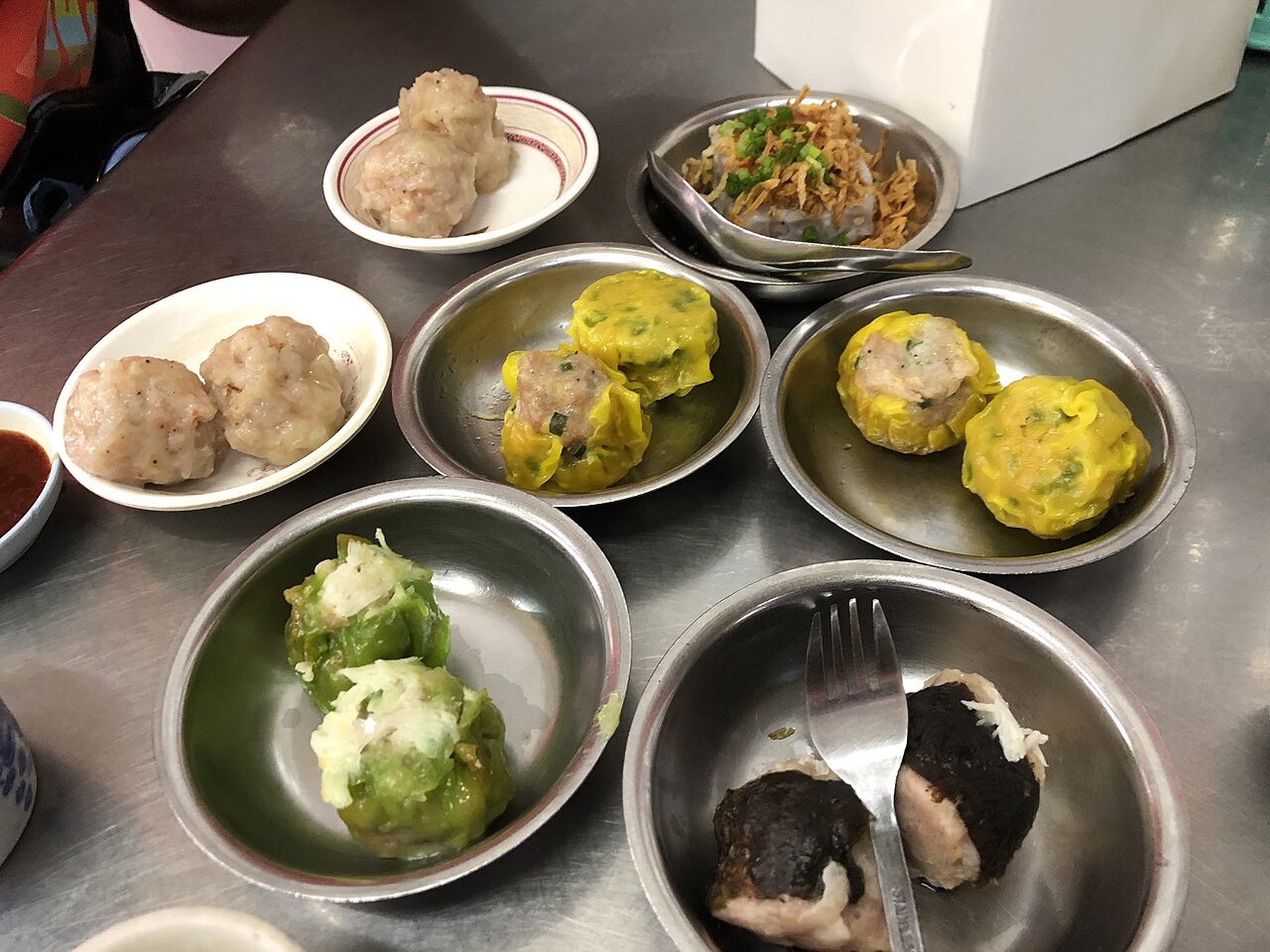
An assortment of Phuket dim sum in small dishes — dumplings, har gow and prawn siu mai laid out on a table, the local breakfast 2
Phuket Dim Sum
點心 · the island's everyday breakfast

In Phuket, dim sum is breakfast — not the late-morning Cantonese affair you find elsewhere. It's an inheritance from the Hokkien Chinese who put down roots here. Dim sum shops open before dawn and people eat dumplings, har gow, buns, braised vegetables and chive cakes with hot tea before the day starts. It comes in little steamers or dishes you pick one at a time, prices are easy, and you order several to share. The round-table buzz from 7 to 9 in the morning is the most Phuket breakfast there is.

How to eat it: pick one basket at a time · dip in the shop's sauce · sip hot tea · come early while everything's still out
Price: ฿20–40 per basket (a breakfast of several ฿100–200)
Where: old dim sum shops in Phuket Town · busy spots packed in the morning
🥘3
Moo Hong
滷肉 · pork belly braised in soy, pepper and garlic

A Baba dish that's been on Phuket tables for generations — pork belly braised in sweet soy with black pepper, garlic and braising spices until the meat falls apart and the skin turns springy. It's savoury-sweet and fragrant with pepper, and what sets it apart from Thai-Chinese five-spice stew is its heavier hand with pepper and garlic. Eaten with hot steamed rice, it's a home-style staple for Phuket's Chinese-descended families. You'll find it in local and Baba restaurants across town; order it alongside a southern curry and vegetables for the fullest spread.
How to eat it: spoon the braising sauce over rice · eat with the egg from the pot · cut the richness with fresh vegetables
Price: ฿120–200 per plate (to share)
Where: One Chun · Raya · Tu Kab Khao
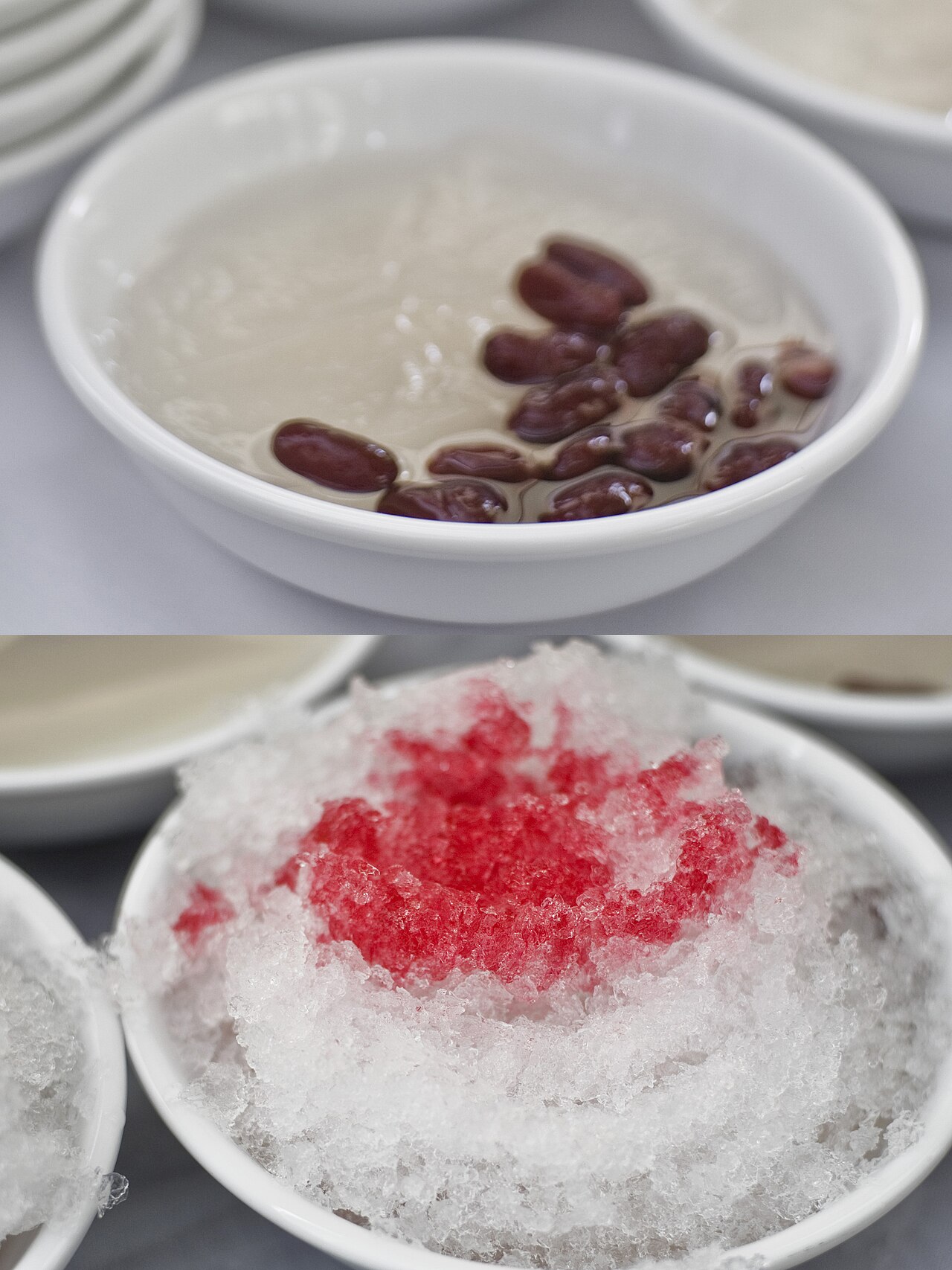
Phuket o-aew — clear jelly in red syrup over shaved ice in a white bowl, with a sign reading o-aew, the island's signature dessert 4
O-aew
薁蕘 · Phuket's signature iced jelly dessert

A dessert that is pure Phuket and hard to find elsewhere — o-aew jelly made from o-aew seeds blended with banana into a clear, soft jelly, served in cold red syrup over shaved ice, sometimes with red beans, grass jelly or job's tears added. It's sweet, cold and refreshing, perfect against the island's tropical heat. It's a Baba dessert handed down from the Hokkien Chinese, and even the name comes from Hokkien. The well-known stalls are in the Old Town and at Kathu market — anyone visiting Phuket should try a bowl.

How to eat it: spoon the jelly, syrup and ice together · add toppings if offered · have it in the afternoon to beat the heat
Price: ฿30–50 per bowl
Where: o-aew stalls in the Old Town (Yaowarat-Thalang area) · Lock Tien food court
🍢5
Lo Bak
滷肉 · battered, fried pork and offal with a sweet-sour dip

A Baba snack Phuket locals love — pork offal, pork belly, tofu and five-spice rolls battered and fried, cut into bite-size pieces and dipped in a thick sweet-sour sauce spiced the Hokkien way. Some stalls add oyster fritters and fried tofu to the same plate. It's the kind of food you graze on all day. The name "lo bak" is Hokkien for braised meat, but the Phuket version leans on fried pieces with that dip. Find it in Old Town food courts and markets; order a mixed plate and share it around with friends.

How to eat it: pick the pieces you want and have them cut · dip every bite in the sweet-sour sauce · eat with rice porridge or on its own
Price: ฿60–150 per plate (depending on the mix)
Where: Lock Tien food court in the Old Town · market stalls
🌶️6
Southern Thai Food
Pak Tai · gaeng tai pla, yellow curry, shrimp-paste relish

The other half of Phuket's flavour is fierce southern Thai food, because the island sits in the south — gaeng tai pla, a deep, fiery fish-innards curry; yellow curry, sour and hot with fish or prawns; shrimp-paste relish (nam phrik kung siap) eaten with fresh and fried vegetables; and stir-fried stink beans with prawns for those who love the pungent kick. Southern food in Phuket comes with a pile of fresh vegetables on the side to cut the heat. It's far punchier than central Thai cooking — a treat if you eat spicy, and you can ask for it milder or pick the non-spicy dishes if you don't.
How to eat it: order several dishes to share · eat with steamed rice and the fresh vegetables · tell the kitchen your spice level
Price: ฿150–300 per person (sharing)
Where: One Chun · Raya · southern Thai restaurants in town
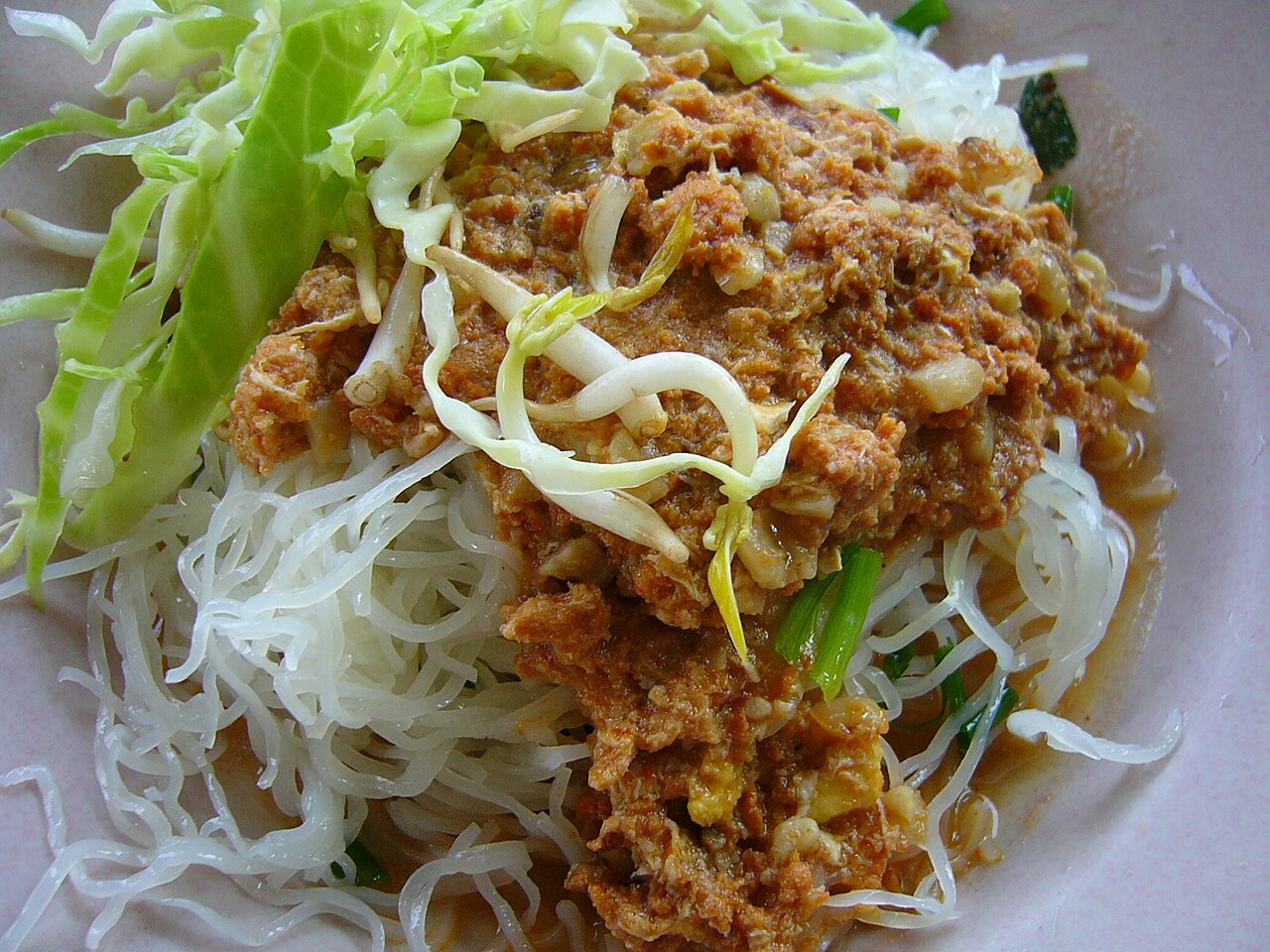
Phuket khanom jeen — rice vermicelli topped with a fish curry, cabbage and bean sprouts, eaten with fresh vegetables 7
Phuket Khanom Jeen
Khanom jeen · rice vermicelli under a curry, with fresh vegetables

Khanom jeen is a favourite breakfast and lunch in Phuket, and the island has its own take — soft rice vermicelli under your choice of fish-curry sauce, nam phrik or gaeng tai pla, eaten with fish cake, a boiled egg and a spread of fresh vegetables you help yourself to freely. Some shops add fried fish and fried chicken on the side. The curry is rich and southern-style, hotter than the central Thai version. It's filling, good value, and a clean shot of real southern flavour — find it at morning khanom jeen shops in town and in the markets.
How to eat it: choose your curry · pile on the free fresh vegetables · add fish cake and a boiled egg
Price: ฿50–90 per plate
Where: morning khanom jeen shops in Phuket Town · stalls in the morning markets
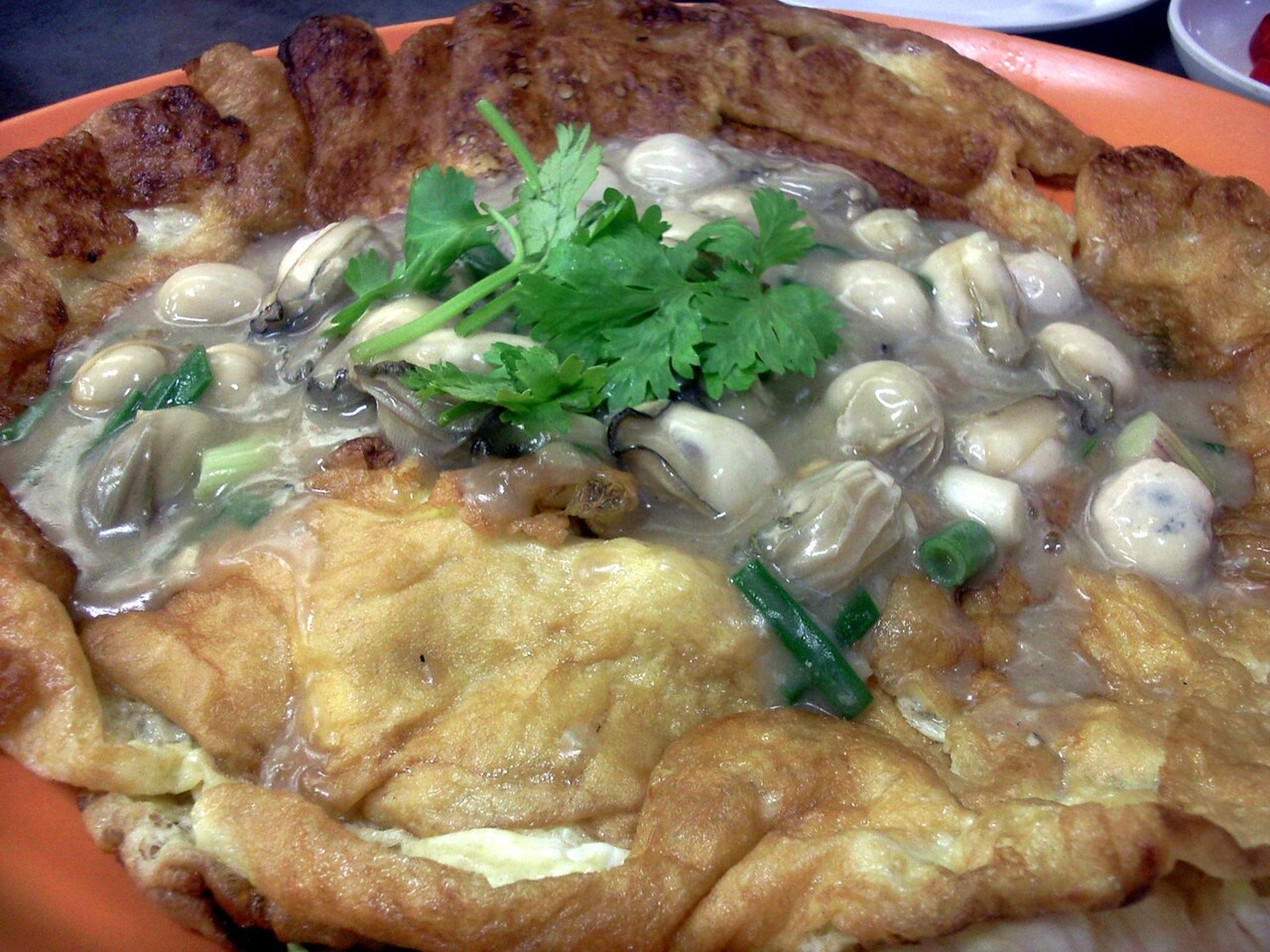
Oyster omelette — oysters fried with egg and batter, topped with spring onion and coriander, crisp outside and soft inside 8
Oyster Omelette
蚵仔煎 · oysters fried with egg and batter

Another Hokkien dish Phuket loves — small oysters fried with egg and a starchy batter into a sheet that's crisp outside and soft inside, scattered with spring onion and coriander, served hot with a chilli or sriracha dip. It goes by two names here — "or-suan" (Hokkien) for the softer, juicier style, and "hoy tod" for the version fried until crisp — and some shops do both. It's an evening snack you'll find in Old Town food courts and night markets, full of wok aroma and the brininess of fresh oysters.

How to eat it: pick the soft (or-suan) or crisp (hoy tod) style · dip in the sauce · eat it hot
Price: ฿60–120 per plate
Where: Lock Tien food court · night-market and Lard Yai walking-street stalls
🍡9
Baba Sweets
Nyonya kueh · a-pong, kosui, traditional Peranakan sweets

Beyond o-aew, Phuket has a whole family of Baba sweets handed down from the Peranakan kitchen — a-pong, a sweet, fragrant rice-flour cup pancake with crisp edges and a soft centre; kosui, a soft steamed cake eaten with coconut; tao so, a flaky pastry with mung-bean filling; and a range of coconut-milk sweets. They reflect the Chinese-Malay-Thai blend that defines Phuket's Baba identity. Find them at sweet stalls in the Old Town, the morning markets, and the Lard Yai walking street every Sunday evening — buy a few kinds and taste them side by side.

How to eat it: try an a-pong hot off the griddle · buy several kinds to compare · pair with a kopi
Price: ฿10–40 per piece
Where: Old Town sweet stalls · A-Pong Mae Sunee · the Lard Yai walking street
🦀10
Phuket Seafood
Seafood · pick it live at Rawai-Chalong, cooked to order

The island's other star is fresh seafood from the Andaman Sea — lobster, sea crab, blue swimmer crab, mantis shrimp, shellfish and grouper. At Rawai beach in the south, fresh-seafood stalls line the beachfront: you pick live creatures, then carry them to the restaurants next door to cook to order — steamed with lime, fried in black pepper, or grilled. Chalong has waterfront seafood spots like Kan Eang @ Pier, and there's Laem Hin for eating by the water. Be straight with yourself: ask the price per kilo and watch the scale before you buy, since seafood is sold by weight, and agree the cooking fee clearly for the best value and peace of mind.
How to eat it: pick it live → ask the price per kilo → watch the scale → agree the cooking fee first
Price: ฿400–1,200 per person depending on what you pick and the weight
Where: Rawai seafront stalls · Kan Eang @ Pier (Chalong) · Laem Hin
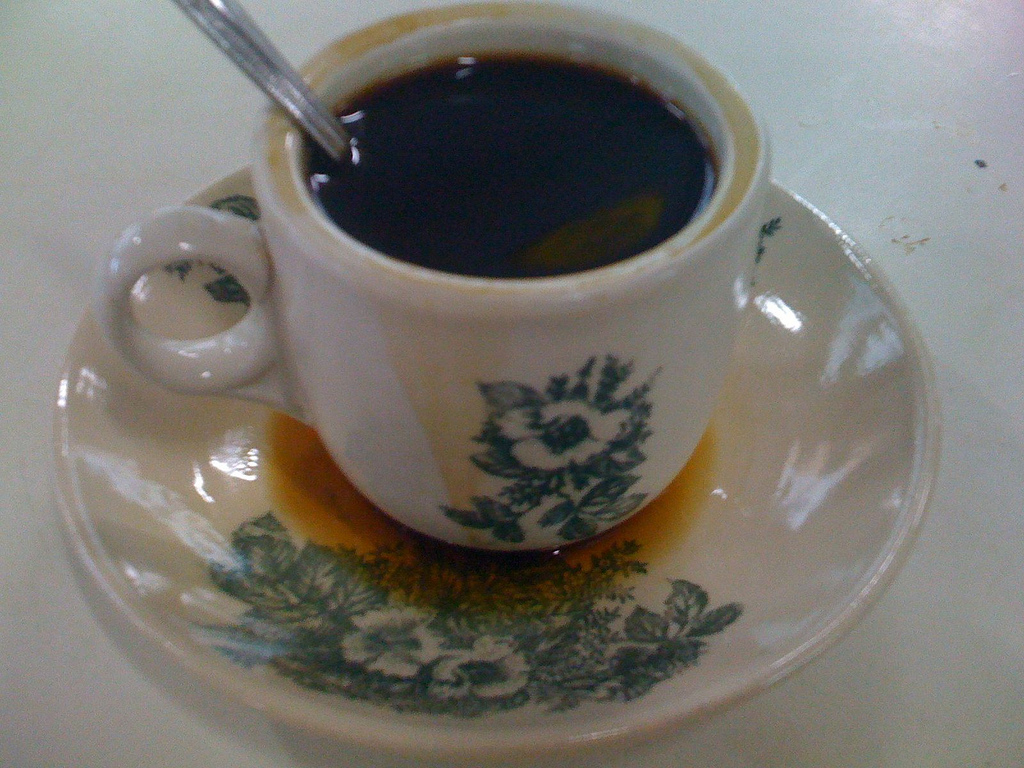
Kopi — black traditional coffee in a floral ceramic cup on a saucer, old coffee-shop style 11
Kopi
咖啡 · dark-roast traditional coffee with condensed milk

Phuket's coffee culture starts with kopi — Hokkien-style traditional coffee, dark-roasted and brewed through a cloth sock, drunk hot with sweet condensed milk or black with sugar, rich and sweet. It's served in old floral ceramic cups. The old kopi shops sit in the Sino-Portuguese shophouses of the Old Town and have been open for decades, where people sip kopi over kaya toast or fried dough in the morning — a scene that captures the Baba way of life. If you prefer specialty coffee, the Old Town also has plenty of newer cafés set in the old buildings.
How to eat it: order kopi (with condensed milk) or kopi-o (black) · pair with kaya toast · sip it in the morning
Price: kopi ฿20–45 per cup · specialty cafés ฿60–120
Where: Kopitiam by Wilai in the Old Town · traditional coffee shops on Thalang Road
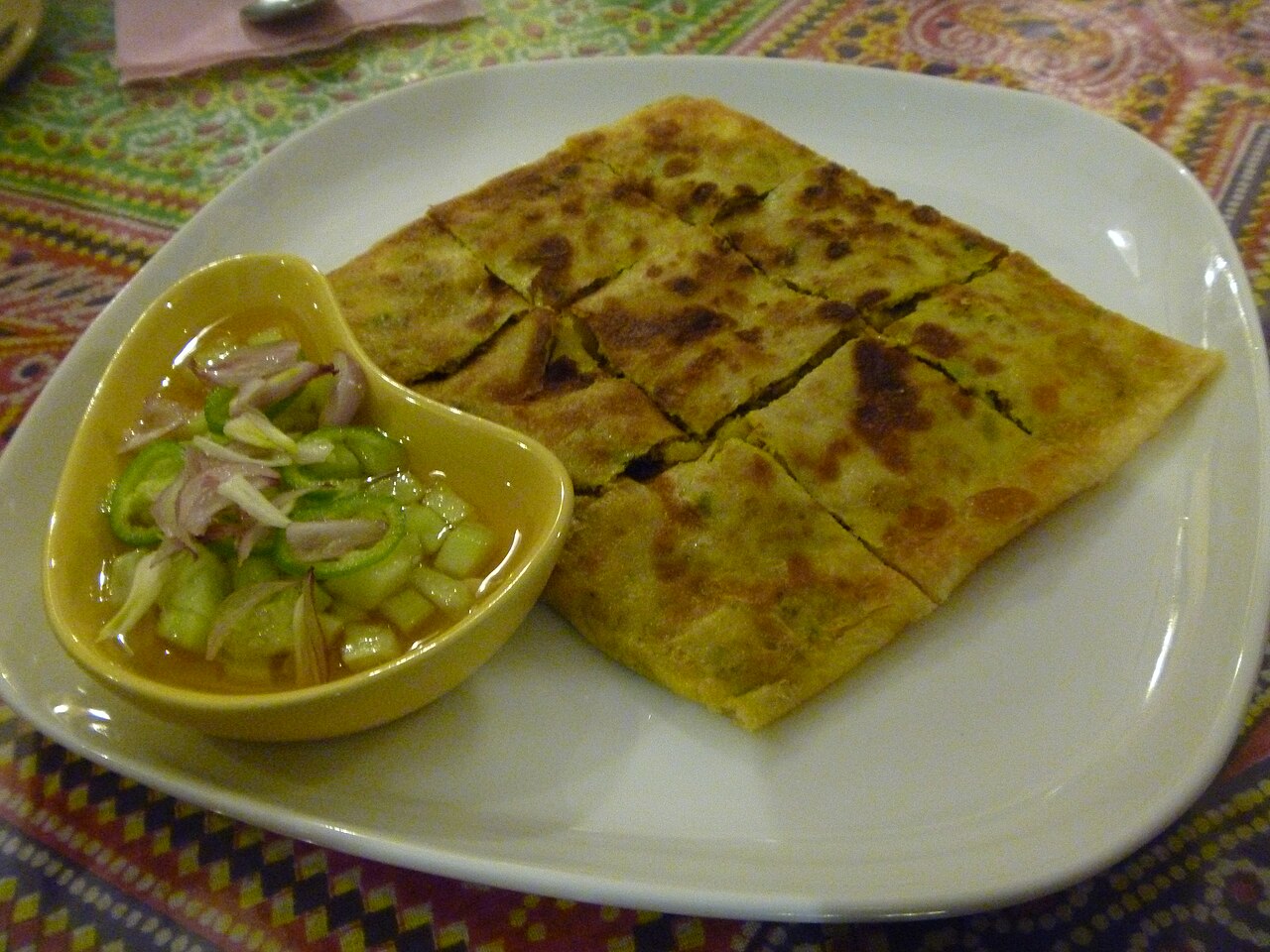
Roti cut into squares on a white plate, served with a small bowl of cucumber relish, southern Thai Muslim style 12
Roti
Roti · with curry or condensed milk, Phuket Muslim style

Phuket has an old Muslim community, so roti is easy to find and good — the dough is pan-fried until crisp outside and soft inside, eaten two ways: savoury, dipped in beef, chicken or massaman curry, or sweet, drizzled with condensed milk and sugar or filled with banana and egg. Some shops make murtabak (mataba), a thick roti stuffed with minced meat and egg that fills you up. Phuket roti is a breakfast and an evening snack alike — find it at roti-and-tea shops in town and the Muslim neighbourhoods, buttery and crisp.

How to eat it: savoury dipped in curry, or sweet with condensed milk · pair with hot pulled tea · order mataba if you want it filling
Price: ฿20–60 per plate
Where: Roti Taew Nam in town · roti-and-tea shops in the Muslim areas
Go deeper on each category

Read on in detail

Want to go deeper? We have a separate guide for each category — start with the one you most want to eat.

Food neighbourhoods

Which area to go for which mood

Phuket's best food is scattered across the island — know what each area does best before you set out (and budget for the drive).

Phuket Old Town
Old Town · the city centre, all walkable

The heart of local eating — Hokkien mee, breakfast dim sum, o-aew, lo bak, oyster omelette and Baba sweets all sit together in an area you can cover entirely on foot. Sino-Portuguese shophouses line Thalang and Yaowarat roads, with old food courts and kopi shops among them. Every Sunday evening Thalang Road turns into the Lard Yai walking street, the busiest scene of the week.

Best for: local food · dim sum · sweets · cafés · Getting around: walkable across the whole quarter
Rawai & Chalong
Rawai & Chalong · the south of the island, seafood by the water

The island's seafood district — Rawai has fresh-seafood stalls along the beachfront where you pick live and carry it to the restaurants next door to cook. Chalong has waterfront seafood spots like Kan Eang and the pier for island boats. Prices run mid to high by the weight of the seafood. It suits a dinner by the sea, about 20–30 minutes from town by taxi, Grab or scooter.

Best for: fresh seafood · dinner by the water · Getting around: taxi/Grab/scooter ~20–30 min from town
Patong
Patong · the tourist beach, lots of options, open late

The busy tourist beach that stays open late — seafood, Thai restaurants, street food and markets like Malin Plaza and Banzaan. Prices are higher than in town because it's a tourist area. It suits you if you're staying near Patong and want a late bite, but for real local food at local prices, head into the Old Town instead. It's about 30–40 minutes from Phuket Town by road.

Best for: late-night food · tourist seafood · markets · Getting around: taxi/Grab/scooter ~30–40 min from town
Kata & Karon
Kata & Karon · the west-coast beaches, beachfront dining

Quieter west-coast beaches than Patong, with restaurants and beachfront seafood spread along the shore — good for a relaxed sunset dinner. Prices run mid to high, with a mix of Thai, seafood and international places for visitors. It suits you if you're staying in this zone; it's a fair way from town and the Old Town, so you'll need a ride — agree the fare before you get in.

Best for: beachfront dinners · sunsets · Getting around: taxi/Grab/scooter from town or Patong
Pins you can't miss

Where locals send you to eat

The shops and food areas that genuinely tell this island's story — check the opening hours before you go, as some close early or on certain days.

1
Mee Ton Poe
A long-running Hokkien mee shop · Phuket Town

A legendary Hokkien mee shop that's been part of Phuket for years, where people queue for thick-broth Hokkien mee with prawns, pork and squid, savoury and full of wok aroma, served wet or dry. It's a good first stop if you want to try Phuket-style Hokkien mee done right. It's in town, walkable from the Old Town. Check the hours before you go, as many local shops close in the afternoon or on certain days.

Where: Phuket Town (near the Old Town)
Hours: check before you go (local shops often close early) · Known for: thick-broth Hokkien mee
2
Lock Tien Food Court
A local food court of star stalls · the Old Town

An old food court in the Old Town that gathers many of Phuket's local dishes under one roof — o-aew, lo bak, Hokkien mee, oyster omelette and Baba sweets. It's ideal if you want to try several things in one sitting without walking between shops. The feel is friendly and old-school, the prices local, and you can order from different stalls to share. It's the single best spot to taste the full range of Baba-Hokkien flavours.

Where: Phuket Old Town
Hours: daytime to evening (check before you go) · Known for: many local dishes in one place
3
Baba restaurants: One Chun · Raya · Tu Kab Khao
Baba-Peranakan restaurants · moo hong, southern curries, local food

If you want Baba and southern Thai food in a nice sit-down setting, there are famous local restaurants to choose from — One Chun and Tu Kab Khao in town serve moo hong, gaeng tai pla, stink-bean stir-fry and Baba dishes in old-building settings, while Raya is set in an old Baba mansion known for its moo hong and local food. These places are popular, so for dinner go early or book ahead.

Where: Phuket Town
Hours: lunch–dinner (busy at dinner) · Known for: moo hong · southern Thai food · Baba dishes
4
Lard Yai Walking Street
Thalang Road, every Sunday evening · local food and street food

Every Sunday evening Thalang Road in the Old Town becomes the Lard Yai walking street, Phuket's liveliest scene. Local food and street-food stalls run the length of the road — o-aew, a-pong, lo bak, oyster omelette, Baba sweets and plenty of snacks — among the Sino-Portuguese shophouses lit up for the evening. It's a place to eat and wander at once; come in the early evening for the best of it. Be ready to walk a lot and bring cash.

Where: Thalang Road, Phuket Old Town
Hours: Sunday evening (around 4pm–10pm) · Known for: street food and local sweets
Frequently asked

FAQ · what people ask before heading out to eat

How is Phuket food different from regular Thai food?
Phuket has its own cuisine, distinct from central Thai food. Its roots come from Hokkien Chinese migrants who came to mine tin over a century ago and married locals, creating the Baba-Peranakan culture. So the food blends Hokkien Chinese flavours with fierce southern Thai ones. The signatures include Hokkien mee, breakfast dim sum, moo hong (pork belly braised in soy and pepper), lo bak, desserts like o-aew and a-pong, plus spicy southern dishes such as gaeng tai pla and shrimp-paste relish, and fresh seafood from the Andaman Sea.
How much does a meal cost in Phuket?
It varies: local food in the Old Town is cheap, but seafood and Patong restaurants cost more. A plate of Hokkien mee or khanom jeen runs ฿50–90, dim sum ฿20–40 per basket (a breakfast of several ฿100–200), a bowl of o-aew ฿30–50, moo hong ฿120–200 per plate, and southern Thai dishes to share around ฿150–300 per person. Seafood at Rawai or Chalong depends on what you pick and the weight — typically ฿400–1,200 per person including the cooking fee.
How do you get to restaurants in Phuket? Does Phuket have a metro?
Phuket has no BTS/MRT metro or train. Getting around means a private car, taxi, Grab (available but limited and pricier than Bangkok), a rented motorbike or scooter, or the slow songthaew that hub at Phuket Town. The upside is that most local restaurants are clustered in the walkable Old Town, while seafood sits around Rawai and Chalong in the south. Agree the fare before you get in every time, as Phuket tuk-tuks are expensive, and if you ride a scooter you need a licence and a helmet.
Why does Phuket eat dim sum for breakfast?
Because of the island's Hokkien Chinese roots, dim sum became the everyday breakfast in Phuket. Dim sum shops open before dawn and people eat dumplings, har gow, buns and braised vegetables with hot tea before the day starts — unlike the late-morning Cantonese dim sum elsewhere. Old dim sum shops in Phuket Town are busiest from 7 to 9 in the morning. It is a breakfast culture you rarely find outside Phuket.
What is o-aew and why try it in Phuket?
O-aew is Phuket's signature dessert, hard to find elsewhere. It is a jelly made from o-aew seeds blended with banana into a clear, soft jelly, served in cold red syrup over shaved ice, sometimes with red beans, grass jelly or job's tears added. It is sweet, cold and refreshing in the island's tropical heat — a Baba dessert handed down from the Hokkien Chinese (the name "o-aew" is itself Hokkien). The well-known stalls are in the Old Town and at Kathu market.
How do you buy seafood at Rawai without getting cheated?
Rawai has fresh-seafood stalls lined up along the beachfront; you buy there and carry it to the restaurants next door to cook to order. To avoid being cheated, ask the price per kilo clearly before you buy, watch the scale every time, bargain, and agree the cooking fee per dish with the restaurant before they start. Pick live creatures still moving, keep your receipt, and compare a few stalls before deciding. Read the step-by-step in our Phuket seafood guide.
Klook · Food tour

Phuket Food Tour — eat at the right places, with someone who knows

A Phuket food tour with a local guide who walks you through the Old Town to try Hokkien mee, o-aew, lo bak and Baba sweets — several real stops in one trip, no guessing which place is good.

See Phuket food tours on Klook →
Wherebest is a Klook affiliate partner — we may earn a commission when you book through our links, at no extra cost to you.