The Phuket Big Buddha is a 45-metre white-marble Buddha on Nakkerd Hill, free to visit, visible from much of the island, and a viewpoint over Chalong Bay and Kata Bay. Pair it with Wat Chalong, the temple Phuket locals revere most — the two sit close together in the south and make an easy half-day, though there is no public transport up the hill, so you need your own transport or a tour.
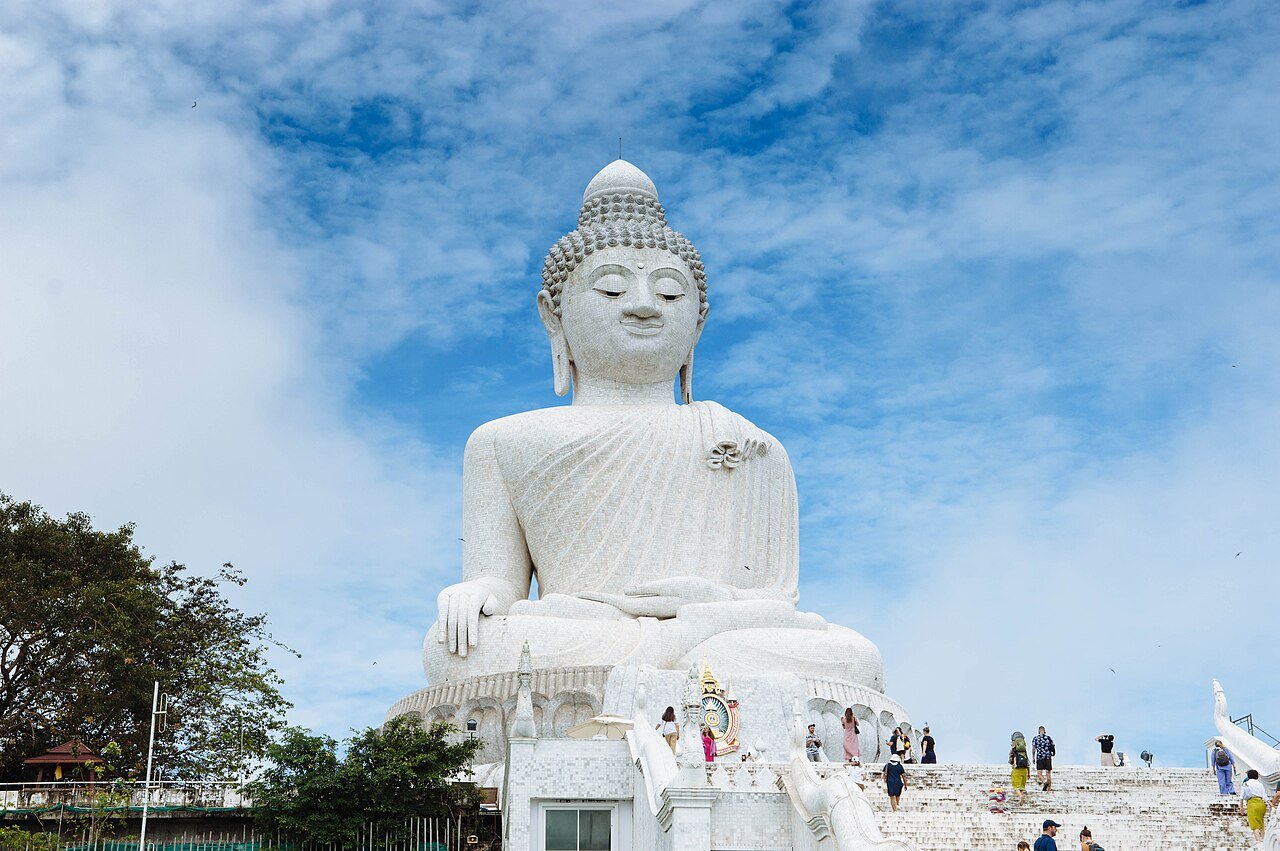
Let us be honest: Phuket is famous for its beaches and its sea, but if you come and never go up to the Big Buddha at least once, it feels like missing the symbol of the island. The statue is a white-marble seated Buddha in the "subduing Mara" pose, about 45 metres tall, set on Nakkerd Hill between Chalong, Kata and Nai Harn — high enough that on a clear day you can pick out its white form from many parts of the island. Reach the top and you find a wide terrace around the statue that serves as both a place to pray and a viewpoint over two bays at once.
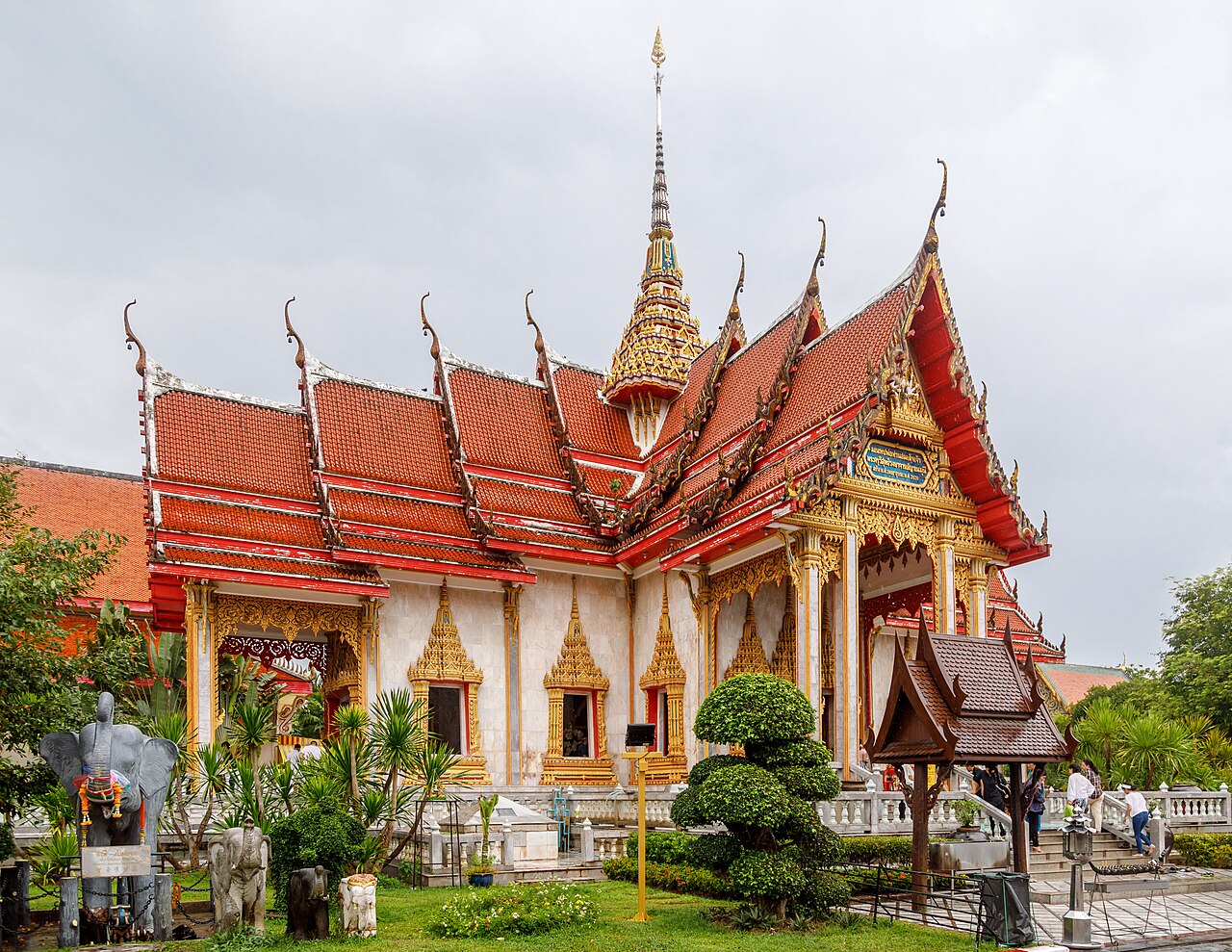
Down from the foot of the hill, not far away, is Wat Chalong (officially Wat Chaithararam), the most revered temple in Phuket. It is the temple of Luang Pho Cham (หลวงพ่อแช่ม), a monk locals have respected since the reign of King Rama V. The highlight is the Grand Pagoda, a tall, gilded chedi that enshrines a relic of the Buddha and is painted inside with murals of the Buddha's life. Thai visitors come here every day to ask for blessings, to fulfil vows, and to apply gold leaf to the statue of the revered monk.
Because both sit in the south of the island, close together — and the road up to the Big Buddha branches off near Chalong — people usually visit them on the same trip: Wat Chalong first, then drive up the Big Buddha, about half a day in total. This is the cultural pairing we suggest slotting into a beach trip, especially on a day when the sea is rough or you simply want a break from the sand.
This is Phuket's cultural pairing, ideal to slot in for half a day — prayers, temple architecture and a two-bay view from the hilltop, all in one trip.
The appeal here is that it is the side of Phuket that is not sand — the culture and faith that have been part of the island for a long time. Up at the Big Buddha you get calm, cool air on the hilltop, and a view that sweeps over Chalong Bay and Kata Bay at once. At Wat Chalong you see how southern Thai people actually worship. Both are easy to visit without much planning, but there are things worth knowing first. See which one of these is you.
If you have had several days of beach and want a change, this cultural half-day is the answer — prayers, Thai-southern architecture and a hilltop view. It slots neatly into a day when you want a break from the sun and the sea. See the rest of the island's sights at the Phuket attractions guide.
Nakkerd Hill, where the Big Buddha stands, is one of the widest views on the island — Chalong Bay to the east and Kata Bay to the west at the same time. Late afternoon, in soft light, is the prettiest. To keep collecting viewpoints, see the Phuket viewpoints guide.
Wat Chalong is where Phuket locals and Thai people from across the country come to ask for blessings and fulfil vows in earnest, especially to Luang Pho Cham — many set off firecrackers to complete a vow and apply gold leaf to the statue. If you want to feel local faith rather than just take photos, this is the spot to slow down and stay respectful.
Because the road up to the Big Buddha is steep and there is no public transport, people without a car tend to join a half-day tour that already runs the route Wat Chalong – Big Buddha – viewpoint, with no worry about driving up the hill or finding a ride back down. See tour options at the foot of this page, or the bigger picture at the Phuket day trips guide.
The heart of it is the statue itself, a seated Buddha in the "subduing Mara" pose clad in white Burmese marble, about 45 metres tall and roughly 25 metres across the lap, set on the summit of Nakkerd Hill. Around the base is a wide terrace you can walk for the view, taking in Chalong Bay to the east and Kata Bay to the west at the same time. Entry is free, with only donation boxes for those who wish to give (the project is still under construction). It is open roughly 06:00 to 19:00, and morning or late-afternoon soft light is the most rewarding time. To keep going, see the Phuket viewpoints guide.
Down from the hill, not far, is Wat Chalong (Wat Chaithararam), the most revered temple in Phuket. The highlight is the Grand Pagoda, a tall gold-and-pink chedi that enshrines a relic of the Buddha; you can climb it, and the walls are painted with murals of the Buddha's life. Another draw is the shrine and statue of Luang Pho Cham, the monk locals revere most on the island. People come to ask for blessings, apply gold leaf, and fulfil vows by setting off firecrackers (there is a firecracker kiln in the grounds). It is lively with genuine worshippers every day — a temple to be respectful at, not just a photo stop.
Beyond the statue, what stays with many people is the view from the hilltop. Because Nakkerd Hill sits in the middle of the southern peninsula, the terrace takes in Chalong Bay and the eastern sea on one side and Kata Bay to the west on the other; on a clear day you can see out to the islands in the bay. The breeze up top is cool compared with below, making it a good place to sit a while after praying — the midday sun is strong, so bring a hat and water.
If you have time left after the Big Buddha and Wat Chalong, the same southern route has Promthep Cape, Phuket's most famous sunset spot, and the Karon Viewpoint, which lines up three bays in one frame. Both are at the southern tip, an easy drive on from Chalong, so people often package them as an evening run that ends with sunset at Promthep Cape. See them all at the Phuket viewpoints guide.
Both the Big Buddha and Wat Chalong are sacred sites that Thai people genuinely revere, so dressing and behaving appropriately matters more than many visitors expect.
The main rule at both is to cover your shoulders and knees — no vests, tank tops, crop tops, shorts or skirts above the knee, and definitely no swimwear. The Big Buddha has free sarongs to borrow at the entrance if you turn up not dressed for it, but bringing your own cover-up or wrap is easier. In some areas you must remove your shoes before entering, so slip-on shoes help. The sun on the hilltop is strong, so carry a hat and water.
At Wat Chalong in particular, where Thai people come to pray in earnest, stay quiet and keep your voice down, and do not climb on things or pose for photos in ways that disrespect the statues and the pagoda. When sitting in a temple hall or pavilion, do not point your feet toward a Buddha image. If you want to make merit or apply gold leaf, just follow what the locals do. Photography is fine in general areas, but avoid disturbing anyone who is praying.
The first thing to know: Phuket has no train or bus that goes up to the Big Buddha. The way up is a winding, steep road, so you need your own transport or a tour.
Wat Chalong sits in the Chalong area on a main road and is easy to reach by any vehicle. The Big Buddha is on top of Nakkerd Hill, up a paved, winding, steep road about 6 km long from a junction near Chalong. A regular car manages it fine but you drive carefully on the bends. There are several ways up — pick what suits you.
09:00 — Start at Wat Chalong, before the crowds build; pray, see the Grand Pagoda, and apply gold leaf to the statue of Luang Pho Cham
10:30 — Drive up to the Big Buddha on Nakkerd Hill; pray and walk the terrace for views over Chalong Bay and Kata Bay
11:30 — Borrow a sarong if needed, photograph the statue and the view, and sit in the cool breeze on the hilltop
12:30 — Drive back down and stop for lunch around Chalong, or head back to the beach
With a full day, continue south from the Big Buddha to the viewpoints at the island's tip:
13:30 — Lunch, then drive south toward Nai Harn or Kata beach for a swim or a rest
16:00 — Stop at the Karon Viewpoint for three bays lined up in one frame
17:30 — Finish at Promthep Cape for Phuket's most famous sunset
See them all at the Phuket viewpoints guide
The Big Buddha and Wat Chalong make a cultural half-day that fits any day — especially a day when the sea is rough during the monsoon (roughly May to October) and boat trips to the islands may not run; that is a good day to go inland instead. See island-wide sights at the Phuket attractions guide and plans at the Phuket day trips guide.