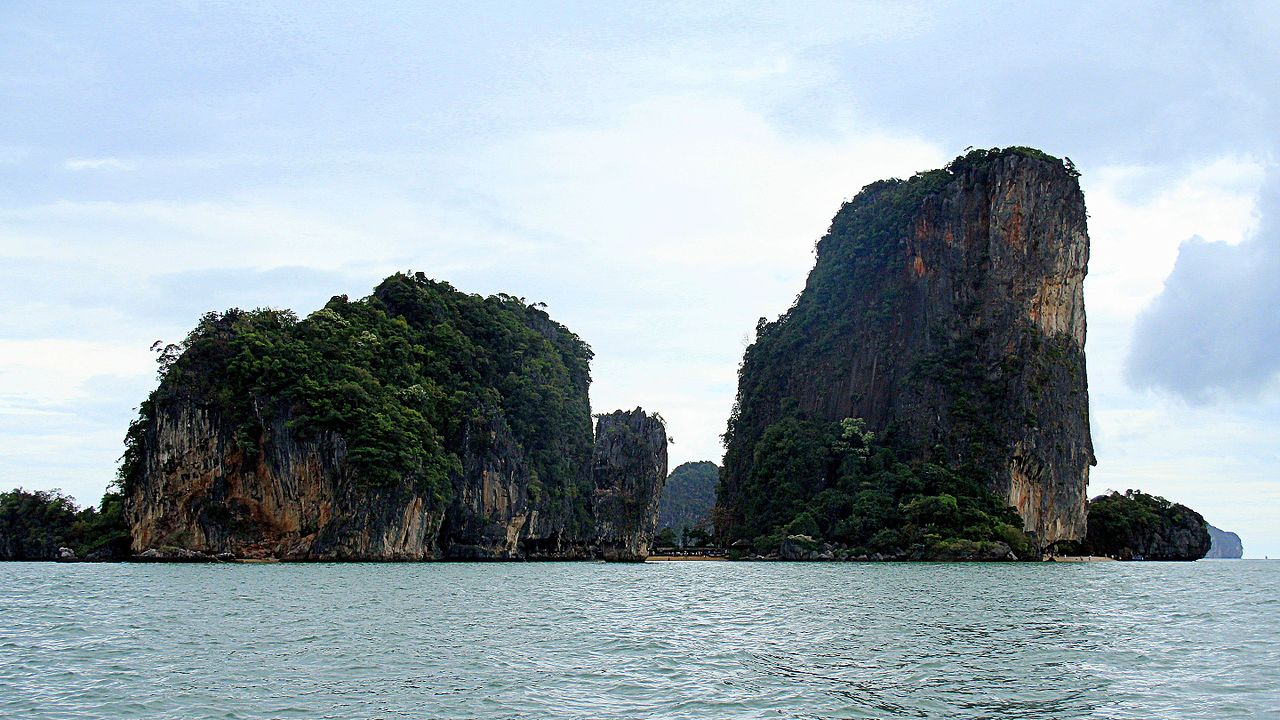
Phang Nga Bay is the wide bay north of Phuket, where hundreds of limestone karsts rise straight out of the sea. The headline sights are James Bond Island (Ko Tapu), the slim rock stack from the 007 film, the Koh Panyee floating Muslim village, and sea-canoeing through caves into hidden hongs. The water here is calmer than the open-sea islands, which makes it an easy boat trip for families and anyone wary of waves.
Picture your boat rounding a headland into open water, and then limestone mountains in grey-green start to rise out of the sea one by one, until a whole forest of rock fills the bay — that is Phang Nga Bay, the broad bay between Phuket island and the Phang Nga mainland. It is a national park of strangely shaped limestone karsts, caves and scattered islets, hundreds of them. The piers are a short drive from Phuket, which is why this is one of the most popular day trips for anyone visiting the island.
What sets Phang Nga Bay apart from the other boat trips is that it is semi-enclosed water sheltered by hills and the mainland, so the waves are usually far calmer than heading out to Phi Phi or the Similans. Travellers who get seasick, or who are bringing children and older relatives, often pick this trip because you get gorgeous scenery and dramatic karsts without rough seas — and you can fit several highlights into a single day, from Ko Tapu to the caves to a village on the water.
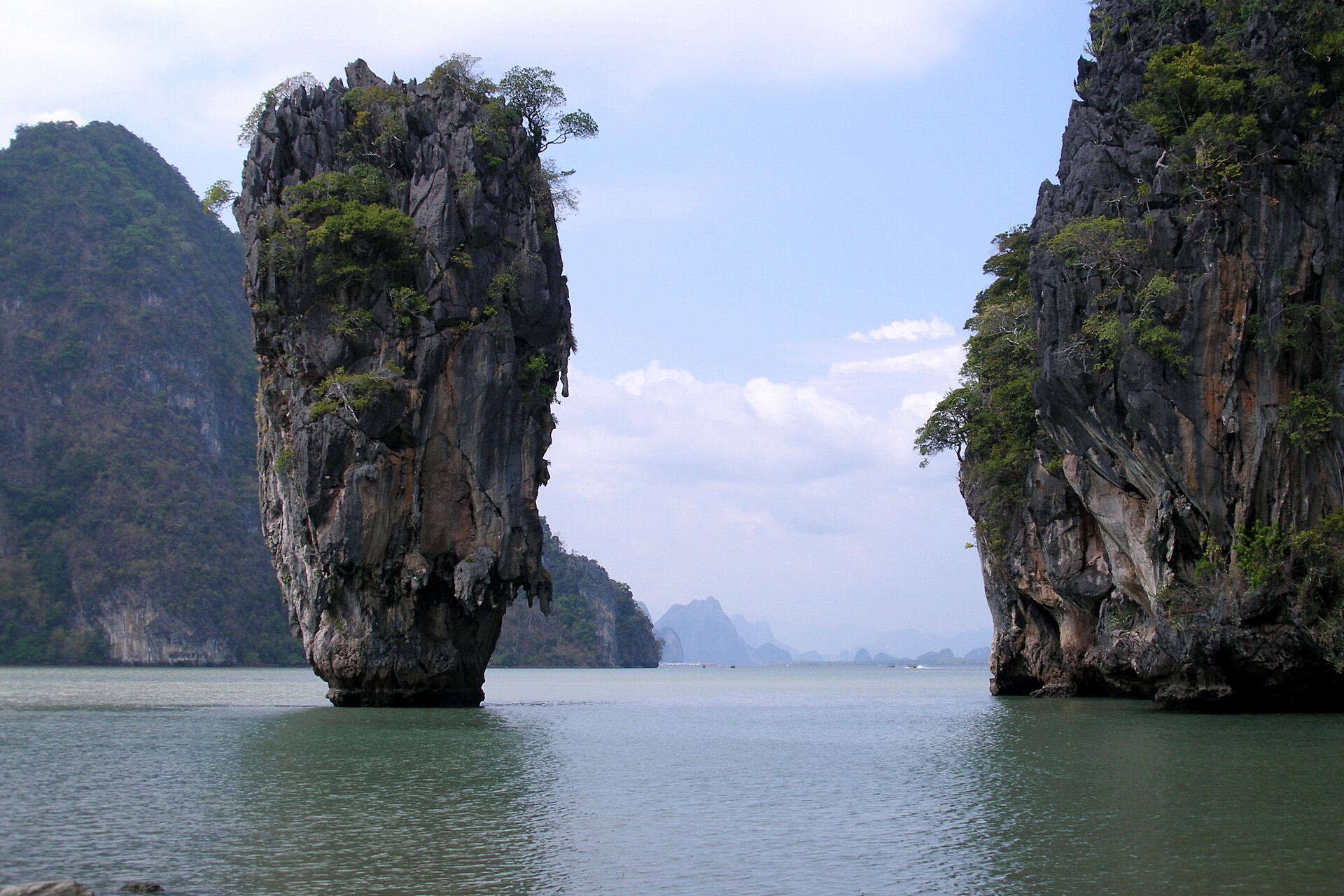
Ever wanted to see that postcard view of a single rock spire standing alone in the sea? The headline of Phang Nga Bay is James Bond Island (Ko Tapu), the limestone stack that went around the world in a Bond film, paired with Koh Panyee, a Muslim fishing village built on stilts over the water, and sea-canoeing through caves into hongs, the hidden lagoons inside the islands. Honestly, if you are in Phuket and want a boat trip that is both beautiful and easy, Phang Nga Bay is hard to skip.
Phang Nga Bay is about limestone scenery and calm water, not snorkelling over coral or swimming off pretty beaches. See whether it matches your style.
The charm of Phang Nga Bay is its limestone scenery and calm, quiet feel — it is more about cruising past the karsts, paddling through caves and seeing a village on the water than spending the day swimming or snorkelling over coral. Knowing that up front helps you choose the right trip, and here are the groups Phang Nga Bay suits best.
Because Phang Nga Bay is semi-enclosed water that usually stays calm, the chance of seasickness is lower than on open-sea trips. Choose a gentle big boat and children and grandparents come along easily, seeing the karsts up close and stopping at a village on the water without battling rough seas. To compare it with other sea trips, see our Phuket day trips.
If you are here for the views, Phang Nga Bay is a dream for photographers — the Ko Tapu stack in the water, sheer limestone walls, caves with stalactites, and the village on stilts are images you will not find elsewhere. Early morning and late afternoon bring softer light and fewer people than midday. Compare it with the other islands on the menu at island hopping from Phuket.
One thing Phang Nga Bay does especially well is paddling a canoe through low caves into the hongs, the hidden lagoons inside the islands. A paddler usually does the work while you sit and watch the cliffs and mangroves drift by in silence — a very different experience from a fast speedboat. Look for a tour that clearly states it includes sea-canoeing into the hongs.
To be honest, if the heart of your trip is swimming off a pretty beach or snorkelling over coral, Phang Nga Bay may not be your first choice — the water in the bay is murkier and the focus is on scenery rather than swimming. This group may prefer the Phi Phi day trip or the Similan Islands (open in high season only).
The headline of the trip is Ko Tapu, a slender limestone stack shaped like a nail standing alone in the water near Khao Phing Kan. The world knows it as James Bond Island, because it appeared in the Bond film The Man with the Golden Gun back in 1974. Most tours land you on the Khao Phing Kan beach and let you walk to the best viewpoint of Ko Tapu, with a few villagers' souvenir stalls nearby. It gets crowded around midday, so an early-departing tour gives you a clearer shot. Compare the other islands on the menu at island hopping from Phuket.
Koh Panyee is a Muslim fishing village built on stilts over the water, beside a limestone karst in the middle of the bay. The whole community is linked by timber walkways, with a mosque, a school, seafood restaurants and souvenir shops. Most tours stop here for lunch and time to walk around and see life on the water. Some trips also point out the floating football pitch the villagers built themselves, which made the village well known. It is busy and lively at midday; if you want a quieter feel, look for a tour that arrives early in the morning or in the afternoon.
One of the best experiences in Phang Nga Bay is paddling a canoe through low caves into the "hongs", the lagoons hidden inside the islands behind the limestone walls. In places the cave ceiling drops so low you have to duck, and then you emerge into a silent pool ringed by cliffs and mangroves. Several islands are popular for this, such as Ko Hong and its neighbours. A paddler usually does the work for you while you take in the view — the quietest, most intimate part of the day.
Beyond Ko Tapu and Koh Panyee, Phang Nga Bay is full of hundreds of oddly shaped limestone karsts and a number of caves. Some hold stalactites and ancient rock paintings on the walls, and at some points the boat slips beneath an overhang. Along the way you pass mangroves on both sides and sea birds overhead. Honestly, just cruising past the karsts across the bay is worth the trip on its own — operators stop at different spots, so check the list of stops before you book.
There are several ways to do Phang Nga Bay, differing in speed, smoothness, the number of stops, and price. Compare them before you book.
A speedboat gets there quickly and fits several stops into one day, which suits people who are short on time and do not get seasick easily. The trade-off is that it slams and sprays when the water is choppy, and the engine is loud. Join-in speedboat tours typically run around ฿1,500–2,500 per person, depending on the stops and what is included in the package. It is the choice if you want to fit Ko Tapu, Koh Panyee and the sea-canoeing all into one day.
A big boat, or a slow-cruising long-tail, is far smoother and steadier than a speedboat, which makes it better for families with children or older travellers and anyone wary of seasickness. The trade-off is that it takes longer and stops at fewer places, but you get a relaxed, take-it-in pace with full views. Join-in tours typically run around ฿1,200–1,900 per person. If your trip is more about relaxing and the scenery than speed, this is the boat.
If the heart of your trip is paddling through caves into the hongs, choose a tour that clearly focuses on sea-canoeing. Many operators bundle Ko Tapu and Koh Panyee into the same package, with a paddler doing the work and taking you into the hongs of several islands, so you get more quiet time in nature than a standard tour. Prices are usually close to a speedboat — check how many canoe stops are included and whether a paddler is provided or you paddle yourself.
Phuket and the Andaman coast have two clear seasons. Pick your month well and you get a trip with calm water and boats running reliably.
The calmest and most reliable time is the high season, roughly November to April — clear skies, small waves and boats running consistently. It is the best window for any boat trip around Phuket. The southwest monsoon, roughly May to October, brings rain and rougher seas in spells; the open-sea islands like Phi Phi and the Similans get rough and some trips are cancelled or run fewer departures (the Similan Islands are a national park that closes for the monsoon, open only from about mid-October to mid-May — check the opening dates before you plan).
The advantage of Phang Nga Bay is that it is semi-enclosed water sheltered by hills and the mainland, so it usually stays much calmer than the open-sea trips. Many monsoon days are still fine for the bay, which makes this a more flexible choice when the weather is not on your side. That said, to be honest, on days of heavy rain or rough seas boats may be cancelled or postponed, so keep a backup plan, check the forecast, and confirm with your tour operator before you travel — especially if you booked several days ahead.
Phuket has no skytrain or metro. Getting around the island means a metered taxi (drivers often refuse the meter, so agree the price first), a tuk-tuk (notoriously expensive here), the Grab app (limited, and contested by local taxis in some areas), a rented scooter (you need a licence and a helmet, and accidents are common, so take real care), or a rented car. For Phang Nga Bay, the easiest and best-value option is to book a tour that includes hotel transfers, because the piers are over on the Phang Nga mainland side and you do not have to arrange your own transport.
07:30–08:30 — Hotel pickup, then a drive to the pier on the Phang Nga side
10:00 — The boat enters the bay; cruise the karsts and stop at caves and photo spots
11:00 — Sea-canoe through low caves into a hong (a paddler does the work)
12:30 — Lunch at the Koh Panyee village, with time to walk the community on the water
14:00 — Stop at James Bond Island (Ko Tapu) to walk, take photos and browse the stalls
16:00–17:30 — Back to the pier, then the transfer to your hotel
If you would rather avoid the midday crowds at Ko Tapu and Koh Panyee, look for a tour that departs at first light or runs as a half-day in the afternoon, and pick an operator that focuses on canoeing into the hongs of several islands, so you spend more quiet time in nature than at the busiest spots. To line up more sea trips on the following days, see the full island menu at island hopping from Phuket, or compare land and sea trips at Phuket day trips.
To plan the whole Phuket trip, see our complete Phuket guide and everything to do across the island at Phuket attractions.