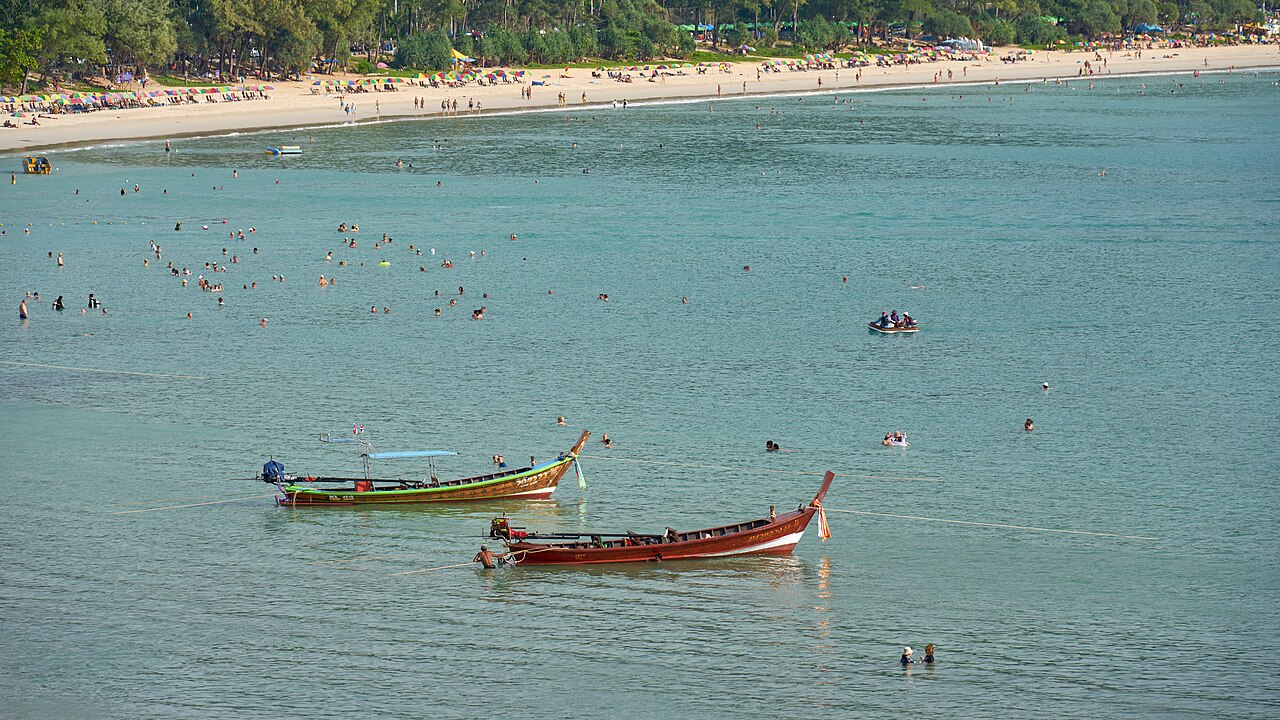
Phuket has no metro, no BTS or MRT, and no train onto the island — everything runs on the roads. Renting a car is best for a spread-out island, scooters are cheap but genuinely risky, and taxis need a price agreed first. The one thing to plan from the start: the beaches sit far apart, a 45–60 minute drive, so choose your base wisely.
If you're used to hopping on the BTS or MRT in Bangkok to get anywhere, here's the first thing to know: Phuket has no metro, no BTS or MRT, and no train running onto the island. Thailand's largest island moves entirely on the roads, with beaches and sights spread out around its edges. It sounds like a hassle, but it's manageable once you know what to use and when.
The main options for tourists in Phuket are renting a car (the most freedom, ideal for a spread-out island) and renting a scooter (the cheapest, but be careful). Backing them up are metered taxis where you should agree a price or ask for the meter first, Phuket's tuk-tuks which are fairly pricey for short hops, Grab, which works but is limited in some areas, and the blue songthaews that run between the west-coast beaches and Phuket Town cheaply but slowly — plus the shuttles many resorts run.
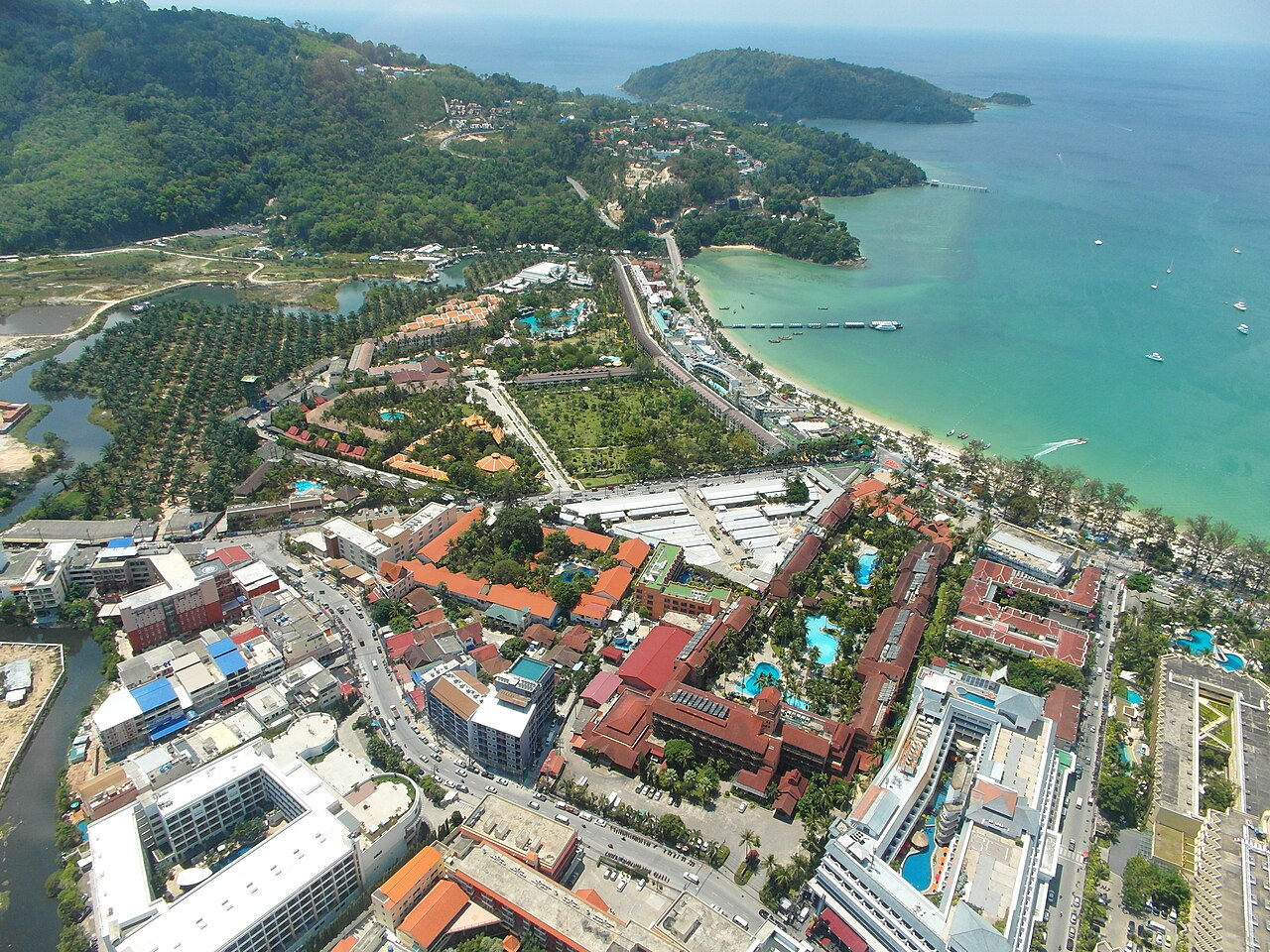
But there's one thing to settle before you even book a hotel: Phuket's beaches and zones are far apart. The airport sits at the far north; it's a 45–60 minute drive down to Patong or Kata on the west coast, and the southern tip at Promthep Cape is farther still. This guide walks through every way to move around Phuket — car, scooter, taxi, tuk-tuk, Grab, songthaew and the right map app — then helps you choose the right base from day one.
On a spread-out island like Phuket, having your own wheels changes the trip — but think hard about scooter safety first.
On an island with no metro and beaches that sit far apart, the thing that gives you the most freedom is having your own vehicle. Renting a car is the best value and most comfortable choice for anyone who wants to see several beaches and sights, while a scooter is cheap and nimble — but the safety conversation has to come first.
A rental car is the most freeing way to get around Phuket — you can drive to every beach, viewpoint and far-flung spot like Promthep Cape or the northern beaches. Expect around ฿1,200–1,800 a day including insurance for a small automatic. You drive on the left as everywhere in Thailand, there's parking at the bigger beaches and malls, and you can pick up at the airport or have it delivered to your hotel.
Tip: choose a company with clear comprehensive insurance, photograph the car all round before you take it, and watch the steep, twisting hill roads between Patong and Kata — they get slippery in rain, so drive slowly to stay safe. Google Maps navigates accurately across the whole island.
Safety warning
Scooters are easy to rent at every beach, around ฿200–300 a day, nimble and easy to park. But honestly: scooter accidents in Phuket are common and genuinely serious. The roads climb and twist over steep hills, rain makes them slippery, larger vehicles move fast, and many tourists have never ridden before. Every year brings injuries and deaths.
By Thai law you must hold a motorcycle licence and wear a helmet every time. Police set up checkpoints often, and without a valid licence your travel insurance usually won't cover a crash — if you've never ridden a scooter, Phuket is not the place to learn. A taxi, Grab or a rental car is far safer.
If you'd rather not drive, these are your three main options — each with its own upsides and things to watch.
If you don't want to rent a car or ride a scooter, Phuket still has plenty of rides to hail. But know this up front: price is the thing to watch most. Many drivers won't run the meter and quote high flat fares to tourists, so agree the price clearly before you get in, or compare it against the Grab app.
Phuket has metered taxis, but the reality is that many won't run the meter and quote a high flat fare to tourists, especially at beaches and tourist spots. Every time you get in, ask them to start the meter; if they won't, agree a clear flat fare first — or compare with Grab.
Tip: check the price in the Grab app before you bargain with a roadside taxi, so you know the going rate. Short hops within one zone are usually a few hundred baht, but crossing zones — Patong to Phuket Town, say, or to the airport — costs noticeably more.
Phuket's tuk-tuks (small red or yellow vans, unlike Bangkok's three-wheelers) wait at beaches and tourist spots and are easy to flag, but they're known for being pricey on short hops. Even a short ride within Patong can run ฿200–300, since they charge a flat fare with no meter.
Use them when you need to, and always agree the fare before getting in. For anything longer, Grab or a taxi usually works out cheaper. Tuk-tuks suit short hops within one zone late at night once the songthaews have stopped, rather than as a main way to get around.
Grab works in Phuket and is handy because you see the price before you book and pay in the app, with no haggling. But it has limits: in some areas, especially at beaches and spots where local taxis and tuk-tuks control the ranks, Grab cars can be scarce or drivers ask you to meet farther off to avoid friction with the local rank (sometimes called the taxi mafia).
In Phuket Town and at the airport you'll usually get a Grab more easily. Always open the app to compare against a roadside taxi — sometimes it's clearly cheaper, sometimes prices surge when cars are scarce. Check both before you decide.
Cheapest
The blue songthaews (shared local passenger trucks) are the cheapest way around Phuket, roughly ฿30–50 a ride. They mainly run between the west-coast beaches — Patong, Karon, Kata — and Phuket Town (the fresh market / clock-tower area). Flag one on a main road and press the buzzer to get off at your stop.
The honest truth: songthaews route through town as a hub rather than running beach-to-beach directly, so going from Patong to Kata may mean heading into town first. They're slow, stop often, and stop running in the early evening (around 17:00–18:00). They suit the tightest budgets and travellers who aren't in a hurry; at night or for beaches that don't pass through town, you'll need a taxi or Grab instead.
Many resorts and hotels in Phuket run their own shuttles — both airport pick-ups and drop-offs (usually paid or booked ahead) and loops to nearby beaches or into town / shopping areas at set times. They're especially common at hotels in far-out zones like Bang Tao / Laguna, Kamala or Mai Khao, which sit away from other beaches and restaurants.
Tip: ask the front desk about shuttle schedules at check-in. Some need booking ahead or run limited times. If you're planning a day out, check whether the hotel shuttle reaches where you want to go, so you don't pay for a taxi every leg.
This is what sets Phuket apart from a metro city, and it's a decision to make before you book a hotel.
If you remember one thing from this page, make it this: Phuket's main beaches and zones aren't next to each other — they're spread out around a big island. There's no metro to string them together, so hopping from one zone to another eats both time and money. If you imagine staying in one spot and dashing to every beach each day, you'll spend more of your trip in the back of a car than you'd expect.
| Area | Location / travel time | Best for |
|---|---|---|
| Patong | West coast · ~45–60 min from the airport | First-timers · nightlife · lively, lots of restaurants |
| Kata / Karon | West coast, south of Patong · ~10–15 min from Patong | Families · calmer beaches · good swimming |
| Bang Tao / Laguna · Kamala | Northern west coast · ~30–40 min from Patong | Upscale, quiet · beachfront resorts |
| Nai Harn / Rawai | Southern tip · ~45 min from Patong | Local + seafood · near Promthep Cape |
| Phuket Old Town | East side / inland · ~30–40 min from west beaches | Culture, cafés · no beach · budget–mid |
| Mai Khao / Nai Yang | North, near the airport · ~10–15 min from the airport | Quiet · close to the airport · long beaches |
Good news: in Phuket, Google Maps works fully and accurately — driving navigation, directions and traffic-based travel times. Unlike some countries where you need a local app, here Google Maps plus a ride-hailing app is all you need.
Google Maps works fully in Phuket and navigates accurately across the whole island for both cars and scooters, estimates travel time against live traffic, and pinpoints beaches, restaurants and viewpoints. It's the essential app here. Download the Phuket map for offline use in case signal drops on the hill roads.
Beyond hailing a ride, the Grab app is the best tool for comparing prices before you bargain with a roadside taxi or tuk-tuk. Pull up the fare estimate for your route and use it as your baseline. Install it and link a card or have cash ready before you travel.
For internet and SIM, you can roam on your home number or buy a local data package as usual. For payments, Phuket widely accepts PromptPay QR and cash. See the full pre-trip rundown in our Phuket first-timer guide.
If we had to boil it down to two points: one — decide whether you'll have your own wheels. If you want to see several beaches and reach far-flung spots around the island, a rental car is the best value and freedom (scooters only for confident riders). If you plan to stay mostly at one beach, occasional taxis and Grab will do — just budget more for rides than you'd expect, because Phuket fares run high.
Two — settle the beach / zone question before you book your hotel. Switching zones mid-trip means packing up, checking out and a 30–60 minute drive across the island. Pick the one base that's right for you from the start, then use a vehicle to reach farther afield — it saves far more time and money.