Inland from the beaches, the heart of Phuket Town hides a small old quarter that is a joy to walk — pastel shophouses of the Baba-Peranakan community lining Thalang Road and Soi Romanee, cafés inside century-old buildings, murals down the side lanes, and every Sunday evening Thalang Road turns into the Lard Yai Walking Street, the liveliest the area gets all week.
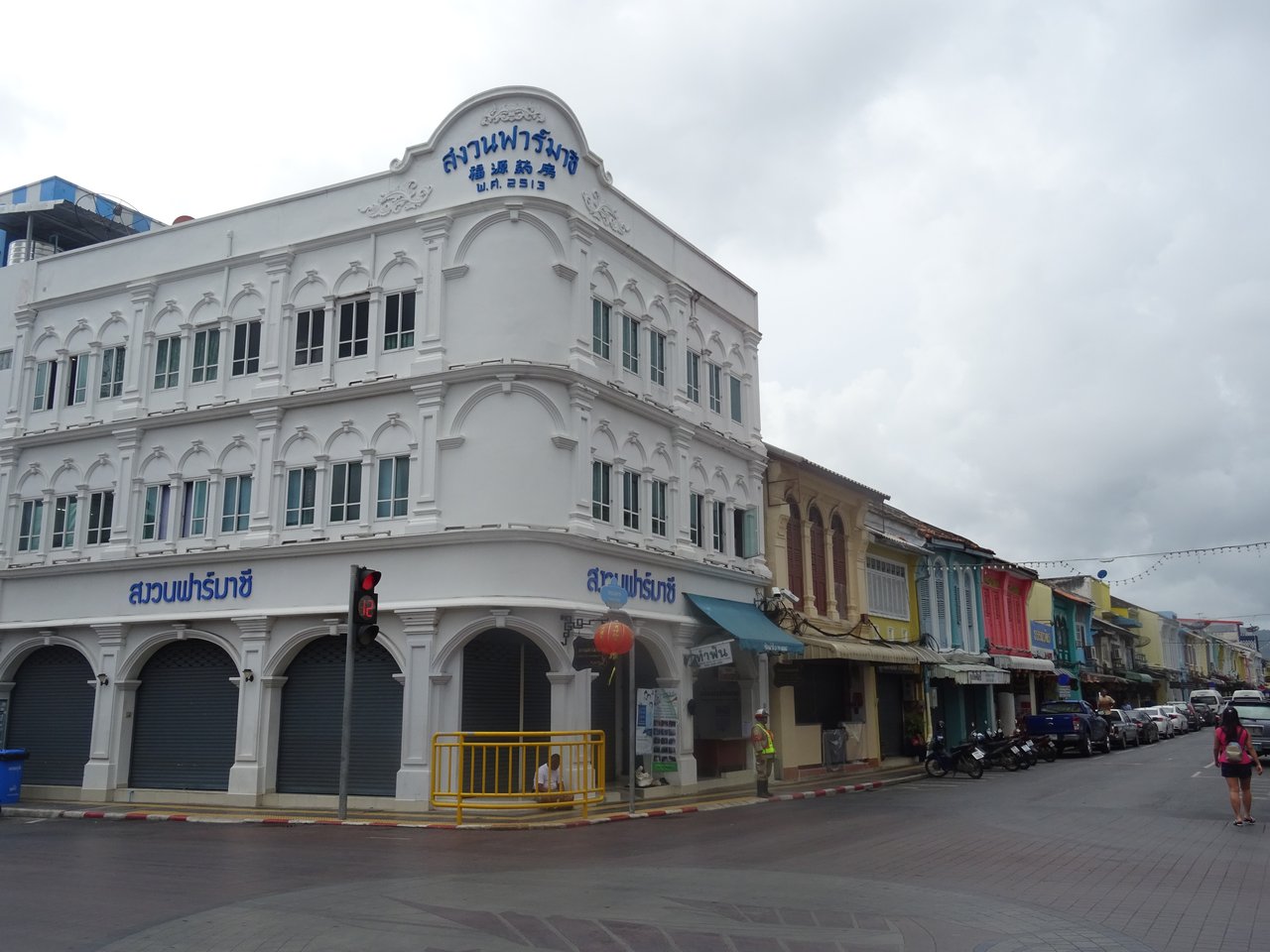
Most people picture Phuket as beaches and islands, but inland in Phuket Town itself (not on the coast) is Old Phuket Town, a different world from the shoreline — a historic quarter where century-old terraces of shophouses run along Thalang, Dibuk, Krabi, Phang Nga and Yaowarat roads and Soi Romanee. The facades are painted in pastels, dressed with European-meets-Chinese plasterwork, and front a covered walkway that Phuket locals call the ngor kah kee. It all sits within a few hundred metres, easy to see in half a day.
The heart of the area is Thalang Road, which has the prettiest run of Sino-Portuguese shophouses and becomes the Lard Yai Sunday Walking Street every Sunday evening. Branching off it, Soi Romanee is a short lane of pastel-painted shophouses that has become the most-photographed scene in the city. Around the quarter you will also find the grand mansions of the old tin-mining families, known as ang mo lao, and street art telling the story of Phuket life tucked along the walls and side lanes.
What makes it work is that you can actually walk it — unlike the rest of Phuket, where the sights are scattered around the island and eat up the day in a car. The old town is compact, every street connects, and you can go from a café to a mural to a local-food shop without taking a single ride. If you want a day away from the beach, the old town is the answer a lot of visitors overlook.
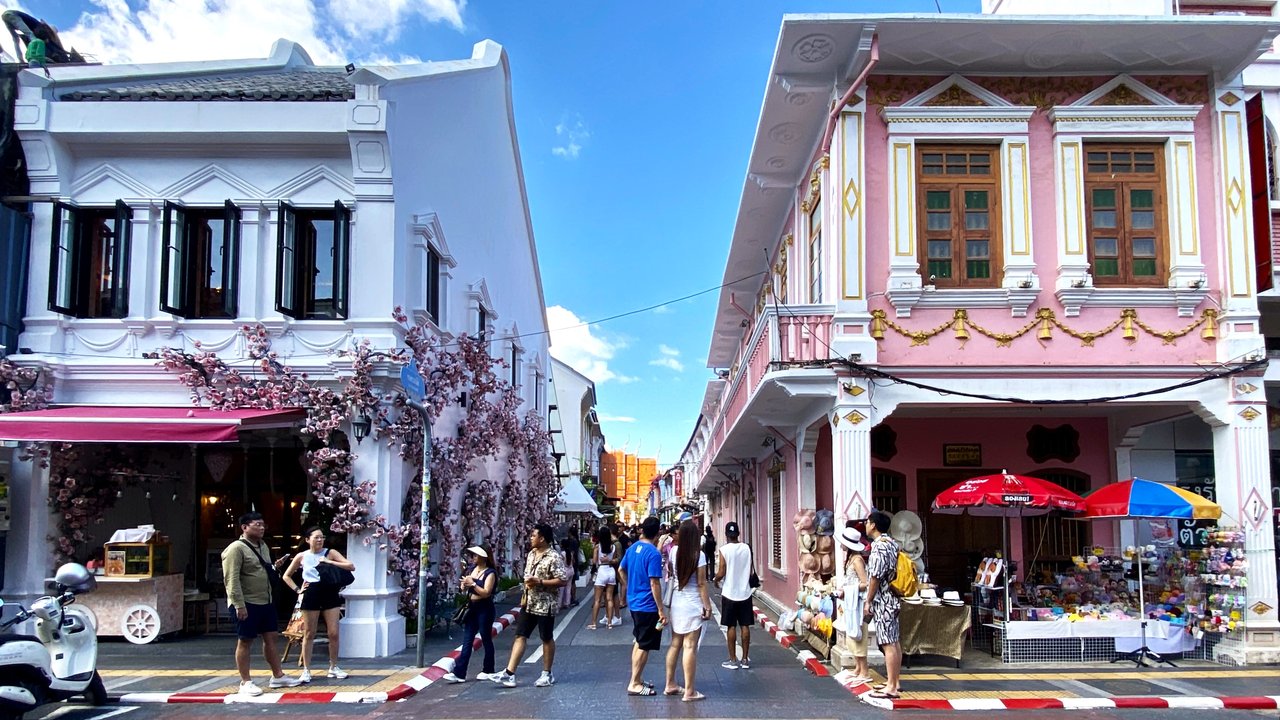
The area gives you two moods — quiet shophouse-gazing and café-hopping on weekdays, then Thalang Road as the busiest walking street of the week on Sunday evening.
The appeal of Old Phuket Town is that it is compact and rewarding to walk — not so big that it tires you out, but with plenty to look at. On a weekday morning the streets are still quiet and the light is soft, so you can photograph the Sino-Portuguese facades and Soi Romanee without the crowds, duck into a heritage café for coffee, then hunt down the murals. Come Sunday evening, Thalang Road closes for the Lard Yai Walking Street, people pour out to eat and listen to music. The area suits travellers who want a break from the beach and to explore a town on foot, without a complicated plan.
If you have done a few days of beaches and islands and want a change, the old town is a tidy half-day. It is easy to walk, hard to get lost in, and shows you a side of Phuket that isn't the sea. For more of the island's sights, read Phuket's top attractions.
Soi Romanee, the pastel facades on Thalang and the murals are a treat for photographers, with heritage cafés to break the walk along the way. Come a little early for soft light and fewer people. See the picks in Old Phuket Town cafés.
The old town is the best place to eat Phuket's own dishes — Hokkien mee, lobak, o-aew — at shops that have been open for decades, plus a whole street of food on Sunday evening. See what to order in the Phuket food guide.
If you like the story behind a place, the area tells the tin-mining era and the Baba-Peranakan culture well, with ang mo lao mansions and small museums set inside old buildings you can go into. Reading the signs as you walk makes it far more interesting.
The spine of the area is Thalang Road, with the prettiest run of Sino-Portuguese shophouses — pastel facades and a continuous covered ngor kah kee (five-foot way) along the front, lined with cafés, souvenir shops and local-food places. The surrounding streets — Dibuk, Krabi and Phang Nga — carry on with more old buildings and ang mo lao mansions to wander past, and the whole quarter is easy to cover on foot. On weekdays it is an ordinary street, quiet for photos; on Sunday evening Thalang closes for the walking street. Free, open any time.
A short lane branching off Thalang, but the most-photographed spot in Old Phuket Town. The shophouses on both sides are painted in bright pastels — pink, blue, yellow, green — making the postcard-and-social-feed backdrop you have probably already seen. It was once one of the town's liveliest lanes; today it is a quiet street with a scattering of cafés and small guesthouses. Free, open any time; early morning has the softest light and fewest people for photos.
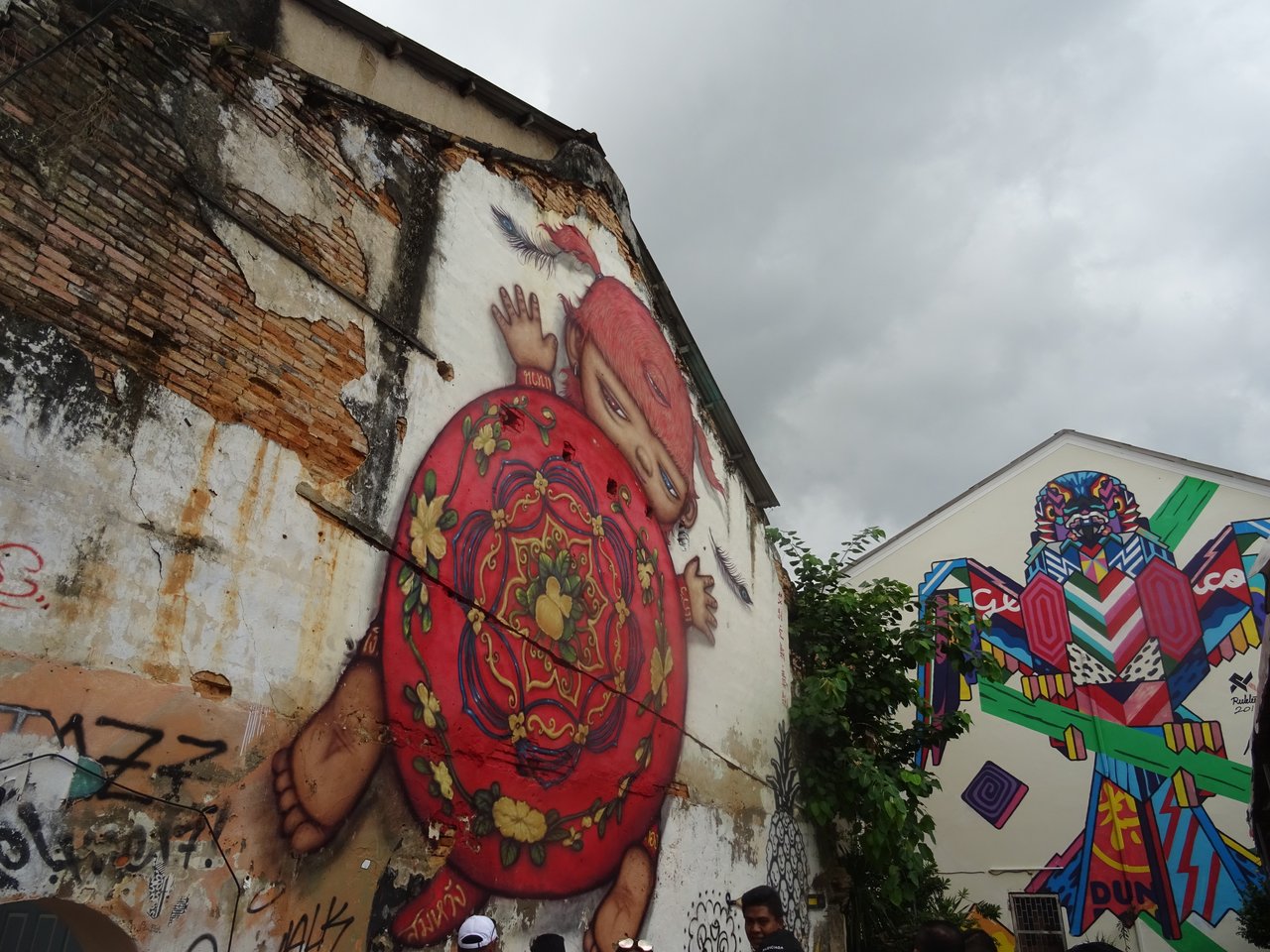
Scattered across the quarter on building walls and down small lanes, especially around Thalang, Phang Nga and Yaowarat. The paintings depict Phuket life — vendors, children with birds, fishermen and the Baba culture — and some are part of art projects made to revive the old town. Finding them as you wander is a bit like a treasure hunt. Free; keep a rough map of them in your head and loop the quarter, and you'll notice many sit right next to the well-known cafés.
When Phuket was rich from tin mining, the mining families built grand Sino-Portuguese mansions known as ang mo lao (literally "Westerner's building"). Several still stand around the old town, and some are open as museums or restaurants you can step inside — old houses displaying the belongings and stories of the Baba-Peranakan community. Entry to the small museums runs about ฿100-200 depending on the house. If you are interested in Phuket's history, going into one helps make sense of the buildings across the whole quarter. Hours and prices change, so check before you go.
The old town is where you eat the full range of Phuket's own food — from the long-running shops by day to the Lard Yai Walking Street every Sunday evening.
Every Sunday evening Thalang Road closes for the Lard Yai Walking Street, starting around 16:00 and busiest from about 17:00 to 22:00. The whole street fills with Phuket local food, snacks, regional sweets, craft stalls and live street music — the liveliest the area gets all week, and a chance to admire the Sino-Portuguese shophouses while you graze. Free; it gets crowded, especially in high season, so come early evening for an easier walk. Times can shift with the season and holidays, so check before you go.
The food at the heart of the area is Phuket's Hokkien-influenced local cooking — Hokkien mee (noodles stir-fried in a thick gravy), lobak (herbed deep-fried pork and offal with a dipping sauce), mee sua, o-aew (a cold iced dessert) and roti with curry. Many are long-running shops on Thalang and Yaowarat, with mains around ฿50-120. The quarter is also full of cafés inside the Sino-Portuguese shophouses, serving coffee and cake at about ฿80-180. See the picks in Old Phuket Town cafés and the dishes in the full Phuket food guide.
A little of the back-story makes walking the old town far more rewarding.
From the late 19th to the early 20th century, Phuket grew rich on tin mining, which drew large numbers of Hokkien Chinese labourers and traders to work and settle. Many married locally, and out of that came the Baba-Peranakan culture (men are Baba, women Nyonya) — a blend of Chinese, Thai and Malay food, dress, language and homes, the same cultural family as the Peranakans of Penang and Malacca.
The buildings you see in the old town are Sino-Portuguese: a Hokkien Chinese shophouse structure dressed in European/Portuguese decorative detail brought in via Penang and Malacca. The easy thing to spot is the ngor kah kee (五脚基, the five-foot way) — the covered walkway across the shopfronts that shelters you from sun and rain. The shophouses are deep and narrow, with a light-well in the middle, and the grand mansions of the mining families are the ang mo lao ("Westerner's building"). Once you know what to look for, watch the plasterwork, shutters and floor tiles as you walk and you'll start seeing detail you would have missed.
Phuket has no metro, subway or train — getting around is all taxi, Grab, blue songthaew, rented scooter or rented car. Once you reach the old town, walking is by far the best way, because every street sits within a few hundred metres of the next.
09:00 — Start on Thalang Road, walking the Sino-Portuguese shophouses in the soft morning light with few people about.
09:45 — Duck into Soi Romanee and photograph the pastel shophouses, the area's icon.
10:15 — Hunt for the street-art murals along Phang Nga and Yaowarat.
11:00 — Break at a heritage café for coffee and cake.
11:45 — Lunch on Phuket local food, like Hokkien mee or lobak, at a long-running shop.
Follow the half-day route above through the morning, then continue:
13:30 — Step inside an ang mo lao mansion or an old-town museum for the Baba-Peranakan story.
15:00 — Wander Dibuk and Krabi roads for more old buildings and souvenir shops.
16:00 — Another café break, or head back to rest (if it's a Sunday).
17:00 — (Sundays only) Return for the Lard Yai Walking Street on Thalang Road — local food and street music.
20:00 — Finish with a Phuket local-food dinner in the quarter.
The old town pairs in one trip with the rest of the island — see the full list at Phuket's top attractions and plan the whole trip with the complete Phuket city guide. For the food, see Old Phuket Town cafés and the Phuket food guide.
The old town is in Phuket Town, not on the coast — choose your base by whether the trip is about the town or the sea.
If your trip is about cafés, local food and the old-town atmosphere, staying in Phuket Town near the old quarter is convenient — you step straight out to eat and explore. There are guesthouses inside the Sino-Portuguese shophouses and small hotels styled to match. But if the trip is mainly about the sea, basing yourself on a beach like Patong, Kata or Karon and giving the old town a half-day is the better call. Because Phuket has no mass transit, staying near whatever you'll do most saves a lot of travel time.