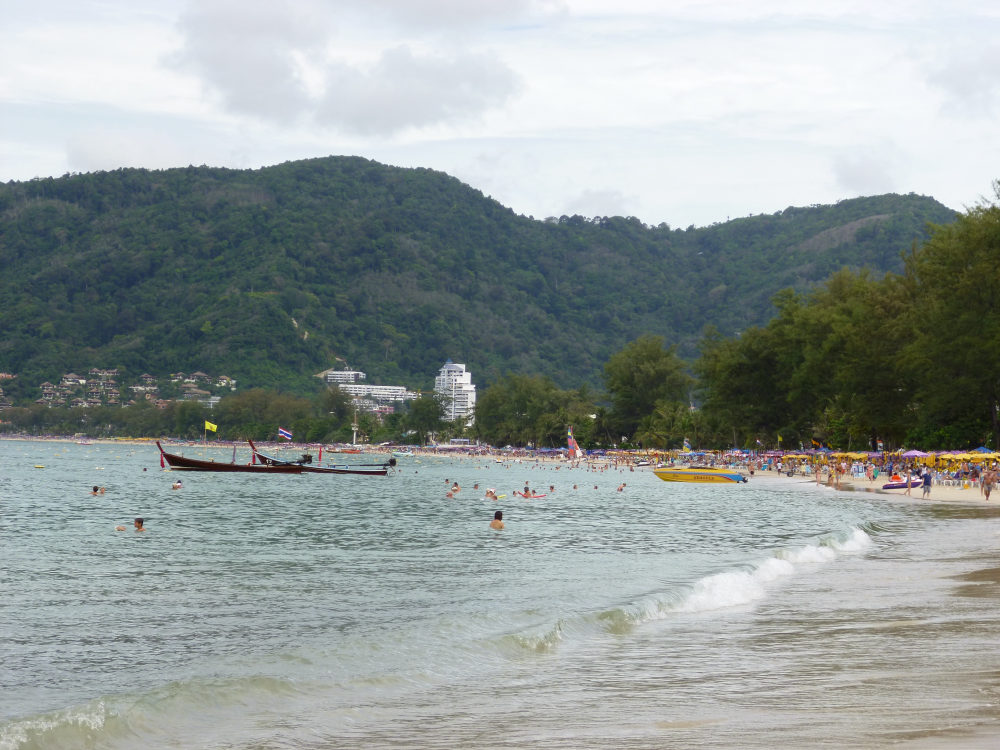
A district of century-old shophouses whose ground floors became cafés — from traditional Hokkien kopi over condensed milk in old kopitiams to specialty coffee roasted in high-ceilinged heritage buildings. Café-hop all day on Thalang Road, Dibuk Road and Soi Rommanee.
Picture yourself walking a narrow street lined with pastel shophouses — wooden folding doors, arched stucco windows, red lanterns hanging out front. You push open a door to high ceilings, old tiles and the smell of roasting coffee. This is Phuket Old Town, the part of an island most people think of for beaches and sand. But the truth is that the cultural heart of the island is in the Sino-Portuguese shophouses of central Phuket Town — and today a great many of those buildings are cafés.
Phuket's coffee story begins with the Hokkien Chinese who came to mine tin more than a century ago and brought a kopi coffee culture with them — beans roasted dark with sugar, brewed through a cloth sock and poured over sweet condensed milk in the glass, the same strong, fragrant, sweet cup they drink in Penang and Singapore. They came with the kopitiam too, the coffee-and-breakfast shop that served the neighbourhood. That culture is still here, and it's the root of the whole café scene.
To be straight with you, the specialty café scene in Phuket Old Town has grown a lot in the past decade — new pour-over cafés keep opening in restored old buildings. But the real charm of the area is that the old coffee and the new sit side by side. A few steps from a century-old kopitiam is a specialty café roasting its own beans. The thing to do is not to rush: walk Thalang Road and Soi Rommanee, and try both in a single day.
In Phuket Old Town you aren't only paying for the coffee — you're sitting inside a century-old building that's part of the island's heritage.
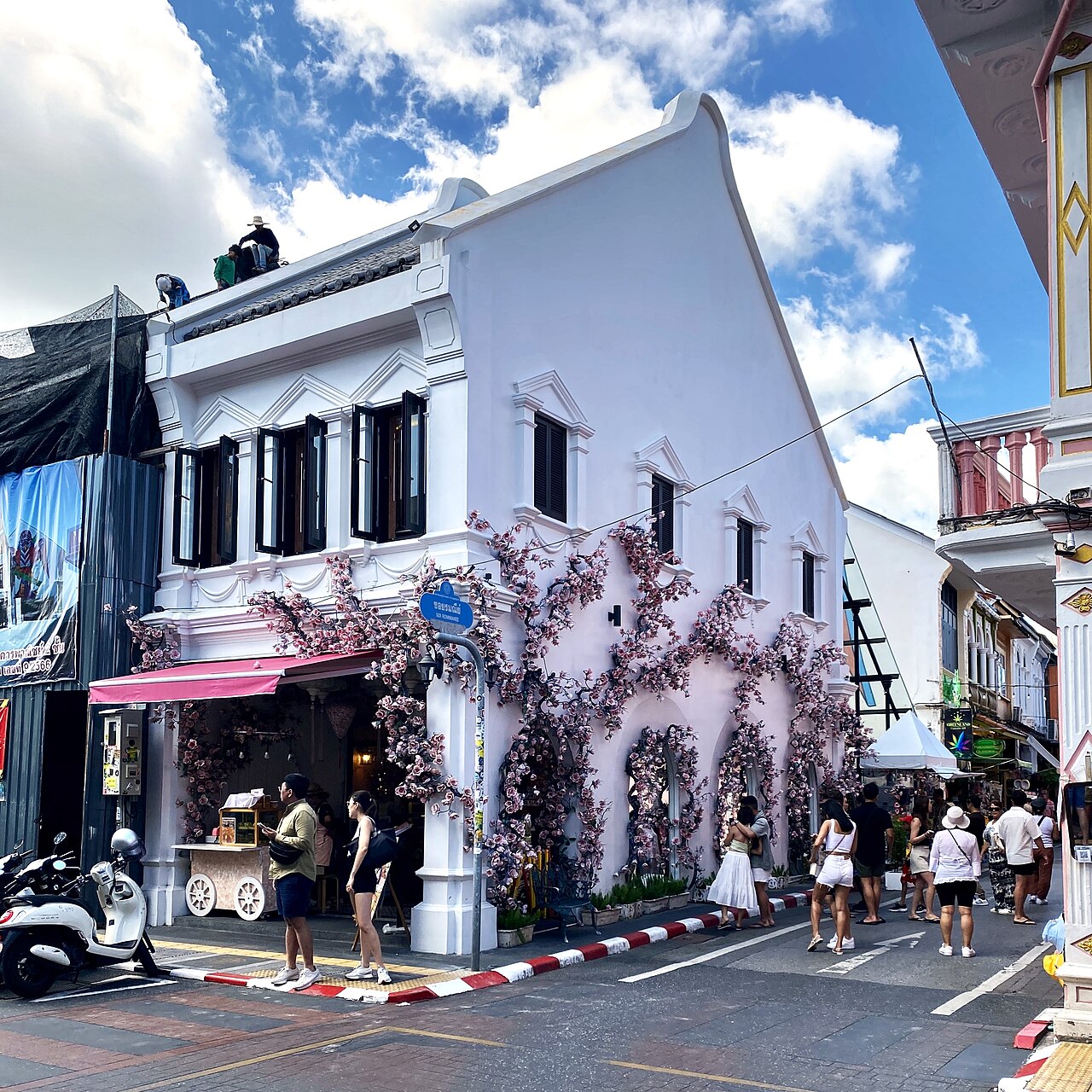
Thalang Road and its surrounding lanes in Phuket Old Town — Sino-Portuguese shophouses whose ground floors have become cafés, restaurants and galleries.
Phuket Old Town is a district of Sino-Portuguese architecture built during the tin-mining boom — narrow, deep shophouses with high ceilings, folding doors and stucco detailing that blends European and Chinese. The main streets to walk are Thalang Road, which has the most cafés and gift shops; Dibuk Road, quieter, with lovely places tucked away; and Soi Rommanee, the candy-coloured lane that's the most photogenic spot in the quarter. Many of these buildings have been restored, their ground floors turned into cafés.
The charm of a Phuket Old Town café is the way the drink suits the building — a hot Hokkien kopi in a kopitiam that's been open for decades, a light-roast specialty coffee in a café decorated with antiques, a scoop of old-style ice cream in a local flavour. Sitting over coffee in a high-ceilinged shophouse, light filtering through the louvred windows, watching people pass on the old street, sums up Phuket Old Town in a single cup.
Get the types straight first, then decide whether today is about an old-style kopi, a self-roasted specialty coffee, or a dessert in a century-old building.
This is the coffee at the root of Phuket Old Town — kopi, the style Hokkien Chinese brought more than a century ago. The beans are roasted dark with sugar and sometimes butter or margarine, brewed by straining through a cloth sock, and poured over sweet condensed milk in the bottom of the glass. The result is strong, fragrant and creamy-sweet, like the kopi of Penang and Singapore. You order it at traditional kopitiams that are part coffee shop, part breakfast spot. Drinking it hot with patongko (fried dough) or kaya toast in the morning is how Phuket locals have always taken it.
The specialty scene in Phuket Old Town has grown a lot in the past decade. Many cafés in the old buildings use light-to-medium-roast arabica, some roasting it themselves on site, serving espresso, pour-over and milk drinks that bring out the bean's character. Plenty use Thai beans from the northern highlands, whose quality has risen sharply. It's a completely different style from old-school kopi — clean, with the fruit and acidity of the bean at the front, brewed with care. Good for anyone who wants a quality cup in a beautiful high-ceilinged building.
The real charm of the area is the buildings — narrow, deep Sino-Portuguese shophouses with high ceilings, folding doors and old tiles, restored and opened as cafés. Some keep all the original furniture and fittings, so it feels like sitting in an old Baba family home; others blend modern design into the old shell. The light through the louvred windows and the courtyards in the middle of each building make them photogenic and full of atmosphere. This is the main reason people choose to sit at a café here over anywhere else.
Beyond coffee, Phuket Old Town is known for dessert — especially the homemade ice cream at Torry's Ice Cream, a small shop in the old quarter making local flavours like coconut, Thai tea and seasonal fruit, dense and just sweet enough, the thing to grab to cool off mid-walk. Many cafés also serve Baba-style and local sweets alongside the coffee — khanom mo kaeng (baked mung-bean custard), o-aew (an iced jelly dessert) and homemade cakes. An afternoon sweet with a coffee, in the island's heat, is the way to do it.
Several cafés in Phuket Old Town don't just sell coffee — they double as a gallery, a bookshop or a craft space. Bookhemian, for instance, is a specialty café that's also a bookshop and a place that shows art. That mix suits an old quarter where a lot of artists and creative people have set up shop. Sipping a coffee while you look at art or open a book is a slow way to spend an afternoon, different from an ordinary café — and another reason the area appeals to anyone who likes an arty atmosphere.
If you want a cold drink on the cheap while you wander, the street stalls in the old quarter do Thai iced tea, oliang (iced black coffee), iced kopi, fresh fruit juice and bubble tea for far less than a café. On Sunday evening, Thalang Road turns into the Lard Yai walking street, with food and drink stalls down the whole road — the liveliest moment of the week. Graze your way along for old-style kopi, sweets and local snacks. Good if you want the feel of the old quarter without sitting down at a café.
Three main streets and one lane every coffee lover should know — all within walking distance in Phuket Old Town.
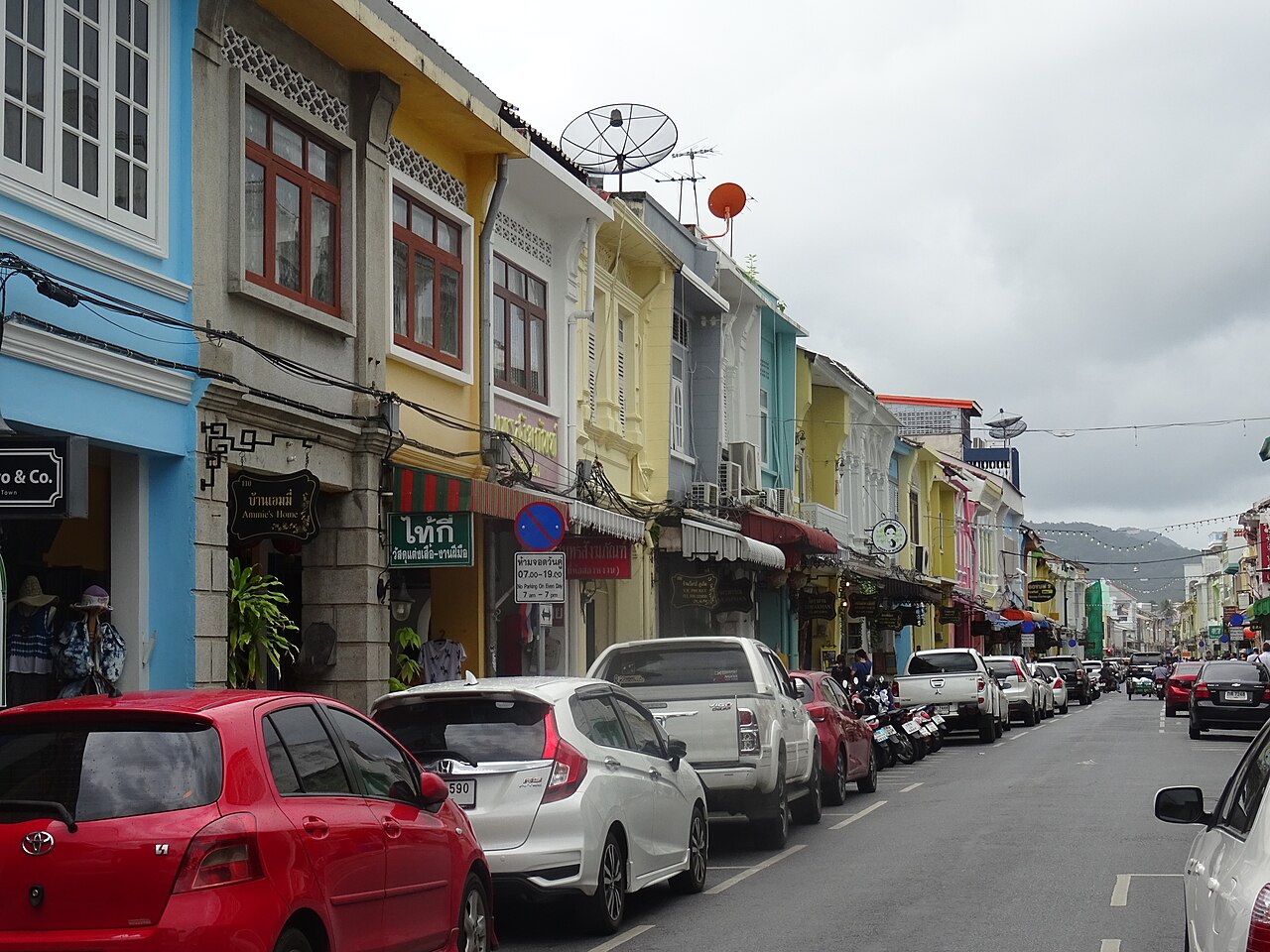
The main street of Phuket Old Town, lined with brightly coloured Sino-Portuguese shophouses whose ground floors are cafés, restaurants, gift shops and old kopitiams. This street has the most cafés to choose from and is the most fun to walk — old-style kopi and modern specialty sit on the same road. On Sunday evening it becomes the Lard Yai walking street, food stalls down the whole road. This is the street to start with.
A parallel street, quieter and more relaxed than Thalang Road, with beautifully restored Sino-Portuguese buildings and several lovely cafés and restaurants tucked away. There are fewer people, which makes it ideal for a calm coffee after the busier Thalang Road. Many of the places here are specialty cafés or local restaurants in old buildings. It's a few minutes' walk from Thalang Road and gives you the old-town mood without fighting for a seat.
A short lane off Thalang Road, known as the most photogenic spot in Phuket Old Town. The shophouses on both sides are painted in bright pastels — pink, yellow, blue — with red lanterns hanging and small cafés tucked between. It once had a colourful history; today it's a lane for strolling, photos and a café stop. The places here are small but full of character, an easy stop for a coffee while you photograph the pretty buildings. Don't skip it if you're walking the old quarter.
The streets around the edge of the old quarter, like Phang Nga and Yaowarat Roads, are home to old kopitiams and local restaurants that Phuket people actually use. The mood is more local than tourist café, the prices are lower, and you get Hokkien kopi and a traditional breakfast. Good if you want to start the morning with a hot kopi and patongko like a local before heading into the main café streets. It's the other side of the old quarter, completely different from the pretty specialty cafés.
These places have a real name in Phuket Old Town — some for old-style kopi, some for specialty coffee and the building itself.
An old kopitiam on Thalang Road, the most-talked-about spot for traditional Hokkien kopi and Phuket local food. It sits in a century-old Sino-Portuguese building decorated with antiques, old photographs and wooden tables, with a mood that feels like stepping back in time. Order a hot or iced kopi over condensed milk alongside Hokkien mee, lo bak or another local dish. Drinking old-style coffee in a place like this gives you the roots of Phuket's coffee culture in a way a specialty café can't. It's popular, so check the hours and allow for a queue on weekends and holidays.
A specialty coffee café that's also a bookshop and an art space, in an old building on Thalang Road. The mood is clean and understated, white walls, with books and art to look at while you drink. The thing to order is a pour-over or a milk coffee from quality beans. It suits anyone who likes to settle in for a while, read or work in an arty setting. It's become one of the old quarter's landmarks for coffee lovers and creative types. Come in the afternoon when the light has softened for the most relaxed atmosphere.
A café for people who are serious about coffee in particular. Campus roasts its own beans and puts the quality of the coffee first, serving espresso, pour-over and special drinks from beans of several origins. The room is simple, focused on the coffee rather than the décor. It suits you if you want a good specialty coffee brewed with care, and a chat with the barista about the beans. It's a completely different style from old-school kopi, and one of the spots Phuket coffee people recommend to each other. Check the hours before you go, since it's small and closed some days.
A specialty coffee café in the old quarter, set on a quiet lane with a relaxed, easy mood — good for escaping the bustle of the main street. It serves pour-over and milk coffees from quality beans, along with some dessert and bakery. It's a place locals and coffee people drop into to work or take a break during the day. The fit-out is calm and simple, no fuss, focused on comfort and the coffee. Good if you want a quiet specialty café where you can sit for a while in Phuket Old Town. Check the hours and days off before you go.
A café and restaurant in a beautifully restored century-old Sino-Portuguese building on Thalang Road. The draw is the building and the décor — antique furniture, collectibles and a shaded courtyard in the middle, like sitting in an old Phuket Baba family home. It serves coffee, tea and food in a setting built around the architectural heritage. It suits you if you want a café where you get the building and the atmosphere as much as the coffee, rather than coming for specialty coffee alone. It's one of the prettiest buildings in the quarter that you can go inside and sit in. Check the hours before you go.
A small homemade-ice-cream shop in Phuket Old Town where people stop to cool off mid-walk. It makes its own ice cream in many flavours, including local ones like coconut and Thai tea, dense and just sweet enough. The shop sits in a cute old building, good for a stop after photographing the shophouses or over a coffee. It's a dessert that suits the island's heat and is well known among people exploring the old quarter. The price per scoop is reasonable; order it with a coffee or on its own. Check the hours before you go, since it's small.
The Sino-Portuguese shophouses of Phuket Old Town — the century-old shells that have become home to the cafés and kopitiams across the quarter.
What you drink and eat in a Phuket Old Town café that's hard to find elsewhere.
A drink that sums up the roots of Phuket Old Town in a single glass — beans roasted dark with sugar and sometimes butter, brewed by straining through a cloth sock, poured over sweet condensed milk waiting in the bottom of the glass. Stir it together before you sip: it's strong, fragrant and creamy-sweet, like the kopi of Penang and Singapore. Ordered hot with patongko or kaya toast at a kopitiam in the morning, it's the way Phuket's Hokkien-Chinese have drunk coffee for a hundred years. Order it iced on a hot day.
The signature of the specialty cafés in Phuket Old Town — a pour-over from arabica beans, many of them Thai beans from the northern highlands, whose quality has risen sharply. Roasted light to medium to bring out the fruit and the sweet-tart acidity of the bean, brewed by hand a cup at a time. Served hot or iced, it's clean, bright and more layered than old-style kopi. If you get to sit at a specialty café in a pretty old building, this is the cup to order to set against a kopi.
The old quarter's go-to dessert to beat the heat. The homemade ice cream at Torry's Ice Cream comes in many flavours, including local ones like coconut, Thai tea and seasonal fruit, dense and just sweet enough rather than over-sugared. It's good to grab while you photograph the old buildings on a hot day. Order it as a scoop on its own or with a coffee. It's a simple dessert that says Phuket through its coconut and Thai-tea flavours, and a popular stop in the quarter.
Phuket has local sweets that are hard to find elsewhere, above all o-aew — a clear iced jelly made from a local seed, served over shaved ice with syrup and red beans, a cooling dessert that's a signature of the island. There are also Baba-style and other local sweets that cafés and stalls in the old quarter serve alongside coffee. A cold o-aew after walking in the sun, or a local sweet with a hot kopi in the afternoon, is how you eat the real Phuket — something an ordinary café can't give you.
The first thing to know about getting around is that Phuket has no BTS/MRT metro or train. Getting to the Old Town means a taxi, Grab (available but limited, and hard to get at times), a rented scooter, or a songthaew, which run from a hub in central Phuket Town. From Patong, Karon or Kata, allow about 40–60 minutes' drive, and always agree the taxi or tuk-tuk fare before you get in, because Phuket tuk-tuks are pricey. The upside is that once you're in the Old Town, the whole café area is within walking distance — see our Phuket travel guide for more on getting around.
The thing to know is that the most genuine isn't the most expensive — an old kopitiam gives you a deeper, far cheaper slice of Phuket coffee than a specialty café. Don't be shy about walking into an old local place and ordering a hot kopi with patongko. The specialty cafés are good for sitting a while, for photos and for a quality pour-over. Treat them as two different experiences and try both in a day — you can walk from a century-old kopitiam to a self-roasting café in a few minutes.
On timing, most cafés open from late morning to early evening (roughly 9am–6pm), and some close early or have a weekly day off, so check the hours of any café you're set on. The most enjoyable time to wander is morning to afternoon, when it's not too hot and the cafés aren't packed. Come on a Sunday evening and you'll hit the Lard Yai walking street on Thalang Road — lively, but the most crowded — read more on the markets in our Phuket night markets guide.
Phuket Old Town — the area to stay near if you want to café-hop and eat all day without a long drive.
Staying in Phuket Town or near the Old Town is the easiest way to reach the cafés, the kopitiams and the eating on foot, without relying on a car.