West Lake in full without the sprint, a whole day for Lingyin Temple and Longjing tea, one big day trip you pick yourself, and a fourth day spent slowly along the canals and old streets — this is Hangzhou done properly.
Two or three days in Hangzhou covers the highlights well — but every short plan has the same problem: you have to cut the day trip. Both Wuzhen water town and Suzhou need a full day on their own. Try to wedge either into a short city trip and you end up rushing the thing you were most curious about.
Four days solves that directly. Day one is West Lake, the heart of the city, walked at an unhurried pace. Day two gives ancient Lingyin Temple and the Longjing tea village a full day to themselves. Day three is your own day trip out of the city, chosen to suit you. And day four is something a short trip never has time for: a slow morning on the Grand Canal or in Xixi Wetland, and an afternoon in the old streets that most visitors never reach.
The Chinese have called Hangzhou "paradise on earth" since the Song dynasty, and the city sits at the southern end of the Grand Canal — the longest artificial waterway ever built. Four days is exactly enough to take in the lake, the hills, a temple, a tea plantation and a canal without ever feeling like you're rushing.
One of the most beautiful lakes in China, a causeway walk beneath the willows, and Leifeng Pagoda for the best sunset over the water — this is the day Hangzhou introduces itself.
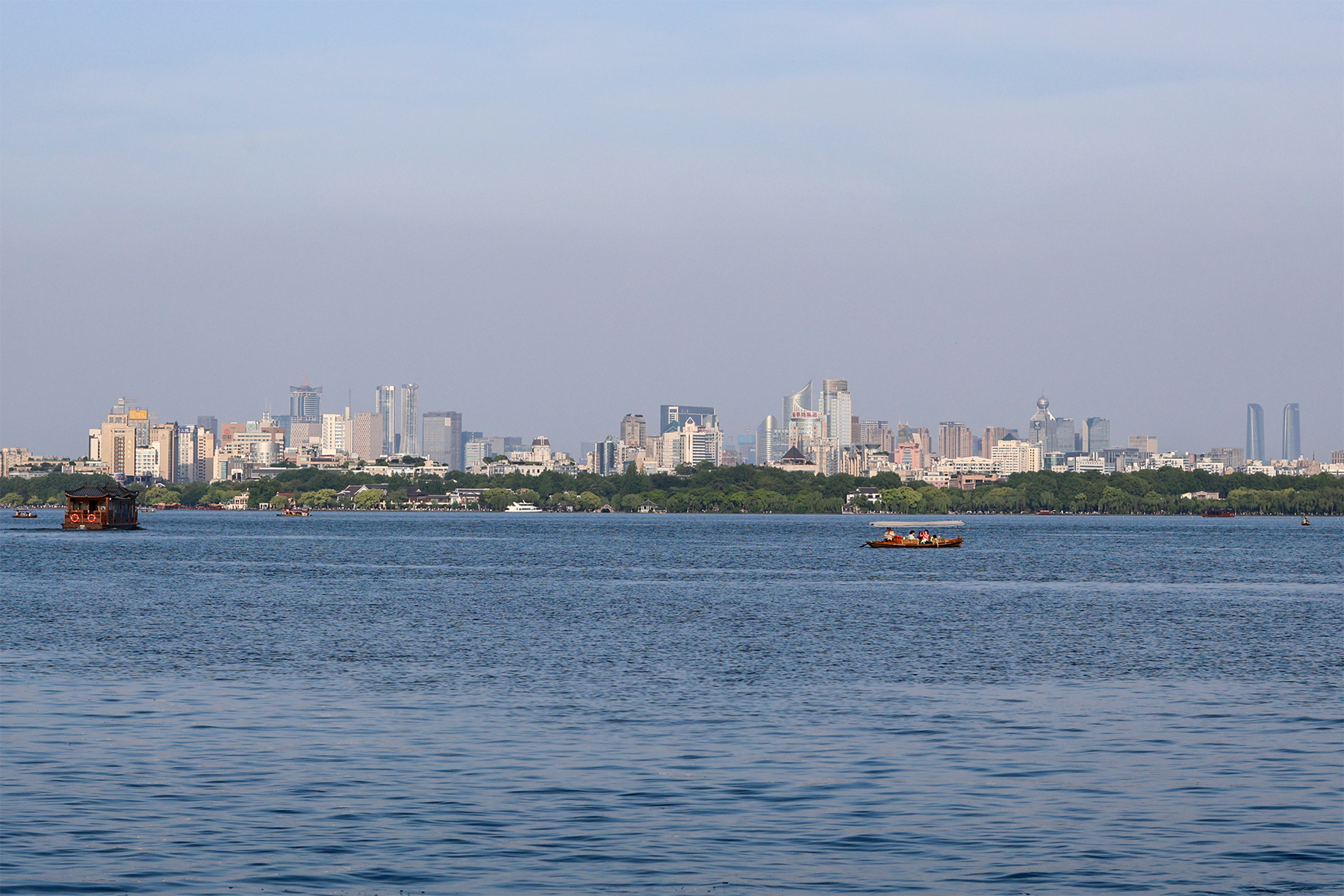
Start at the Broken Bridge on the northeast corner of West Lake around 08:00–08:30, before the big tour groups arrive. This is where the Legend of the White Snake — a story every Chinese visitor knows — begins. From here, walk the Bai Causeway across the northern edge of the lake; willows alternate with peach trees, and the view opens out to the hills ringing the water.
The causeway leads to Gushan (Solitary Hill Island), where the free Zhejiang Provincial Museum is worth a look. If you have time, take a boat out to Three Pools Mirroring the Moon — the small stone pagodas standing in the water that appear on the ¥1 banknote. Three unhurried hours covers all of this. See the full West Lake guide.
After lunch, walk or hire a bike along the Su Causeway — a 2.8 km dyke built by the poet Su Dongpo 900 years ago, running straight across the middle of the lake from north to south. Six arched bridges along the way make natural stopping points; it is one of the loveliest stretches of West Lake.
At the southern end stands Leifeng Pagoda, a modern tower built over the base of the original from 975 AD, with a lift to the upper floors. From the top you see the whole lake in a single frame, and it is the best vantage point for sunset over the water. Aim to arrive about an hour before the sun goes down.
Come down from the pagoda and head back to the east shore between 18:00 and 20:00. West Lake after dark feels like a different place: lights on Leifeng Pagoda and along the causeways glow across the still water. Walk the Hubin waterfront on the east side, which doubles as a lakeside promenade and a shopping street, and find your first dinner in the city here. Order Dongpo pork (东坡肉), Hangzhou's signature braised pork belly.
A 1,700-year-old Buddhist temple in a wooded valley, hundreds of carved Buddhas on a limestone peak, and the village where China's finest green tea grows — the day Hangzhou gets deeper than the lake.
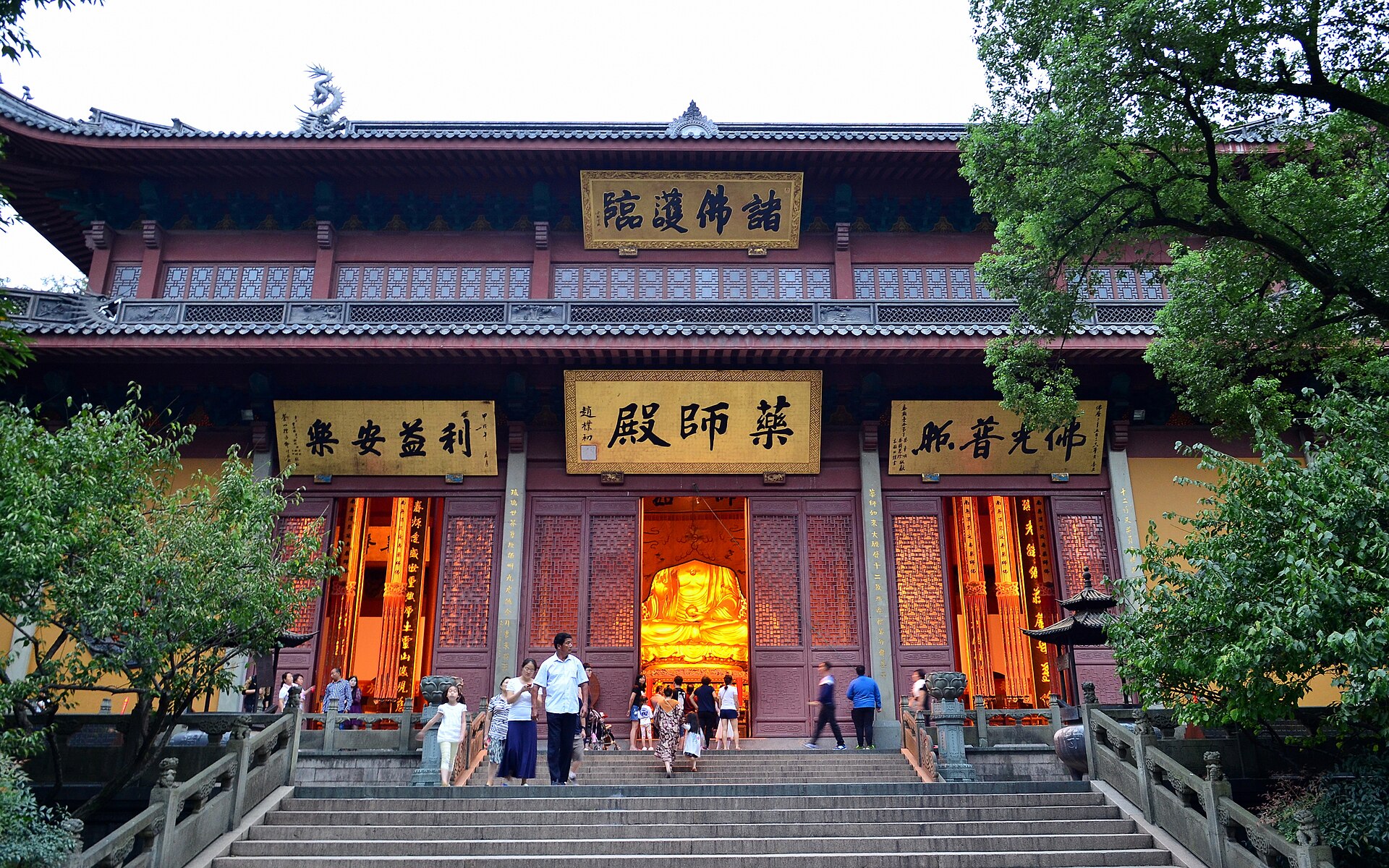
Head out early for Lingyin Temple, one of the oldest and most important Buddhist temples in China, founded in 328 AD and tucked into a valley behind the hills west of West Lake. Tall trees and drifting incense set the mood; a series of halls climbs the hillside one above the next. Allow about 90 minutes here.
Before you reach the temple you pass Feilai Feng ("the peak that flew here") — a limestone outcrop carved with more than 300 Buddhist figures dating from the 10th to 14th centuries, hidden in caves and along the rock face. The most famous is the round-bellied, broadly grinning Laughing Buddha. The riverside paths through the grottoes are a pleasure to wander.
From Lingyin, a short bus ride or DiDi gets you to Longjing village — the home of Longjing (Dragon Well) green tea, which the Chinese rate among the best teas in the country. Whole hillsides are terraced with rows of tea bushes; walking up the paths through the plantation, the air is fresh and the views are wide, especially in spring when the new leaves are being picked.
Stop at one of the village teahouses, sit with a freshly brewed cup of Longjing from leaves grown on the very slope you're looking at, and have some local snacks. It's a relaxed afternoon that balances nicely against the solemnity of the temple earlier in the day.
Return to the city in the evening. Tonight calls for proper Zhejiang cooking: try West Lake vinegar fish (西湖醋鱼), the city's signature dish made with lake fish, or Longjing shrimp (龙井虾仁), river shrimp stir-fried with fresh green tea leaves. Mid-range restaurants in the West Lake or Hefang Street area run ¥100–250 per person.
This is the day that separates four days from a short trip. Pick the day trip that fits you, give it your full energy, and don't try to combine it with anything else.
Leave your hotel before 08:00 to catch a coach from Jiubao station, aiming to arrive around midday. Wuzhen has two districts: Dongzha (east), older and smaller, walkable in 2–3 hours, and Xizha (west), larger and more extensively restored, with accommodation and shops inside the water town.
With a single day, choose Xizha and stay into the evening — because Xizha after dark, with red lanterns reflecting on the canals, is exactly what people come to Wuzhen for. Take a boat through the canals, wander the stone lanes, then catch the last coach back to Hangzhou. Always check the return-bus times before you set out.
Head out early and take the metro to Hangzhou East, then a G or D train to Suzhou in about 1.5 hours. In Suzhou, visit the classical gardens that form a UNESCO World Heritage site — above all the Humble Administrator's Garden (拙政园), the largest and finest — then stroll Pingjiang Road (平江路), a living canal-side street through the old town.
Suzhou and Hangzhou are always mentioned in the same breath: "In heaven there is paradise; on earth, Suzhou and Hangzhou." Pairing the two on one trip makes natural sense. Take an evening train back to Hangzhou. See the day trips from Hangzhou guide for other options (Wuzhen, Shanghai, Huangshan).
A final day with no fixed schedule — the longest canal in the world, a tranquil wetland in the middle of the city, and old streets for last-minute shopping.
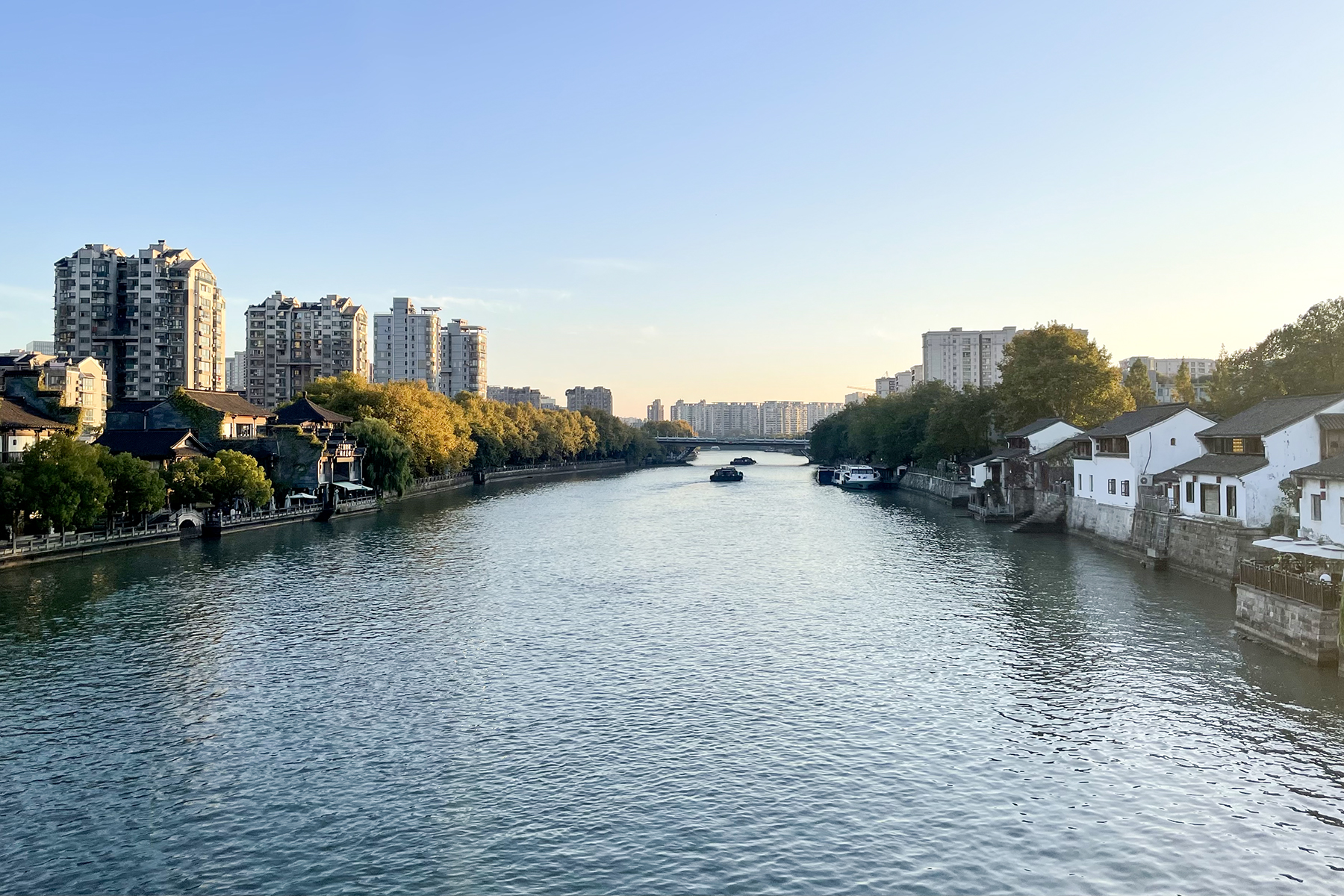
Choose your final morning to suit you. The Beijing–Hangzhou Grand Canal is the southern terminus of the longest artificial waterway ever dug (nearly 1,800 km, a World Heritage site). Its Hangzhou end centres on Gongchen Bridge (拱宸桥), with small canal-side museums, old houses and a very peaceful riverside walk — or ride a water bus along the canal to see the city from the water.
Alternatively, head west to Xixi Wetland — a rare urban wetland of small channels, islets and waterbirds. A quiet electric boat threading between the reed beds is a gentle counterpoint to the density of the city.
Give the final afternoon to Hefang Street — a pedestrian street that preserves Qing-dynasty shopfront architecture at the foot of Wushan Hill, and the oldest commercial quarter in Hangzhou. Longjing tea sellers, the 140-year-old Huqingyu Tang (胡庆余堂) traditional Chinese medicine hall, fan shops, scissor makers and street snacks line both sides.
Walk on into the connecting Qinghefang street — older in feel and busier with street-food stalls. Try local snacks as you go. It's an easy area to wander without any pressure to rush. See the Hangzhou street food guide.
Before heading to the airport or station, if you still need to shop, the Wulin Square (武林广场) downtown area has the big malls, or pick up more gifts on Hefang Street. For the final dinner, go for proper Hangzhou cooking — beyond Dongpo pork and West Lake fish, try beggar's chicken (叫化鸡), a whole chicken wrapped in lotus leaf and baked in clay, a local legend. The full Hangzhou food guide has more.
The Hubin (湖滨) area on the east shore of West Lake works best for this plan — you can walk to the lake and the shopping streets, and it sits centrally for all four days. Wulin Square, the downtown core with metro and malls, is another strong base. On day three, if you choose Suzhou, the metro to Hangzhou East is straightforward. See accommodation options in the Hangzhou city guide.
Hangzhou has one of China's largest metro networks (12+ lines) covering almost everything, at ¥2–9 per journey, paid by scanning a QR code in Alipay or WeChat Pay. The exception: Lingyin Temple and the tea fields have no metro — take bus 7/Y1/Y2/27 or a DiDi. See the China high-speed rail guide for the Suzhou day trip.
Link a Visa or Mastercard to Alipay via its international mode before leaving home. Most shops accept Alipay or WeChat Pay only — some don't take cash at all. Download and test a VPN at home too (Google Maps, Instagram and WhatsApp are blocked in China), and remember to reserve your Lingyin Temple slot in advance in the mini-program. See the Alipay setup guide.
| Item | Budget | Mid-range | Comfortable |
|---|---|---|---|
| Hotel · 3 nights | ¥270–540 (~฿1,350–2,700) |
¥750–1,500 (~฿3,750–7,500) |
¥1,800–4,500+ (~฿9,000–22,500+) |
| Food · 4 days | ¥280–440 (~฿1,400–2,200) |
¥560–960 (~฿2,800–4,800) |
¥1,200–2,400 (~฿6,000–12,000) |
| Metro + bus · 4 days | ¥50–90 (~฿250–450) |
¥80–140 (~฿400–700) |
¥150–280 (~฿750–1,400) |
| Entry tickets · days 1–2 | ¥70–110 (pagoda + temple) |
¥150–250 (+ West Lake boat) |
¥300–450 (all sites) |
| Day 3 day trip | ¥120–200 (Suzhou return) |
¥230–320 (Wuzhen Xizha) |
¥400+ (Wuzhen combined + boat) |
| Day 4 · canal / Xixi | ¥3 (water bus) |
¥80–140 (Xixi + boat) |
¥180+ (Xixi + activities) |
| Total per person (approx.) | ¥793–1,380 (~฿3,965–6,900) |
¥1,850–3,310 (~฿9,250–16,550) |
¥4,030–7,810+ (~฿20,150–39,050+) |
Exchange rate reference: ¥1 ≈ ฿5. Estimates may vary by season and personal spending. International flights to Hangzhou are not included in the table.