Home Chongqing China Chongqing Hotels About
Home  ›  Asia  ›  China  ›  Chongqing  ›  Chongqing or Chengdu
🇨🇳 Sichuan Basin Travel Guide · 2026

Chongqing or Chengdu
Which to Visit — or Both?

A vertical 8D mountain city and a flat, laid-back panda capital — two Sichuan-basin neighbours just about an hour apart by train.

Start here

The good news —you may not have to choose

Picture this. You're planning a trip through western China's Sichuan basin and these two names keep coming up side by side — Chongqing, the vertical "8D" mountain city built across hills where two great rivers meet, where monorails run through buildings, night lights look like a sci-fi film, and the original beef-tallow hotpot is brutally spicy; and Chengdu, the capital of Sichuan province — flat, slow, the city of giant pandas, teahouses and easy-walking old lanes. The classic question follows: if time is tight, which one do you visit?

Here's the honest headline first — the best thing about this pair is that the two cities are extremely close. High-speed trains run from Chongqing North to Chengdu East in as little as 62 minutes, most around 1–1.5 hours, with services all day. Which means a lot of people don't pick one over the other at all — they catch both in the same trip. It's one of the easiest, most rewarding city pairings in all of China.

This guide lays out clearly what each city does differently — the highlights, the food, the vibe, the budget and the crowds — then helps you work out which to choose if you only have time for one, and how to plan a trip that catches both (there's a 5-6 day itinerary at the end). We write from the angle of someone based in Chongqing — but not to make you dislike Chengdu, which has plenty of charm of its own.

Quick verdict

The short answer before the detail

If you had to choose right now

You want a dramatic city — mountains stacked with towers, monorails through buildings, river cableways, cinematic night lights, and bold original hotpot Pick Chongqing — the vertical 8D mountain city: Hongyadong, Liziba, the Yangtze cableway, Jiefangbei, Ciqikou old town, and the boldest beef-tallow hotpot. City energy from the first step.
You want to see pandas, sip tea in old teahouses, watch face-changing opera, wander old lanes, and take it slow Pick Chengdu — the Chengdu Panda Base, the Kuanzhai and Jinli lanes, Sichuan-opera face-changing, People's Park teahouses, and Sichuan food that's a touch more rounded. The home of taking it easy.
Chongqing · 重庆

The vertical 8D mountain city —drama, stacked towers and bold hotpot
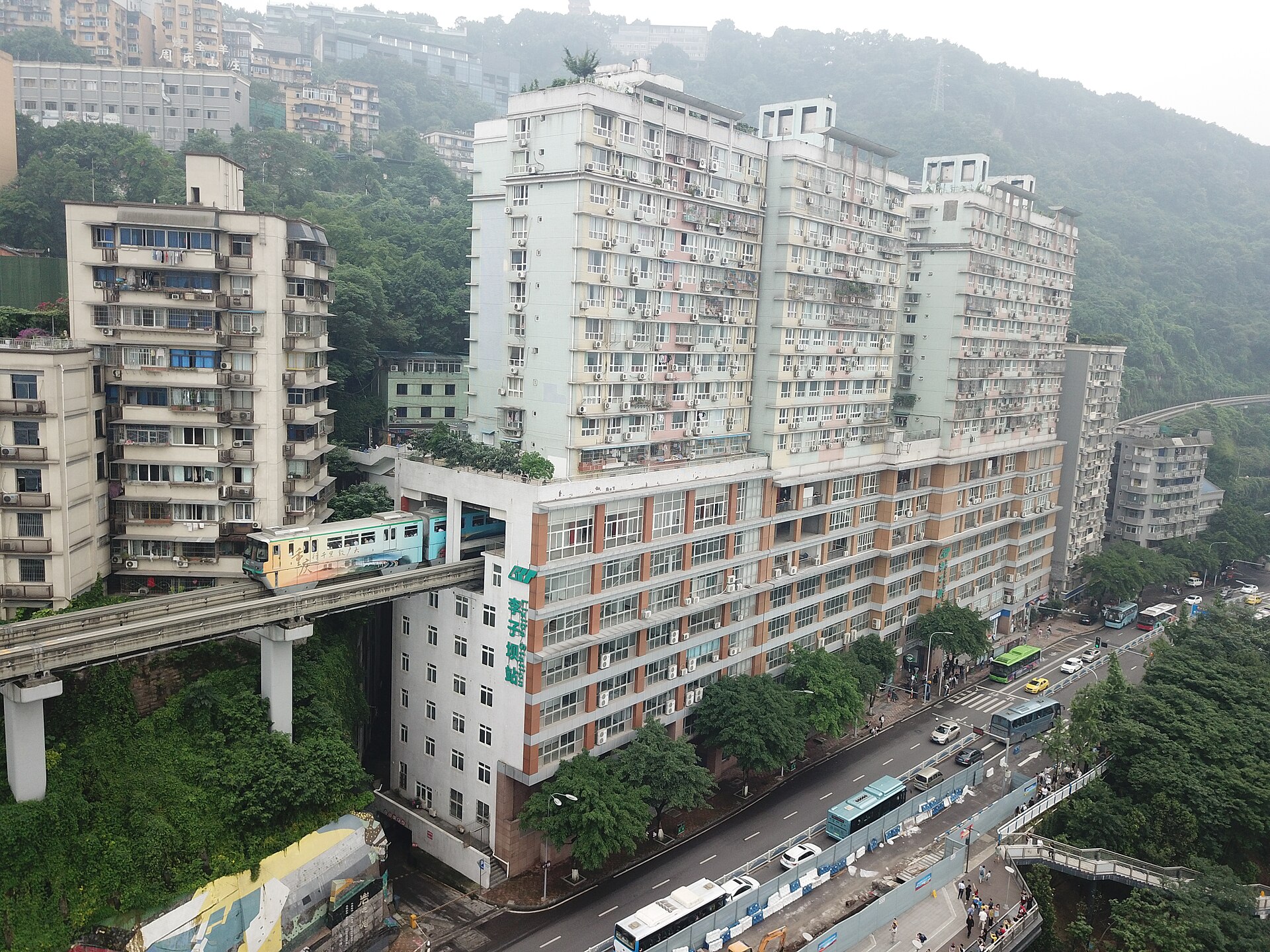
The Line 2 monorail running straight through a residential apartment block at Liziba station, Chongqing — the symbol of the 8D city

Chongqing has something Chengdu doesn't — genuinely dramatic mountain terrain. The city is built across hills right where the Yangtze and Jialing rivers meet, with skyscrapers stacked in layers people call the "8D city". There's no flat ground here; you might walk out of the first floor of a mall and find you're on the tenth floor of the street on the other side. This is the city where the monorail runs straight through an apartment block at Liziba and the Yangtze River cableway are everyday transport.

The standout is Hongyadong, a cluster of stilted wooden buildings stacked 11 storeys up a riverside cliff that lights up golden after dark like something out of an animated film. Nearby are Jiefangbei, the central pedestrian shopping core, and Ciqikou old town, stone lanes by the river with old teahouses and traditional snacks. For nature, you can take day trips out to Wulong karst or the Dazu rock carvings, both World Heritage sites.

And you can't skip the hotpot — Chongqing is the home of spicy-numbing hotpot, with a broth built on beef tallow (牛油) under a mound of dried chillies and Sichuan peppercorns: heavy, fiery and bolder than anywhere else. Locals eat it all year, even sweating through it in summer. Add direct flights from Bangkok into Jiangbei airport (CKG) in about 3–3.5 hours, and Chongqing makes a Sichuan-basin starting point that wows you from day one.

Pros · good to know
Dramatic 8D mountain terrain — monorail through buildings, Yangtze cableway, night lights
Original beef-tallow hotpot — the spiciest, boldest, most intense version
Hongyadong after dark — one of the most iconic views in China
High city energy, fast and ever-changing — a city unlike any other
Direct flights from Bangkok to CKG — start the trip here
Nature and heritage day trips — Wulong, Dazu, Three Gorges cruises
No big panda base like Chengdu (Chongqing Zoo has pandas, but smaller)
Lots of walking, steep stairs and slopes because it's a mountain city
Brutally hot summers (Jun–Aug) ~38–40°C — one of China's "furnace" cities
Winters are often grey and foggy (the "Fog City")
Don't-miss highlights · Chongqing

3 things Chongqing does best

🌃
Hongyadong after dark
11-storey stilted complex on a cliff · golden night lights · free

This is the image of Chongqing — a cluster of stilted wooden buildings stacked up a riverside cliff that lights up golden at night, so striking it looks animated. Head up for local snacks, river views, and photos all evening.

Read the Hongyadong guide →
🚈
The Liziba monorail-through-buildings
Line 2 runs through a residential block · free

The viral clip everyone has seen — the monorail passing through floors 6 to 8 of a real apartment block. There's a viewing spot below to film the train shooting into the building, a quirk of the mountain city you won't find anywhere else.

Read the Liziba guide →
🌶️
Original beef-tallow hotpot
Spicy-numbing málà · eaten year-round · the real birthplace

Chongqing is the birthplace of hotpot — a beef-tallow broth floating with dried chillies and Sichuan peppercorns, heavy, fiery and rich. Dunk fresh beef, vegetables and offal to cook. It's a meal you have to try at least once in your life.

Read the Chongqing hotpot guide →
Chengdu · 成都

The flat Sichuan capital —pandas, teahouses and a slow pace

Chengdu has something Chongqing doesn't — giant pandas and a genuinely relaxed pace. Chengdu is the capital of Sichuan province: flat, easy to walk, bike-friendly, and famous as the most laid-back city in China. Its heart is the Chengdu Research Base of Giant Panda Breeding, where you see the most giant and baby pandas, up close. Admission is about ¥55 (about ฿275), and going early at opening (around 7:30) is best, because that's when the pandas are awake and eating bamboo.

The other big draw is tea and opera culture. Chengdu is the city of teahouses — sit and sip covered-bowl tea (盖碗茶) at People's Park or an old teahouse for a whole afternoon. In the evening, watch Sichuan-opera face-changing (变脸), where performers flip masks to a new colour in the blink of an eye. Add the restored old lanes of Kuanzhai and Jinli, packed with teahouses, sweets and local snacks, and you've got the city's signature easy day.

The honest caveat is that Chengdu doesn't have Chongqing's dramatic mountain terrain — it's a flat city, so there are no monorails through buildings or river cableways to thrill you, and the energy is slower and calmer. Sichuan food in Chengdu is still spicy, but many places cook a more refined, rounded version than Chongqing's. It's a city that suits travellers who want to slow down and soak up the culture rather than chase a skyline.

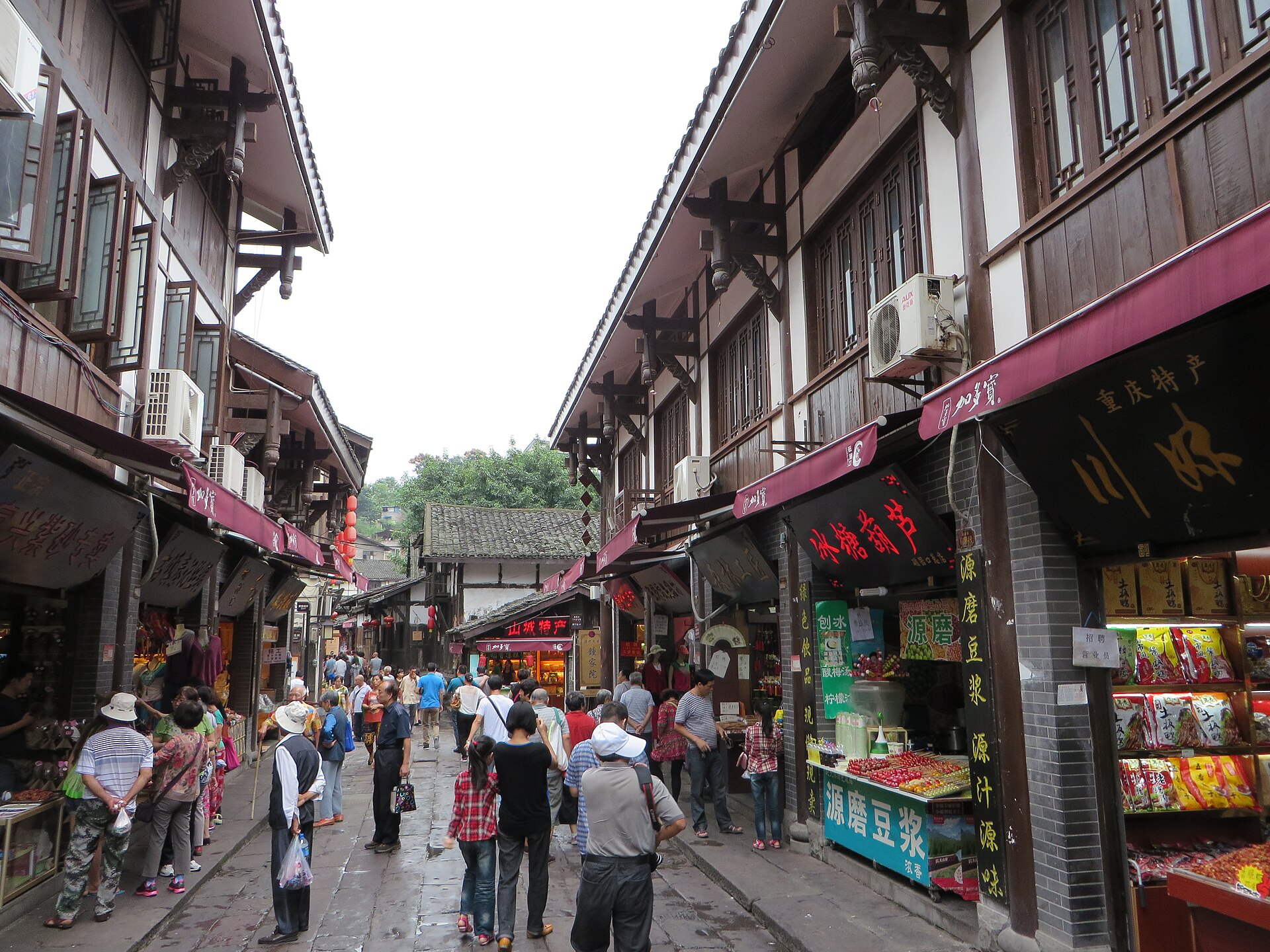
A riverside old-town stone lane with red lanterns and traditional shops — illustrating a Chinese heritage lane (photographed at Ciqikou old town in Chongqing, used to represent Chengdu's Jinli/Kuanzhai-style old lanes)
Pros · good to know
Chengdu Panda Base — the most giant and baby pandas, seen up close
Teahouse culture — covered-bowl tea at People's Park all afternoon
Sichuan-opera face-changing (变脸) — a show you can really only see here
Old Kuanzhai and Jinli lanes — easy strolling, snacking and browsing
Flat city, easy to walk, slow pace — the most relaxed in China
Sichuan food a touch more rounded — good if you don't want full heat
No dramatic mountain terrain or monorail-through-buildings like Chongqing
Slower, calmer city energy — more about culture than spectacle
The Panda Base needs an advance online ticket and your real passport
Winters are grey and often foggy, similar to Chongqing
Don't-miss highlights · Chengdu

3 things Chengdu does best

🐼
The Chengdu Panda Base
Giant + baby pandas · ¥55 entry · go at opening

The main reason people come to Chengdu. Walk through shady bamboo enclosures watching giant and baby pandas. Going at opening (around 7:30) is best, because the pandas are awake and eating bamboo (feeding is roughly 8:00–9:30). Book your ticket online in advance with your real passport.

🍵
Teahouses + face-changing opera
Covered-bowl tea 盖碗茶 · People's Park · Sichuan opera 变脸

Sip covered-bowl tea at People's Park or an old teahouse for a whole afternoon and soak up Chengdu's easy pace. In the evening, catch Sichuan-opera face-changing, where performers flip masks to a new colour in an instant — a famous show you can really only see here.

🏮
Kuanzhai + Jinli lanes
Old lanes · teahouses, sweets, local snacks · free

The Kuanzhai and Jinli lanes are restored old quarters full of teahouses, traditional sweets, souvenirs and Sichuan street food. Easy to wander and photograph, and some spots put on small face-changing performances while you sip your tea.

Compare

Every angle in one table

Dimension Chongqing 重庆 Chengdu 成都
Main draw 8D mountain city, monorail-through-buildings, Hongyadong, bold hotpot Pandas, teahouses, face-changing opera, old lanes
City image Vertical mountain metropolis on two rivers — dramatic, fast, night lights Flat Sichuan capital — slow, easy, relaxed, the panda city
Terrain Towers stacked on hills, lots of stairs and slopes, striking everywhere Flat, easy to walk, bike-friendly, calm pace
Hotpot / food Original beef-tallow hotpot — bold, fiery, the most intense More rounded Sichuan food — spicy but refined and balanced
Pandas Chongqing Zoo has pandas, but smaller Chengdu Panda Base — the most pandas, seen closest
From Thailand Direct Bangkok → CKG ~3–3.5 hr Direct Bangkok → CTU ~3–3.5 hr (Tianfu/Shuangliu airports)
Connecting them High-speed train ~62 min–1.5 hr (Chongqing North/West ↔ Chengdu East) · ¥138–154 · about every 5–10 min
Budget Good value — friendly hotel and food prices Good value — similar to Chongqing, the basin isn't pricey
Suggested time 2.5–3 days (Hongyadong + monorail + cableway + hotpot) 2.5–3 days (pandas + tea + opera + old lanes)
Best for Spectacle / drama / fiery food / city energy Pandas / culture / relaxing / slow pace
How they connect

About an hour apart by train — very easy to pair

Chongqing and Chengdu sit on the same high-speed line across the Sichuan basin, making this one of the easiest city pairings to move between in all of China.

Chongqing ↔ Chengdu by train: the fastest trains from Chongqing North or Chongqing West to Chengdu East on the newer ultra-fast line take just about 62 minutes, with most around 1–1.5 hours. Second-class tickets cost roughly ¥138–154 (about ฿690–770). Around 150 trains run each day, departing about every 5–10 minutes from early morning to late at night — almost like catching a cross-city bus.
All of Chongqing's stations link to the metro: Chongqing's main high-speed stations are Chongqing North (north of the city) and Chongqing West (out at Shapingba), both connected to the city by metro. Check your ticket carefully for which station you depart from, as the two are on different sides of town.
How to book: book ahead on the Trip.com or 12306 app and board with your passport. Booking early is wise around public holidays, especially Golden Week (Oct 1–7) and Spring Festival. For the full how-to on booking and boarding, see the China high-speed rail guide.
The open-jaw trick: both Chongqing (CKG) and Chengdu (CTU) have direct flights from Bangkok. If you can find an open-jaw ticket — flying into one city and out of the other — you save the round-trip train time and never have to double back. It's the most time-efficient way to do both.
The food, head to head

Bold hotpot —versus rounded Sichuan

Both are Sichuan málà (spicy-numbing) cooking, but with different personalities. Chongqing is bold and original; Chengdu is more refined and balanced.

Chongqing (original hotpot) — the birthplace of hotpot, with a beef-tallow (牛油) broth floating with dried chillies and Sichuan peppercorns: heavy, fiery, rich, the boldest there is. Beyond hotpot you'll find Sichuan noodles, street food and rustic jianghu cooking. See the standout dishes in the Chongqing food guide.
Chengdu (rounded Sichuan) — the home of refined Sichuan cooking: spicy but balanced, with more layers of flavour (sour, sweet, spicy, numbing). Many hotpot places are a little milder than Chongqing's, ideal if you want Sichuan without going full intensity. More at the Chengdu hotpot guide.

In short: if you want the boldest, most intense original hotpot, Chongqing is the answer; if you want the rounded balance and variety of Sichuan cooking, Chengdu shines. Doing both? Have the full-on beef-tallow hotpot in Chongqing, then try the more refined Sichuan dishes in Chengdu — both styles in one trip.

Do both

The "catch both cities" plan · 5-6 days

The popular route starts in Chongqing for 2.5–3 days, then moves to Chengdu for another 2.5–3 (no dragging bags back and forth). Every leg is under about an hour and a half by train.

Day 1
Chongqing · arrive
Land at CKG, check in — Hongyadong and your first hotpot

Fly direct from Bangkok into Jiangbei airport (CKG), check into a hotel around Jiefangbei / Yuzhong. In the afternoon, walk Jiefangbei in the city centre, then head to Hongyadong for the golden riverside lights at dusk, and have your first beef-tallow hotpot to mark arriving at the source.

Day 2
Chongqing · the 8D city
Monorail-through-buildings + Yangtze cableway + Ciqikou

Start at Liziba to see the monorail-through-buildings, then ride the Yangtze River cableway for mountain-city views. In the afternoon, wander Ciqikou old town's riverside stone lanes; if you have energy, climb up to Eling Park for a high city view, then eat local in the evening.

Day 3
Chongqing → Chengdu · move on
~1 hr train — afternoon in the Kuanzhai lanes

Tidy up any Chongqing loose ends in the morning (or take a day trip out to Wulong / Dazu if you have extra time). Mid-morning, take the high-speed train from Chongqing North to Chengdu in about an hour. Check into a hotel around Chunxi Road / Taikoo Li, wander the Kuanzhai lanes and sip tea in the afternoon, then catch Sichuan-opera face-changing in the evening.

Day 4
Chengdu · panda day
Panda Base at dawn + Jinli in the evening

Get up early for the Chengdu Panda Base at opening (around 7:30), when the pandas are awake and eating bamboo (book your ticket online in advance). Head back into town in the afternoon for tea at People's Park, then walk Jinli in the evening for Sichuan street food. Pick from more Chengdu attractions to fill out the day.

Day 5–6
Chengdu · loose ends, then fly home
Temples/museums, souvenirs, then out via CTU

Take the last day easy — pick from Wuhou Shrine, Wenshu Monastery, or the Chunxi Road / Taikoo Li district, buy tea and souvenirs, then head to Chengdu airport (CTU) for the direct flight back to Bangkok. With an open-jaw ticket (in via Chongqing, out via Chengdu) you never double back — the most time-efficient option. Short on time? Cut it to four days with two days per city.

The verdict

Which city if you're...

If you love spectacle and fiery food and only have time for one city — pick Chongqing. Towers stacked on mountains, the monorail-through-buildings, the Yangtze cableway, Hongyadong at night and original beef-tallow hotpot are experiences you can't get elsewhere — plus direct flights from Thailand into CKG to start the trip right away.
If you're here for pandas, culture and a slow, relaxed pace — pick Chengdu. The Panda Base, teahouse culture, Sichuan-opera face-changing, and the old Kuanzhai and Jinli lanes are what Chengdu does better, ideal for travellers who want to take their time.
If you're travelling with family or kids — Chengdu has the edge with pandas that kids love, while Chongqing is fun for the thrill of the monorail-through-buildings and cableway. Do both and you get both; but if you pick one city for young children, Chengdu's flat ground is easier to walk.
If you have 5-6 days and want it all — do both, using the plan above: start in Chongqing, then move to Chengdu. The two are only about an hour apart by train, so moving is easy, and you'll see the two opposite faces of the Sichuan basin — mountain drama and panda-city ease.
FAQ

FAQ · Chongqing or Chengdu

How long does the high-speed train between Chongqing and Chengdu take?
They're very close. On the high-speed line from Chongqing North or Chongqing West to Chengdu East, the fastest trains on the newer ultra-fast service take just about 62 minutes, with most running around 1–1.5 hours. Second-class tickets cost roughly ¥138–154 (about ฿690–770). Around 150 trains run each day, departing about every 5–10 minutes from early morning to late at night, which makes pairing the two cities in one trip very easy. Book ahead on the Trip.com or 12306 app and board with your passport. See how to book and board in the China high-speed rail guide.
If I only have time for one city, should I pick Chongqing or Chengdu?
If you love a dramatic, fast-changing city — mountains stacked with towers, monorails running through apartment blocks, river cableways, cinematic night lights, and the original bold beef-tallow hotpot — pick Chongqing. If you want to see giant pandas up close, sip tea in old teahouses, watch Sichuan-opera face-changing, wander the old Kuanzhai and Jinli lanes, and enjoy a slow, relaxed pace — pick Chengdu. For city energy and fiery food, Chongqing is the answer; for pandas and a laid-back mood, Chengdu fits better.
How is hotpot different in Chongqing versus Chengdu?
Both are Sichuan málà (spicy-numbing) hotpot, but in different styles. Chongqing is the home of hotpot — its broth is built on beef tallow (牛油), loaded with dried chillies and Sichuan peppercorns, heavier, spicier and bolder. Chengdu tends to be a touch milder and more balanced — many places cook a more refined broth that's spicy but rounded, good for anyone who wants Sichuan hotpot without going full intensity. Pick Chongqing for the boldest version, Chengdu for the more rounded one — but Sichuan food is excellent in both cities. See more in the Chongqing food guide and the Chengdu hotpot guide.
How many days do I need to see both Chongqing and Chengdu in one trip?
Five to six days is ideal. The popular plan starts in Chongqing for 2.5–3 days (Hongyadong, the Liziba monorail-through-buildings, the Yangtze cableway, Jiefangbei, Ciqikou old town, hotpot), then takes the train to Chengdu for 2.5–3 days (the Chengdu Panda Base, the Kuanzhai and Jinli lanes, Sichuan-opera face-changing, teahouses). The two cities are only about an hour apart by train. With less time you can cut it to four days — two days per city — and book an open-jaw flight, flying into one city and out of the other, to save the round-trip train time. See the detailed Chongqing plan in the Chongqing 3-day itinerary.
What does Chengdu have that Chongqing doesn't?
Chengdu's clear edge is pandas — the Chengdu Research Base of Giant Panda Breeding is where you see the most giant and baby pandas, up close. Admission is about ¥55 (about ฿275), and going early at opening is best because the pandas are awake and eating bamboo. Chengdu also has its famous teahouse culture, sipping covered-bowl tea (盖碗茶) at People's Park and old teahouses, Sichuan-opera face-changing (变脸), the old Kuanzhai and Jinli lanes, and the slow, relaxed pace the city is known for. Chongqing, meanwhile, leads on dramatic mountain terrain and city energy. Read on at Chengdu attractions and Chengdu teahouse culture.
Which city should I base in if I do both?
You don't have to pick a single base, because the train is only about an hour. The smoothest way is to stay 2–3 nights in Chongqing, then move and stay another 2–3 nights in Chengdu (no dragging bags back and forth). If you fly in from Thailand to Chongqing (CKG), start there and then take the train to Chengdu; or, if you can find an open-jaw flight (in one city, out of the other), it saves even more time. Chongqing makes a good starting point thanks to direct flights from Bangkok and dramatic scenery from day one. See where to stay at Chongqing hotels.