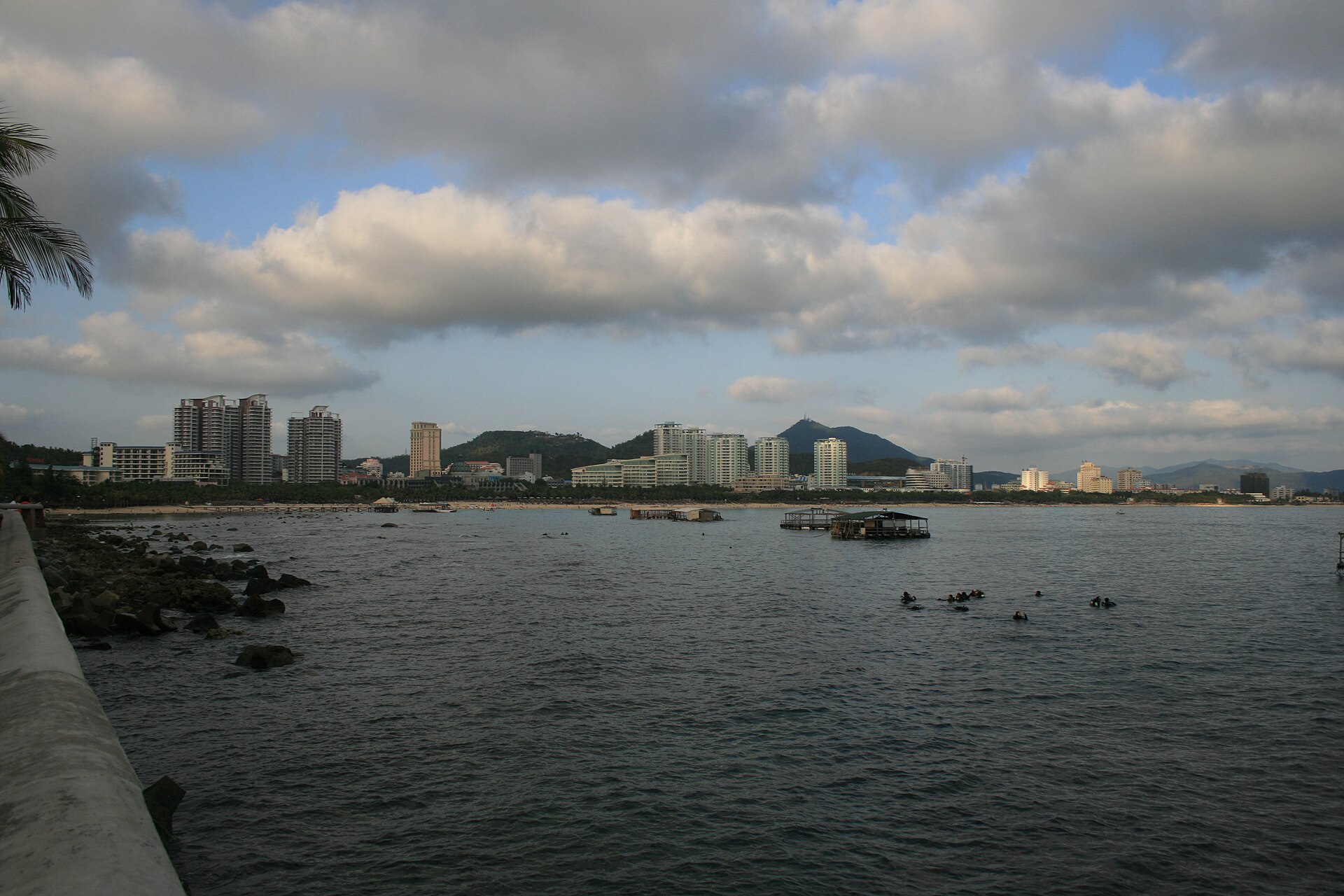
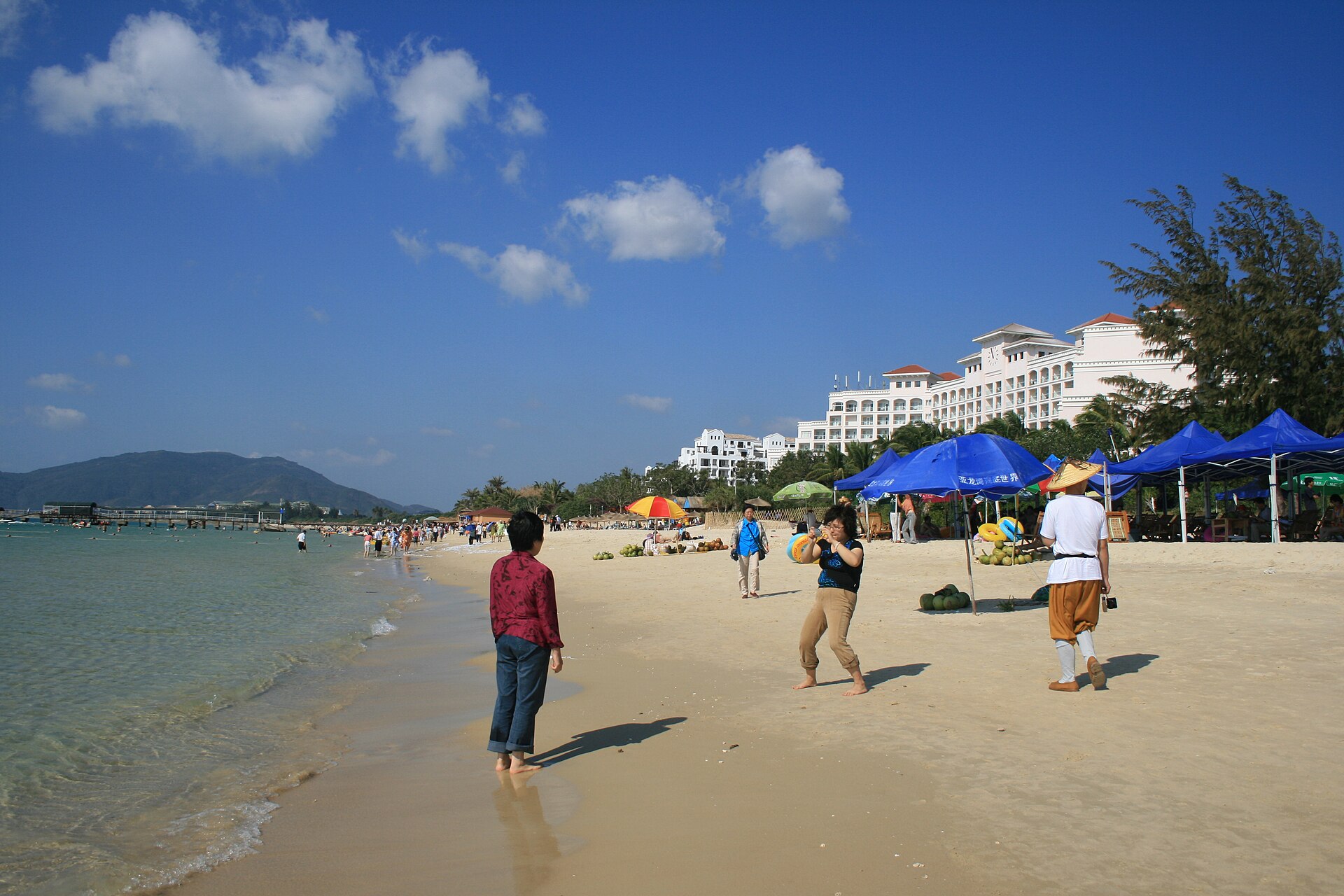
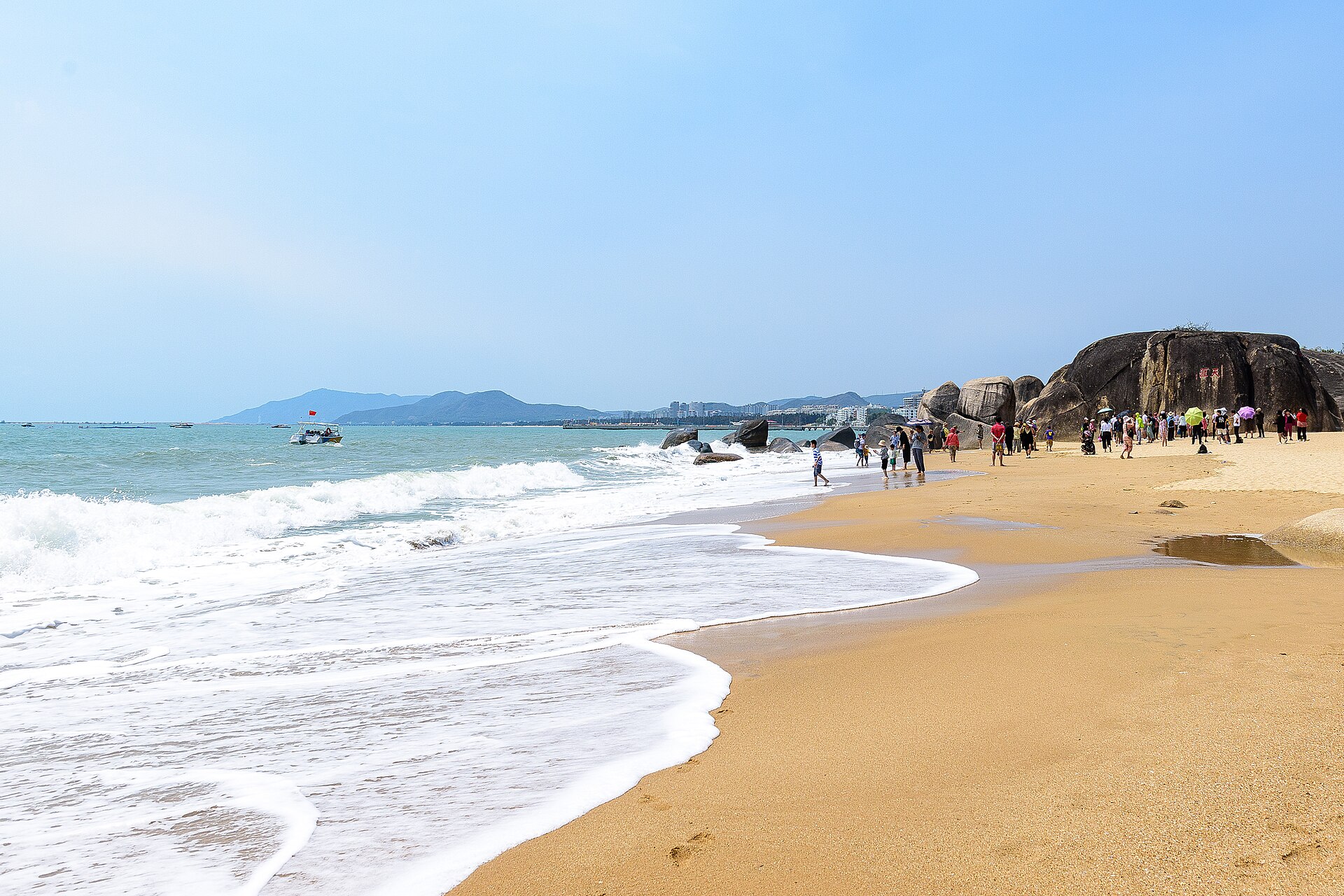
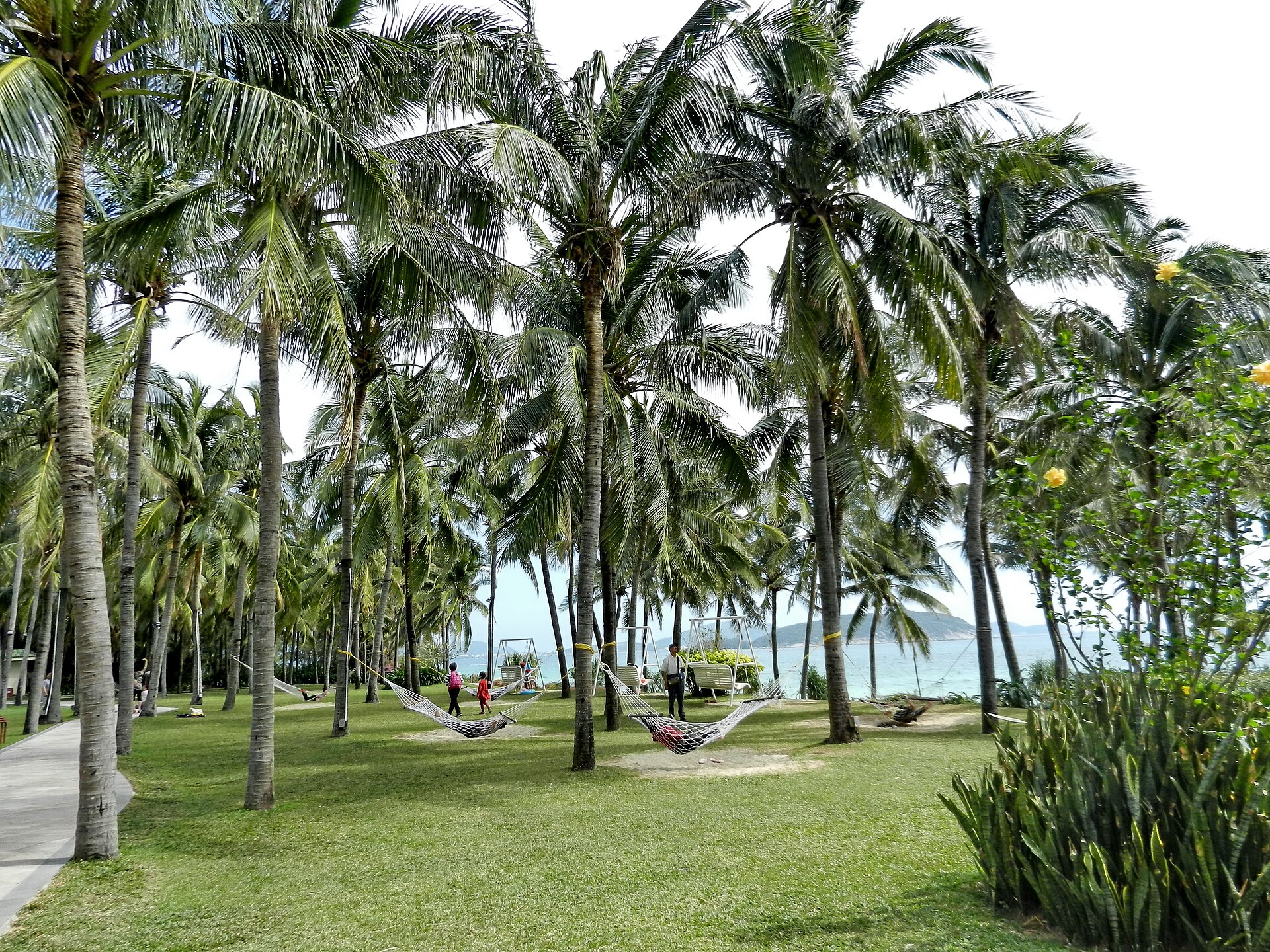
White sand, warm clear water and coconut palms along the bay — but it's in China, and Thai passport holders walk in visa-free. This guide is built from verified facts and real visitor accounts to get you ready for your first tropical China trip before you leave home.
Picture a Chinese version of Phuket or the Maldives — long white-sand beaches, warm water all year, five-star resorts lined up along the bays. That is Sanya, the resort city at the southern tip of Hainan Island, where mainland China escapes the winter and where a growing number of Thai travellers now head for a beach break.
The easiest China to enter — Thai passport holders get up to 30 days visa-free on Hainan Island, which makes Sanya one of the simplest China trips to plan. Good sea all year — water at 25-28°C, long beaches, diving offshore, and a dry season that stretches across half the year. Three trips in one — on a single visit you can swim, dive an island, see one of the tallest Guanyin statues in the world, and shop the largest duty-free mall on the planet. Few beach cities offer that range. See the full overview at the complete Sanya guide →
Sanya is a place to slow down, not to race around ticking off sights. Three days is the sweet spot — beach time, a culture day, and an island day all fit comfortably. Four or five days gives you room to add a duty-free shopping day and never feel rushed.
Day 1: Check in, relax on the beach at your bay, watch the sunset. Day 2: Nanshan Temple for the giant Guanyin statue, then Tianya Haijiao for the classic photo at "the edge of the sky and sea". Day 3: Take the ferry to Wuzhizhou Island for swimming and snorkelling, then wander Dadonghai in the evening.
Add a shopping day at CDF Mall in Haitang Bay (the world's largest duty-free store). Add an unstructured beach day — read, swim, spa, or try Atlantis Aquaventure water park at Haitang Bay if you are travelling with children. The extra days turn a quick break into a proper holiday.
Itineraries for every schedule: 1 day · 2 days · 3 days · 4 days · 5 days
November to April is the prime window: warm and dry, 22-28°C, very little rain, clear skies and calm seas — the best conditions for swimming and diving. This is exactly why mainland visitors flock here in winter. May to October is hotter, more humid and wetter, with typhoon risk from July to September. Full detail at when to visit Sanya →
As of 2026, Thai passport holders enter Hainan Island (including Sanya) visa-free for up to 30 days. The conditions: fly directly into Hainan, hold a return ticket and a hotel booking, and stay within Hainan Province. Policy can change without much notice, so check the current rules at China visa-free entry guide → before committing to flights.
Sanya has a single airport: SYX (Sanya Phoenix International), about 14 km west of downtown near the Sanya Bay side. There is no airport metro. The main way in is taxi or DiDi (China's Grab equivalent) — both cheap and easy — but the fare varies a lot by which bay you stay in. Choose your bay carefully when you book, and you save both time and money.
Downtown / Sanya Bay ~¥30-50 (~฿150-250), about 20 minutes · Dadonghai ~¥40-70 (~฿200-350) · Yalong Bay ~¥100-140 (~฿500-700), about 40 minutes · Haitang Bay ~¥120-180 (~฿600-900), about 45-50 minutes. DiDi is usually slightly cheaper than a metered taxi and removes the haggling.
Airport buses run to downtown and Dadonghai for ¥10-25 (~฿50-125), handy if you are staying in town. Many resorts run paid shuttles — check with your hotel before you travel. There is also an intercity-rail station at the airport (Phoenix Airport station) on the Hainan ring high-speed line, useful for hops to east-coast towns.
Sanya has no subway. The way most visitors move is DiDi and taxis — cheap, easy to hail, flagfall around ¥10. City buses cost ¥1-5 (scan Alipay or WeChat). There is a short tourist tram line along Sanya Bay. For trips to east-coast towns, the Hainan ring high-speed railway works well (Sanya to Haikou in about 90 minutes). Full guide at getting around Sanya →
China runs primarily on Alipay and WeChat Pay. Resorts and the duty-free malls accept Visa and Mastercard. Seafood restaurants, market stalls and small shops usually take mobile payment only — often there is no card reader at all. Set up the tourist version of Alipay before you leave home: it accepts foreign Visa and Mastercard and works immediately. Alternatively, withdraw yuan from an ATM on arrival as a backup. Full guide: paying in China →
The single most important choice in Sanya is which bay you book, because they sit 25-30 km apart (40-50 minutes), each with a different feel and price point. Pick one bay and stay put — do not spread a short trip across several. Full neighbourhood guide at where to stay in Sanya → or the bays and beaches guide →
An in-town bay, walkable to the beach, with plenty of restaurants and convenience stores. The best value in Sanya, close to the seafood market. Ideal for first-timers who want convenience and don't want to rely on taxis all day.
A long curve of white sand with calm, clear water — the best swimming beach in Sanya — lined with five-star international resorts (Ritz-Carlton, St. Regis). It sits 25 km from the city, so it is geared towards staying inside the resort; leaving means a taxi ride.
The furthest bay (30 km) but the newest and most upscale. Home to Atlantis Sanya, the water park, and the world's largest duty-free mall (CDF). Best for travellers who want to shop and stay at a high-end resort.
A long beach along the "Coconut Dream Corridor", close to the airport, with mid-range pricing. Good for staying near the city while still on the sea, and a well-known sunset spot — though the water is less clear than Yalong Bay.
The cheapest accommodation, in the heart of the local city near First Market (the famous seafood market). Best for backpackers and anyone who wants fresh seafood at local prices every night. You will need a ride to the better beaches.
Sanya has several bays and a few cultural sites, but for a first visit these are the core — the places that best explain why the city is worth the trip. Full details at Sanya attractions → or things to do and book →
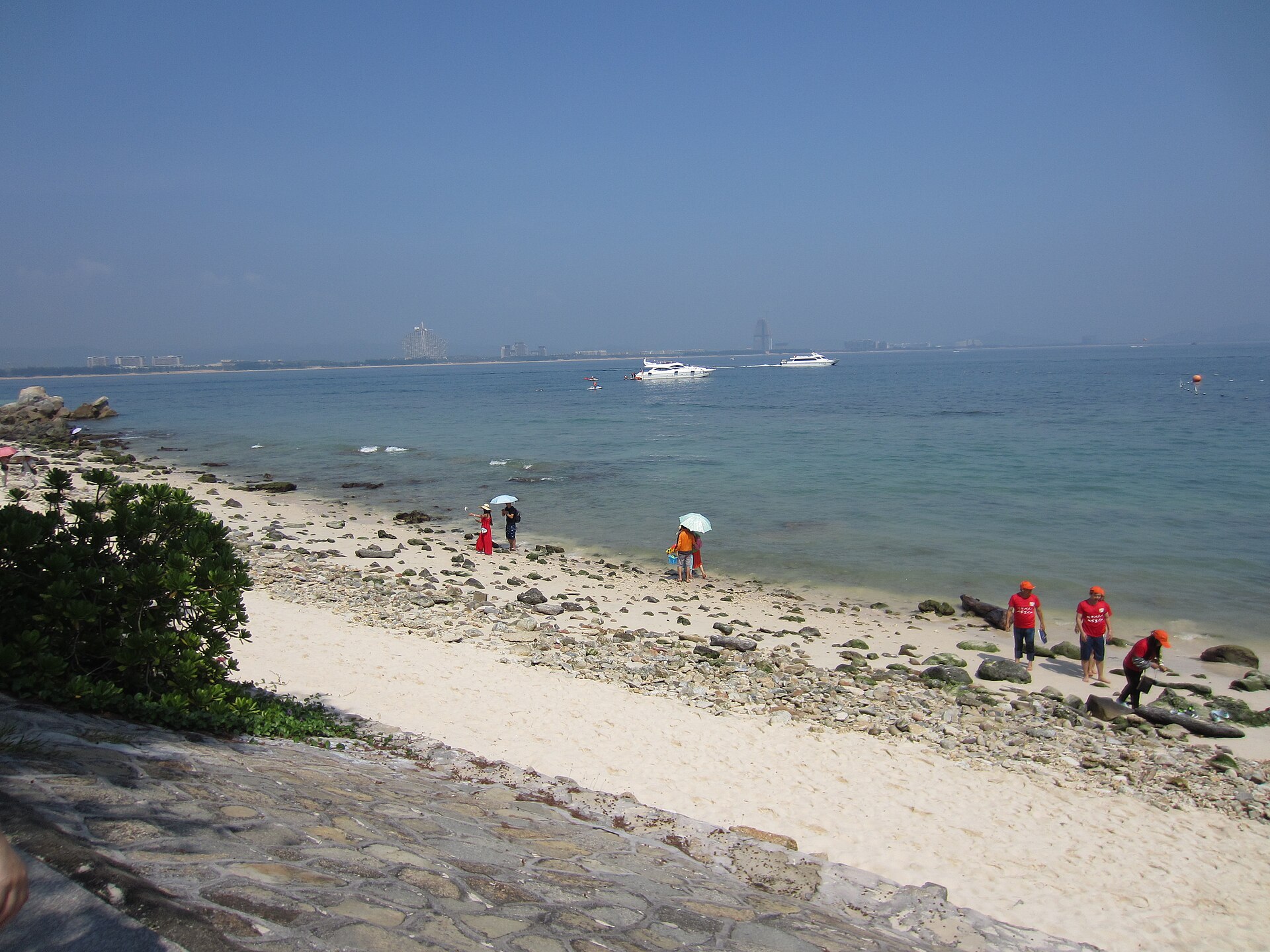
The sea is the heart of Sanya. Yalong Bay has the clearest water for swimming, Dadonghai is the convenient in-town choice, and Sanya Bay is the long sunset beach. Pick the bay that matches your style and spend real time there rather than chasing all of them.
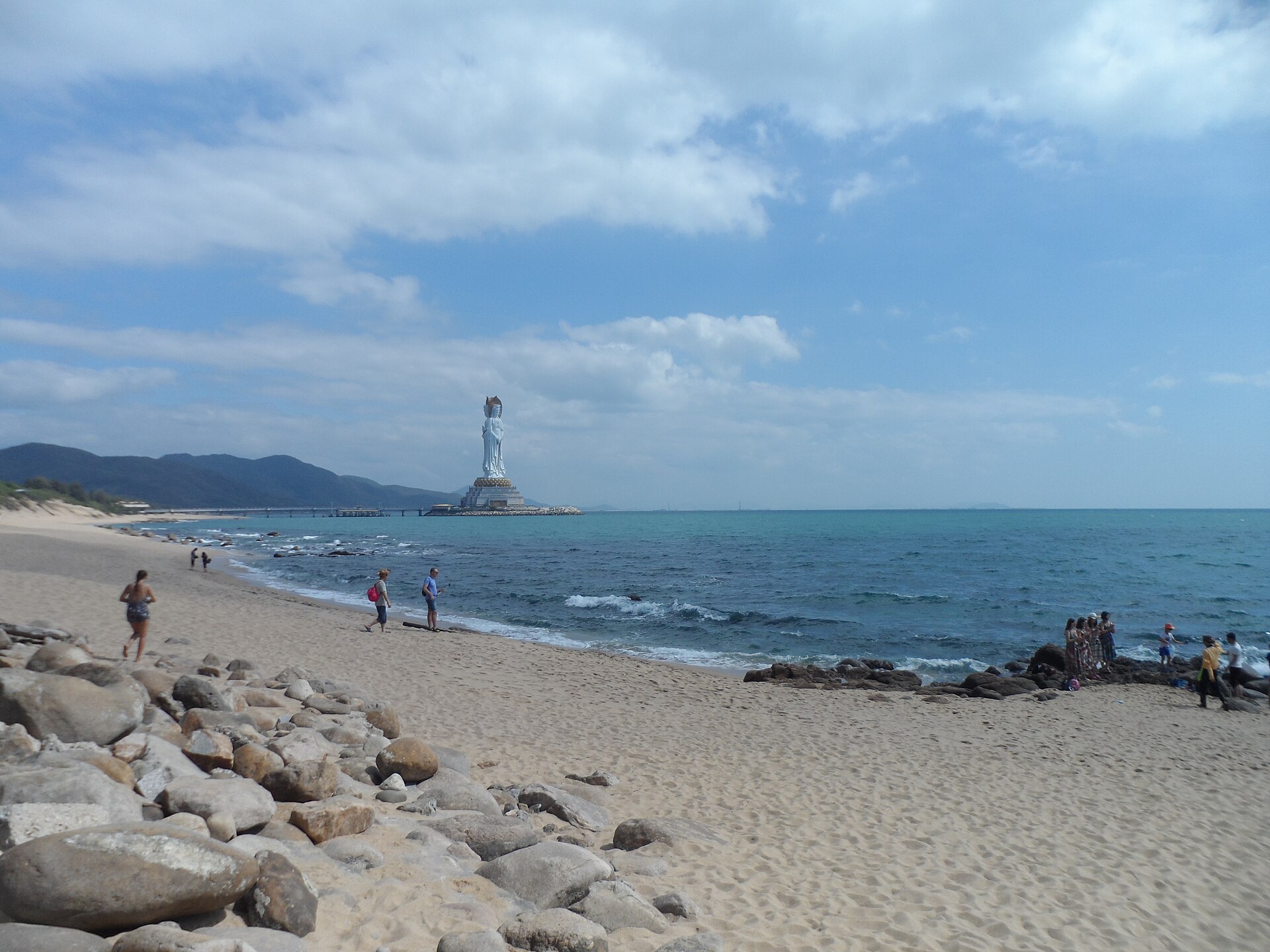
The Nanshan Buddhist cultural zone sits 40 km southwest of the city. Its centrepiece is the 108-metre Guanyin of Nanshan standing out over the sea — one of the tallest Guanyin statues in the world. Allow half a day to walk the grounds; the atmosphere is calm and striking.
The clearest-water coral island near Sanya, and a magnet for snorkelling and water sports. The ticket includes the round-trip ferry (about 20 minutes each way). Snorkelling, jet skis and photogenic viewpoints — easily a full day out and back.
"The edge of the sky and sea" — a beach scattered with giant inscribed boulders that is one of Sanya's signature photo spots, known across China. It is usually paired with Nanshan Temple since they sit on the same route, about 30 minutes apart.
What sets Sanya apart from other beach cities is offshore duty-free shopping — a special Hainan policy that lets visitors (both Chinese and foreign) buy tax-free goods up to ¥100,000 (~฿500,000) per person per year. The popular buys are cosmetics, perfume, watches and designer brands.
Sanya's main duty-free mall brings nearly 300 brands under one roof, out at Haitang Bay (near Atlantis). Plan a full day. Cosmetics and perfume in particular are often noticeably cheaper than retail prices back home.
You buy within the ¥100,000/year allowance, registering with your passport and outbound flight details. Most goods are collected at the airport pickup point on the way out. Compare prices against home before you commit — some items are a clear saving, others aren't. Full guide at Sanya duty-free shopping →
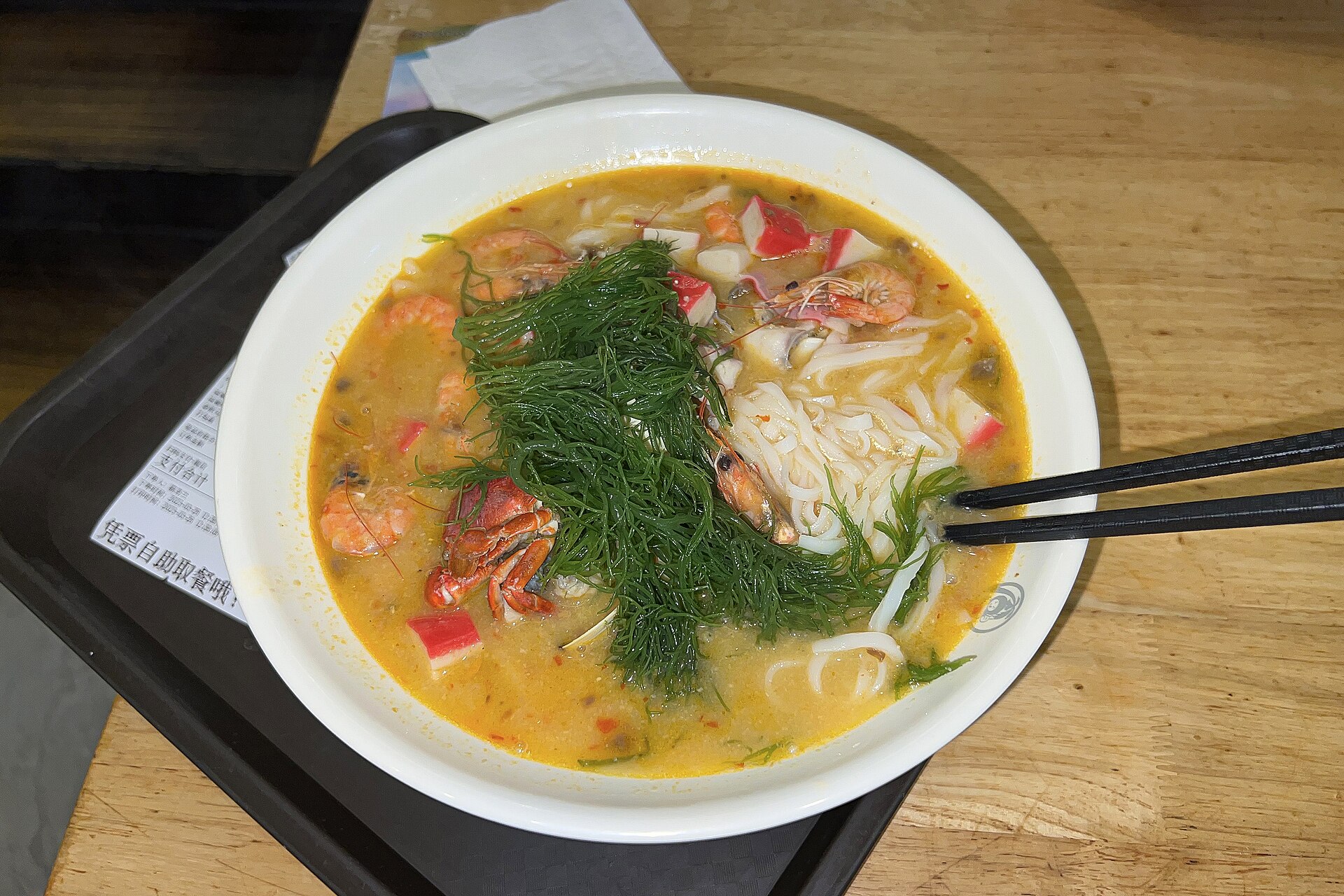
Sanya is a seaside city, so the standout is fresh seafood — alongside Hainan's home cooking, some of which you may already know: the original Hainanese chicken rice, and coconut in just about everything. Full guide: Sanya food guide →
Every visitor agrees that seafood is the thing to eat in Sanya. The classic approach is First Market: pick your fresh catch yourself, then pay a stall to cook it (cost of the seafood plus a cooking fee). Fresher and better value than the resort restaurants. For how to do it without being overcharged, see eating seafood in Sanya →
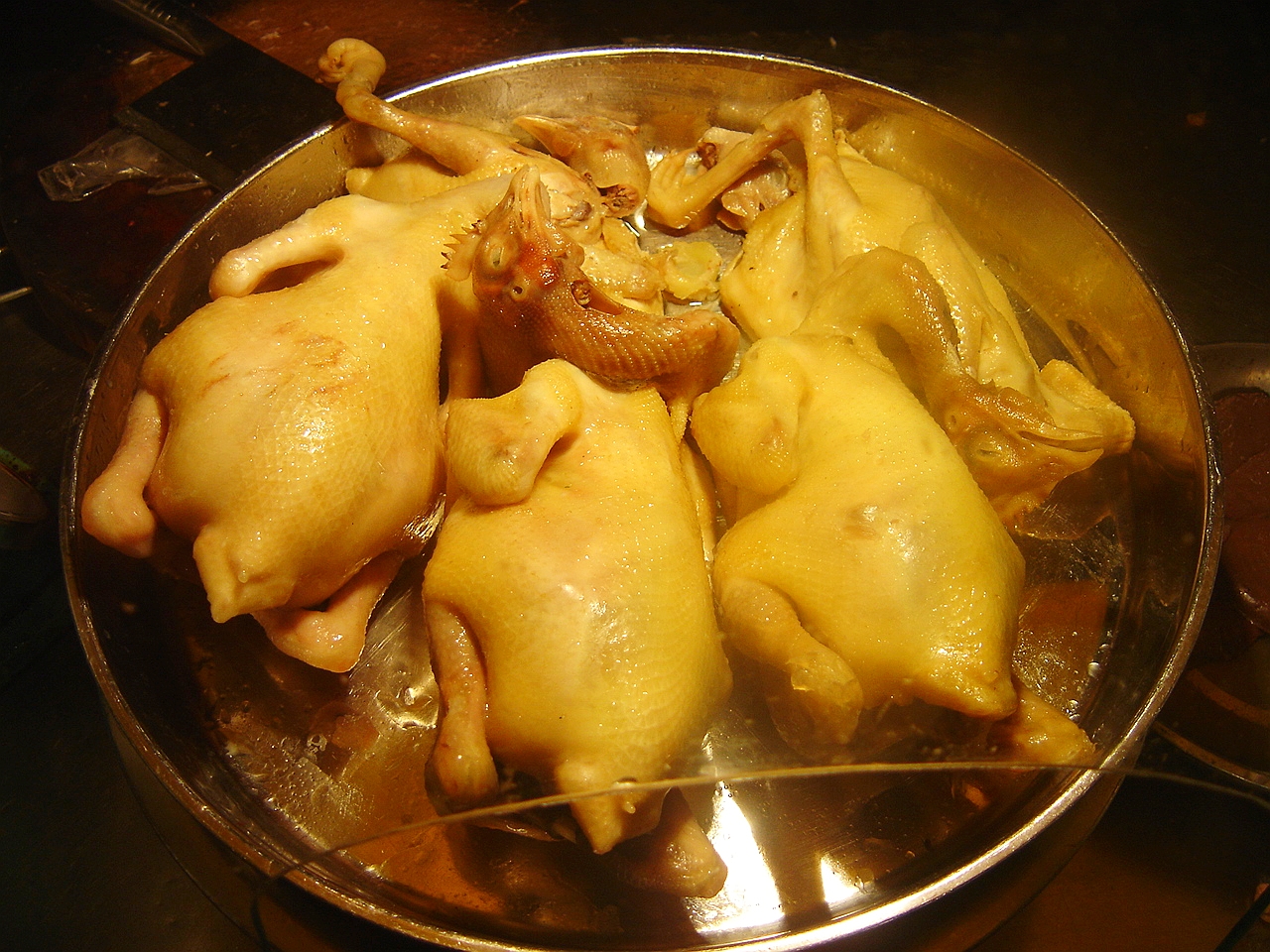
The chicken rice eaten across Southeast Asia traces back to Hainan, and Wenchang chicken is the original breed — tender meat, thin skin, served with rice cooked in chicken fat and a ginger-garlic dip. If you are on the island, it is worth having the genuine version. More at Wenchang chicken →
Hainan is the coconut island — fresh chilled coconuts are sold on every corner. The signature dish is coconut chicken hotpot (椰子鸡), a fragrant, naturally sweet broth made from coconut water that is wonderfully restorative on a hot day. Try the local coconut desserts too. See coconut chicken →
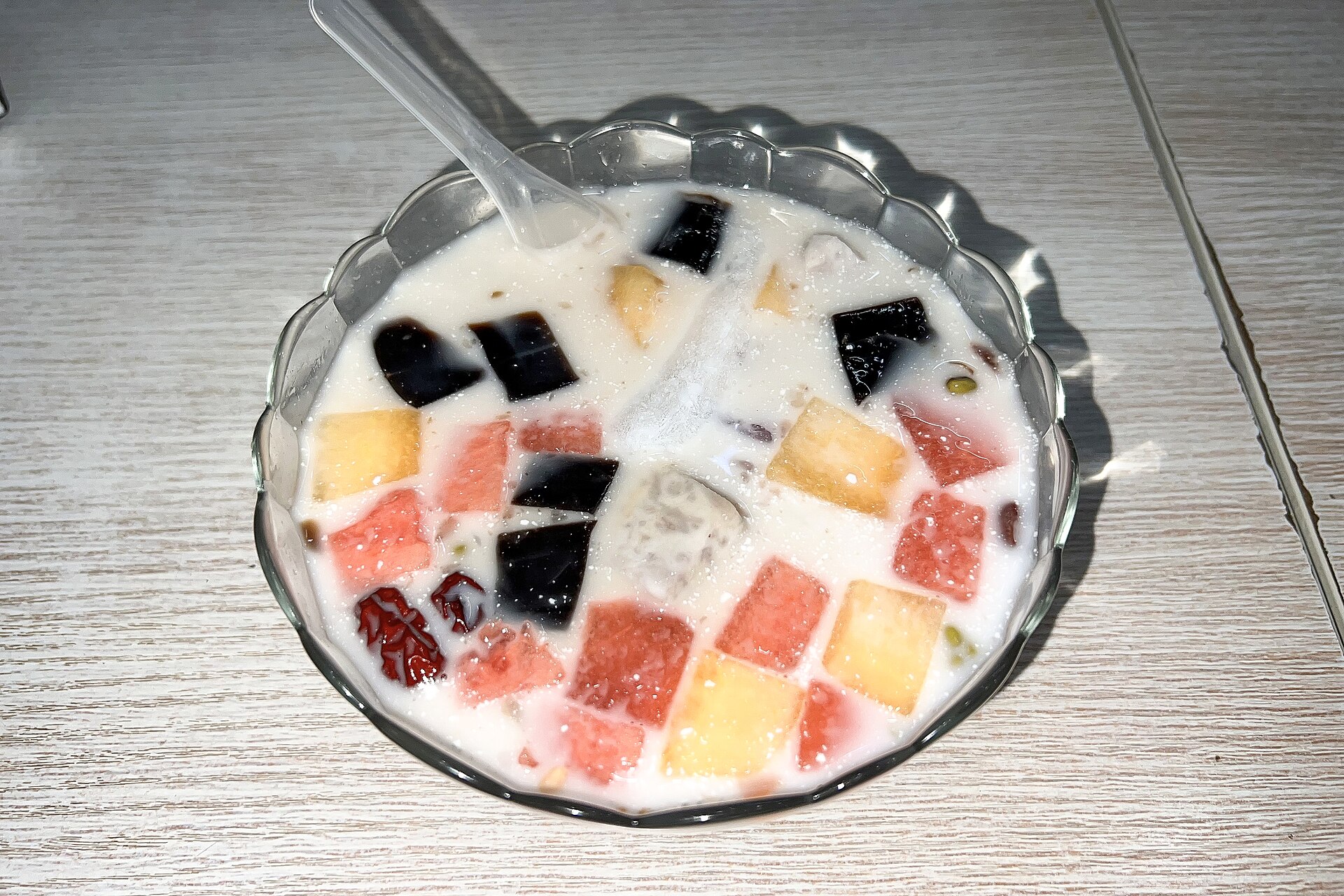
Hainan's signature iced dessert: beans, taro, jelly and fruit in coconut milk or shaved ice. The perfect cool-down after a full day on the beach, it is cheap and available all over town. For more local dishes and street food, see Hainan desserts → · street food →
Sanya works for a range of budgets. Staying in town at Dadonghai keeps costs down, and seafood at the market is far cheaper than at resorts. At the other end, the five-star beach resorts at Yalong Bay and Haitang Bay can run high. Full breakdown: Sanya trip budget guide →
| Level | Accommodation/night | Food/day | Approx. total/day |
|---|---|---|---|
| Budget | ¥150–350 (~฿750–1,750) hostel or in-town hotel | ¥80–180 (~฿400–900) | ¥300–600 (~฿1,500–3,000) |
| Mid-range | ¥500–1,000 (~฿2,500–5,000) 4-star hotel/resort | ¥200–450 (~฿1,000–2,250) | ¥800–1,600 (~฿4,000–8,000) |
| Luxury | ¥2,000–6,000+ (~฿10,000–30,000+) 5-star beach resort | ¥500–2,000+ (~฿2,500–10,000+) | ¥3,000–9,000+ (~฿15,000–45,000+) |
Your main transport cost is DiDi/taxi rides between the bays (¥30-140 per trip). Attractions run ¥68-144 each, beaches are free, and the duty-free budget is separate and up to you. More detail at China travel budget guide →
The most common mistake is booking several bays across a short trip and then losing hours and hundreds of yuan a day to taxis. Yalong Bay, Haitang Bay and Dadonghai sit 25-30 km apart (40-50 minutes). Choose one bay that matches your style and stay put — the trip is far more relaxing for it.
China blocks all Google services (Maps, Gmail, Translate), Facebook, Instagram, LINE and YouTube. Without a working VPN you are cut off from all of it. Set up a VPN on your phone before leaving home, and download Amap (Gaode Maps) for navigation. For the internet itself, see VPN and eSIM guide →
The seafood market, fruit stalls and small shops mostly take Alipay or WeChat Pay only — no card terminal. Set up the tourist version of Alipay (it accepts foreign Visa and Mastercard), or withdraw yuan from an ATM as a backup. ¥500-1,000 in cash covers small purchases comfortably.
Seafood in Sanya is priced by weight, and some stalls in tourist areas overcharge or swap your catch. Buy where prices are clearly displayed — First Market is the safe bet — watch it weighed in front of you, and photograph the price before ordering. Full method at eating seafood in Sanya →
If you stay at Yalong Bay or Haitang Bay, the airport is 40-50 minutes away — leave plenty of margin, especially on your departure day. DiDi is easy to hail, but at busy times (evenings, holidays) you may wait. Plan at least an hour for the airport run, plus check-in time.
Sanya is close to the equator and the sun is stronger than you expect — you can burn even on a cloudy day. Pack sunscreen, a hat, sunglasses and a light long-sleeve layer, drink plenty of water, and stay in the shade around midday. For water activities, use water-resistant sunscreen.