11 dishes to try before you leave Sanya
Ranked by how distinctive they are — the dishes that capture Hainan's light, fresh, coconut flavour.
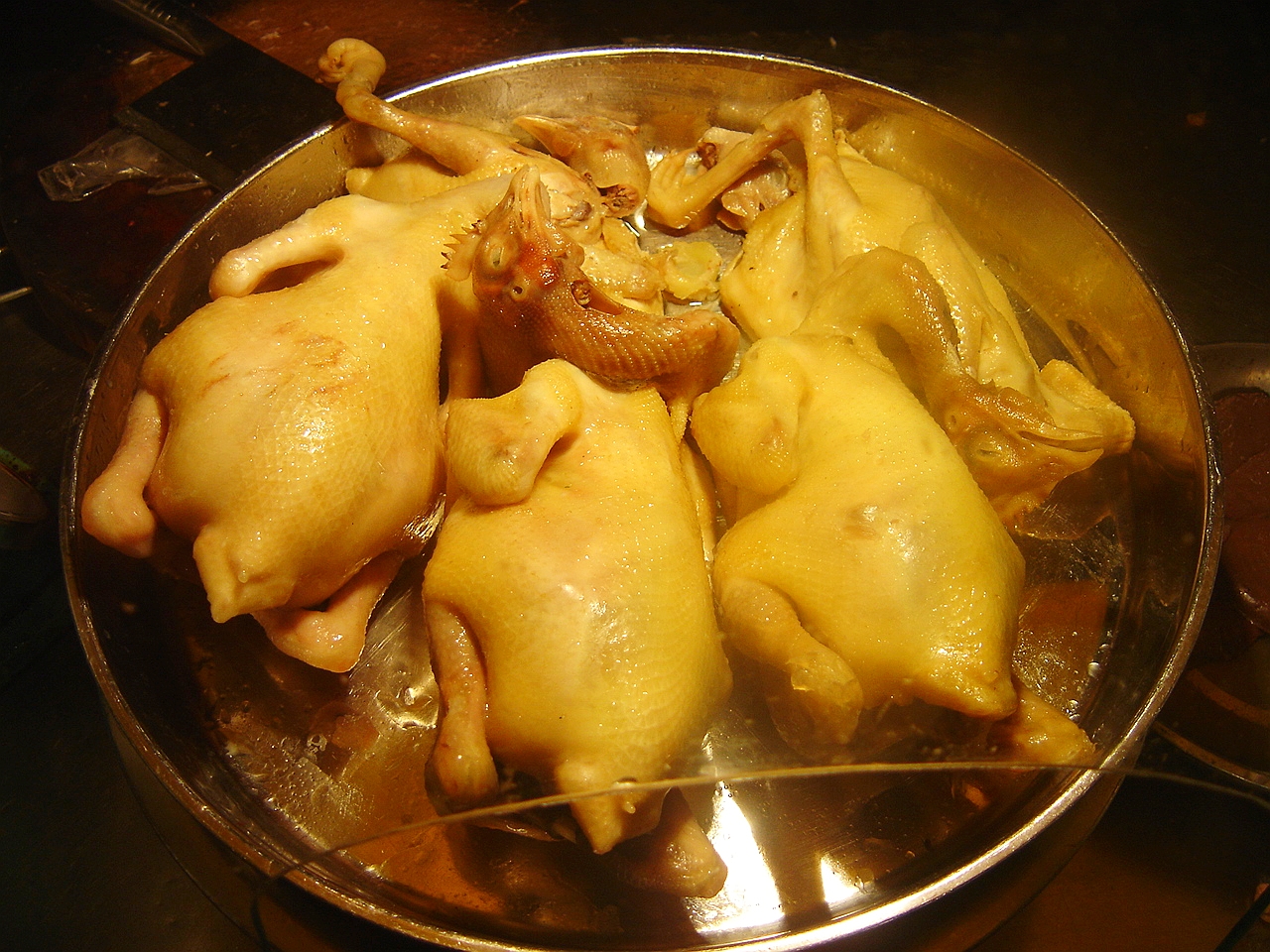 1
1
This is Hainan's most famous dish and the original Hainanese chicken rice that spread to Singapore, Malaysia and Thailand. The small free-range birds from Wenchang city are poached until the skin is silky and the meat is tender and juicy, served cool and dipped in a sauce of ginger, sand-ginger (沙姜) and garlic, with chicken-oil rice and a clear broth alongside. The flavour is gentle — sweet chicken, fragrant dip — and it explains exactly why chicken rice travelled so far to reach our tables.
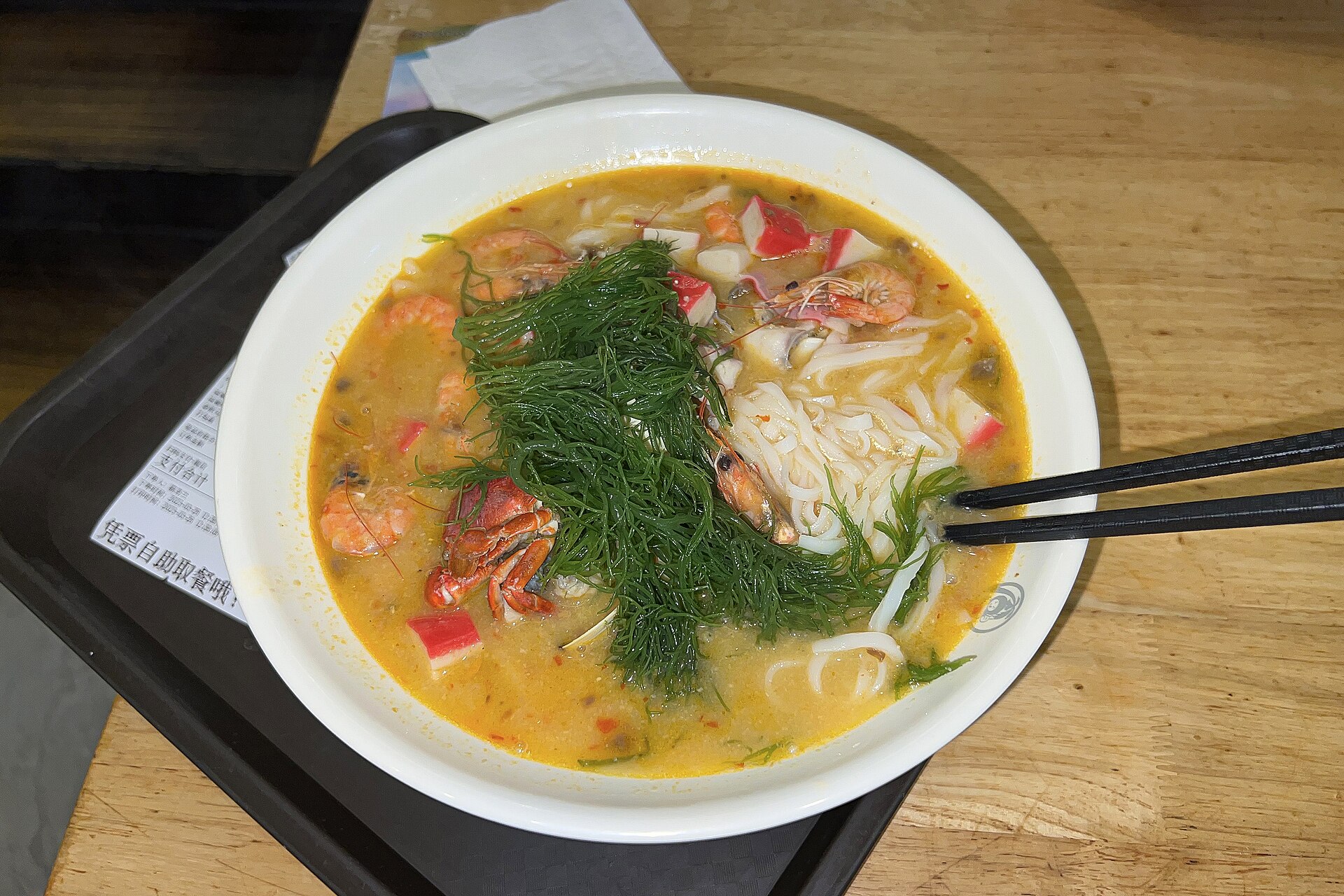 2
2
Sanya's signature seafood ritual — walk the stalls of the First Market (第一市场) picking live prawns, Hele crab, scallops, sea snails, mantis shrimp, abalone and grouper, then carry your haul to a nearby processing restaurant (加工) that cooks it to order: garlic-steamed, spicy stir-fried, or sashimi. You pay separately for the seafood and the cooking. Be honest with yourself first, though: the First Market is well known for short-weighing and overcharging tourists, so weigh everything at the official public scale, agree the price before you buy, and confirm the cooking fee up front.
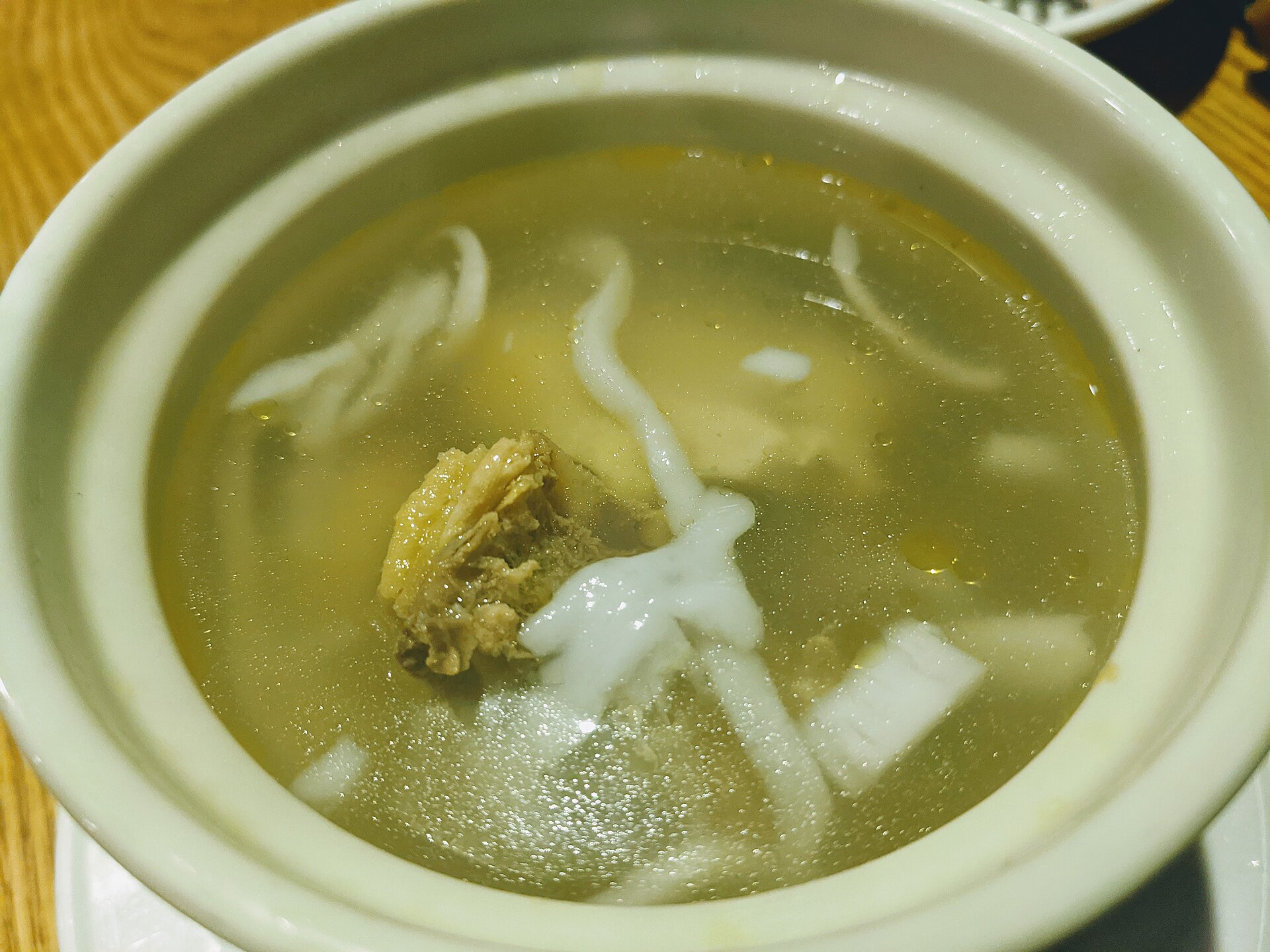 3
3
A hotpot that is the opposite of málà in every way — the broth is fresh young-coconut water instead of a fiery base, with free-range chicken simmered in it, so it tastes clear, naturally sweet and not spicy at all: clean and light. You dip the chicken in a fragrant kumquat, chilli and sand-ginger (沙姜) sauce, and once the chicken is gone you keep simmering coconut flesh, vegetables, mushrooms or seafood in that sweet broth. It is a modern Hainan signature, born from having fresh coconuts all over the island, and locals eat it as a family.
One of Hainan's Four Famous Dishes, this sea crab from Hele (和乐) township on the island's east coast is prized for being packed with roe and rich fat. The best way to eat it is plain steamed, so the sweet meat and the buttery roe come through fully, dipped in a little ginger vinegar. The flesh is firm and sweet, the roe so rich you sip it slowly straight from the shell. Locals rank it among the very best things to eat on the island, and it's at its finest when the crabs are full of roe.
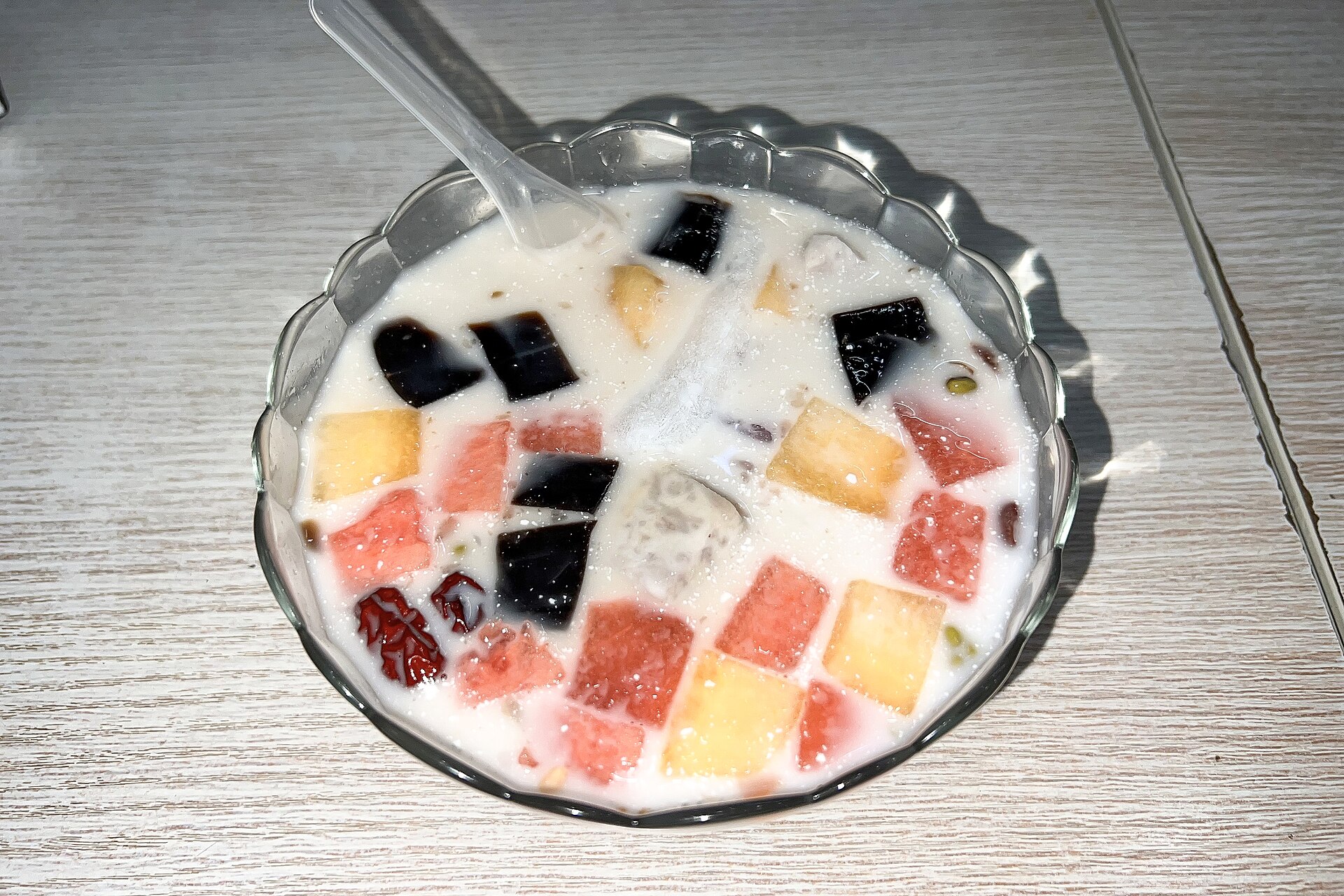 5
5
The island dessert locals crown the king of Hainan sweets — a big bowl flooded with cold coconut milk (or young-coconut water) and packed with red beans, mung beans, grass jelly, watermelon, mango, peanuts, taro, glutinous rice balls and tapioca pearls. You can have it iced or warm, and people eat it all day in the tropical heat. It's coconut-fragrant, just sweet enough, with crunch from the beans and toppings — one order gives you every texture in a single bowl, and it's the most refreshing thing on a hot day.
 6
6
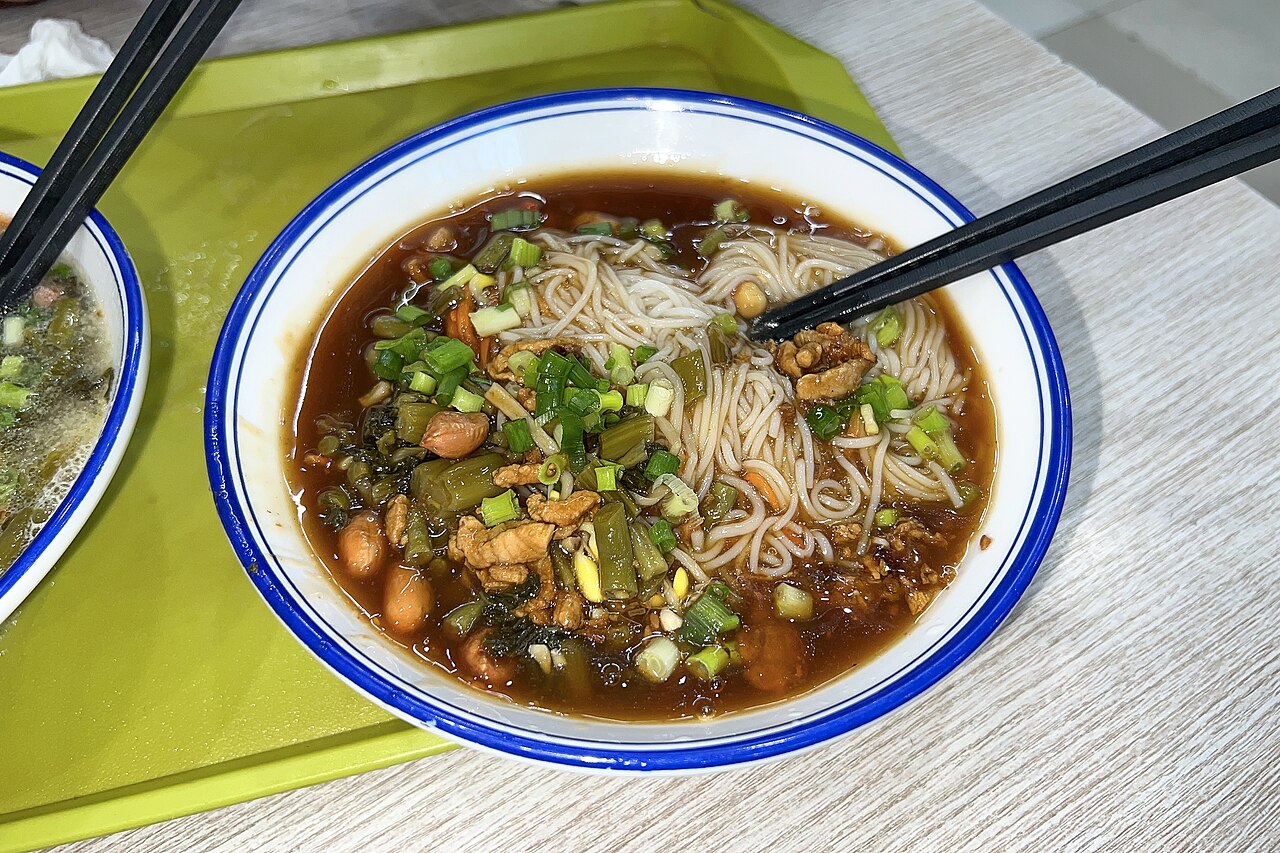
Hainan is an island where every town has its own rice-noodle bowl, and most are eaten dressed, not soupy. The classic is Hainan fen (海南粉), thin noodles tossed in a rich dressing; Baoluo fen (抱罗粉) is thicker, with a pork-bone broth; and the one not to miss is Lingshui sour noodles (陵水酸粉) from Lingshui county — thin noodles piled with more than ten toppings (fish cakes, dried squid, small dried fish, peanuts, beef jerky) and a bright sweet-sour-spicy dressing from vinegar and kumquat. Hot weather, cold bowl, no contest.
Another of Hainan's Four Famous Dishes, this duck from Jiaji (加积) in Qionghai is specially fattened until the meat is firm and the skin is thin without being greasy. It is often served poached and sliced (白切), the same way as Wenchang chicken, or roasted Cantonese-style for fragrant skin. The meat is dense and sweet with no fishy edge, dipped in a ginger sauce or the restaurant's own. People usually order it alongside Wenchang chicken in a big meal, so you get both the island's signature bird and its signature duck on one table.
The fourth of Hainan's Four Famous Dishes, the Dongshan (东山) mountain goat from Wanning grazes on grass and herbs in the hills until the meat turns tender and, unusually, has almost no gamey smell. It's cooked several ways — braised in a herbal hotpot, roasted in soy, or simmered in a clear soup. The meat falls apart, the skin is springy, the broth is mellow and sweet. Locals order it for special meals, and it has been prized since ancient times as a fine tribute dish.
 9
9
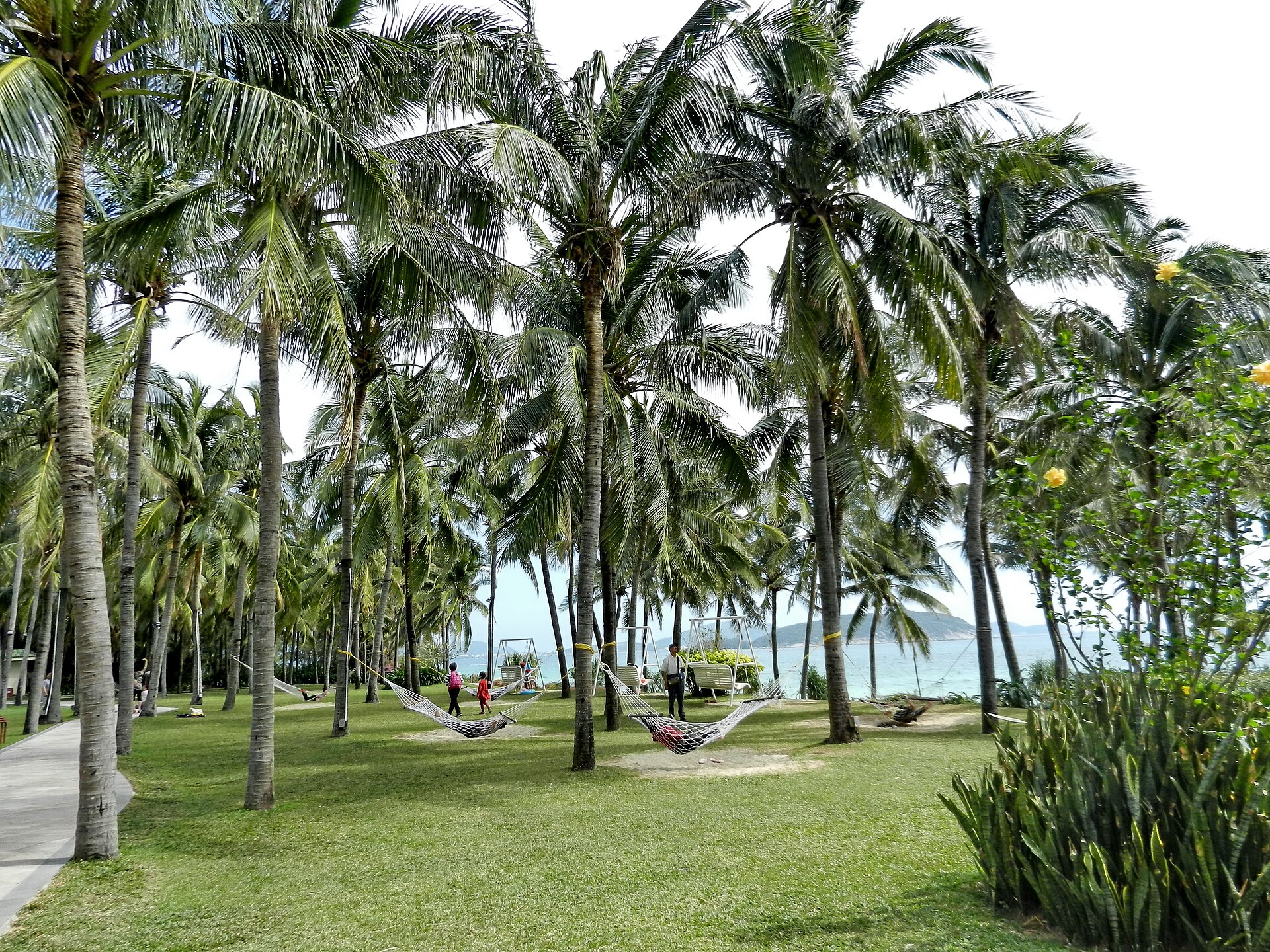
The whole island is a coconut grove, so coconut turns up in almost everything — coconut rice (椰子饭), glutinous rice steamed inside a whole coconut until it's fragrant, then halved and eaten shell and all; coconut jelly (椰子冻), soft young-coconut flesh set in chilled coconut water; coconut ice cream served in a coconut shell; coconut candy; and the one you'll reach for constantly, fresh chilled coconut water sold on every corner. It's sweeter and fresher than anywhere else because it's cut from trees just up the road — the dessert and drink that represent the island best.
Hainan is China's tropical fruit basket, and Sanya is where you catch it ripe — mango, mangosteen, durian (Hainan now grows its own), dragon fruit, jackfruit, coconut, longan, rambutan, sugar apple and pineapple. A lot of it is picked tree-ripe, so it's sweeter than imported fruit. The First Market and the fruit markets have whole stalls of it; buy it fresh or order it blended into a cold juice. Try things you don't often see at home, like small Hainan mangoes or red-flesh dragon fruit — cheap, ripe and refreshing.
Few people realise Hainan grows its own coffee — robusta from Fushan (福山) and Xinglong (兴隆), brought back and planted by returning overseas Chinese from the 1930s–50s. It's dark-roasted and usually drunk with condensed milk, rich and sweet. The place to drink it is the laoba-cha (老爸茶), or "old dad's tea" — cheap neighbourhood teahouses where people sip tea or coffee over dim-sum-style snacks and chat all afternoon. Sanya's beachfronts also have newer sea-view specialty cafés; to be straight with you, those are modern and resort-priced, while laoba-cha is the cheap heritage worth trying.