The warm, clear-water beaches that draw the whole of China south in winter, sunset over the city from Luhuitou, then a 108-metre Guanyin statue and the edge of sky and sea — a single weekend is enough to feel both sides of this island.
Sanya has two faces, and most people arrive wanting to see both. One is the warm, white-sand, tropical-beach side. The other is the cultural side — Nanshan Temple and the giant Guanyin statue that have become the image of Hainan island. This two-day plan gives one clear day to each, so you are not zig-zagging back and forth and wearing yourself out.
It is built for travellers with limited time — a long weekend, or a first trip to see what Sanya is like before coming back for longer. What it deliberately leaves out: Wuzhizhou Island, a full day at Atlantis Aquaventure, and the Yanoda rainforest (each one eats a whole day). If you want those, see the 3-day plan, or if you only have one day, the 1-day plan.
The single most useful decision: choose your bay before you book, because Sanya's bays sit 25–35 km apart. For a swimming-beach trip pick Yalong Bay; for walkable restaurants and the best value pick Dadonghai. See options in the top 10 Sanya hotels guide.
A slow morning on white sand, an afternoon swimming in warm water, a hilltop sunset over the city at Luhuitou, and fresh seafood to close the day.
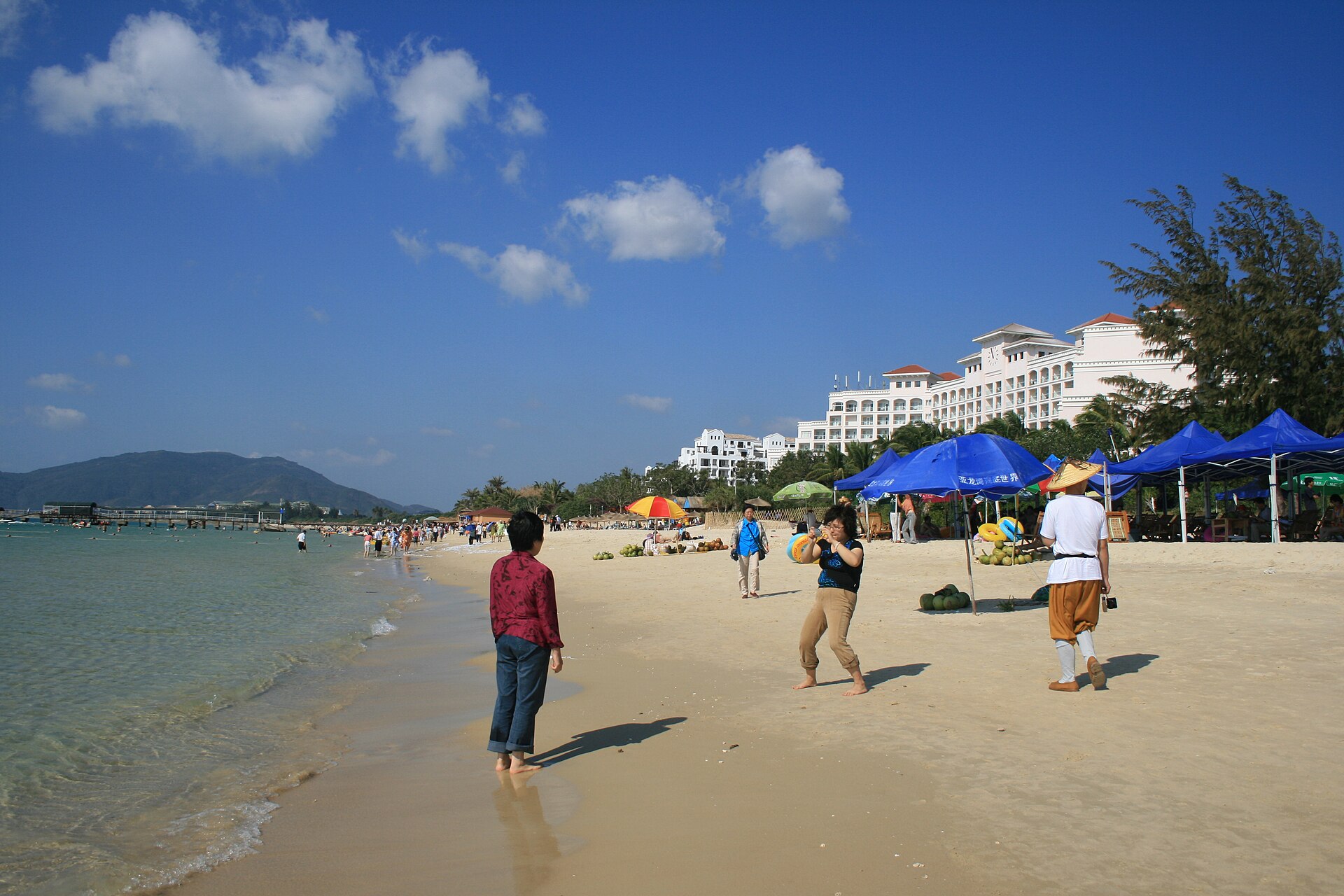
Day one in Sanya is not a day to rush. Sleep in, eat breakfast at the hotel, then head to the beach. Yalong Bay is the prettiest, widest swimming beach in Sanya — fine white sand curving for more than seven kilometres, and water that grades from pale blue to deep turquoise. The sea here is warm all year and the surf is gentle, which makes it a place for floating and wading rather than surfing.
If you are already staying at a Yalong Bay resort, you can walk straight down to the sand. From Dadonghai or downtown it is about a 40-minute DiDi ride. Rent a lounger and umbrella, or spread a mat under the coconut palms — the morning, before the sun gets fierce and before the afternoon crowds, is the most comfortable time to be on the beach.
For lunch, try a beachfront restaurant or your resort. To keep costs down, take a DiDi back into Dadonghai, where restaurants are denser and prices friendlier. Then give the afternoon to the sea — swim, float, walk the shoreline for shells, or read under an umbrella. This is exactly why people fly in from across China to escape the northern winter.
If you want more than lying around, Yalong Bay has water sports — jet skis and parasailing. If you are after serious snorkelling over coral, save that for a Wuzhizhou Island day on a longer trip (it needs a full day). Today, keep it easy.
About an hour before sunset, take a DiDi up to Luhuitou Park — a seaside hill that looks out over the whole of Sanya city and Dadonghai bay below. At the top is the "deer that turned its head" statue, from a Li ethnic-minority love legend that gives the city its name. The golden-hour light here is the best of the day — the city slowly lights up as the sky changes colour, an ideal way to close out a beach day.
Back down the hill, it is seafood o'clock. Sanya is known for fresh, well-priced seafood. The most popular spot is the First Market (第一市场) in town — buy your own prawns, clams, crab and fish, then pay a nearby restaurant to cook it (a system called jiagong). Seafood restaurants throughout Dadonghai are an easy alternative. Do not miss the garlic scallops, lobster and steamed crab.
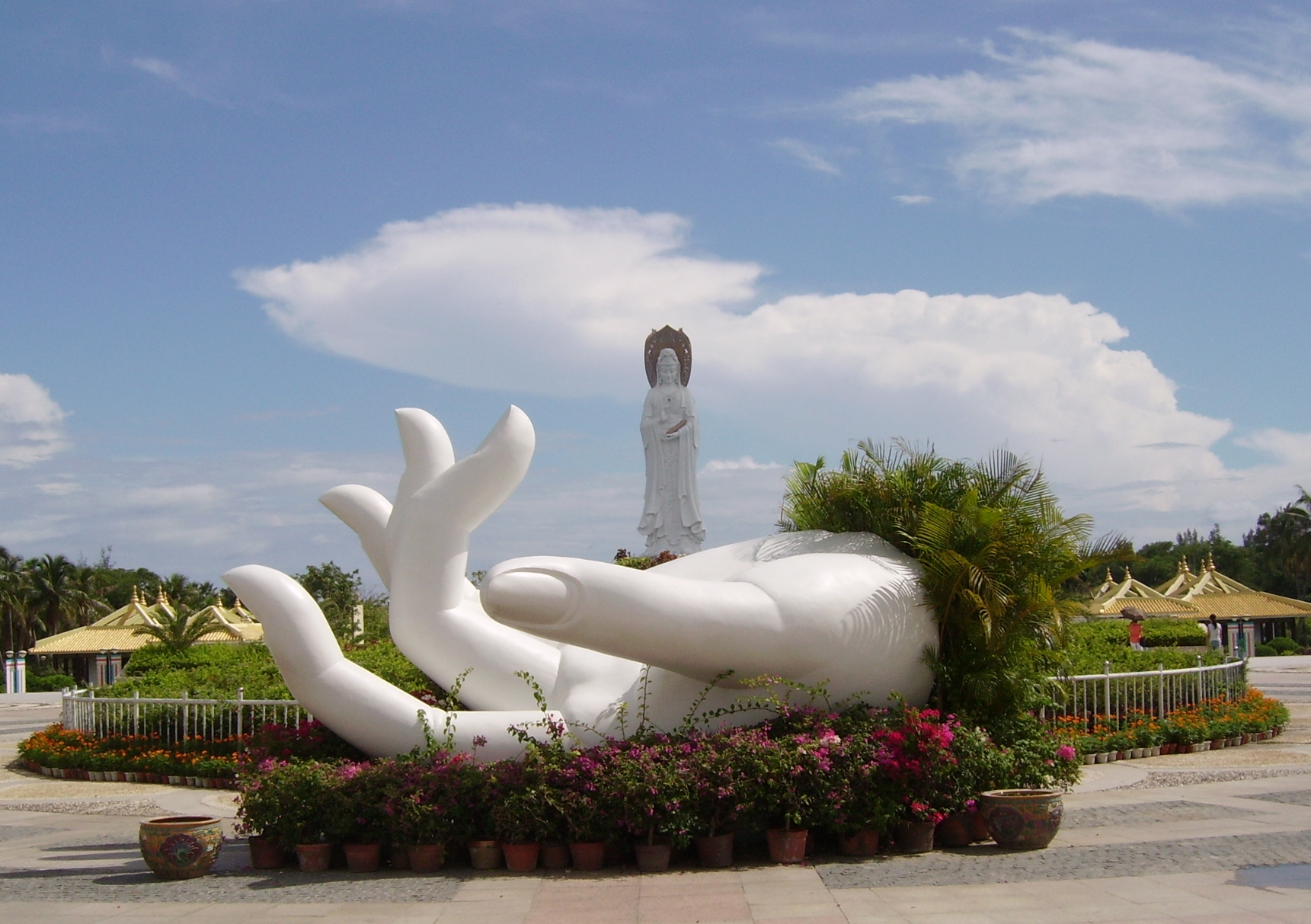
A morning at Nanshan Temple with its 108-metre offshore Guanyin, Hainanese coconut chicken for lunch, and an afternoon at Tianya Haijiao's legendary inscribed boulders.
Start day two earlier, because the west coast is a fair distance from town. The Nanshan Buddhist Cultural Zone is about 40 km south-west of the city, 50–60 minutes by car. It is a large seaside Buddhist park with shuttle buses running loops inside. The thing everyone comes to see is the Nanshan Guanyin (南海观音) — 108 metres tall, standing on a small islet in the sea in front of the temple, reached by a causeway. The statue has three faces: one holding a lotus, one a Buddhist scroll, one a string of prayer beads. It is taller than the Statue of Liberty and one of the tallest Guanyin statues on earth.
Take your time with the temple itself, the Gate of Non-Duality, the Valley of Longevity and the seaside pavilions. Allow about 2.5–3 hours inside the zone — there is a lot of walking even with the shuttles, so wear comfortable shoes and carry water.
Leaving Nanshan, stop for lunch on the way. The Hainan dish to try is coconut chicken (椰子鸡) — a hotpot of chicken simmered in sweet, fragrant fresh coconut water, eaten with a chilli-soy dipping sauce — and Wenchang chicken (文昌鸡), firm poached chicken with a ginger dip. These two are the genuine local Hainanese staples. See recommendations in the Sanya food guide.
The afternoon is Tianya Haijiao, which translates as "the edge of the sky, the corner of the sea" — a seaside park with giant boulders carved with old Chinese characters sitting right on the beach. Imperial-era Chinese once considered this the very end of the known land; today it is the signature photo spot of Sanya, and it once appeared on the old 2-yuan banknote. Walk the shoreline, photograph the "Tianya" and "Haijiao" boulders, and allow about 1.5–2 hours.
The drive back from Tianya Haijiao into town takes about 40 minutes. If you still have energy and want one more sea view, stop for a walk along Sanya Bay and the Coconut Dream Corridor at sunset — or, if you are tired, head straight back to the hotel for a rest before dinner.
For the final dinner, make the most of it with seafood again, or switch to a relaxed beachfront spot in Dadonghai for a cold beer and the sound of the waves — an unhurried way to end a Sanya weekend. See the dishes worth ordering in the Sanya seafood guide.
Pick one bay — they are far apart. Yalong Bay: the best beach and luxury resorts, 25 km from town · Dadonghai: in town, walkable to restaurants, best value for first-timers · Haitang Bay: worth it only if you have come for Atlantis and duty-free. See the top 10 Sanya hotels.
Sanya has no metro — get around by DiDi (a Grab-style ride app) and taxi, which are cheap and the easiest option; in-town fares start around ¥10. The bays sit 25–35 km apart, so for the west-coast day a full-day hire car works out cheaper and more comfortable. Use Amap (高德) rather than Google Maps.
Set up Alipay or WeChat Pay (linked to a Visa or Mastercard) before you go — most shops accept scan-to-pay only. Thai passport-holders get visa-free entry to Hainan for ~30 days, a big advantage. See China visa-free for Thais and the Alipay & WeChat Pay setup guide.
| Category | Budget | Mid-range | Comfortable |
|---|---|---|---|
| Hotel (1 night) | ¥150–300 (~฿750–1,500) |
¥400–700 (~฿2,000–3,500) |
¥900–2,500+ (~฿4,500–12,500+) |
| Food (3 meals/day, with seafood) | ¥100–150 (~฿500–750) |
¥150–300 (~฿750–1,500) |
¥350–700 (~฿1,750–3,500) |
| Transport (DiDi/hire car, 2 days) | ¥100–180 (mostly DiDi) |
¥250–450 (+ hire car on Day 2) |
¥500–900 (hire car both days) |
| Admission (full 2-day trip) | ¥42 (Luhuitou ¥42) |
¥252 (+ Nanshan ¥129 + Tianya ¥81) |
¥400–600 (+ water sports/activities) |
| Total for 2 days (est.) | ¥592–972 (~฿2,960–4,860) |
¥1,202–2,002 (~฿6,010–10,010) |
¥3,050–6,800+ (~฿15,250–34,000+) |
Exchange rate used: ¥1 ≈ ฿5 · Hotel cost counted as 1 night · Prices are estimates and vary by season · Spring Festival / Golden Week rates spike 2–3×.