Home Sanya China Sanya Food About
Home  ›  China  ›  Sanya  ›  Hainan Desserts
🍧 Hainan Desserts in Sanya · 2026

Hainan desserts in Sanya
qingbuliang, coconut sweets, and a whole island of tropical fruit

Sanya is hot almost year-round — and the locals have a better way to beat it than anyone. A chilled bowl of coconut milk loaded with a dozen toppings, ice cream scooped into a coconut shell, market stalls heaped with tropical fruit. This is the sweet side of Hainan that most visitors miss.

Why Hainan's sweets are special

A hot island, a coconut island, an island of cold sweets

Hainan food is not fiery Sichuan cooking. This is China's southernmost tropical island, and the flavours here are clean, fresh and light, built around two ingredients above all: coconut and tropical fruit. When the afternoon sun is blazing, people in Sanya don't reach for the kind of shaved ice you might know from elsewhere — they reach for a bowl of qingbuliang (清补凉), a chilled coconut-milk dessert that throws everything cooling into a single bowl.

Hainan sweets lean gentle — fresh and cold rather than heavily sugared like Western desserts, because the whole point is to cool you down and leave you feeling restored. The coconuts here are sweet and fresh because they grow on the island, and the fruit is picked from nearby groves the same day. So we've gathered the tropical desserts and drinks that tell Hainan's story best — starting with the island's star, qingbuliang, and working all the way to the fruit heaped across the markets, with notes on where to find each one and what it costs.

The island's star

Qingbuliang (清补凉) — Hainan's proudest dessert

If you only eat one sweet thing in Sanya, make it this bowl — cool, nourishing, refreshing, exactly as the name promises.
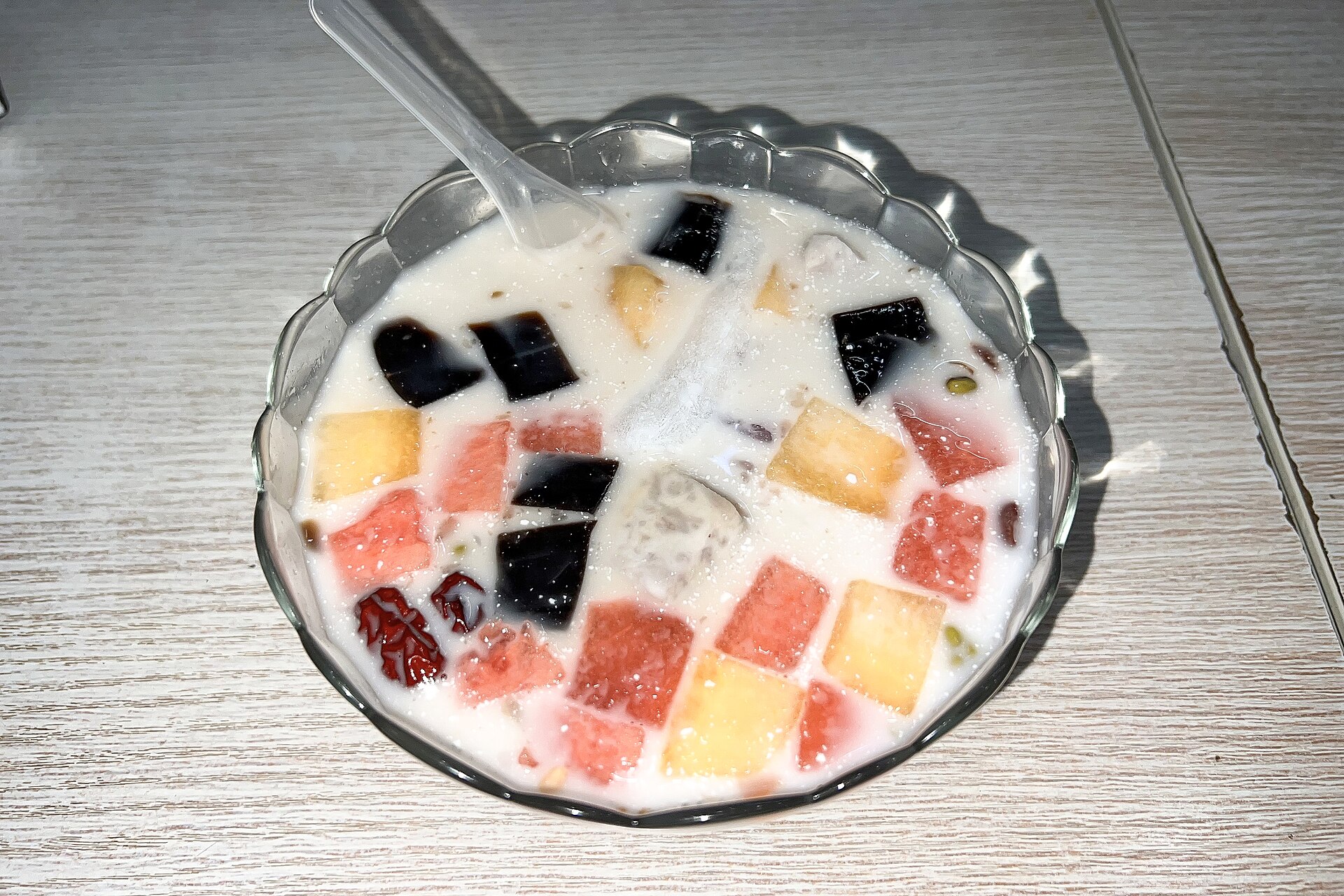
A bowl of Hainan qingbuliang in Sanya — white coconut milk with cubes of black grass jelly, watermelon, mango, beans and lotus seeds in a glass bowl 1
Qingbuliang
清补凉 · iced coconut milk with beans, grass jelly, fruit, sago, taro and peanuts

The name translates as "cool, nourishing, refreshing", and that is exactly what the bowl delivers. It starts with a base of fresh coconut milk or young-coconut water, naturally sweet and cold, then a dozen-plus things go in: cooked mung beans, red beans, coix barley, lotus seeds, mashed taro, chewy taro balls, cubed black grass jelly, sweet watermelon, ripe mango and clear sago, all crowned with crushed roasted peanuts for a nutty finish. Some stalls float a scoop of coconut-milk ice on top. It is never aggressively sweet, and every spoonful brings a different texture — crunchy, chewy, smooth, cold all at once. One bowl and you understand why Hainan locals eat it every day through the hot months.

Where: Several stalls side by side at First Market (第一市场) · neighbourhood shops Lin Qing Qingbuliang and Zheng Ama Qingbuliang · night markets across the city
Price: ¥15–25 per bowl (about ฿75–125), depending on toppings
Best time: Late afternoon to evening, when the heat peaks and the night market is busy
Tip: You can order it iced (冰) or hot (热) — the hot version is favoured in the morning or on a rainy day. Try it both ways at least once.
🍦2
Coconut ice cream
椰子冰淇淋 · served in a coconut shell, or as a fried roll

Sanya's coconuts are sweet and fresh enough to become ice cream with almost nothing added. The best vendors serve coconut-milk ice cream inside a real coconut shell, then scrape fresh young-coconut flesh over the top so you get both the ice cream and the coconut in one go — cold, creamy, fragrant. The other version you'll spot in the night markets is the fried ice-cream roll (炒冰), where coconut milk or yoghurt is poured onto a frozen steel plate and scraped into curls in front of you, often with chopped fruit folded in. It's half dessert, half performance — kids love it.

Where: First Market (第一市场) · night markets in every district · beachfront stalls at Dadonghai
Price: ¥15–25 per cup or shell (about ฿75–125)
Look for: The version served in a real coconut shell — better value, and you get the fresh flesh too
🥥3
Coconut jelly
椰子冻 · soft coconut-milk jelly set inside a coconut

Picture a silken tofu pudding made with coconut milk instead of soybean — soft, wobbling, pale and gently sweet, with the natural perfume of fresh coconut. The places that do it well set the jelly back inside a halved coconut and serve it so you can spoon out both the jelly and the tender flesh clinging to the inside. It's cold, smooth and far lighter than coconut ice cream, which makes it the right call when you want something refreshing without feeling heavy. Some shops add a drizzle of syrup or fresh fruit on top. This is a coconut dessert that doesn't try to do much — and is delicious precisely because the coconut is good.

Where: Coconut-dessert shops in town · First Market · beachfront cafés
Price: ¥18–30 per coconut (about ฿90–150)
Look for: Island coconut makes it more fragrant than versions made with boxed coconut milk
🌴4
Fresh coconut water
椰子水 · young coconuts cracked open beachside

In Sanya, a cold young coconut is the easiest and freshest drink going. Beachfront stalls and market carts keep coconuts piled into hills; the vendor grabs one, takes a few cleaving cuts with a heavy knife and drops in a straw on the spot. Hainan coconut water is just sweet enough and properly cooling. When you've drunk it, ask them to split the coconut in half so you can scrape out the tender flesh — some hand you a spoon for exactly this. It is the cheapest and best way to beat the heat in the city, and the image that stays with everyone who visits Sanya.

Where: Beachfront stalls at Dadonghai · Sanya Bay · every market · carts all over town
Price: ¥8–15 each (about ฿40–75) · resort beachfronts can charge more
Tip: Confirm the price before you take it, and ask them to split it so you can eat the flesh
A coconut palm grove by the beach in Sanya, Hainan, with hammocks strung between the trees and the sea behind 5
Mango sweets
芒果甜品 · mango sago, mango shaved ice, mango with coconut

Hainan is China's biggest mango producer, and from March to June the markets fill with ripe, fragrant fruit — so the dessert shops run a whole mango menu. There's mango sago in coconut milk (杨枝甘露, the Cantonese-style classic) blending mango purée, sago, pomelo segments and cold coconut milk; mango blended over ice; or simply diced ripe mango drizzled with condensed milk and coconut cream. Hainan mango is intensely sweet and aromatic, and against the richness of the coconut it strikes a nice balance. It's the fresh, easy-going option for anyone who doesn't want their dessert too sweet.

Where: Dessert shops in town · night markets · fruit-smoothie stalls across Sanya
Price: ¥18–35 per cup (about ฿90–175)
Season: Mango is best March–June, but sold almost all year
🥤6
Fresh sugarcane juice
甘蔗汁 · cold-pressed and refreshing

The cart with the spinning press is a familiar sight in Sanya's markets and roadsides — fresh cane stalks fed through the rollers and crushed into a green-gold juice, served over ice straight away. The sweetness is clean and natural, never sticky, and some vendors squeeze in a little lime to brighten it. It's genuinely thirst-quenching in the heat, one of the cheapest drinks around, and the one locals reach for again and again. It also happens to be the perfect companion to a walk through Sanya's fruit markets.

Where: Roadside carts · First Market · night markets across town
Price: ¥8–15 per cup (about ฿40–75)
Tip: Drink it fresh from the press — it's sweetest then and darkens if it sits
🍮7
Grass jelly & herbal jelly
凉粉 / 龟苓膏 · cooling black jelly with syrup

Beyond qingbuliang, Hainan has several cooling jellies you can eat on their own. Grass jelly (凉粉) is a wobbly black or clear jelly, cubed and dressed with brown-sugar syrup; some stalls add beans, taro and fruit, making it a pared-down cousin of qingbuliang. Herbal jelly (龟苓膏, guilinggao) is a jet-black Chinese-herb jelly, faintly bitter-sweet and believed to cool the body's "heat" — it's served with honey or condensed milk to balance the bitterness. Both are light, cold and not too sweet, the kind of thing the Chinese have eaten to beat the heat for generations. Good for a day when you want something cold but restrained.
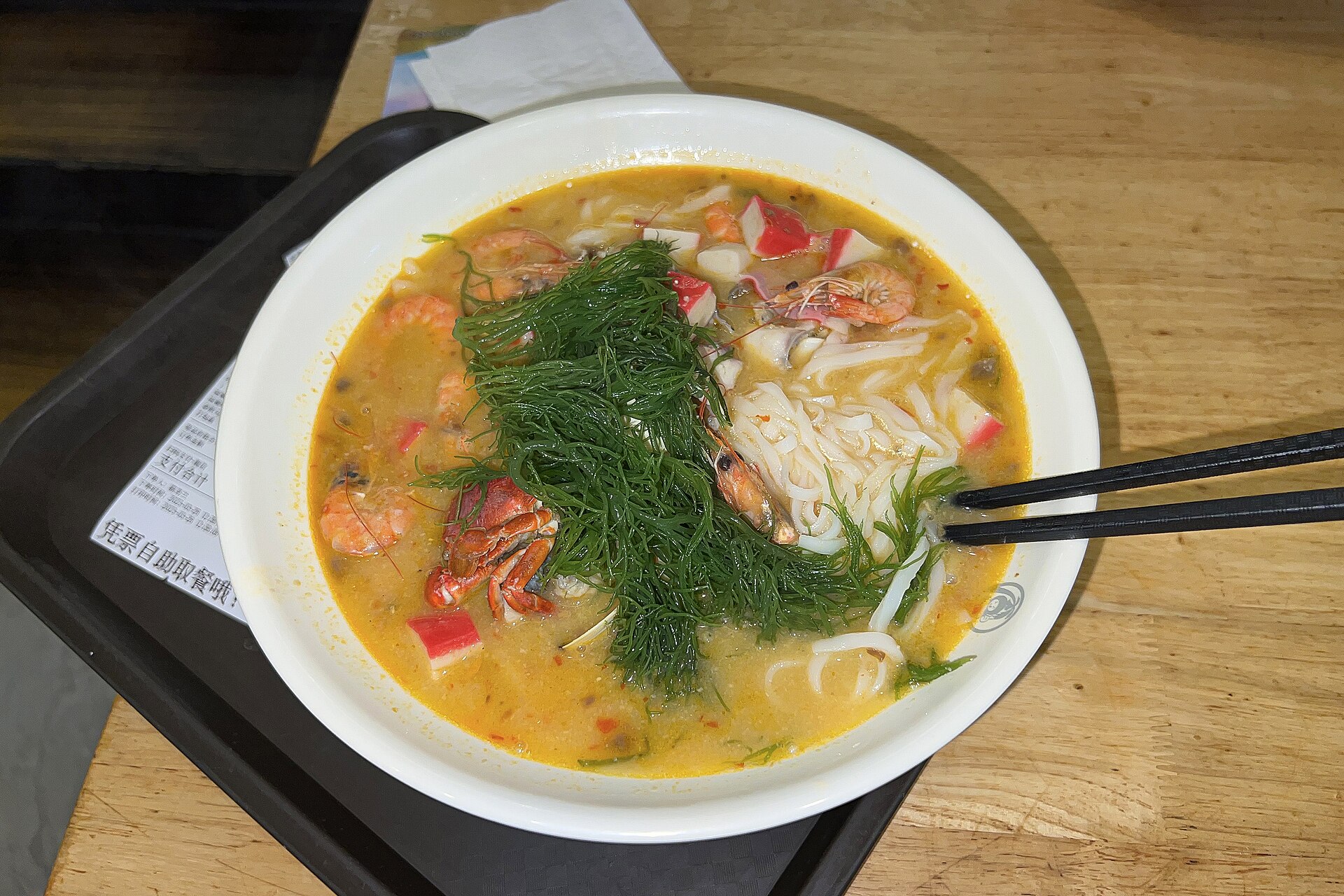
Where: Dessert stalls in the markets · qingbuliang shops · night markets
Price: ¥10–20 per bowl (about ฿50–100)
Tip: Herbal jelly is slightly bitter — ask for extra honey or condensed milk if it's your first time
A local market in Sanya, Hainan, with fresh produce on display in the morning market atmosphere 8
Hainan's tropical fruit
热带水果 · mango, mangosteen, durian, jackfruit, dragon fruit, longan, rambutan, coconut

Hainan is China's tropical-fruit basket, and Sanya sits at its southern tip, so the fruit here is fresher, cheaper and more varied than anywhere else in the country. Walk First Market or a fruit market and you'll find mango (the local king), mangosteen (the queen), dragon fruit with deep-red juicy flesh, golden jackfruit, longan, rambutan, durian (now grown in Sanya), and coconut all year round. Most is sold by weight, and some stalls dice it into bags with a skewer so you can graze across several at once — easy sampling in one spot. Just keep an eye on the scales (see the FAQ at the foot of the page).

Where: First Market (第一市场) · city fruit markets · roadside stalls · local supermarkets
Price: Sold by weight — mango/dragon fruit from ¥10–20/kg (about ฿50–100); mangosteen/durian dearer
Season: Coconut all year · mango Mar–Jun · longan Mar–Jul · jackfruit Apr–Sep · dragon fruit May–Oct
Where to find them

Where to hunt down sweets and fruit in Sanya

No guesswork — these three spots are where locals and visitors actually go for Sanya's tropical sweets.

1
First Market (第一市场)
The heart of Sanya street food · old town · a night market stretching several blocks

First Market is Sanya's liveliest food hub. By day it's a seafood and fruit market; by evening the streets around it turn into a walking food strip with several qingbuliang stalls in a row (Apo Qingbuliang mid-street, Coconut House near the entrance), coconut ice cream, fried ice-cream rolls, fresh sugarcane juice and tropical fruit piled high. This is the place to come if you want to taste the full range of Hainan sweets in one go — just remember that fruit sold by weight is where you should agree the price and watch the scales.

Area: Sanya old town (near Jiefang Road / First Market)
Best time: Late afternoon to evening (desserts and night market) · Known for: Qingbuliang, coconut ice cream, fruit
2
Neighbourhood qingbuliang shops (Lin Qing · Zheng Ama)
Where locals go · fresh-pressed coconut milk · local prices

For qingbuliang the way Sanya locals eat it, step out of the tourist zone into the residential neighbourhoods. Favourites like Lin Qing Qingbuliang (Hongtukan community) are known for piling bowls high and using fresh-pressed coconut milk, while Zheng Ama Qingbuliang works from a three-generation coconut recipe, with a dozen-plus toppings and a scoop of coconut-milk ice floating on top. These places charge local prices and feel more serious than the tourist stalls. Check the latest location in a Chinese map app (Amap / 高德) before you set out, since small shops sometimes move or change their hours.

Area: Residential Sanya (outside the resort zone)
Best time: Afternoon to evening · Known for: Fresh-coconut-milk qingbuliang piled high
3
Beachfront stalls & Sanya Bay cafés (Dadonghai · Sanya Bay)
Fresh coconut and sweets with a sea view · easy if you're at a resort

If you're staying around Dadonghai beach or Sanya Bay, you don't need to head into town for tropical sweets — beachfront stalls crack open fresh young coconuts and serve coconut ice cream and fruit smoothies, while plenty of seafront cafés do coconut jelly, mango sago and coconut drinks with a sea view and a place to sit. The trade-off is that resort-beach prices run noticeably higher than the markets in town, but you're paying for the setting and the convenience. Ideal for an afternoon treat after a swim.

Area: Dadonghai beach · Sanya Bay
Best time: Afternoon to evening · Known for: Fresh coconut water, coconut jelly, mango sago with a sea view
Fruit by season

When you go, what fruit you'll get

Coconut is here all year, but the other tropical fruit comes in seasons — time it right and you'll catch each one at its sweetest.

🌸
Spring (Mar–May)
Mango ripening · early longan

Mango comes on strong from March (Hainan is China's biggest mango producer), intensely sweet and cheap — mango sweets and mango sago are at their best now. Longan starts to appear, and coconut is always around. The weather isn't yet at its hottest and the fruit is excellent.

🌴
Summer (Jun–Aug)
Peak fruit · durian, mangosteen, rambutan

The fullest stretch for tropical fruit — mangosteen, rambutan and durian arrive together, late-season mango lingers, and jackfruit is good. It's also the hottest and most humid time, so cold desserts like qingbuliang, coconut ice cream and grass jelly fly off the stalls. The high season for beat-the-heat sweets.

🐉
Autumn (Sep–Nov)
Dragon fruit · late jackfruit

Dragon fruit with sweet red flesh runs into October, early-season jackfruit hangs on, and coconut is the same as ever. The weather starts to cool a touch and the rain eases, making market walks more comfortable. Coconut sweets and fruit smoothies are still everywhere.

☀️
Winter (Dec–Feb)
Peak visitor season · coconut, pomelo, guava

The season when many escape the cold for Sanya, with the weather at its most pleasant. The standout fruits are coconut (year-round), late-season dragon fruit, and local pomelo and guava. The desserts are all still here — qingbuliang, coconut jelly, coconut ice cream. On a breezy day, try a hot bowl of qingbuliang for once.

Frequently asked

FAQ · before you go hunting for Hainan sweets

What is qingbuliang (清补凉) and how is it different from other coconut desserts?
Qingbuliang (清补凉) is Hainan island's signature cold coconut-milk dessert — the name translates roughly as "cool, nourishing, refreshing". A bowl holds mung beans, red beans, coix barley, mashed taro, lotus seeds, sago, cubes of grass jelly, chewy taro balls, watermelon and mango, all topped with crushed roasted peanuts and bathed in fresh coconut milk or young-coconut water. Some stalls float a scoop of coconut-milk ice on top. It comes iced or hot. What sets the Hainan version apart is the fresh island coconut as the base, the sheer number of toppings piled into one bowl, and a sweetness that stays gentle rather than cloying.
Where is the best qingbuliang in Sanya, and how much does it cost?
The busiest spot is the First Market area (第一市场), where several qingbuliang stalls sit side by side — Apo Qingbuliang mid-street and Coconut House near the entrance both build their bowls on fresh coconut water with a dozen-plus toppings. Away from the tourist zone, neighbourhood favourites like Lin Qing Qingbuliang and Zheng Ama Qingbuliang press their own fresh coconut milk and pile bowls high. A bowl normally costs ¥15–25 (about ฿75–125) depending on the toppings. Late afternoon to evening, when the heat peaks and the night market comes alive, is the best time to go. For more local dishes, see the Sanya food guide.
Which tropical fruits are in season when I visit Sanya?
Hainan is China's largest tropical-fruit basket. Coconut is available all year. Mango — Hainan is China's biggest mango producer — peaks March to June; longan runs March to July; jackfruit April to September; dragon fruit May to October. Mangosteen, rambutan and durian are summer fruits (roughly May to August), and durian is now grown in Sanya itself with harvests starting in recent years. In winter (December to February), the high season for many overseas visitors, the standouts are coconut, late-season dragon fruit, and local pomelo and guava.
What is the difference between coconut ice cream and coconut jelly in Sanya?
Coconut ice cream (椰子冰淇淋) is a coconut-milk ice cream, usually served inside a real coconut shell with fresh young-coconut flesh scraped on top; some vendors make it as a fried ice-cream roll on a frozen steel plate in front of you. Coconut jelly (椰子冻) is a soft, wobbly jelly made from coconut milk, set back inside a halved coconut and eaten together with the tender flesh — cool, smooth and lightly sweet. The ice cream is rich and properly cold; the jelly is lighter and more refreshing. Both run about ¥15–30 (around ฿75–150).
How do I avoid being overcharged at Sanya's markets?
First Market (第一市场) has a real reputation for overcharging and short-weighing tourists, especially on fruit sold by weight. Play it safe: agree the price per kilo before you buy, watch the weighing, and use the market's public weigh-scale stations (公平秤) to double-check. Plated desserts like qingbuliang and coconut ice cream are usually fixed-price per bowl, so they carry far less risk. Almost every stall takes Alipay and WeChat Pay — having one set up is more convenient than juggling cash. For more on buying seafood and navigating the markets safely, see the Sanya seafood guide.
Are Hainan desserts only served cold, or is there a hot version?
Both. Qingbuliang can be ordered iced (清补凉冰) or hot (清补凉热) — the hot version, with warm coconut milk over the beans and taro, is popular in the morning or on a rainy day and feels almost like a nourishing tonic. Coconut ice cream, coconut jelly, sugarcane juice and grass jelly are all served cold, which suits Sanya's near year-round heat. If you visit in the cooler winter months, try a hot bowl of qingbuliang at least once — it is a side of the dish most visitors never discover.
Klook · Food Tour

Sanya Food Tour — taste Hainan's sweets and fruit with someone who knows

Walk First Market and Sanya's night markets with a local guide — try qingbuliang, coconut ice cream and tropical fruit you'd struggle to find on your own, with no worries about the language or the scales.

See Sanya Food Tours on Klook →
Wherebest is a Klook affiliate partner — we may earn a commission when you book through our link, at no extra cost to you.