Home Sanya China Sanya Hotels About
Home  ›  Asia  ›  China  ›  Sanya  ›  Getting Around
🚕 Sanya Transport Guide · 2026

Getting Around Sanya
No Metro, But DiDi Has You Covered

Sanya has no subway like the big mainland cities — but DiDi is cheap and easy to hail, flagfall is only about ¥10, buses cost ¥1–5, and the ring railway takes you on island day trips. The one thing to plan from the start: the bays sit 25–35 km apart, so choose your base wisely.

Before you go

A beach city with no metro — and that's fine

If you've travelled in Shanghai or Beijing and grown used to hopping on a subway to get anywhere, here's the first thing to know: Sanya has no metro or MRT. This tropical beach resort city on Hainan Island moves at a slower, more spread-out pace and runs almost entirely on wheels. It sounds like a hassle, but it's easier than you'd think once you know what to use and when.

The star of getting around Sanya is DiDi (滴滴 — China's version of Grab) and metered taxis. Both are remarkably cheap, with a flagfall of just ¥10–15, easy to hail, and the DiDi app is in English and bills straight to Alipay or WeChat. Backing them up are ¥1–5 city buses you pay for by scanning a QR code, a short tram line along Sanya Bay, and the Hainan ring high-speed railway that carries you to other towns on the island with no car needed.

But there's one thing to settle before you even book a hotel: Sanya's main bays are far apart. Yalong Bay and Haitang Bay lie 25–35 km out to the east — a 40–50 minute DiDi ride from downtown. This guide walks through every way to move around Sanya, from DiDi and buses to the tram, the railway and the right map app — then helps you choose the right base from day one.

Your main option

DiDi and taxis — how most visitors get around

Cheap, easy to hail, no Chinese needed — for tourists in Sanya, this is the real workhorse.

In a city with no metro, the best stand-in is affordable ride-hailing — and Sanya has it in spades. DiDi is China's number-one ride-hailing app, works just like Grab, has an English interface, lets you type place names in English and finds them for you, shows a fare estimate before you book, and bills your Alipay or WeChat directly. You never have to negotiate a price with the driver.

🚕
Metered taxi
出租车 · every cab is metered

Sanya taxis run on a meter. Flagfall is about ¥10–11 including the first 2.5 km, then it's charged by distance. Fares climb in traffic and at night (23:00–06:00), when a roughly 20% surcharge applies. Flag one on a main road or pick one up outside hotels and attractions.

Tip: have your destination written in Chinese characters, since most drivers don't speak English. Ask your hotel to write it on a small card, or save the Chinese name from Amap on your screen — and check the meter is running each time.

Rough fares: downtown / Dadonghai ~¥15–30 · city → Yalong Bay ~¥80–120
Pay with: cash · Alipay · WeChat Pay (most cabs)
At night: ~20% surcharge between 23:00–06:00
📱
DiDi — the go-to ride-hail
滴滴出行 · English app interface

DiDi suits almost every situation in Sanya — when you're loaded with luggage, heading back to the hotel late, crossing between bays, or going somewhere the buses don't reach. DiDi Express starts at around ¥15, charged by distance and time, while DiDi Premier (nicer cars) starts at about ¥29. You pick the tier in the app.

Before you fly, download DiDi and link Alipay or WeChat in advance — setting it up at the airport is fiddly. Once you can hail a car in the app, everything gets easier: no haggling, no worrying about detours.

DiDi Express: from ~¥15 · by distance + time
Payment: link Alipay or WeChat in the app — set it up before you travel
Language: English interface, type your destination in English
Why DiDi and taxis fit Sanya so well: Sanya's sights are scattered rather than clustered the way they are in a metro city, so buses mean multiple transfers and long waits. DiDi, meanwhile, drops you right at the door for a few dozen yuan. For couples or small groups, splitting a fare often works out cheaper and far more comfortable than public transport — budget for DiDi in your trip plan from the start. See our full Sanya trip budget.
How to pay

Paying for transport in Sanya — scan a QR code

China is almost cashless, and Sanya is no exception. Everything from DiDi to buses to the tram and street stalls is paid by scanning a QR code. Setting up Alipay or WeChat Pay before you fly is the single most important thing you can do, because it's the key to moving around for the entire trip.

📱
Alipay

Link a Visa/Mastercard in international mode to pay for DiDi, buses, restaurants and tram scans — set it up before you travel.

💬
WeChat Pay

A companion to Alipay with a similar setup. Link a foreign card and scan QR codes to pay for transport and shops just the same.

🚌
Bus/tram QR

Board a bus or tram and scan the QR with Alipay/WeChat at the reader by the door — no coins needed, though a few in reserve never hurt.

💵
Cash

Buses take cash dropped in the box (no change given) — keep ¥1–5 coins handy in case Alipay isn't ready, but most people just scan.

Honestly, if you set up Alipay with a linked card before you leave home, your Sanya trip gets smoother instantly — beyond transport, you'll use it at seafood restaurants, night markets, cafés and the duty-free malls. For a step-by-step on linking a foreign card, see our Alipay & WeChat Pay guide.

Other options

Buses, the tram and the ring railway

🚌
City buses
公交车 · cheap but Chinese-only

Sanya has many bus routes linking downtown, Dadonghai, Sanya Bay and out to Yalong/Haitang bays. Fares are distance-based, starting at ¥1–2 and mostly under ¥5 — the cheapest option of all. Pay by scanning a QR code or dropping coins.

The honest truth: signs and announcements are mostly in Chinese, with long waits and several transfers for the far bays. For tourists, DiDi is much more comfortable. Buses make sense on the tightest budget within the downtown/Dadonghai zone, paired with Amap, which gives accurate routes and stops.
Fare: ¥1–5 by distance
Pay with: QR scan (Alipay/WeChat) · cash in the box (no change)
Tip: use Amap (Gaode) for routes and stops
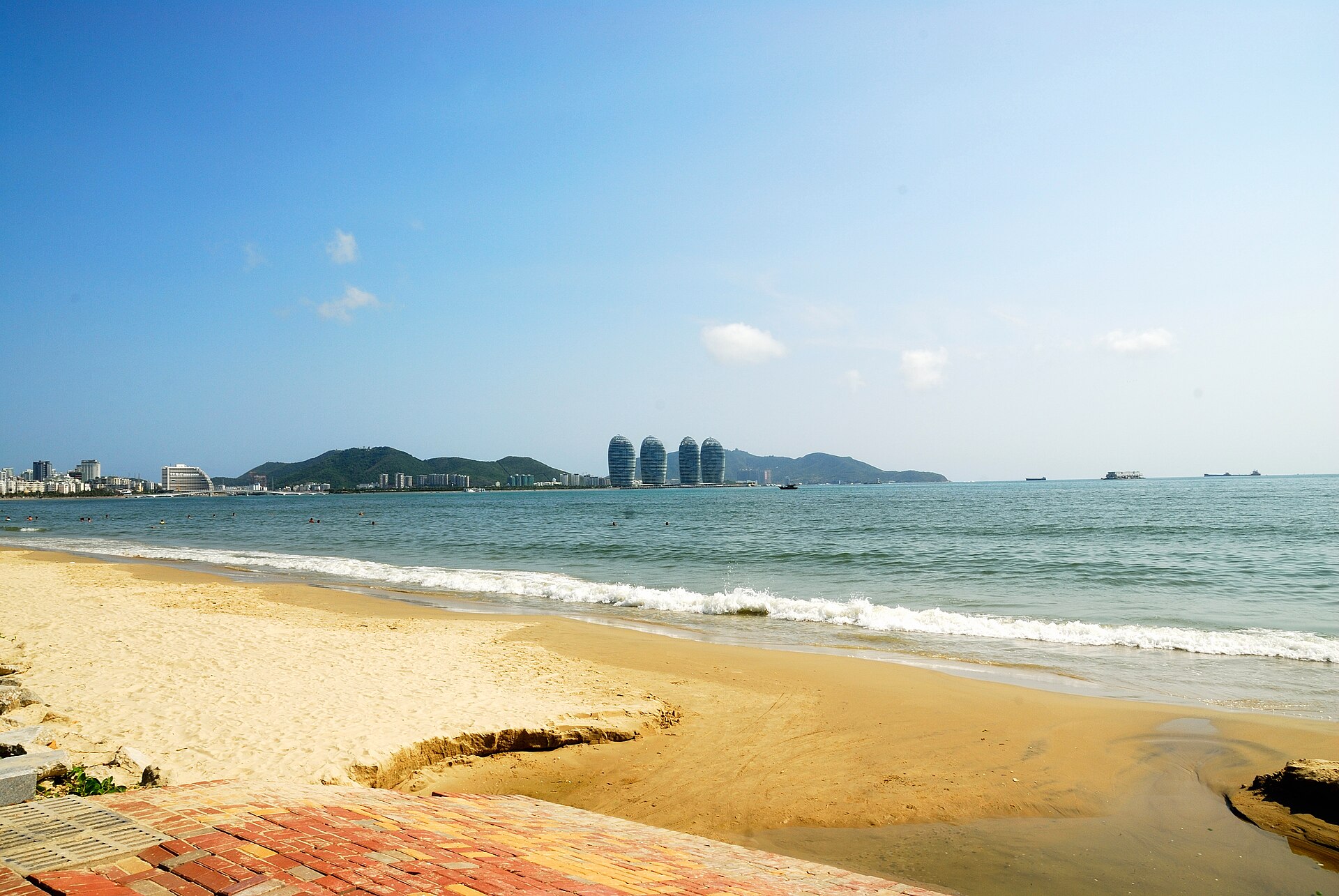
Sanya Bay, Hainan — the long beach beside the Coconut Dream Corridor that the Sanya tram runs along Tram
Sanya tram
有轨电车 · along Sanya Bay

The Sanya tram (有轨电车) is a single sleek, low-noise, zero-emission line running about 8.4 km along the Sanya Bay waterfront from the Jianguo Road area to Sanya Railway Station, with 15 stops. It's good for a beachfront ride through the Sanya Bay area with a bit of sightseeing along the way.

Know its limits before you rely on it: the tram covers only the Sanya Bay corridor, not the whole city — it won't take you directly to Dadonghai, Yalong Bay or Haitang Bay. Think of it as a fun little extra for anyone staying near Sanya Bay rather than a backbone for the trip.
Route: ~8.4 km · 15 stops · along Sanya Bay
Pay with: QR scan (Alipay/WeChat)
Best for: guests near Sanya Bay · beachfront rides
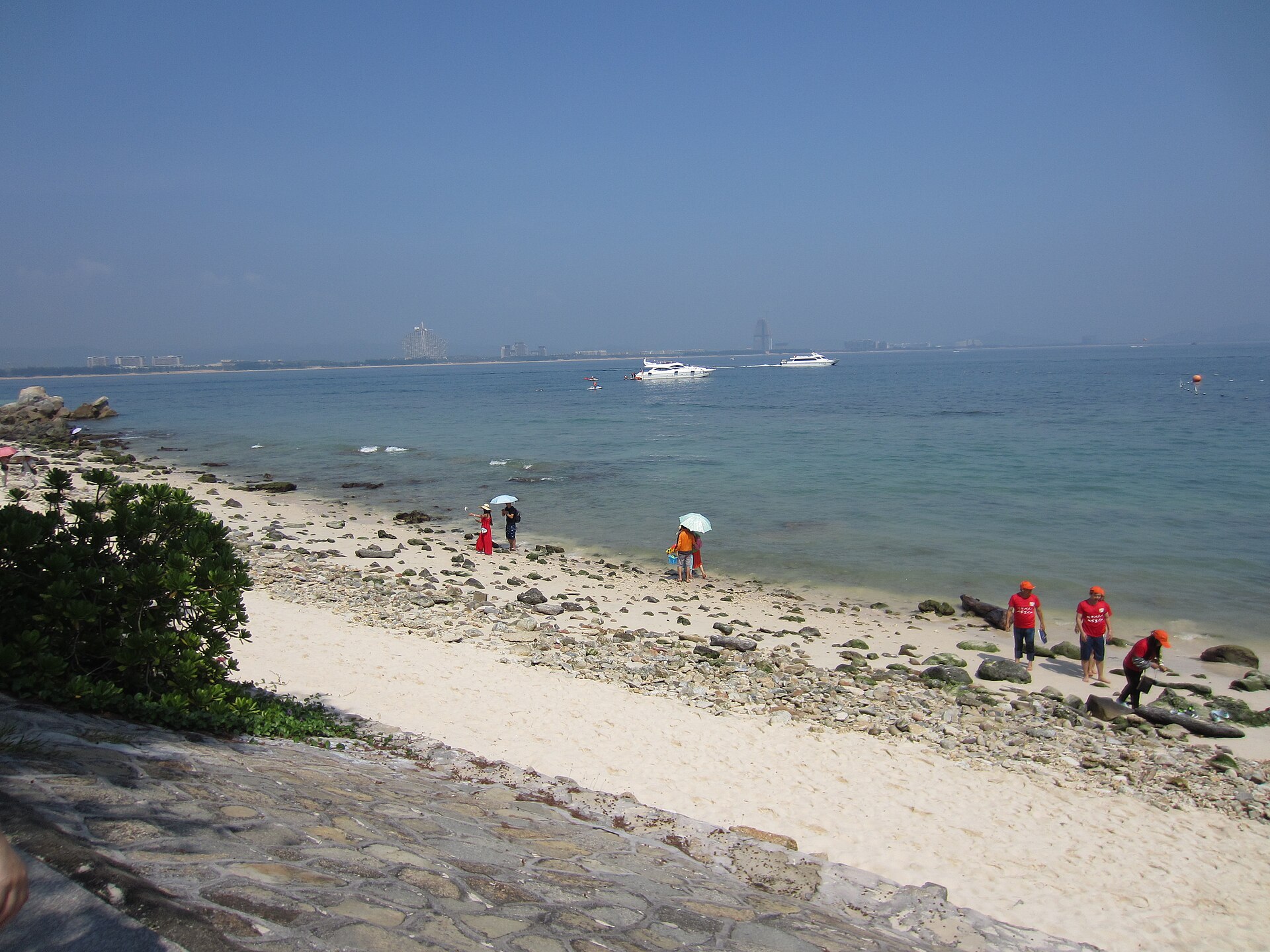
Wuzhizhou Island near Sanya — turquoise water, an east-coast day-trip spot reachable by train Ring railway
Hainan ring high-speed railway
海南环岛高铁 · east-coast day trips

The Hainan ring high-speed railway loops the entire island. Sanya has three main stations: Sanya Railway Station (三亚站) downtown, Yalong Bay Station (亚龙湾站) to the east, and Phoenix Airport Station (凤凰机场站). It's ideal for car-free day trips up the east coast.

Popular runs: Sanya → Haikou (海口) in about 1.5–2 hours, second-class around ¥98–158 · Sanya → Lingshui for the boat to Boundary Island in around 20–30 minutes. Book ahead on Trip.com or the 12306 app. See our China high-speed rail guide.

Sanya ↔ Haikou: ~1.5–2 hr · 2nd class ~¥98–158
3 stations: Sanya (downtown) · Yalong Bay (east) · Phoenix Airport
Booking: Trip.com · 12306 app
🚐
Resort shuttles
酒店班车 · ask at check-in

Many resorts in Yalong Bay and Haitang Bay run their own shuttles — both airport pick-ups and drop-offs (usually paid) and loops within the bay or to the duty-free mall (sometimes free at set times). Since these bays are far out and the sights are scattered, a resort shuttle can save you a fair bit on DiDi.

Tip: ask the front desk about shuttle schedules at check-in. Some need to be booked ahead or run limited times. If you're planning a day out, check whether the resort shuttle reaches where you want to go so you don't pay for a DiDi every leg.
Common in: Yalong Bay · Haitang Bay (5-star resorts)
Ask about: schedule · advance booking · free or paid
Helps with: cutting DiDi costs in the far-out bays
Scooters / e-bikes — rentable, but be careful: there are scooter and e-bike rental shops in Sanya, but honestly they're not recommended for most visitors — traffic moves fast, signs are in Chinese, foreign licences usually aren't legally valid in China, and insurance gets complicated if you crash. Since DiDi is cheaper and far safer, keep scooters as a last resort.
The most important thing about Sanya

The bays are far apart — pick one base

This is what sets Sanya apart from other cities, and it's a decision to make before you book a hotel.

If you remember one thing from this page, make it this: Sanya's main bays aren't next to each other — they're spread out over tens of kilometres. There's no metro to string them together, so hopping from one bay to another eats both time and money. If you imagine staying in one spot and dashing to every bay each day, you'll spend more of your trip in the back of a car than you'd expect.

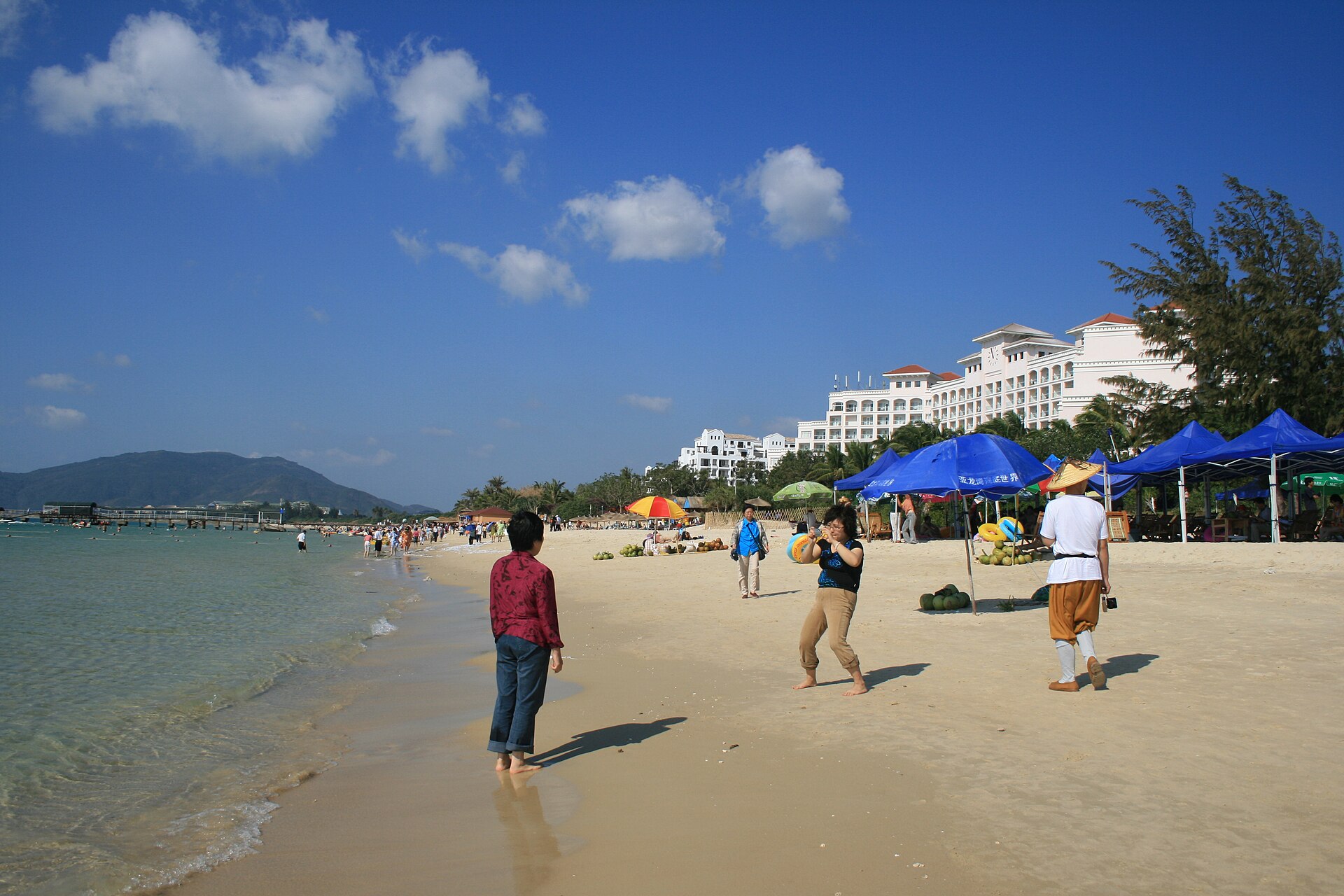
Yalong Bay, Sanya — a curving white-sand beach about 25 km from downtown
Yalong Bay — the best swimming beach and the luxury resorts, but about 25 km from downtown: a ~40–50 minute DiDi ride.
Distance + travel time

How far each bay is from downtown

Area Distance from downtown Best for
Dadonghai In town · walkable First-timers · best value · lively, lots of restaurants
Sanya Bay ~5–10 km · near airport Long sunset beach, mid-range value
Yalong Bay ~25 km east · ~40–50 min Best swimming beach, luxury resorts, calm
Haitang Bay ~30 km northeast · ~45–50 min Newest, most luxurious · Atlantis + biggest duty-free
Downtown / First Market Central Cheapest, local, near the seafood market
How to choose without regret: want an easy trip with restaurants in walking distance and a budget that won't balloon → Dadonghai · want a luxury beachfront resort and don't mind staying put → Yalong Bay · travelling with family for Atlantis and duty-free shopping → Haitang Bay. Pick the one base that best fits your style, and if you want to visit another bay, plan it as a half- or full-day trip with DiDi money set aside. Compare locations in full in our where to stay in Sanya guide and the 10 best hotels in Sanya.
Maps and apps

Which app to navigate Sanya with

This matters: in mainland China, Google Maps doesn't show accurate public-transport data. The map may load with a VPN, but bus, tram and routing info is often wrong or missing. There are two apps that actually work for navigating Sanya.

🗺️
Amap (高德地图 / Gaode)
China's most-used navigation app

Amap has accurate bus and tram data, lets you hail DiDi inside the app, supports searching places in English, and has full transit planning with bus-stop details. Download it from the App Store worldwide and it works without a VPN — an essential app for Sanya.

Tip: download before you board, since the App Store/Play Store inside China require a VPN
🍎
Apple Maps
no extra app for iPhone users

Apple Maps uses Amap's map data inside China, so its routes and directions are accurate, and it works without a VPN. Ideal for iPhone users who'd rather not install anything extra — you can search in English too.

Note: Android can't use Google Maps fully here — install Amap instead

Want to use LINE, Instagram, Gmail or full Google Maps while in China? You'll need a VPN downloaded and tested before you travel, since most VPN sites are blocked inside China. See the details in our China internet & VPN guide.

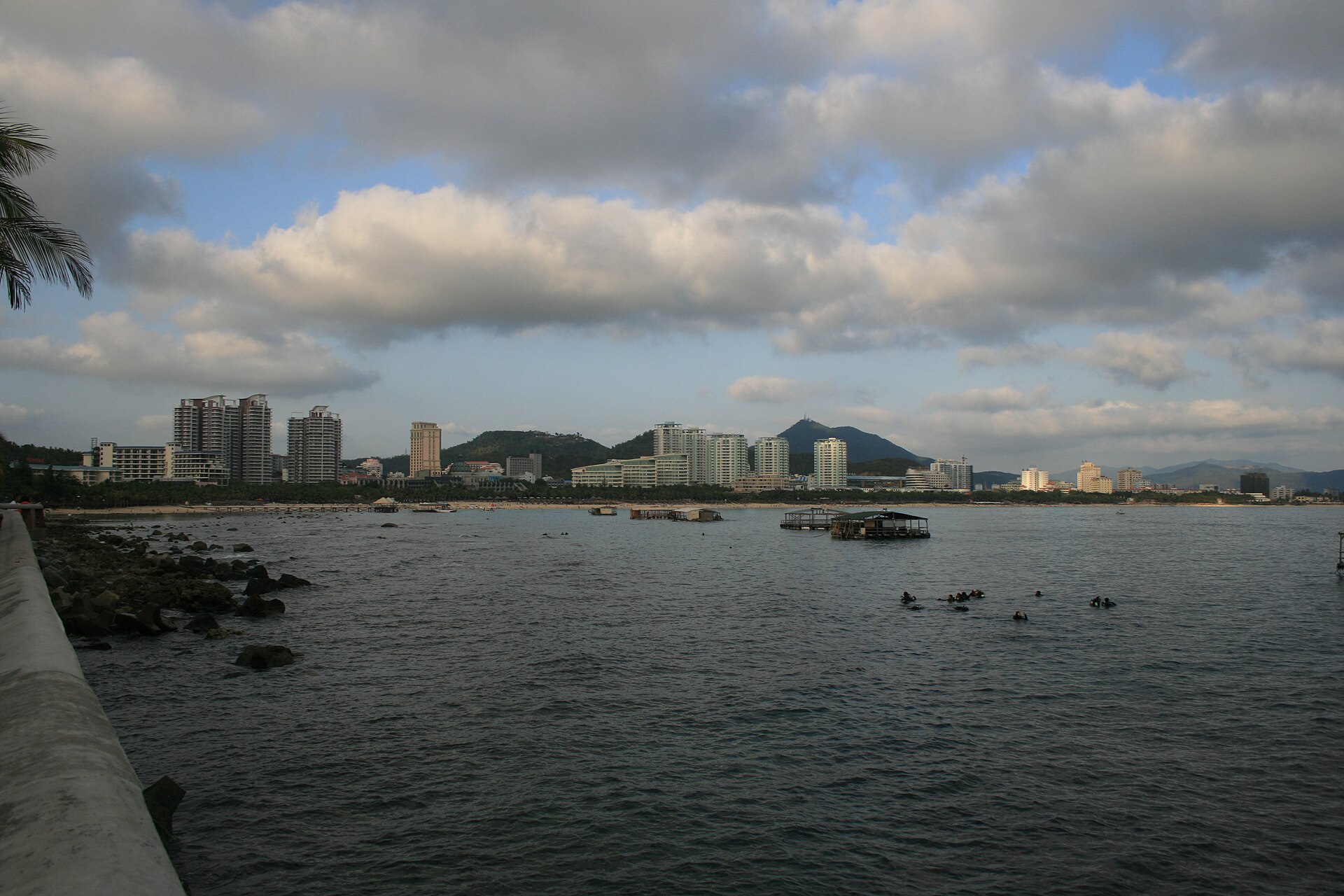
Dadonghai beach, Sanya — the in-town beach you can walk to, ringed by restaurants and hotels
Dadonghai — the in-town beach you can walk to, with restaurants all around: ideal if you'd rather not take a DiDi every time.
The real tip

Do two things before you fly and Sanya gets easy

If we had to boil it down to two points: one — set up Alipay or WeChat with a linked card, and download DiDi and Amap before you leave home. These three apps are the complete getting-around kit for Sanya, because the city runs on ride-hailing and QR payments. The moment you land, you can open the app and hail a DiDi without any fuss at the airport.

Two — settle the bay question before you book your hotel. Switching bays mid-trip means packing up, checking out and a 40–50 minute drive. Pick the one base that's right for you from the start, then use DiDi and the ring railway to reach farther afield — it saves far more time and money.

For first-timers in Sanya: Phoenix Airport (SYX) sits west of the city, close to the Sanya Bay/Tianya side. A DiDi to downtown or Sanya Bay is ~¥30–50 (~20 min); Yalong Bay is further at ~¥100–140 (~40 min). Leave enough time and budget — see every route option in our Sanya airport transfer guide, and start planning at our Sanya first-timer guide.
Frequently asked questions

FAQ · Getting around Sanya

Does Sanya have a metro or subway?
No. Sanya has no metro or subway like big mainland cities such as Shanghai or Beijing. The main way tourists get around is DiDi (China's Grab) and taxis, which are cheap and easy to hail, backed up by ¥1–5 city buses, a short tram line along Sanya Bay, and the Hainan ring high-speed railway for trips to other towns on the island. Many resorts also run their own shuttles.
How much do DiDi and taxis cost in Sanya, and do I need to speak Chinese?
Metered taxis have a flagfall of about ¥10–11 for the first 2.5 km, then charge by distance, with roughly a 20% surcharge at night (23:00–06:00). DiDi Express starts at around ¥15 and is charged by distance and time. The DiDi app has an English interface, lets you type your destination in English, and bills your linked Alipay or WeChat directly, so you don't need to speak Chinese. Having your destination written in Chinese characters still helps if you flag a taxi on the street. See how to set up Alipay in our Alipay & WeChat Pay guide.
How far apart are Sanya's bays, and should I stay in just one?
Sanya's main bays are spread out. Yalong Bay is about 25 km east of downtown, Haitang Bay is furthest at around 30 km to the northeast, while Dadonghai and Sanya Bay sit near the centre. Travelling between the eastern bays and downtown takes 40–50 minutes and costs anywhere from tens to over a hundred yuan by DiDi each way. It's best to pick one base that matches your trip style, then budget the time and cost if you plan to cross to another bay. Compare locations in our where to stay in Sanya guide.
Is the Sanya tram (有轨电车) useful for sightseeing?
Yes, within its zone. The Sanya tram (有轨电车) is a single modern line running about 8.4 km along the Sanya Bay waterfront from the Jianguo Road area to Sanya Railway Station, with 15 stops. It's good for a beachfront ride and a bit of sightseeing in that corridor rather than as a main way across the city, since it only covers the Sanya Bay area. For the other bays you still rely on DiDi or the high-speed rail.
Can I take a train to other towns on Hainan from Sanya?
Yes, and it's very convenient. The Hainan ring high-speed railway (海南环岛高铁) loops the whole island. Sanya has three main stations: Sanya Railway Station (三亚站) downtown, Yalong Bay Station (亚龙湾站) to the east, and Phoenix Airport Station (凤凰机场站). Sanya to Haikou (海口) takes about 1.5–2 hours; Sanya to Lingshui (for Boundary Island) is around 20–30 minutes. Book through Trip.com or the 12306 app. It's ideal for car-free day trips up the east coast. See our Sanya day trips guide.
Can I use Google Maps in Sanya?
Google Maps shows the map if you have a VPN, but its public-transport data in mainland China is unreliable. Use Amap (高德地图 Gaode) or Apple Maps instead — both have accurate bus, tram and DiDi-hailing data and work without a VPN. Install Amap before you fly, because the App Store and Play Store inside China require a VPN.