A whole pot of fresh young-coconut water, clear and golden, naturally sweet — free-range chicken poached in it, then dipped in a sand-ginger and kumquat sauce. If Chongqing hotpot is fire, Sanya's coconut chicken is water: light, clean, tropical, the opposite of spicy.
If you've spent your whole trip eating tongue-numbing Sichuan hotpot, arriving in Sanya and finding coconut chicken hotpot (椰子鸡 yēzǐ jī) feels like coming up for air. This is a Hainan-style pot with no heat at all — the broth is pure fresh young-coconut water, clear and pale gold, naturally sweet. No beef tallow, no chilli, no peppercorn. Just a clean, light freshness that suits the island's hot, humid climate perfectly.
The simplest way to think about it: Chongqing is fire, Sanya is water. Málà hotpot wins on force; coconut chicken wins on freshness. The pot takes Wenchang chicken (文昌鸡) — Hainan's famous free-range bird — and poaches it in fresh coconut water until the meat drinks up the sweetness. You lift a piece out and dip it in your own bowl of sand ginger (沙姜), kumquat and chilli. All the heat and tang live in the dipping bowl, never in the pot — so you season every bite to taste.
Coconut chicken hotpot is fairly new compared with Hainan's classic dishes. It grew out of Hainanese hotpot restaurants and then spread to Guangzhou, Shenzhen and Shanghai, where it's become a citywide trend for "healthy" hotpot. But Sanya and Hainan are the source, where the coconuts are freshest. Come to this island and skip a pot of coconut chicken, and you've missed a true signature — it explains Hainan as well as the beaches and the palm trees do.
Before your first bite, understand these three elements and the meal makes a lot more sense.
1
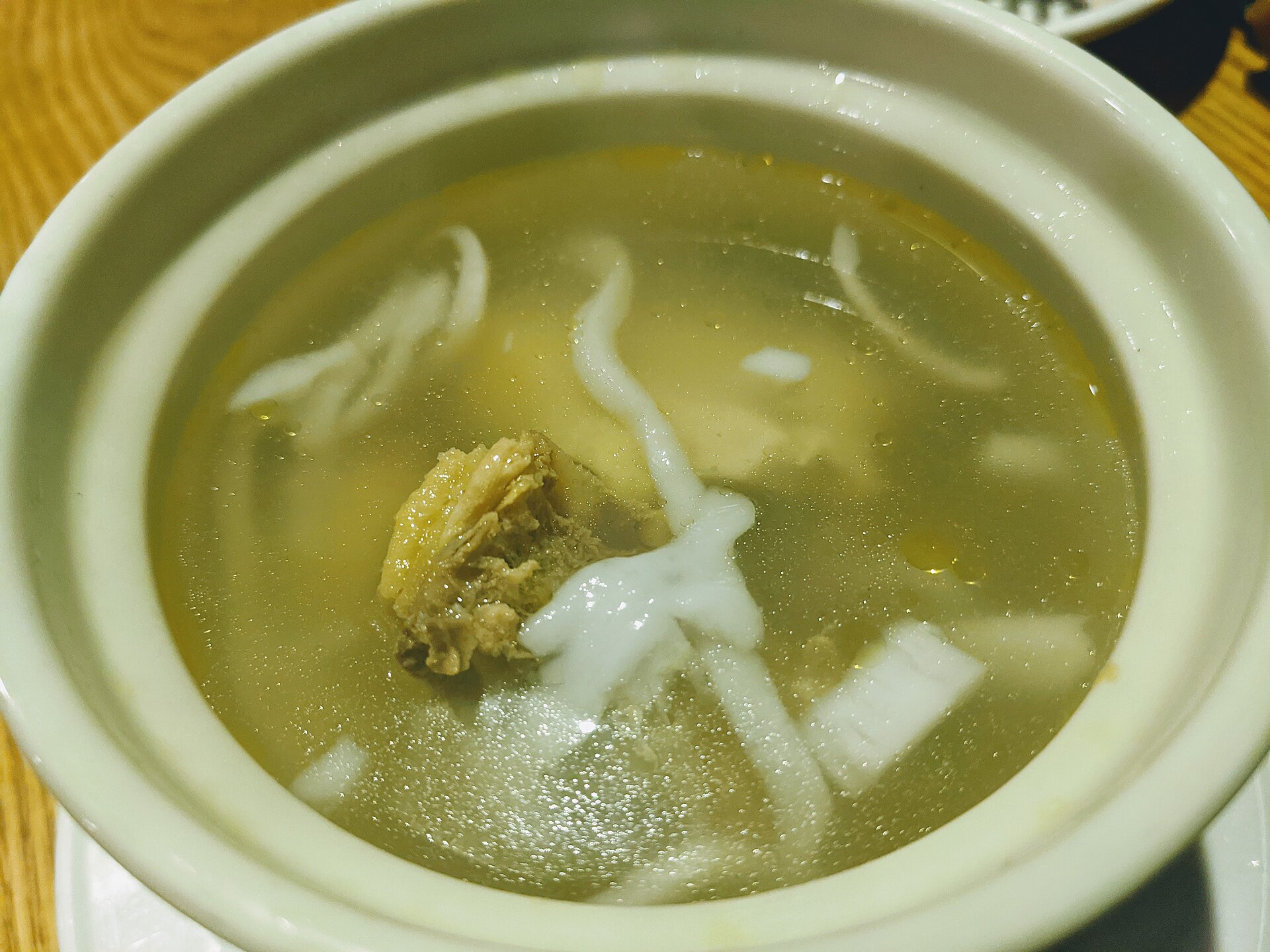
The broth is fresh young-coconut water, not plain water cut with coconut cream. Good restaurants crack coconuts the same day and pour the water of about three coconuts into a single pot, so the broth comes out clear and pale gold, naturally sweet. Some add a few red dates (红枣) or goji berries (枸杞) for aroma. Once the chicken goes in, the coconut sweetness rounds out and picks up the savour of the bird; the longer it simmers, the sweeter it gets — this is broth you can drink to the bottom without it ever feeling heavy.
The chicken in the pot isn't an industrial broiler but a free-range bird in the Hainan style. Well-known spots make a point of using birds raised free for around 100-120 days, so the meat is firm and springy with thin, glossy skin. It's chopped into bite-sized pieces and dropped into the already-boiling coconut water for about 3-5 minutes, just until cooked, so the meat stays tender and juicy and soaks up the coconut sweetness. Scoop a piece, dip it in the sand-ginger sauce, and eat — rich, tender, gently sweet and fragrant with sand ginger, all in one bite.
If the broth is the lead, the dipping bowl is the co-star — and just as important. It's built on sand ginger (沙姜 shajiang), finely chopped or pounded, mixed with freshly squeezed kumquat (金桔, calamansi), sliced bird's-eye chilli (小米辣) and soy sauce; some shops add spring onion and coriander. Sand ginger has its own aroma — ginger-like but mellower, and not hot — that cuts the richness of the chicken beautifully. The kumquat brings fresh sourness, the chilli a tingle. Together they turn plain poached chicken into a bright, rounded mouthful — this is the part people fall for.
Another charm of this pot is the young-coconut flesh scraped from the same coconuts as the broth, dropped in to soften and sweeten — lovely and chewy. After the chicken, it's time for the add-ins, and the rule is keep it light so nothing buries the coconut sweetness: lotus root, sweetcorn, winter melon, water chestnut, enoki, shiitake, tofu and beancurd skin all work well, and bamboo pith (竹荪) is an especially good match, soaking the broth right up. Want more protein? Prawns or clams are great. Just avoid anything strongly flavoured or very oily, which clouds the broth and dulls the freshness.
Step 1 — boil the coconut water, then add the chicken: staff usually pour the fresh coconut water in for you. Once it's at a full boil, add the chopped free-range chicken and simmer 3-5 minutes until just cooked. The broth is still clear here and the coconut flavour leads — scoop the chicken, dip it in the sand-ginger sauce and eat first. This first round of chicken is the sweetest and freshest.
Step 2 — add the coconut flesh: scrape or drop in the young-coconut flesh to soften in the pot; nibble on it through the meal. The broth's sweetness deepens as it goes.
Step 3 — in go the veg, mushrooms, tofu and seafood: once you've eaten a good amount of chicken, add the lighter ingredients — lotus root, corn, winter melon, bamboo pith, tofu, and seafood if you ordered it. These all drink up the sweet broth.
Step 4 — finish by drinking the broth: by the end of the meal the broth is at its sweetest, concentrated from the chicken and coconut that have simmered away. Ladle it into a bowl and drink it hot — plenty of people say that last bowl is the real star of the whole meal.
Group size: one pot usually suits two to three people (a free-range chicken plus three coconuts). With a bigger group, order a second pot or add more chicken and coconut. Vegetables, mushrooms and seafood are ordered on the side to taste. Per head: a regular restaurant runs ¥60-120 (about ฿300-600); a well-known chain sits around ¥100 a head; a pot for two or three is usually ¥120-260 (about ฿600-1,300).
Most places take WeChat Pay and Alipay; some accept cash in yuan but rarely foreign credit cards, so set up Alipay or WeChat before your trip. Popular spots around Dadonghai, Yalong Bay and Sanya Bay get long queues in the evening — especially weekends and the winter high season — so go before 6pm, or use the Dianping/Meituan apps to grab a queue ticket in advance.
The places locals and visitors talk about most — always check opening hours and the queue first, as prices and branches can change.
If you name the coconut chicken hotpot brand most people in Sanya know, Ye Xiao Ji is it — a chain known for using free-range chicken raised around 100 days and pouring three fresh coconuts into every pot. The rooms are clean and modern, which suits first-timers well. Branches are spread across the tourist districts — Haitang Bay, Yalong Bay and Dadonghai — so you can pick the one nearest your hotel. Expect queues in the evening and through the high season.
Another coconut chicken spot people talk about a lot, over in the Sanya Bay area — known for pouring three fresh coconuts per pot and making a point of hand-chopping large numbers of coconuts fresh each day, so the broth comes out sweet and fragrant. The Sanya Bay location is easy to reach and suits anyone staying along the bay or in the town centre. The vibe is relaxed and casual; queues build at dinner, so go early or book a queue ticket ahead.
A coconut chicken spot with the edge of a great location — right on Sanya Bay, open and airy near the water, with friendly prices of around ¥60 a head. It's a good fit if you want a sweet pot of coconut chicken with a cool sea view, without paying resort prices. Open from late morning to evening, it works for both lunch and dinner — a solid choice for travellers on a lighter budget who still want the flavour and the view. Check the queue and grab a seaside table early.
A coconut chicken spot in the Haitang Bay area — Sanya's luxury-resort and duty-free-mall zone. It's well-rated on travel platforms and suits anyone staying around Haitang Bay or browsing the duty-free malls who wants an easy coconut chicken pot near their hotel. The broth is the standard sweet, fresh coconut chicken style, the room is comfortable, and it's a reliable option in Haitang, where there are fewer local restaurants than in town. Check the hours and current prices before you go.