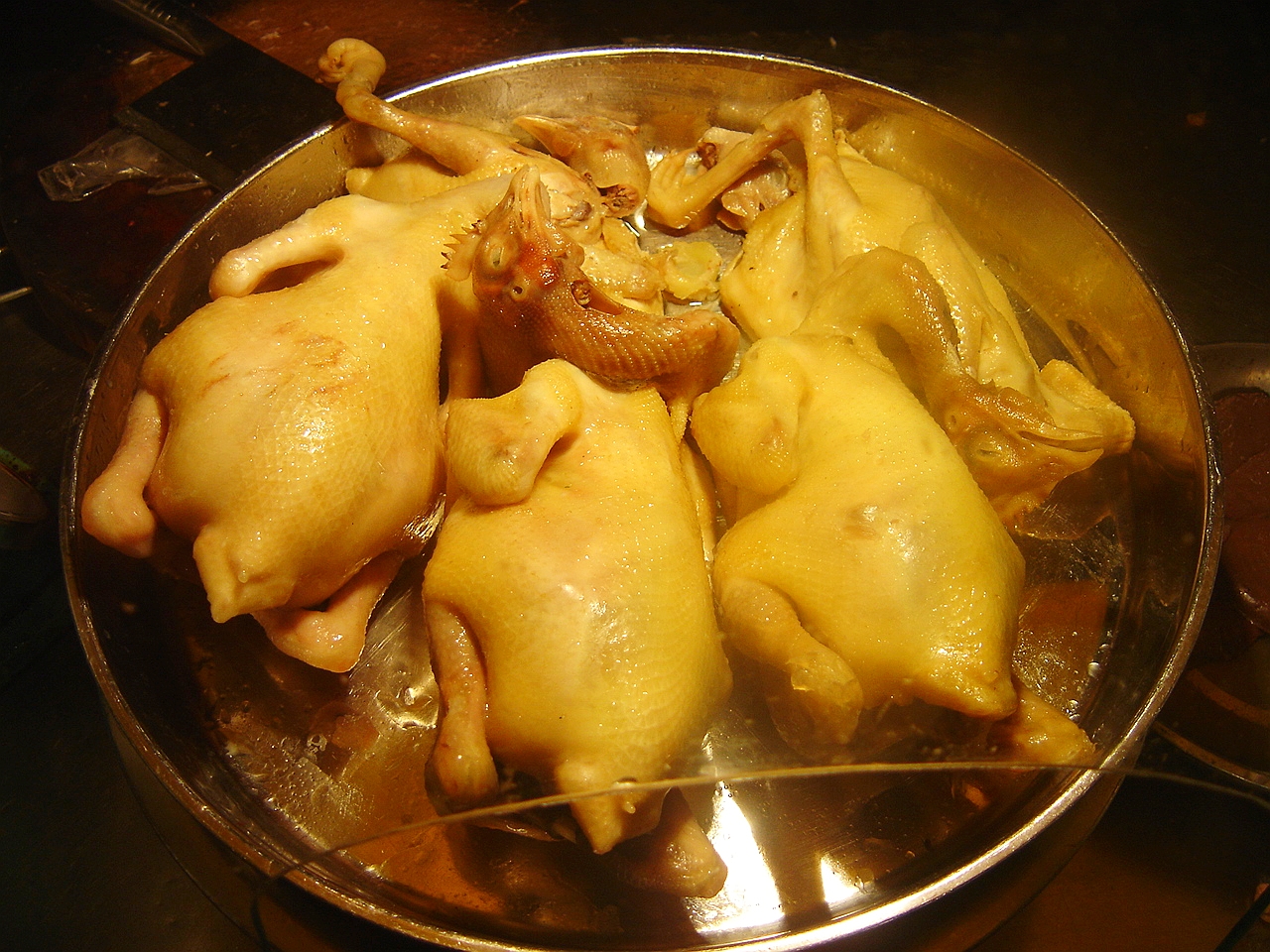
A poached free-range bird with glossy yellow skin and sweet, tender meat, dipped in ginger, sand ginger and calamansi, with a bowl of fragrant chicken-oil rice — this is where the Hainanese chicken rice the whole of Asia eats began. Clean, light, not spicy, all the natural sweetness of a proper farm chicken.
Think of the chicken rice you order again and again — fragrant rice, tender chicken, a ginger dip, a bowl of clear soup. That plate has an origin, and the origin is Wenchang chicken (文昌鸡 Wénchāng jī) from Hainan island. Plenty of people across Asia have been eating the descendants of this dish their whole lives without knowing it, because the Hainanese chicken rice of Thailand, Singapore and Malaysia all traces back to this one bird. So if you're in Sanya, the original version is worth ordering at least once.
Wenchang chicken is one of Hainan's Four Famous Dishes (海南四大名菜) and the name locals are proudest of. It's both a chicken breed and a dish — a special free-range bird from Wenchang city in the northeast of the island, raised here for more than 400 years. The birds are free-ranged on coconut and peanut bran, then fattened in coops near the end for firm, well-marbled meat. The result is a chicken with thin yellow skin and a layer of fat under it, with flesh noticeably sweeter and juicier than a battery bird.
The most important thing to understand first — Hainanese food is not spicy. This is not málà or Sichuan cooking. The flavour of Wenchang chicken is clean, light and naturally sweet: a simply poached farm bird, nothing more. Hainan is a tropical island where the cooking leans on freshness, coconut and the sea; flavours stay gentle and let the ingredient speak. Wenchang chicken is delicious on its own terms, with no need for heavy seasoning — the skill is in taking a plain chicken and making it as good as a chicken can be.
Real Wenchang chicken arrives as a set, not a lone plate of chicken. Understand these four parts and the meal gets better right away.
1
Wenchang chicken is cooked white-cut (白切, 'white slicing') — the whole bird poached in near-boiling water that's never at a hard boil, cooked gently in the residual heat to keep it tender and juicy. When it's just done, it's plunged into cold water so the skin tightens and turns slightly springy, then chopped on the bone and served. The result is thin, glossy yellow skin with a fine layer of fat beneath, and flesh that's tender and sweet but still has the bite of a real free-range bird. Eat a piece unseasoned and you get the full natural sweetness of the meat.
Because the bird is cooked plainly, all the flavour lives in the dip. The Hainanese version is minced ginger, minced garlic, sand ginger (沙姜, a galangal), spring onion, salt and sesame oil, slackened with hot chicken broth straight from the poaching pot, then brightened with a squeeze of calamansi (a small native lime). Sand ginger is what sets the aroma apart from ordinary chicken rice — cool and fragrant, somewhere between galangal and young ginger. It cuts the richness of the skin and draws out the sweetness of the meat.
The rice that comes with Wenchang chicken isn't plain steamed rice — it's chicken-oil rice (鸡油饭). The raw grains are first fried in chicken fat rendered from the bird, with garlic (some recipes add ginger and peanut oil), until each grain is coated in a thin film of clear oil, then cooked in chicken stock instead of water. Every grain comes out fragrant with chicken oil and soaked through with the broth — glossy, savoury, good enough to eat on its own. This is the real reason it's called "chicken rice" in English: not because there's chicken in it, but because the rice itself is cooked in chicken fat.
A proper Wenchang chicken set usually comes with a clear broth made from the same poaching liquid — round and sweet from the bones, sometimes with a little leafy veg or goji berries. It's a light soup to sip between mouthfuls of chicken and oily rice, washing the palate and keeping the meal from feeling heavy. This is what makes Wenchang chicken a balanced meal: richness from the bird and the rice, brightness from the dip, and a hot broth to bring every bite back into line. Finish the set and you're full but comfortable, never weighed down.
Wenchang chicken is the eldest of the group — but once you're in Hainan, the other three are worth completing. Every one leans on the island's fresh ingredients, and none of them is spicy.
The star of the four and of this guide — a free-range Wenchang bird poached white-cut, glossy yellow skin and sweet meat, dipped in ginger, sand ginger and calamansi, with chicken-oil rice and a clear broth. It's the gentlest of the group, a perfect first dish to recommend to anyone new to Hainan, and the ancestor of the Hainanese chicken rice eaten across Asia.
A sea crab from the Hele area on the east of the island, famous for its generous, deep orange-red roe and dense paste. The best way to eat it is steamed whole, to hold on to the freshness and sweetness of the meat, dipped in a ginger-and-vinegar sauce. It's the seafood dish Sanya locals and visitors order again and again — the rich roe spooned over rice is a thing of beauty.
Goat from the Dongshan hills, raised on mountain herbs and grass, which gives it tender meat with barely any gamy smell — unlike goat elsewhere. It's cooked several ways: simmered in a thick soup, braised with Chinese herbs, or set up as a charcoal goat hotpot. The broth is deep and sweet from the meat, and locals eat it warm, especially for dinner. If you've ever been put off by the smell of goat, Dongshan is the one that changes your mind.
Duck from the Jiaji area, raised by a particular method that gives a plump breast, thin skin, soft bones and tender meat that's rich without being greasy. It's often cooked white-cut like Wenchang chicken, or braised in soy and spices, or roasted Cantonese-style, eaten with a dip and rice. It's the close cousin of Wenchang chicken in technique — people who love the chicken usually love the duck too — and you'll find it at almost any Hainanese restaurant in Sanya.
Start by making your own dip — spoon ginger, garlic and sand ginger into your bowl, pour over hot chicken broth, add a squeeze of calamansi, and stir. Taste it first for salt and sourness, then adjust. Now take your first piece of chicken and dip it lightly — don't drown it, or you'll lose the chicken; let the dip just kiss it so you catch the sand ginger and the brightness, and the natural sweetness of the meat still comes through.
Next mouthful, stir some chicken-oil rice through the dip left in the bottom of your bowl — the rice gets even better — and sip the clear broth now and then to wash the palate and cut the richness. Keep cycling: chicken with the dip, rice through it, a sip of broth. That rhythm is how the Hainanese eat Wenchang chicken, and it's what makes every bite land just right.
Group size: two people, a half bird + two bowls of rice; four people, a whole bird + four bowls + veg or other dishes. Per head: chicken, rice and broth to fill you runs roughly ¥40–70 (about ฿200–350); with other dishes added, about ¥60–120 (about ฿300–600).
The key is whether the place uses a real Wenchang bird — a good one chops the chicken fresh at the front, the skin glossy yellow with a thin layer of fat, the meat firm rather than mushy. Pale skin and stringy flesh mean it's either not a real farm bird or it's been overcooked. The spots locals queue at are usually small places that focus on Wenchang chicken and Jiaji duck, not buffet halls that do everything. In Sanya you'll find both specialist shops and stalls in the markets — go where the chicken turns over fast and the bird will be fresher.
Most places take WeChat Pay and Alipay as the main payment; some accept cash in yuan but rarely foreign credit cards, so set up Alipay or WeChat before you arrive in China. Popular spots can have a queue at lunch and dinner — go a little early or avoid peak hours. Menu prices are usually per half or whole bird, so check before you order to stay within budget.
Places known for Wenchang chicken and Hainanese food in Sanya — always check opening hours, location and the queue on the Dianping app before you go. Prices can shift with the season.
A shop named exactly for what it does — Wenchang chicken and Hainanese chicken rice — so the birds turn over fast and stay fresh. White-cut chicken with glossy skin and tender meat, served with fragrant chicken-oil rice, the ginger-and-sand-ginger dip, and a clear broth. It's the place for anyone who wants the original version done simply, no guesswork, at friendly prices — the one Sanya locals point to when you ask where to get real chicken rice.
A Hainanese restaurant locals bring up for its Wenchang chicken — sweet, tender meat and skin with just the right spring, a homestyle place that gets the bird right. Beyond the chicken there are other Hainanese dishes to order alongside, like Jiaji duck and stir-fried local greens, which makes it a good fit for a family meal or a group that wants to try several Hainanese dishes in one sitting. Relaxed rather than fancy, but the cooking wins real eaters over.
A big restaurant doing both seafood and Hainanese dishes — its Wenchang chicken is known for tender, juicy meat, and you can pair it with fresh seafood under one roof. It suits a group that wants both the chicken and a seafood spread in the same meal. The room is spacious and comfortable, a sensible pick for a big or celebratory dinner. Open with a half Wenchang chicken, then follow with fresh crab or prawns.
Beyond the specialists, Wenchang chicken and chicken rice are easy to find at stalls in Sanya's markets and local food streets — usually cheaper, with fast turnover because locals eat here every day. Look for a stall hanging glossy yellow Wenchang chicken and Jiaji duck out front with a line of people buying; that's the sign the bird is fresh and the flavour is right. Point to order a half with a bowl of chicken-oil rice, sit down and eat like a Hainanese — this might be the meal you remember most.