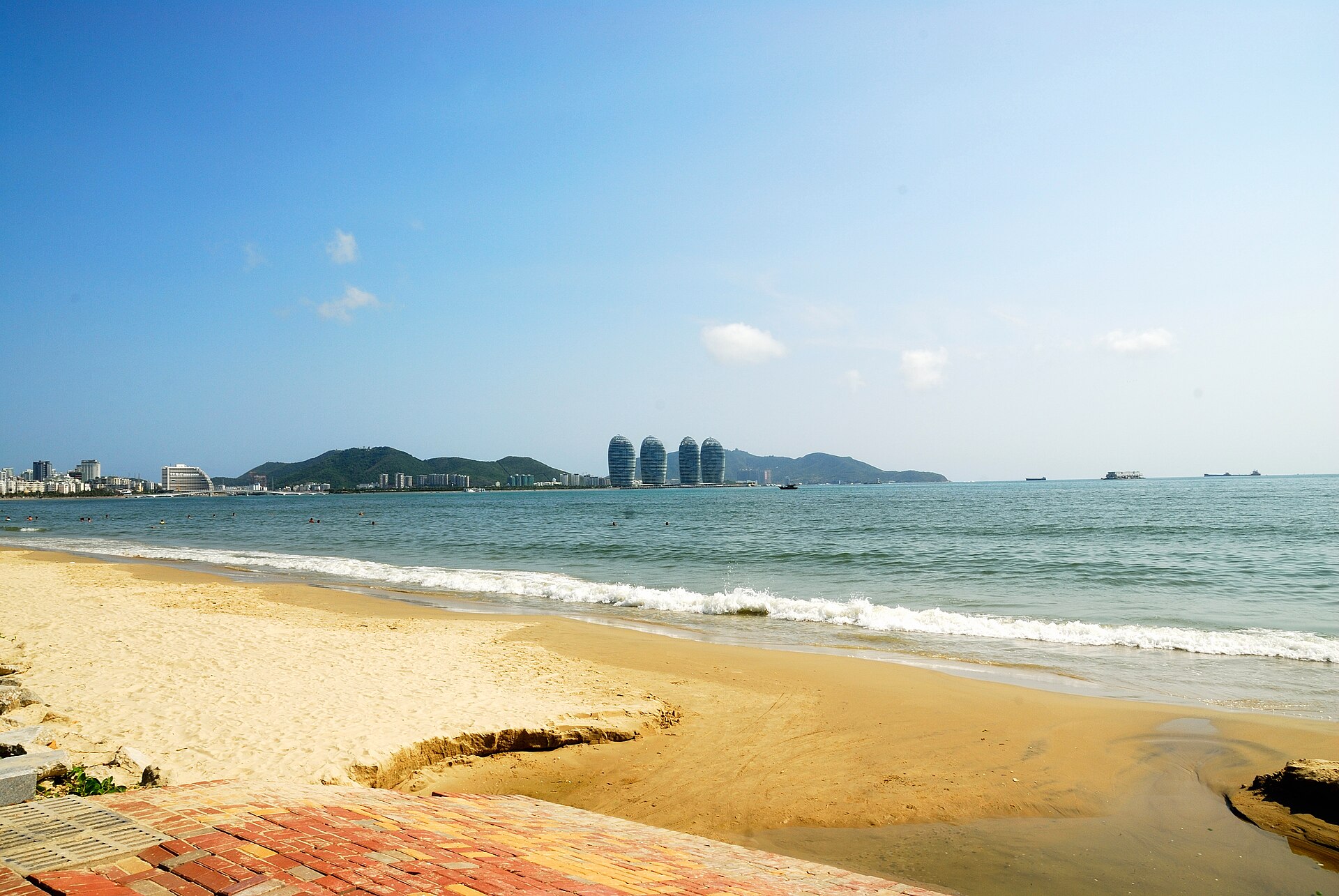
A seaside park on Sanya's west coast where giant boulders are carved with the characters 天涯 and 海角 — "to the edge of the sky and the corner of the sea." It is the spot Chinese couples come to promise forever.
Picture this: you are standing on a stretch of sand-and-rock beach on Sanya's west coast, a stiff sea breeze blowing, and in front of you two enormous boulders lean together, each carved with huge red Chinese characters — one reads 天涯 (Tianya, the edge of the sky), the other 海角 (Haijiao, the corner of the sea). Millions of Chinese couples travel here to be photographed together at exactly this spot, because the name "edge of the sky, corner of the sea" stands for a vow to stay together to the ends of the earth.
This is Tianya Haijiao (天涯海角), the "Edge of the World" — a seaside scenic park on the south-western shore of Sanya, about 24 km from the city centre. In the Qing dynasty this was considered the far edge of the empire, the furthest point Chinese territory reached, and officials banished to Hainan would stand here gazing at the sea with the feeling that they had run out of land. The characters were carved into the rocks back then, and the legend has carried on ever since.
What makes the place special is that it is far more than pretty rocks by the sea — it is a national cultural icon. The sea pillar called 南天一柱 (the Pillar of the Southern Sky), rising straight out of the water, once featured on China's old ¥2 banknote, so the whole country instantly recognises the view. Coming here feels like stepping into an image you have seen your entire life.
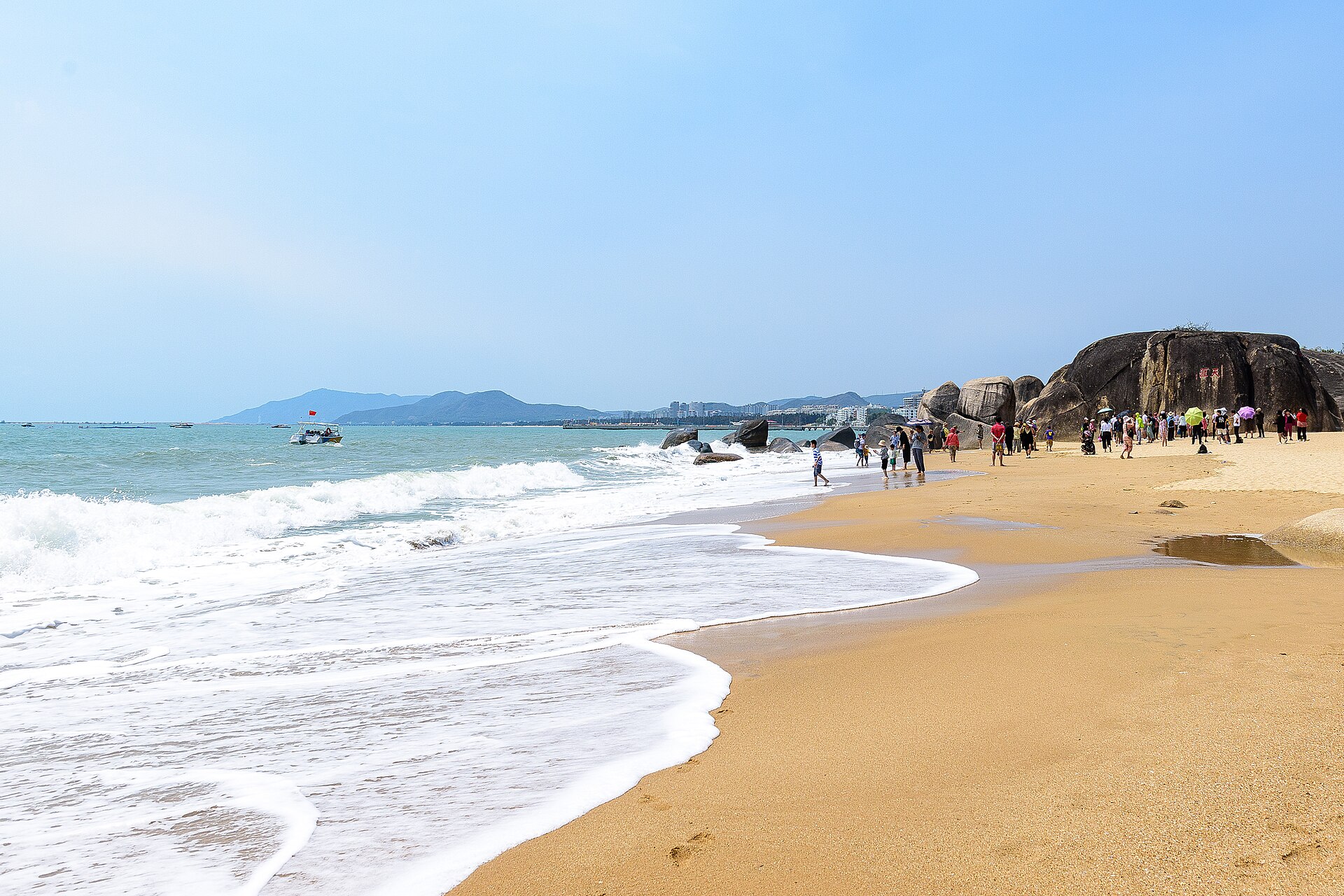
Walk west along the beach from the gate — each rock carries its own meaning
The giant boulder carved with the large red characters 天涯 is the icon photo spot here. Legend says that to stand on this spot was to reach the very edge of the Chinese sky. Couples line up to be photographed together in front of it, as a way of promising to stay together to the ends of the earth.
A second boulder carved with the characters 海角 stands not far from the Tianya Rock. Together the two spell out "Tianya Haijiao," the edge of the sky and the corner of the sea — a symbol of love and a bond with no end, and the source of the whole park's name.
A tall stone pillar standing right by the water, its name meaning "the single pillar holding up the southern sky." This is the rock that once appeared on China's old ¥2 banknote, which is why the whole country recognises it. It is one of the best photo spots, especially when the waves crash around its base.
Beyond the headline inscribed rocks, more boulders are scattered along the beach, each with a sign telling its legend. You can stroll the white-and-rock shore under rows of coconut palms with the wide South China Sea stretching to the horizon — perfect for an easy walk and wide ocean photos.
The heart of the visit is the cluster of giant inscribed boulders spread along roughly 2.5 km of shoreline. From the entrance gate, walk west along the sea and you will reach the Tianya Rock, the Haijiao Rock and the Pillar of the Southern Sky in turn. Each has a sign telling its legend and a queue for photos. If you would rather not walk far in the sun, take the electric buggy (about ¥15 return) to drop you near the main rocks, then explore on foot.
Allow 2 to 3 hours and you will have time to see the rocks, take your photos and sit by the sea for a while.
The reason Chinese couples travel all this way is the symbolism — a photo together in front of the Tianya or Haijiao rock is a way of promising to stay together "to the edge of the sky and the corner of the sea." Plenty of couples come for pre-wedding shoots, and some even propose right at the rocks.
The light is softer and the crowds smaller in the morning, which makes it the best time for couple photos. During China's long holidays (Chinese New Year, National Day 1–7 October) it gets very busy, so arrive as early as you can.
So you are not disappointed, here it is straight: Tianya Haijiao is not a swimming beach. The sand is fairly coarse and mixed with rock, the surf is strong, and the whole point of the place is the legendary rocks, the photos and the cultural and romantic symbolism rather than the water.
If you really want to swim or sunbathe on fine white sand, set aside a day for Yalong Bay, Dadonghai or Sanya Bay, or head out to Wuzhizhou Island, where the water is far clearer.
The park is about 24 km west of central Sanya, a 40 to 50 minute drive, and you have a few ways to get there.
Tianya Haijiao is an easy half-day, so you can sleep back in town or out on the luxury bays