Home Qingdao China Qingdao Hotels About
Home  ›  Asia  ›  China  ›  Qingdao  ›  3-Day Itinerary
🗓️ Qingdao Itinerary · 3 Days · 2026

3 Days in Qingdao —
a beer city by the Yellow Sea with a German accent

A German old town with a pier reaching out into the sea on the first day, a seafront square, the Olympic Sailing Center and a fresh draught on Beer Street on the second, and a third day that rides the over-sea Metro Line 11 out to spend the whole day on Mount Lao — three days is exactly enough to see every side of Qingdao in one trip.

Why 3 days

A city with sea, mountains and beer all in one

If you have done the big mainland cities, Qingdao lands differently the moment you arrive: a port on the Yellow Sea that was a German concession in the early 1900s, so it is full of red-tiled roofs, old churches and cobbled European lanes tumbling down the hills to the water. It is also the home of Tsingtao beer, known the world over. At the heart of any trip are the German old town, the coast from Badaguan to the Olympic Sailing Center, and Mount Lao, the Taoist mountain where granite peaks meet the sea — all in one city.

This plan is built for a first visit to Qingdao, with each day grouped by zone so you don't waste hours doubling back: Day 1 walks the old town and the beach — Zhanqiao Pier, St Michael's Cathedral, the old lanes, a viewpoint hill and No.1 Bathing Beach; Day 2 takes the modern east side — Badaguan, May Fourth Square, the Olympic Sailing Center, finishing at the Beer Museum and Beer Street; Day 3 gives the whole day to Mount Lao, riding the over-sea Metro Line 11 out of town before heading up the mountain. In town you run almost entirely on the metro, buses and your own two feet — you barely need a taxi.

Want a shorter or longer trip? See the 2-day plan for a weekend, the 4-day plan that adds a trip out of the city like Penglai, or browse all Qingdao attractions first.

Day one

The German old town — a sea pier, a church and cobbled lanes

A morning walking the seafront old town · an old church and red-roofed lanes · a viewpoint over the whole city · finishing on a sandy beach and a pier reaching out to sea — a day done mostly on foot, and worth every step.
01
Day 1
Zhanqiao Pier · St Michael's Cathedral · old lanes · Signal Hill · No.1 Beach
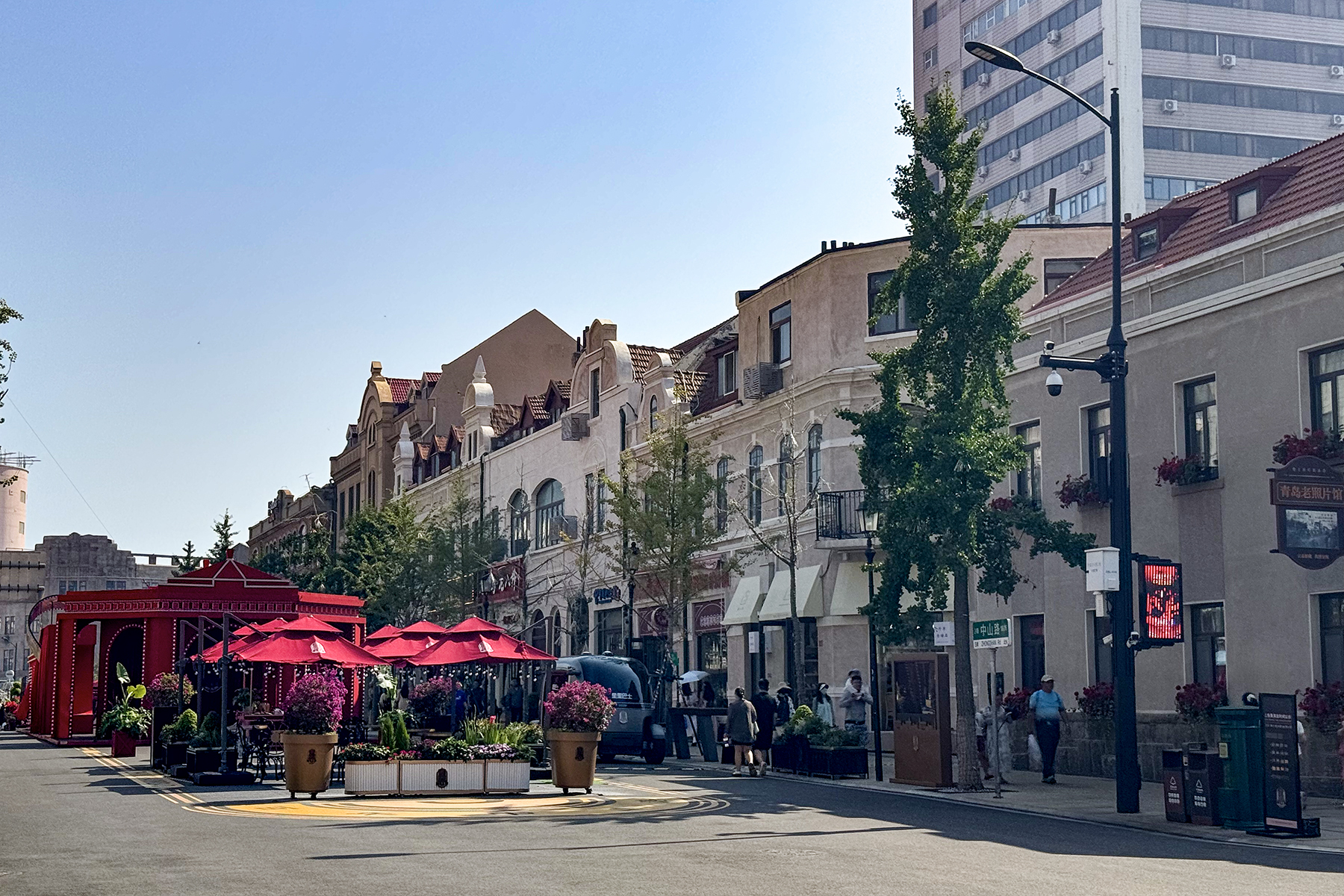
Qingdao old town — German-era red-tiled houses tumbling down the hill toward the Yellow Sea
Morning · ~3 hours
Zhanqiao Pier (栈桥) + St Michael's Cathedral (圣弥厄尔大教堂)

Start the first day at Zhanqiao Pier, a historic timber-and-concrete pier reaching more than 400 metres out into Qingdao Bay, with the octagonal Huilan Pavilion at its tip — the symbol of the city (and the image on the Tsingtao beer label). It dates to 1892, and from the end of the pier you look back at the old-town skyline against the hills. It is the best place to start, sitting right by Qingdao Railway Station on the edge of the old town. Read more in the Zhanqiao Pier guide.

From the pier it is a short uphill walk to St Michael's Cathedral, a Romanesque-Gothic Catholic cathedral the Germans finished in 1934, its twin towers a landmark of the old town. The plaza out front is a favourite for Chinese wedding photos, and the streets around it are the prettiest cobbled lanes in the city. For opening hours and photo spots, see the St Michael's Cathedral guide.

Getting there: Metro Line 3 to Qingdao Railway Station, then walk to Zhanqiao Pier · from the pier walk uphill to the cathedral and old lanes
Zhanqiao Pier: free · open all hours · a small fee for the pavilion at the tip
St Michael's Cathedral: entry ~¥10 (~฿50) · check opening hours and Mass times on site
Afternoon · ~3 hours
The old lanes + Signal Hill Park (信号山公园)

In the afternoon, wander the old lanes around Zhejiang Road and Daxue Road, which still hold German-era red-roofed houses, cafés in old buildings, and the former German Governor's Residence, open to look around inside. Walk up and down the hills, stopping at the pretty corners for a photo. For routes and highlights see the Qingdao old town guide.

Round off the afternoon at Signal Hill Park, a hilltop park in the middle of the old town with a red, ball-shaped revolving viewing tower. From the top you get a 360-degree view of the old town — a carpet of red roofs running down to the sea, the best overview of old Qingdao there is. Read more in the Signal Hill guide.

Signal Hill Park: viewing-tower ticket ~¥15 (~฿75) · open ~07:30–18:00 · the top deck revolves
German Governor's Residence: ticket ~¥13 (~฿65) · a museum in an old European building
Lunch: ¥50–130 per person · cafés and eateries in the old-town buildings
Tip: Qingdao's old town is one big hillside, so wear comfortable shoes, and pair St Michael's Cathedral and Signal Hill on the same day since they are close together — it saves the most legwork.
Evening · ~2–3 hours
No.1 Bathing Beach (第一海水浴场) + a seafront seafood dinner

In the evening, walk or hop a seafront bus to No.1 Bathing Beach, a long curving city beach where people in Qingdao have swum and strolled the promenade since German times. It is gorgeous at sunset, with the old houses on the hill across the bay, and it is the most relaxing free spot in the city. For the other beaches and swimming notes, see the Qingdao beaches guide.

Round off the first day with a fresh seafood dinner — Qingdao is famous for it: spicy stir-fried clams, oysters, mantis shrimp and sea fish, washed down with a glass of fresh Tsingtao. See more in the Qingdao seafood, spicy clams and Qingdao food guides.
No.1 Bathing Beach: free · open all hours · best at sunset · swimming season June–September
Getting there: several seafront buses · or walk from the old town (~20–30 min)
Dinner: ¥80–250 per person · seafood and local restaurants around the old town / seafront
Day two

The east side — villas, a square, a sailing harbour and beer

A quarter of European villas by the sea in the morning · a seafront square with its red May Wind sculpture · the Olympic sailing harbour · finishing at the Beer Museum and Beer Street — several sides of modern Qingdao along one coast.

02
Day 2
Badaguan · May Fourth Square · the Olympic Sailing Center · the Beer Museum / Beer Street
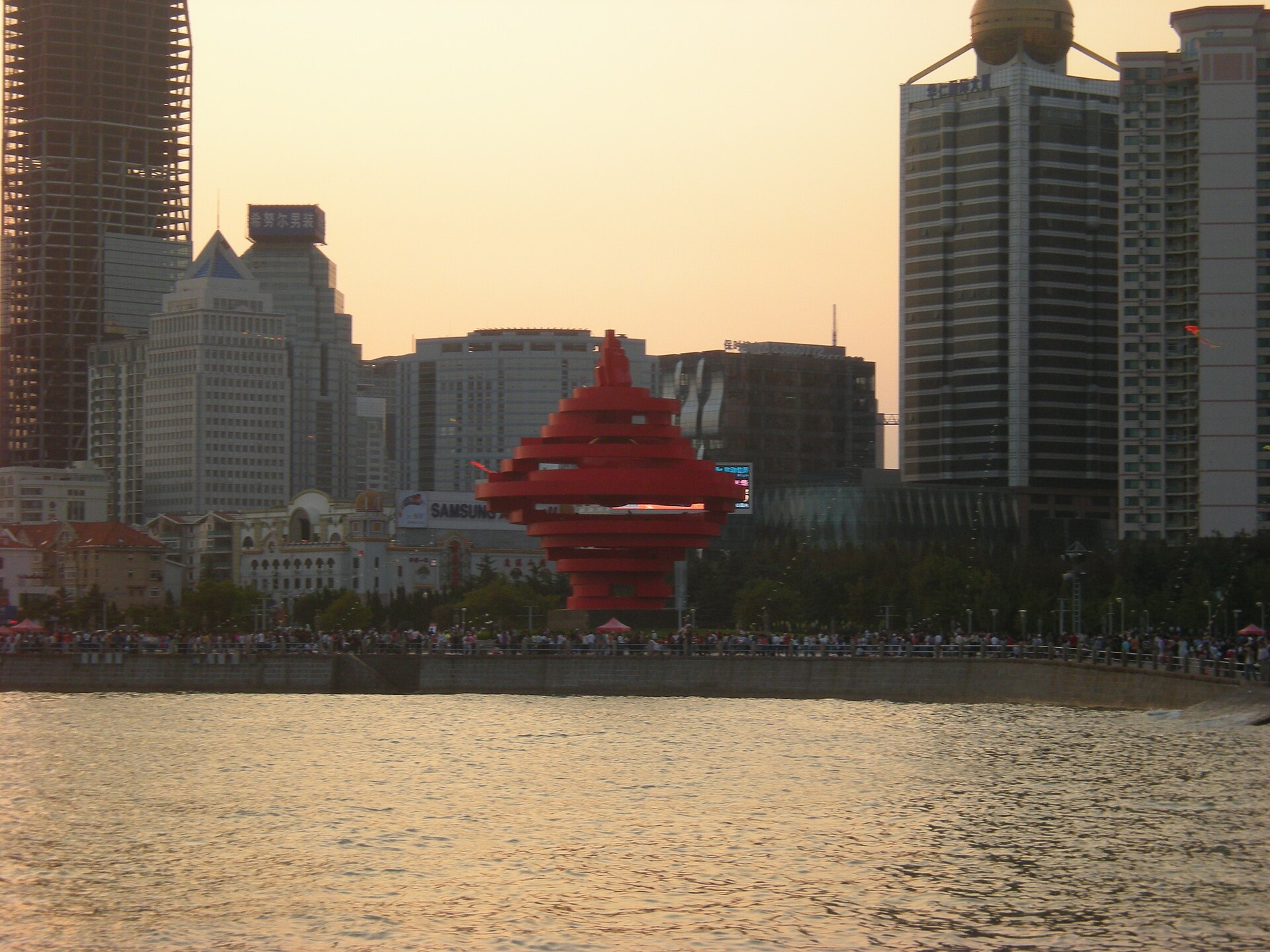
May Fourth Square, Qingdao — the red spiral May Wind sculpture on Fushan Bay with skyscrapers behind
Morning · ~2.5–3 hours
Badaguan (八大关) + Huashilou villa / No.2 Beach

Start the second day at Badaguan, the seafront villa quarter many call the loveliest in Qingdao — ten streets named after the passes of the Great Wall, lined with more than 200 European-style villas in styles from all over, each street shaded by a different species of tree (especially pretty in spring and autumn). The one not to miss is Huashilou (花石楼), a stone seafront villa open to visit with a lovely sea-view terrace, right by the quieter No.2 Bathing Beach. Read more in the Badaguan guide.

Badaguan is an easy walk and largely free (only a few villas charge), so just drift down the shadiest streets and stop at the pretty corners — it feels like a little slice of Europe.

Getting there: Metro Line 3 to a nearby station then walk or a short bus · or a seafront bus from the old town
Badaguan: free to walk the quarter · Huashilou (花石楼) charges ~¥8–20 (~฿40–100)
Note: each street is planted with a different tree · blossom in spring, autumn colour later — the prettiest time
Afternoon · ~3 hours
May Fourth Square (五四广场) + the Olympic Sailing Center (奥帆中心)

In the afternoon, head to May Fourth Square, the seafront square on Fushan Bay that is the face of modern Qingdao. At its centre stands the bright-red spiral sculpture "May Wind" (五月的风), 30 metres tall — the city's most photographed spot, set against a skyline of towers, and named to mark the May Fourth Movement of 1919. Stroll the waterfront promenade from here. Read more in the May Fourth Square guide.

From the square it is about 1.5 km (~20–25 min) along the sea to the Olympic Sailing Center, the marina that hosted the 2008 Olympic sailing events. Today it is a waterfront promenade with a yacht marina, the "Lovers' Wharf", restaurants, and the best across-the-bay skyline view at dusk — there are bay cruises here too. For the highlights and the cruise, see the Olympic Sailing Center guide.

May Fourth Square: free · open all hours · Metro Line 2/3 to May Fourth Square station
Olympic Sailing Center: free · ~1.5 km walk from the square · bay cruises charged separately
Lunch / snacks: ¥60–180 per person · eateries around the square / sailing center
Evening · ~2–3 hours
The Tsingtao Beer Museum (青岛啤酒博物馆) + Beer Street (登州路)

Round off the second day with the thing Qingdao is most famous for — beer. Head to the Tsingtao Beer Museum on Dengzhou Road (登州路), set inside the original brewery the Germans founded in 1903 — China's first beer museum. You walk through the history, the old machinery and a working production line, and best of all you taste fresh beer straight from the brewery, both the unfiltered "raw beer" and a fresh draught that is hard to find elsewhere; the tasting is included in the ticket. Read more in the Tsingtao beer guide.

Right outside is Beer Street, the length of Dengzhou Road lined with seafood restaurants and bars decked in Tsingtao flags. Order spicy clams and a fresh draught poured into a plastic bag (the proper Qingdao way) for a fun end to the day. See the Qingdao street food and Shandong cuisine guides.

Beer Museum: ticket ~¥110 (~฿550 · tasting included) · open ~08:30–17:30 · at 56 Dengzhou Road
Beer Street: free · bars open late · liveliest during the Beer Festival in July–August
Dinner: ¥80–250 per person · seafood and fresh draught all along Beer Street
Day three

Mount Lao · a seaside metro ride to a Taoist mountain

A morning ride on the over-sea Metro Line 11 out of the city to Mount Lao · the park sightseeing bus into the touring areas · a day walking a Taoist coastal mountain with an ancient temple — a big day given over entirely to nature.

03
Day 3
Mount Lao (崂山) — a full day out by Metro Line 11
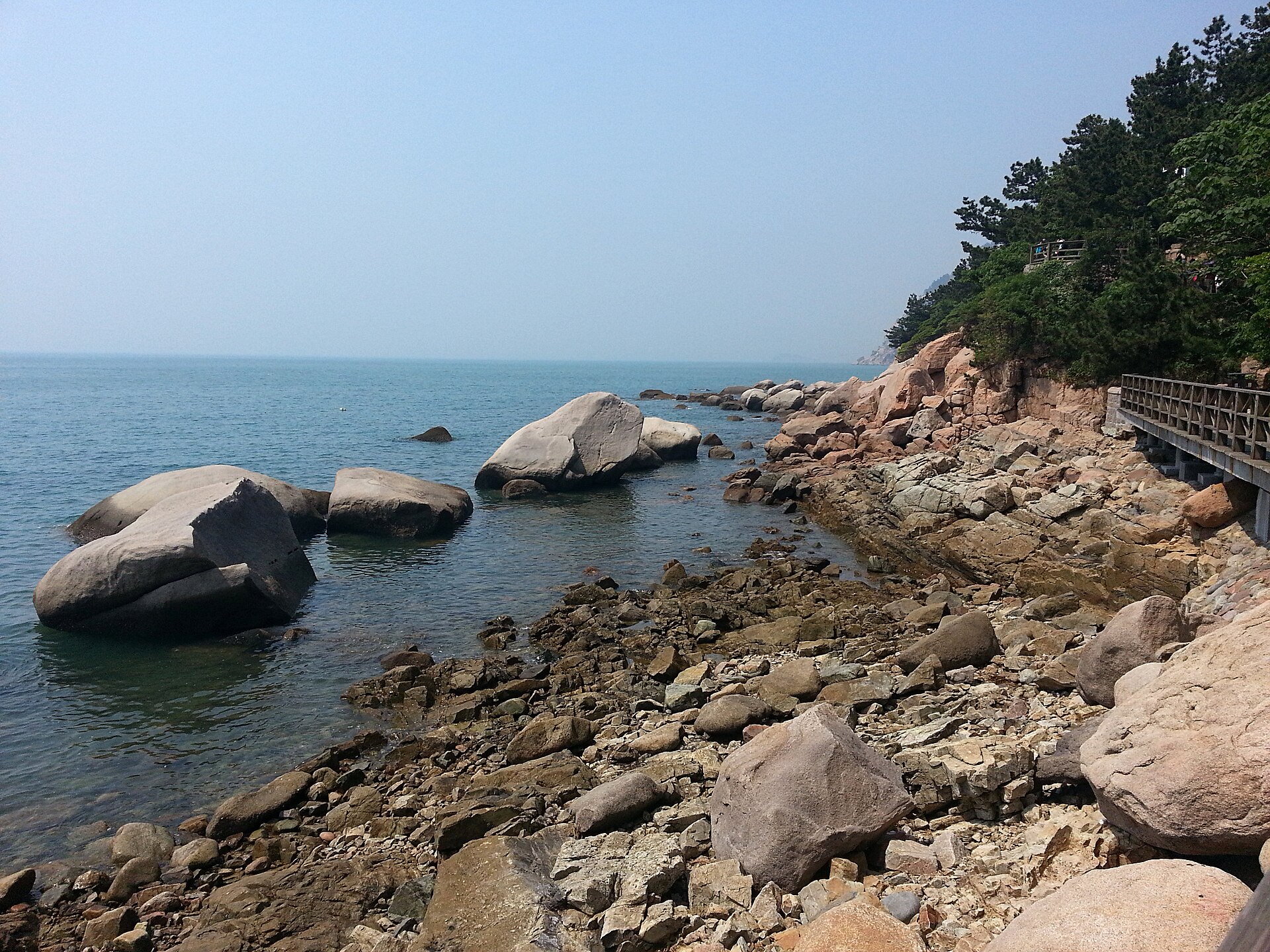
Mount Lao, Qingdao — the granite peaks of the Taoist mountain dropping straight to the Yellow Sea
Morning · ~half a day
The seaside Metro Line 11 out to Mount Lao (崂山)

Set off early on the last day for Mount Lao (Laoshan), the granite Taoist mountain that is the highest on China's coastline (~1,133 metres) and unusual for dropping its peaks straight into the Yellow Sea. The way visitors love most is Metro Line 11, which runs along the east coast toward Laoshan District with lovely sea views on both sides. From the city, take Line 3 or 2 and transfer to Line 11, get off near the entrance, then take a local bus or the park's sightseeing bus to the touring areas. For routes and highlights, see the Mount Lao guide.

Mount Lao is huge and split into several areas — the Jufeng area (巨峰) is the high-summit zone for hiking and the cable car, while the seaside Yangkou–Taiqing area (仰口/太清) hugs the coast and holds Taiqing Palace (太清宫), the oldest Taoist temple on the mountain. Pick one area to suit your time and energy, as crossing between them eats up the day.

Metro: Line 11 along the east coast toward Laoshan District · fare ¥2–7 · get off and take a bus to the park entrance
Alternative: Metro Line 4 to Dahedong Station, then the sightseeing bus straight into the Jufeng area
Inside the park: you ride the park sightseeing bus (included in the ticket) — private cars aren't allowed and distances are long
Afternoon · ~half a day
Walking the coastal mountain + Taiqing Palace / the Jufeng summit

Spend the afternoon exploring Mount Lao properly. If you choose the seaside Taiqing area, walk the cliffside paths to Taiqing Palace (太清宫), a Taoist shrine more than 2,000 years old tucked at the foot of the mountain by the sea, shaded by ancient trees and wonderfully calm — the cultural highlight. If you choose the Jufeng area, ride the sightseeing bus up and then walk (or take the cable car) to the summit for a panorama of granite peaks meeting the sea — the very view a lot of people come to Mount Lao to see.

Mount Lao is a lot of walking, so allow the full day for the travel and the trails, and bring water, good shoes and a windbreaker (it is windier and cooler up top than in the city). There are restaurants inside the park but they cost more than in town, so packing snacks is a good idea. Everything on tickets, hours and areas is in the Mount Lao guide.

Tickets: through ticket (3 days) ~¥210 (~฿1,050 · ¥140 gate + ¥70 sightseeing bus) · Jufeng area alone ~¥120 (~฿600)
Jufeng cable car: ~¥40 one way / ¥80 return (~฿200/400) · charged separately
Tip: go early · pick one area · book online ahead in high season as numbers are capped
Tip: in summer, watch for thick sea fog on some days that can swallow the summit view. Check the forecast before you go and have a plan B — if the peak is closed in, the coastal Taiqing/Yangkou areas are still a great walk even when the sky won't clear.
Evening · trip's end
Back into the city + a last seafood-and-beer feast

In the evening, ride Metro Line 11 back into the city (allow time, it is a long line) and close out the trip with a big local feast — fresh seafood and Tsingtao one more time. Qingdao has a few things to try before you leave, like mackerel dumplings (鲅鱼水饺), a true Shandong local dish, and the seafront snacks — a fitting way to end the trip on the city's real flavours.

Qingdao eats well and stays affordable, so order what you fancy — figure on ¥80–250 per person. See the Qingdao food guide, the mackerel dumplings guide and the Qingdao seafood guide.

Mid-range dinner: ¥80–250 per person · around the old town / May Fourth Square / Beer Street
To the airport (TAO Jiaodong): Jiaodong airport is ~40 km north-west of the city · take Metro Line 8 (~50–60 min into the city), an airport bus, or a taxi (~¥120–150, ~฿600–750)
✈️
Want a longer trip?
See the 4-day plan — add a trip out of the city like the fairy-tale town of Penglai, or fill in the city sights at an easier pace
See the 4-day plan →
Practical info

Where to stay · getting around · budget

🏨
Where to stay

For this trip, base yourself in Shinan (市南) district by the sea, especially around the old town / Zhanqiao Pier — within walking distance of Qingdao Railway Station, the old lanes and No.1 Bathing Beach. The alternative is the May Fourth Square / Fushan Bay area on the modern east side, near the malls and the sailing center, or — if you use the high-speed rail often — somewhere near Qingdao North Station on Lines 1/3/8. See the top 10 hotels or the 6 luxury hotels.

🚇
Getting around

Qingdao has several metro lines covering the main sights — Line 3 strings together the old town with Zhanqiao Pier, Badaguan and May Fourth Square; Line 2 reaches the sailing center / Fushan Bay; Line 11 runs along the coast out toward Mount Lao; and Line 8 goes to TAO airport. Fares are ¥2–8 a trip, paid via Alipay/WeChat Pay (scan a QR) or a transit card (交通卡). Back them up with buses, shared bikes and DiDi. Use Amap or Apple Maps for routing (Google Maps is unreliable).

💳
Paying for things

Link a Visa or Mastercard to Alipay (via its international mode) before you travel. Most places in Qingdao take Alipay/WeChat Pay first, and some no longer take cash — see the Alipay & WeChat Pay guide to set it up beforehand, and check entry rules for your passport in the China visa-free guide.

Budget

Approximate cost per person per day

Item Budget Mid-range Comfort
Hotel (per night) ¥140–280
(~฿700–1,400)
¥300–650
(~฿1,500–3,250)
¥800–1,800+
(~฿4,000–9,000+)
Three meals ¥70–130
(~฿350–650)
¥100–250
(~฿500–1,250)
¥300–600
(~฿1,500–3,000)
Metro / bus / bike ¥10–25
(~฿50–125)
¥15–40
(~฿75–200)
¥50–120
(~฿250–600)
Entry tickets ¥30–110
(free sights + Beer Museum)
¥90–250
(Beer Museum + one Mount Lao area)
¥250–400
(Mount Lao through ticket + cable car + more)
Total per day (approx.) ¥250–545
(~฿1,250–2,725)
¥505–1,190
(~฿2,525–5,950)
¥1,400–2,920+
(~฿7,000–14,600+)

Exchange rate used: ¥1 ≈ ฿5 · prices are approximate and vary by season (they spike in summer / during the Beer Festival and Golden Week).

Frequently asked

FAQ · 3-day Qingdao itinerary

Is 3 days enough for Qingdao?
Three days comfortably covers all the main highlights: the German old town, Zhanqiao Pier, St Michael's Cathedral, Signal Hill, Badaguan, May Fourth Square, the Olympic Sailing Center, the Tsingtao Beer Museum and Mount Lao. The trick is to give the old town and No.1 Beach a first day on foot, spend the second on the modern east side (Badaguan, May Fourth Square, the sailing center) and finish the evening on Beer Street, then keep the whole third day for Mount Lao, which is out of the city and eats up travel time. What you have to skip is a day trip to Penglai or the offshore islands. If you want either, extend to four or five days for a more relaxed pace — see the 4-day plan.
What is the best time of year to visit Qingdao?
May to June and September to October are the best windows: clear, breezy and ideal for walking the old town and climbing Mount Lao. Summer (June to August) is the real high season, both the beach months and the International Beer Festival (mid-July to August) — the liveliest scene, but crowded with higher hotel prices. Early summer can bring thick sea fog on some days. Winter (December to February) is cold and windy at around 0–8 degrees Celsius. Avoid Chinese New Year and Golden Week (1–7 October), when the city packs out and prices double or triple — see more in the best time to visit China.
Can you reach Mount Lao by metro, and how do you get there?
Yes. Qingdao's Metro Line 11 runs along the east coast toward Laoshan District and is the line most visitors use for Mount Lao, with lovely sea views on both sides. From the city, take Line 3 or 2 and transfer to Line 11, get off near the entrance, then take a local bus or the park's sightseeing bus to the touring areas (such as the Jufeng summit area, or the seaside Yangkou/Taiqing area). Inside the scenic area you ride the park sightseeing bus, because private cars are not allowed and the distances are long. An alternative is Metro Line 4 to Dahedong Station, then the sightseeing bus straight into the Jufeng area. Allow the whole day, as the travel and the walking up the mountain take time — read more in the Mount Lao guide.
How much does Mount Lao cost?
Mount Lao charges by area. A through ticket valid for three days is around ¥210 (~฿1,050), covering the ¥140 gate fee plus the ¥70 sightseeing bus. For the Jufeng summit area alone it is about ¥120 (~฿600), made up of an ¥80 gate fee plus a ¥40 sightseeing bus. The Jufeng cable car is extra, around ¥40 one way or ¥80 return. Prices can be lower outside the peak season. Check the latest rates and book online ahead in high season, as daily visitor numbers are capped.
What is a realistic budget for 3 days in Qingdao?
A mid-range budget runs roughly ¥550–950 per person per day, covering a 3-star or 4-star hotel (¥300–650 per night), three meals (¥100–250), metro and bus fares (¥15–40) and entry tickets (¥50–250 — the Mount Lao day is the priciest, at ¥120–210 plus a cable car). Qingdao does excellent, affordable seafood and beer. Budget travellers in old-town hostels who lean on free sights like walking the old town, May Fourth Square and the beaches can get by on ¥350–500 per day — see the China budget guide.
Which neighbourhood should a first-time visitor stay in?
Shinan (市南) district by the sea is the most practical base for a first trip, especially around the old town and Zhanqiao Pier, within easy reach of Qingdao Railway Station, the old lanes and No.1 Bathing Beach. The alternative is the May Fourth Square / Fushan Bay area on the modern east side, near the malls and the Olympic Sailing Center and well served by Metro Lines 2 and 3. If you use the high-speed rail, look around Qingdao North Station (青岛北站) on Lines 1, 3 and 8. See the top 10 Qingdao hotels for options at every price.
Do I need a VPN in Qingdao?
Yes, if you want to use Google Maps, Instagram, WhatsApp, Facebook or Gmail. Download and activate your VPN before you leave home — most VPN websites are themselves blocked inside China. Apps that work without a VPN include Alipay (payments), Amap or Baidu Maps (navigation), WeChat and DiDi (taxis). A working Alipay account linked to a foreign Visa or Mastercard is the single most useful thing to set up before arrival.