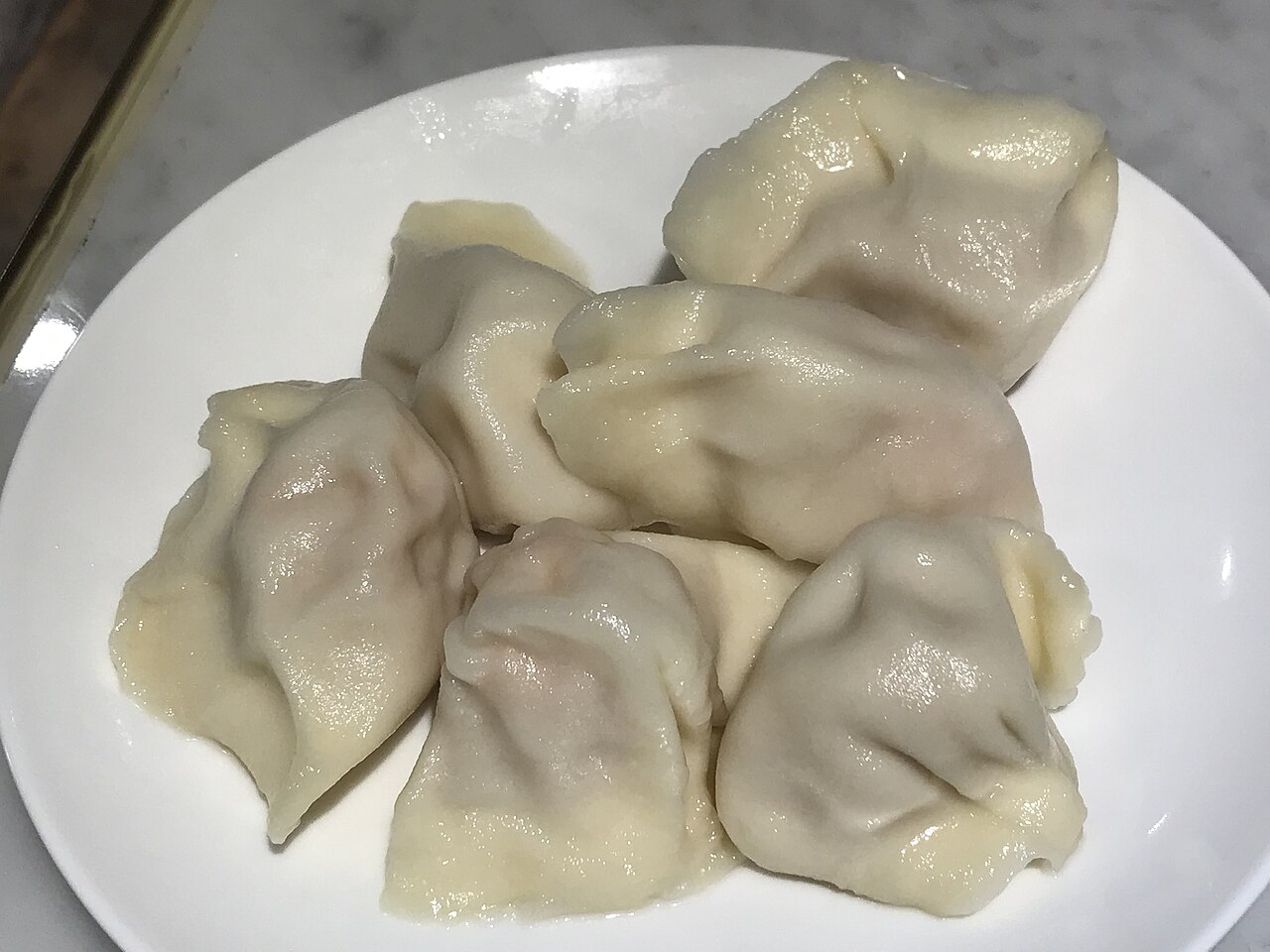
Big, plump boiled jiaozi stuffed with minced Spanish mackerel and Chinese chives — juicy and lightly sweet with the taste of the sea, but barely fishy at all. Qingdao's signature dumpling, tied to a lovely custom: every spring, sons-in-law gift fresh mackerel to their wives' parents, and the whole family folds it into dumplings to share.
Ask a Qingdao local what you have to eat and one answer comes back for sure: mackerel dumplings (鲅鱼水饺 bàyú shuǐjiǎo) — big, plump boiled jiaozi, bigger than ordinary dumplings, filled with the meat of Spanish mackerel (鲅鱼) caught fresh from Jiaozhou Bay around the city. Qingdao is a sea town where seafood is daily life, and people here fold the riches of that sea into a dumpling until it became one of the city's signature dishes — eaten alongside Tsingtao beer and a plate of stir-fried clams.
The heart of the dish is the filling. The shop takes fresh mackerel, skins it and removes every bone, leaving only the white flesh, then minces it fine and mixes it with Chinese chives (韭菜), a little fatty pork to keep it juicy, ginger, scallion, cooking wine, salt and pepper. Boiled, the fish turns soft and springy and juicy, the gentle sweetness of fresh sea fish cut by the fragrance of the chives. And because it's been skinned and boned, it's barely fishy at all — the easiest way there is to enjoy seafood, with no bones or shells to pick through.
What makes mackerel dumplings more than just food is this: they're tied to a family custom of gratitude. Qingdao has a saying, 'bàyú tiào, zhàngrén xiào' (鲅鱼跳、丈人笑) — 'when the mackerel leaps, the father-in-law smiles.' Every spring, when the mackerel is fat and best, a son-in-law buys fish to give to his wife's parents, and the whole family makes it into dumplings to eat together. This bowl carries far more than flavour.
Get your head around these four and you'll see why a plate of big boiled dumplings is a point of pride for Qingdao locals.
1
Spanish mackerel (鲅鱼) is a long, firm-fleshed sea fish caught in quantity around Qingdao — pinkish-white flesh, nicely fatty. The shop picks fresh fish and skins and bones it completely before mincing it into filling. The freshness of the fish decides how good the dumpling is: the fresher the fish, the sweeter and the less fishy. The best mackerel comes in spring, after the Grain Rain solar term (谷雨, around late April), when the fish is at its fattest.
The minced mackerel is mixed with Chinese chives (韭菜), which bring a fresh fragrance that cuts the richness of the fish, plus a little fatty pork to keep the filling juicy rather than dry, seasoned with ginger, scallion, cooking wine to clear any fishy note, salt and pepper. Every shop has its own ratio — some go all fish for a stronger sea taste, some add more pork for a softer, juicier bite. Bite into one of those big dumplings and the filling is dense, springy and full of its own juice — that's the part that hooks people.
True mackerel dumplings are 'shuǐjiǎo' (水饺), boiled in water — not potstickers (锅贴) pan-fried with a crisp base. Qingdao prefers them boiled because boiling keeps the fish filling at its juiciest: the fish stays soft and springy rather than drying out. Mackerel dumplings are folded bigger than ordinary jiaozi, the wrapper thin enough that you can see the white fish through it. They're eaten with a dip of black vinegar and minced garlic, and a little chilli oil if you like a bit more depth — dunk and take a big bite, and the fresh fish and chives come right through.
Why are these dumplings so special to Qingdao people? The answer is in the saying 'bàyú tiào, zhàngrén xiào' (鲅鱼跳、丈人笑) — when the mackerel leaps from the sea, the father-in-law smiles. Every spring after the Grain Rain (谷雨) solar term, when mackerel is fat and best, Qingdao sons-in-law buy several fresh mackerel to give their wives' parents as a sign of respect, and the family makes the fish into dumplings to eat together. Most of the fish comes in through Shazikou fishing port (沙子口) at the foot of Mount Lao, and the custom is listed as one of the city's intangible cultural heritages.
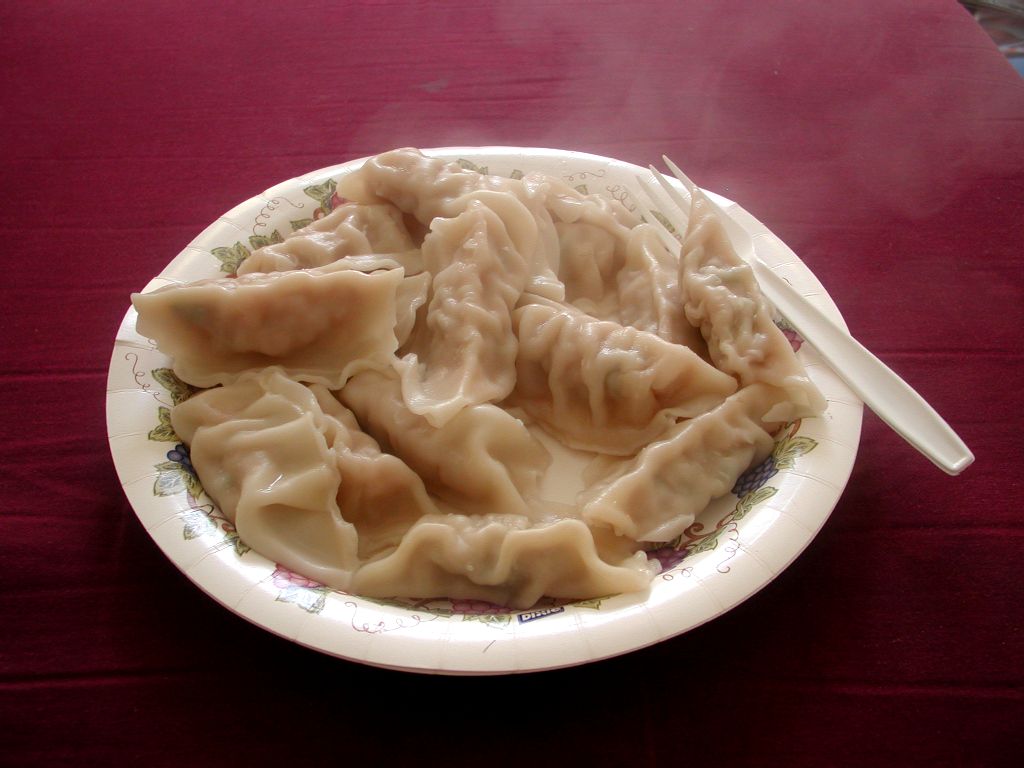
Dumpling shops in Qingdao usually sell by the portion (份) or by weight in liang (两); a portion is usually around 10–15 dumplings. Mackerel dumplings are bigger than ordinary jiaozi, so two portions fill up an average eater. The easy way to order is to ask for 'bàyú shuǐjiǎo' (鲅鱼水饺) and say how many portions. No Chinese? Just point at the picture menu. Branded places like Chuange have picture menus and other seafood fillings to try, such as prawn dumplings (虾水饺) and squid-ink dumplings (墨鱼水饺), where the wrapper turns black from the ink. Ordering a few different fillings on one plate is half the fun.
First time and not sure what to get? Make mackerel dumplings the star, add a portion of prawn or squid-ink dumplings, and order a bowl of clam soup (蛤蜊汤) on the side — that's a full, well-rounded seafood-dumpling meal, the Qingdao way.
Step 1: mix your dip first — black vinegar with minced garlic, a little chilli oil if you like it. Step 2: pick up a big dumpling, dunk it, and take a big bite, but mind the heat — they're hot and juicy inside, and you get the sweet fresh fish against the sharp vinegar all at once. Step 3: sip the clam soup between dumplings; the gentle saltiness cleans your palate so you can keep going without it feeling heavy. A good mackerel dumpling is easy to finish a whole plate of, because the fish filling is lighter than pork.
Paying: most shops take WeChat Pay and Alipay; a few small ones still take cash in yuan but rarely foreign cards, so set up Alipay or WeChat before your trip to China. Getting there: many shops in the old town and the shopping districts sit a short walk from a Qingdao Metro station, and the branded restaurants in the malls usually have a metro stop connected right to them — handy for visitors.
Spots locals and food lovers have talked about for years — the big brands are comfortable and family-friendly, while the small market shops are often homelier and cheaper. Check the branch nearest your hotel on the Dianping app before you go.
Name a mackerel dumpling shop people talk about and Chuange comes first — it's Qingdao's first seafood-dumpling brand, now with several branches, clean and comfortable to sit in, good for families or a bigger group. It's known for big, well-stuffed dumplings with several seafood fillings to choose from — mackerel, prawn, abalone, and the squid-ink dumplings whose wrappers turn black from the ink. Reviewers mostly rate it highly. Reckon on around ¥75–100 per person once you order several fillings plus a few seafood dishes, and ordering is easy with a picture menu to point at.
Another spot Qingdao locals and food lovers rate for seafood dumplings — known for a wide range of seafood fillings and fresh ingredients. The mackerel dumplings are folded big and well-stuffed, the fresh-fish flavour clear and sweet, and the room is dressed in an old-style look with a touch of early-1900s Qingdao character. It's a good choice if you want seafood dumplings somewhere comfortable that isn't a big chain. Order the mackerel dumplings with prawn dumplings and a bowl of clam soup for a full spread. Check branches and opening hours on the Dianping app before you go.
The truth about mackerel dumplings is that the small dumpling shops where locals actually eat are often homelier, tastier and cheaper than the brands. Walk the old town or the lanes near the seafood markets and look for a shop packed with locals, the dumplings turning over fast, fresh fish coming in daily — that's the one. At places like these a portion of mackerel dumplings is around ¥38–68, a good bit cheaper than the sit-down restaurants. Come in spring after Grain Rain and you'll be eating them right when the mackerel is at its fattest. Ask a market stallholder where the good mackerel dumplings are nearby; you'll often get a better answer than any online review.