The German old town and both seafronts done properly, a full day on seaside Mount Lao, then a fourth day that rides the train ~1.5–2.5 hours to the cliffside Penglai Pavilion at Yantai, or to Jinan, the city of springs — this is Qingdao with the rest of Shandong folded into the same holiday.
Three days in Qingdao covers the highlights well — but every three-day plan has the same problem: you cut the day out of the city. And that's a shame here, because Qingdao is the gateway to more of Shandong: the cliffside Penglai Pavilion at Yantai, and Jinan, the Shandong capital famous for its springs. You can wedge a trip out of town into three days, but you'll feel rushed throughout.
Four days solves that directly. Day one walks the German old town (St Michael's Cathedral, Zhanqiao Pier, Signal Hill). Day two takes care of the eastern seafront (the Badaguan villas, May Fourth Square, the Olympic Sailing Center). Day three is a full day on Mount Lao, by the sea. And day four is the one a three-day trip never has time for — out of town to Penglai or Jinan.
The difference from the five-day itinerary: this plan keeps to one out-of-town day and does the in-city highlights tightly. It's for travellers with exactly four days who want to use every one of them.
Walk the old town the Germans built a century ago, the twin-spired St Michael's Cathedral, the Zhanqiao Pier reaching into the bay that is the city's emblem, then climb Signal Hill for a panorama of red roofs — the slowest and most characterful day of the trip.
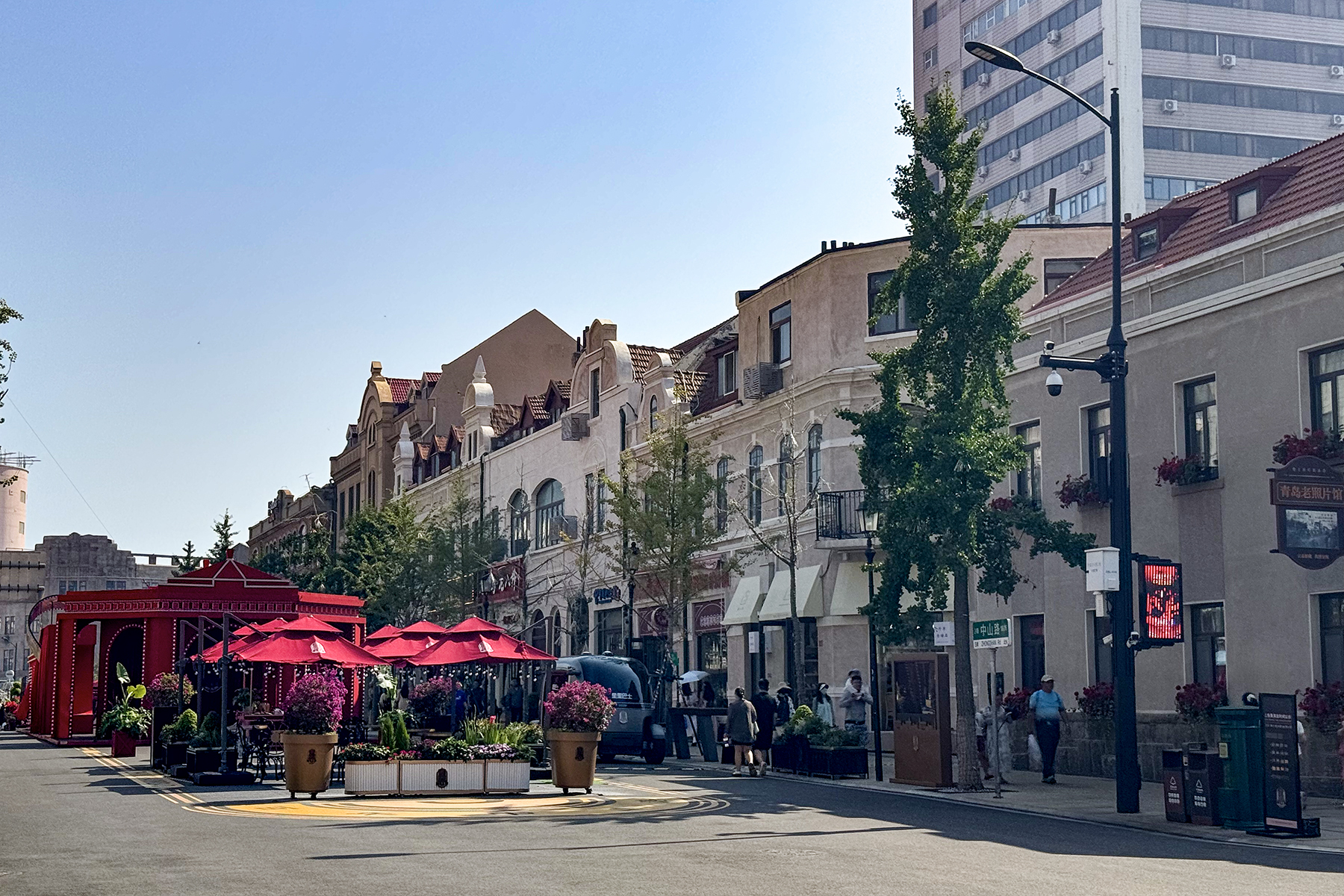
Start the day at St Michael's Cathedral — a twin-spired Romanesque-Gothic Catholic cathedral the Germans built while they governed Qingdao, a landmark in the heart of the old town and a favourite photo spot. Around it is the Shinan old town, full of old European buildings, cobbled streets that climb and dip, and small cafés and shops. Go early for an old town before the crowds and better light.
Carry on towards Lichun Road and the square in front of the old Qingdao railway station, noticing the German architecture that survives all over the quarter. Read more in the Qingdao old town guide.
Head down to the water at Zhanqiao Pier — a stone pier reaching about 440 metres into Qingdao Bay, with the octagonal Huilan Pavilion at its end, the image you'll know from the Tsingtao beer label. Walk to the end for a view of the red-roofed old town against the sea, then climb Signal Hill — a hill in the centre topped with red domed viewing towers, where you get a panorama of the whole old quarter, its tiled roofs spilling down to the water. It's the best high view on the old-town side.
In the afternoon, let yourself wander the old lanes — stop on Beer Street (Pijiu Street) or a local restaurant along the way. Don't rush; the charm of the old town is in the aimless walking.
The first evening calls for a fresh Tsingtao beer — stop at the Tsingtao Brewery (青岛啤酒博物馆), both a museum and a place to taste beer fresh off the line, before finishing with a Shandong seafood dinner. Qingdao is a coastal port, so clams, prawns, crab and fish are fresh all day, or try local plates like spicy stir-fried clams and mackerel dumplings. Read more in the Qingdao seafood guide and the Qingdao food guide.
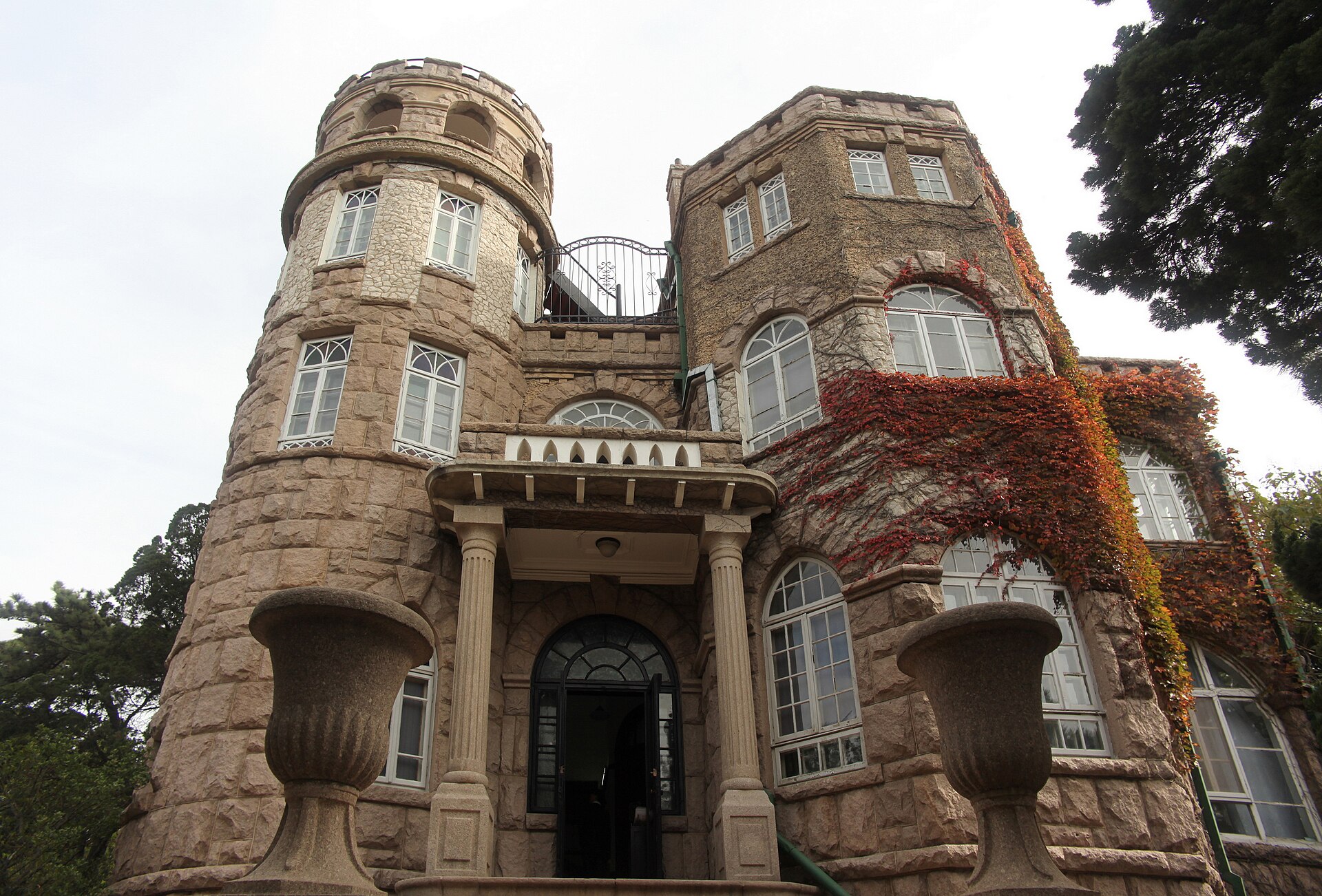
Walk Badaguan, with villas in many national styles under the trees, May Fourth Square with its red "May Wind" sculpture, and the Olympic Sailing Center on Fushan Bay that hosted the 2008 Olympic sailing — a day of old city meets new city by the sea.
Start the morning at Badaguan — a seaside villa quarter of several hundred holiday houses in many European styles, built from the German and Japanese eras, where every street is planted with a different tree, earning it the nickname "museum of international architecture". It's a lovely morning of photo-walking under the trees. The highlight is the Huashilou (花石楼) stone villa, a small seafront castle open to visitors (~¥5). The quarter is free to walk, and it sits beside Huiquan Bay — the city's No. 1 Bathing Beach.
Walk on east along the coast, past beaches and small headlands, and you'll reach May Fourth Square in the next stretch.
In the afternoon, come to May Fourth Square — a bayside square in the new city with the "May Wind" (五月的风) sculpture, a red steel spiral about 30 metres tall that is the emblem of modern Qingdao, ringed by towers, lawns and a path along Fushan Bay. It's an easy walk for photos, and the city's main shopping and malls sit across from the square.
Carry on east along Fushan Bay for a kilometre or two and you reach the Olympic Sailing Center — or take Metro Line 2 one stop.
Close the day at the Olympic Sailing Center — the yacht marina on Fushan Bay that Qingdao used for the Beijing 2008 Olympic sailing, with a long seafront promenade, the Olympic flame tower and a view of the skyline over towards May Fourth Square. Late afternoon to sunset is the best time: take a short sailing or bay cruise, or sit with a drink and watch the city lights come on one by one — an easy end to day two before you rest up for Mount Lao tomorrow.
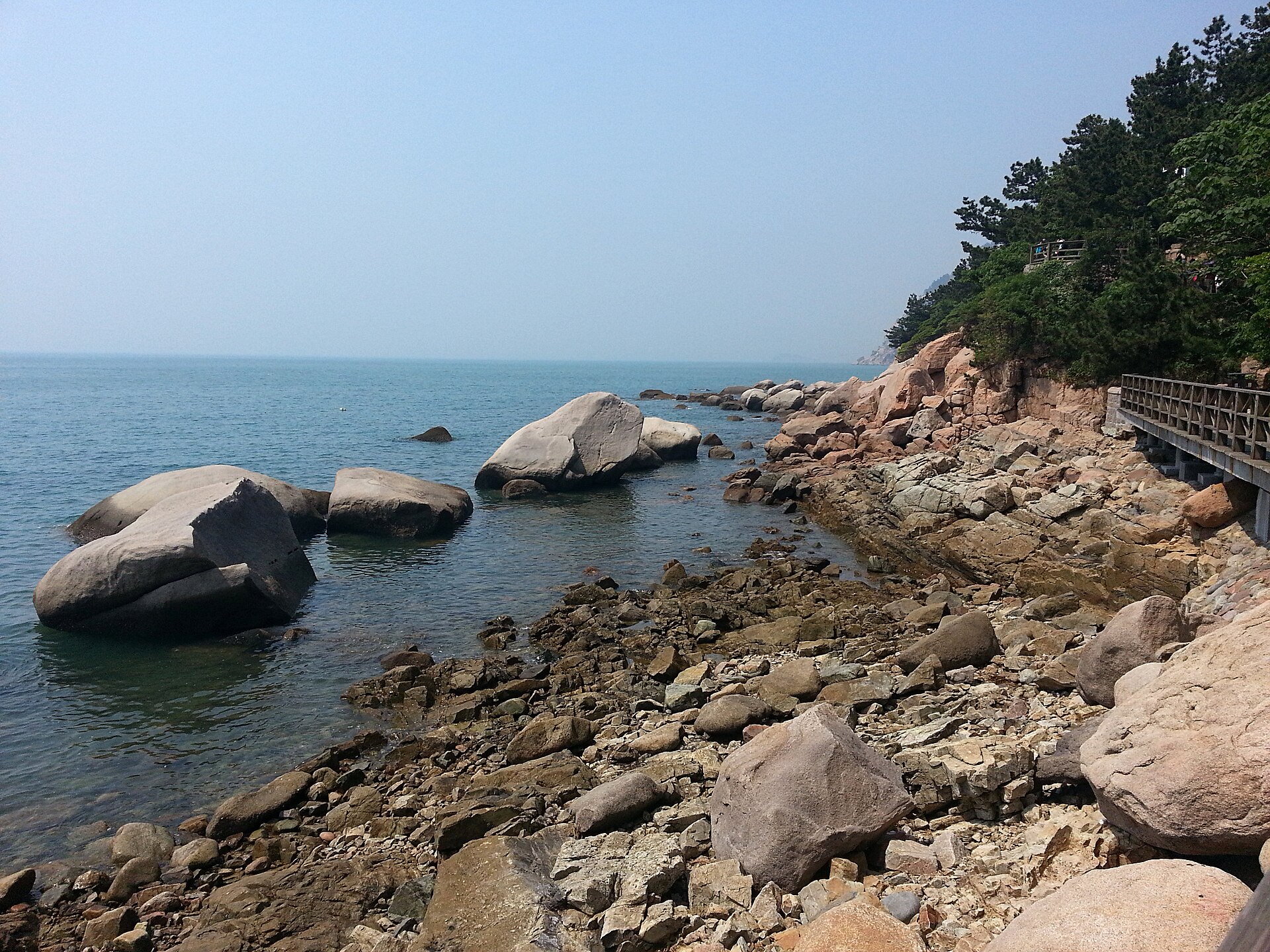
Head ~40 km east of the city to Mount Lao — a sacred Taoist mountain that rises straight out of the Yellow Sea, with ancient Taoist temples, waterfalls and a summit view over the ocean. A day quite unlike the city.
Start the day on Mount Lao — the highest coastal mountain in China and one of Taoism's sacred peaks, about 40 km east of the centre. What sets it apart is that it's a rocky mountain falling straight into the sea, so from the summit you look out over the open ocean. Go early, because the journey and the in-park bus transfers take time, and it gets busy by late morning.
You reach Mount Lao by the Laoshan tourist bus, taxi/DiDi or a day tour with transfers. On arrival you park at the visitor centre and transfer to the park's shuttle buses to go inside (private cars can't drive in).
Mount Lao is divided into several zones; pick by energy and interest. The Taiqing zone is the most popular for a day visit, with Taiqing Palace (太清宫) — a Taoist temple over two thousand years old, set at the foot of the mountain right by the sea — and an easy seaside walk. If you want the high summit, head to the Jufeng zone, which has a cable car and trails up to the summit viewpoint, or the Yangkou/Beijiushui zones for waterfalls and streams.
Because the zones are far apart and need shuttle-bus transfers, a single day usually covers one or two — Taiqing (temple + sea) paired with Jufeng (the summit) is the popular combination. See route and cable-car detail in the full Mount Lao guide.
Head back to the city in the evening — after a full day of hiking, tonight calls for an easy dinner near your hotel, perhaps grilled seafood or a seaside hot pot, and a good rest, because tomorrow is the out-of-town day with an early start and a high-speed train.
This is the day that separates four days from three. Qingdao is the gateway to the best of Shandong, an hour and a half to two and a half hours away by high-speed rail — pick the trip that suits you and give it your full energy.
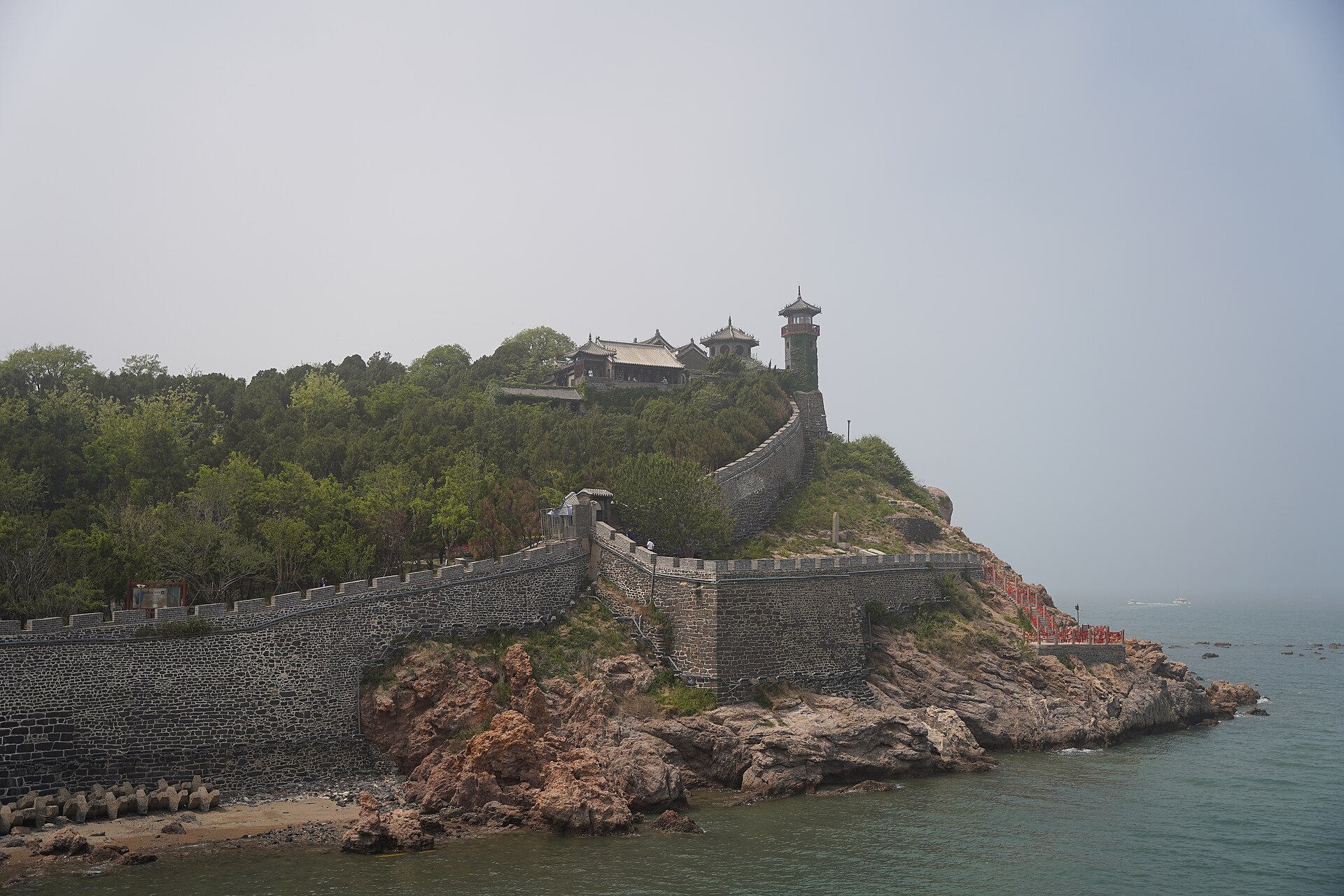
Head to Qingdao or Qingdao North station in the morning and take the ~1.5–2.5-hour high-speed train straight to Penglai station — the Penglai Pavilion (蓬莱阁) is an ancient cliff-top complex the Chinese count among the country's four great towers, the birthplace of the Eight Immortals legend, and famous for the sea mirage that genuinely appears on the right days. From the pavilion you look out over the wide Bohai Sea.
Yantai (烟台), the city the pavilion belongs to, is a pleasant seaside city in its own right, with an old colonial quarter and wineries (Yantai is one of China's famous wine regions). It's doable as a day return, but you'll need an early start and a careful plan for the local transfers. See the day trips from Qingdao for route detail and more stops.
Jinan (济南) is the capital of Shandong, nicknamed the "city of springs" for the hundreds of natural springs that bubble up in its centre. The highlight is Baotu Spring Park (趵突泉), reckoned the city's number-one spring, its clear water bubbling up constantly and once a favourite of the emperors, and Daming Lake (大明湖), the lake in the heart of the city fed by those springs, an easy stroll under the willows — plus the old Kuanhouli lanes with teahouses and local snacks.
The high-speed train from Qingdao/Qingdao North takes about 1.5–2.5 hours, with dozens of services a day from early morning to late, and the fastest at about 1 hour 40 minutes. It's doable as a day return but a little tiring, since the sights are spread out; if you'd rather take it easy and catch the old town at night, stay one night.
Shinan (the old-town side, west) suits you if you want to walk the old town, St Michael's Cathedral, Zhanqiao Pier and the local restaurants easily. The May Fourth Square–Fushan Bay area (east) suits you if you prefer the new city, towers, malls and bay views at night. The two are linked by Metro Line 3 and Line 2. If you'll take the train to Penglai or Jinan on day four, look at Qingdao Station (old town) or Qingdao North (the main hub, Lines 1/3/8). See the top 10 hotels in Qingdao or the six luxury hotels.
Lean on the metro — Qingdao runs several lines: Line 3 links the old town and Qingdao North; Line 2 goes to May Fourth Square/Fushan Bay/the east; Line 11 runs along the east coast towards Laoshan; Line 1 crosses the bay to Huangdao; Line 8 serves Jiaodong Airport and Jiaozhou. Fares are ¥2–8 per journey — scan Alipay or WeChat at the gate. For Mount Lao you take the Laoshan bus or a taxi, and shared bikes (Hellobike/Meituan) are everywhere. Use Amap or Apple Maps — Google Maps doesn't work in China. More in the Qingdao city guide.
Link a Visa or Mastercard to Alipay via its international mode before leaving home — most shops accept Alipay or WeChat Pay only. Download and test a VPN before you fly too (Google Maps and many Western apps are blocked in China). Thai passport-holders can enter China visa-free (around 30 days — check the latest terms before you go). See the Alipay guide · internet/VPN guide · China high-speed rail guide.
| Item | Budget | Mid-range | Comfortable |
|---|---|---|---|
| Hotel · 3 nights | ¥270–540 (~฿1,350–2,700) |
¥750–1,500 (~฿3,750–7,500) |
¥1,800–3,600+ (~฿9,000–18,000+) |
| Food · 4 days | ¥300–460 (~฿1,500–2,300) |
¥600–1,000 (~฿3,000–5,000) |
¥1,300–2,600 (~฿6,500–13,000) |
| City transport · 4 days | ¥60–110 (~฿300–550) |
¥110–180 (~฿550–900) |
¥200–360 (~฿1,000–1,800) |
| Old town + Mount Lao (days 1–3) | ¥220–320 (beer + Laoshan by zone) |
¥350–520 (+ all-mountain ticket) |
¥600–900 (everything + tour/cruise) |
| Day 4 out of town | ¥220–360 (Jinan, rail + entries) |
¥360–560 (full-day Penglai/Jinan) |
¥600–900+ (Penglai + Yantai) |
| Total per person (approx.) | ¥1,070–1,790 (~฿5,350–8,950) |
¥2,170–3,760 (~฿10,850–18,800) |
¥4,500–8,360+ (~฿22,500–41,800+) |
Exchange rate reference: ¥1 ≈ ฿5. Estimates may vary by season and personal spending. Mount Lao and the Penglai Pavilion charge more in peak season (Apr–Oct) than off-season. Summer (Jun–Aug) is the beach and International Beer Festival peak (busy, pricier, the biggest scene); May–Jun and Sept–Oct are the most pleasant overall; early summer can bring sea fog; winter (Dec–Feb) is cold and windy (~0–8°C). Avoid Chinese New Year and the National Day holiday (1–7 Oct), when hotel prices and queues spike 2–3×.