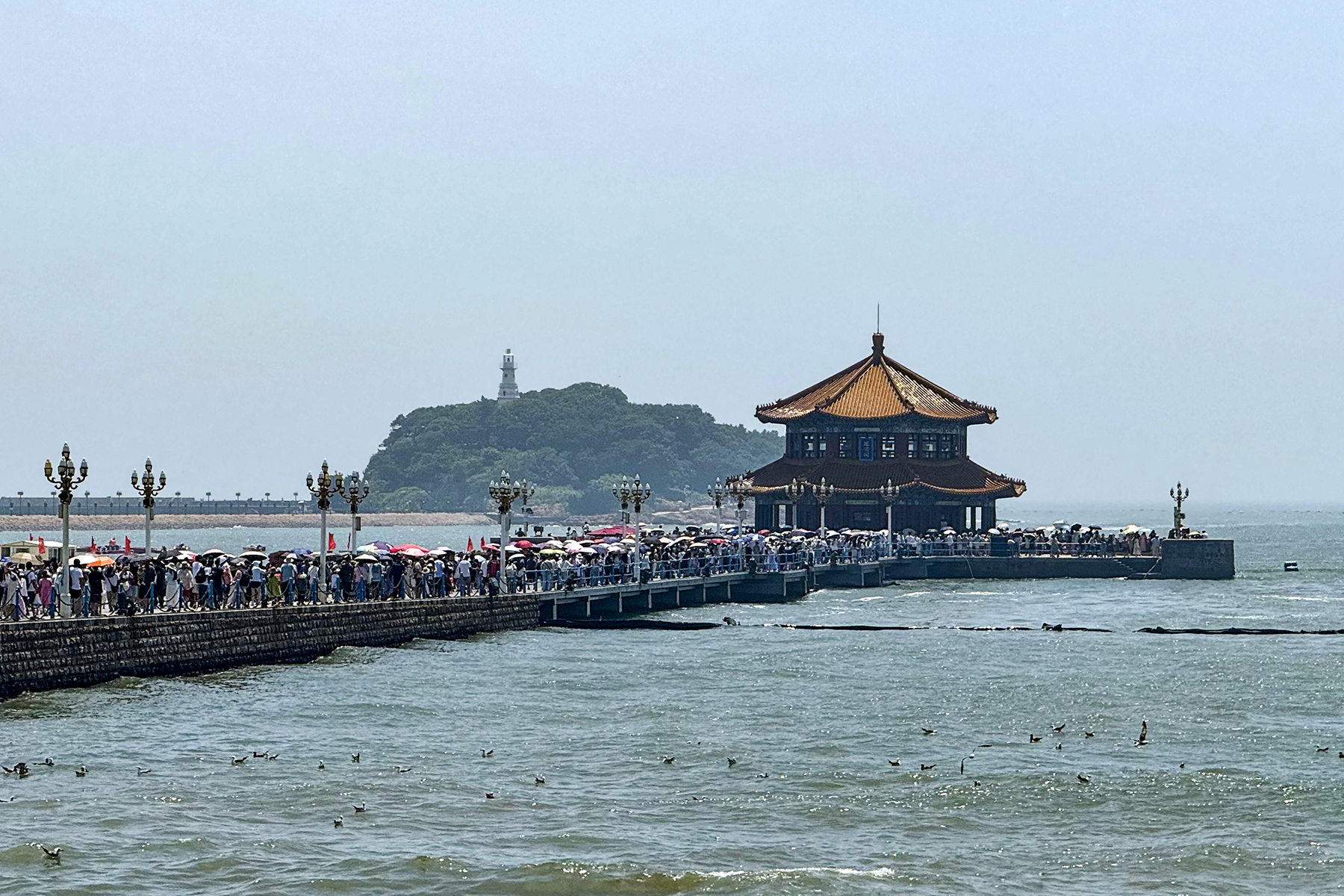
A stone pier reaching 440 metres into the bay, ending in the very pavilion you have seen on every Tsingtao beer bottle — free to walk, beside the German old town, and most magical at dawn when the gulls circle.
Picture this: you are standing at the foot of the pier at seven in the morning, a cool sea breeze in your face. Ahead, a grey stone pier stretches straight out into the bay, ending in an octagonal pavilion with a yellow roof perched on a half-moon breakwater. Seagulls wheel overhead, and a few people are holding out bread for the birds to snatch mid-air. Then it hits you — this exact view is the one on the Tsingtao beer bottle you have seen your whole life.
This is Zhanqiao Pier (栈桥, literally "trestle pier"), a 440-metre stone pier at the foot of Zhongshan Road in Qingdao's old town. It was first built in 1892, in the late Qing dynasty, as the city's very first wharf. In 1931 the authorities extended it to its present 440 metres and built the Huilan Pavilion (回澜阁) at the far end — and it is this octagonal, two-storey pavilion that became the emblem of Qingdao and the logo on the Tsingtao beer label.
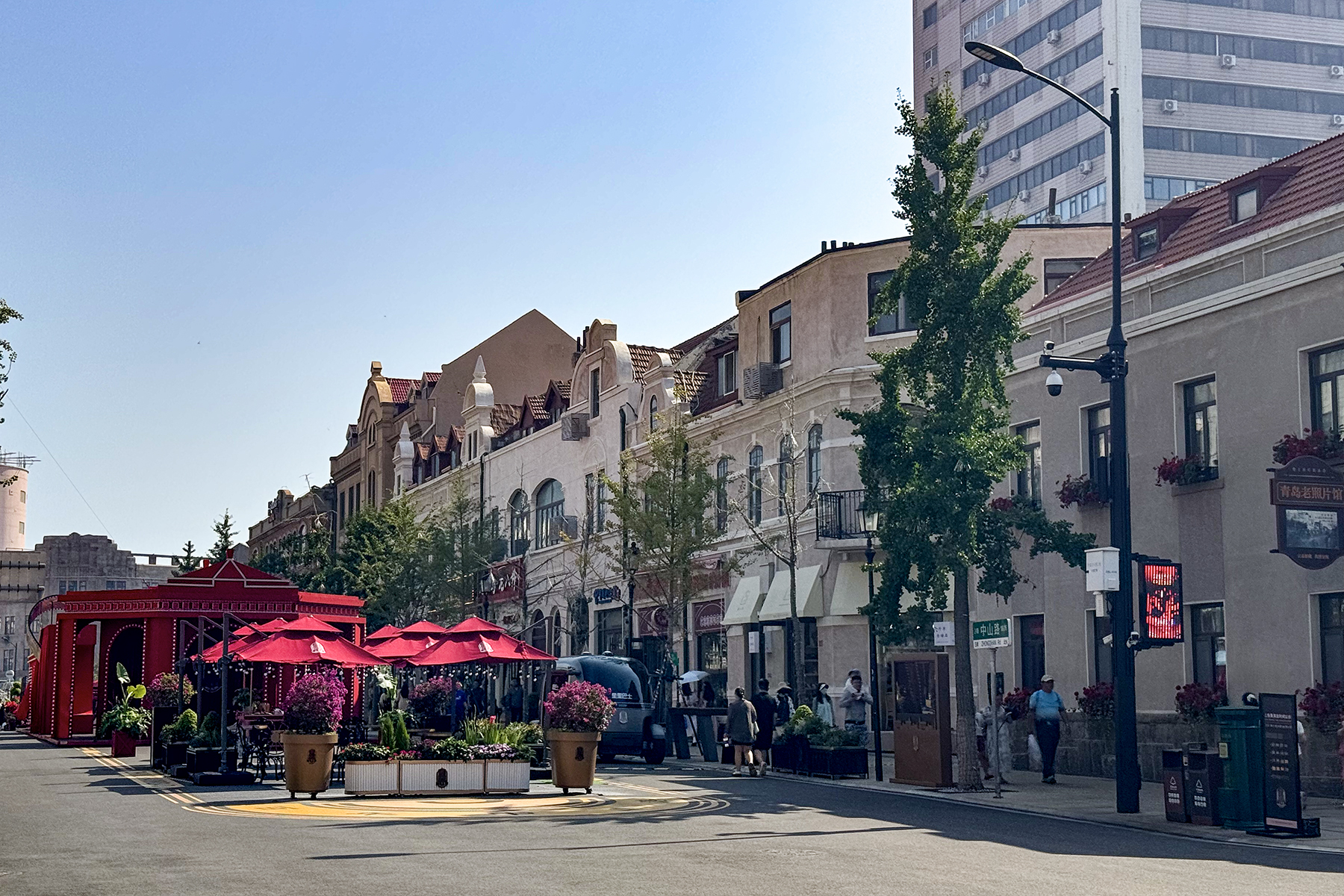
What makes Zhanqiao special is that it is free and open 24 hours — no entrance fee, no queue — and it sits right in the heart of the German old town. From the pier you can walk straight to Zhongshan Road, the Pichaiyuan food alley, or follow the shore east to No.6 Beach and St Michael's Cathedral. It is where almost every visitor starts their Qingdao trip.
Walk from the shore out to the sea — each stop has its own story
The heart of the pier — an octagonal pavilion with a yellow helmet-shaped roof standing on a semicircular breakwater at the far end. "Huilan" means "returning waves." Climb to the upper floor and look back toward shore for a beautiful view of the red-roofed old town rising up the hills behind. This is the same pavilion that appears on the Tsingtao beer label, so a photo with it is practically obligatory.
What brings Zhanqiao to life is the flock of seagulls circling the pier, especially in winter when thousands of migrating gulls arrive. Visitors love holding out bread for the birds to swoop in and catch mid-air — a photo moment that even Qingdao locals come back for every year. The gulls are busiest at first light, which is also when the light is at its prettiest.
Look east from the Huilan Pavilion and you will see a small island with a white lighthouse — that is Little Qingdao (小青岛, "Little Green Island"), the islet that gave the city its name. Set against the sea and the red-roofed hills behind, it makes the classic Qingdao view. If you have time, you can walk along the shore and out onto the islet itself.
Step off the pier on the east side and you are at No.6 Beach, a small downtown stretch of sand where locals sit out and swim in summer. It is not Qingdao's biggest beach, but it gives you that "sea in the middle of the city" feeling, with Zhanqiao Pier as the backdrop. A good spot to photograph the pier from after your walk.
Do not overlook the pier itself. It is one of the oldest structures in Qingdao, built in the late Qing dynasty before the Germans leased the city, originally as a wharf for cargo and troops. It has been restored several times into the scenic walkway you see today. Walking out over the old stone, it is worth remembering that the whole city began right here.
The two best windows are early morning, 6.30–8.30 am, when there are few people, the light is soft and the gulls are liveliest, and low tide, when rocks and seaweed appear around the pier's base for a completely different mood. Check Qingdao's tide table in your weather app before you go — on very high tides during windy days, the authorities may close the walkway out to the pavilion for safety.
The busiest times are weekend afternoons and the Chinese public holidays (Golden Week in early October and Chinese New Year), when the pier gets packed and slow. If you can, come on a weekday or in the morning.
Here is what makes this pier quietly famous around the world: the image of it reaching into the sea with the Huilan Pavilion is the logo on the Tsingtao beer label, the brewery founded in 1903 during the German lease. So if you have ever drunk a Tsingtao, you have already seen this place on the bottle. Standing for a photo beside the real pavilion is a little ritual many beer lovers come here to complete.
Once you have seen Zhanqiao, follow the beer trail — head into the old town for fresh draft beer sold in a plastic bag, or carry on to the Tsingtao Beer Museum on Dengzhou Road's beer street.
The classic "Qingdao postcard" shot is not taken from the pier but from the shore on the east side (toward No.6 Beach), turning your camera back toward the pier so you catch the stone walkway leading straight to the Huilan Pavilion, with the sea and Little Qingdao islet behind. Come at sunset for warm gold light on the pavilion roof.
Another favourite is to climb to the upper floor of the Huilan Pavilion and look back to shore — the whole sweep of red-roofed old town climbing the hills fills the frame. For an even higher angle, Signal Hill nearby looks down over both the pier and the old town.
The easiest option is the metro, which drops you close to the foot of the pier.
Everything is in the same old-town area — within walking distance or one stop on Metro Line 3