Home Qingdao China Qingdao Hotels About
Home  ›  China  ›  Qingdao  ›  Seafood
🇨🇳 Qingdao Seafood · 2026

Qingdao Seafood
Jiaozhou Bay, fresh daily, with beer

Qingdao sits on the Yellow Sea with Jiaozhou Bay (胶州湾) right beside it, so the catch comes in fresh every day — and locals eat it Shandong-style: clams, prawns, mantis shrimp, sea cucumber and oysters, steamed, blanched or salt-boiled so the freshness leads, then washed down with cold Tsingtao draft. People in the know walk the markets, pick their own, and have a stall cook it on the spot.

Why eat here

Freshness is the starcook it less, let the sea speak

If you come to Qingdao and skip the seafood, you've missed one of the best things the city has. Qingdao is in Shandong Province (山东) on the Yellow Sea, and Jiaozhou Bay (胶州湾) beside it is a big, rich bay — fishing boats land the catch daily, so the clams, prawns, mantis shrimp, sea cucumber, oysters and mackerel are genuinely fresh. The seafood here belongs to Shandong cuisine (鲁菜, Lu cuisine), the oldest of China's eight great cuisines — built on freshness and balance, not the numbing málà of Sichuan. The favourite methods are steaming, blanching and salt-boiling (盐水), all meant to draw out the natural sweetness of the seafood. The idea is simple: the fresher the catch, the less you do to it, and you let the ingredient tell the story.

The other half of the story is Tsingtao beer (青岛啤酒), which locals drink fresh. The classic city scene is a plate of chilli-fried clams (辣炒蛤蜊) and a cold draft — that pairing is a real Qingdao ritual. And the heart of how locals eat seafood isn't in fancy restaurants but at the seafood markets, especially around Tuandao (团岛), which has a big market near the harbour. The method is pick-and-cook (加工): choose your own seafood at the stalls, pay by weight, then carry it to a nearby restaurant that cooks it on the spot. We've picked six things that best tell the story of a Qingdao seafood table — from the clams and prawns everyone orders to the sea cucumber that Shandong is famous for — plus how to do pick-and-cook without getting overcharged.

What to pick

Six things to try from Jiaozhou Bay

From the crowd-pleasers everyone orders to the pricey Shandong specialty
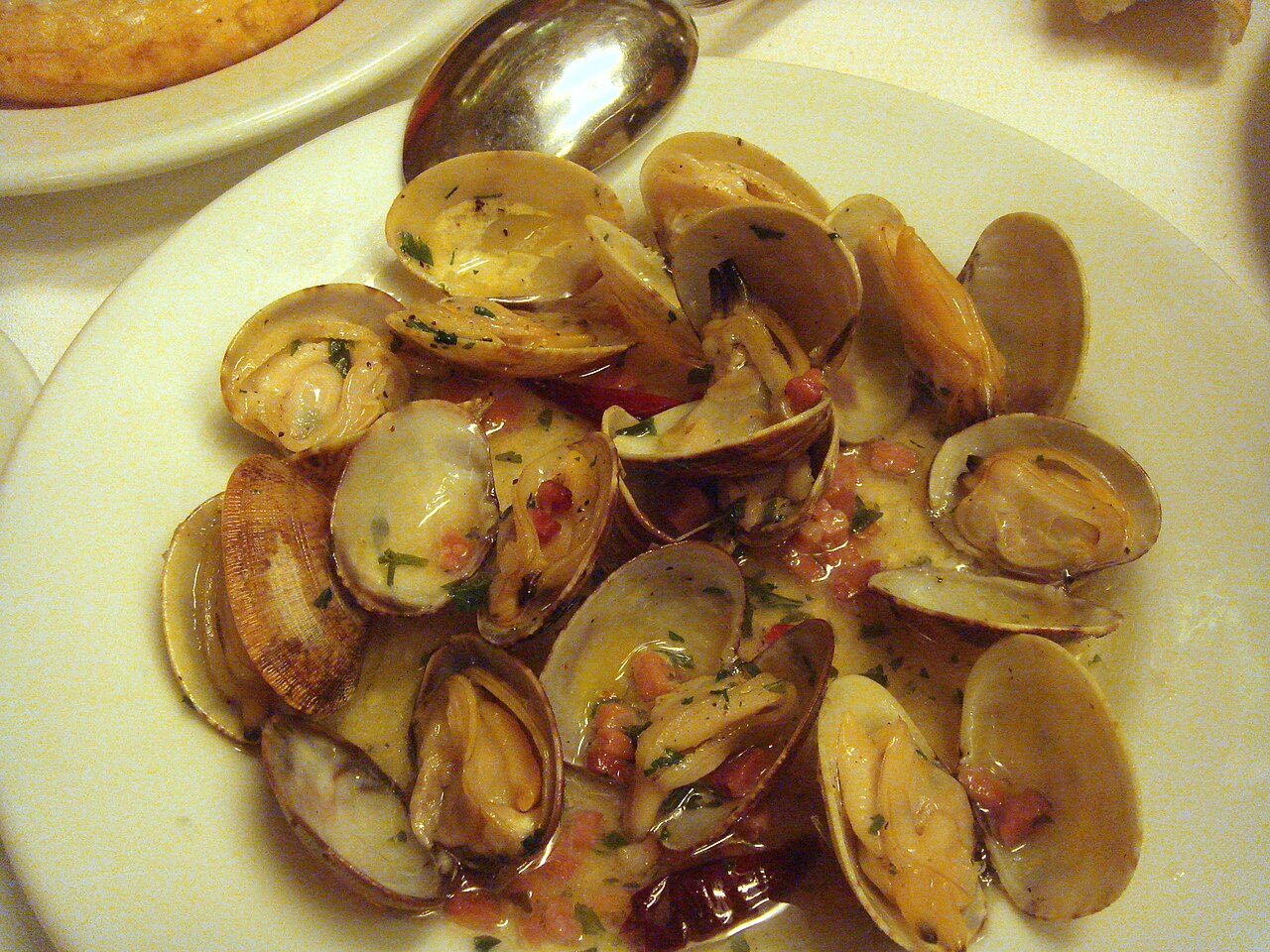
A plate of clams served in a light sauce with spring onion and chilli, the classic Qingdao beer snack 1
Clams / Gala
蛤蜊 / 嘎啦 · Qingdao's little clams, the beer snack

Clams (蛤蜊, which Qingdao locals pronounce "gala" 嘎啦) are the city's signature little shellfish — sweet, small, and so cheap that locals eat them as a standard beer snack. The classic preparation is chilli stir-fry (辣炒蛤蜊) with garlic, scallion and chilli, cooked just until the shells open so the meat stays juicy and the sauce turns sweet-savoury with a little heat. They're also good steamed or blanched for pure clam flavour. The defining Qingdao scene is a big plate of chilli clams at a beer-snack restaurant with a cold draft alongside (哈啤酒吃蛤蜊). It's the dish everyone names as the taste of this seaside city.

Where: Beer Street (Dengzhou Rd) snack restaurants · market stall + cook-it restaurant
Price: ¥8–20 (฿40–100) per catty (very cheap)
Tip: Order chilli-fried with beer · blanched in salt water for pure clam flavour
🦐2
Steamed Prawns
大虾 / 盐水大虾 · sweet Jiaozhou Bay prawns

Prawns from Jiaozhou Bay are plump, firm and sweet — a Qingdao specialty for generations. The Shandong way that honours freshness most is plain steaming or salt-boiling (盐水大虾), drawing out the natural sweetness with no fuss; a little ginger-vinegar dip is all you need. Some places do a sauce stir-fry or garlic fry, which is good too, but if the prawns are genuinely fresh, try them steamed first and you'll understand the local pride. When you pick them, look for clear shells, intact whiskers and a firm body — that's freshness. Prices swing with the season, so ask the price per catty before you order.

Where: Tuandao market stall + cook-it restaurant · city seafood restaurants
Price: ¥40–90 (฿200–450) per catty (by size and season)
Tip: Pick clear-shelled firm prawns · steam or salt-boil for the sweetest result
🦞3
Steamed Mantis Shrimp
虾虎 / 皮皮虾 · sweet and juicy, steamed plain

Mantis shrimp (called 虾虎 xiāhǔ in Qingdao, 皮皮虾 elsewhere) is a catch locals look forward to, especially in spring when they're full of roe — plump, with sweet, juicy meat. The best way to eat them is plain steaming to keep all the natural sweetness, with a ginger-vinegar dip. They're a little fiddlier to shell than prawns, but well worth it. In the roe season (usually spring) you'll find a firm line of roe down the middle, so good that locals happily peel through a pile of them. It's one of the dishes that most clearly says "Qingdao is a sea city." Prices swing with the season, so ask the price per catty first.
Where: Tuandao market stall + cook-it restaurant · seafood beer-snack restaurants
Price: ¥40–100 (฿200–500) per catty
Tip: Pick lively ones · steam plain for the sweetest result · in spring choose ones with roe
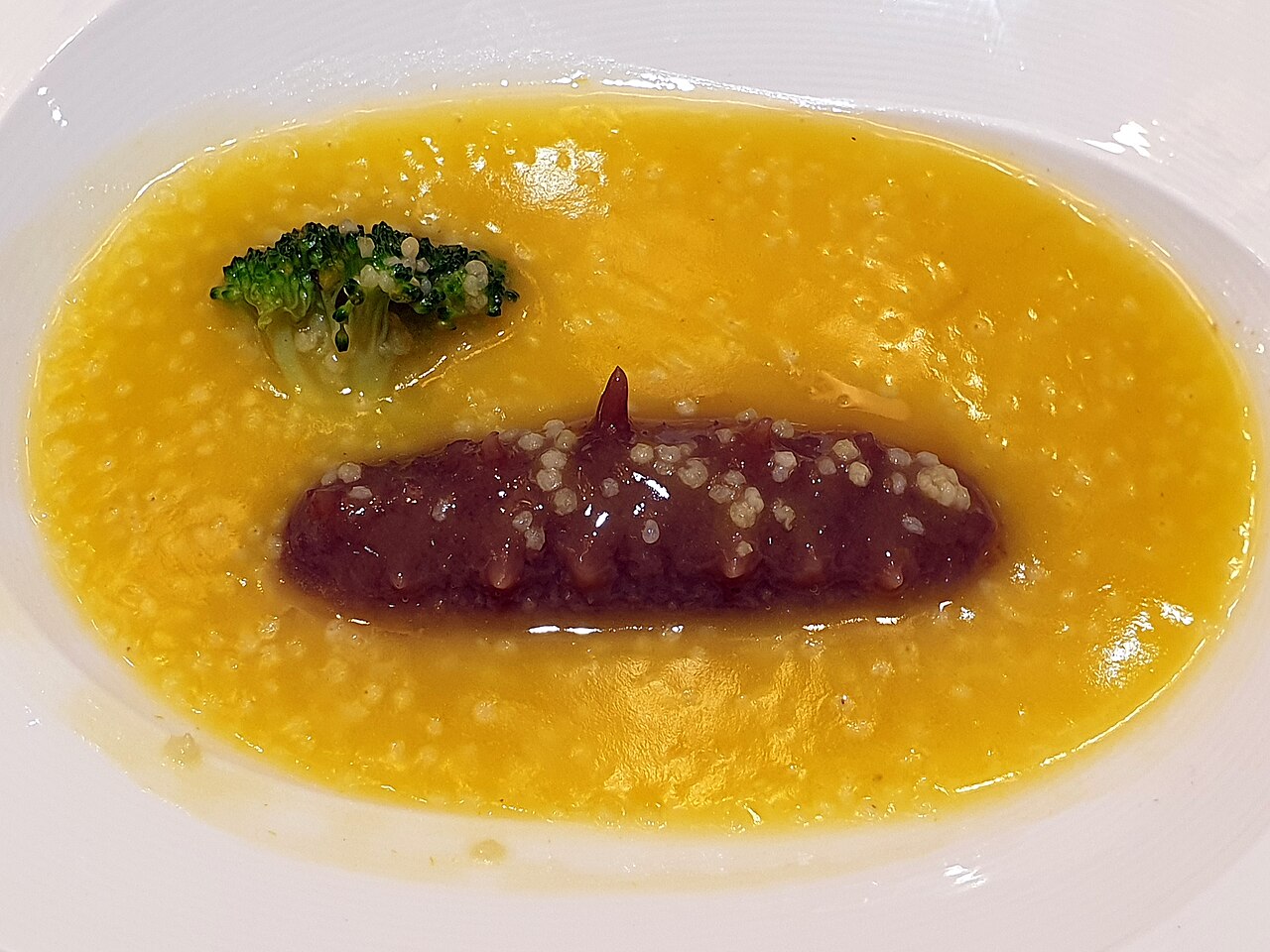
A single Shandong-style sea cucumber glazed in sauce, plated in a golden sauce with a vegetable garnish 4
Scallion Sea Cucumber
海参 / 葱烧海参 · a Shandong delicacy, springy, pricey

Sea cucumber (海参) is one of Shandong's most famous and prized ingredients, and Qingdao and the Shandong peninsula raise highly regarded Yellow Sea sea cucumber. The classic Lu-cuisine dish is braised sea cucumber with scallion (葱烧海参) — the sea cucumber simmered in a deep, savoury sauce with scallion until it's tender and soaked through with flavour. It isn't flashy; it's deep and rounded, with the distinctive springy bounce of the sea cucumber itself. Honestly, sea cucumber is expensive — priced per piece or per dish, far above ordinary seafood — and it's something Shandong people order for special meals or to host guests. If you want a taste of real Shandong cooking, don't miss it.

Where: Shandong (鲁菜) restaurants · city seafood restaurants
Price: well above ordinary seafood, priced per piece/dish (pricey)
Tip: Order the classic scallion-braised version · a special-meal dish, not a snack
🦪5
Fresh Oysters
生蚝 / 海蛎子 · Jiaozhou Bay oysters, grilled or raw

Oysters (生蚝, or 海蛎子 in the Shandong dialect) from Qingdao's waters are plump, with creamy, sweet-briny flesh. The popular move at night markets and barbecue restaurants is grilled with crispy garlic (蒜蓉生蚝) — grilled until the oyster liquor bubbles up with fragrant garlic, eaten hot and intense. If the oysters are very fresh, some places serve them raw with a squeeze of lemon. There's also oyster omelette (海蛎煎/蛎黄), a snack you'll find at stalls. Oysters are priced per piece or per plate; pick a place with quick turnover for the freshest, safest ones. They go brilliantly with beer.

Where: Taidong night market · seafood barbecue restaurants · market stalls
Price: ¥3–8 (฿15–40) each (by size)
Tip: Grilled with garlic, eaten hot · pick a stall with quick turnover
🐟6
Spanish Mackerel
鲅鱼 · firm Shandong fish, steamed, grilled or as dumplings

Spanish mackerel (鲅鱼, báyú) is Qingdao's hometown fish — firm, rich-fleshed, with smooth skin. Fresh whole fish at the market change with the day's catch, and there are several ways to eat it: steamed with soy, ginger and scallion topped with hot oil for pure fish flavour; grilled or fried for crisp skin; or made into mackerel dumplings (鲅鱼水饺), Qingdao's signature dumpling of minced fresh mackerel and chives, juicy and sweet with a hint of the sea. There's a local custom of sons-in-law gifting mackerel to their wife's parents in spring (鲅鱼礼) — it's a fish woven into the city's life. If you want a deeper look at the dumplings, we have a separate guide too.

Where: market stall + cook-it restaurant · mackerel-dumpling shops in town
Price: ¥30–80 (฿150–400) per catty (fresh fish) · dumplings priced per plate
Tip: Steam fresh fish with soy · for the local thing, order mackerel dumplings
Flavour note: The Shandong seafood philosophy is "the fresher it is, the less you do to it" — with genuinely fresh seafood, stalls just steam, blanch or salt-boil it and serve a ginger-vinegar or soy dip, the one exception being clams, which are usually chilli-fried for beer. Some things are seasonal: mantis shrimp are full of roe in spring, crab is fattest late in the year. Catch them in season and they're especially good — ask the stallholder what's at its best right now and you'll get the pick of the day.
How pick-and-cook works

Walk Tuandao market and don't get overcharged

Pick-and-cook (加工) is better value than seaside-view restaurants — but you need to know the steps and agree the weight and price clearly every time.

Step 1 · Pick at the stalls
团岛海鲜市场 · the Tuandao seafood market

Start at the Tuandao (团岛) seafood market or a neighbourhood market in town, and walk a few stalls before you decide. Freshness shows in prawns and mantis shrimp that are still moving, clams shut tight, and fish with clear eyes and red gills. Ask the price per catty (斤 = 500g) clearly before you point at anything, and compare two or three stalls. Popular items like prawns and mantis shrimp swing with the season, so don't rush.

Best picks: clams · prawns · mantis shrimp · mackerel · oysters · Time: morning–afternoon for the freshest
Step 2 · Watch the scale + agree the total
称重 · where people get overcharged

This is the most important step — watch the scale with your own eyes and have them state the total as a number before you pay. Some stalls in tourist areas have off scales or quietly swap your cheaper pick for a pricier one. If a number looks odd, just ask again. A small pocket scale, or re-weighing at the market's central scale point if there is one, gives peace of mind. Pay cash or scan exactly the amount you agreed — don't leave anything vague.

Golden rule: see the scale · know the total before paying · Watch for: swapped picks · rigged scales
Step 3 · Carry it to a cook-it restaurant (加工)
海鲜加工 · restaurants around the market

Take your seafood to a restaurant near the market that cooks it (look for a 加工 or 海鲜加工 sign). Ask the per-dish cooking fee and the method before you put your seafood down — steamed, blanched, salt-boiled, or chilli-fried. The fee is usually about ¥10–20 per dish. Be clear about how you want each thing done; for very fresh seafood, go for steaming, blanching or salt-boiling first, then add a chilli stir-fry (chilli clams are a must). You can order Tsingtao beer and rice on the side.

Best methods: steam · blanch · salt-boil · chilli-fry · Time: market hours, noon–evening
Shortcut · Beer-snack restaurants
啤酒屋 · if you don't want to shop yourself

If you'd rather not pick your own, Qingdao has beer-snack restaurants (啤酒屋) and seafood restaurants that do everything in one place — especially around Beer Street, Dengzhou Road (登州路), where you can order chilli clams with fresh draft straight away. It's more convenient but usually pricier than buying from the market. The same rules still apply — check the posted prices and ask clearly before you order. Avoid the seaside-view seafood restaurants that don't post prices or push you toward the expensive options.

Best picks: chilli clams + fresh draft · Watch for: seaside-view places with no posted prices
Eat your way through Qingdao

Read on for more Qingdao dishes

Seafood is only part of it — Qingdao also has chilli clams, mackerel dumplings and street food waiting.

Frequently asked

FAQ · what people ask before eating seafood in Qingdao

Why is Qingdao seafood so fresh and famous?
Qingdao (青岛) sits in Shandong Province (山东) on the Yellow Sea, with Jiaozhou Bay (胶州湾) — a big, rich bay — right beside it. Fishing boats land the catch every day, so the seafood is genuinely fresh, especially clams (蛤蜊, which locals call "gala" 嘎啦), prawns, mantis shrimp, sea cucumber, oysters and mackerel. The Shandong way of cooking is all about freshness and light handling — mostly steaming or blanching to bring out the natural sweetness of the seafood. Add the city's Tsingtao beer (青岛啤酒) culture, where a plate of chilli clams goes with a fresh draft, and you have the signature image of this seaside city.
Where are Qingdao's pick-and-cook seafood markets, and how do they work?
Qingdao has several seafood markets. The one locals use for fresh seafood at good prices is in the Tuandao (团岛) district, which has a big seafood market near the harbour, and there are neighbourhood markets in the old town and around the city too. The way to eat is pick-and-cook (加工): you walk the stalls and choose your own seafood — clams, prawns, mantis shrimp, fish — pay by weight, then carry it to a nearby restaurant that cooks it for you for a small per-dish fee. They'll steam it, blanch it, salt-boil it, stir-fry it with garlic, or do whatever you ask. You get the freshest possible seafood at a price you control — cheaper and fresher than ordering in a tourist restaurant.
How do you buy seafood at a Qingdao market without getting overcharged?
The key is to agree the weight and the price clearly before you pay, every time. First, ask the price per catty (斤 = 500g) at the stall before you point at anything. Once you've chosen, watch the scale with your own eyes and have them state the total as a number before you hand over money — some stalls in tourist areas have off scales or quietly swap your cheaper pick for a pricier one. A small pocket scale, or re-weighing at the market's central scale point if there is one, gives peace of mind. Popular items like prawns and mantis shrimp swing with the season, so if a price looks off, walk a few stalls and compare first. At the restaurant that cooks it, ask the per-dish cooking fee and the method up front. Avoid the seaside-view seafood restaurants that don't post prices — they tend to overcharge.
How is Qingdao seafood cooked — is it spicy?
Qingdao seafood belongs to Shandong cuisine (鲁菜, Lu cuisine), the oldest of China's eight great cuisines, which is all about freshness, balanced flavour and showcasing the ingredient — not the numbing málà of Sichuan. The most popular methods are steaming, blanching and salt-boiling (盐水), to draw out the natural sweetness of the seafood. Prawns and mantis shrimp are usually steamed or salt-boiled plain; fresh fish is steamed with soy and a scatter of ginger and scallion; sea cucumber braised with scallion (葱烧海参) is a signature dish; and clams are typically stir-fried with chilli (辣炒蛤蜊) as a beer snack. The philosophy is simple: the fresher the catch, the less you do to it. If you want bolder flavour you can order a chilli stir-fry, but freshness is the real point here.
How much does a seafood meal in Qingdao cost?
Pick-and-cook at the market is good for the budget and better value than smart restaurants. Rough prices by weight: clams ¥8–20 (฿40–100) a catty — so cheap that locals eat them as a regular beer snack; fresh prawns ¥40–90 (฿200–450) a catty; mantis shrimp ¥40–100 (฿200–500) a catty depending on size and season; fresh fish ¥30–80 (฿150–400) a catty; oysters ¥3–8 (฿15–40) each. Sea cucumber is a delicacy and costs much more, priced per piece or per dish. The cooking fee at a 加工 restaurant is about ¥10–20 (฿50–100) per dish. Come as a group of two or three, pick a little clam, prawn and fish and have it cooked, and it works out around ¥60–130 (฿300–650) per person for a full spread of fresh seafood (sea cucumber extra).
Where should you go for the freshest seafood in Qingdao?
The freshest and cheapest seafood is at the Tuandao (团岛) seafood market and the neighbourhood markets around the city — picking your own and having a stall cook it is how locals actually eat. Beer Street, Dengzhou Road (登州路), has beer-snack restaurants that serve chilli clams with fresh draft, and the Taidong (台东) night market has plenty of grilled seafood and seafood barbecue. Honestly, the seaside-view seafood restaurants and tourist areas tend to be pricier and not as fresh as the market. If you want the real thing at a real price, start at Tuandao or a local market. It's easy to get around on the Qingdao metro, which covers the city's main districts.
Klook · Qingdao food tours & activities

Qingdao Food Tour — graze the sea city with a local

Want to eat your way through Qingdao's seafood and Shandong dishes without guesswork? A Qingdao food tour walks you through the seafood markets, the old town and Beer Street, tasting the real thing stall by stall with a local guide — fun, filling, and you learn which places are worth it.

See Qingdao food tours on Klook →
Wherebest is a Klook affiliate partner — we may earn a commission when you book through our links, at no extra cost to you.