11 places worth your time
Ordered by geography — start in the German old town in the west, move east to Fushan Bay, then on to Mount Lao and the brewery.
 1
1
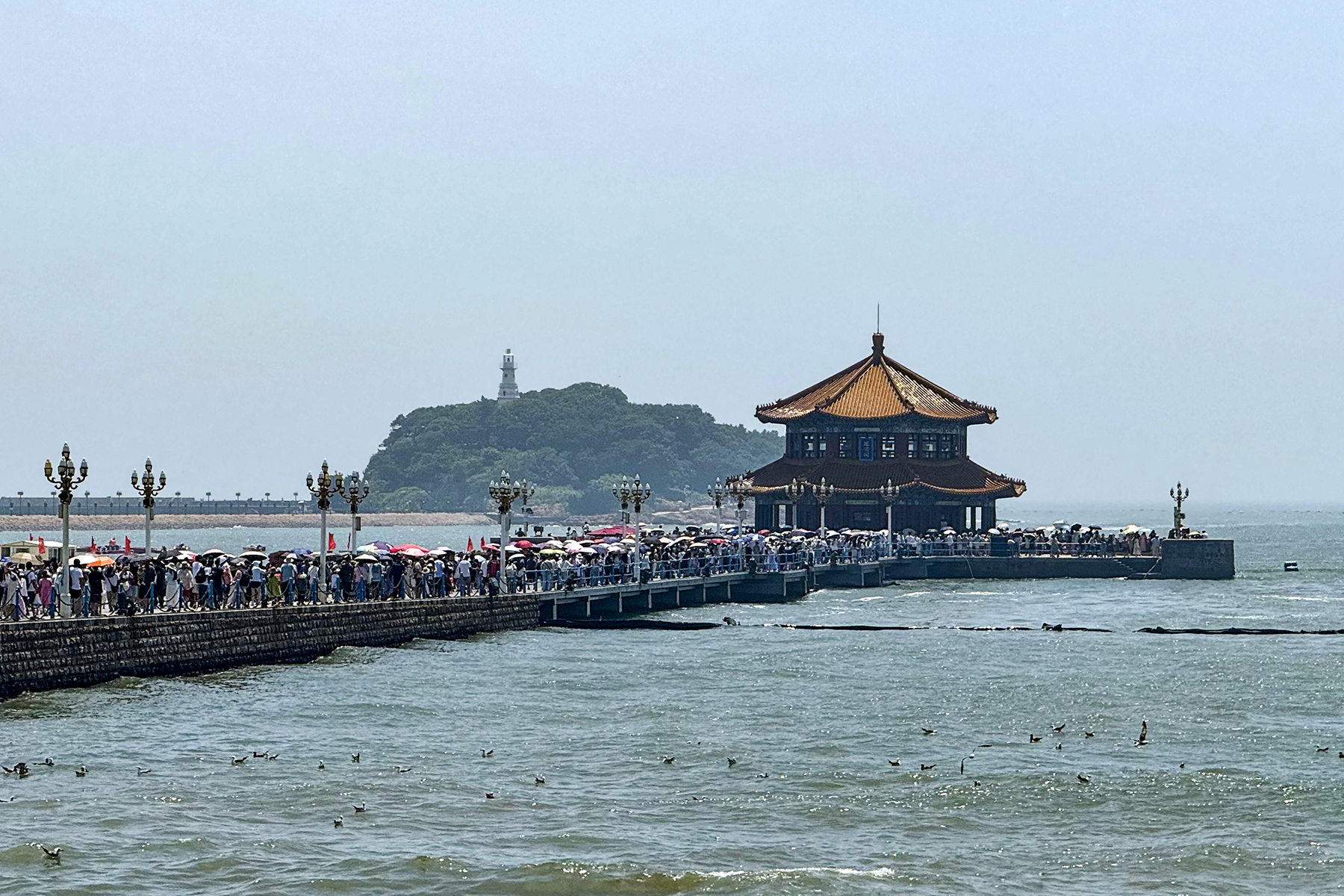
Picture a stone pier about 440 metres long reaching into the bay, ending in the octagonal Huilan Pavilion (回澜阁) — the building you already know, because it is printed on the Tsingtao beer label. This is Zhanqiao Pier, a late-Qing structure from 1892 that became the city's emblem. Walking out along it is free; at low tide you see the rocks and people gathering shellfish, and the prettiest light is early in the morning when the crowds are thin. No.6 Beach, a small city beach, sits right beside it. The pier is next to Qingdao Railway Station, an easy walk from Metro Line 3 — most people start their old-town tour here.
 2
2
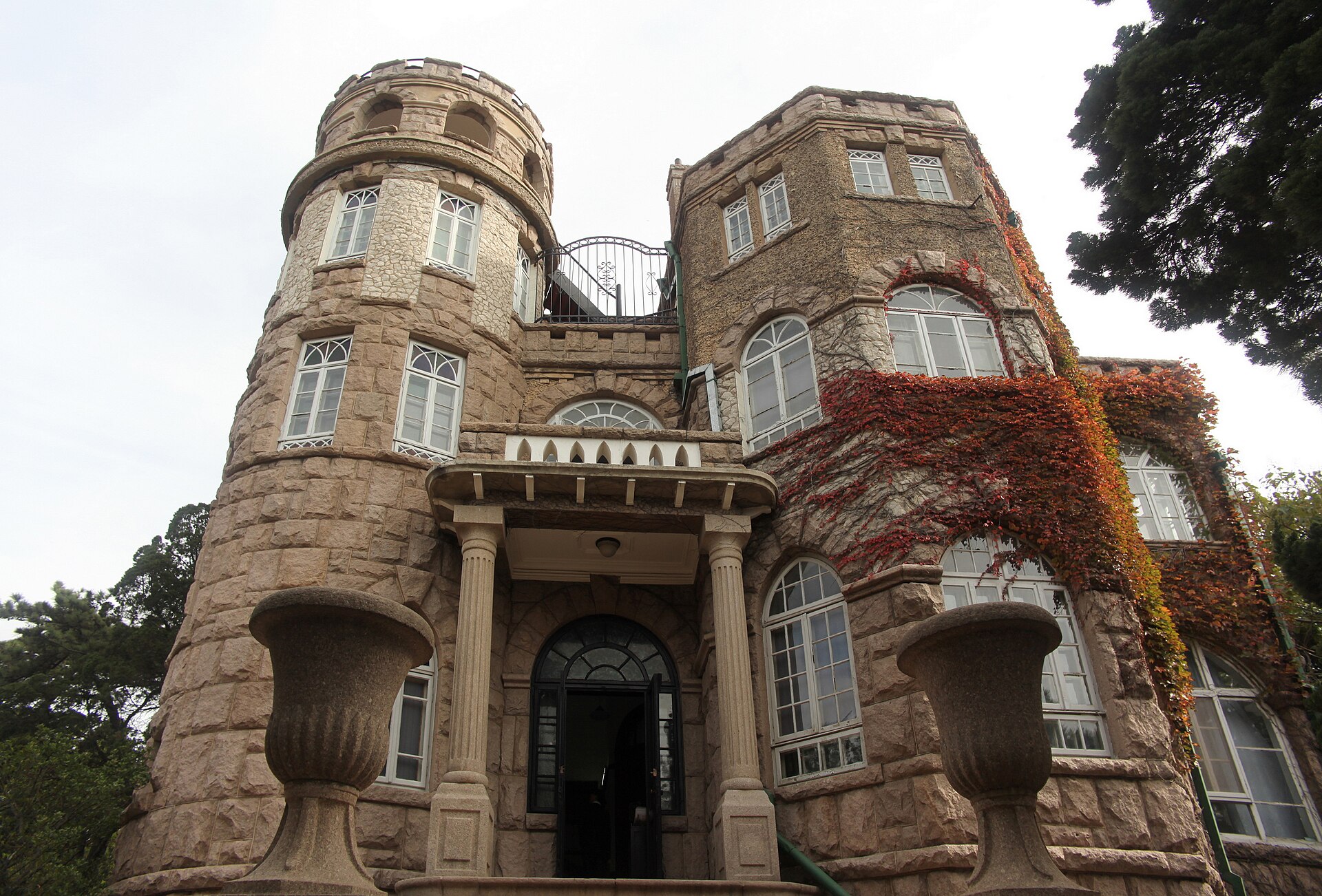
For the prettiest place to walk in Qingdao, Badaguan is the answer — a 1930s seaside resort quarter where each street is named after one of the eight passes of the Great Wall (hence "Eight Passes"). The villas come in every style — Russian, British, French, German, more than 20 in all — earning the area its nickname, the "museum of world architecture". Each street is planted with a different tree, so they flower in turn through the seasons. The standout is Huashi Lou (花石楼), a stone seaside mansion you can go inside for about ¥8.5, and right next to it is No.2 Beach, quieter than the main beaches. The quarter is free to wander and a favourite for wedding photos.
 3
3
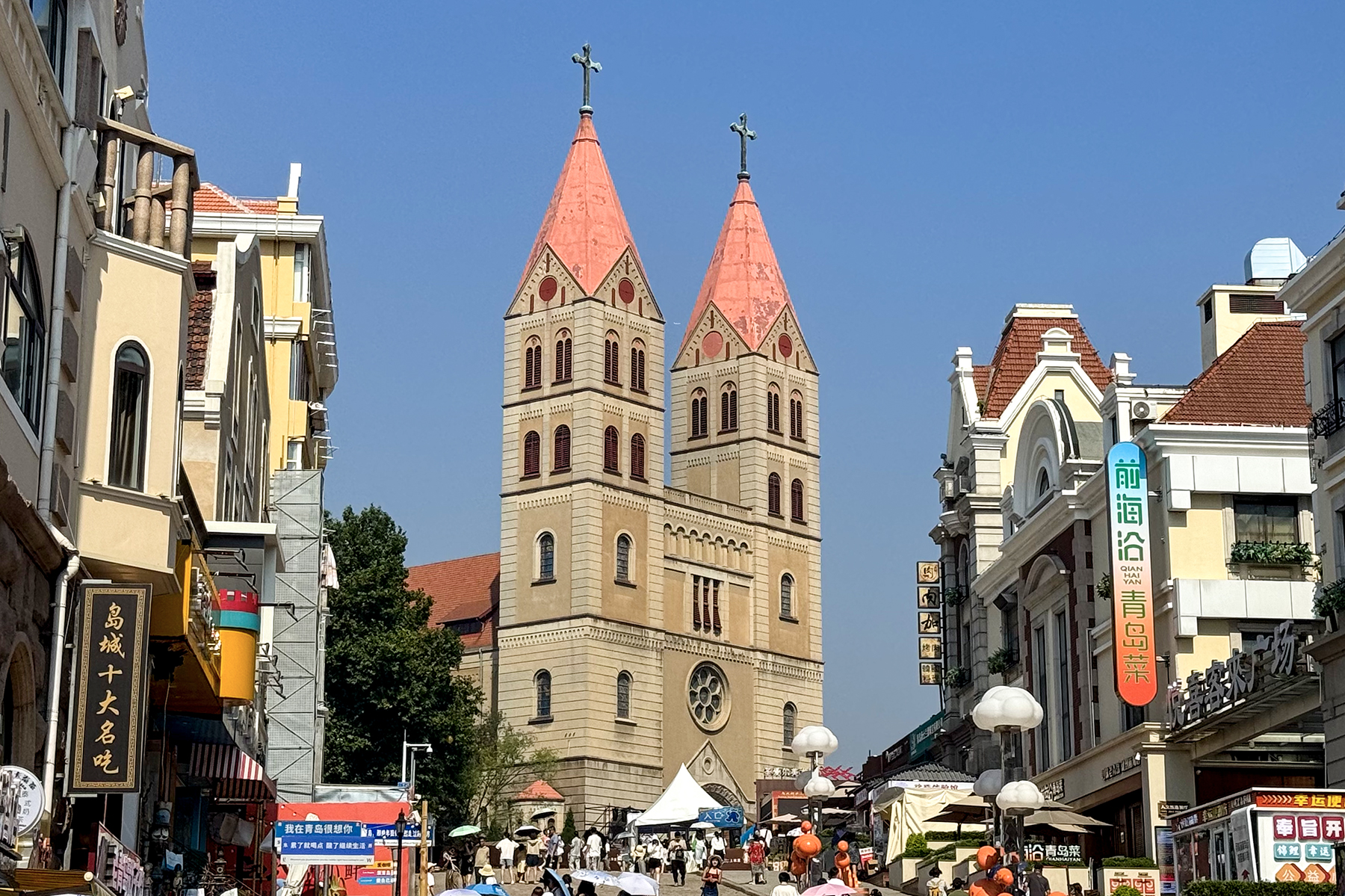
The landmark everyone photographs in the old town is St Michael's Cathedral, also called the Qingdao Catholic Church — a German twin-tower cathedral in a Gothic-Romanesque style, completed in 1934 and standing high on a rise in the heart of the old quarter, visible from far off. The stone plaza out front is a hugely popular photo spot, with wedding shoots most days of the week. Inside is a tall, light nave with stained-glass windows; there is a small entry fee, but on Sundays and during mass it opens free of charge (visit respectfully — it is a working service). The lanes and old buildings around it reward a wander. Take Metro Line 3 to the Zhongshan Road area and walk up the hill.
 4
4
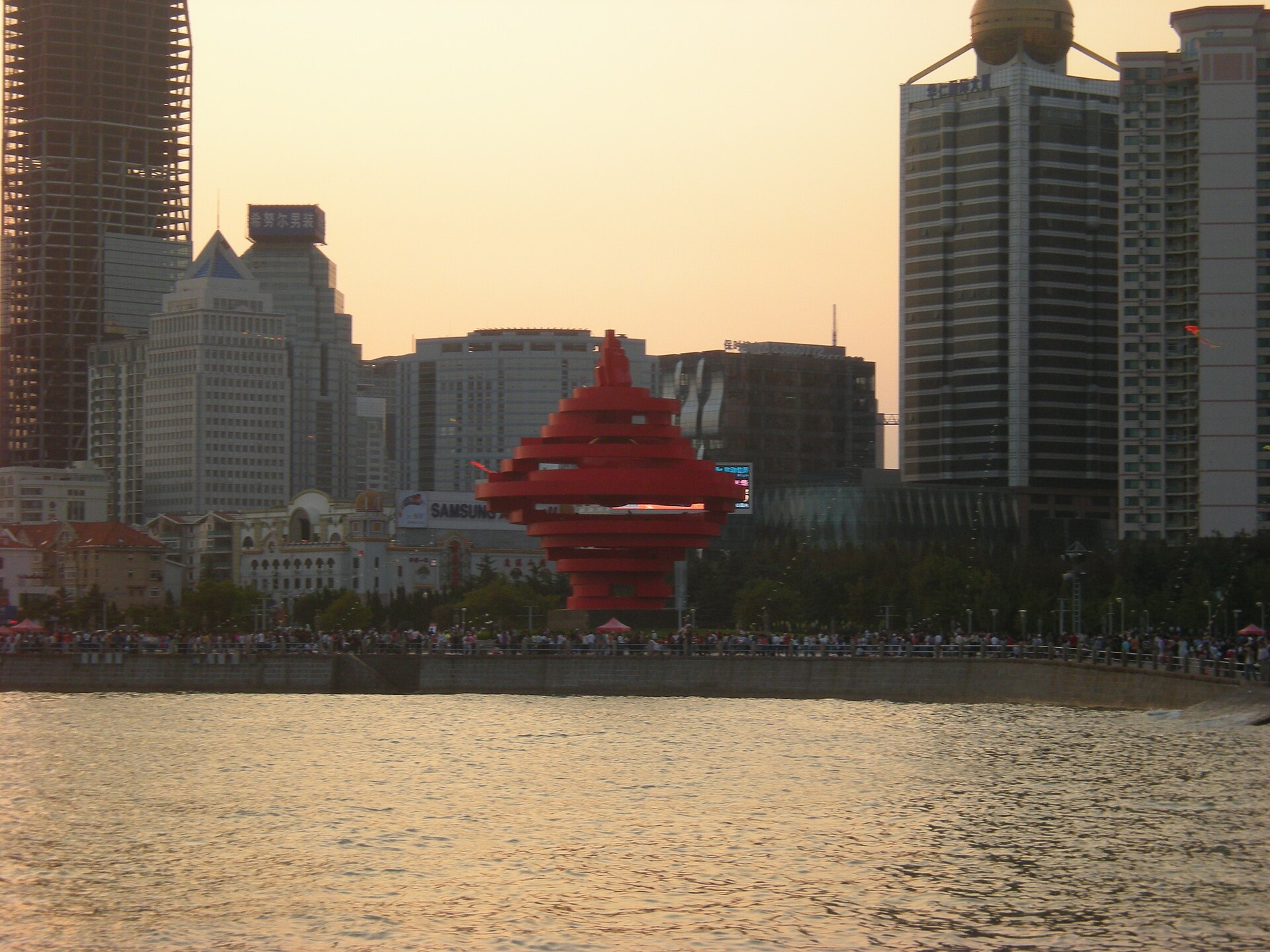
Cross to the modern side on Fushan Bay (浮山湾) and you reach May Fourth Square, a modern civic square whose centrepiece is the bright-red spiral sculpture, "May Wind" (五月的风) — a tall red whirl that has become the city's signature check-in shot, framed against the skyscraper skyline. By day people photograph the red spiral against the sea; by night the towers around the bay light up together in a coordinated light show that is genuinely impressive. From here you can stroll the waterfront all the way to the Olympic Sailing Center. The square is free; take Metro Line 2 to Fushansuo station, or Line 3.
 5
5
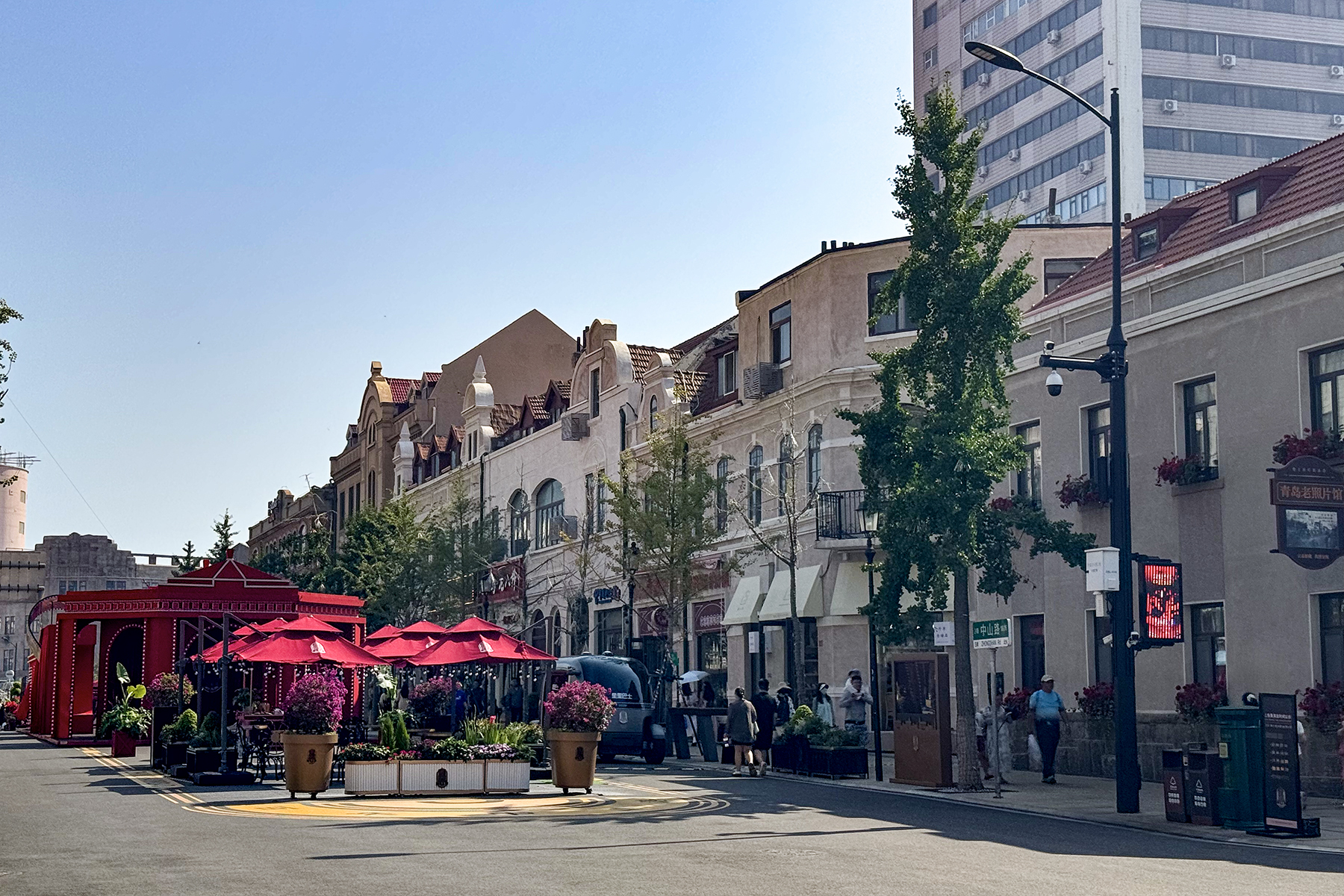
The heart of Qingdao's old town is the Zhongshan Road (中山路) area, an old commercial street lined with German colonial buildings under red roofs — walk up and down the slopes and you keep finding old facades, sweet shops and churches. The one thing not to miss is the Pichaiyuan food alley (劈柴院), an old eating lane packed with Shandong dishes and grilled seafood — clams, prawns, noodles and fresh Tsingtao beer poured into a bag. Another photogenic corner is the Dabaodao (大鲍岛) quarter, where restored old buildings have turned into cafes and little shops. It is free to wander, prettiest after dark, and easy on Metro Line 3.
 6
6
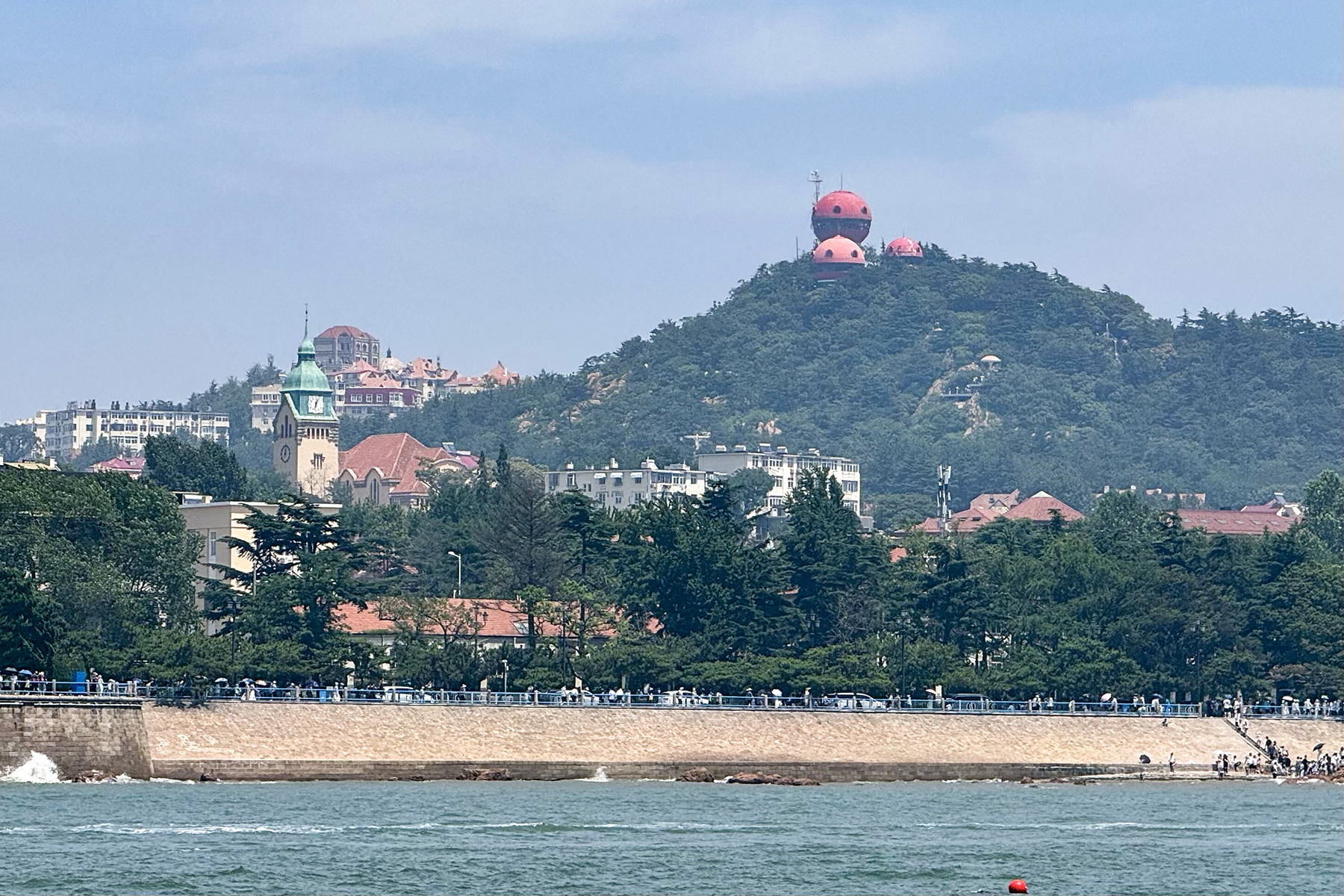
For the roofs-to-the-horizon shot everyone posts, Signal Hill is the best vantage point — a low hill in the middle of the old town that was a German-era signalling station. On top stand three landmark red-domed towers, and the headline one has a rotating viewing platform that sweeps you 360 degrees over the red-tiled roofs of the old town as they run down to the blue sea. It is a short climb up, with a small fee to ride the rotating tower; late afternoon to early evening gives the softest light. Nearby is the German Governor's Residence (迎宾馆), which you can carry on to.
 7
7
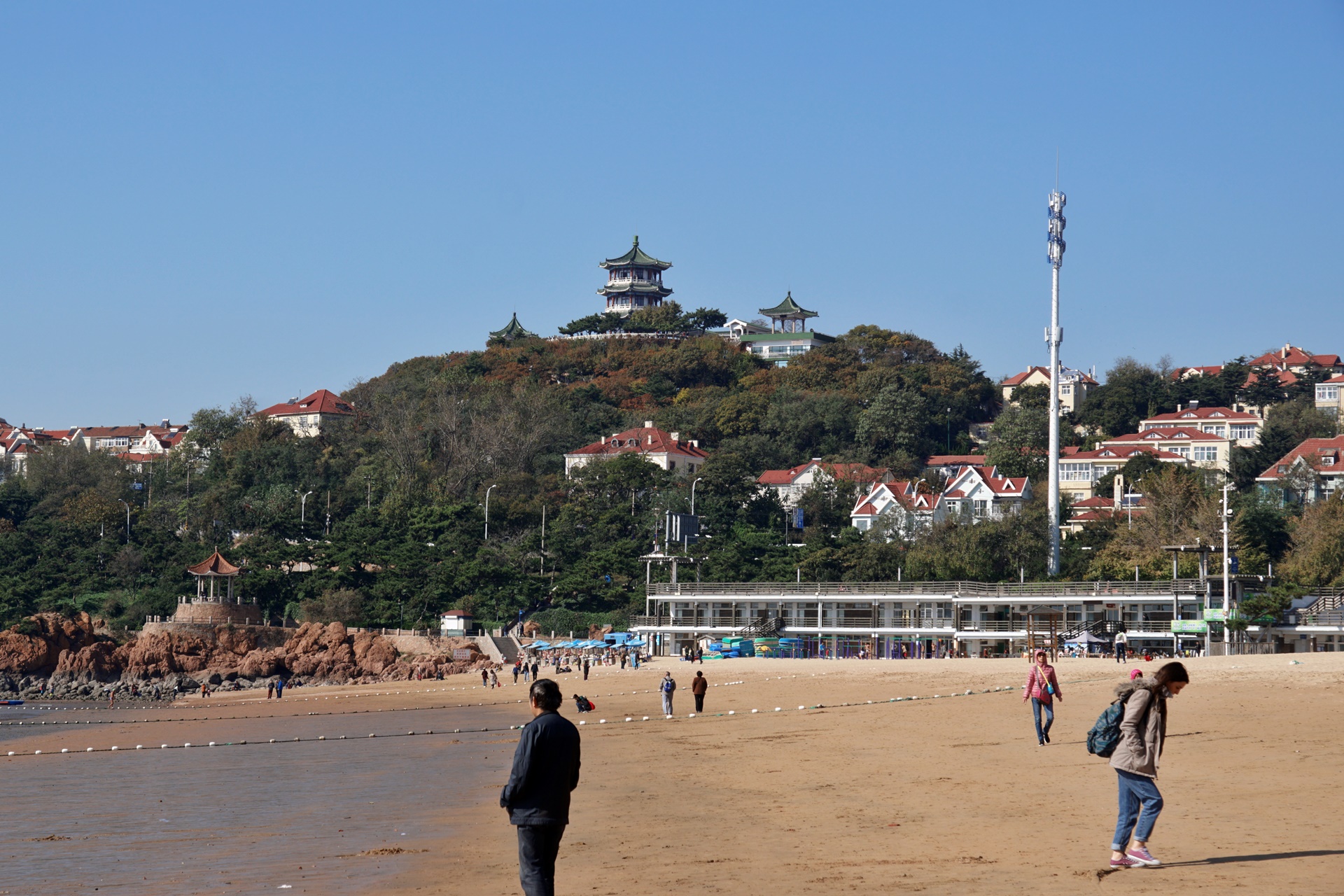
What sets Qingdao apart from most Chinese cities is its city beaches, where you can actually swim in summer. Several main beaches line the shore — No.1 Beach (第一海水浴场), the biggest and busiest city beach; No.2 Beach, in the Badaguan quarter, quieter with cleaner water; No.6 Beach, a small one beside Zhanqiao Pier; and Shilaoren Beach (石老人) to the east, near the luxury-hotel district, the longest and widest stretch of sand. The swimming season runs roughly 1 July to 25 September, with lifeguards and changing rooms on duty. All the beaches are free to enter, and outside the season the seafront is still a lovely walk.
 8
8
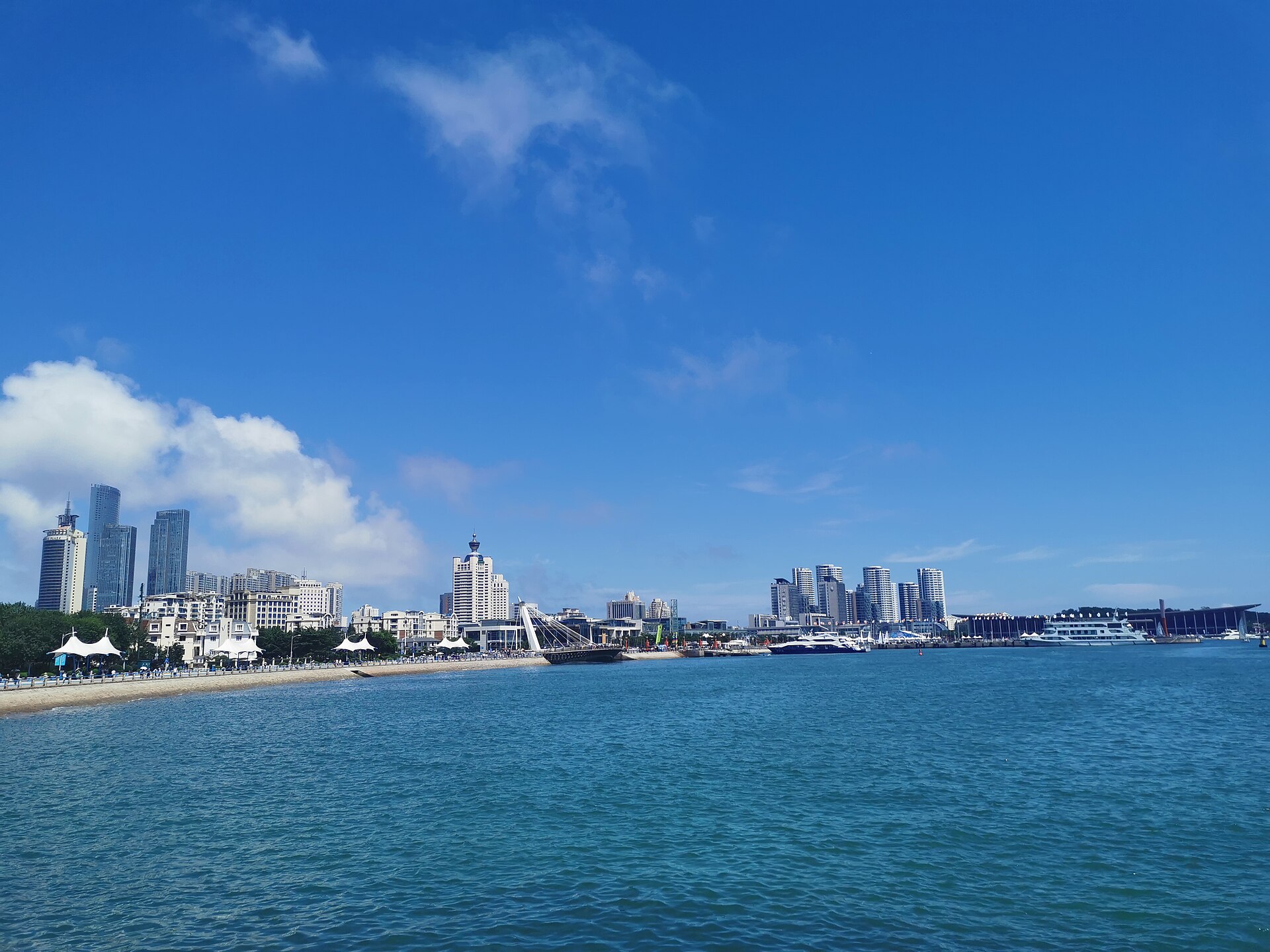
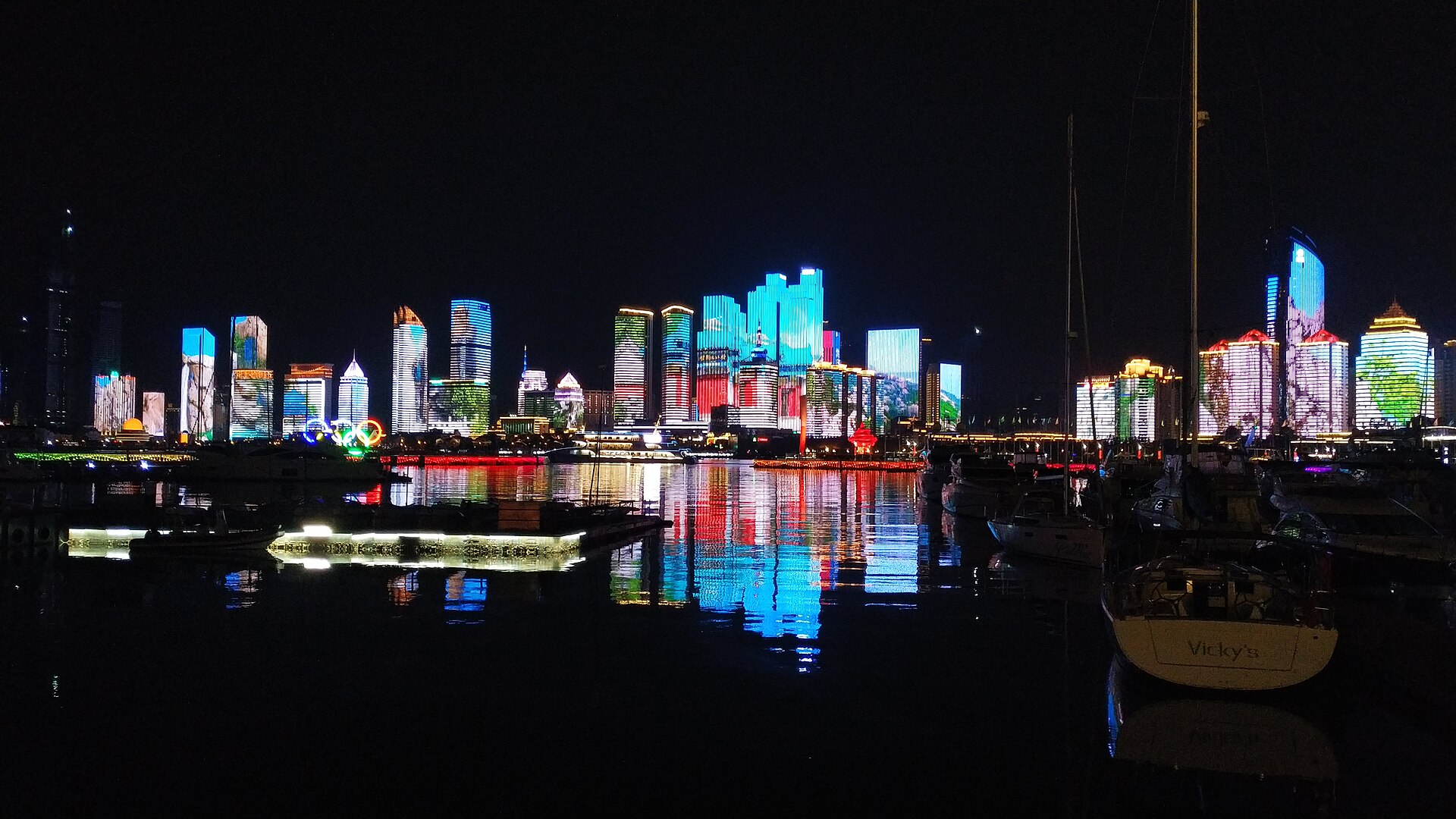
Next to May Fourth Square on Fushan Bay is the Olympic Sailing Center, the marina built for the 2008 Olympic sailing events and now a favourite waterfront walk. There are rows of moored yachts, the Olympic flame tower, and a promenade with the whole city skyline laid out across the bay. If you want to head out on the water, you can take a yacht or sailing trip around the bay. The real draw is after dark, when the towers around the bay light up together and, on some nights, drones perform overhead. It is free to walk; take Metro Line 2 to Fushansuo station, or carry on from May Fourth Square.
 9
9
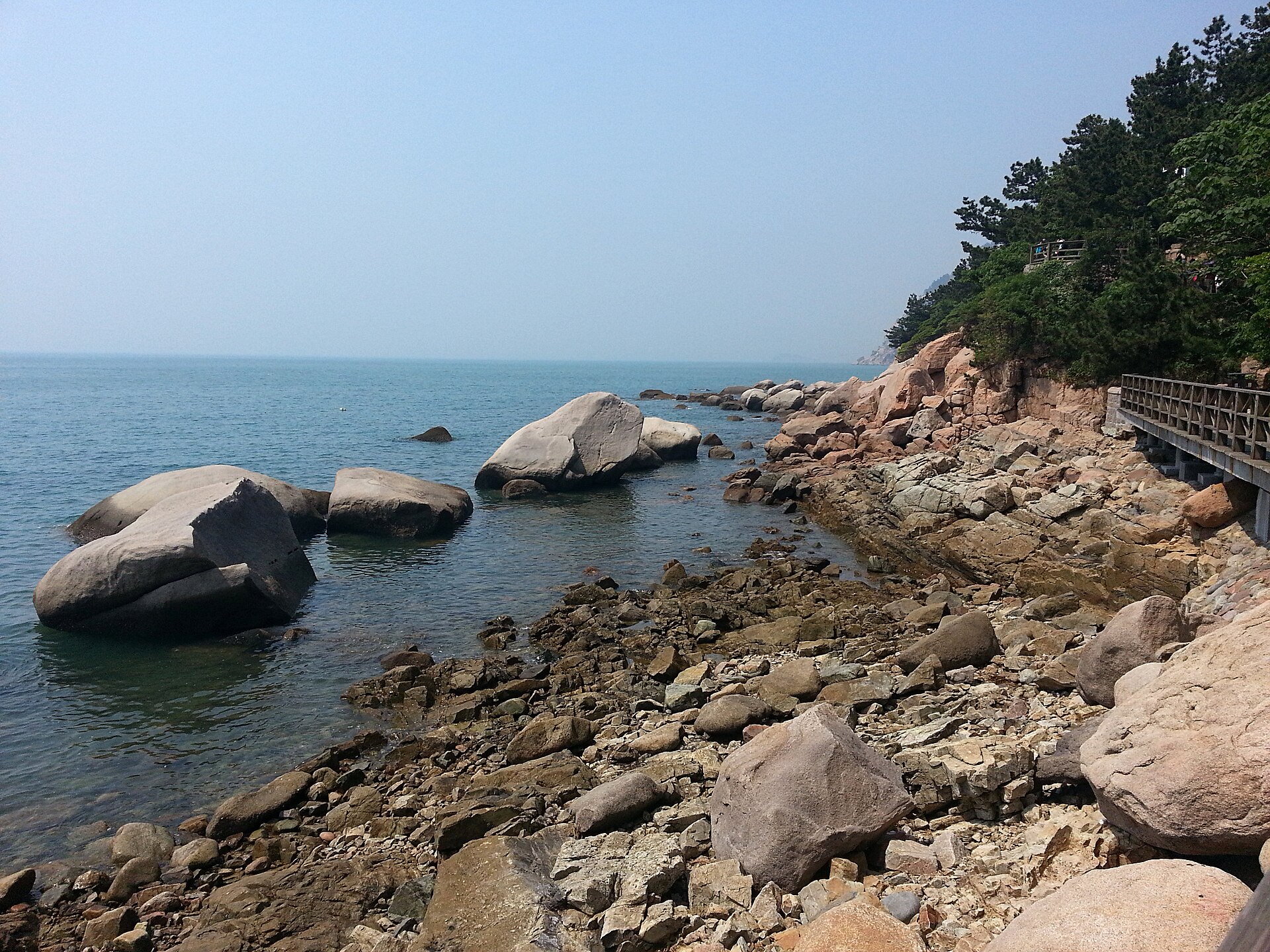
With an extra day, Mount Lao is the nature trip that pays off — a coastal Taoist mountain said to be China's highest peak on the seaboard, about 30–40 km east of the city. Its signature is the rare sight of granite dropping straight into the sea. The park holds Taiqing Palace (太清宫), an old seaside Taoist temple, with hiking trails, cable cars and the Jufeng summit to climb for the views. It is a big area split into several zones, with park buses linking the sites, so allow a whole day. The easiest way there is Metro Line 11 plus a park bus, or a tour. Tickets and packages can be booked ahead — go early and check the weather first.
 10
10
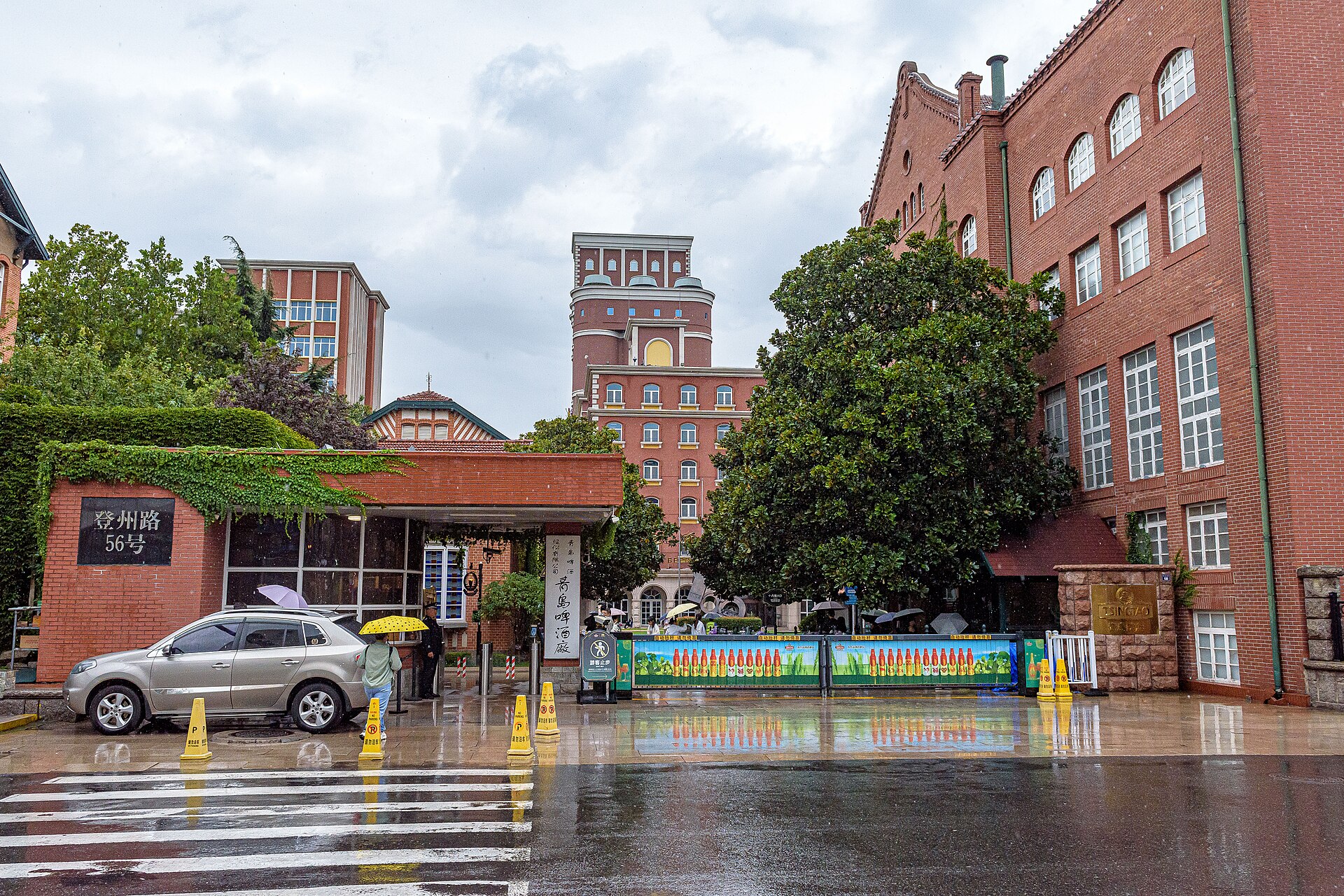
The Tsingtao beer half the world drinks started right here — the Tsingtao Beer Museum sits inside the original 1903 German brewery on Dengzhou Road (登州路), which has become the city's "beer street". Inside, it tells the brewery's story through old machinery, a real production line and a couple of fun rooms that leave you feeling pleasantly tipsy. The best part is that the ticket includes fresh beer to taste — both the raw, unfiltered brew and a fresh pour, with a snack — drunk in the original brewery, which is a great atmosphere. Reach it by bus or taxi; allow about 1.5 to 2 hours, and pair it with dinner on the beer street.
 11
11
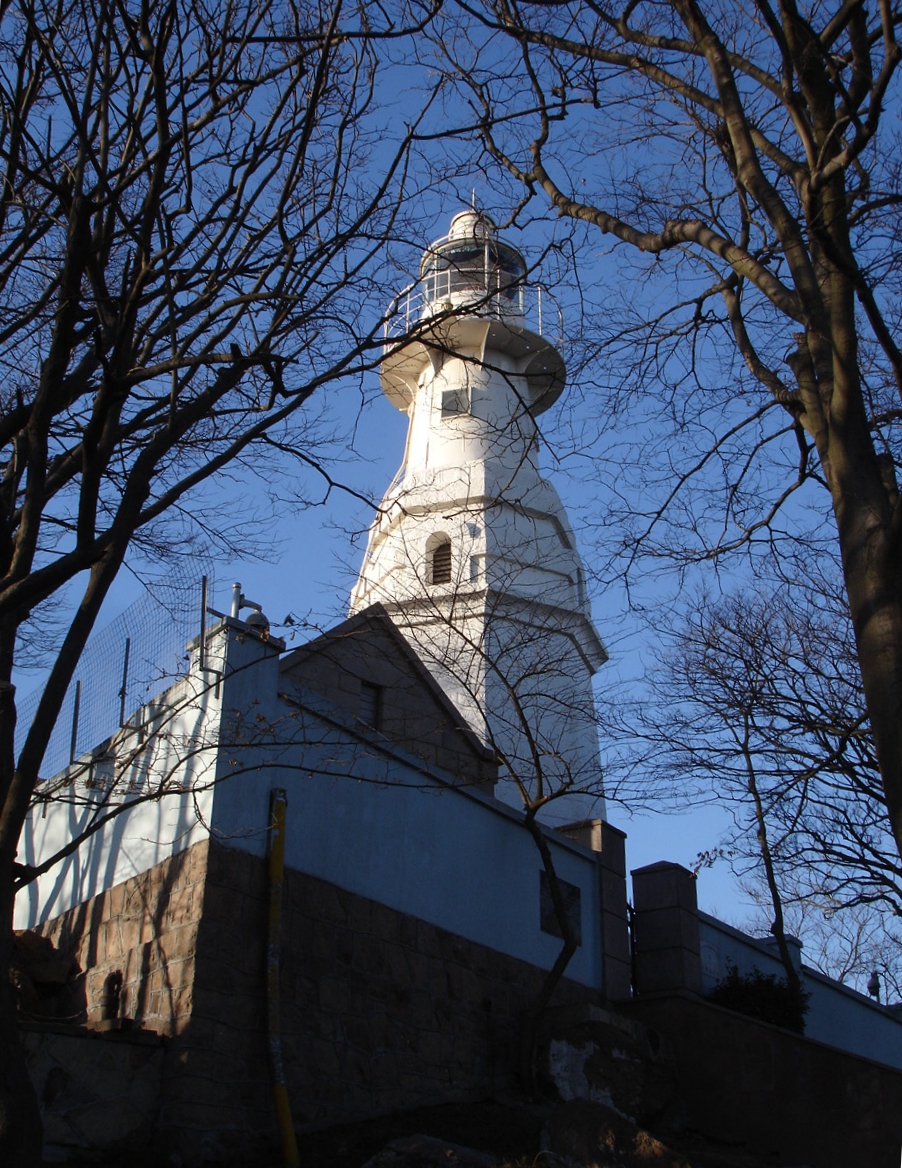
Right beside Zhanqiao Pier is the little island that gave the city its name — Little Qingdao (小青岛), or "little green island", a lyre-shaped islet joined to the shore by a short causeway. On it stands a white German-era lighthouse, still in use, with a shady garden and the best spot to look back at Zhanqiao Pier and the old-town skyline — a prettier, quieter angle than the pier itself. It takes only a short stroll to circle the island, so it pairs perfectly with Zhanqiao Pier in one go. There is a small entry fee, and it makes a neat way to round off the old town.
 +
+
With an extra day or two, Qingdao makes a good base for day trips — Yantai / Penglai (烟台·蓬莱), the seaside towns of northern Shandong, home to the Penglai Pavilion (蓬莱阁) of "fairy isle" legend and a famous spot for mirages over the sea; the high-speed train takes about 1.5 hours to Yantai, then a local transfer. Jinan (济南), the Shandong capital, is known for its natural springs, around 1.5–2.5 hours by HSR. And Mount Lao itself is a popular half- to full-day trip in its own right. We round up the routes, times and budgets in a separate day-trips guide.