A seaside city that was once a German colony — cobbled hill streets and red-tiled houses, a spired church, a villa quarter by the beach, and a bay of towers that lights up after dark with a light show. Qingdao splits neatly into an old-town day and a new-town day, and this plan fits both into 48 hours.
Honestly, Qingdao is a Chinese city that doesn't look like a Chinese city at all — it was a German leased territory in the early 20th century, and the legacy is everywhere: cobbled streets climbing the hills, red-tiled roofs, European-style churches, and a brewery that became the world-famous Tsingtao beer. Lucky for you, planning 2 days here is very easy, because the city divides itself so clearly — Day 1 walks the old town to the west (Shinan district), with Zhanqiao Pier, St Michael's Cathedral, Signal Hill and Zhongshan Road nearly all linked on foot, while Day 2 moves to the modern east side, with the Badaguan villa quarter, the beaches, May Fourth Square and Fushan Bay with its evening light show. So we make Day 1 the old-town day and Day 2 the new-town day — no running back and forth across the city wasting time.
This plan is built for travellers short on time — a quick weekend, or anyone who wants a taste of Qingdao first to see if they like it. Day 1 in the old town is mostly on foot (every uphill street is a picture), while Day 2 on the east side mixes the metro, buses and seafront walks. Qingdao's main metro lines are Line 3, which runs through the old town to May Fourth Square, and Line 2, linking the eastern districts — both clean and cheap. What's not in this plan is Mount Lao, the Tsingtao brewery, and a day trip to Penglai — if you want those too, see all Qingdao attractions to build the plan up to 3 days.
Two important tips: one — pick the right season. Qingdao's summer (June–August) is the peak for the beaches and the International Beer Festival — the liveliest atmosphere, but crowded and pricey. May–June and September–October have the clearest, easiest weather for sightseeing; early summer can bring sea fog, and winter is windy and cold. Two — pick a neighbourhood that fits your style. To wake up and walk straight into the old town and the sea, choose Shinan / Zhongshan Road; to be near the beach and the light show, choose May Fourth Square / Fushan Bay. See the options in the 10 best hotels in Qingdao to find one that suits your budget.
Walk Zhanqiao Pier out into the bay · photograph St Michael's Cathedral on its plaza · ride the Signal Hill viewing tower for the whole carpet of red roofs · shop Zhongshan Road and graze the street food at Pichaiyuan market · finish the evening on No.6 Beach.
Start the first day at the symbol of Qingdao — Zhanqiao Pier, a 440-metre stone pier reaching out into the middle of Jiaozhou Bay, built back in 1892, with the octagonal Huilan Pavilion (回澜阁) and its red-tiled roof at the tip, the image everyone pairs with the city. Walk out to the very end for the morning sea breeze and the old-town skyline curving along the bay — this is the picture that has been on the Tsingtao beer label for more than a hundred years. Free, and a lovely easy stroll.
From the pier it's about a 10–15 minute uphill walk into the old town to St Michael's Cathedral, a Romanesque-Gothic Catholic cathedral the Germans finished in 1934, its twin 56-metre spires rising at the end of the street. It's the most popular photo spot in the city — wedding couples shoot their pre-wedding photos here all day — and you can go inside (a small fee), where the vaulted ceiling and stained glass are beautiful. The cobbled lanes around the church are a delight to wander.
Grab lunch in the old town first — the area is full of Shandong restaurants, seafood places and cafés in old buildings; try a local dish or read up on Qingdao Shandong cuisine to go with it. Then walk up Signal Hill, a small hill in the middle of the old town topped by three red mushroom-shaped viewing towers, the upper one a 360-degree revolving deck that turns a full circle in about 30 minutes. Look down on the sea of red-tiled roofs of the old town set against the blue water — this is the view that has sold Qingdao postcards forever, and one of the prettiest on the trip.
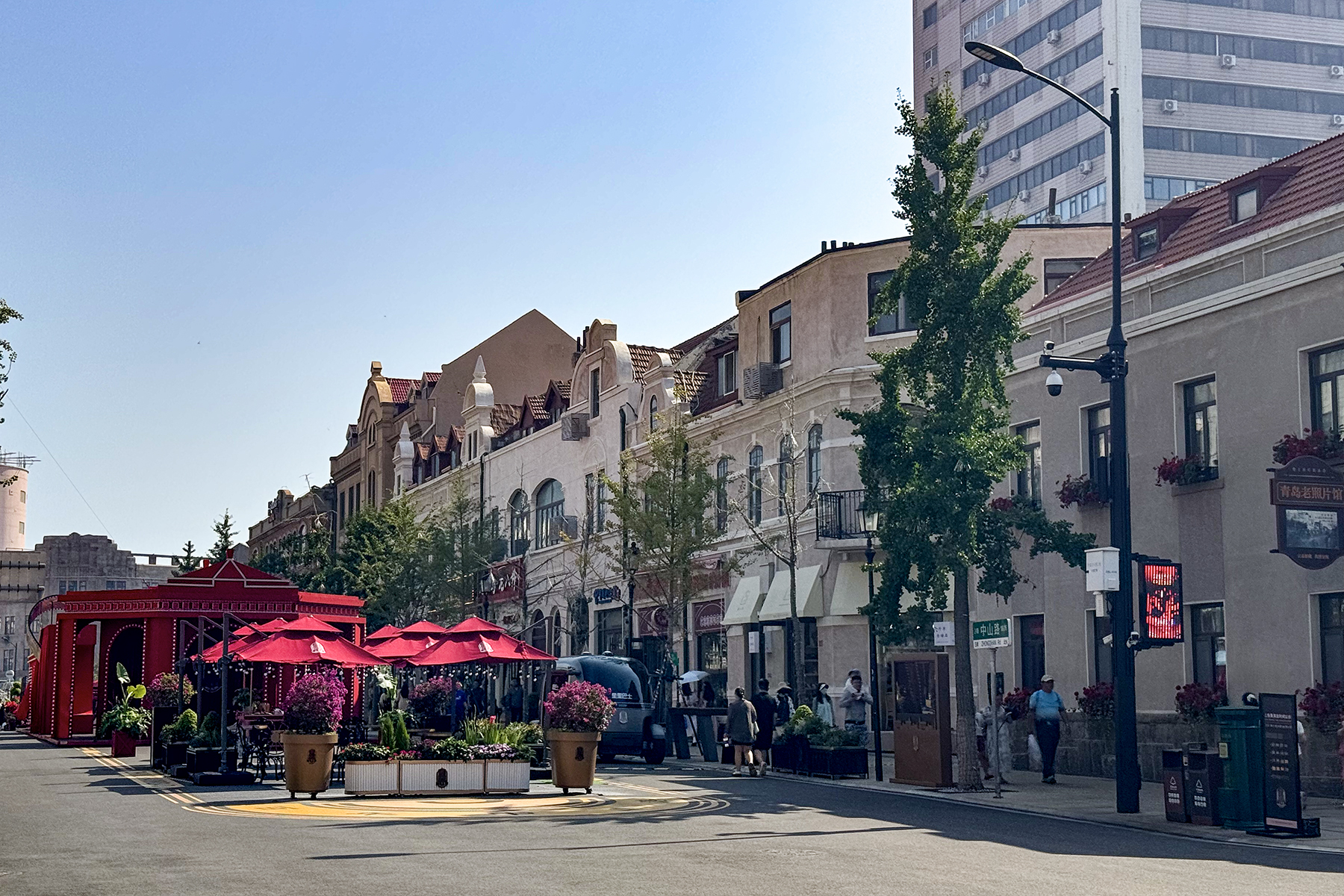
Come down from the hill toward Zhongshan Road, Qingdao's oldest shopping street, lined with century-old European buildings running down to the sea, with old shops, small department stores and local sweet shops — a lovely stroll for the architecture alone. Right nearby is Pichaiyuan market (劈柴院), a food alley dating to 1902, a warren packed with street-food stalls: grilled oysters, grilled squid, boiled dumplings and all sorts of Shandong snacks. Graze your way through it — it's good fun.
In the evening it's a short walk from the old town down to the sea — No.6 Bathing Beach sits right at the foot of Zhanqiao Pier, a small, soft-sand beach in the bay with the pier as its backdrop, and the golden evening light on the water is gorgeous; locals come out to sit by the sea here all the time. If you've still got the legs, walk a little further east along the shore to No.1 Bathing Beach, a longer stretch of sand and the most popular swimming beach in summer. For an overview of every beach, see the Qingdao beaches guide.
For dinner on the first night, head back around the old town / Zhongshan Road, or grab a seafront table — Qingdao is a city of fresh seafood and fresh beer. Order the spicy stir-fried clams (辣炒蛤蜊) that go hand in hand with a beer table, alongside fresh Qingdao seafood and fresh Tsingtao poured into a plastic bag the local way; or browse the full Qingdao food guide. Figure on ¥80–200 per person.
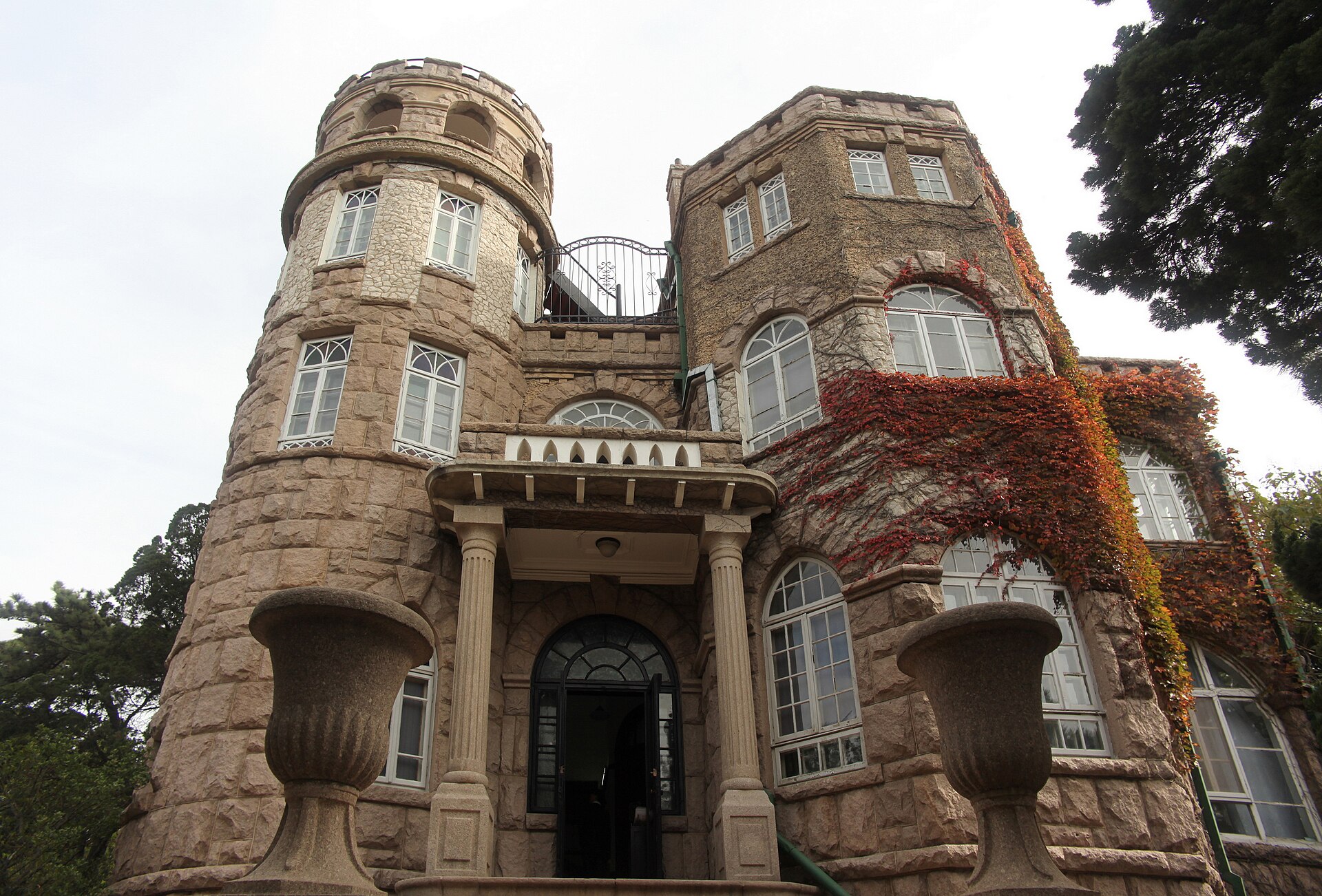
Walk the Badaguan villa quarter and the stone Huashilou villa · pause at the quieter No.2 Beach · photograph the May Wind sculpture at May Fourth Square · stroll the Olympic Sailing Center · finish with the Fushan Bay light show after dark and a fresh draught.
Start the second day at Badaguan, the seafront villa quarter many call the loveliest corner of Qingdao. The name "Badaguan" means "eight great passes", because each street is named after a pass of the Great Wall — and each is planted with a different species of tree, so spring brings peach blossom and autumn turns the leaves. The whole quarter is free to walk, threading past more than 200 European-style villas in styles from all over, shady and calm, and a favourite for pre-wedding photos.
The highlight of the quarter is Huashilou (Huashi Villa / 花石楼), a castle-like stone villa by the sea built in 1932 that once hosted a string of notable guests; go up to the top floor for the wide sea view (a small entry fee). From the stone villa it's a short walk down to No.2 Bathing Beach, a quieter, cleaner beach than No.1, ringed by rocks and trees — perfect for sitting in the morning sea air before you move on.
Grab lunch around the May Fourth Square area first — this new-town side is full of malls and restaurants; try some seafood or check the Qingdao seafood guide. Then make for May Fourth Square, the central seafront square on Fushan Bay, marked by the red spiral wind sculpture "May Wind" (五月的风) standing 30 metres tall in the middle of an open plaza facing the sea — the modern city's signature photo spot, a counterpart to old Qingdao's Zhanqiao Pier.
Walk east along the bay for about 15 minutes to the Olympic Sailing Center, the yacht harbour that hosted the sailing events of the Beijing 2008 Olympics and is now a much-loved waterfront promenade, with rows of moored sailing boats, the Olympic flag masts, cafés and a boardwalk along the water. The afternoon, with the sun softening and a cool breeze, is lovely for photos against the Fushan Bay skyline — and this is the best place to wait for sunset and the evening light show.
Close the trip with the thing Qingdao does best after dark — the Fushan Bay Light Show, running light projected across the faces of the skyscrapers around the bay, set to music, the whole bay of towers turning into a giant screen that lights up and shifts colour to the beat. In summer and on holidays (roughly May–October) it runs in the evening around 19:30–21:00, repeating in bursts. The best vantage points are the waterfront plaza in front of May Fourth Square and the promenade running toward the sailing center — grab a spot by the water and wait for the first lights of the evening. Free, no entry fee.
After the show it's time to celebrate the end of the trip the proper Qingdao way — find a seafront seafood place or head back into the city, and order hot spicy stir-fried clams with a cold fresh Tsingtao. This is the combo locals eat every summer night. Take a look at the Tsingtao beer guide or the mackerel dumplings, another local favourite, and round it off with more bites in the Qingdao street food guide. Dinner runs ¥80–220 per person.
Two options — Shinan / Zhongshan Road on the old-town side, near Zhanqiao Pier, St Michael's Cathedral, Signal Hill and Pichaiyuan market, ideal if you want to wake up and walk straight into the old town and the sea; or the May Fourth Square / Fushan Bay area on the new-town side, near the beach, the malls and the light show, ideal if you're focused on Day 2 and the nightlife. A 3–4 star hotel runs ¥350–650 a night. See the 10 recommended hotels or the 6 luxury hotels.
Qingdao has several metro lines, clean and cheap at ¥2–8 a trip — Line 3 runs through the old town (Qingdao Railway Station, near Zhanqiao Pier) to May Fourth Square on the east side, while Line 2 links the eastern districts and helps you carry on along the coast. Pay via Alipay/WeChat Pay (scan a QR) or a transit card, backed up by buses, taxis/DiDi and shared bikes. Day 1 in the old town is most fun on foot (every uphill street is a picture), while Day 2 on the new-town side is easiest on the metro and seafront walks.
Set up Alipay (its international version, linked to a Visa/Mastercard) before you travel — most shops take only Alipay or WeChat Pay, and cash is far less accepted now. See the Alipay & WeChat Pay setup guide and the visa-free guide for Thai passport holders (around 30 days in China). TAO Jiaodong airport is ~40 km from the city — get in on Metro Line 8, an airport bus, or a taxi (~¥120–150), so plan in the travel time.
| Item | Budget | Mid-range | Comfort |
|---|---|---|---|
| Hotel (1 night) | ¥130–280 (~฿650–1,400) |
¥350–650 (~฿1,750–3,250) |
¥750–2,000+ (~฿3,750–10,000+) |
| Three meals/day | ¥70–120 (~฿350–600) |
¥120–230 (~฿600–1,150) |
¥280–550 (~฿1,400–2,750) |
| Metro + bus (2 days) | ¥15–30 | ¥25–45 | ¥60–140 (+ the odd taxi) |
| Entry tickets (2 days total) | ¥0 (stick to the all-free sights — Zhanqiao Pier + the old town + Zhongshan Road + Badaguan + the beaches + May Fourth Square + the light show) |
¥30–45 (+ Signal Hill viewing tower ¥10–15 + St Michael's Cathedral ¥10 + Huashilou villa ¥8.5) |
¥80–160 (+ a bay cruise / extra activities) |
| Total 2 days (approx.) | ¥425–790 (~฿2,125–3,950) |
¥1,025–1,650 (~฿5,125–8,250) |
¥2,420–5,750+ (~฿12,100–28,750+) |
Exchange rate used: ¥1 ≈ ฿5 · prices are approximate and vary by season · avoid Chinese New Year and Golden Week (1–7 October), when hotel prices spike and the beaches pack out · summer (June–August) is the peak of the Beer Festival, the priciest and liveliest time · hotel cost is for 1 night · the Fushan Bay light show may be cancelled in winter, so check before you go.