Qingdao has sandy beaches strung along the bay for kilometres, from the old town below Zhanqiao Pier all the way to the east coast — all free to enter. The only thing to decide is which one suits what you came to do.
Picture a late summer afternoon: you walk a few steps out of a red-roofed old-town lane and the sea opens up in front of you — sand full of families under umbrellas, kids running at the waterline, older locals wading in the salt water, and the smell of grilled seafood drifting from the stalls along the front. This is Qingdao in summer, the city the whole of China comes to for a seaside holiday.
Qingdao doesn't have just one beach. It has a string of public bathing beaches along the coast, each one numbered. No.1 Beach (第一海水浴场) is the biggest and most famous; No.2 is quieter, with cleaner water, tucked into the Badaguan villa quarter; No.3 is built for families; No.6 sits beside Zhanqiao Pier in the old town; and Shilaoren Beach (石老人), out on the east coast, is the longest sandy stretch of all.
The good news is that every beach is free — no ticket, no closing gate, just step onto the sand. The only real decision is which one to head to, because each has its own atmosphere. This guide walks through them one by one so you can pick the right beach before you even leave your hotel.
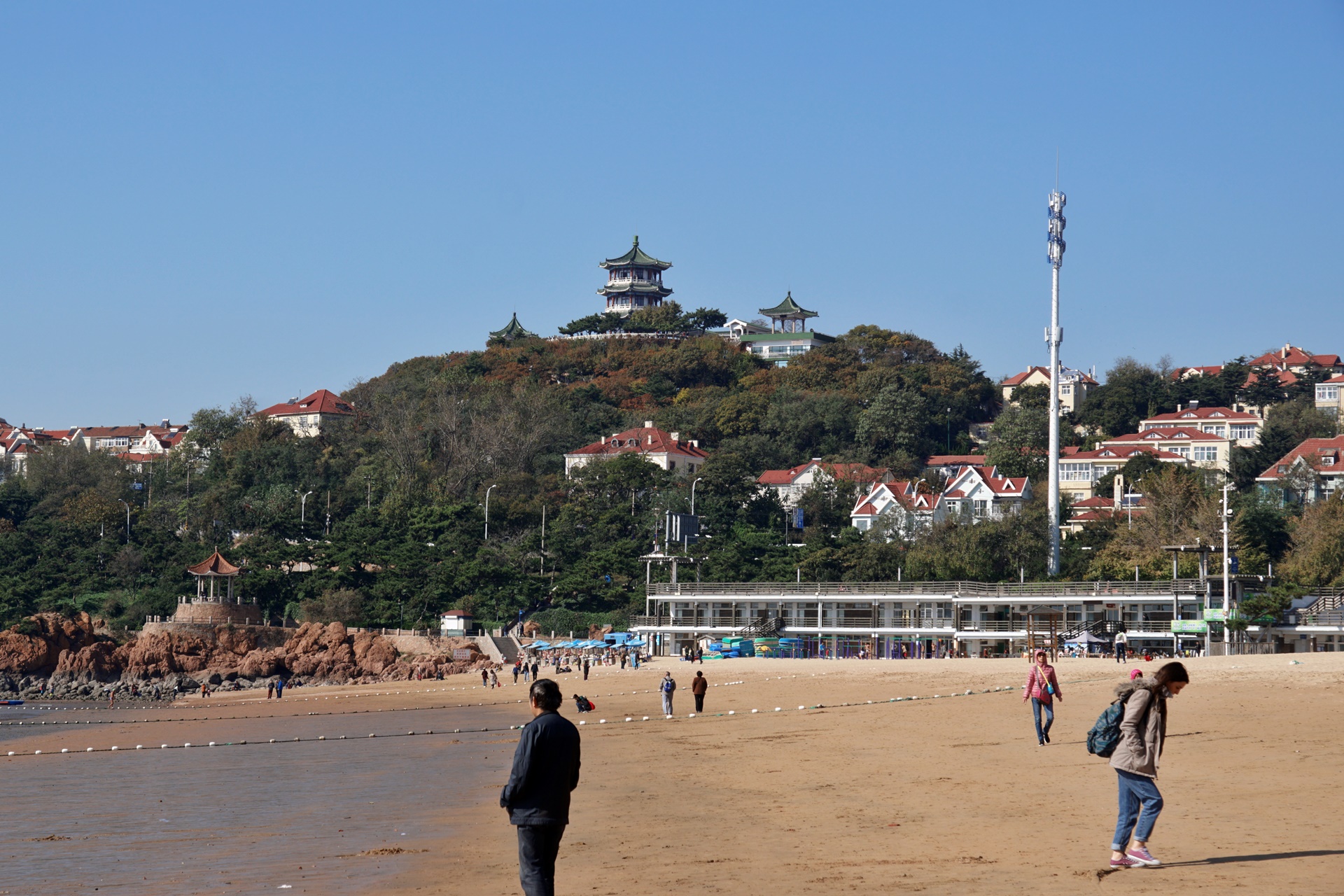
Listed from the old town in the west heading east — pick by whether you want to swim, bring the kids, or just take photos
A small old-town beach right beside Zhanqiao Pier, just a few minutes' walk from Qingdao Railway Station. Its draw is the central location, with the pier and the Huilan Pavilion as a backdrop. The sand is fairly coarse and the water less clear than other beaches, so people come more to walk, take photos and watch the sunset than for a serious swim. Handy to drop into while exploring the old town.
A large sandy beach on Huiquan Bay, the most famous in Qingdao since the German era. The sand is wide, the waves gentle, and in summer it is the liveliest beach in the city, with lifeguards, changing rooms, lockers and first-aid points all on hand. During the swim season (about 1 July to 25 September) it can be packed almost solid. If you want the full Chinese seaside scene with seafood stalls along the front, this is the one — but if you dislike crowds, come early or pick another beach.
A smaller beach than No.1, tucked at the foot of the Badaguan villa quarter. It draws fewer people, the water is clearer, and the waves are small and slow — altogether much calmer. It was once a private beach for the old holiday villas, so it still feels more secluded than the others. Good for an easy swim, or to combine with a wander among the European-style villas in the same neighbourhood.
The beach purpose-built as Qingdao's family beach. Its main feature is a sandy bottom that slopes very gently and shallowly into the sea, so young children can paddle more safely than elsewhere, backed up by family facilities and close-watch safety. It sits on the eastern side of the bay and is less crammed than No.1. If you are travelling as a family with kids, this is the most reassuring choice.
Qingdao's biggest and longest beach, out on the east coast away from the old town, near the luxury-hotel zone (the Hyatt, for one) and Polar Ocean World. The sand is soft and many say the water is clearer than the city beaches, with fewer people and fresher air — a lot of locals prefer to swim here. The name "Shilaoren" (meaning "the old stone man") comes from the rock pillar standing out in the sea, the beach's signature landmark. Best if you want a wide, quieter beach and are staying on the east side.
Qingdao is up north, so the sea is much colder than the beaches of southern China. The comfortable swimming window is roughly early July to early September, with No.1 Beach running its full beach services from about 1 July to 25 September. That is when you get lifeguards, changing rooms, lockers and first-aid points on the beach.
Outside this season the water is too cold for swimming and many of the facilities close, but the beaches stay open for walking and photos year-round. Late summer into early autumn (September) brings fine weather and thinning crowds — the time of year a lot of people like best.
Qingdao's summer can bring some jellyfish, especially after rain or late in the season. Some visitors report seeing one or two, but for the most part they are not a serious problem. The safest approach is to swim inside the netted, lifeguarded zone, not to go too far out, and to get out of the water straight away if you spot jellyfish.
The other thing to know is that the tides here are pronounced. At low tide the sand stretches far out but the swimming line is a long way off, so checking the tide table beforehand helps you plan your timing. And always swim where other people are — never alone, and not outside the hours when lifeguards are on duty.
One of the nice things about Qingdao is that the beaches are linked by seafront paths and a coastal road. You can walk from No.6 in the old town, past Zhanqiao Pier, around toward Huiquan Bay and No.1 and No.3, stopping at viewpoints, Chinese pavilions and seaside cafés along the way.
For somewhere quieter with a longer sweep of sand, shift east toward Shilaoren Beach, which has a long waterfront promenade good for a morning walk or run, looking out at the Shilaoren rock pillar standing in the sea — the beach's landmark.
Qingdao has a metro, and for most beaches you ride it close, then walk or take a short taxi or DiDi to the seafront — just choose the line for the old-town beaches or for the east coast.
Stay around Huiquan Bay or Badaguan for No.1–No.3, or on the east coast for Shilaoren — step out of the hotel and you're at the sea